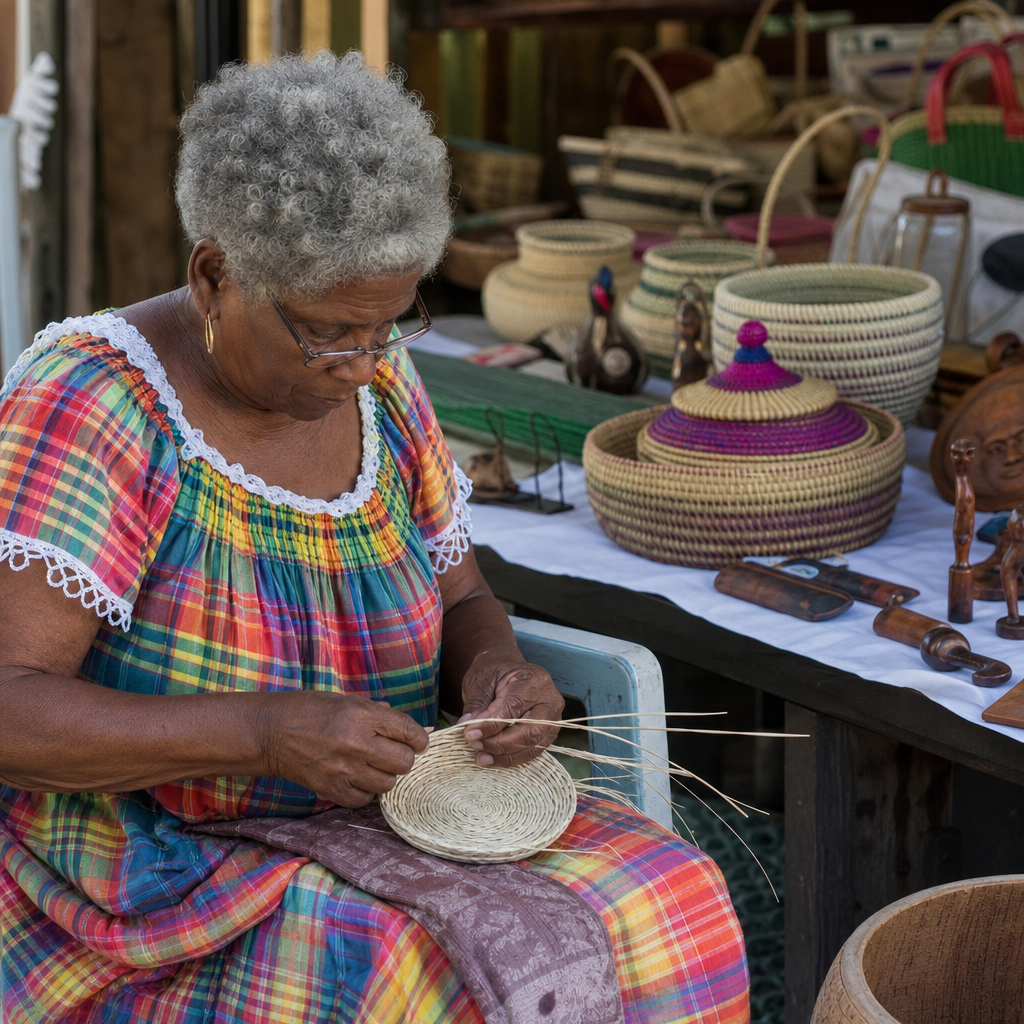
Nevis’ traditional handicrafts are more than souvenirs; they are working records of memory, skill, and community life that connect the island’s past to its present. On a small Caribbean island where tourism, migration, and imported goods shape daily commerce, keeping the craft alive means protecting techniques that once met practical needs and now carry cultural value. Traditional handicrafts on Nevis include straw weaving, woodcarving, pottery traditions remembered through oral history, textile work, basket making, and decorative objects made from local fibers, seeds, shells, and reclaimed materials. Some crafts survive through active makers and market sellers, while others persist in fragments, family knowledge, church fairs, school projects, and heritage demonstrations. That broad mix is exactly why handicrafts deserve close attention within local life and experiences.
When I have spoken with artisans on Caribbean islands, one pattern appears again and again: a craft disappears slowly before anyone admits it is endangered. A grandmother no longer teaches plaiting because children are busy; a carpenter buys imported trim instead of carving by hand; a market stall shifts toward factory-made keepsakes because visitors want lower prices. None of those changes looks dramatic in isolation. Together, they weaken the chain of transmission. On Nevis, where identity is shaped by village ties, agricultural history, African and European influences, and close community networks, handicrafts matter because they preserve embodied knowledge. You cannot archive the feel of tension in a woven strand, the timing of drying clay, or the hand pressure used to smooth wood without people actively practicing those techniques.
This hub article covers the miscellaneous handicraft landscape of Nevis comprehensively, not as a narrow shopping guide but as a cultural map. It explains what traditional handicrafts include, how they developed, where visitors may encounter them, what challenges artisans face, and what practical steps help sustain the sector. It also points readers toward the wider local life and experiences theme, because craft is linked to foodways, festivals, heritage education, community tourism, and everyday island economics. If you want to understand Nevis beyond beaches and resort imagery, look closely at handmade work. Crafts reveal what materials people valued, how households adapted to limited resources, and how creativity continues even in a global market crowded with imports. That is why preserving Nevis’ traditional handicrafts is not nostalgic decoration; it is cultural continuity made visible.
What counts as traditional handicrafts on Nevis
Traditional handicrafts on Nevis are handmade objects rooted in local materials, inherited techniques, and community use. The category includes straw hats and bags, woven baskets, carved household pieces, stitched and embroidered textiles, dolls and ornaments using cloth or natural fibers, and decorative works made from seeds, shells, calabash, coconut, and wood. Not every item sold on the island qualifies. A craft becomes traditional when it reflects methods shaped by Nevisian life rather than mass-produced templates imported for tourists. In practice, many artisans combine old and new approaches, using synthetic thread to strengthen a basket or reclaimed hardwood in place of rarer species. That adaptation does not make the work less authentic. Traditional craft has always evolved according to available materials, household demand, and market opportunity.
Historically, craft on Nevis grew out of necessity. People made containers, mats, hats, simple furniture, fishing-related items, and domestic textiles because imported goods were costly or unavailable. Agricultural life encouraged practical making: fibers were gathered, wood was repurposed, sacks were mended, and decorative skill often emerged from everyday utility. Over time, these functional objects also became expressions of pride, especially in church events, holiday celebrations, and local markets. Today, some crafts are produced mainly for sale, yet the strongest examples still carry signs of their practical origins. A well-made woven piece must hold shape. A carved mortar or stool must feel balanced. A textile item must show durable stitching, not just surface decoration. Those performance standards are part of the tradition, and serious buyers should learn to recognize them.
How craft traditions developed through island history
Nevisian handicrafts cannot be separated from the island’s layered history. Colonial plantation economies transformed land use, labor patterns, and access to materials, while African-descended communities retained and adapted making traditions through memory and improvisation. Enslavement and later rural village life forced people to develop self-reliance. In that context, craft knowledge traveled through observation rather than formal schools. Children learned by helping older relatives strip fibers, sort seeds, prepare reeds, patch clothing, or sand wood. Techniques were rarely written down. That is common across the Caribbean, where heritage often survives in hands and habits instead of manuals.
Trade also influenced local making. Ships brought fabrics, tools, metal fasteners, and manufactured goods that changed what could be made at home. Mission schools encouraged sewing and needlework. Tourism later altered production again by creating demand for portable, decorative pieces over strictly utilitarian ones. A woven market basket might become a smaller gift basket; a practical hat might be restyled for visitors; shell work might become framed art. These shifts are not evidence of decline by themselves. They show that handicrafts respond to economics. The real question is whether the core skills remain on the island and whether artisans retain enough control to define quality, design, and fair pricing.
Common materials, methods, and hallmark qualities
Across Nevis, traditional handicrafts are distinguished by resourcefulness. Makers work with what the island provides or what households can salvage. Natural fibers may come from grasses, palm, or similar plant sources suitable for plaiting and weaving. Coconut shells can be polished into small containers or ornaments. Calabash, where available, has long been valued across the Caribbean for bowls and decorative forms. Local woods and reclaimed timber support carving, turning, and simple joinery. Textile crafts rely on cotton blends, thread, lace, and recycled cloth, especially where cost-conscious making remains essential.
The methods are equally important. Weaving requires even tension, consistent patterning, and careful finishing at rims and handles. Carving depends on grain awareness, sharp tools, and staged sanding rather than rough cutting alone. Needlework is judged by clean seams, balanced motifs, and durability under use. In my experience evaluating handmade products in island markets, the easiest way to spot serious workmanship is to inspect the underside, interior, or reverse side. Authentic skill shows where casual buyers do not look: tightly hidden joins, reinforced stress points, smooth edges, and no excess glue. Those details separate heritage craft from quick-assembly tourist stock.
| Craft type | Typical materials | Traditional use | Quality markers |
|---|---|---|---|
| Straw weaving | Palm or grass fibers, thread | Hats, baskets, bags, mats | Even plaiting, strong handles, neat finish |
| Woodcraft | Local or reclaimed hardwood | Stools, bowls, décor, utensils | Smooth sanding, balanced form, clean grain cuts |
| Textile work | Cloth, lace, thread, recycled fabric | Household linens, garments, gifts | Precise stitching, durable seams, tidy reverse side |
| Seed and shell art | Seeds, shells, coconut, cord | Jewelry, ornaments, keepsakes | Secure assembly, symmetry, polished surfaces |
Where visitors and residents encounter Nevisian handicrafts
Handicrafts on Nevis are usually encountered in small, human-scale settings rather than giant retail districts. Village events, cultural exhibitions, seasonal markets, hotel pop-ups, church fundraisers, and heritage celebrations often provide the best access to local makers. Charlestown and surrounding communities may host artisans selling baskets, sewn items, carved objects, jewelry, and mixed-media souvenirs. Visitors who only browse resort gift shops can miss the most interesting work, because many skilled makers operate informally or part-time. Asking local hosts, taxi drivers, museum staff, or heritage guides where handmade goods are sold often leads to more authentic encounters than a standard shopping circuit.
For residents, crafts also appear through schools and community organizations. Heritage days, independence-related events, and youth programs sometimes feature demonstrations that show how fibers are prepared or how old household items were made. These settings matter because they place craft back into a social context. Buying a basket is useful, but seeing someone explain why a certain weave is stronger or how a design changed over time creates understanding. That educational layer is critical for a hub topic like miscellaneous handicrafts, since the category is broad and can otherwise feel fragmented. The island’s craft story lives not only in finished objects but in the moments where making is explained, taught, and watched.
Challenges threatening the survival of traditional crafts
The biggest threat to Nevis’ traditional handicrafts is not lack of talent; it is lack of continuity. Many artisans are older, and fewer younger people see craft as a reliable source of income. Imported goods undercut local prices, especially when machine-made items mimic handmade aesthetics. Raw materials can be inconsistent, tools may be expensive, and the time required for quality work often exceeds what casual buyers expect to pay. Tourism creates opportunity, but it can also distort production toward fast, inexpensive souvenirs that reward speed over heritage technique.
There is also a documentation problem. Because many skills are transmitted orally, a technique can vanish when one practitioner stops working. Islands face an added challenge of scale: a craft tradition may rest with only a handful of people. Once that number drops too low, there is no apprenticeship ecosystem to sustain it. I have seen this in other heritage sectors where excellent makers become isolated producers rather than teachers. Without organized workshops, school partnerships, archives, and fair market access, preservation efforts remain symbolic. Cultural pride alone does not keep a craft alive; systems do.
How Nevis can keep the craft alive
Effective preservation starts with treating artisans as cultural workers and small business owners at the same time. First, recording techniques through video, interviews, and community archives creates a baseline before more knowledge is lost. Second, schools can integrate local crafts into art, history, and practical skills programs so students handle materials rather than only read about heritage. Third, markets must reward quality. Certification labels, artisan profiles, and live demonstrations help buyers distinguish genuine handmade work from imported replicas.
Tourism businesses have a direct role. Hotels, villas, and tour operators can source locally made décor, host maker showcases, and connect guests to workshops. That approach creates income without forcing artisans into constant retail presence. Cultural institutions can support exhibitions explaining the history of weaving, woodwork, and household crafts within Nevisian family life. Small grants for tools, transport, and training would have outsized impact because many craft businesses operate with minimal capital. The most practical strategy is a networked one: educators, heritage groups, government agencies, and private tourism operators each reinforcing demand, visibility, and transmission.
Why handicrafts strengthen the wider local experience
Traditional handicrafts enrich local life because they connect multiple parts of Nevisian identity that visitors often experience separately. Food culture values homemade methods and local ingredients; craft culture values handmade skill and local materials. Historic sites explain plantation and village history; crafts show how ordinary people lived within those systems. Festivals display music and costume; craft supplies many of the visual elements that make celebrations distinct. In other words, handicrafts are not a side activity. They are part of how the island tells its story.
For travelers, buying or learning about craft also changes the quality of a trip. A handmade object carries a traceable relationship to place, unlike generic imports available in any cruise port. For residents, supporting artisans keeps money circulating locally and affirms that knowledge held by elders still has public value. That is the core benefit of preserving Nevis’ traditional handicrafts: the island retains control over one more part of its cultural narrative instead of outsourcing it to mass production.
Nevis’ traditional handicrafts deserve attention because they preserve skills, materials knowledge, and community memory in forms people can still use, teach, and share. From woven fiber work and woodcraft to textiles, seed art, and hybrid handmade objects, these practices reveal how island life has adapted across generations. They also show that heritage is strongest when it remains practical. A basket, stitched linen, carved bowl, or shell ornament may appear modest, yet each object embodies design choices shaped by local history, resourcefulness, and pride.
The future of craft on Nevis will depend on action, not admiration alone. Documentation, youth training, fair pricing, direct market access, and stronger links between artisans and the visitor economy are all achievable steps. As a miscellaneous hub within local life and experiences, this topic points outward to related stories about markets, festivals, museums, village traditions, and community tourism. Start there, but do one more thing: seek out a local maker, ask about the process, and choose handmade when you can. That choice helps keep the craft alive.
Frequently Asked Questions
What traditional handicrafts are most closely associated with Nevis?
Nevis’ traditional handicrafts are rooted in everyday island life, where useful objects were once made by hand from local materials and passed down through families and communities. Among the best-known forms is straw weaving, which has long been used to create baskets, hats, mats, and other household items. This craft reflects both practicality and artistry, since makers must understand how to select, dry, prepare, and shape plant fibers into durable forms. Woodcarving is also closely associated with Nevis, especially in the making of tools, decorative objects, and pieces that reflect island landscapes, folklore, and domestic life. In addition, pottery traditions remain part of Nevisian cultural memory, even where the practice itself survives more through oral history, family stories, and the remembrance of older techniques than through large-scale modern production. Textile-related skills, including sewing, embroidery, and other forms of handwork, also belong within the wider tradition of Nevisian craft, particularly because clothing, linens, and ceremonial items often carried both practical and social importance. Together, these handicrafts represent far more than handmade goods. They preserve local knowledge about materials, labor, design, and identity, and they show how Nevisians historically turned available resources into objects of daily use, beauty, and meaning.
Why are traditional handicrafts important to Nevis’ cultural heritage?
Traditional handicrafts matter to Nevis because they serve as living records of the island’s history, values, and community knowledge. Every woven basket, carved object, or hand-finished textile carries evidence of how earlier generations lived, worked, and adapted to their environment. On an island where imported goods and modern retail have changed the rhythms of daily commerce, these crafts preserve the memory of a time when many household and work-related needs were met locally through skill and resourcefulness. That makes handicrafts deeply important not just as art forms, but as cultural documents. They reflect how people used natural materials, how knowledge moved between elders and younger generations, and how communities expressed identity through design and technique. They also help protect stories that may not always appear in formal archives. Oral tradition, family instruction, and community demonstration often kept these skills alive, so the craft itself becomes part of the historical record. In that sense, preserving traditional handicrafts on Nevis supports cultural continuity. It strengthens pride in local heritage, offers residents and visitors a more authentic understanding of the island, and ensures that the past remains visible in the present rather than fading into memory alone.
What challenges do Nevis’ traditional crafts face today?
Nevis’ traditional crafts face several modern pressures, and many of them are tied to broader economic and social change. One major challenge is competition from imported goods, which are often cheaper, faster to produce, and easier to access through modern shops and tourism markets. When factory-made products replace handmade ones in daily use, traditional craft skills can lose both their practical role and their commercial footing. Tourism can create a second challenge. While tourism offers opportunities to sell local crafts, it can also encourage simplified, mass-market versions of handmade traditions if artisans feel pushed to produce quickly or match outside expectations. Migration is another important factor. When younger people leave the island for education or work, fewer apprentices remain available to learn techniques that depend on close observation, repetition, and long-term mentorship. In some cases, traditional knowledge survives mainly in the memories of older community members, which makes it vulnerable if it is not recorded or taught. Access to raw materials can also shift over time because of land use changes, environmental pressures, or the declining availability of plants and woods once commonly used in craft production. Finally, there is the challenge of visibility. If traditional handicrafts are treated only as souvenirs rather than as serious cultural practices, their deeper meaning can be overlooked. Keeping these crafts alive therefore requires more than appreciation; it requires active support, teaching, documentation, and fair economic opportunities for makers.
How can traditional handicrafts be preserved and passed on to future generations in Nevis?
Preserving Nevis’ traditional handicrafts depends on treating them as living knowledge rather than static museum pieces. One of the most effective ways to keep craft traditions alive is through intergenerational teaching, where experienced artisans demonstrate techniques directly to younger learners in homes, schools, workshops, and community settings. Many craft skills cannot be fully understood through description alone; they require hands-on practice, correction, and repetition. That is why apprenticeship-style learning remains especially valuable. Documentation is also essential. Recording oral histories, photographing techniques, filming demonstrations, and identifying traditional materials can help safeguard knowledge that might otherwise be lost. Schools and cultural organizations can play a major role by integrating local crafts into educational programs, exhibitions, festivals, and heritage initiatives. Economic support matters just as much as cultural recognition. If artisans can earn fair value for their work, they are more likely to continue practicing and teaching their skills. This means encouraging local markets, promoting authentic handmade goods, and helping craft producers connect with visitors in ways that respect quality and tradition. Preservation also benefits from public awareness. When residents understand that weaving, carving, pottery memory, and textile work are part of Nevis’ cultural inheritance, they are more likely to support those practices. In short, the future of traditional handicrafts on Nevis depends on a combination of teaching, documentation, community pride, and meaningful investment in the people who carry the knowledge forward.
How should visitors and locals support authentic Nevisian handicrafts?
The best way to support authentic Nevisian handicrafts is to approach them with respect, curiosity, and a willingness to value the labor behind them. For visitors, that starts with buying directly from local artisans or trusted cultural outlets whenever possible. Purchasing from makers helps ensure that income goes to the people preserving the tradition rather than to resellers offering imported imitations. It is also helpful to ask questions about materials, techniques, and the story behind a piece. Genuine artisans can often explain how an item was made, where the design comes from, and what role the craft has played in island life. For locals, support can take many forms beyond purchasing. Attending craft fairs, recommending artisans, encouraging young people to learn traditional skills, and participating in community heritage events all help sustain interest and recognition. Both residents and travelers should understand that handmade work often costs more than factory-made alternatives because it reflects time, skill, and cultural knowledge. Paying fair prices is part of preservation. Support also means recognizing that these crafts are not just decorative souvenirs. They are expressions of memory, resilience, and identity on a small island shaped by change. When people choose authentic Nevisian handicrafts thoughtfully and value the makers behind them, they help keep traditional skills visible, economically viable, and culturally meaningful for the future.