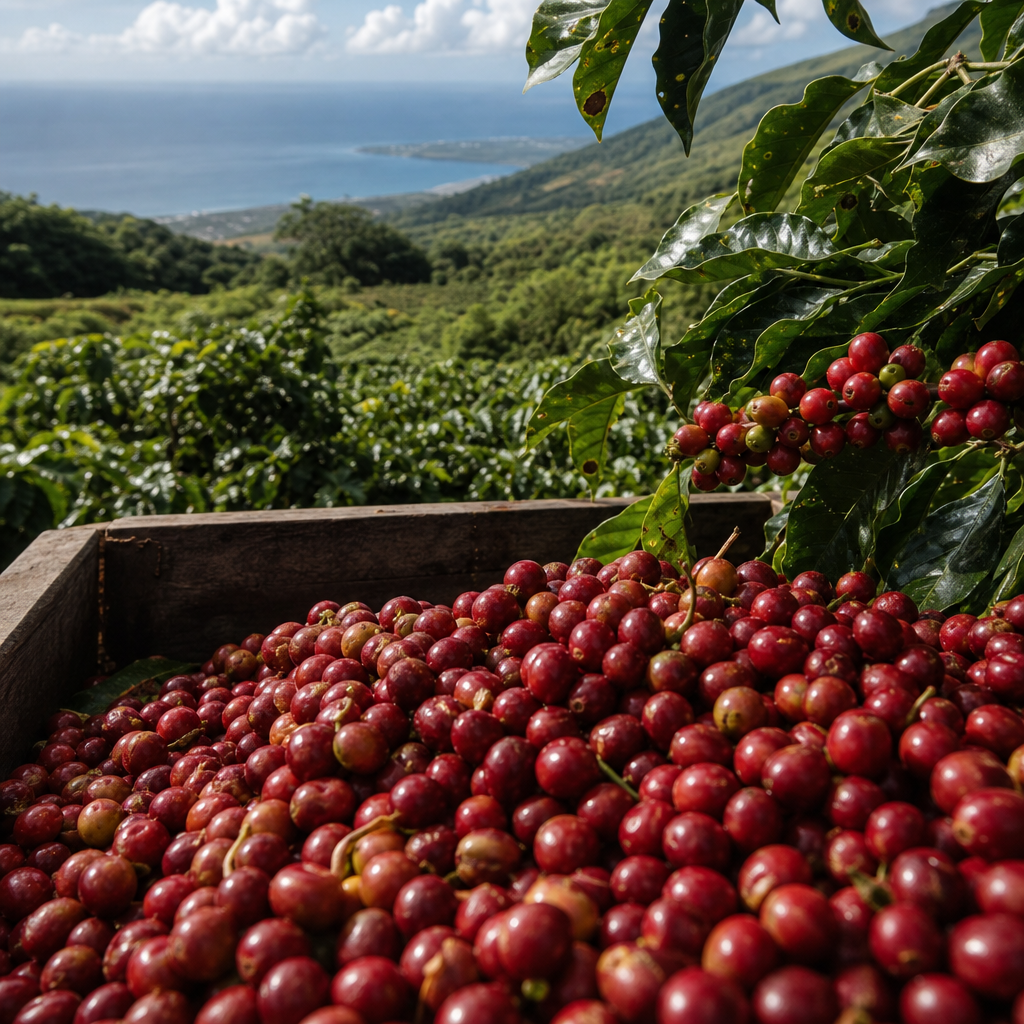
Nevis’ coffee industry is small in scale but significant in promise, linking hillside farms, tourism businesses, regional trade, and premium export ambitions into one developing value chain. On a compact Caribbean island better known for beaches, historic estates, and boutique hospitality, coffee may seem like a niche crop. In practice, it represents a practical diversification opportunity within the broader business and investment landscape, especially as global buyers increasingly reward traceability, origin stories, and limited-production specialty lots. When I have evaluated island-based agricultural ventures, coffee consistently stands out because it can connect farming, processing, hospitality, retail, and export branding more effectively than many other crops. For Nevis, that matters because economic resilience depends on building industries that generate value beyond land sales and seasonal visitor spending.
At its simplest, the coffee industry includes cultivation, harvesting, processing, roasting, packaging, branding, distribution, and final retail sales. For Nevis, each stage carries a different opportunity set. Local farms can produce cherries; processors can improve quality through careful washing or natural drying; roasters can capture margin by selling finished beans; hotels and cafés can create steady local demand; and exporters can position Nevis coffee as a rare Caribbean origin. The term value chain is important here because the highest returns rarely come from raw agricultural output alone. They come from controlling quality and story from the farm gate to the final cup.
This topic matters to investors, policymakers, and entrepreneurs because small-island agriculture faces familiar constraints: limited acreage, weather risk, labor shortages, logistics costs, and competition from larger producers. Coffee does not erase those constraints, but it can work within them if the strategy is built around premium positioning rather than commodity volume. Nevis will not compete with Brazil or Vietnam on scale, and it should not try. Its advantage lies in micro-lot production, agro-tourism integration, direct-to-consumer sales, and a differentiated Caribbean identity. As a hub topic within business and investment opportunities, coffee also overlaps with land use, food security, environmental stewardship, and local enterprise development, making it a useful lens through which to assess broader miscellaneous opportunities on the island.
Understanding Nevis’ coffee industry therefore means looking beyond the farm itself. It requires examining geography, market positioning, infrastructure, regulation, climate adaptation, hospitality demand, and export readiness. It also requires realism: success depends on quality control, consistent production, and professional market access, not just an attractive story. For readers exploring miscellaneous investment themes in Nevis, coffee is one of the clearest examples of how a modest local industry can create layered commercial value when managed correctly.
How Coffee Fits Nevis’ Agricultural and Business Landscape
Nevis has natural features that can support coffee cultivation, including volcanic soils, elevated interior zones, and a climate capable of sustaining perennial crops. Arabica coffee generally performs best in well-drained soils and moderate highland conditions, while robusta tolerates lower elevations and higher heat but usually attracts lower specialty pricing. On Nevis, the commercial case is stronger for quality-focused arabica grown in suitable microclimates, though varietal trials are essential because wind exposure, rainfall distribution, and disease pressure vary across the island. In agricultural planning, site selection is decisive. A plot with the wrong slope, inadequate shade management, or poor access to water can undermine quality long before harvest.
From a business perspective, coffee aligns with Nevis because it can be developed at several scales. A small estate can supply a farm café or boutique hotel. A cooperative model can aggregate cherries from multiple growers for central processing. A vertically integrated operator can control nursery stock, cultivation, processing, roasting, and branded sales. I have seen island ventures perform best when they begin with one profitable channel, often hospitality or direct retail, and expand into export only after establishing production discipline. That sequencing reduces the common mistake of chasing international buyers before mastering consistency at home.
Coffee also fits the island’s premium tourism profile. Visitors increasingly seek local products with provenance, and coffee offers a direct sensory experience that can be incorporated into tastings, estate tours, gift shop sales, and restaurant programming. A hotel serving identifiable Nevis-grown coffee strengthens its own brand while supporting local agriculture. That relationship is commercially useful because tourism can absorb early production volumes that are too small for major export contracts but large enough to sustain a young industry.
The Farm Level: Cultivation, Harvesting, and Quality Foundations
The economics of coffee begin in the field. Healthy seedlings, appropriate varietals, shade management, pruning cycles, soil fertility, and pest control all influence cup quality and yield. Coffee leaf rust, berry borer, and erratic rainfall can damage output if monitoring is weak. Good producers do not rely on guesswork; they use soil testing, field mapping, pruning schedules, and harvest records. Standards from organizations such as the Specialty Coffee Association and agronomic guidance from the Food and Agriculture Organization help frame best practice, even though local adaptation is always necessary.
Harvesting is especially important for a premium origin. Coffee cherries do not ripen uniformly, so selective picking is better than strip harvesting when quality is the priority. That raises labor costs but improves sweetness, density, and consistency in the final cup. On a small island, labor availability can become a binding constraint, which means managers must weigh acreage expansion against realistic harvest capacity. In practical terms, a farm that can carefully pick five acres may be more profitable than one that poorly manages fifteen.
Post-harvest discipline starts immediately. Cherries should be processed quickly to avoid unwanted fermentation. Washed processing can create clarity and brightness when water and equipment are well managed. Natural processing can reduce water demand and generate fruit-forward flavor profiles, but it requires strict drying control to prevent mold and defects. Honey processing sits between the two. The right method depends on climate, labor, target flavor profile, and available infrastructure. Investors often underestimate this stage, yet processing decisions frequently determine whether coffee sells as a premium specialty product or a generic local novelty.
| Stage | Key Requirement | Commercial Impact |
|---|---|---|
| Cultivation | Suitable varietals, soil care, shade and pruning | Higher yields and better bean development |
| Harvesting | Selective picking of ripe cherries | Improved cup quality and fewer defects |
| Processing | Controlled fermentation and drying | Premium pricing potential |
| Roasting | Profile consistency and batch control | Brand credibility in local and export markets |
| Sales | Traceability, packaging, and distribution | Stronger margins and repeat demand |
Processing, Roasting, and Building a Distinct Nevis Origin
Once green coffee is stable, value creation shifts to milling, roasting, packaging, and presentation. On small islands, centralizing certain functions can improve efficiency. Shared depulping equipment, raised drying beds, moisture meters, and storage protocols reduce inconsistency between farms. Green coffee should generally be dried to a stable moisture range near industry norms before storage, then protected from heat and humidity. Poor storage can erase months of good farm management.
Roasting offers Nevis one of its strongest commercial levers because it allows local businesses to move beyond commodity pricing. A roasted, branded bag sold to a hotel gift shop or online customer captures far more margin than unroasted beans sold in bulk. However, roasting is technical work. Time, temperature, airflow, development ratio, and batch size all affect flavor. Consistent roasting requires profiling software, calibrated equipment, cupping routines, and recordkeeping. Tools from manufacturers such as Probat, Diedrich, and Cropster are common in serious operations because they support repeatability, which buyers notice quickly.
Origin building is not just marketing language. It depends on sensory distinctiveness, documented production methods, and a coherent narrative tied to place. Nevis can credibly emphasize volcanic soils, limited production, estate-scale traceability, and close integration with hospitality experiences. What it should avoid is making sweeping claims before quality data exists. Credibility is stronger when roasters publish harvest dates, process methods, altitude ranges, varietals, and tasting notes grounded in actual cupping results. For example, if a lot presents citrus acidity, cocoa sweetness, and medium body after washed processing, that should be described plainly rather than exaggerated into generic luxury language.
Local Demand, Tourism Linkages, and Retail Pathways
For emerging coffee regions, the domestic and visitor markets often provide the first stable revenue. Nevis is well positioned here because hotels, villas, restaurants, beach clubs, and specialty cafés can all feature locally roasted coffee. This creates a short supply chain with clear storytelling. A guest who tours a farm in the morning and drinks the same coffee at breakfast the next day is more likely to buy packaged beans or reorder online after returning home. That customer journey is far more valuable than a one-time cup sale.
Retail strategy should match production reality. If annual output is modest, the smartest channels are high-margin, low-volume outlets: resort boutiques, airport retail, curated grocery shelves, direct subscriptions, and e-commerce. Wholesale to large supermarkets may sound attractive but often compresses margin and requires inventory depth that small producers cannot sustain. I have seen too many agricultural brands dilute themselves by accepting broad distribution before they can ensure consistent supply, packaging, and shelf-life management.
Tourism linkages can also extend into experiences. Coffee tastings, roasting demonstrations, plantation walks, and pairing events with pastries or local chocolate transform a crop into an attraction. This matters economically because experiential revenue can smooth the seasonality and agricultural risk inherent in farm output. A farm that earns from tours, beverages, merchandise, and event hosting is less exposed than one dependent solely on bean sales.
Export Potential, Investment Needs, and Practical Constraints
Global markets reward scarcity when scarcity is paired with quality and reliability. That is the export opening for Nevis coffee. Specialty buyers in the United States, Canada, the United Kingdom, and parts of Europe regularly purchase micro-lots from small origins if those lots are clean, well documented, and logistically manageable. Direct trade relationships can be especially effective because they allow buyers to understand the context of production and accept smaller volumes than mainstream import channels.
Still, export is not simple. Packaging, labeling, phytosanitary compliance, shipping schedules, moisture stability, and customs paperwork must all be handled professionally. Freight costs from small islands are structurally high, which means export margins can disappear if product is undifferentiated. Investors should model the full delivered cost, not just farmgate assumptions. Capital needs may include nurseries, irrigation, pulping equipment, solar or mechanical dryers, storage, roasting systems, packaging lines, quality-control labs, and brand development. Working capital is equally important because coffee revenue is seasonal while labor and maintenance costs continue year-round.
Climate risk is the main long-term constraint. Rising temperatures, extreme rainfall events, drought cycles, and storm exposure can all reduce yield and quality. Adaptation measures such as shade trees, water capture, erosion control, windbreaks, disease-resistant varietals, and diversified farm income are therefore not optional extras; they are part of the business model. Public policy can help through extension services, land-use planning, small-business financing, and export facilitation. Private operators, meanwhile, need disciplined execution. The opportunity in Nevis’ coffee industry is real, but it belongs to businesses willing to treat coffee as a technical, branded, and logistics-intensive sector rather than a romantic side venture.
Nevis’ coffee industry demonstrates how a small island can convert limited agricultural scale into premium economic value when farming, processing, branding, tourism, and export strategy work together. The central lesson is straightforward: coffee is most viable in Nevis when it is positioned as a high-quality, traceable, experience-rich origin, not as a bulk commodity. Strong cultivation practices create the raw potential, but processing discipline, roasting consistency, and professional route-to-market decisions determine whether that potential becomes profit.
For investors, the most attractive opportunities usually sit where multiple revenue streams meet. A farm linked to hospitality, retail, and online sales is stronger than a farm selling only raw cherries. A roasting brand with dependable local supply and visitor exposure is stronger than one built on imported coffee alone. A cooperative processing model may outperform fragmented smallholder production if it improves quality control and reduces equipment costs. These are practical choices, not abstract theories, and they shape whether the industry remains a novelty or matures into a durable niche sector.
As a hub within miscellaneous business and investment opportunities, coffee also points to a wider truth about Nevis: the island’s best prospects often come from combining local assets rather than copying larger economies. Land, story, tourism, and craftsmanship can create defensible value when managed with rigor. If you are assessing opportunities in Nevis, put coffee on the shortlist, then evaluate it through the full value chain: farm readiness, processing capacity, hospitality partnerships, export feasibility, and climate resilience. That is where the real market potential becomes visible.
Frequently Asked Questions
1. Why is coffee becoming important to Nevis’ economy if the island is still a relatively small producer?
Coffee matters to Nevis not because it is a mass-volume crop, but because it fits the island’s broader economic reality. Nevis has limited land, a premium tourism profile, and growing interest in business models that create more value from smaller-scale production. In that setting, coffee offers a realistic diversification opportunity. It can connect agriculture, hospitality, retail, branding, and export development in ways that are difficult for many other crops to match. Rather than competing with large coffee-producing countries on sheer output, Nevis can position itself around quality, traceability, story, and exclusivity.
This is especially significant because the global coffee market increasingly rewards origin identity and supply-chain transparency. Buyers in premium and specialty segments want to know where beans were grown, how they were processed, who produced them, and what makes the flavor profile distinctive. That plays to Nevis’ strengths. A small island with identifiable farms, controlled production, and a tourism-driven brand can often communicate authenticity more effectively than a larger, less differentiated origin. For investors, producers, and hospitality businesses, that creates room to build a high-margin product rather than a commodity business.
Coffee also supports local economic linkages. Farmers can supply beans to boutique hotels, restaurants, cafés, and gift shops, while processors and roasters can capture more of the value chain on-island. In practical terms, this means coffee can generate income not only at the farm level but also in packaging, branding, culinary experiences, agritourism, and export sales. Even if production remains modest, the combined impact can be meaningful because each stage of the chain adds value. That is why coffee is increasingly viewed as a strategic niche within Nevis’ wider development and investment landscape.
2. What makes Nevisian coffee appealing to premium buyers in regional and global markets?
The strongest appeal of Nevisian coffee lies in differentiation. Premium buyers are rarely looking for anonymous beans; they are looking for quality with a credible story behind it. Nevis can offer a compelling combination of island terroir, limited production, hillside cultivation, and close farm-level traceability. Those factors can make the coffee attractive to specialty roasters, upscale hospitality groups, gourmet retailers, and consumers who are willing to pay more for rare and carefully sourced products.
Another advantage is the island’s brand environment. Nevis already has international recognition tied to boutique travel, heritage estates, upscale accommodations, and a refined Caribbean identity. Coffee can benefit from that existing brand equity. When marketed effectively, it can be presented not just as a beverage input but as part of a larger lifestyle and destination story. That matters in premium markets, where packaging, provenance, and customer experience are often nearly as important as the bean itself. A coffee associated with an elegant island destination and a transparent farm-to-cup narrative can stand out in a crowded market.
Traceability is also central to the opportunity. As the article suggests, global buyers increasingly reward transparent supply chains. Because Nevis’ coffee industry is small, it has the potential to document production with unusual precision. Buyers may be able to identify specific farms, processing methods, harvest periods, and quality controls. That level of detail builds trust, supports consistent branding, and can justify premium pricing. In addition, small-lot coffees often appeal to roasters who want exclusive releases or limited-edition offerings. In short, Nevisian coffee is not likely to win on volume, but it has a clear path to winning on scarcity, quality, identity, and market positioning.
3. How does coffee connect local farms with tourism businesses on Nevis?
Coffee is especially valuable in Nevis because it can move beyond agriculture and become part of the visitor economy. Hotels, villas, restaurants, cafés, and specialty shops are always looking for ways to offer guests something distinctive and local. A Nevis-grown coffee served at breakfast, featured in welcome baskets, sold in gift packaging, or included in tasting experiences gives tourism businesses a product with both practical use and strong storytelling value. Instead of importing all of their coffee offerings, hospitality operators can incorporate a local product that reinforces the island’s identity and improves the guest experience.
This creates a mutually beneficial relationship. Farmers gain a nearby premium market, while tourism businesses gain a high-quality local product that helps differentiate their service. For example, a boutique hotel can highlight estate-grown or locally roasted coffee as part of its brand promise, emphasizing freshness, sustainability, and support for the local economy. Restaurants and cafés can create signature drinks around Nevisian beans. Retail outlets can package coffee as a premium souvenir that travelers take home, extending the island’s brand presence beyond the visit itself.
There is also strong potential for agritourism. Coffee farm visits, roasting demonstrations, tastings, and origin-focused culinary experiences can turn the crop into an attraction in its own right. On an island known for heritage and boutique experiences, that kind of integration makes strategic sense. It allows coffee to generate value not only as an agricultural product but also as an educational and experiential offering. In effect, tourism can help build demand for coffee, and coffee can enrich the tourism product. That kind of cross-sector linkage is one reason the industry has promise even at a small scale.
4. What are the main challenges facing Nevis’ coffee industry as it tries to grow from local production to export markets?
The most obvious challenge is scale. Nevis is a compact island with finite agricultural land, which means coffee production will likely remain relatively limited. That restricts the ability to serve large commodity buyers and makes consistency of supply especially important. Premium markets can be more forgiving of low volume, but they are often more demanding when it comes to quality, processing standards, and reliability. If buyers are paying a premium, they expect a product that is carefully managed from harvest through export.
Infrastructure and value-chain development are also critical. Producing coffee cherries is only one part of the business. To compete effectively, the industry needs strong post-harvest systems, including processing, drying, storage, roasting, packaging, and logistics. Any weak point can reduce quality or shrink margins. For a developing coffee sector, investments in training, equipment, quality control, and market access can be just as important as farm expansion. This is particularly true for specialty coffee, where small defects can have an outsized impact on buyer perception and final pricing.
Another challenge is market positioning. Nevis must be clear about where it wants to compete. If it tries to enter mainstream coffee channels on price, it will face overwhelming competition from much larger producers. Its more credible route is to focus on premium, niche, and story-driven segments. That requires disciplined branding, traceability, and often certifications or documented sustainability practices, depending on the target buyer. Export logistics can also be complex for a small island, with costs, shipping schedules, and compliance requirements affecting competitiveness. The opportunity is real, but success depends on treating coffee as a carefully designed premium value chain rather than simply another crop.
5. What would long-term success look like for Nevis’ coffee industry?
Long-term success would not necessarily mean Nevis becoming a major coffee exporter by global standards. A more realistic and potentially more profitable outcome would be a well-defined premium coffee sector with strong local integration and selective international reach. In that model, farms produce high-quality beans, local processors and roasters retain more value on-island, tourism businesses feature the coffee prominently, and export partners place Nevisian coffee in specialty channels where rarity and provenance command higher prices. Success would be measured less by tonnage and more by brand strength, margin capture, and the durability of the supporting business ecosystem.
It would also mean building resilience into the agricultural economy. If coffee helps diversify income sources for farmers and creates new commercial opportunities for hospitality, retail, and export businesses, it can contribute to a more balanced development strategy. That is particularly important for island economies, which are often exposed to external shocks. A successful coffee industry would create deeper connections between agriculture and other sectors rather than operating in isolation. The strongest version of this model is one in which local consumption, visitor demand, and export sales reinforce one another.
From an investment perspective, long-term success would likely involve gradual scaling with a strong emphasis on standards. That includes farmer training, quality assurance, traceable sourcing systems, thoughtful branding, and partnerships with buyers who understand the value of limited-origin coffee. Over time, Nevis could become known not as a volume producer, but as a credible boutique origin with a clear identity. That kind of recognition can be commercially powerful. For a small island, the goal is not to mimic the world’s largest coffee industries, but to build a distinctive and resilient one that turns local character into global market value.