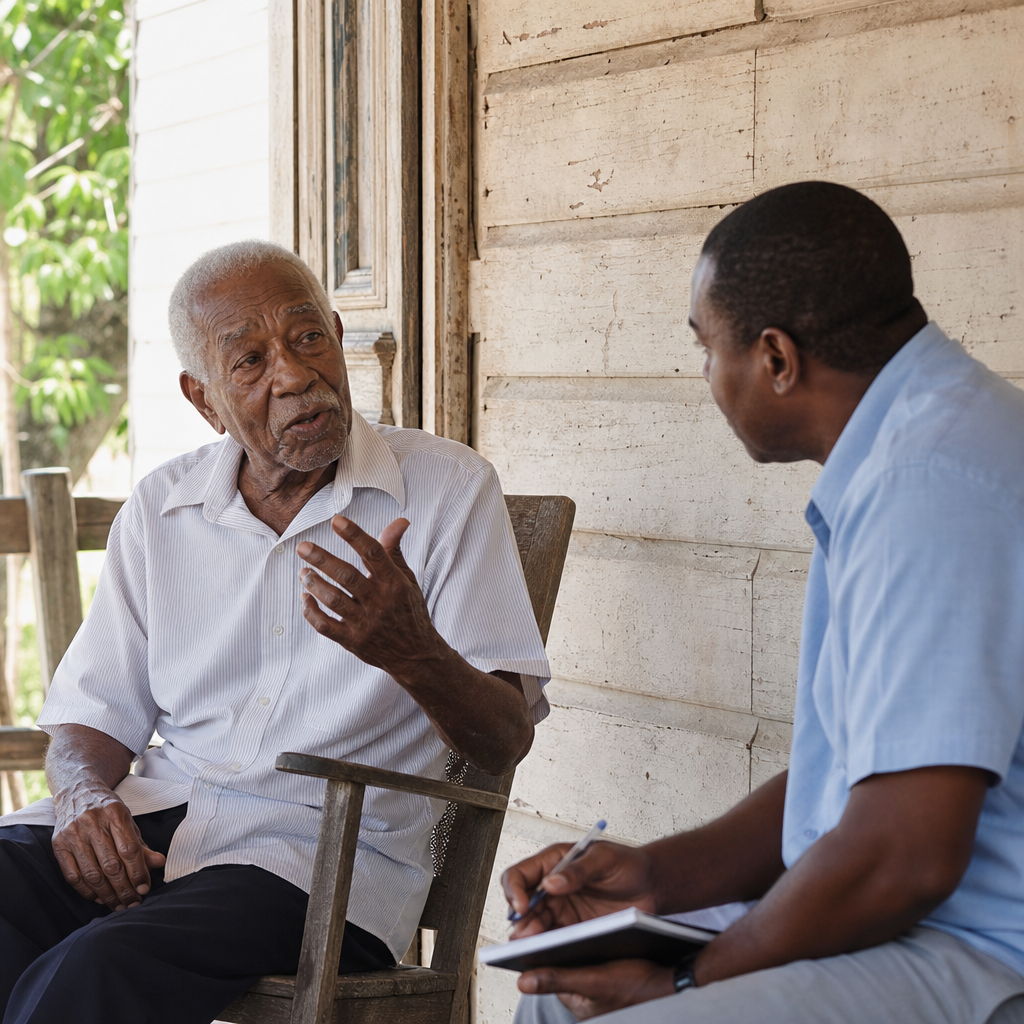
Preserving the oral histories of Nevis is essential because the island’s memory lives not only in archives, churches, and plantation records, but also in the spoken recollections of elders, storytellers, fishermen, teachers, craftsmen, and families whose experiences explain how Nevisian culture has endured and changed. Oral history, in practical terms, is the structured recording of people’s memories about events, customs, work, migration, language, music, foodways, disasters, religion, and everyday life. On Nevis, those memories carry details that formal documents often miss: how villages organized labor after storms, how masquerade traditions shifted across generations, how schoolchildren navigated colonial expectations, how women preserved recipes and healing knowledge, and how migration to St. Kitts, the United Kingdom, the United States, and Canada reshaped family networks. I have worked on cultural documentation projects where one recorded interview clarified more local truth than dozens of written summaries, because people remember tone, gesture, humor, conflict, and practical context. That is why this topic matters. Once a generation passes, unrecorded knowledge disappears with it. For a small island with a layered history of Indigenous presence, colonization, slavery, emancipation, plantation economies, seafaring, education, and diaspora movement, preserving oral histories of Nevis is not a sentimental exercise. It is foundational cultural infrastructure, supporting research, education, tourism interpretation, genealogy, museum practice, and community identity while creating a reliable hub for broader culture and history articles.
What Nevisian oral histories contain and why they are uniquely valuable
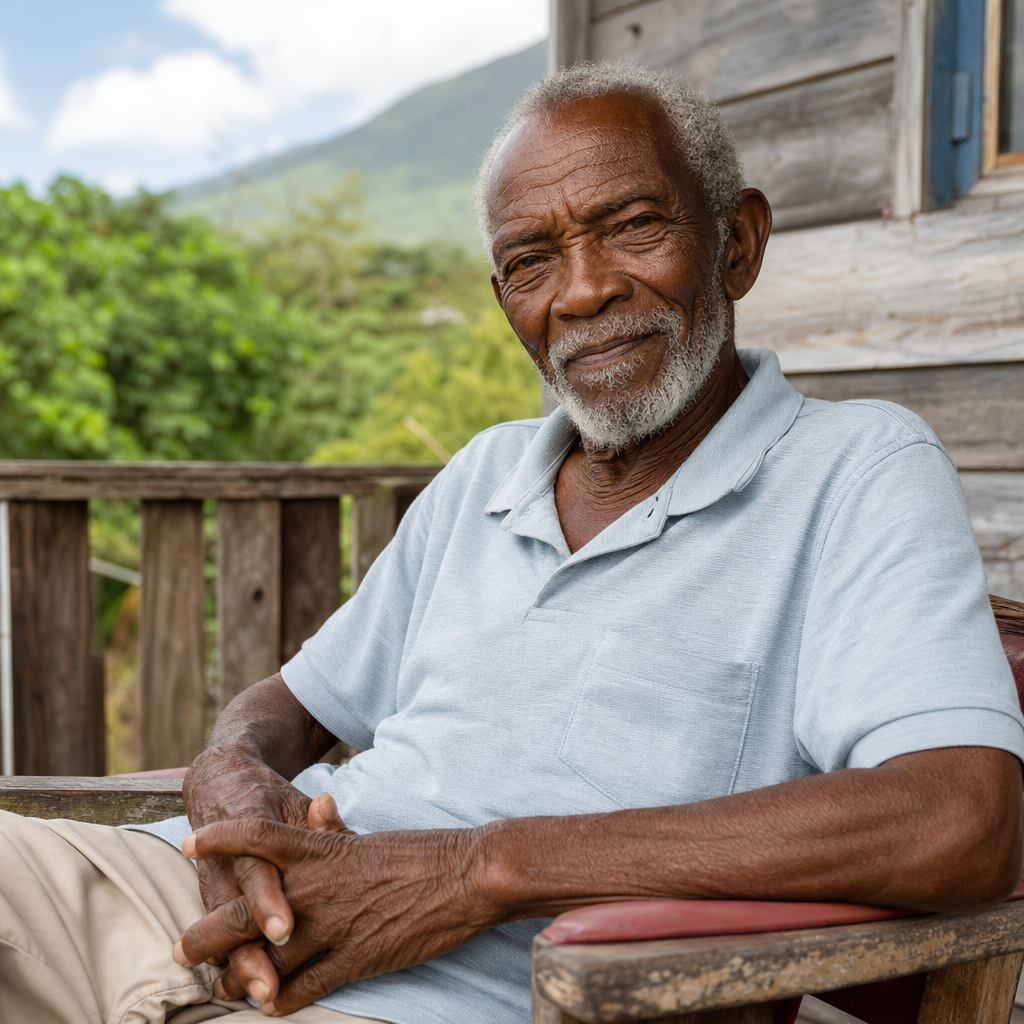
Oral histories in Nevis preserve the lived experience behind major historical themes. Written records can show land transfers, church membership, births, shipping notices, or estate output, but they rarely explain what daily life felt like in Cotton Ground, Gingerland, Newcastle, Jessups, Bath Village, or Charlestown during times of social change. Interviews with elders can reveal how market trading worked before modern retail patterns, which songs accompanied wakes, what proverbs guided child rearing, how hurricane recovery depended on reciprocal labor, and which local place names survived despite official maps. These accounts also capture speech patterns, cadence, and vocabulary that matter to cultural historians and linguists. A phrase used by a fisherman or a market vendor can illuminate class, occupation, family lineage, or cross-island influence in ways no census table can. Oral testimony is especially valuable in post-emancipation history, where official records often center institutions rather than ordinary people. In my experience, the strongest interviews are not broad biographies alone; they are anchored in specific prompts such as first jobs, school routes, church feasts, boat travel, cane work, domestic service, herbal medicine, Carnival, or migration letters read aloud at home. Specificity creates evidence. It lets historians compare memories across narrators and connect them with photographs, estate maps, parish registers, newspaper reports, and museum collections to build a fuller historical record.
Key themes that a hub on preserving the oral histories of Nevis should organize
Because this page functions as a hub under culture and history, it should connect the full range of miscellaneous but important oral history themes rather than treating memory as a single category. The first is family history and genealogy, including naming traditions, kinship networks, adoption within extended families, and migration stories that tie Nevisians to wider Caribbean and overseas communities. The second is labor history: sugar estates, domestic work, teaching, public service, fishing, carpentry, shopkeeping, and tourism. The third is religious life, from Anglican and Methodist traditions to Moravian, Pentecostal, and community revival practices, all of which shaped music, morality, education, and mutual aid. The fourth is expressive culture, including string band music, Big Drum associations where relevant memory survives, Christmas Sports, storytelling, funeral customs, and food heritage. The fifth is environmental memory, especially recollections of droughts, hurricanes, earthquakes, and changing coastlines. The sixth is political and civic memory, covering local government, federation debates, development projects, and changes in health and schooling. A strong oral history hub should also guide readers to related articles on museums, archives, architecture, family names, village histories, folk practices, and heritage tourism, since oral testimony enriches each of those subjects. In plain terms, oral history is the connective tissue linking every other part of Nevisian heritage.
How oral histories should be collected on Nevis
Good oral history collection is disciplined work, not casual chatting with a recorder. The accepted standard used by archives and historical organizations begins with research, informed consent, careful interviewing, accurate metadata, preservation-quality files, and clear access rules. Before any interview, the interviewer should study the narrator’s background, identify key dates and topics, and prepare open-ended questions. “Tell me about your first years teaching in Gingerland” produces richer testimony than “Did you like teaching?” Equipment matters. A dedicated digital audio recorder such as a Zoom H5 or Tascam DR-40X with an external microphone records cleaner sound than a phone alone, especially when documenting elders whose voices may be soft. Video can add value for demonstrations like cooking, craftwork, or music, but audio remains the core format because it is easier to preserve and transcribe. Interviews should be done in a quiet room, ideally with room tone captured, files backed up immediately in multiple locations, and each file named consistently. The following table summarizes a practical workflow used in credible oral history projects.
| Stage | Best practice | Why it matters on Nevis |
|---|---|---|
| Preparation | Research family, village, and topic before recording | Helps interviewers ask informed questions tied to local history |
| Consent | Use written permission forms with access options | Protects narrators and allows future educational use |
| Recording | Capture WAV audio with external microphone | Produces archive-quality files suitable for long-term preservation |
| Metadata | Log date, place, names, keywords, and summary | Makes interviews searchable for schools, museums, and researchers |
| Preservation | Store copies locally, offsite, and in cloud storage | Reduces risk from storms, hardware failure, or accidental deletion |
| Access | Transcribe, index, and set fair usage rules | Ensures the community can actually use the collection |
Ethics, trust, and the problem of memory
Anyone preserving the oral histories of Nevis must handle ethics with seriousness. Memory is invaluable, but it is not perfect. Dates shift, family legends grow, and painful experiences may be partially told or intentionally withheld. That does not make oral history unreliable; it means oral history must be interpreted with care. I have found that the best approach is triangulation: compare an interview with other interviews, documentary records, maps, church registers, school records, newspapers, and material culture. If three former cane workers describe the same harvest routine, and estate records confirm the season, the account gains weight. At the same time, discrepancies are often historically meaningful. They can reveal how status, gender, generation, or politics shape memory. Ethical practice also means respecting narrators’ boundaries. Some families may discuss migration and marriage openly but resist recording disputes over land, illegitimacy, or political conflict. Consent forms should let narrators choose whether an interview is fully public, restricted for a period, or available only for research. Communities are more likely to participate when they trust that their stories will not be extracted, sensationalized, or stripped of context. In small island settings, confidentiality can be difficult because voices and events are recognizable, so interviewers must discuss those realities plainly before recording begins.
Where oral histories can support education, archives, and heritage interpretation
Once collected properly, oral histories become useful across many sectors. In schools, teachers can use short clips to teach students how national and local history connects to real families and familiar villages. A lesson on emancipation becomes more powerful when students hear descendants describe land hunger, church life, apprenticeship memories passed down, or the social meaning of surnames. Museums and heritage sites can use interviews to interpret buildings, forts, sugar estates, and public spaces without relying only on official colonial perspectives. Oral testimony can deepen exhibits at local museums, libraries, and historic houses by adding the voices of women, workers, artisans, and migrants. Tourism benefits as well, but only when interpretation remains respectful. Visitors remember places more vividly when signage, audio guides, or exhibitions include first-person accounts of bathhouse culture, village cricket, market life, or storm recovery. Oral histories also support family research. Diaspora Nevisians often know a grandparent’s nickname and village but not the broader story. Indexed interviews can reconnect them to lineages, occupations, and community traditions. For archives, the key is not merely storing files but making them discoverable. Each interview should have a summary, keywords, place references, and rights information. Without that layer, even excellent recordings become invisible. A true hub page should point readers toward archival methods, transcription standards, local repositories, and related history topics that oral testimony can illuminate.
Current challenges and practical solutions for long-term preservation
The biggest threats to preserving the oral histories of Nevis are delay, weak documentation systems, funding limits, and digital fragility. Delay is the most serious because many knowledge holders are elderly. Every year lost means fewer firsthand accounts of early twentieth-century work, wartime changes, village customs, and migration transitions. The solution is to begin with focused community drives rather than waiting for a perfect island-wide project. Start with one village, one church, one family network, or one occupational theme such as fishing or teaching. Weak documentation is the next problem. Too many recordings are made without names, dates, consent forms, or file backups, which makes them hard to use later. Simple standards solve much of this: interview logs, naming conventions, transcript templates, and duplicate storage. Funding does matter, but oral history is relatively affordable compared with major conservation work. A small grant can buy recorders, memory cards, headphones, storage drives, and transcription support. Partnerships are often the most effective model. Schools, libraries, museums, community groups, churches, and diaspora associations can share labor and expertise. Long-term preservation requires file format discipline. Uncompressed WAV for audio, MP4 or MOV for access copies, PDF/A for documents, and regular checksum verification are proven practices in archival settings. Cloud storage is helpful, but it should never be the only copy, especially in hurricane-prone regions. Preservation works best when technology, policy, and community ownership are built together.
Preserving the oral histories of Nevis is ultimately about keeping the island’s knowledge usable, searchable, and meaningful for future generations. Spoken memory explains how Nevisians lived through change, how communities organized themselves, and how traditions were adapted rather than merely inherited. It fills gaps left by official records and gives proper historical weight to workers, women, elders, migrants, artisans, and village leaders whose experiences shaped the island. For a culture and history hub, this subject belongs at the center because it connects genealogy, education, religion, music, food, architecture, environment, and public memory. The core lessons are straightforward: collect interviews now, follow clear ethical standards, preserve files in durable formats, describe them properly, and make access possible under fair community rules. If you are building a broader resource on Nevis heritage, use oral history as the linking method that brings every other article to life. Start by identifying one elder, one theme, and one recording plan, then build a collection that future Nevisians can trust, study, and hear for themselves. That is how cultural memory survives.
Frequently Asked Questions
Why is preserving the oral histories of Nevis so important?
Preserving the oral histories of Nevis matters because many of the island’s most meaningful records were never written down in full. Official documents can tell us when land changed hands, when churches were founded, or how plantations operated, but they rarely capture how people actually lived, spoke, cooked, worked, worshipped, celebrated, mourned, and adapted over time. Oral histories fill in those gaps by preserving the voices of elders, families, fishermen, teachers, artisans, market vendors, and community leaders whose memories hold the texture of everyday life. These recollections help explain how Nevisian identity was shaped not just by major historical events, but also by resilience, relationships, migration, local knowledge, and shared customs passed from one generation to the next.
They are also essential because memory preserves cultural details that are easy to lose once a generation passes. A recorded conversation may reveal how a village responded to a hurricane, how certain foods were prepared for feast days, how children learned respect and responsibility, how songs and proverbs were used, or how people understood changes in farming, seafaring, religion, and education. These stories do more than entertain; they create a fuller historical record and strengthen cultural continuity. For Nevis, oral history is not a substitute for archives—it is a necessary partner to them, ensuring that the island’s past is remembered in human terms, through the lived experiences of the people who carried it forward.
What kinds of stories and memories should be recorded in a Nevis oral history project?
A strong Nevis oral history project should aim to capture a wide range of experiences, not only dramatic moments or accounts from public figures. Some of the most valuable stories come from ordinary daily life. Interviews should explore family traditions, farming methods, fishing practices, craft skills, local trade, school life, church activities, festivals, food preparation, language use, folk remedies, music, storytelling traditions, and community relationships. Memories of migration are especially important, including stories about leaving Nevis for work or education, maintaining family ties across borders, and returning home with new ideas and experiences. In addition, recollections of major events such as hurricanes, economic shifts, public health crises, and political or social change can help future generations understand how communities adapted under pressure.
It is also important to record knowledge that may seem small in the moment but is historically significant. This includes place names, nicknames, sayings, beliefs, burial customs, wedding practices, seasonal work patterns, and the meanings attached to landscapes, roads, springs, estates, and shoreline areas. A fisherman’s description of old currents, a teacher’s memory of classroom discipline, or an elder’s recollection of how Christmas or Emancipation was observed can reveal aspects of Nevisian life that no formal record captures adequately. The goal should be breadth and depth: documenting not just what happened, but how people understood it, felt about it, and passed meaning along within their families and communities.
How can oral histories be collected in a respectful and reliable way?
Collecting oral histories well requires preparation, patience, and respect. The process should begin with informed consent, meaning interviewees clearly understand who is recording them, why the interview is being done, how it may be used, and whether it will be archived, published, or shared publicly. Interviewers should create a comfortable setting, use open-ended questions, and allow narrators to speak in their own rhythm rather than rushing them toward neat summaries. In Nevis, as anywhere, tone matters. People tend to share richer and more accurate memories when they feel heard, not interrogated. Good interviewers ask follow-up questions gently, clarify names and dates when possible, and avoid correcting or challenging a narrator in a way that shuts down trust.
Reliability comes from careful documentation rather than expecting every memory to function like a perfect timeline. Human memory is interpretive, and that is part of what makes oral history valuable. Researchers should record the date, place, interviewer name, and biographical details of the narrator; preserve high-quality audio or video files; produce transcripts; and, when appropriate, compare key details with photographs, newspapers, church records, maps, family papers, and other interviews. Differences between accounts should not automatically be treated as flaws. They can reveal variations in perspective, status, generation, or community experience. A responsible oral history project in Nevis should honor the narrator’s voice while also preserving enough context for future researchers, students, and families to understand how and why each story was told.
What challenges threaten the preservation of oral histories in Nevis?
One of the greatest challenges is time. Elders who hold deep memories of earlier ways of life may pass away before their knowledge is recorded, and with them can disappear dialect expressions, local place-based knowledge, family histories, and firsthand accounts of social change. Another major challenge is the mistaken idea that only written documents are “real” history. When communities undervalue spoken memory, important testimonies may remain unrecorded in homes, at kitchensides, on porches, at the seaside, or after church gatherings, where some of the richest historical material is often shared informally. There are also practical barriers, including limited funding, lack of trained interviewers, inadequate recording equipment, poor long-term digital storage, and the difficulty of organizing and cataloging interviews so they remain accessible over time.
Additional challenges include ethical concerns and community trust. Some individuals may be hesitant to speak openly about sensitive subjects such as family conflict, inequality, migration hardship, labor conditions, or painful historical experiences. Others may worry that their words will be taken out of context, commercialized, or used without permission. Language and expression can also present challenges if recordings are transcribed without sensitivity to local speech patterns and meanings. To overcome these risks, preservation efforts in Nevis need clear ethical standards, local involvement, community-based partnerships, and long-term planning for access and care. Oral history is not just about making recordings; it is about building a trustworthy system that respects narrators, protects cultural meaning, and ensures the material remains usable for future generations.
How can families, schools, and community groups help preserve the oral histories of Nevis?
Families, schools, and community groups can play a decisive role because oral history preservation works best when it is part of everyday cultural life rather than a one-time heritage project. Families can begin by recording conversations with older relatives about childhood, courtship, work, migration, church life, recipes, songs, proverbs, local events, and family origins. Even simple recordings made on a phone can become invaluable if they are labeled clearly with names, dates, locations, and topics. Families can also preserve photographs, letters, recipe books, funeral programs, and other personal materials alongside recorded memories to create richer context. What matters most is starting early, asking thoughtful questions, and storing materials carefully so they can be passed on rather than lost.
Schools can integrate oral history into local education by teaching students how to conduct interviews, transcribe recordings, summarize themes, and connect spoken memories with maps, archives, and community history. This not only preserves valuable knowledge but also helps young people develop research skills and a stronger relationship to Nevisian heritage. Community groups, churches, heritage organizations, libraries, and cultural centers can support larger efforts by hosting recording days, training volunteers, creating digital archives, and organizing public programs where stories are shared responsibly. The most effective approach is collaborative: elders provide memory, younger generations provide energy and technical skills, and institutions provide structure and preservation. When that happens, oral history becomes a living bridge between past and future, helping Nevis protect its cultural inheritance in a way that is personal, accurate, and enduring.