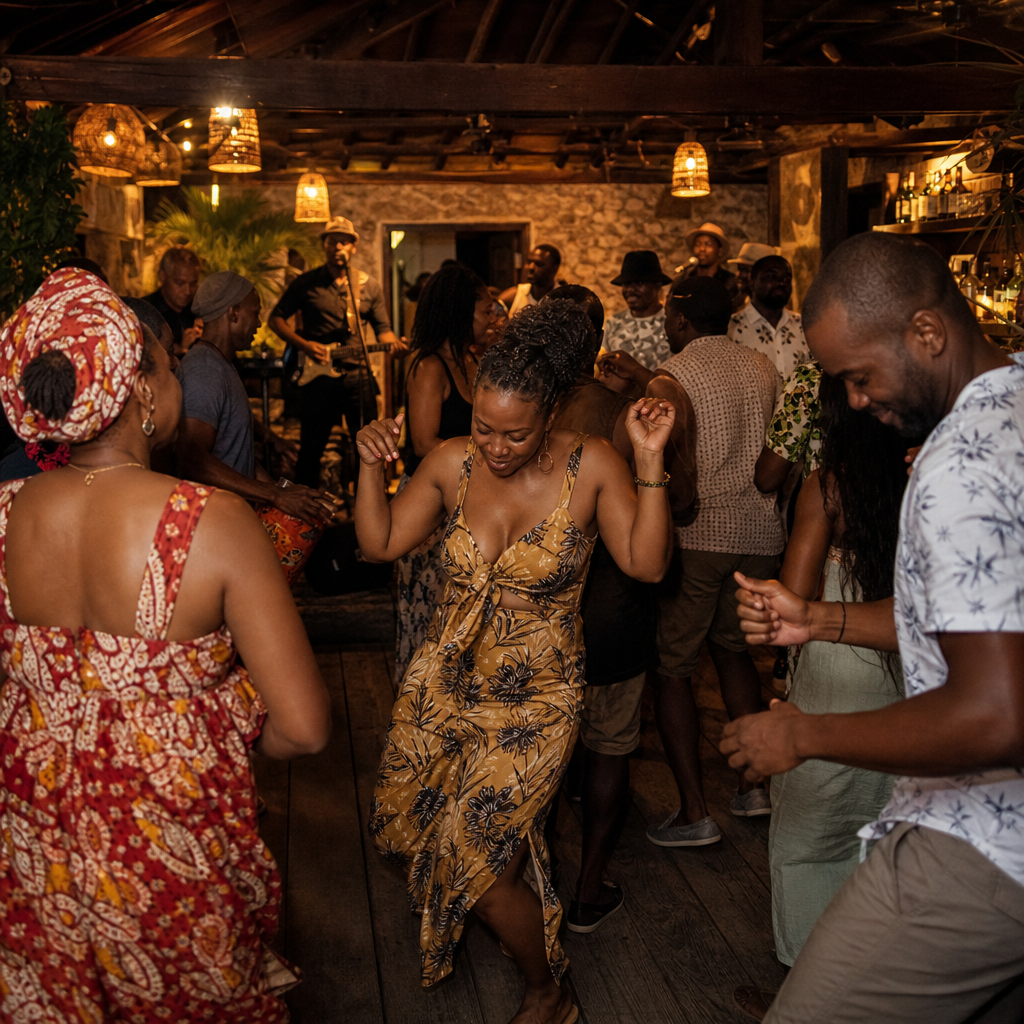
Nevisian women have shaped the island’s culture, economy, politics, and memory for centuries, yet their contributions are often scattered across plantation records, church archives, oral histories, and family stories rather than gathered in one clear narrative. In the context of Nevis history, “Nevisian women” includes free and enslaved women, market traders, teachers, nurses, civil servants, artists, activists, and elected leaders whose labor and leadership influenced daily life as much as headline events. A pioneer is not only the first person to hold office; on Nevis, pioneers also include women who sustained households through drought, migration, emancipation, federation, and modernization. A leader is similarly broader than a public official. Leadership appears in village mutual aid, church organizations, schoolrooms, health campaigns, and cultural preservation. This matters because understanding Nevis without women produces a distorted historical record. It hides how land, family, religion, and work were actually organized and how communities survived structural inequality. It also weakens how younger Nevisians interpret citizenship today. When I have reviewed Caribbean local histories with teachers and heritage groups, the same gap appears repeatedly: women are everywhere in the evidence but underrepresented in the summary. A hub article on Nevisian women in history should therefore do two jobs at once. It should introduce major figures and themes for readers beginning their research, and it should point toward the wider networks that connect biographies to slavery, emancipation, education, migration, healthcare, entrepreneurship, and political change. That fuller view restores proportion. It shows that Nevisian women were not marginal participants in history; they were central actors in building the island’s institutions, preserving its identity, and expanding what leadership could mean across generations.
From Enslavement to Emancipation: Women Who Held Communities Together
Any serious account of Nevisian women in history must begin in the plantation era. From the seventeenth century, Nevis developed as a sugar colony structured by enslaved labor, and women formed an indispensable part of that system. They worked in cane fields, provision grounds, domestic service, livestock care, food preparation, and childrearing, often under overlapping demands that blurred productive and reproductive labor. British colonial records usually reduced them to property categories, but those same records reveal their economic importance through valuations, punishment logs, and estate inventories. Archaeology and comparative Caribbean scholarship add essential context: enslaved women frequently maintained small-scale food production and market exchange that helped families survive when plantation rations failed. On Nevis, as elsewhere in the Leewards, these survival networks mattered because sugar wealth concentrated power while exposing ordinary people to famine risk, disease, and market shocks.
Emancipation in 1834, followed by apprenticeship and full freedom in 1838, did not suddenly remove inequality. Women leaving slavery entered a constrained labor market with low wages, limited land access, and continued dependence on former estates. Yet they used every available space to assert autonomy. Oral traditions across the Eastern Caribbean consistently emphasize women as organizers of households, keepers of kinship ties, and negotiators of informal credit. That pattern fits Nevis closely. Female-headed households became significant social units, not because men were absent in some simplistic sense, but because women often managed budgets, child welfare, food security, and religious life. Their authority could be quiet and private, yet it had public consequences. Villages functioned because women coordinated care, exchange, and discipline long before the colonial state provided meaningful social services.
Education, Faith, and Professional Service
In the late nineteenth and early twentieth centuries, one of the clearest paths to influence for Nevisian women was education. Schools linked literacy to social mobility, clerical work, teacher training, and respectability, while churches provided many of the institutional spaces in which women could organize. Anglican, Methodist, Moravian, and other Christian traditions shaped girls’ schooling and women’s associations, sometimes reinforcing conservative gender norms, but also creating networks for leadership, fundraising, and public speaking. Women teachers became especially important local authorities. In small communities, a teacher was never only a classroom instructor. She often acted as counselor, mediator, event organizer, and the person who taught generations how to read official documents, write letters abroad, or prepare for examinations.
Nursing and midwifery formed another sphere of practical leadership. On an island where access to doctors could be limited by geography, income, and infrastructure, nurses and community health workers often represented the real front line of care. Women managed maternal health, infectious disease response, elder care, and the everyday medical advice that kept families functioning. Their impact rarely appears in celebratory political histories, yet public health outcomes depend heavily on this kind of local authority. The Caribbean experience during outbreaks of yaws, influenza, and later chronic disease management makes that plain. In Nevis, women in health professions translated formal training into trusted neighborhood service. That combination of skill and social credibility is a recurring historical pattern: institutions may confer titles, but communities decide who truly leads.
Political Trailblazers and Public Leadership
Modern Nevisian political history cannot be told without women who moved from community leadership into formal office. The most widely recognized figure is Josephine Estelle “Joan” Wilkin, the first woman elected to the Nevis Island Assembly. Her election was historically significant not only because it marked a first, but because it demonstrated that women’s long-standing influence in education, religion, and civic life could translate into constitutional representation. Wilkin also served in roles connected to social development and public administration, showing how female leadership often enters government through practical portfolios that directly affect daily life. That route matters. It challenges the mistaken idea that political significance exists only in top executive office. On small islands, influence is often measured through policy implementation, constituency work, and institution building.
Other women have strengthened public life through the civil service, legal administration, electoral management, and diplomacy within the wider Federation of Saint Kitts and Nevis. Their names are not always as widely circulated as male political figures, but their roles have been indispensable in maintaining state continuity. In my experience reviewing local governance histories, this is where many readers underestimate women’s impact: they look for dramatic campaign moments and miss the administrators, permanent secretaries, clerks, and policy specialists who make governance operational. On Nevis, where institutions are small and personal reputation matters, competence is unusually visible. Women who deliver reliable public service build legitimacy not through slogans but through outcomes.
| Area of leadership | How Nevisian women shaped it | Why it matters historically |
|---|---|---|
| Education | Teaching, school administration, literacy mentoring | Expanded opportunity and built social mobility across generations |
| Health | Nursing, midwifery, public health outreach | Improved survival, maternal care, and community trust in institutions |
| Politics | Elected office, constituency service, policy implementation | Broadened representation and normalized women in public decision-making |
| Culture | Folk traditions, church music, storytelling, festival participation | Protected identity and transmitted historical memory |
| Economy | Market trading, small business, remittance management | Stabilized households and diversified income beyond plantation work |
Economic Builders: Traders, Entrepreneurs, and Household Strategists
Much of Nevisian women’s historical leadership is economic, even when it was not labeled that way. Market women, seamstresses, food vendors, domestic workers, and small shop operators kept money circulating in both town and village life. On islands with limited industrial diversification, these forms of enterprise are not minor. They are the connective tissue of the local economy. Women sold produce, processed foods, handmade goods, and imported necessities, often balancing paid work with unpaid care obligations. They also managed remittances from relatives abroad, particularly during the twentieth century, when migration to Saint Kitts, the wider Caribbean, the United Kingdom, Canada, and the United States reshaped household finances. Managing a remittance economy requires planning, trust, and negotiation. In practice, many women became household financial strategists long before development planners used that language.
Tourism and service-sector expansion added new opportunities and new strains. As Nevis developed its reputation for hospitality, women found work in hotels, guest services, administration, food production, and crafts, while also bearing the pressure of preserving family life amid changing labor schedules. The economic history here is not a simple success story. Tourism can create jobs, but it can also intensify land pressure and dependency on external demand. The women who navigated this shift did so with realism. They diversified income where possible, invested in children’s education, and maintained community obligations that purely market measures ignore. Their contribution should be read as both entrepreneurial and stabilizing. Without women’s budgeting, savings practices, and informal credit networks, many Nevisian households would have been far more vulnerable to downturns, hurricanes, and sudden unemployment.
Culture, Memory, and the Work of Preservation
Nevisian women have also been custodians of culture in ways that formal archives rarely capture well. Family recipes, funeral customs, hymn traditions, proverbs, herbal knowledge, and storytelling practices have often been passed through female lines. This kind of transmission is historical work. It preserves vocabulary, moral frameworks, and place-based knowledge that would otherwise disappear. Across Nevis, community memory has long depended on women who remembered kinship links, birth histories, migration patterns, and local events with a precision no official registry could match. Researchers who conduct oral history interviews in Caribbean communities quickly learn that elderly women are often the indispensable interpreters of local chronology.
Cultural leadership also appears in performance and public ritual. Women have sustained church choirs, holiday celebrations, school pageants, and commemorative events that give history a lived form. Their role in these settings is not decorative. It is organizational, educational, and intergenerational. A well-run community event requires logistics, rehearsal, fundraising, costume preparation, food coordination, and protocol management, all areas in which women have often been central. That work shapes how an island understands itself. Heritage is not preserved only in museums or government declarations; it survives because people repeat it in disciplined, meaningful ways. Nevisian women have done that repeatedly, making culture something practiced rather than merely admired.
Why Their Stories Matter Now
The history of Nevisian women matters today because it clarifies how the island actually developed and because it offers a better model of leadership for the future. Their stories show that power is not only held in office but exercised through teaching, caregiving, enterprise, advocacy, and memory. They also reveal the limits women faced: unequal access to land, underrecognition in official archives, and the routine minimization of work associated with home and community. A balanced history should acknowledge both achievement and constraint. That balance makes the accomplishments more credible, not less impressive.
As a hub for the broader miscellaneous subtopic within Culture and History, this overview points readers toward several essential lines of further study: biographies of Nevisian women in politics, the role of women after emancipation, women in education and nursing, market women and migration, and the preservation of oral tradition. Taken together, these themes prove a simple point. Nevisian women were pioneers and leaders not occasionally, but consistently. They helped build institutions, protect families, and carry the island’s identity across generations. If you are exploring Nevis history, follow their stories next. They lead to the clearest understanding of how the island endured, adapted, and grew.
Frequently Asked Questions
Who are considered Nevisian women in history, and why is that definition so broad?
When historians talk about Nevisian women in history, they are not referring only to a small group of famous public figures. The term is much broader and more accurate when it includes free and enslaved women, rural laborers, domestic workers, market vendors, midwives, teachers, nurses, churchwomen, civil servants, artists, entrepreneurs, activists, and elected leaders. That wider definition matters because Nevis was shaped not just by formal officeholders, but by women whose work sustained households, communities, and institutions across generations. On a small island, influence often operated through family networks, churches, schools, trading relationships, and mutual aid rather than through highly visible titles alone.
This broad definition is also essential because the historical record is uneven. Men in elite political or commercial roles were more likely to appear in official documents, while many women appear only in fragments: plantation ledgers, baptismal registers, marriage records, probate files, school reports, newspaper notices, oral testimony, and family memory. If we define historical importance too narrowly, we repeat the silences already built into colonial archives. A fuller understanding of Nevisian history recognizes that women shaped the island’s economy, culture, and social order whether or not their names were preserved in formal state records. In that sense, the history of Nevisian women is not a side story; it is central to understanding how Nevis itself developed.
How did Nevisian women influence the island’s economy and everyday survival?
Nevisian women were indispensable to the island’s economy, especially when economic life is understood beyond plantation ownership and official trade statistics. Enslaved women performed brutal agricultural labor, domestic service, skilled work, childcare, and food preparation under slavery, making plantation society function even as they endured exploitation and coercion. After emancipation, many women continued to support households through wage labor, provision farming, laundering, sewing, domestic work, huckstering, market trading, and small-scale entrepreneurship. Their work often existed in the informal economy, but it was no less important than formal employment. In many cases, women’s earnings and management of scarce resources determined whether families could eat, educate children, build homes, or survive periods of hardship.
Women also served as practical economic strategists. They stretched household budgets, preserved food, cultivated kitchen gardens, exchanged goods within community networks, and maintained relationships that helped families endure downturns in agriculture, storms, migration, or limited employment opportunities. Market women, in particular, played a vital role in circulating produce and household goods, connecting rural producers with town consumers and keeping local commerce active. Their labor was rarely glamorous, but it was foundational. To understand Nevis’s economic history honestly, it is necessary to see women not merely as helpers in the background, but as central actors in production, exchange, care work, and survival.
Why are the stories of many important Nevisian women harder to find in traditional history sources?
Many important Nevisian women are harder to locate in traditional histories because the archives themselves were created within systems of power that did not value all lives equally. Colonial administrations, plantation owners, churches, and later state institutions documented what served their priorities, and those priorities often centered property, taxation, labor control, and male authority. As a result, women frequently appear only when their lives intersected with those concerns: a baptism, a marriage, a disciplinary note, a labor record, a court dispute, or an estate inventory. Enslaved women were especially subject to dehumanizing forms of documentation, often recorded as labor units or property rather than as full individuals with voices, families, and ambitions.
That is why reconstructing the history of Nevisian women often requires reading across many kinds of evidence. Oral histories, family stories, grave markers, school registers, church groups, community memory, photographs, newspapers, migration records, and personal papers can all reveal forms of leadership and influence that formal archives overlook. Historians must often piece together patterns rather than rely on a single neat biography. This does not make the history less reliable; it simply means the work of recovering women’s lives requires broader methods and greater care. In fact, these scattered traces often reveal something very important: many women shaped Nevis profoundly without ever being given the official recognition their contributions deserved.
In what ways did Nevisian women show leadership outside formal politics?
Leadership in Nevisian history did not begin and end with elected office, and many women led in ways that were practical, local, and deeply influential. Teachers helped shape generations of young Nevisians through literacy, discipline, values, and aspiration. Nurses and midwives protected community health and often became trusted advisers far beyond the clinic or sickroom. Churchwomen organized charitable work, youth activities, fundraising, and community care, while also preserving moral and cultural traditions. Women heading households made strategic decisions about education, migration, land use, and family finances, often under difficult circumstances. These forms of leadership were sometimes informal, but they carried real authority and lasting effects.
Nevisian women also exercised cultural leadership. Through storytelling, music, craft, cuisine, festival traditions, and family memory, they helped preserve the island’s identity and pass on values across generations. Activists and community organizers advocated for social improvement, better services, stronger schools, and greater dignity for ordinary people. Even women whose names are not widely known may have been central figures in village life, neighborhood networks, or public service. This broader view of leadership is important because it reflects how small societies actually function. Influence is often built through trust, consistency, care, and service, and Nevisian women have long excelled in those roles while also opening doors in more visible fields like government and public administration.
Why does studying the history of Nevisian women matter today?
Studying the history of Nevisian women matters today because it corrects an incomplete picture of the island’s past and gives a more truthful account of how Nevis developed. When women’s experiences are overlooked, history can become distorted, focused too heavily on colonial officials, male political leaders, or plantation elites. Bringing women back into the narrative shows how families were sustained, communities were organized, culture was preserved, and social change took root. It also helps modern readers understand that leadership is not only exercised in parliament, courtrooms, or boardrooms. It is also found in classrooms, markets, clinics, churches, and homes, where many Nevisian women made decisions that shaped everyday life.
This history matters for another reason as well: it provides continuity, recognition, and inspiration. For descendants, students, and the wider public, recovering these stories affirms that women were not passive observers of Nevisian history but active makers of it. It encourages stronger research, preservation of oral traditions, and greater care for local archives and family records. It also helps younger generations see that the island’s legacy of resilience, intelligence, creativity, and service includes women from every social background, not only the most publicly celebrated names. In that sense, studying Nevisian women in history is not just about honoring the past. It is about shaping a richer, more inclusive understanding of Nevis in the present and future.