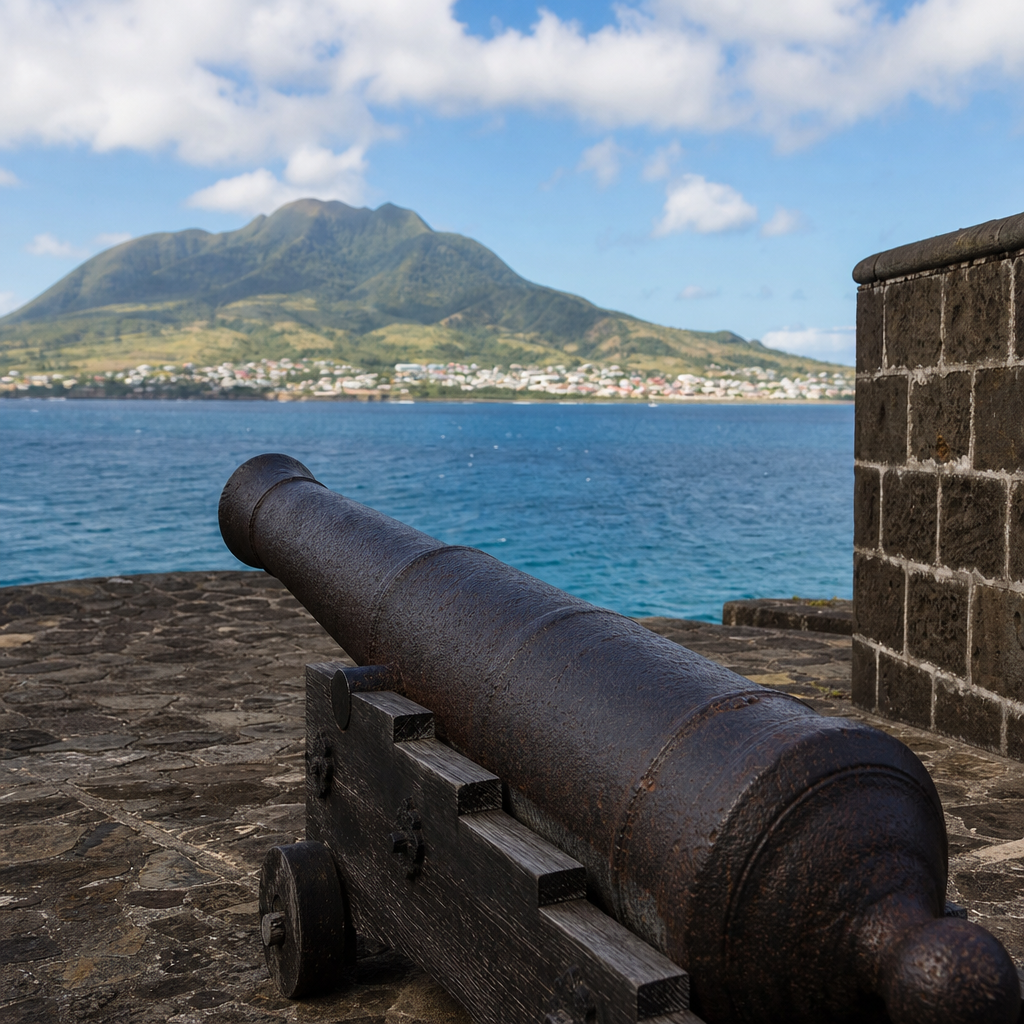
Saint Kitts’ relationship with Europe shaped nearly every part of the island’s political, social, economic, and cultural development. From the first sustained European settlements in the early seventeenth century to the legal institutions, churches, plantation estates, and place names that remain visible today, the island’s history reflects centuries of rivalry, extraction, adaptation, and resistance. To understand Saint Kitts in the broader Culture and History landscape, it helps to define the core terms clearly. “Europe” in this context refers chiefly to the imperial powers that claimed, settled, fought over, administered, and traded through the island, especially England, France, Spain, and, indirectly, other Atlantic actors. “Historical ties” means more than diplomatic links. It includes colonization, religion, law, labor systems, architecture, migration, military conflict, commerce, and memory.
I have found that readers often approach this subject expecting a simple story of colonial influence, but Saint Kitts presents something more layered. The island, known historically as Saint Christopher, was one of the earliest and most consequential English and French colonial footholds in the Caribbean. That made it a testing ground for plantation capitalism and imperial competition long before many neighboring territories were fully developed as colonies. Its experience helps explain wider Caribbean patterns, including land concentration, forced labor, creole culture, and the long afterlife of European institutions. It also shows that local history was never passive. Kalinago communities, enslaved Africans, free people of color, indentured laborers, soldiers, clergy, and merchants all shaped outcomes on the ground.
This matters because modern Saint Kitts and Nevis still carries the imprint of those European ties in its legal system, parliamentary traditions, official language, road networks, surnames, education system, and heritage sites such as Brimstone Hill Fortress National Park. Yet those same ties also produced dispossession, slavery, environmental transformation, and unequal ownership structures whose effects remained visible well into the twentieth century. A serious account must hold both truths at once. This hub article covers the main dimensions of that relationship so readers can connect military history with sugar, religion with governance, and cultural expression with economic change. Seen together, these strands explain why Saint Kitts became both a prized colonial possession and a society defined by survival, synthesis, and historical reckoning.
Early Contact, Settlement, and Imperial Rivalry
Before sustained European settlement, Saint Kitts was inhabited by Indigenous peoples, including the Kalinago, who navigated the Lesser Antilles through extensive regional networks. European contact intensified after Columbus sighted the island during his second voyage in 1493, though permanent colonization did not follow immediately. The decisive shift came in the 1620s, when English settlers under Thomas Warner and French settlers under Pierre Belain d’Esnambuc established colonies there. Few Caribbean islands illustrate the early European scramble for territory as clearly as Saint Kitts. It became one of the first places where English and French colonists settled side by side, not out of harmony but out of pragmatic competition.
In practice, this arrangement was unstable from the beginning. Europeans divided territory while marginalizing and attacking the island’s Indigenous population. Historians frequently point to the violence directed at the Kalinago in the 1620s as a foundational event in the colonial order. Saint Kitts was then used as a launching point for further colonization across the Caribbean, including settlements in Nevis, Antigua, and Montserrat. That role gave the island outsized strategic significance. Spain also remained a looming power, and European wars repeatedly spilled into the Caribbean. Control of Saint Kitts shifted during successive conflicts, and every transfer left marks in fortification, landholding, and administration. This is one reason the island’s European ties cannot be reduced to one empire alone. Its history developed through overlapping claims and repeated contestation.
Plantation Economy, Sugar, and Enslavement
The deepest and most consequential European tie was economic. By the mid-seventeenth century, Saint Kitts was transformed into a plantation colony centered on sugar production. Sugar was not simply a crop; it was a system that reorganized land, labor, technology, and political authority. European demand for sugar, combined with merchant credit and shipping networks, drove the rapid consolidation of estates. Forests were cleared, land was surveyed and enclosed, mills and boiling houses were built, and fertile valleys were absorbed into export agriculture. In my experience reviewing Caribbean plantation records, few patterns are more consistent than this one: once sugar proved profitable, colonial society became structured around its needs.
That system depended on enslaved African labor. Saint Kitts became part of the wider Atlantic slave economy in which European traders, insurers, investors, and colonial officials profited from human bondage at every stage. Enslaved people cleared fields, planted and cut cane, processed sugar, maintained infrastructure, and worked in domestic and skilled roles. Mortality was high, labor discipline was brutal, and family life was constrained by sale, punishment, and plantation control. The wealth generated by estates enriched absentee owners and imperial treasuries, while the majority population endured coercion. Any honest discussion of Europe’s historical relationship with Saint Kitts must place slavery at the center, not the margins, because the island’s colonial prosperity was inseparable from racialized exploitation.
Over time, the plantation model also shaped demography and class. A relatively small European-descended elite controlled land and law, while a large African-descended population created community under oppressive conditions. After emancipation in the British Empire in 1834, followed by apprenticeship and then full freedom in 1838, old inequalities did not disappear. Estate control, wages, housing dependence, and access to land continued to favor planter interests. The transition from slavery to freedom therefore preserved many economic structures built during the European colonial era.
War, Fortification, and Strategic Importance
Saint Kitts mattered to Europe because it was profitable, but also because it was strategic. Located in the Leeward Islands, it served as a military and naval waypoint in imperial competition. The clearest surviving symbol of that importance is Brimstone Hill Fortress, one of the best-preserved military complexes in the Caribbean and now a UNESCO World Heritage Site. Built largely by enslaved African labor under British direction from the late seventeenth century onward, the fortress embodied European military engineering adapted to Caribbean terrain. Its bastions, ramparts, and elevated position gave defenders commanding views of sea approaches and inland routes.
Wars between Britain and France repeatedly made Saint Kitts a battleground. During the seventeenth and eighteenth centuries, the island changed hands more than once, and treaties in Europe often determined local control after expensive campaigns in the Caribbean. This pattern shows how Saint Kitts was drawn into decisions made far away in London, Paris, and Madrid. Yet local consequences were immediate: estates were damaged, civilians displaced, and military garrisons expanded. The island’s roads, signal points, and administrative centers developed partly in response to security needs. Even today, historical tourism on Saint Kitts often revolves around military heritage because fortification was not incidental; it was a core part of how Europe sought to hold wealth-producing territory.
| Historical dimension | European influence on Saint Kitts | Lasting legacy today |
|---|---|---|
| Settlement | English and French colonization in the 1620s | Place names, property patterns, bilingual archival records |
| Economy | Sugar plantation system tied to Atlantic markets | Estate ruins, export traditions, land inequality debates |
| Labor | Enslavement under European colonial law | African-descended majority, emancipation memory, social stratification |
| Defense | Imperial fortification and repeated warfare | Brimstone Hill Fortress, military heritage tourism |
| Governance | British legal and parliamentary institutions | Common law framework, Westminster-style politics |
| Religion and culture | Mission churches, education, language transmission | Christian denominations, English language, hybrid cultural forms |
Law, Governance, and Colonial Administration
European influence in Saint Kitts was not limited to conquest and trade; it also became embedded in institutions. Under British rule especially, the island developed within a framework of common law, colonial assemblies, parish administration, and bureaucratic record keeping. Many of the assumptions that structure public life today, including court procedures, land registration traditions, and parliamentary norms, grew from this period. That does not mean colonial governance was inclusive. On the contrary, it was designed to protect imperial order and planter property. Voting rights were restricted, offices were dominated by elites, and legal systems often enforced racial hierarchy. Still, those institutions proved durable, and postcolonial governments inherited, modified, and sometimes challenged them rather than replacing them entirely.
One of the most important examples is the continuity between colonial legislatures and modern representative politics. Saint Kitts and Nevis ultimately moved from colony to associated state and then to independence in 1983, but constitutional development rested on earlier legal frameworks introduced through British rule. Civil service organization, policing structures, and education policy also reflect that inheritance. When readers ask whether European ties are still visible in everyday governance, the answer is yes: in the courts, in parliamentary procedure, in administrative language, and in the wider constitutional culture that developed under empire.
Religion, Language, and Social Identity
European powers also influenced Saint Kitts through religion and language. Anglicanism became especially prominent under British rule, but Catholic and other Protestant traditions also left marks through missions, schools, and parish life. Churches were not merely spiritual institutions. They helped organize literacy, moral regulation, marriage records, burial practices, and social hierarchy. Mission education sometimes created limited avenues of advancement for free people of color and, later, the descendants of enslaved people, though usually within restrictive colonial assumptions.
English became the dominant official language, but daily speech developed through creolization. The language heard across Saint Kitts reflects African retention, British vocabulary, regional Caribbean exchange, and local innovation. Food, music, festivals, and storytelling show the same pattern. European forms arrived through power, yet they were reworked on the island. Christmas customs, church music, family names, and culinary techniques often carry British or French traces, but they survive in distinctly Kittitian forms. That is why cultural identity on Saint Kitts cannot be described as simply European or African. It is Caribbean and creole, formed through unequal contact but also through creativity and endurance.
Memory, Heritage, and the Postcolonial Relationship
In modern Saint Kitts, the relationship with Europe is preserved, debated, and reinterpreted through heritage. Estate houses, stone churches, cemeteries, archival records, and fortifications attract visitors and scholars, but they also raise hard questions about what is being commemorated. A restored great house can teach architectural history, yet it also sits within the history of forced labor. Brimstone Hill can be celebrated as an engineering achievement while still acknowledging that enslaved Africans built it. Responsible historical interpretation requires both.
Postcolonial ties to Europe continue through tourism, diplomacy, education, migration, and archival research. British institutions remain especially visible because of the island’s constitutional history and Commonwealth links. At the same time, there is growing interest in reparatory justice, slavery remembrance, and local history told from the perspective of the colonized rather than the colonizer. Museums, school curricula, heritage guides, and public discussion increasingly emphasize resistance, maroonage, labor struggle, and emancipation alongside governors and generals. That shift matters. It allows Saint Kitts to engage European history without being defined only by European viewpoints.
For readers exploring the broader Culture and History topic, this miscellaneous hub is useful because Saint Kitts’ European ties connect to nearly every other subtopic: military sites, plantation ruins, family names, church records, architecture, festivals, constitutional change, and the sugar industry’s decline. These are not separate stories. They are chapters of one long, complex relationship.
Saint Kitts’ historical ties to Europe were formative, profitable for empires, and devastating for many who lived under colonial rule. The island became an early center of English and French settlement, a major sugar colony, a heavily fortified imperial prize, and a society ordered for generations by laws and institutions imported from Europe. Those influences still appear in language, religion, governance, architecture, and heritage landscapes. Just as important, the island’s people transformed those inheritances, creating a culture that is unmistakably Kittitian rather than a simple colonial extension.
The main lesson is that this relationship was never one-dimensional. It included trade and war, Christianity and coercion, legal continuity and social exclusion, preservation and loss. Understanding Saint Kitts means tracing how European power operated, but also how Indigenous people, enslaved Africans, freed communities, and later citizens contested, adapted, and remade the society around them. That fuller view produces better history and a more honest account of the present.
If you are building knowledge around Saint Kitts under the Culture and History theme, use this page as your starting point, then explore connected subjects such as slavery and emancipation, Brimstone Hill Fortress, plantation estates, colonial governance, and creole culture. The island’s past rewards close study, and every layer helps explain the Saint Kitts of today.
Frequently Asked Questions
1. Why is Saint Kitts’ relationship with Europe considered so central to its history?
Saint Kitts’ connection to Europe is central because European involvement did not simply influence one aspect of island life; it reshaped the entire social, political, and economic structure of the island over several centuries. Beginning with early seventeenth-century colonization, Saint Kitts became one of the first enduring European footholds in the Eastern Caribbean, making it a strategic point in imperial competition. English and French settlers both established themselves on the island, and their presence introduced new systems of land ownership, governance, religion, labor, and military defense. These were not temporary changes. They formed the framework through which the island was administered, cultivated, and integrated into Atlantic trade.
Europe’s role was especially significant because Saint Kitts became deeply embedded in the plantation economy, particularly through sugar production. European powers and merchants extracted wealth from the island while building institutions that served imperial interests. At the same time, the island became a site of conflict, negotiation, and survival for different groups, including enslaved Africans, free people of color, European settlers, and the Indigenous Kalinago population, who suffered devastating displacement. The lasting effects of these encounters can still be seen in place names, property patterns, churches, legal traditions, language, and cultural memory. In that sense, Saint Kitts’ ties to Europe are not just part of its history; they are fundamental to understanding how the island developed and why its historical landscape remains so layered and complex.
2. How did European colonization begin on Saint Kitts, and why was the island so important to rival powers?
European colonization on Saint Kitts began in the early 1600s, when the island emerged as one of the first major bases for sustained English and French settlement in the Caribbean. Its geographic position made it highly desirable. Located in the Lesser Antilles, Saint Kitts offered fertile land, access to shipping routes, and the potential to serve as a military and commercial staging ground for wider expansion in the region. For European powers eager to establish profitable colonies and challenge one another’s influence, the island was exceptionally valuable.
The island’s early colonial period is particularly important because it reflected the broader rivalry between European empires. Unlike islands controlled exclusively by one colonial power from the outset, Saint Kitts saw both English and French occupation, creating a tense and often unstable political environment. Treaties, territorial partitions, military campaigns, and raids all shaped its development. Control of the island shifted over time, and these shifts were tied directly to European wars and diplomatic settlements taking place across the Atlantic. In other words, events in Europe had immediate consequences for life on Saint Kitts.
This competition made the island more than a settlement; it became a symbol of imperial ambition. European powers viewed Saint Kitts as a proving ground for colonial administration, agricultural profit, and strategic dominance. That importance accelerated the building of forts, estates, churches, and roads, but it also intensified violence and exploitation. The desire to secure Saint Kitts for imperial gain drove conflict not only between European rivals but also against Indigenous communities and the growing enslaved population. Its importance, then, lay in both its material value and its place within the wider struggle for Caribbean power.
3. In what ways did Europe shape Saint Kitts’ economy and social structure?
Europe shaped Saint Kitts’ economy most dramatically through the plantation system, especially the rise of sugar cultivation. Once sugar became the dominant export crop, the island was reorganized around production for European markets. Land was consolidated into estates, labor was disciplined for maximum output, and local development was directed toward the needs of overseas investors, merchants, and colonial administrators. The economy became heavily dependent on external demand, and wealth flowed outward even as plantation society generated immense local inequality. Ports, warehouses, mills, and estate houses were all part of this economic order, linking Saint Kitts directly to Atlantic commerce and European capital.
That economic transformation also created a rigid social hierarchy. At the top were European landowners, officials, and merchants who held political authority and legal power. Beneath them existed a complicated social world of overseers, soldiers, clergy, artisans, free people of color, and smallholders, but the majority of the labor force eventually consisted of enslaved Africans whose forced labor sustained the plantation economy. This was not incidental to European influence; it was one of its defining features. The wealth Europe derived from Saint Kitts depended on systems of coercion, racial classification, and legal inequality.
Even after slavery ended, European economic patterns continued to shape society. Plantation ownership, land access, labor relations, and political representation remained unequal long after emancipation. Many of the island’s longstanding social tensions can be traced back to these colonial structures. At the same time, the people of Saint Kitts transformed and challenged those systems through resistance, adaptation, religion, community formation, and political activism. So while Europe imposed the broad framework of the economy and class order, local people continually reshaped what life within that framework looked like.
4. What evidence of Saint Kitts’ European historical ties can still be seen today?
Visible evidence of Saint Kitts’ ties to Europe remains all across the island, both in the built environment and in less obvious institutional forms. One of the clearest examples is architecture. Churches, former plantation great houses, estate ruins, stone walls, sugar mills, and fortifications all reflect centuries of European colonial presence. Brimstone Hill Fortress, in particular, stands as a major symbol of the island’s strategic role in imperial defense and conflict. Designed to protect colonial interests, it also demonstrates the scale of labor and resources invested in making Saint Kitts a fortified Caribbean possession.
Place names also preserve these historical links. Towns, parishes, roads, estates, and geographic landmarks often carry names inherited from colonial administrators, landowners, saints, or European traditions. In addition, Saint Kitts’ legal and political systems show the enduring legacy of European rule. Parliamentary governance, aspects of the court system, land tenure patterns, and administrative boundaries all developed through British colonial institutions. Religious traditions, especially the prominence of Christian denominations introduced or formalized during the colonial period, are another important part of this legacy.
Cultural traces are equally important, even when they are more blended or transformed. Language, education systems, family names, ceremonial practices, and archival records all reveal layers of European influence. Yet these surviving features should not be read as simple signs of European dominance alone. They are also evidence of how people on the island absorbed, contested, reinterpreted, and localized imported institutions. What survives today is not a frozen colonial inheritance but a historical landscape shaped by conflict, endurance, and creative adaptation.
5. How should Saint Kitts’ historical ties to Europe be understood in a broader cultural and historical context?
Saint Kitts’ ties to Europe are best understood as complex, consequential, and deeply ambivalent. On one hand, European involvement introduced institutions and infrastructures that became part of the island’s long-term development, including legal frameworks, organized churches, government structures, and commercial networks. On the other hand, those same connections were inseparable from conquest, dispossession, plantation slavery, military conflict, and economic extraction. Any serious understanding of Saint Kitts in a broader Culture and History context has to hold both realities together rather than presenting European influence as either wholly civilizing or wholly explanatory.
This broader view also requires recognizing that Saint Kitts was never just a passive recipient of European power. The island’s history was shaped by the actions of Indigenous peoples, enslaved Africans, free communities, laborers, religious leaders, women, political organizers, and ordinary residents whose choices affected how colonial structures operated and how they eventually changed. Resistance to oppression, the formation of new cultural identities, and the reinterpretation of inherited institutions are central to the story. Europe may have supplied many of the formal systems, but the lived meaning of those systems was continually rewritten on the island itself.
In practical terms, this means reading Saint Kitts’ European ties as part of a wider Atlantic history of empire, trade, migration, violence, and cultural exchange. The island’s development cannot be separated from the struggles over labor, race, land, and sovereignty that defined the Caribbean as a whole. Understanding that relationship helps explain why Saint Kitts today reflects both European legacies and powerful local traditions born from survival and transformation. It is precisely this mixture of inheritance, conflict, and resilience that makes the relationship so historically rich and so essential to interpreting the island’s past.