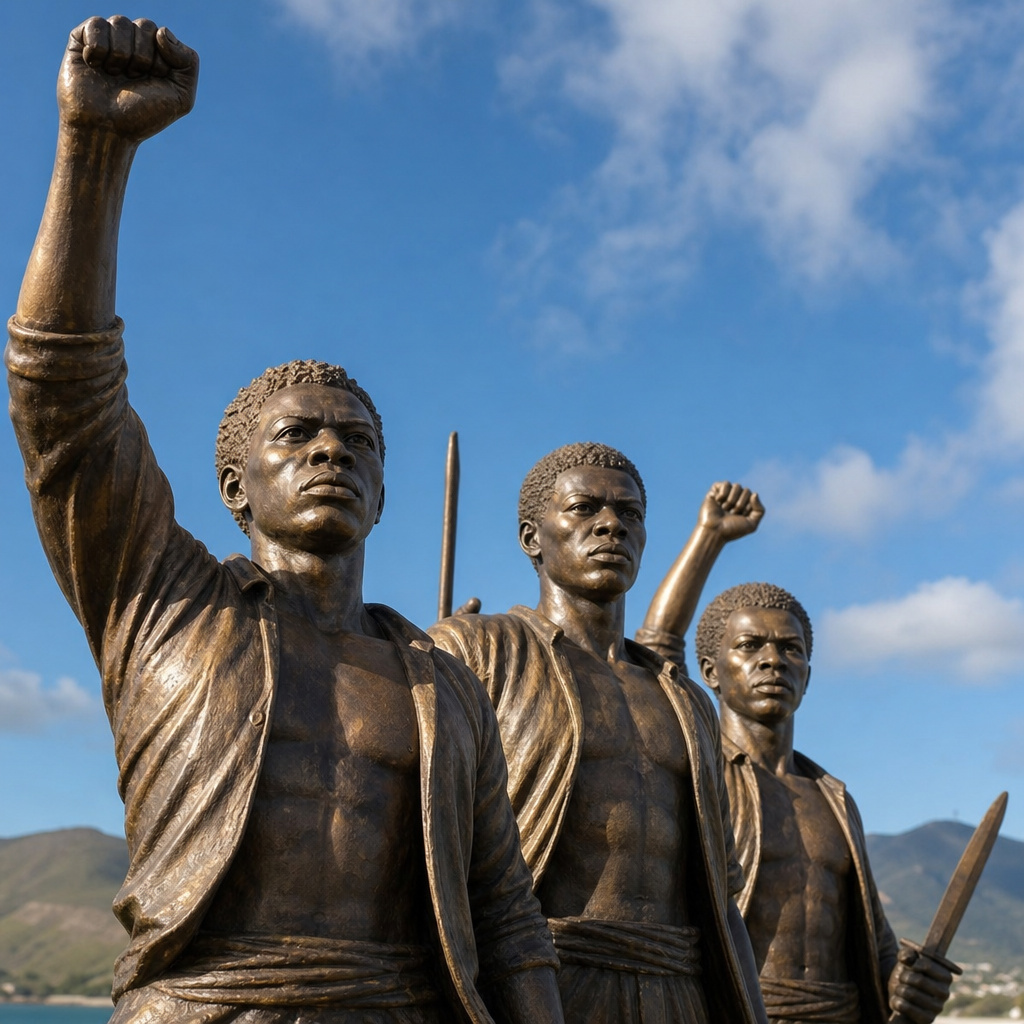
Nevis’ Revolutionaries: Heroes of Freedom stands at the crossroads of Caribbean memory, political struggle, and community identity, revealing how a small island shaped larger fights over labor, representation, and dignity. In the context of Nevis, revolutionaries were not only battlefield figures or dramatic conspirators. They included reformers, labor organizers, legislators, teachers, clergy, and ordinary citizens who challenged entrenched power. Freedom, likewise, meant more than emancipation from slavery in 1834. It extended to fair wages, land access, political participation, constitutional change, and cultural self-definition. I have worked through archival collections, oral histories, plantation records, and modern political speeches on Nevisian history, and one lesson appears consistently: the island’s most important heroes are often those who transformed daily life rather than those remembered only through monuments. This hub article surveys that wider revolutionary tradition, connecting slavery and resistance, post-emancipation activism, labor revolt, federation debates, and the modern autonomy movement. It matters because Nevisian history is frequently compressed into a few famous names or folded into broader narratives about St. Kitts and the wider Leeward Islands. A dedicated overview restores local specificity. It also helps readers navigate related topics across culture and history, from plantation society and family lineage to constitutional politics and heritage preservation, by showing how each thread belongs to one ongoing story of freedom.
Defining Nevisian Revolution and Resistance
To understand Nevisian revolutionaries, it helps to define revolution in island terms. On large continents, revolutions are often marked by decisive wars, regime collapse, or declarations of independence. In Nevis, change usually arrived through cumulative resistance. During the colonial era, enslaved Africans resisted through flight, work slowdowns, sabotage, preservation of African-derived customs, and direct revolt. Free people of color pressed for legal recognition. After emancipation, laborers challenged exploitative plantation systems that survived slavery in altered form. In the twentieth century, workers used strikes, unions, and electoral politics to demand structural reform. Later, constitutional advocates reframed freedom around local control, revenue fairness, and self-government within the federation of Saint Kitts and Nevis.
This broader definition matters because it avoids a common historical mistake: treating revolution as valid only when it produces dramatic violence. On Nevis, the fight for freedom was often strategic, patient, and institutionally savvy. A village petition, a labor march, an election campaign, or a call for secession could be as revolutionary as an armed uprising when it shifted power relations. Historians of the British Caribbean regularly note that plantation colonies were governed through law, property, and labor control. Resistance therefore emerged where those systems pressed hardest. Nevis offers clear examples. Its sugar economy concentrated land and authority among planters, while the majority African-descended population supplied coerced or underpaid labor. The heroes of freedom were those who contested that imbalance in whatever arena was available.
Enslavement, Maroonage, and Early Defiance
Any honest account must begin with slavery, because the earliest Nevisian revolutionaries were enslaved people who refused to accept bondage as natural. From the seventeenth century onward, Nevis became one of England’s important sugar islands. Sugar wealth depended on brutal plantation discipline, high mortality, and the Atlantic slave trade. Enslaved Africans were denied legal personhood, family stability, mobility, and bodily autonomy. Yet they continuously fought back. Colonial records across the Leewards describe runaways, poison fears among planters, market theft framed by elites as criminality, and coordinated acts of disobedience. These are not marginal details. They are the foundation of Nevisian freedom history.
Maroonage, even when limited by the island’s size, mattered symbolically and practically. Escape challenged the planter claim to absolute control. So did the maintenance of kinship networks, provision grounds, spiritual traditions, music, and burial customs. Revolutionary action did not always announce itself with banners. Sometimes it took the form of surviving on one’s own terms inside a violent system. Slave resistance across the Caribbean also shaped imperial policy. British fears after the Haitian Revolution, the 1816 Barbados uprising, the 1823 Demerara rebellion, and the 1831 Baptist War in Jamaica intensified scrutiny of slavery’s instability. Nevis was part of that regional pressure field. Even where no single islandwide uprising dominates the record, enslaved Nevisians contributed to the cumulative crisis that made emancipation unavoidable.
From Emancipation to the Struggle for Real Freedom
Emancipation in 1834, followed by the end of apprenticeship in 1838, did not deliver full freedom. Across the British West Indies, former slaveholders retained land, capital, and political influence. On Nevis, freed people faced limited access to arable land, dependence on estate wages, and legal systems still tilted toward employers. This is why post-emancipation activists deserve recognition as revolutionaries. They sought substantive freedom rather than symbolic change. Their demands anticipated modern development debates: who owns land, who controls taxation, who benefits from export agriculture, and who gets to define citizenship.
Mission schools, chapels, and village associations became important spaces of political awakening. Literacy allowed more Nevisians to read contracts, laws, newspapers, and petitions. Religious institutions could reinforce hierarchy, but they also created leadership pathways outside plantation management. Teachers and preachers often emerged as local advocates because they could speak publicly, organize meetings, and frame injustice in moral terms. In my review of Caribbean labor history, this pattern appears repeatedly. Reform rarely begins in formal legislatures alone. It grows where people gather regularly and develop language for shared grievances. On Nevis, that process helped transform ex-slaves and their descendants from subjects into political actors.
Labor Revolt and Working-Class Leadership
The most decisive modern revolutionary tradition in Nevis is labor activism. By the late nineteenth and early twentieth centuries, sugar had become less profitable, yet plantation labor remained harsh and wages low. Economic shocks, hurricanes, falling commodity prices, and global depression sharpened hardship. Throughout the British Caribbean, the 1930s produced widespread unrest, and the Leeward Islands were no exception. Workers no longer confined protest to isolated complaints. They organized around hours, wages, housing, and respect. This was revolutionary because it challenged both local elites and the colonial state.
Nevisian labor history is inseparable from the wider rise of trade unionism and workers’ politics in Saint Kitts and Nevis. The influence of figures such as Robert Llewellyn Bradshaw is especially important, even though his political identity is more commonly associated with St. Kitts. Bradshaw’s labor organizing, connection to the St. Kitts-Nevis Trades and Labour Union, and later premiership reshaped political expectations across the federation. On Nevis, workers engaged these movements through estate struggles and electoral participation, while also developing local critiques when they felt Nevisian interests were sidelined. That tension between shared working-class solidarity and island-specific grievance became one of the defining features of Nevisian political life.
| Period | Main Freedom Struggle | Typical Revolutionary Actors | Lasting Impact |
|---|---|---|---|
| Slave era | Resistance to bondage | Enslaved runaways, rebels, cultural preservers | Undermined planter control and fed abolition pressure |
| Post-emancipation | Access to land, wages, legal equality | Freedpeople, teachers, clergy, petitioners | Expanded civic participation and local leadership |
| 1930s-1950s | Labor rights and political representation | Workers, union organizers, reform politicians | Built mass politics and social reform agendas |
| Late twentieth century | Autonomy and constitutional fairness | Nevis Island leaders, legislators, voters | Strengthened island government and self-determination claims |
Political Revolution, Federation, and the Nevis Question
To many Nevisians, freedom in the twentieth century was no longer only about class. It was also about constitutional balance inside a shared state. The modern federation of Saint Kitts and Nevis developed through colonial restructuring, Associated Statehood in 1967, and independence in 1983. At each stage, Nevisians debated whether union protected or diluted their interests. Questions over revenue, development priorities, infrastructure, and representation were never abstract. They touched roads, schools, hospital services, port facilities, and jobs. A revolutionary in this context was a leader willing to argue that political arrangements themselves could perpetuate inequality.
Simeon Daniel stands out as a central hero of Nevisian freedom in this constitutional era. As the first Premier of Nevis after independence and a leading figure in the Nevis Reformation Party, Daniel articulated the case for stronger island self-government with discipline and persistence. He was not a revolutionary in the romantic guerrilla sense. He was more consequential than that for modern governance. He translated local frustration into institutions, negotiation, and durable political identity. The Nevis Island Administration, established under the constitution, gave formal expression to demands long felt by residents who believed decisions were too concentrated elsewhere. Daniel’s work remains essential to understanding how autonomy became a mainstream democratic project rather than a fringe complaint.
The 1998 secession referendum further illustrates Nevisian revolutionary tradition. Under the constitution, Nevis could pursue separation if supported by a two-thirds majority. The referendum produced a strong majority in favor but fell short of the threshold. That result matters historically because it showed how deeply self-determination resonated while also demonstrating respect for constitutional process. Few societies channel such a profound issue through ballots rather than force. In practical terms, the referendum strengthened negotiations over local authority even without achieving secession. It confirmed that freedom on Nevis includes the right to debate statehood openly, legally, and with confidence.
Cultural Guardians as Heroes of Freedom
Freedom is preserved not only in statutes but in memory. That is why cultural workers are also among Nevis’ revolutionaries. Historians, archivists, museum professionals, dramatists, musicians, and oral tradition bearers defend the island against erasure. Places such as the Museum of Nevis History in Charlestown, heritage churches, former plantation sites, and village festival spaces turn history into public knowledge. They help residents and visitors understand that Nevis is not merely picturesque. It is a site of contest, endurance, and creativity.
Consider the symbolic reach of Alexander Hamilton’s birthplace, often emphasized in tourism narratives. Used narrowly, it can overshadow the majority population’s history. Used carefully, it can instead become an entry point into the full social world of colonial Nevis, including slavery, commerce, class hierarchy, and Atlantic mobility. That interpretive choice is itself political. The same is true for commemorations of emancipation, Culturama, and local storytelling traditions. When communities insist on telling the island’s past through their own voices, they are protecting cultural freedom. They are saying that heritage belongs to the people who inherited both the wounds and the wisdom of the past.
How This Hub Connects the Miscellaneous History of Nevis
As a hub within Culture and History, this page links the miscellaneous strands that readers often encounter separately. Plantation records explain the economic structures that revolutionaries fought. Family history and genealogy show how descendants carry memories of enslavement, migration, and social mobility. Articles on churches, schools, villages, and festivals reveal where leadership formed and identity endured. Political biographies clarify how constitutional ideas turned into parties, campaigns, and institutions. Heritage site guides ground abstract history in specific places such as Charlestown, Bath, Gingerland, and former estates spread across the island’s landscape.
Reading these topics together produces a more accurate picture of Nevis. The island’s revolutionaries were not isolated heroes appearing in rare moments of crisis. They emerged from communities shaped by labor, faith, education, kinship, and place. That is why a miscellaneous history hub is valuable. It prevents fragmentation. A labor march makes more sense when readers also understand estate life. A secession debate becomes clearer when linked to older patterns of uneven development. A festival performance carries deeper meaning when traced back to emancipation and African cultural survival. The history of freedom is the framework that ties these subjects together.
Nevis’ revolutionaries were heroes of freedom because they expanded what freedom meant in every era of the island’s history. Enslaved people defied a system built on terror. Freedpeople pursued land, literacy, and civic standing after emancipation. Workers and union organizers demanded dignity in wages and representation. Constitutional leaders such as Simeon Daniel transformed island grievance into lawful self-government. Cultural guardians protected memory so future generations could understand the cost of liberty. Taken together, they show that Nevisian revolution was rarely a single event. It was a long, disciplined process of resisting domination and claiming voice.
For readers exploring the broader Culture and History collection, this hub offers the clearest starting point because it connects social, political, and cultural change across centuries. The main benefit of studying these figures is perspective. You begin to see Nevis not as a minor footnote in Caribbean history, but as a community that repeatedly produced people willing to challenge power with courage and strategy. Use this hub to continue into related articles on slavery, labor, heritage sites, political leaders, festivals, genealogy, and village history. Each subject adds another piece to the story of how Nevisians fought for freedom and continue to define it today.
Frequently Asked Questions
Who were Nevis’ revolutionaries, and why are they considered heroes of freedom?
Nevis’ revolutionaries were not limited to armed rebels or famous political firebrands. In the island’s historical experience, the term includes a wide range of people who challenged injustice and demanded a more humane social order. They included labor leaders who confronted exploitative plantation systems, reform-minded legislators who pressed for broader political participation, teachers who used education to cultivate dignity and critical thought, clergy who spoke against oppression, and ordinary citizens who resisted systems designed to silence them. What unites them is not a single ideology or dramatic event, but a sustained commitment to changing the conditions under which people lived and worked.
They are considered heroes of freedom because they expanded the meaning of liberation in practical, everyday ways. On Nevis, freedom was never only about the formal end of slavery. It also involved struggles over wages, land access, voting rights, fair treatment under the law, social mobility, and the right of Black and working-class people to shape public life. These revolutionaries challenged entrenched hierarchies that survived long after emancipation, exposing how political and economic power remained concentrated in the hands of a few. Their efforts helped redefine citizenship and dignity for generations that followed.
Calling them heroes also reflects how collective memory works in Caribbean societies. Heroism in Nevisian history often lies in persistence rather than spectacle. Many of these figures worked within communities, unions, churches, classrooms, and councils, building slow but lasting change. Their legacy is heroic because they transformed resistance into institution-building, public consciousness, and a stronger sense of belonging. In that sense, Nevis’ revolutionaries were heroes not simply because they opposed oppression, but because they helped imagine and create a freer society.
What did “freedom” mean in the context of Nevis’ political and social history?
In Nevisian history, freedom meant far more than legal emancipation. While the abolition of slavery was a foundational turning point, it did not automatically produce equality, security, or meaningful power for the majority of the population. After emancipation, many people still faced harsh labor conditions, restricted economic opportunity, limited political influence, and social systems shaped by colonial privilege. As a result, freedom had to be pursued as an ongoing project rather than understood as a completed event.
For many Nevisians, freedom meant the ability to live with dignity and to make decisions about their own labor, family, community, and future. This included access to decent wages, protection from exploitation, greater educational opportunity, and a voice in governance. It also meant freedom from humiliation and dependency in a society where old plantation structures continued to influence everyday life. Struggles for representation, labor reform, and local leadership were therefore deeply connected to broader definitions of freedom. People wanted not only legal status, but agency.
Freedom also carried a cultural and psychological dimension. It involved reclaiming identity, memory, and self-worth in the wake of colonial domination. Teachers, preachers, organizers, and civic leaders often worked to affirm the humanity and historical significance of ordinary Nevisians, especially those descended from enslaved Africans. In this way, freedom was social, political, economic, and moral all at once. Understanding Nevis’ revolutionaries requires recognizing that they were fighting for a fuller freedom: one rooted in justice, participation, and the right to be treated as complete human beings.
How did labor activism shape the revolutionary tradition in Nevis?
Labor activism was one of the most important engines of revolutionary change in Nevis because the island’s history was so deeply tied to plantation agriculture and unequal economic power. For generations, work was the arena in which inequality was most visible and most intensely felt. Wages, working conditions, land access, and employer control over daily life all became central issues. In such a setting, labor activism was never just about employment disputes; it was about human worth, survival, and the redistribution of power.
Workers and labor organizers helped transform private hardship into public action. By organizing collectively, they challenged the idea that ordinary people had to accept exploitation as inevitable. Labor movements gave workers a language of rights, solidarity, and justice, allowing them to push back against entrenched elites who benefited from inherited colonial structures. These struggles could take many forms, from protests and strikes to advocacy, negotiation, and political mobilization. Through them, labor activism became one of the clearest expressions of revolutionary citizenship on the island.
Its influence went well beyond the workplace. Labor activism often fed directly into wider demands for political reform, greater representation, and more accountable institutions. Leaders who emerged from labor struggles frequently became important public voices, helping communities connect economic grievances to constitutional and civic questions. This is why labor history is essential to understanding Nevis’ revolutionaries. It shows that revolutionary change on the island was not always sudden or violent; often, it was built through organized resistance to economic injustice and through the belief that workers deserved not only better conditions, but a meaningful stake in society itself.
Were Nevis’ revolutionaries only political leaders, or did ordinary citizens play a major role too?
Ordinary citizens played a major role, and in many ways they are the foundation of Nevis’ revolutionary story. Political leaders may be the most visible figures in historical narratives, but they rarely act alone. Real change depends on communities that are willing to support reform, challenge authority, preserve memory, and sustain movements over time. In Nevis, that meant market women, laborers, domestic workers, artisans, teachers, small farmers, church members, and countless others who took part in everyday acts of resistance and civic participation.
This broader view matters because it helps correct a narrow understanding of revolution. On a small island, social transformation often happens through networks of kinship, neighborhood influence, religious institutions, schools, and workplaces rather than through one dramatic seizure of power. Ordinary people shaped public life by attending meetings, joining labor actions, voting when permitted, circulating ideas, educating younger generations, and refusing to accept inherited inequality as natural. Even quiet acts of persistence, such as insisting on schooling, fair treatment, or communal self-respect, contributed to the long struggle for freedom.
Recognizing the role of ordinary citizens also highlights the democratic character of Nevisian resistance. The island’s revolutionary tradition was not only something done for the people by exceptional individuals; it was something created with and through the people themselves. Leaders mattered, but they were strengthened by communities that carried ideals into daily life. This is one reason the memory of Nevis’ revolutionaries remains so powerful. It reflects not just the achievements of notable names, but the courage of a society that continually pushed back against exclusion and asserted its right to dignity.
Why does the legacy of Nevis’ revolutionaries still matter today?
The legacy of Nevis’ revolutionaries still matters because the core issues they confronted have not disappeared from public life. Questions about representation, economic fairness, social dignity, historical memory, and community self-determination remain deeply relevant in the Caribbean and beyond. Studying these figures helps modern readers understand that freedom is not static. It must be defended, expanded, and interpreted in each generation. The Nevisian experience offers a powerful reminder that even small societies can shape large conversations about justice and citizenship.
Their legacy also matters because it broadens how we think about political courage. Nevis’ revolutionaries demonstrate that meaningful change can come from organizing, teaching, legislating, preaching, writing, and building community institutions—not only from dramatic confrontation. That lesson is especially important today, when many people seek models of leadership rooted in service, accountability, and moral clarity. The island’s historical actors show that resistance can be practical, principled, and deeply local while still speaking to universal human concerns.
Finally, their legacy matters because memory itself is a form of cultural power. Remembering Nevis’ revolutionaries helps preserve a richer and more accurate understanding of Caribbean history, one that centers local agency rather than treating islands as passive sites of imperial events. It gives younger generations a lineage of struggle and achievement to draw from, and it reinforces the idea that dignity was won through collective effort. In that sense, the story of Nevis’ revolutionaries is not simply about the past. It is an ongoing resource for thinking about identity, responsibility, and the unfinished work of freedom.