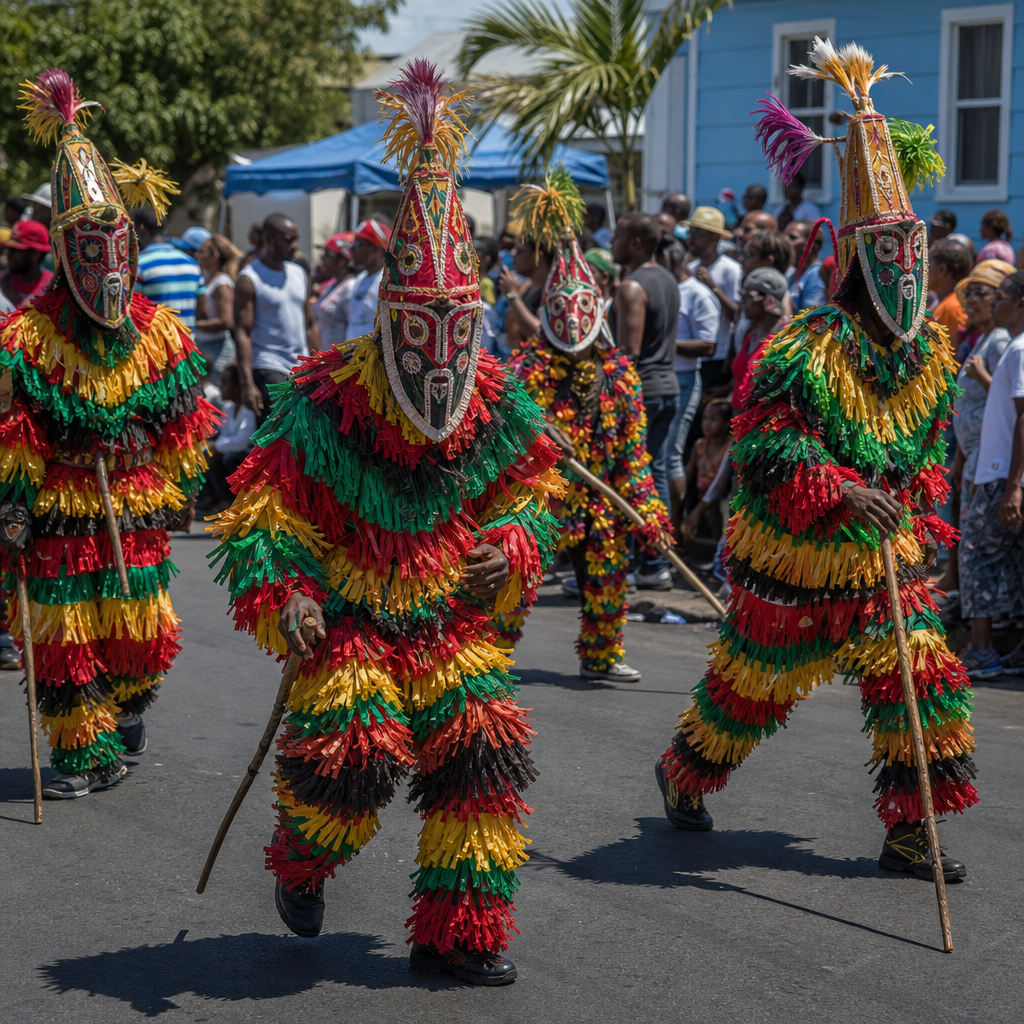
Saint Kitts’ traditional festivals are living archives of memory, belief, music, and community, and they remain one of the clearest ways to understand how the island keeps culture alive across generations. In Saint Kitts, a festival is not just a public party. It is a structured cultural expression shaped by African retention, European colonial history, Christian observance, village identity, family participation, and modern tourism. When people ask what defines Kittitian culture beyond beaches and scenery, the answer often begins with festival traditions: Carnival, village celebrations, religious feast days, drumming, masquerade performance, pageantry, foodways, and seasonal rituals that tie everyday life to history. I have seen that the strongest festivals on the island are the ones that do two jobs at once: they entertain in the present while preserving inherited forms that would otherwise fade. That matters because small-island cultures face constant pressure from migration, imported media, and commercial event planning that can flatten local distinctiveness.
For readers exploring Saint Kitts under the wider Culture and History topic, festivals serve as a practical hub because they connect nearly every other cultural subject. Traditional celebrations link to folklore, national identity, colonial and post-emancipation history, sacred music, costume making, oral performance, street food, and the role of villages in social life. They also reveal how culture survives through repetition. A costume troupe practicing for months, elders teaching children a Christmas Sports character, vendors preparing longtime seasonal dishes, or church communities organizing processions are all examples of culture being transmitted by doing rather than by museum display alone. Understanding these festivals helps travelers interpret what they see, and it helps researchers, educators, and local families recognize why community events deserve active support rather than passive nostalgia.
Saint Kitts is especially interesting because its festival landscape mixes large national events with smaller traditions that still carry weight in local memory. Some celebrations are highly visible and marketable, while others are sustained by schools, churches, cultural groups, and neighborhoods. Taken together, they show that keeping culture alive is not accidental. It requires rehearsal spaces, public funding, intergenerational teaching, fair opportunities for traditional performers, and audiences willing to value heritage alongside contemporary entertainment. This hub article explains the main festivals and customs that shape Saint Kitts’ cultural calendar, how they developed, why they still matter, and what is needed to keep them meaningful in the future.
Carnival and Christmas Sports: the core of Kittitian festival culture
The single most important traditional festival framework in Saint Kitts is Carnival, locally tied to the Christmas season and often discussed through the older concept of Christmas Sports. This is the island’s best-known cultural showcase because it gathers music, masquerade, dance, beauty pageantry, calypso, soca, street parade, and community competition into one season. While many Caribbean carnivals are now associated mainly with summer calendars or visitor-driven spectacle, Saint Kitts retains a strong Christmas connection that gives the celebration a different cultural texture. The season blends festivity with continuity, and its traditional elements still carry historical meaning even as newer music and parade styles evolve.
Christmas Sports refers to older forms of seasonal performance that predate the contemporary carnival package. In practical terms, it includes costumed street characters and troupe traditions that emerged from a creolized society shaped by enslavement, emancipation, and village social life. The best-known traditional figures include Masquerade performers, Moko-Jumbies, clowns, and aspects of string band accompaniment. Masquerade on Saint Kitts is not merely decorative dancing. It is a disciplined folk performance involving ornate costumes, ribbons, whips, bells, and choreographed movement patterns with deep Afro-Caribbean roots. The precision matters. A well-trained masquerade group demonstrates timing, endurance, and respect for inherited form, not just improvisation.
Calypso and soca competitions are now central to the season as well. Calypso in particular functions as social commentary. The best calypsonians do not simply entertain; they critique politics, mock excess, celebrate resilience, and preserve the island’s habit of public argument through song. That role has historical value because calypso has long been one of the Caribbean’s most effective popular media for commentary before social platforms existed. In Saint Kitts, the calypso tent tradition and competitive stage environment create a public record of what people cared about during a given year. For anyone studying culture and history, that makes carnival music a source, not just a soundtrack.
What keeps Carnival culturally alive is the layered participation behind the main events. Seamstresses build costumes, musicians rehearse for months, schools expose children to folk forms, and former performers return as trainers or judges. When these backstage systems are strong, the festival remains rooted. When they weaken, the public still sees a parade, but the cultural content thins out. That distinction is crucial for understanding why preservation work cannot stop at marketing the final event.
Traditional performance forms and what they symbolize
Several traditional performance forms within Saint Kitts’ festivals deserve attention because they carry meanings that are often missed by casual observers. Masquerade remains the most iconic. Its visual richness can make it seem purely celebratory, yet the form also reflects survival, adaptation, and coded identity. Across the wider Caribbean, masquerade traditions preserve African-derived movement vocabularies, ceremonial display, and community performance structures that endured despite colonial suppression. On Saint Kitts, those inheritances were reshaped into a local style with distinct costume aesthetics and performance expectations.
Moko-Jumbies are another important example. These stilt walkers are visually dramatic, but their significance is larger than spectacle. In Caribbean cultural interpretation, Moko-Jumbies are often linked to protective or watchful spiritual presences rooted in West African traditions. Their elevation above the crowd creates both theatrical impact and symbolic authority. On Saint Kitts, when Moko-Jumbies appear in festival settings, they connect modern public entertainment to older cosmologies that traveled across the Atlantic under conditions of forced displacement. That is exactly the kind of continuity festival culture can preserve when everyday life no longer visibly carries the same symbolism.
Clown troupes and folk dancers also belong in this conversation. They show how humor, mimicry, rhythm, and coordinated movement become tools of community identity. Traditional string band music, where still present, adds another layer through instrumentation and repertoire that differ from amplified carnival road music. These forms remind audiences that a festival season is made of genres, not one generic celebration. When organizers create space for each form on major stages and parades, they help the public see the full cultural ecosystem rather than only the most commercially popular parts.
| Festival element | What it includes | Why it matters culturally |
|---|---|---|
| Masquerade | Costumed dancers, bells, ribbons, choreographed movement | Preserves Afro-Caribbean performance practice and village training traditions |
| Moko-Jumbies | Stilt walking, ceremonial entrance, crowd interaction | Connects festival spectacle to spiritual memory and African inheritance |
| Calypso | Lyric competition, social critique, audience response | Documents public opinion and political commentary through music |
| Pageantry | National queen shows, talent, interview segments | Combines representation, performance discipline, and modern identity |
In practice, preserving these forms requires more than admiration. It takes funding for costume materials, safe rehearsal spaces, transportation for youth groups, and public booking standards that pay traditional performers fairly. Without those basics, heritage groups are often asked to symbolize culture while carrying the highest costs and receiving the least institutional support.
Village festivals, church observances, and everyday cultural memory
Not every meaningful festival in Saint Kitts is a national headline event. Village activities, patronal or church-centered observances, school celebrations, Emancipation-related programming, and community commemorations all help keep culture alive at ground level. In my experience, these smaller events often preserve the strongest sense of ownership because the people attending are not consumers first; they are participants with family, church, or neighborhood ties. That difference changes the atmosphere. People know the performers, recognize the songs, and understand the references without explanation.
Religious festivals and holiday observances are especially important because Christianity has long shaped the island’s calendar. Christmas, Easter, and saint-linked community traditions often include music, dress, food, and public gathering that blend formal worship with local custom. This is where culture survives in ordinary repetition: choir rehearsals, nativity production styles, church dinners, processions, and homecoming patterns for relatives returning to the island. Even when these activities do not look like heritage programming, they are powerful vehicles of continuity because they normalize Kittitian ways of celebrating time, family, and faith.
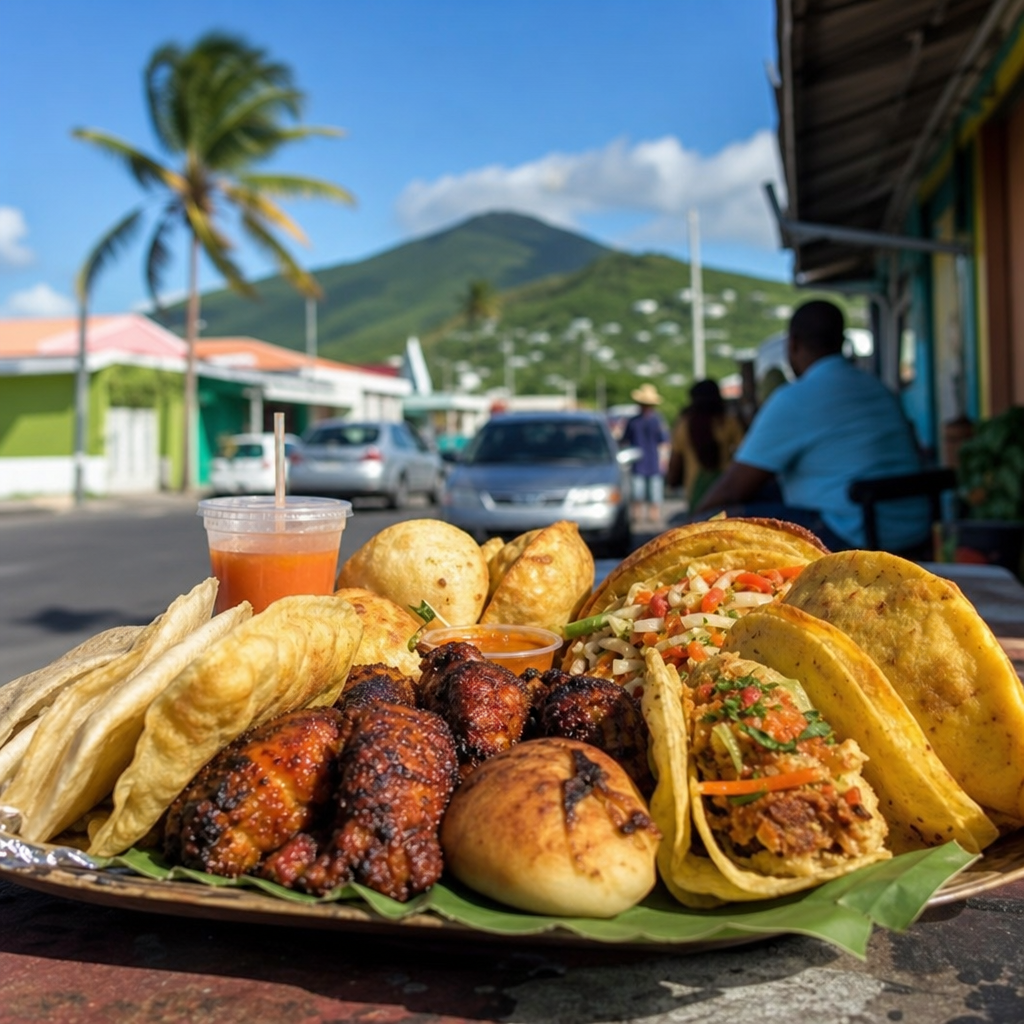
Village festival culture also supports local food traditions. Goat water, saltfish dishes, black pudding, coconut-based sweets, sugar cake, and seasonal drinks appear not just as refreshments but as markers of memory. Food at a festival is evidence of continuity. Recipes passed down through families preserve agricultural history, trade patterns, and taste preferences formed during plantation and post-plantation life. A community event with local food vendors can teach as much about culture as a formal exhibit, provided the audience understands what they are eating and why those dishes endure.
These smaller festivals matter for another reason: they distribute cultural leadership. If all prestige and funding flow only to major carnival stages, then knowledge becomes centralized and fragile. When villages, churches, schools, and local associations host their own events, more people become custodians of tradition. That broader base is one of the best protections against cultural loss.
How festivals support identity, tourism, and education
Traditional festivals in Saint Kitts deliver three major benefits at once: they strengthen identity, create visitor interest, and provide informal education. Identity comes first. A festival gives people shared symbols and recurring moments that say, in effect, this is who we are. That is particularly important in a small state where outward migration has touched many families and imported entertainment can easily dominate local attention. A child who learns a folk dance, hears live calypso commentary, or watches a masquerade troupe in context is receiving cultural literacy that cannot be replicated by reading alone.
Tourism is a real benefit, but it works best when authenticity is protected. Visitors respond to festivals because they want something place-specific, not a generic Caribbean event package. Saint Kitts gains long-term value when travelers can clearly distinguish local traditions from those of neighboring islands. That means interpretation matters. Event guides, museum partnerships, school exhibitions, and clear stage commentary can help visitors understand what they are seeing rather than reducing heritage to colorful background entertainment. The stronger the explanation, the more likely guests are to respect and remember the culture.
Festivals also function as public education. They teach history through performance, and they make abstract subjects tangible. Emancipation, colonial labor structures, African retention, creole language use, and post-independence identity all become easier to grasp when seen in costumes, music, satire, and procession. This is why cultural institutions should treat festivals as educational assets. Partnerships with the National Museum, schools, archives, and cultural departments can document oral histories, record performances, and create teaching materials that extend festival meaning beyond the event date itself.
The challenges of keeping tradition alive in a modern festival economy
Keeping culture alive through festivals is not automatic, and Saint Kitts faces the same pressures seen across the Caribbean. Commercialization is the most obvious challenge. Sponsorship and promotion are necessary, but they can push organizers toward formats that privilege speed, spectacle, and marketability over depth. When amplified road experiences dominate every decision, slower traditional forms can be shortened, sidelined, or presented as token opening acts. That creates visibility without real preservation.
Generational transfer is another issue. Young people often enjoy traditional culture once they encounter it, but they need structured access. If training depends entirely on unpaid elders with limited resources, continuity becomes uncertain. Schools, community centers, and arts funding have to bridge that gap. Documentation matters too. Too many Caribbean traditions rely on memory alone. Recording choreography, costume methods, song repertoires, and oral explanations does not freeze culture; it gives future practitioners a base to build from.
There is also the challenge of balancing evolution and authenticity. Festivals must change to stay alive. New music, new staging, and new audiences are not threats in themselves. The problem begins when innovation erases the traditional core rather than building around it. The best festival planning in Saint Kitts recognizes this balance: support the road march and modern concert economy, but reserve prime space, funding, and prestige for masquerade, folk performance, and community-rooted programming.
Anyone invested in Saint Kitts’ culture and history can help by attending traditional events, supporting local artisans and performers, documenting family knowledge, and choosing interpretation over passive consumption. Festivals survive when communities treat them as inheritance. That is the central lesson of Saint Kitts’ traditional festivals: culture stays alive when people perform it, fund it, teach it, and insist that it remains visible. Explore the island’s festival calendar with that mindset, and every parade, song, costume, and village gathering reveals a deeper story worth keeping.
Frequently Asked Questions
What makes Saint Kitts’ traditional festivals so important to cultural identity?
Saint Kitts’ traditional festivals matter because they do far more than entertain. They preserve shared memory and give visible form to the island’s history, beliefs, and social values. A Kittitian festival often combines African-derived performance traditions, European colonial influences, Christian observance, village customs, and family participation in one public setting. That combination makes festivals one of the clearest mirrors of national identity. Through costume, music, dance, storytelling, food, and ritual, people do not simply remember culture in theory; they actively practice it together.
These events also create continuity across generations. Older community members pass down songs, procession styles, drumming patterns, masquerade knowledge, seasonal customs, and stories about why certain celebrations matter. Younger people learn not only what to perform, but what those performances mean. In that sense, festivals act like living archives. They hold history in motion rather than in storage. For many people in Saint Kitts, traditional festivals answer the question of what defines Kittitian culture beyond beaches and tourism imagery: they reveal the island’s resilience, creativity, spirituality, and strong sense of community.
How do Saint Kitts’ festivals reflect the island’s history?
Traditional festivals in Saint Kitts reflect history because they grew out of the island’s complex social and cultural development. The legacy of slavery, plantation society, emancipation, church life, village organization, and colonial rule all helped shape how festivals evolved. African cultural retention remains especially important in rhythm, movement, performance styles, and communal expression. At the same time, Christian feast days, holiday calendars, and European ceremonial structures influenced the timing and format of many celebrations. What emerges is not a simple copy of one tradition, but a distinctly Kittitian cultural expression formed through adaptation and survival.
That historical layering is part of what gives the festivals their depth. A parade, folk dance, or masquerade presentation may appear festive on the surface, but it often carries generations of inherited meaning. Certain practices can be understood as responses to historical hardship, while others represent continuity, joy, thanksgiving, or public visibility for communities that used celebration as a means of preserving identity. When people attend or participate in these festivals, they are engaging with the island’s past in a direct way. The history is not presented as a distant lesson; it is embodied in the sound of the music, the design of the costumes, the route of the procession, and the collective memory of the people.
What role do music, dance, and performance play in keeping culture alive in Saint Kitts?
Music, dance, and performance are central to cultural preservation in Saint Kitts because they transmit knowledge in memorable, participatory ways. Traditional rhythms, call-and-response patterns, movement styles, and masquerade performances carry values, symbols, and historical experience from one generation to the next. In many communities, these forms are learned socially rather than formally. Children watch elders, performers rehearse in groups, and villages prepare together for major celebrations. That process turns culture into something lived and repeated, not merely discussed.
Performance also keeps culture relevant by allowing tradition to remain visible in public life. A festival performance is not just about artistic display; it is about recognition, belonging, and continuity. It reminds communities who they are, where they come from, and what practices deserve to be sustained. Even as modern influences enter festival spaces, traditional music and dance provide an anchor. They help ensure that development and tourism do not erase local expression. Instead, performance becomes a tool for cultural confidence, showing both residents and visitors that Kittitian identity is rooted in creative traditions with deep historical meaning.
How do families and local communities help preserve traditional festivals in Saint Kitts?
Families and local communities are the foundation of festival continuity in Saint Kitts. Traditional celebrations are often sustained not by institutions alone, but by households, village groups, church communities, cultural organizers, and long-standing social networks. Parents and grandparents introduce children to seasonal customs, proper forms of participation, songs, dress traditions, and the stories behind local observances. Community members help build costumes, prepare food, organize routes, coordinate rehearsals, and maintain the etiquette of the event. In this way, festival culture is embedded in everyday life rather than separated from it.
Village identity is especially important. Many traditional celebrations carry a strong local character, and community pride helps keep them active. People participate because the festival represents their place, their people, and their inherited traditions. That emotional investment gives festivals staying power even as society changes. When younger generations are invited into planning and performance, they do not simply inherit a date on the calendar; they inherit responsibility for cultural stewardship. This grassroots involvement is one of the main reasons Saint Kitts’ festivals remain meaningful. They are sustained by collective ownership, not just public spectacle.
How has tourism affected Saint Kitts’ traditional festivals?
Tourism has had a mixed but important impact on traditional festivals in Saint Kitts. On the positive side, visitor interest can bring attention, funding, and broader appreciation to cultural events that might otherwise remain underrecognized. Festivals can create economic opportunities for performers, artisans, food vendors, designers, and local businesses. They also give Saint Kitts a chance to present itself on its own terms through culture rather than relying solely on natural scenery. When done well, tourism can support preservation by increasing the perceived value of traditional practices and encouraging investment in cultural programming.
At the same time, there is always a need for balance. If festivals are reshaped too heavily for outside audiences, they risk losing the meanings that made them important in the first place. A traditional festival should not become only a product for consumption. Its first role is to serve the community that created and sustained it. The strongest cultural approach is one in which tourism remains secondary to authenticity. In Saint Kitts, the continued vitality of traditional festivals depends on protecting their historical roots, local leadership, spiritual dimensions, and communal purpose while still welcoming respectful visitors. That balance is what allows festivals to remain both culturally alive and publicly accessible.