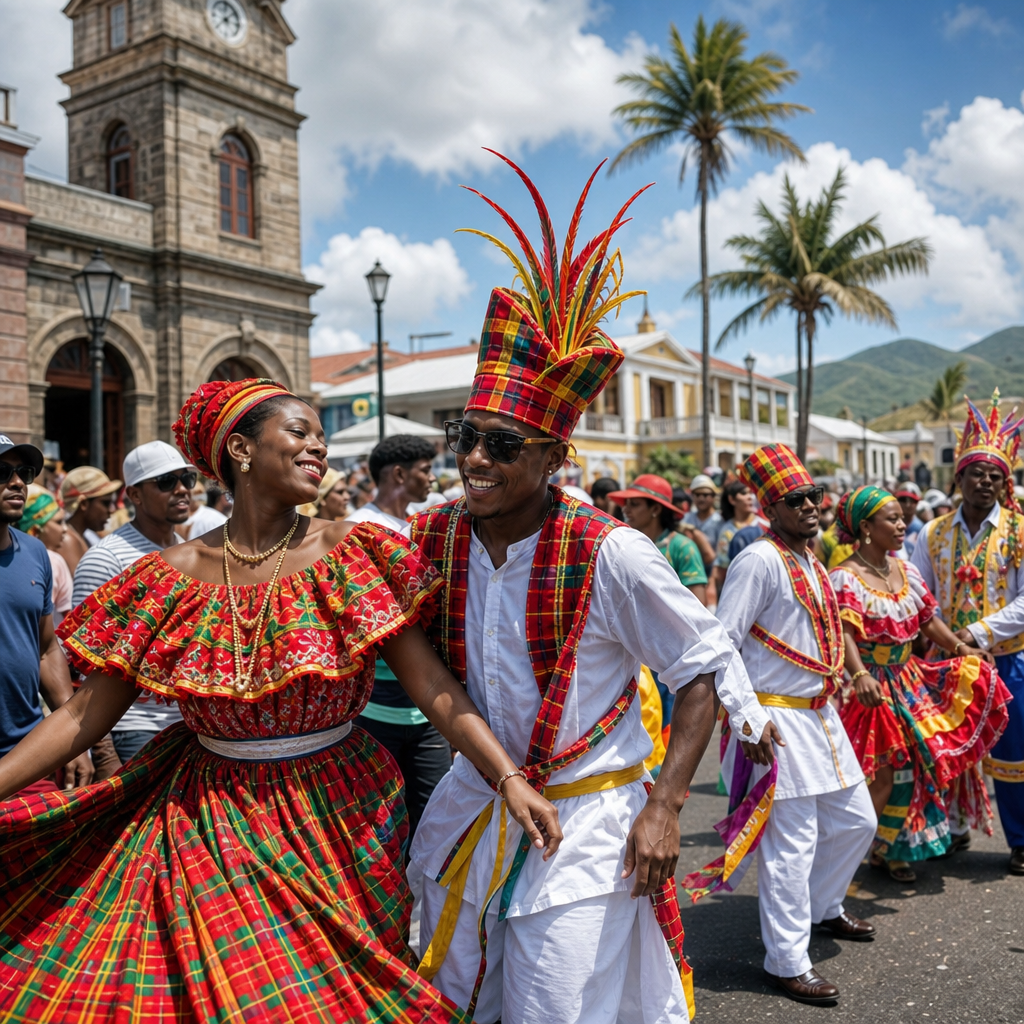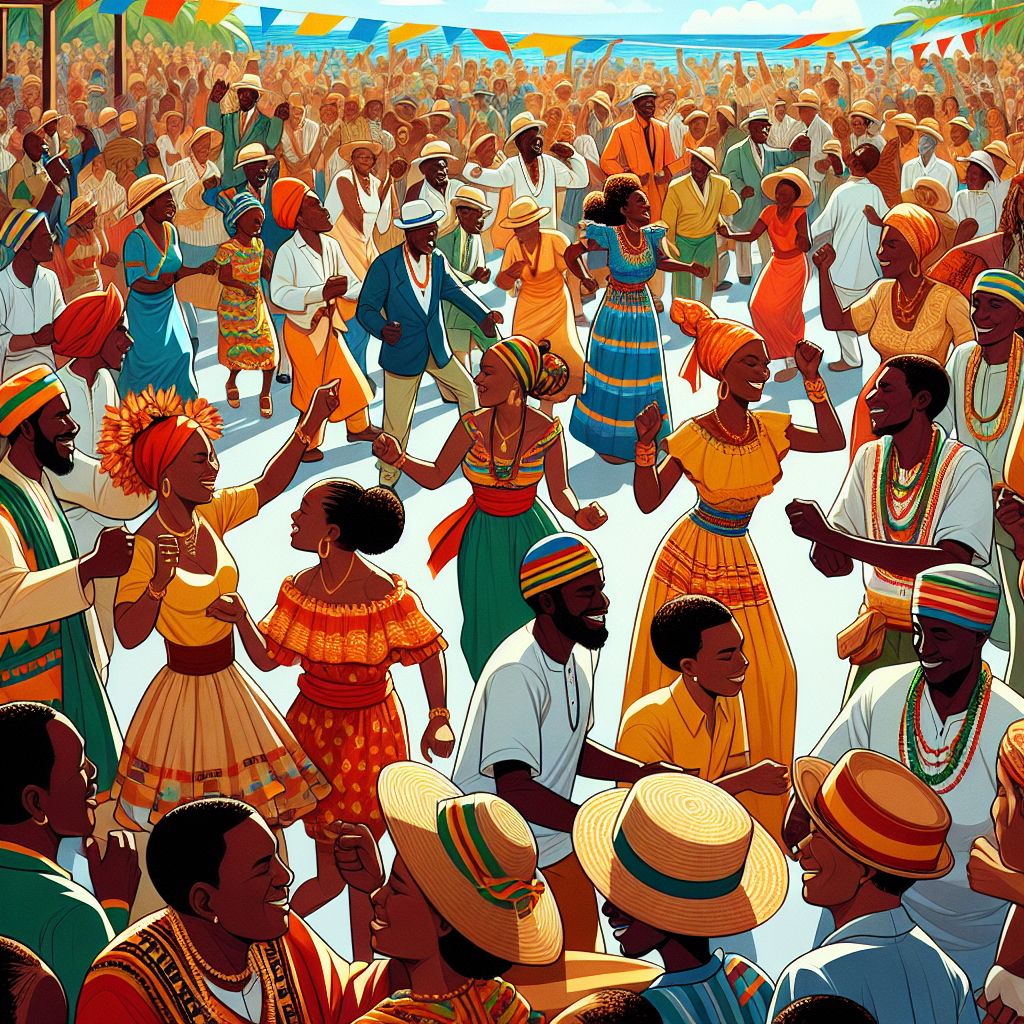
Saint Kitts in the digital age faces a clear challenge: how to preserve cultural heritage while tourism, migration, climate pressure, and fast-moving technology reshape daily life. Cultural heritage includes tangible assets such as historic buildings, archaeological sites, museum collections, archives, craft traditions, and monuments, as well as intangible heritage such as oral history, music, dance, religious practice, foodways, language patterns, storytelling, and community memory. In Saint Kitts, these elements are not abstract categories. They are living markers of identity, visible in Basseterre’s streetscape, remembered in village festivals, heard in string band rhythms, and carried through family narratives about plantation labor, emancipation, migration, and nationhood.
Digital preservation means using technology to document, store, interpret, share, and protect these cultural resources. That can include scanning old photographs, mapping historic estates with geographic information systems, recording elders’ memories, digitizing newspapers, creating online museum catalogues, and using cloud storage to safeguard records from hurricanes or physical deterioration. In practice, I have seen that digital work succeeds only when it starts with local priorities. A hard drive full of files is not preservation unless the material is described properly, backed up, legally managed, and made meaningful to communities that recognize it as their own.
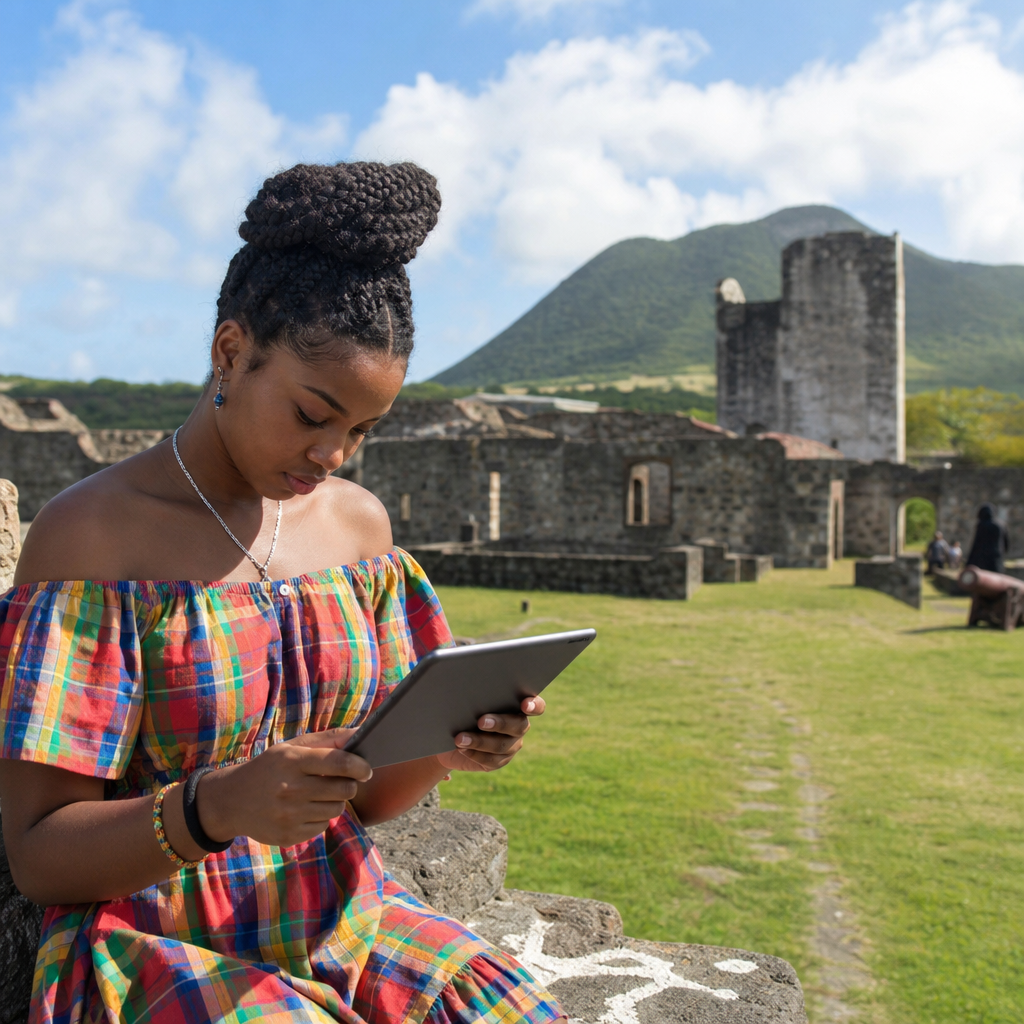
This matters because Saint Kitts is small, historically rich, and vulnerable. The island’s heritage is shaped by Indigenous presence, European colonization, African enslavement, sugar production, labor resistance, religious institutions, and Caribbean creativity. Brimstone Hill Fortress National Park, a UNESCO World Heritage Site, is the best-known symbol, yet it represents only one layer of a much broader story. Family graveyards, church registers, Carnival traditions, market speech, and domestic architecture are equally important. When these are lost through neglect, disaster, or simple inattention, recovery is difficult. Digital tools cannot replace original objects or lived practice, but they can extend access, strengthen memory, and improve long-term protection.
For a Culture and History hub covering miscellaneous heritage topics, the central question is straightforward: what should Saint Kitts preserve first, how should it do that, and who should benefit? The strongest answer is comprehensive rather than narrow. Preservation must connect archives, schools, heritage sites, creative industries, tourism planning, and community groups. It must also recognize that digital heritage is not only about the past. The photographs, recordings, festival footage, and social media posts created now will become tomorrow’s historical record. A practical heritage strategy for Saint Kitts therefore needs documentation standards, local training, public access rules, funding models, and a clear sense of cultural ownership.
Why digital preservation matters for Saint Kitts now
Saint Kitts does not have the luxury of delaying documentation. Tropical humidity accelerates mold and paper decay. Hurricanes and storm surge can damage archives, churches, libraries, and private collections in hours. Development pressure can alter historic neighborhoods before they are adequately surveyed. At the same time, many of the people who hold oral history are aging. Once a community elder dies without being recorded, a unique account of place names, work routines, recipes, songs, or migration stories may disappear permanently. Digitization is not a fashionable add-on; it is a risk management tool and a cultural continuity tool.
There is also an economic case. Heritage, when handled responsibly, strengthens tourism by moving beyond generic sun-and-sea marketing. Visitors increasingly look for authentic experiences: restored townscapes, guided history walks, archive-based exhibits, traditional food demonstrations, and local music interpreted in context. Digital collections support these experiences by supplying images, timelines, maps, and multilingual interpretation. Schools benefit as well. Students who can access digitized records from Saint Kitts are more likely to study local history seriously instead of relying only on imported textbooks that summarize the Caribbean too broadly.
A further reason is visibility. Small islands are often underrepresented in global knowledge systems. If historical records from Saint Kitts are not digitized, indexed, and described well, researchers, journalists, educators, and automated discovery systems simply bypass them. That weakens the island’s presence in scholarship and public understanding. Good metadata, clear provenance, and accessible digital repositories allow Saint Kitts to be found, cited, and understood on its own terms.
What counts as cultural heritage in a Saint Kitts hub page
A strong miscellaneous heritage hub should organize the full range of material that people often search separately. Built heritage includes Basseterre’s Georgian-influenced architecture, former sugar estates, churches, cemeteries, military sites, bridges, and vernacular homes. Archival heritage includes colonial records, plantation documents, maps, ship registers, newspapers, school records, and family photographs. Museum heritage includes tools, textiles, furniture, ceramics, and objects tied to domestic, agricultural, and political history. Intangible heritage includes Carnival traditions, masquerade, drumming, folk songs, Quadrille influences, herbal knowledge, storytelling, and local cooking practices.
Language and memory belong in this hub too. The ways Kittitians speak, name places, narrate events, and frame family history are part of heritage preservation. Diaspora heritage is another essential category. Many Saint Kitts families have relatives in the United Kingdom, United States, Canada, and neighboring Caribbean territories. Letters, recorded calls, migration photographs, and church anniversary booklets held abroad can fill major gaps in the island’s archive. In several projects across the Caribbean, some of the most valuable historical material has turned up not in official repositories but in family trunks, shoeboxes, or parish offices.
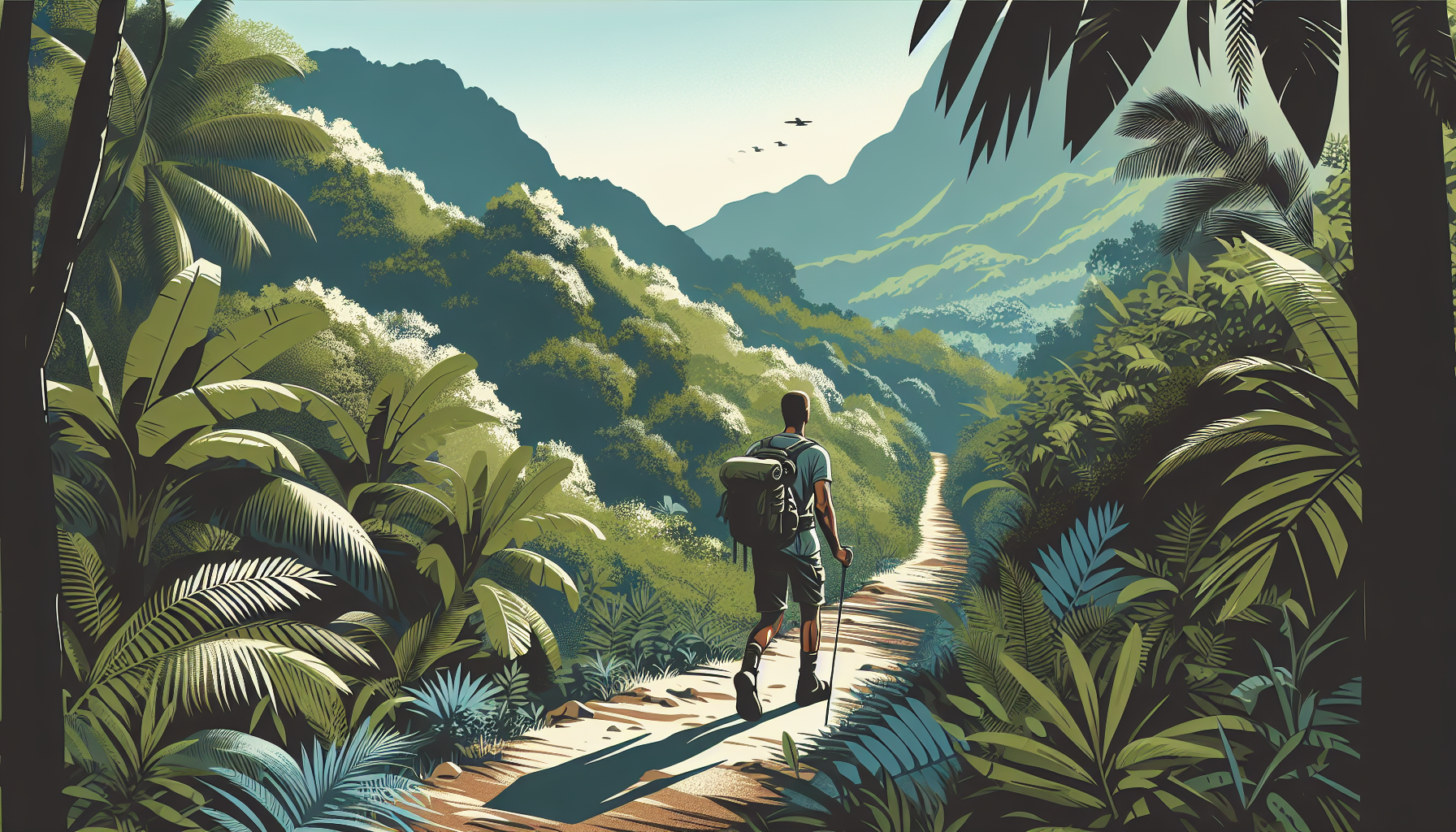
Natural and cultural heritage also intersect. Historic landscapes such as former cane fields, coastal landing points, and mountain pathways hold cultural meaning. A digital map that overlays estate boundaries, surviving ruins, and oral testimonies can reveal how labor, ecology, and settlement evolved together. That kind of integrated documentation is especially useful for planners, teachers, and heritage tourism operators.
Digital tools that actually work for heritage preservation
The most effective digital preservation programs use simple, durable workflows rather than expensive technology with no maintenance plan. For documents and photographs, high-resolution scanning with color calibration and nonproprietary master files, typically TIFF, remains standard practice. Access copies can be JPEG or PDF. Audio interviews should be captured in uncompressed WAV when possible, with MP3 derivatives for streaming. Video preservation benefits from high-bitrate master files and documented codecs. Every file needs metadata: title, date, creator, location, rights status, description, and source information. Without metadata, digital collections become unsearchable storage.
Collections management systems such as CollectiveAccess, ArchivesSpace, Mukurtu, and Omeka are useful depending on institutional needs. Omeka works well for online exhibits and public storytelling. ArchivesSpace suits archival description and finding aids. Mukurtu is especially valuable when communities need culturally specific access protocols, including restrictions on sacred or sensitive material. Geographic information systems such as QGIS help map forts, estate ruins, cemeteries, and historic roads. For three-dimensional heritage, photogrammetry and laser scanning can document statues, ruins, and architectural details with a high degree of precision.
| Heritage need | Recommended digital method | Practical Saint Kitts use case |
|---|---|---|
| Fragile photographs and documents | High-resolution scanning with TIFF masters | Digitizing family albums, newspapers, church registers |
| Oral history and music | WAV audio recording with transcripts and consent forms | Capturing elders’ memories, folk songs, Carnival commentary |
| Historic sites and ruins | GIS mapping, photogrammetry, drone imagery | Recording plantation remains, military structures, cemeteries |
| Public access and education | Omeka or similar online exhibit platform | Publishing themed collections for schools and visitors |
| Long-term preservation | Cloud backup plus local redundant storage | Protecting records from storm damage and hardware failure |
Long-term preservation requires redundancy. The widely used 3-2-1 rule remains sound: keep at least three copies of data, on two different media types, with one copy offsite. Checksums should be generated to detect file corruption, and migrations should be planned as storage media and file formats age. This is where many heritage projects fail. They digitize materials once, launch a website, and then stop funding maintenance. Preservation is an ongoing operational responsibility, not a one-time campaign.
Community knowledge, oral history, and ethical access
Some of the most important heritage in Saint Kitts cannot be preserved by scanning alone. Oral history requires trust, planning, and ethical clarity. Interviewees should understand how recordings will be used, whether they will be public, and whether restrictions are possible. Written consent matters, but so does cultural sensitivity. Family conflict, slavery-era trauma, sacred practices, and burial knowledge may require partial closure or delayed access. Good preservation balances openness with dignity.
From experience, the best interviews are rarely just factual timelines. They capture cadence, emotion, local vocabulary, and small observations that formal histories miss. An elder describing cane cutting, market day, school discipline, or preparing festival clothing often provides details no official record contains. These details are valuable to historians, but they are equally valuable to younger residents trying to understand how communities functioned before mass migration, imported food dependence, and digital communication changed social life.
Transcription and translation deserve investment. A recording that is never transcribed remains difficult to search, quote, and teach from. Time-stamped transcripts improve accessibility and discovery. If the speaker uses local expressions unfamiliar to outside researchers, glossaries and curator notes can preserve meaning without flattening local speech. Ethical access also means proper attribution. Communities and families should not see their heritage extracted into polished digital products without acknowledgment, consultation, or a share in resulting benefits.
Education, tourism, and the future of public memory
When heritage is digitized well, it becomes easier to teach, experience, and protect. Schools can build local history modules around digitized maps, oral histories, and photographs. Teachers can compare plantation-era records with emancipation narratives and modern migration stories, helping students see continuity and change. Museums and heritage sites can use QR codes, touchscreen kiosks, and virtual exhibits to provide context without overwhelming visitors with printed panels. For Saint Kitts, where international visitors often arrive with limited historical background, digital interpretation can quickly explain why sites matter and how they connect.
Tourism should not be the sole reason to preserve culture, but it can support preservation financially if managed carefully. A digitally documented heritage trail through Basseterre, Old Road, former estate landscapes, and cultural performance spaces could strengthen local business while spreading attention beyond a few iconic attractions. The key is accuracy and community participation. Heritage tourism loses value when it becomes costume without context or when local people are excluded from planning and revenue. The better model links documentation, training, curation, and local enterprise.
Saint Kitts also has an opportunity to shape its future archive intentionally. Government agencies, schools, churches, artists, radio stations, and event organizers should adopt basic recordkeeping policies now. Born-digital material is fragile in its own way. Phones break, social platforms change, and file names become meaningless. A national or cross-institutional digital heritage framework could set standards for metadata, storage, rights, and public access. That would help preserve today’s cultural production for future generations.
The main lesson is simple: preserving Saint Kitts cultural heritage in the digital age requires more than scanning old objects. It demands a coordinated system that values archives, oral history, historic places, language, performance, and family memory equally. The island’s heritage is broad, layered, and still alive, which is why preservation must combine technical standards with community trust. Strong metadata, redundant storage, ethical consent, and public interpretation are not optional details. They are the foundation that turns scattered materials into a durable national resource.
For a miscellaneous Culture and History hub, the best approach is to treat every format and every community as part of one connected story. Brimstone Hill, Basseterre streets, estate ruins, church books, Carnival traditions, migration letters, and elders’ testimonies all belong in the same preservation conversation. Digital tools make that possible by increasing access, improving disaster resilience, and supporting education and responsible tourism. They also help Saint Kitts claim visibility in the wider historical record, ensuring that its story is found, cited, and understood accurately.
The benefit is practical as well as cultural. Better documentation supports planning, conservation funding, school curricula, museum programming, and community identity. It gives younger generations evidence of where they come from and gives researchers better material to work with. Most importantly, it reduces the risk of silent loss. The next step is straightforward: support local archives, record family history, digitize vulnerable collections, and build partnerships that keep Saint Kitts heritage accessible for decades to come.
Frequently Asked Questions
Why is preserving cultural heritage in Saint Kitts especially important in the digital age?
Preserving cultural heritage in Saint Kitts matters because digital change is happening at the same time as major social, economic, and environmental shifts. Tourism continues to influence how local culture is presented and consumed, migration can scatter communities and traditions across borders, and climate pressure threatens historic buildings, coastlines, archives, and archaeological sites. In that setting, digital tools are not just modern conveniences; they are becoming essential instruments for documentation, protection, education, and continuity.
For Saint Kitts, cultural heritage includes both tangible and intangible forms. Tangible heritage involves historic churches, plantation-era structures, public monuments, family photographs, museum objects, craft techniques, and written records. Intangible heritage includes oral history, storytelling, music, dance, food traditions, religious customs, local speech patterns, and shared community memory. Many of these traditions have long been passed from one generation to another through direct participation. The digital age changes that process by offering new ways to record, store, and share knowledge, but it also introduces the risk that heritage may be reduced to fragments of content without context.
That is why preservation today must be intentional. Digitization can help safeguard old documents, map threatened heritage sites, record elders’ memories, and make cultural resources accessible to younger generations at home and abroad. At the same time, digital preservation should not replace lived tradition. The goal is to support communities in keeping heritage active, meaningful, and locally grounded while using technology to extend its reach and resilience.
What types of cultural heritage in Saint Kitts are most vulnerable, and why?
Some of the most vulnerable heritage in Saint Kitts is the kind that exists in fragile formats, aging structures, and living memory. Historic buildings and monuments can deteriorate because of humidity, storms, salt exposure, inadequate maintenance, and development pressure. Archaeological sites may be damaged by erosion, construction, or lack of sustained protection. Paper archives, photographs, church records, newspapers, and private family collections are at risk from poor storage conditions, flooding, insects, and simple neglect over time.
Intangible heritage is equally vulnerable, and in many cases even harder to recover once lost. Oral traditions, local sayings, songs, recipes, craft skills, ceremonial practices, and storytelling styles often depend on regular use and intergenerational contact. When elders pass away without their knowledge being recorded, or when younger people have fewer opportunities to learn directly within community settings, important elements of identity can disappear quietly. Migration can intensify this problem by separating families and weakening the everyday spaces where culture is practiced naturally.
Another challenge is that vulnerability does not always look dramatic. Heritage can be altered by commercialization, shortened for entertainment, or reshaped for tourism until its deeper meanings are lost. Digital platforms can help document traditions, but they can also strip them from their original setting if content is shared without explanation, permission, or community guidance. In Saint Kitts, the most at-risk heritage is often that which sits at the intersection of environmental exposure, limited preservation resources, and rapid cultural change. Protecting it requires both technical solutions and strong community involvement.
How can digital technology help Saint Kitts preserve cultural heritage without losing authenticity?
Digital technology can be extremely effective when it is used to strengthen heritage rather than replace it. One of the clearest benefits is documentation. Audio and video recordings can preserve oral histories, traditional music, performances, and interviews with elders. High-resolution photography and 3D scanning can capture the condition and details of historic buildings, artifacts, and monuments. Digital archiving can protect newspapers, manuscripts, maps, family records, and museum collections from physical decay while making them easier to catalog and study.
Technology can also improve access. Schools can use digital heritage materials in classrooms, researchers can study collections remotely, and members of the Kittitian diaspora can stay connected to cultural life on the island. Interactive exhibits, online archives, heritage maps, and virtual storytelling projects can broaden public engagement, especially among younger audiences who already live in a highly digital environment. This is particularly valuable for a small island nation, where resources may be limited and where sharing knowledge efficiently matters.
However, authenticity depends on how digital tools are applied. Heritage should be documented with proper context, local interpretation, and respect for community ownership. Not every tradition should be publicly uploaded, and not every sacred, familial, or sensitive practice should be turned into online content. Authentic preservation means ensuring that the people closest to the tradition help decide what is recorded, how it is described, where it is stored, and who can access it. In other words, technology should serve culture, not define it. The most successful digital preservation efforts in Saint Kitts will be those rooted in local knowledge, careful curation, and cultural consent.
What role do schools, families, and local communities play in preserving heritage in Saint Kitts?
Schools, families, and local communities are at the center of preservation because heritage survives best when it is practiced, taught, and valued in everyday life. Formal institutions such as museums, archives, and heritage organizations are essential, but they cannot carry the full burden alone. Families preserve memory through stories, recipes, photographs, names, faith traditions, celebrations, and language habits. Communities sustain identity through festivals, music, dance, craft, ritual, and local historical knowledge tied to neighborhoods and landmarks.
Schools can play a particularly powerful role by treating cultural heritage not as a side topic, but as part of national education. Students should have opportunities to learn local history through field visits, interviews with elders, cultural performance, archival projects, and digital storytelling assignments. When young people document a family tradition, map a heritage site, or record community narratives, they become active participants in preservation rather than passive learners. This helps build long-term stewardship and pride.
Community groups, churches, artists, historians, and cultural practitioners also help keep heritage living and relevant. They can organize oral history projects, support local language and performance traditions, host exhibitions, and advocate for at-risk sites. In the digital age, they can also help shape ethical preservation by deciding which stories should be publicly shared and which should remain within trusted circles. For Saint Kitts, cultural continuity depends on this local ecosystem. Heritage is strongest when institutions provide support, but communities remain the primary custodians of meaning.
What practical steps can Saint Kitts take now to protect its cultural heritage for future generations?
Saint Kitts can take several practical and achievable steps, especially by combining policy, community action, and digital planning. First, it is important to identify and prioritize what needs protection most urgently. That means conducting updated surveys of historic buildings, archaeological areas, archival collections, monuments, and vulnerable traditions. A clear national or island-wide inventory creates the foundation for preservation, funding decisions, and emergency response.
Second, digitization should be treated as a strategic effort rather than a one-time project. Archives, libraries, museums, churches, schools, and private families often hold materials of historical value. These can be scanned, photographed, cataloged, and stored in secure digital systems with backup plans. Audio and video recording programs should capture oral histories, songs, storytelling, craft processes, and community memories while knowledgeable elders and practitioners are available to share them. Proper metadata, storage standards, and long-term maintenance are essential so that digital files remain usable over time.
Third, legal and institutional support matters. Heritage laws, planning regulations, conservation funding, and climate resilience strategies should all work together. Historic structures need maintenance incentives and disaster preparedness plans. Sensitive sites need protection from inappropriate development. Cultural workers and local researchers need training in documentation, digital archiving, conservation methods, and public interpretation.
Finally, public engagement must remain a priority. Preservation succeeds when people see heritage as part of national life, not just as a museum concern. Public programs, community archives, youth projects, cultural festivals, and accessible digital platforms can all help create that connection. For Saint Kitts, the most effective path forward is one that respects tradition, uses technology wisely, and recognizes that cultural heritage is both a historical record and a living source of identity.