Saint Kitts may be better known for volcanic peaks, green vervet monkeys, and beaches framed by the Caribbean Sea, but its butterfly life offers one of the island’s most revealing windows into local ecology. Butterflies are not just attractive insects. They are pollinators, prey species, indicators of habitat quality, and practical guides to how forests, gardens, farms, and coastal scrub are functioning. On a small island like Saint Kitts, where elevation changes quickly from shoreline to rainforest, butterfly diversity tells a larger story about climate, plants, land use, and seasonal change. For travelers, naturalists, teachers, and residents, learning Saint Kitts’ butterfly species turns an ordinary walk into a sharper way of seeing the landscape.
In practical terms, a butterfly species is a distinct kind of butterfly identified by shared physical features, life cycle, behavior, and genetics. Butterflies belong to the order Lepidoptera, along with moths, and pass through four life stages: egg, larva, pupa, and adult. The species most people notice first are the large, colorful fliers around flowering shrubs, but the island also supports smaller skippers, fast-moving grass specialists, and seasonal migrants. Some species are widespread across the Caribbean, while others are tied to specific host plants or habitat types. The term butterfly watching may sound informal, yet the observations behind it often support conservation, biodiversity recording, and environmental education.
This hub article covers the miscellaneous side of Saint Kitts butterfly knowledge: the common species beginners are most likely to encounter, the habitats where they occur, how to identify them without collecting specimens, which plants support them, and why conservation matters. I have found that the most useful approach on Saint Kitts is not memorizing every Latin name at once, but linking species to places and behaviors: swallowtails cruising along forest edges, sulphurs patrolling roadside flowers, monarchs near milkweed, and skippers darting low across grass. That place-based method makes identification more accurate and deepens appreciation for how tightly butterflies are tied to the island’s native and cultivated plants.
Because this page functions as a hub within Nature and Wildlife, it also helps frame related topics you may want to explore next, including rainforest ecology, native flowering plants, bird habitats, hiking routes, seasonal weather patterns, and pollinator-friendly gardening. Butterflies sit at the intersection of all of them. If you understand which species appear in dry coastal scrub versus moist upland ghauts, or why a yard planted with nectar flowers still fails to support breeding populations without larval host plants, you are already reading Saint Kitts’ ecology at a more sophisticated level. That is why butterfly species matter far beyond aesthetics.
What butterfly species can you see on Saint Kitts?
Saint Kitts supports a representative mix of Caribbean butterflies rather than the massive species counts found on larger mainland areas, and that makes it an excellent island for focused observation. Among the species most often noticed are the Monarch, Queen, Gulf Fritillary, Zebra Longwing in some areas, Cloudless Sulphur, Orange-barred Sulphur, various grass yellows, the Caribbean Buckeye, skippers, and larger swallowtails such as the Polydamas Swallowtail. Depending on season, weather, and habitat, visitors may also encounter longwings, crescents, metalmarks, and occasional migrants moving through the Lesser Antilles. Exact lists vary by source because island records are updated as observers document new sightings or taxonomic treatments change.
The easiest way to think about Saint Kitts butterflies is by family-level patterns. Swallowtails are large and strong fliers, often black or dark with bold markings. Whites and sulphurs are common in open sunny areas, especially roadsides, gardens, and disturbed land. Brush-footed butterflies include many of the island’s showiest species, such as monarchs, queens, buckeyes, and fritillaries. Skippers are smaller, thicker-bodied, and more erratic in flight, often overlooked even though they can be abundant. Learning these broad groups first reduces confusion in the field and gives beginners a practical framework before moving into species-level detail.
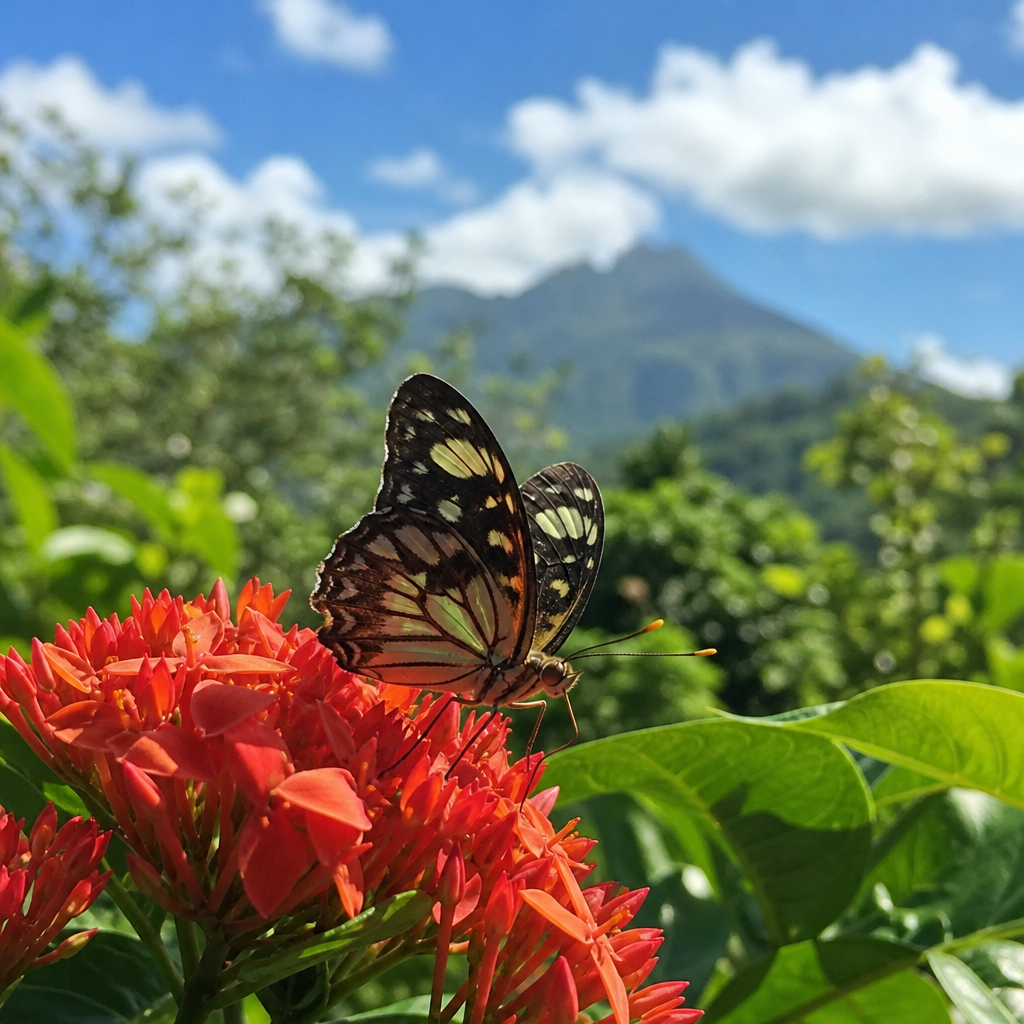
Several species on Saint Kitts are especially useful as entry points for identification because they combine visibility with distinctive traits. The Monarch is recognizable by its orange wings with black veins and white-spotted black margins. The Queen is similar but typically richer brown-orange with more white spotting and less bold veining. The Gulf Fritillary flashes bright orange above and silvery spots below. The Caribbean Buckeye shows eye spots that can be striking when the wings are open. The Cloudless Sulphur is often a clean lemon-yellow, while the Orange-barred Sulphur can show stronger contrast and larger size. Polydamas Swallowtails, lacking tails despite the name, are dark with pale yellow spotting and a powerful, gliding flight.
Species occurrence is not random. On Saint Kitts, butterfly numbers usually rise where nectar sources, shelter, sun, and larval host plants overlap. A coastal ornamental garden may attract adult sulphurs and monarchs, but a forest edge with vines, shrubs, and less manicured ground often supports more complete life cycles. After rain, fresh plant growth can trigger breeding activity, and in drier periods adults may concentrate around remaining flowers or damp patches. That is why two sites only a short drive apart can produce very different butterfly observations.
Where to find butterflies across Saint Kitts habitats
Butterfly watching on Saint Kitts improves dramatically when you match your search to habitat. The southeast peninsula, with its drier coastal vegetation and open scrub, favors species comfortable in heat, wind, and intense sun. Roadside verges, pasture edges, and flowering hedges around villages can be unexpectedly productive, especially for sulphurs, skippers, and widespread brush-footed butterflies. In contrast, the central and upland areas around the island’s volcanic slopes support more moisture-loving vegetation, shaded trails, and forest margins where swallowtails and shade-tolerant species may appear. Ghauts, which are seasonal watercourses or ravines, are particularly good because they combine shelter, humidity, and diverse host plants.
Gardens deserve special attention because they are often the first place people notice butterflies, yet they can either function as real habitat or merely temporary feeding stations. In Basseterre and residential areas beyond it, flowering plants such as lantana, pentas, porterweed, and ixora can bring in adults throughout the day. However, breeding depends on host plants such as milkweed for monarchs and queens, passionvine for Gulf Fritillaries and longwings, and cassia or senna species for many sulphurs. I have repeatedly seen heavily landscaped spaces attract a brief flurry of adults and then go quiet because the larvae have nowhere to develop. Well-planned gardens sustain both nectar feeding and reproduction.
Timing also matters. Early morning is useful for watching basking behavior and photographing adults before heat and wind increase. Late morning through early afternoon often brings peak flight activity in sunny weather. After strong rain or on heavily overcast days, numbers can appear lower, though sheltered forest margins may still hold active species. On islands, trade winds influence behavior more than many beginners expect. Butterflies often concentrate on leeward edges of hedges, trail clearings, and protected slopes where they can feed without being blown off flowers.
| Habitat | Typical butterfly groups | Best clues |
|---|---|---|
| Coastal scrub and peninsula | Sulphurs, grass yellows, skippers | Open sun, low shrubs, wind-sheltered patches |
| Village gardens and hotels | Monarchs, queens, fritillaries, common garden visitors | Nectar beds plus host plants |
| Forest edge and ghauts | Swallowtails, buckeyes, shade-tolerant species | Humidity, vines, mixed native vegetation |
| Pasture edges and roadsides | Sulphurs, skippers, migrants | Weedy flowers, grasses, disturbed ground |
How to identify Saint Kitts butterflies accurately
Accurate butterfly identification on Saint Kitts depends more on observation sequence than on memorizing a field guide. Start with size, then flight style, then dominant color, then wing shape, then behavior around plants. A large dark butterfly gliding along a forest edge suggests swallowtail before you ever inspect pattern details. A small yellow butterfly bouncing low over open grass points toward a sulphur or grass yellow. A thick-bodied insect that perches with wings partly open and darts in short bursts is often a skipper. This layered method reduces mistakes caused by quick glimpses.
Photographing both upperwing and underwing surfaces is one of the best habits for beginners and experienced observers alike. Many Caribbean butterflies look similar from above but separate clearly underneath. The Gulf Fritillary, for example, has unmistakable silvery spots below that help confirm identification. Queens and monarchs can be separated by vein boldness, spot patterns, and overall tone, especially when you compare multiple angles. For skippers, antenna shape, resting posture, and the presence of pale spots can be decisive. A smartphone image is often enough for later review if it captures size relative to a flower and the wing pattern clearly.
Host plants provide another reliable clue. If you find a caterpillar on milkweed, the likely candidates narrow quickly. If adults are repeatedly visiting and circling passionvine, Gulf Fritillary or longwing activity becomes more probable. Sulphurs around senna shrubs make ecological sense in a way that random guessing does not. This is why serious butterfly identification often overlaps with basic botany. Knowing the plant can solve the insect. On Saint Kitts, where many observations happen in gardens and mixed-use landscapes, that connection is especially useful because ornamental and wild plants occur side by side.
It is also important to recognize limits. Some species complexes require close comparison, regional expertise, or a confirmed photographic record reviewed by experienced Caribbean observers. Wind wear, seasonal fading, and individual variation can make a common species look unusual. Migrants can appear unexpectedly, and island records occasionally expand. A careful observer says likely when certainty is not warranted. That caution improves the quality of local butterfly records and makes community science more valuable.
Why butterflies matter to Saint Kitts ecology and conservation
Butterflies matter because they are both participants in ecosystems and indicators of ecological change. Adult butterflies pollinate many flowers while feeding on nectar, though they are generally less efficient pollinators than bees. More importantly, their larvae transfer plant energy into the food web, feeding birds, lizards, spiders, and predatory insects. When butterfly diversity drops sharply in an area, it often signals broader habitat simplification, pesticide pressure, over-manicured landscapes, or the loss of host plants. On an island system, where habitats are naturally limited and fragmented, those signals should be taken seriously.
Saint Kitts has seen long-term shifts in land use, from sugar cultivation history to changing patterns of development, tourism infrastructure, secondary forest growth, and garden landscaping. Each of these changes affects butterflies differently. Some adaptable species benefit from disturbed ground and ornamental nectar sources. Others decline when native vegetation is cleared or when roadside management removes larval food plants before caterpillars complete development. Even small choices, such as replacing mixed hedgerows with tightly clipped nonnative borders, can reduce usable habitat. Butterflies respond quickly because their life cycles are short and tightly linked to plant availability.
Conservation does not always require large reserves. In practical terms, Saint Kitts can support butterfly populations through connected habitat patches, reduced insecticide use, school gardens planted with host species, and better public understanding of the difference between a neat landscape and a living one. Hotels, villas, and public grounds can contribute by planting milkweed, passionvine, porterweed, senna, and other suitable species rather than relying only on decorative exotics with little ecological value. Monitoring programs, even informal ones using photo records and date-stamped sightings, help detect seasonal trends and unusual visitors.
For residents and travelers alike, butterfly watching can become a gateway to broader conservation literacy. Once people learn that a monarch needs more than a flower bed, or that a swallowtail’s presence reflects healthy host plant networks nearby, they begin to see the island’s vegetation with greater ecological precision. That shift in awareness is one of the most practical conservation tools available.
Saint Kitts’ butterfly species reveal the island in miniature: dry coasts, lush slopes, gardens, ghauts, and roadsides all expressed through color, movement, and seasonality. The key lessons are simple and durable. Learn the major butterfly groups first, then connect species to habitats, host plants, and behavior. Look beyond nectar flowers to the full life cycle. Use photographs, plant knowledge, and careful observation to identify species accurately. And remember that even common butterflies carry important ecological information about land use, vegetation, and environmental health.
As a hub within the Nature and Wildlife topic, this guide provides the foundation for exploring more specialized pages on butterfly identification, pollinator gardens, rainforest trails, native plants, and island conservation. The main benefit of understanding Saint Kitts butterflies is not just knowing names. It is gaining a practical, enjoyable way to read the landscape and notice how nature works across the island. Bring that perspective on your next walk, start recording what you see, and let Saint Kitts’ butterflies lead you deeper into its wildlife.
Frequently Asked Questions
What kinds of butterflies can you expect to see in Saint Kitts?
Saint Kitts supports a surprisingly varied butterfly community for a relatively small Caribbean island. Visitors and residents can encounter species associated with dry coastal vegetation, cultivated gardens, lowland forest edges, and wetter upland habitats closer to the island’s interior slopes. Rather than one uniform butterfly fauna across the island, Saint Kitts offers a patchwork of species that reflect changes in elevation, rainfall, host plants, and land use. That is part of what makes butterfly watching here so rewarding: even short distances can reveal noticeably different insect activity.
Many of the butterflies most people notice first are the active, sun-loving species found in open spaces such as roadsides, hotel gardens, village yards, and agricultural margins. These often include sulphurs, whites, skippers, and brush-footed butterflies that move quickly between flowering plants and patches of sunlight. In greener and more sheltered areas, especially where native or long-established vegetation remains, observers may find species that are more selective about shade, humidity, or larval host plants. Seasonal conditions also matter. Rainfall patterns can influence nectar availability, plant growth, and breeding cycles, which means butterfly abundance may rise and fall throughout the year.
What makes Saint Kitts especially interesting is not only the number of butterflies present, but what their presence says about the island’s ecological diversity. On an island known for steep volcanic topography and rapid transitions from shoreline to high ground, butterfly communities can serve as a visible map of habitat variation. A walk from coastal scrub toward more wooded slopes is often also a journey through different butterfly niches. For naturalists, photographers, gardeners, and casual travelers alike, the island’s butterflies provide an accessible introduction to how local ecosystems are structured.
Why are butterflies important to the ecology of Saint Kitts?
Butterflies play several ecological roles at once, which is why they matter far beyond their visual appeal. As adult insects, many butterflies visit flowers for nectar and contribute to pollination. While they are not always as efficient as bees in that role, they still help move pollen among flowering plants, especially in open habitats and gardens where a range of nectar sources are available. Their movements connect plant populations and support the reproductive cycles of species that make up the island’s broader living landscape.
Butterflies are also a vital food source. Their eggs, caterpillars, chrysalises, and adults are consumed by birds, lizards, spiders, and other insects. In that sense, butterflies help transfer energy through the food web. A healthy butterfly population usually reflects healthy plant growth at the base of the system and sufficient predator presence higher up. Because each life stage interacts differently with its environment, butterflies are woven into ecological processes in a way that is much larger than their size suggests.
Just as importantly, butterflies are widely recognized as indicators of habitat quality. Many species respond quickly to changes in temperature, moisture, vegetation cover, pesticide use, and the availability of larval host plants. If a site loses butterfly diversity, that can be an early sign that the habitat is becoming simplified or stressed. On Saint Kitts, where land use can shift rapidly across small areas, butterflies provide a practical and visible way to understand how forests, farms, gardens, and coastal scrub are functioning. They help researchers and everyday observers alike read the health of the landscape in real time.
Where are the best places to look for butterflies on Saint Kitts?
The best places to look for butterflies on Saint Kitts are areas where sunlight, flowering plants, shelter, and host vegetation come together. Gardens are often excellent starting points because they concentrate nectar sources and are easy to access. Botanical plantings, hotel landscapes, village yards, and mixed ornamental-native gardens can attract a broad range of species, especially during warm, bright parts of the day. Butterflies are often drawn to lantana, porterweed, milkweed, and other nectar-rich flowers, but they may also gather around damp soil, fallen fruit, or leaf litter depending on the species.
Beyond gardens, forest edges and lightly disturbed habitats are especially productive. These transition zones tend to support both sun-loving and shade-tolerant butterflies, making them richer than either dense forest interior or highly exposed open ground alone. Trails along lower slopes, old estate lands, roadside vegetation, and areas where secondary growth is regenerating can be very rewarding. Upland routes may reveal different species from coastal areas because temperature, moisture, and plant communities shift noticeably with elevation. Even agricultural margins can host butterflies if there are hedgerows, weedy flowering strips, and reduced chemical disturbance.
Coastal scrub should not be overlooked. Although it may appear harsh compared with greener inland areas, it can support specialized butterfly activity where drought-tolerant plants and open basking spaces are available. The key is to move slowly and watch both flowers and flight paths. Morning through late morning is often productive once the sun has warmed the vegetation, while windy or overcast conditions can reduce activity. For the best results, think in terms of habitat variety rather than one single “best” spot. On Saint Kitts, diversity in landscape usually translates into diversity in butterflies.
How do butterflies reflect environmental change and habitat health on the island?
Butterflies are among the clearest biological signals of environmental change because they are sensitive to both immediate conditions and longer-term ecological trends. Their populations respond to temperature, rainfall, vegetation structure, and the presence or absence of particular host plants needed by caterpillars. When habitats become fragmented, overmanaged, sprayed with pesticides, or stripped of plant diversity, butterfly numbers often decline quickly. In contrast, when habitats contain layered vegetation, flowering resources, and breeding plants, butterfly communities tend to be more stable and varied.
On Saint Kitts, this sensitivity is especially meaningful because the island compresses many habitats into a small geographic area. Coastal development, shifts in agriculture, storm impacts, invasive plant spread, and climate-related changes in moisture patterns can all influence where butterflies thrive. A species that does well in dry, disturbed ground may expand, while one dependent on more complex or humid vegetation may retreat. Tracking those changes can reveal broader ecological patterns that might otherwise be easy to miss until they become severe.
That is why butterflies are often described as practical guides to ecosystem function. If a garden supports repeated breeding activity rather than just occasional visiting adults, it suggests the area is offering food, shelter, and host plants. If an upland path once rich in butterfly activity becomes quiet over time, it may indicate changes in canopy cover, plant composition, or microclimate. In other words, butterflies help translate environmental quality into something visible. On an island landscape where elevation changes rapidly from the coast to rainier interior zones, they provide a living measure of how connected and resilient those habitats remain.
What can residents and visitors do to help protect butterfly species in Saint Kitts?
One of the most effective ways to help butterflies in Saint Kitts is to protect and restore habitat at a practical, local scale. That begins with planting for the full butterfly life cycle, not just for adult nectar feeding. Many people focus on colorful flowers, which are important, but caterpillars require specific host plants on which females lay eggs. Without those plants, butterflies may visit briefly but cannot reproduce successfully. Gardens, schoolyards, farms, and community spaces become much more valuable when they include a mix of nectar sources, native or well-adapted host plants, and sheltered vegetation of different heights.
Reducing pesticide use is equally important. Broad-spectrum insecticides can kill caterpillars, adults, and many other beneficial insects directly, while herbicides can remove the “ordinary” plants butterflies depend on for breeding. A tidy landscape is not always a healthy one. Allowing some leaf litter, weedy edges, and lightly unmanaged corners can create essential microhabitats. Water management matters too. Damp ground, shallow water sources, and diverse plantings can improve conditions for butterflies and for the wider insect community that supports birds and other wildlife.
Visitors can contribute by observing responsibly, avoiding damage to vegetation, and supporting tourism and community efforts that value native habitats rather than excessive clearing or chemical maintenance. Residents can go further by participating in citizen science, documenting sightings, and encouraging pollinator-friendly planting in neighborhoods and public landscapes. Even small actions add up on an island. Because Saint Kitts contains such a compressed range of ecosystems, protecting butterfly habitat in gardens, farm edges, forest margins, and coastal vegetation can have a meaningful impact on biodiversity overall. Helping butterflies is not a niche conservation effort; it is a practical way to support the health, beauty, and ecological resilience of the island itself.