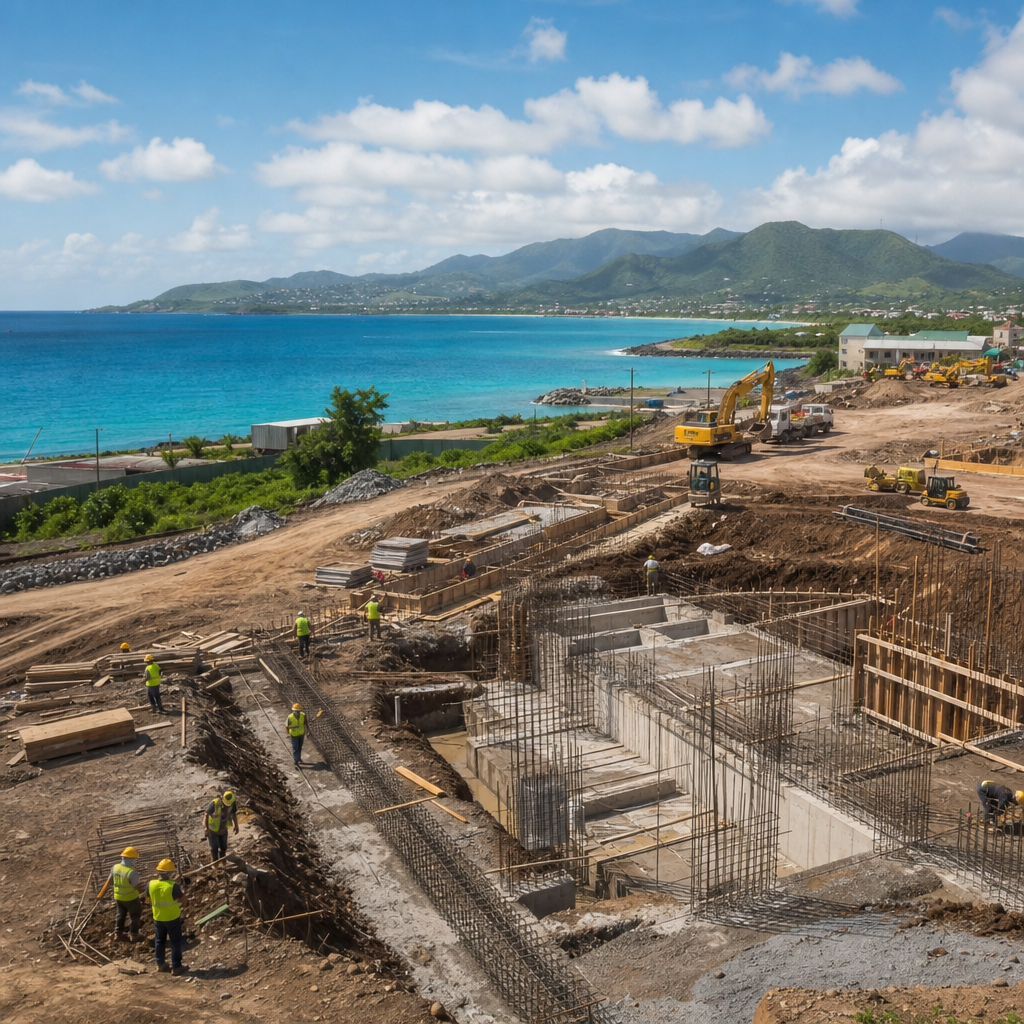
Saint Kitts’ infrastructure projects are creating a wider set of investment opportunities than many Caribbean markets of similar size, because the island’s development strategy combines tourism expansion, utility upgrades, transport modernization, and climate resilience in one compact economy. In practical terms, infrastructure projects include roads, port improvements, energy systems, water networks, digital connectivity, public facilities, and mixed-use real estate that supports commercial activity. For investors, that matters because infrastructure is not an isolated asset class in Saint Kitts; it is the operating base for hotels, logistics, housing, healthcare, education, and business services. I have worked with investors evaluating Caribbean projects, and Saint Kitts consistently stands out for one simple reason: the market is small enough to understand quickly, yet active enough to offer multiple entry points. That makes this a useful hub topic for anyone exploring broader business and investment opportunities on the island.
Saint Kitts and Nevis is not competing on scale. It is competing on access, policy alignment, and targeted development. Basseterre remains the commercial center, the port is essential to both trade and cruise activity, and Robert L. Bradshaw International Airport underpins tourism and business travel. Around these core assets, the government and private sector have pushed projects tied to urban renewal, renewable energy, hospitality-linked construction, and utility reliability. Investors usually ask three questions first: where is the demand coming from, how are projects financed, and what risks are most material? The short answer is that demand comes from tourism, population needs, public service modernization, and resilience planning; financing often blends public funding, development finance, bank lending, and private capital; and risks center on execution, regulatory timing, weather exposure, and market concentration. Understanding those fundamentals is the difference between seeing Saint Kitts as a niche island story and seeing it as a disciplined infrastructure-led investment environment.
Why infrastructure investment in Saint Kitts matters now
The current opportunity is shaped by convergence. Tourism remains the headline sector, but tourism alone does not explain the pipeline. Hotel growth requires roads, stable electricity, water security, waste management, broadband, and airport efficiency. Residential and commercial expansion need the same support systems. Governments across the Caribbean learned after repeated storms and global supply disruptions that legacy infrastructure can suppress growth more than tax rates do. In Saint Kitts, that lesson has translated into greater focus on resilient public works and service capacity. Investors entering now are not only backing a single road or building; they are participating in the platform that enables retail, logistics, healthcare, education, and higher-value visitor spending.
There is also a timing advantage. Smaller island economies often move in visible cycles, and project pipelines can be tracked through planning announcements, tender activity, utility upgrades, and tourism development commitments. When airport enhancements, port activity, and real estate construction rise together, secondary opportunities usually follow. Those can include construction materials, engineering services, warehousing, cold storage, property management, transport fleets, and digital systems for payments or security. I have seen investors focus only on headline resort deals and miss the steadier returns available in enabling infrastructure and service contracts. In Saint Kitts, the supporting layers are often where risk-adjusted value is clearest.
Core project categories attracting investor attention
Transport is the most visible category. Road rehabilitation, drainage improvement, junction upgrades, port-related works, and airport-linked development all have direct economic effects. Better roads reduce travel time for workers and tourists, lower vehicle maintenance costs, and improve access to inland development sites. Port infrastructure is equally important because island economies depend heavily on maritime logistics for imports, construction inputs, and consumer goods. Any improvement in cargo handling, storage, customs processing, or cruise reception can have an outsized multiplier effect in Saint Kitts.
Energy is another high-potential area. Caribbean electricity costs have historically been elevated because systems rely on imported fuel, small generation bases, and costly maintenance. That makes renewable energy, storage, grid modernization, and efficiency upgrades especially attractive. Saint Kitts has drawn attention for solar potential and broader clean-energy discussions, and investors should view power projects not just as utility plays but as competitiveness projects. Lower and more reliable energy supports hotels, manufacturers, offices, and data-heavy services. Water and wastewater infrastructure belong in the same category because service reliability directly affects public health, tourism quality, and land development feasibility.
Digital and social infrastructure should not be overlooked. Fiber connectivity, mobile network upgrades, public sector digitization, schools, clinics, and community facilities may appear less glamorous than ports or hotels, but they strengthen labor productivity and investor confidence. In my experience, business owners care deeply about whether staff can commute, utilities stay on, and administrative processes are predictable. Infrastructure that solves those practical issues tends to support a broader range of profitable businesses than a single landmark project.
| Project area | Why it matters | Typical investor angle | Main watchpoint |
|---|---|---|---|
| Roads and drainage | Supports tourism, housing, logistics, and storm resilience | Contracting, materials, equipment leasing, land appreciation | Permitting and weather delays |
| Ports and airport links | Improves trade flow and visitor access | Logistics, warehousing, concessions, adjacent real estate | Traffic concentration and customs bottlenecks |
| Energy and utilities | Reduces operating costs and service interruptions | Independent power, EPC services, efficiency systems | Tariff structure and grid integration |
| Water and wastewater | Enables development and protects public health | Engineering, treatment technology, maintenance contracts | Capital intensity and long payback periods |
| Digital infrastructure | Supports modern services and administration | Telecom partnerships, software, network equipment | Scale limitations in a small market |
How investors can participate beyond direct ownership
Many investors assume infrastructure means bidding for a public-private partnership or funding a large utility asset. In Saint Kitts, participation is broader. Direct equity in a major project is only one path. Another is becoming a supplier or operator to projects already moving forward. Engineering firms, quantity surveyors, environmental consultants, project managers, aggregate suppliers, mechanical contractors, and facilities operators can all benefit from infrastructure spending without taking full development risk. This matters in a market where relationships, local execution, and timeline discipline are often more important than headline balance sheet size.
There are also real opportunities in adjacent real estate and business services. A road upgrade can unlock housing demand in previously less accessible corridors. A port enhancement can justify warehouse investment, customs brokerage expansion, and temperature-controlled storage. Utility reliability can improve the economics of office parks, medical facilities, and education campuses. I often advise investors to map first-order and second-order effects. First-order value comes from the project itself. Second-order value comes from the businesses that become viable because the project exists. On islands, those second-order gains can be substantial because each infrastructure improvement removes a bottleneck affecting multiple sectors at once.
Financing support services are another niche. Investors with experience in structured lending, equipment finance, insurance, or receivables management can find openings where contractors and operators need working capital. In smaller jurisdictions, the shortage is not always project ideas; it is often bankable structuring, procurement support, and disciplined operational follow-through. Investors who bring those capabilities can create differentiated value.
Government policy, regulation, and project structuring
Any investor assessing Saint Kitts infrastructure projects needs to understand the policy environment. The federation has long positioned itself as an investment-friendly jurisdiction, but successful execution still depends on careful regulatory review. Land use permissions, environmental standards, utility regulation, procurement rules, tax treatment, and development approvals all affect outcomes. Projects connected to public services may involve ministries, statutory bodies, utility stakeholders, and local authorities, so timeline planning should be realistic. In my experience, the strongest investors build a regulatory workstream into the project model from day one instead of treating approvals as a final checklist item.
Project structure matters just as much as headline demand. Some assets are suited to concession models or long-term service agreements. Others work better as fully private developments aligned with public infrastructure expansion. International Finance Corporation guidance, World Bank procurement principles, and Caribbean Development Bank project standards are useful benchmarks even when a specific transaction is locally negotiated. These standards help investors test whether demand forecasts, environmental safeguards, and revenue assumptions are credible. They also improve lender confidence. A project that follows disciplined feasibility, procurement transparency, and maintenance planning usually attracts capital more efficiently than one relying on optimistic narratives.
Tax incentives and investment promotion mechanisms can support returns, but they should not be the core thesis. Incentives improve a sound project; they do not rescue a weak one. Investors should focus first on cash flow durability, counterparty quality, and replacement value. In Saint Kitts, where market size imposes natural limits, disciplined underwriting is essential.
Risk factors investors should price carefully
The main risks are clear and manageable if addressed early. Climate exposure is the first. Hurricanes, intense rainfall, coastal erosion, and heat can disrupt construction and increase maintenance costs. That means resilient design is not optional. Drainage capacity, corrosion-resistant materials, backup power, elevated equipment placement, and realistic insurance coverage should be built into capex assumptions. I have seen Caribbean projects underprice resilience upgrades and then absorb avoidable costs within a few storm seasons.
Execution risk is the second major factor. Small-island markets can face labor shortages, imported material delays, and contractor concentration. A project may look simple on paper but depend on shipment timing, customs clearance, specialist subcontractors, and utility coordination. Investors should test schedule buffers, procurement plans, and contractor depth. Market concentration is the third risk. Demand in Saint Kitts can be strong, but it is still concentrated relative to larger economies. A single tourism downturn, airline change, or public budget constraint can affect volumes faster than in a diversified market. That is why mixed revenue models and phased investment approaches often work well.
Currency and legal considerations also matter, although the Eastern Caribbean dollar’s long-standing peg to the US dollar reduces one common source of volatility. Investors should still review repatriation mechanics, contract enforceability, dispute resolution provisions, and local operating requirements. None of these issues are unique to Saint Kitts, but handling them thoroughly is what separates durable infrastructure investments from speculative ones.
Where the strongest opportunities may emerge next
Looking ahead, the most compelling areas are likely to be projects that combine economic utility with resilience. Renewable energy, microgrid support, battery storage, efficient water systems, stormwater management, and port-adjacent logistics fit that pattern well. So do mixed-use developments tied to upgraded transport corridors, because they capture both infrastructure value and operating income. Healthcare-related facilities, education assets, and specialized commercial space may also benefit as the island continues to position itself for higher-quality services rather than volume alone.
Investors should watch for clusters, not isolated announcements. When road improvements, hospitality construction, utility upgrades, and public realm investments appear in the same geography, that usually signals a stronger medium-term thesis. Basseterre and its surrounding commercial zones remain obvious focal points, but secondary areas can become attractive once access and services improve. The best opportunities often emerge before a market is fully re-rated, when infrastructure investment has begun but land and service capacity are not yet fully priced.
Saint Kitts offers investors a practical infrastructure story: targeted projects, visible demand drivers, and multiple ways to participate without overextending risk. The core lesson is simple. Do not evaluate roads, ports, power, water, or digital networks as isolated assets. Evaluate them as the foundation for the island’s broader business and investment opportunities. If you are building a Caribbean pipeline, start with the infrastructure map, identify the bottlenecks being removed, and then match your capital or operating expertise to the businesses those improvements will unlock.
Frequently Asked Questions
Why is Saint Kitts attracting investor interest in infrastructure projects?
Saint Kitts is drawing attention because its infrastructure pipeline is tied directly to national economic priorities rather than isolated, one-off developments. In a relatively compact market, improvements to roads, ports, utilities, digital networks, and public facilities can have an outsized impact on tourism, trade, real estate demand, and business formation. That creates a practical investment case: capital deployed into infrastructure often supports multiple sectors at the same time. For example, transport upgrades can improve visitor flows, strengthen logistics for local businesses, and raise the value of surrounding commercial and residential assets. Likewise, utility modernization can make hospitality projects, mixed-use developments, and industrial activities more reliable and efficient.
Another important factor is the country’s development strategy. Saint Kitts is not expanding in a random way; it is pursuing a broad modernization agenda that combines tourism growth, climate resilience, urban improvements, and essential services. For investors, that integrated approach reduces the risk that a single project will sit disconnected from the rest of the economy. A port improvement can support cruise traffic and imports, a water network upgrade can help sustain new development corridors, and better digital connectivity can strengthen both government services and private-sector productivity. In short, Saint Kitts stands out because infrastructure investment is closely linked to the island’s wider economic transformation, creating a range of entry points for investors with different risk profiles and time horizons.
What types of infrastructure opportunities are available to investors in Saint Kitts?
The opportunity set is broader than many investors initially expect. Traditional infrastructure areas such as roads, bridges, port facilities, power generation, water distribution, and wastewater systems are part of the picture, but they are not the whole story. Saint Kitts also presents opportunities in digital infrastructure, including broadband expansion, communications systems, smart-building technologies, and technology-enabled public services. These projects can be especially attractive because they support both residents and businesses while helping modernize the island’s competitiveness in tourism, finance, education, and professional services.
There is also a strong connection between core infrastructure and real estate-linked investment. Mixed-use developments, hospitality-supporting facilities, marina-adjacent services, logistics space, and public-private civic projects can all qualify as infrastructure-related opportunities when they enable broader economic activity. Investors may find opportunities through direct ownership, joint ventures, public-private partnerships, concession-style structures, engineering and development contracts, or financing roles. Climate adaptation and resilience projects are another emerging area, including drainage, coastal protection, renewable energy integration, stormwater systems, and resilient building systems. Because Saint Kitts is a small island economy with clear development priorities, infrastructure categories often overlap, and that can create attractive, multi-layered revenue potential for investors who understand how transport, utilities, tourism, and real estate reinforce one another.
How does tourism growth influence infrastructure investment potential in Saint Kitts?
Tourism is one of the strongest drivers of infrastructure demand in Saint Kitts, and that has direct implications for investors. As visitor numbers grow and the hospitality sector expands, pressure increases on ports, roads, airports, utility systems, public amenities, and digital services. This creates demand not only for headline tourism assets such as hotels and marinas, but also for the underlying infrastructure that makes those assets viable and competitive. Reliable electricity, efficient transport links, modern water systems, attractive public spaces, and high-quality connectivity all affect the visitor experience and the operating performance of tourism-related businesses.
For investors, this matters because tourism-linked infrastructure often benefits from visible market demand. A port improvement can support cruise arrivals and cargo efficiency at the same time. Road upgrades can improve access to resorts, beaches, commercial districts, and residential communities. Utility investments can reduce service disruptions for hotels, restaurants, and mixed-use properties. Even public realm improvements, such as waterfront enhancements or urban beautification, can strengthen surrounding land values and commercial activity. In a market like Saint Kitts, where tourism remains central to economic expansion, infrastructure investment is often less about building for speculative future demand and more about supporting real, ongoing growth. That dynamic can make the investment thesis more compelling, particularly when projects are aligned with long-term tourism development plans and local land-use priorities.
What should investors evaluate before committing capital to infrastructure projects in Saint Kitts?
Investors should begin with project fundamentals: demand, revenue model, delivery timeline, operating assumptions, and long-term maintenance requirements. In Saint Kitts, as in any island market, it is especially important to understand whether a project serves local demand, tourism demand, government service needs, or a combination of all three. That affects cash flow predictability, pricing power, and long-term utilization. Investors should also review land rights, permitting pathways, environmental considerations, utility interconnection requirements, and the regulatory framework for foreign participation. If the project involves a public-private partnership or another structured arrangement, the allocation of construction risk, political risk, demand risk, and performance obligations should be examined closely.
Resilience is another critical issue. Because Caribbean infrastructure must perform under climate and weather pressures, investors should assess design standards, insurance availability, redundancy planning, and long-term operating durability. Currency exposure, import dependency for materials, contractor capacity, and supply chain timing can also affect both returns and execution. Just as important is stakeholder alignment. Projects tend to perform better when they fit clearly within Saint Kitts’ development priorities and have support from relevant public agencies, local communities, and commercial users. Experienced investors typically combine financial due diligence with legal, technical, and environmental reviews to ensure the project is not only profitable on paper but also practical to deliver and operate in the local context. A disciplined approach is essential, but for well-structured projects, the market can offer meaningful upside.
Are Saint Kitts’ infrastructure projects suitable for long-term investors seeking stable returns?
In many cases, yes. Infrastructure projects in Saint Kitts can be well suited to long-term investors because they are often tied to essential services and durable economic trends. Assets linked to transport, utilities, water, communications, and public-use facilities typically serve ongoing needs rather than short-term consumer cycles. That can support more stable demand profiles over time, especially when projects are integrated into national development plans or linked to recurring tourism and business activity. For investors seeking a balance between income potential and strategic asset exposure, infrastructure in Saint Kitts can offer a useful way to participate in the country’s growth while focusing on assets with real economic utility.
That said, stable returns depend on structure, execution, and asset selection. Not every infrastructure-related project carries the same risk profile. Core utility or service assets may offer more predictable performance than speculative development plays, while mixed-use or tourism-adjacent infrastructure may provide higher upside with greater market sensitivity. Long-term investors should look closely at concession terms, user-fee structures, operating contracts, inflation pass-through mechanisms, and maintenance obligations. They should also consider how a project fits into broader trends such as renewable energy adoption, resilience spending, digital modernization, and continued tourism development. When chosen carefully, infrastructure investments in Saint Kitts can combine defensiveness with growth exposure, which is exactly why the market is becoming more relevant to investors looking beyond larger but more crowded Caribbean jurisdictions.