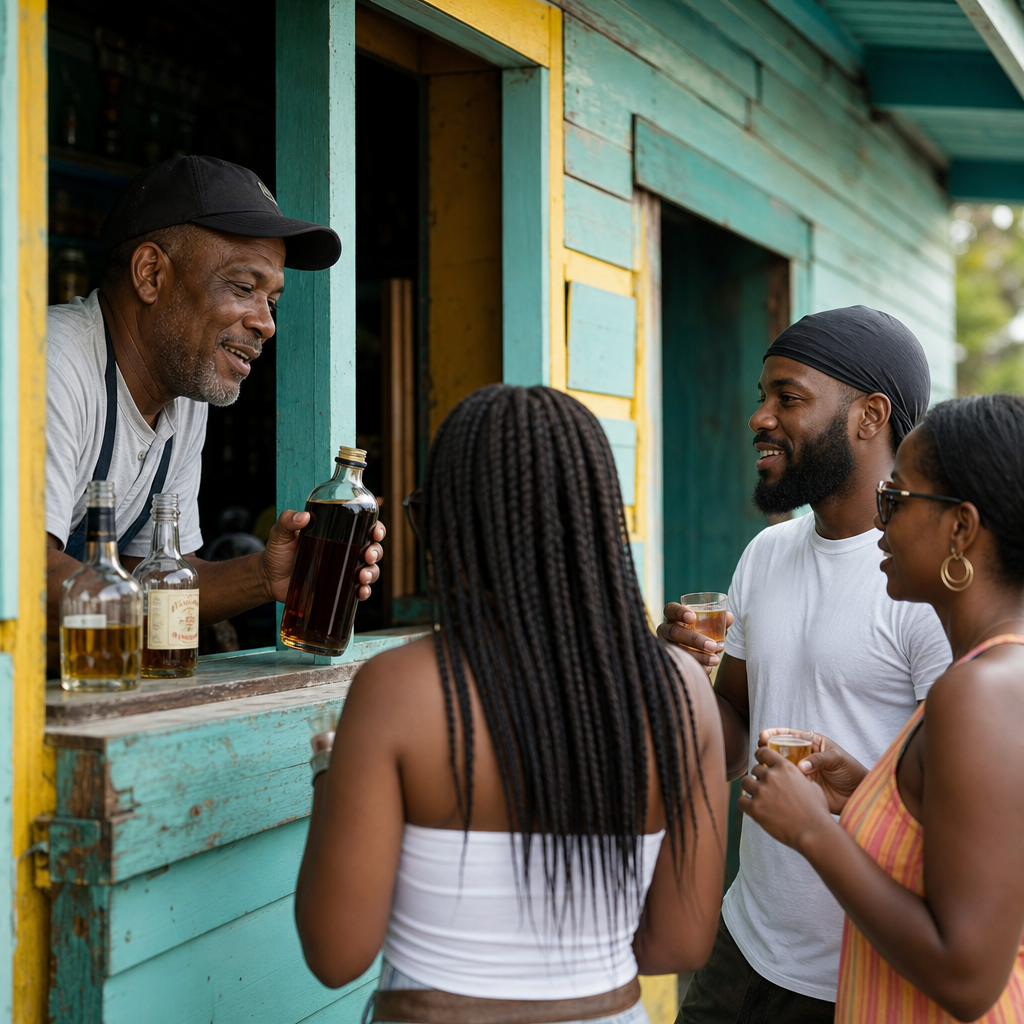
Saint Kitts’ rum shops are small, social, deeply local spaces where a drink is only the starting point, because these neighborhood bars function as informal community centers, cultural archives, and windows into everyday island life. Visitors often arrive expecting a quick shot of overproof rum or a cold Carib, then discover conversations about cricket scores, ferry schedules, politics, fishing conditions, and family history unfolding across a counter that has served generations. In Saint Kitts, a rum shop is not simply a place to consume alcohol; it is part corner store, part storytelling venue, part meeting hall, and part cultural classroom.
That distinction matters for anyone exploring local life and experiences on the island. To understand Saint Kitts beyond beaches, cruise excursions, and resort dining, you need to understand where residents actually gather and how social routines work. Rum shops reveal class dynamics, village identity, music preferences, food habits, and the cadence of island time more clearly than almost any formal attraction. I have spent enough time in Caribbean neighborhood bars to know that the best insights rarely come from menus. They come from who walks in, who gets greeted by name, what is playing on the speaker, what is simmering in the kitchen, and how long people stay after their glass is empty.
On Saint Kitts, these spaces range from roadside wooden bars with hand-painted signs to slightly larger establishments with televisions, domino tables, grills, and weekend sound systems. Some focus on local rum, some sell beer and simple mixed drinks, and some blur into cook shops or small groceries. Many are unpretentious by design. Plastic chairs, a few regulars on stools, a cooler near the entrance, and a steady current of conversation can tell you more about Basseterre and village life than a polished brochure ever will. That is why Saint Kitts’ rum shops deserve attention as a hub topic within miscellaneous local experiences: they connect food, music, transport, etiquette, history, safety, and social customs in one setting.
For travelers, the key question is simple: what should you expect from a rum shop in Saint Kitts? Expect authenticity, but not performance. These are not themed bars created for outsiders. They exist to serve local communities first. That means standards of hospitality may feel warmer, more direct, and less scripted than in tourist zones. It also means visitors benefit from understanding the basics before stepping inside: order respectfully, greet people, ask before photographing anyone, pace your drinking, carry cash, and stay aware of your surroundings. When approached with humility, rum shops offer one of the clearest and most rewarding entry points into everyday Kittitian culture.
What a Saint Kitts rum shop really is
A rum shop in Saint Kitts is best defined as a small, casual drinking establishment rooted in neighborhood life rather than nightlife branding. Historically across the British Caribbean, rum shops emerged as accessible places where working people could buy local spirits, socialize after labor, and exchange news. In Saint Kitts, that tradition still shapes how these venues operate. They may open early, attract a mixed-age crowd, and serve as unofficial information networks. Someone might stop in for one drink, but leave having learned which beach is rough that day, where a fête is happening, or why a road is backed up near town.
The physical setup is usually simple. Many have a serving counter, a few tables, coolers, and limited but reliable stock: local or regional rum, beer, soft drinks, water, and sometimes basic snacks. Some also serve hot food, especially on weekends. You may find goat water, saltfish, chicken, fried fish, plantains, or barbecue depending on the area and the owner’s specialty. The atmosphere can shift by hour. Midday may be quiet and conversational. Late afternoon often brings workers stopping by. Evenings and weekends can become louder and more festive, especially if dominoes, sports broadcasts, or music are involved.
What separates a rum shop from a standard bar is social function. Regulars are not just customers; they help create the place. The owner or bartender often knows family ties, community disputes, and local history. In practice, that means the rum shop becomes a trusted third place, a term urban sociologist Ray Oldenburg used for spaces outside home and work where community life develops. On Saint Kitts, this role is visible in real time. A resident drops off a message, another asks about a mechanic, a fisherman comments on the sea, and a visitor quietly learns how the island talks to itself.
Why rum shops matter to local life and culture
Rum shops matter because they preserve forms of social connection that many destinations have lost to chain venues and highly curated tourism. In Saint Kitts, they remain one of the few places where conversation is still the main event. That makes them important cultural sites, not just beverage outlets. You hear local speech patterns, debates, humor, and memory. You also see how communities negotiate change, from rising prices to tourism growth to election seasons. For anyone studying Caribbean social life, these bars offer direct evidence of how public culture operates on a small island.
They also support micro-economies. Most rum shops are independently owned, locally supplied, and modest in scale. Revenue circulates within the community through beverage sales, food preparation, music bookings, transportation, and informal referrals. A small roadside spot may employ family members, buy produce locally, and draw customers who later purchase from nearby vendors. That local circulation matters on islands where imported goods are costly and small business margins can be thin. Spending in a neighborhood rum shop typically has a different economic footprint than spending in an all-inclusive resort bar.
Culturally, rum shops hold memory. Many have existed in one form or another for decades, even if ownership or buildings have changed. Older patrons may recall the sugar industry era, village fêtes from years past, or how a neighborhood developed. Younger patrons bring current music, sports talk, and digital habits into the same space. That overlap between generations is significant. It keeps local identity active instead of packaging it as nostalgia. In my experience, the most revealing moments happen when someone tells a story that begins with a drink but ends with a lesson about migration, labor, or family networks across Saint Kitts, Nevis, and the wider Caribbean.
What visitors will notice first: atmosphere, etiquette, and rhythm
The first thing most visitors notice is that rum shops run on local rhythm, not service theater. Nobody is trying to impress you with cocktail rituals, curated back bars, or elaborate branding. The value is in ease, recognition, and social texture. If you enter expecting the speed and structure of a hotel lounge, you may misread the room. If you enter ready to observe, greet, and adapt, the experience opens quickly. A simple “good afternoon” or “good evening” goes a long way. In Caribbean social settings, greeting people before launching into a request is basic respect.
Dress tends to be casual, but that does not mean anything goes. Beachwear in a village setting can look careless, especially away from obvious tourist zones. Smart casual, clean shirts, and normal daywear are safer choices. Cash is useful because not every small establishment accepts cards reliably. Ordering is usually straightforward: ask what they have, choose simply, and avoid treating the interaction like a tasting performance. If you do not know local brands or rum strengths, ask directly. Overproof rum is common across the region, and the practical rule is to respect it. Caribbean pours can be more generous than visitors expect.
Photography requires discretion. A rum shop is a lived space, not a backdrop. Always ask before taking pictures of people, domino games, or interiors. Noise levels also vary. Some venues are quiet enough for long conversation; others center on music, especially on weekends. Pay attention to cues. If regulars are talking politics or cricket, listen before jumping in. If the space is lively and communal, participation may be welcomed. The difference usually becomes clear within minutes. The best approach is simple: be friendly, stay observant, and let the place teach you how it wants to be experienced.
Food, drink, music, and conversation: the full experience
The phrase “more than just a drink” is literal in Saint Kitts. Rum shops often combine beverage service with food, entertainment, and social exchange in ways that make them central to miscellaneous local experiences. A visitor might start with a local rum served neat, then order grilled chicken or fried fish, stay to watch a football match, and end up in conversation about Carnival or ferry schedules to Nevis. That layered experience is why rum shops deserve hub status: they intersect with nearly every practical and cultural strand of island life.
| Element | What you may find | Why it matters |
|---|---|---|
| Drinks | Local rum, overproof rum, beer, stout, soft drinks, water | Shows everyday preferences rather than resort menus |
| Food | Barbecue, saltfish, goat water, fried fish, plantains, chicken | Connects drinking culture to home-style cooking traditions |
| Games | Dominoes, card games, sports on television | Creates social interaction and repeat community use |
| Music | Soca, reggae, dancehall, old-school Caribbean hits, live DJs | Reflects generational taste and event culture |
| Conversation | Politics, cricket, family news, transport, work, local events | Turns the shop into an informal information network |
Rum itself carries historical weight. The Caribbean rum economy grew out of the sugar plantation system, and Saint Kitts’ landscape still bears the marks of that history. While a casual drink today is far removed from the old export structures, the spirit remains tied to labor, trade, and colonial economics. That context does not make a rum shop somber; it makes it meaningful. When a local establishment pours rum in a former sugar island, it is serving a product that is inseparable from the region’s past.
Music deepens that connection. A Friday evening playlist can reveal generational identity faster than almost any direct question. Older calypso or reggae selections suggest one mood; newer soca or dancehall pushes another. Sports do the same. During major cricket matches, football games, or local competitions, rum shops become small public viewing rooms where commentary from patrons is often better than the broadcast. For visitors, these details turn a stop for a drink into an education in how leisure actually works on the island.
How to choose a good rum shop and avoid common mistakes
Choosing a good rum shop in Saint Kitts starts with intent. If you want a highly polished, tourist-oriented experience, a rum shop may not be your best fit. If you want local texture, conversation, and grounded hospitality, it can be ideal. Ask trusted residents, taxi drivers, guesthouse hosts, or small tour operators where they would actually go for a casual drink or weekend food. Recommendations are better than random searching because the best spots are not always heavily reviewed online. Some of the most memorable places have minimal digital presence and depend almost entirely on repeat local business.
Time of day matters. Daylight or early evening is best for first-time visitors because it is easier to read the atmosphere, meet the owner, and leave comfortably. Group size matters too. One or two curious, respectful travelers usually integrate more smoothly than a loud party. Common mistakes include overdrinking, assuming every rum shop is a tourist attraction, and treating local patrons as part of the entertainment. Another mistake is mistaking simplicity for low quality. In Caribbean bar culture, a place with basic furniture and strong community presence is often more valuable than a slick venue with no local character.
Safety is mostly about standard judgment. Stay aware of transport plans, keep valuables discreet, and avoid wandering unfamiliar areas late at night after drinking. Women traveling solo may prefer visiting in daylight, going with a trusted guide, or choosing busier establishments known to guesthouse owners. None of this is unique to Saint Kitts; it is sensible practice anywhere. The core principle is respect for place. When visitors understand that rum shops are community spaces first, they usually receive the same respect in return, and the experience becomes far richer than a simple bar stop.
Why rum shops anchor the broader local experience hub
As a hub topic within local life and experiences, Saint Kitts’ rum shops connect naturally to nearly every miscellaneous subject a traveler may want to understand next. They lead into local food, because many serve dishes that reflect village cooking rather than restaurant presentation. They lead into music and nightlife, because DJs, fêtes, and weekend gatherings often begin or end around these venues. They lead into transport and geography, because residents discuss which villages are active, where events are happening, and how people move between Basseterre, the Southeast Peninsula, and rural communities. They even connect to language and etiquette, since visitors quickly learn greeting customs, humor, pacing, and conversational norms.
That is the real benefit of seeking out a rum shop in Saint Kitts: you do not just buy a drink, you gain access to context. You see how people gather, what they value in public space, and how culture is carried through ordinary routines. Some travelers collect attractions; smarter travelers collect understanding. Start with a respectful visit, listen more than you speak, try the house specialty if offered, and notice how much island life becomes clearer from a single stool at a local counter. If you want Saint Kitts to feel less like a destination and more like a place, put its rum shops on your list.
Frequently Asked Questions
What exactly is a rum shop in Saint Kitts, and how is it different from a regular bar?
A rum shop in Saint Kitts is much more than a place to buy a drink. On the surface, it may look simple: a small roadside bar, a corner storefront, or a modest gathering spot with a counter, a few stools, music in the background, and bottles lined up behind the bar. But in practice, rum shops serve as deeply local social spaces where everyday island life plays out in real time. They are places where neighbors check in with one another, where news travels fast, and where conversations move easily from cricket and politics to fishing conditions, ferry timing, village events, and family connections.
What sets a Kittitian rum shop apart from a conventional bar is its role in the community. A regular bar often centers on nightlife, entertainment, or a broad customer base. A rum shop, by contrast, usually feels more rooted in the neighborhood. It may have regulars who have been coming for years, and the person behind the counter may know customers by name, by family, or by district. Visitors often walk in expecting a quick shot of rum or a cold beer, only to realize they have stepped into an informal community center where local culture is not staged for tourists but simply lived.
That is why rum shops are often described as cultural archives as much as drinking spots. Stories are told there, opinions are debated there, and generations of memory gather there. Even the setting itself can reflect continuity, with counters, signs, and routines that have served the same area for decades. In Saint Kitts, the drink may be the reason you enter, but the conversation, atmosphere, and sense of place are what make the experience memorable.
Why are Saint Kitts’ rum shops considered such important parts of local culture?
Saint Kitts’ rum shops matter because they preserve the rhythms and relationships of everyday life in a way few formal institutions can. They are accessible, familiar spaces where people gather naturally, not because an event has been organized, but because the rum shop is where the community meets itself. In a small-island setting where social ties, reputation, memory, and neighborhood identity remain important, these spaces function almost like public living rooms. They hold the pulse of local opinion and provide a setting where people exchange practical information, celebrate small victories, and talk through concerns.
Culturally, rum shops are valuable because they reveal the island beyond the polished visitor experience. In these spaces, you hear the concerns and humor of real life: who won the cricket match, whether the sea is rough, what is happening in Basseterre, which family is connected to which village, or what has changed over the years. These are not scripted interactions. They are lived conversations that reflect how Saint Kitts understands itself. That makes rum shops important not only socially, but historically. They carry oral history, community memory, and local perspective from one generation to the next.
They also matter because they embody a style of Caribbean sociability built on presence, conversation, and familiarity. A rum shop does not need to be large or elaborate to be significant. Its value lies in how it creates continuity. People return not only for rum, beer, or a snack, but because the space offers belonging. For travelers who want to understand Saint Kitts beyond beaches and attractions, the rum shop is one of the clearest windows into the island’s social fabric.
What should visitors expect when they step into a rum shop in Saint Kitts?
Visitors should expect a setting that feels local first and performative not at all. Many rum shops are casual, compact, and unpretentious. You might find plastic chairs, dominoes, a television showing sports, music playing softly or loudly depending on the hour, and a mix of regulars engaged in animated conversation. The menu may be straightforward, often centered on local or regional rum, beer such as Carib, and simple mixers. Some places may also offer light snacks or small bites. The atmosphere can range from quiet and conversational in the daytime to lively and energetic later on.
More important than the physical setup is the social environment. A rum shop in Saint Kitts often operates on familiarity and rhythm, so first-time visitors should be prepared to observe a little before jumping in. Listen to the flow of conversation, greet people politely, and understand that the experience is usually more about interaction than speed. Service may feel relaxed compared with high-turnover bars in tourist districts, but that slower pace is part of the appeal. These are places built for staying a while, not simply ordering and leaving.
Many visitors are pleasantly surprised by how much they learn from a single stop. A short visit can turn into a discussion about island history, local politics, neighborhood changes, transport, agriculture, cricket, or fishing. If you are respectful and genuinely curious, people may be very open. At the same time, it helps to remember that you are entering a community space, not a themed attraction. The best approach is to be friendly, patient, and authentic. In return, you may experience one of the most grounded and memorable forms of hospitality Saint Kitts offers.
Is there any etiquette visitors should follow in Saint Kitts’ rum shops?
Yes, and following local etiquette can make a major difference in how welcome and comfortable the experience feels. The first rule is simple: enter with respect. Greet people, acknowledge the bartender or shop owner, and avoid acting as though the space exists solely for visitors. Rum shops are neighborhood institutions, so basic courtesy matters. Taking a moment to settle in, observe, and understand the tone of the room is often better than arriving loudly or treating the shop like a novelty.
It is also wise to be mindful with photographs and videos. Because rum shops are intimate social spaces, not everyone will want to be photographed or filmed. Always ask before taking pictures, especially if you want to capture people rather than just the setting. Respect for privacy signals that you understand the shop as a living community space rather than a cultural display. The same goes for conversations: listen more than you dominate, avoid overly personal questions at the outset, and be sensitive when topics shift to politics, money, or family matters.
Ordering with confidence but humility helps too. If you are unfamiliar with local rums or customs, ask politely. Most people appreciate genuine interest. Drink responsibly, especially if you are trying overproof rum, which can be much stronger than some visitors expect. Pay attention to how locals interact, whether people are buying rounds, lingering over one drink, or balancing conversation with dominoes and sports. Above all, do not rush the place. The culture of the rum shop is built on presence, exchange, and ease. If you respect that rhythm, you are far more likely to have a meaningful and enjoyable experience.
Why is a drink often just the starting point at a Kittitian rum shop?
In Saint Kitts, the drink is often only the opening gesture because the real function of the rum shop is social connection. Ordering a shot of rum or a cold beer creates the occasion, but what follows is usually far richer: conversation, storytelling, commentary, debate, laughter, and the small daily rituals that keep community ties alive. People come not just to consume, but to hear what is happening, to see familiar faces, to exchange opinions, and to remain part of the social current of the neighborhood.
This is why a simple stop can quickly widen into a fuller portrait of island life. One minute the topic might be cricket scores, and the next it may be ferry schedules, election talk, the weather offshore, a fisherman’s read on the sea, or a story about someone’s grandfather who once stood at the same counter. These conversations are not incidental. They are part of how local knowledge circulates. The rum shop becomes a place where information, memory, humor, and identity are shared casually but meaningfully.
For visitors, this is one of the most revealing aspects of the experience. It shows that in Saint Kitts, hospitality is not always formal and culture is not always packaged. Sometimes it lives in ordinary spaces where people gather without ceremony and let conversation unfold. The drink matters, of course, especially in a place with a strong rum tradition, but it is the human exchange around that drink that gives the rum shop its significance. That is what makes these places more than just somewhere to have a beverage; they are windows into the daily life, values, and voice of the island.