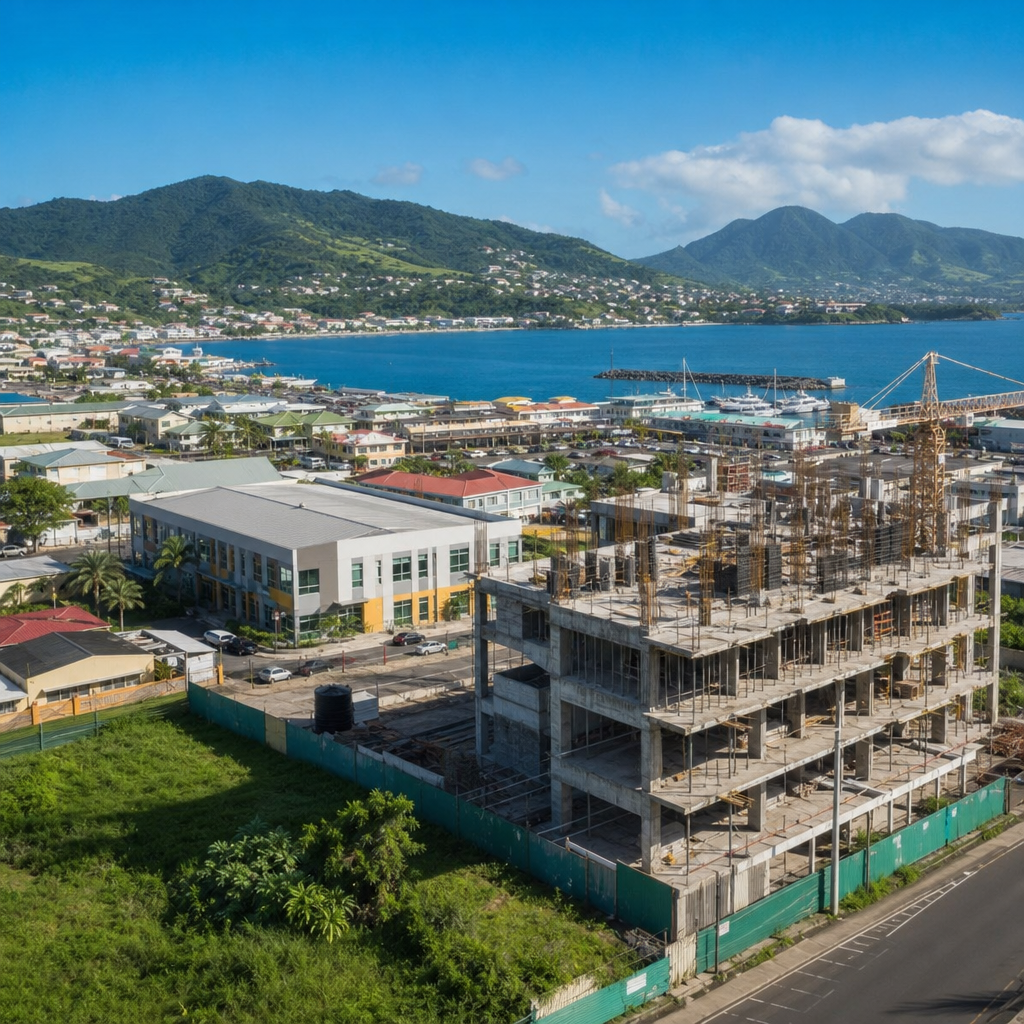
Saint Kitts’ urban development projects are reshaping the island’s investment landscape, creating opportunities that extend well beyond tourism real estate and into infrastructure, mixed-use districts, utilities, retail, and professional services. In this context, urban development means the planning, financing, construction, and long-term management of projects that improve how people live, move, work, and do business in towns and growth corridors. On Saint Kitts, that includes Basseterre revitalization, housing expansion, road upgrades, port-related improvements, public facilities, and private projects linked to the citizenship by investment ecosystem. I have worked with Caribbean market assessments and investor briefs for island jurisdictions, and Saint Kitts stands out because it combines a small geographic footprint with concentrated policy attention and a well-established international investor base. For investors evaluating miscellaneous opportunities under the broader business and investment theme, this matters because urban development often creates durable demand across several sectors at once, from construction materials and engineering to property management and digital infrastructure.
The key attraction is not simply that building is happening; it is that development on Saint Kitts is tied to structural drivers with measurable economic relevance. The federation’s economy has long depended on tourism, financial services, and investment migration, yet urban projects increasingly support resilience, logistics, housing availability, and commercial modernization. Investors should define the market accurately. Saint Kitts is the larger island within the Federation of Saint Christopher and Nevis, with Basseterre serving as the capital and primary commercial center. Urban projects here are influenced by government planning priorities, land availability, climate risk, and the need to upgrade legacy infrastructure without undermining heritage areas. The best investment lens is therefore multidisciplinary. A waterfront enhancement may affect hotel valuations, retail rents, traffic flow, and utility demand at the same time. A housing initiative can change labor mobility, contractor pipelines, and mortgage demand. Understanding these linkages is essential for anyone using this article as a hub to explore the subtopic comprehensively.
Why Saint Kitts urban development deserves investor attention
Saint Kitts offers a scale that allows investors to see policy decisions translate into market outcomes relatively quickly. In larger countries, urban plans can take years to produce visible commercial impact across diffuse geographies. On Saint Kitts, a road improvement, port enhancement, or redevelopment zone can materially change access patterns for a meaningful share of the island’s economic activity. Basseterre remains central because it concentrates government offices, retail, tourism services, and transport links. Frigate Bay and the Southeast Peninsula add another layer through hospitality, residential, and leisure-led development. This compact geography reduces the distance between infrastructure spending and private sector returns.
Demand is also supported by recurring visitor flows, an established second-home market, and investor familiarity created by the citizenship by investment program, even as that program has evolved under tighter regional standards and due diligence expectations. In practice, I have seen urban development briefs for Saint Kitts evaluated less like speculative frontier projects and more like niche Caribbean infrastructure plays with a strong real estate component. That distinction matters. Investors are not only underwriting unit sales or hotel occupancy; they are underwriting improved functionality of urban space. When a project enhances roads, drainage, parking, public realm design, or utility reliability, it can strengthen surrounding asset values in ways that pure standalone property development cannot.
Urban development on Saint Kitts also deserves attention because constraints create pricing power. Buildable land in prime connected areas is limited. Permitting, environmental review, import logistics, and skilled labor availability can slow supply. Those frictions raise execution risk, but they also reduce the chance of uncontrolled overbuilding that would dilute returns. For investors with patient capital, local partnerships, and competent project management, constrained supply can be an advantage rather than a deterrent.
Core project categories shaping the market
The urban development pipeline on Saint Kitts can be understood through several recurring categories. First are mixed-use and hospitality-linked projects, often concentrated near tourism corridors or areas with strong access to services. These developments typically combine residential units, retail frontage, food and beverage space, and in some cases office or wellness components. Their value lies in diversified cash flow. If short-stay demand softens, long-stay residential leasing or ground-floor commercial income can help stabilize returns.
Second are public infrastructure and utility upgrades. Investors do not always participate directly in these assets, but they benefit from the spillover effects. Road rehabilitation, drainage works, street lighting, water network improvements, and digital connectivity projects can improve land usability and reduce operating friction for businesses. In island markets, a parcel with poor access or vulnerable drainage can remain underperforming for years. Once those constraints are addressed, the asset can move into a higher-value use category.
Third are housing and community expansion projects aimed at local demand. This segment is often overlooked by offshore investors who focus narrowly on resort inventory. That is a mistake. Saint Kitts needs housing for public employees, hospitality workers, returning nationals, and middle-income residents seeking better-quality stock. Well-positioned residential projects can create reliable occupancy and support adjacent businesses such as convenience retail, childcare, transportation services, and maintenance contractors.
Fourth are institutional and civic projects, including health, education, and administrative facilities. These developments may not always be open to direct private ownership, but they create downstream investment opportunities in design services, materials supply, security, cleaning, food provision, and nearby commercial property. On a small island, a new public facility can anchor an entire micro-market.
| Project category | Typical locations | Main revenue logic | Primary investor considerations |
|---|---|---|---|
| Mixed-use districts | Basseterre, Frigate Bay, growth corridors | Residential sales, leases, retail rent | Absorption pace, parking, utilities, design quality |
| Hospitality-linked urban assets | Tourism nodes, waterfront areas | Room revenue, branded residences, F&B income | Seasonality, brand strength, labor availability |
| Workforce and middle-income housing | Near employment centers and transport routes | Stable long-term occupancy | Affordability, mortgage access, construction cost control |
| Infrastructure-adjacent commercial space | Road upgrade zones, port approaches | Office, logistics, retail leasing | Traffic counts, zoning, resilience standards |
Where the strongest investment insights come from
The best insights come from tracking how public planning, private capital, and tourism flows intersect. Start with the capital area. Basseterre remains the clearest case for urban redevelopment because it combines heritage significance with commercial necessity. Investors should examine opportunities tied to streetscape improvements, adaptive reuse of older buildings, small-format office space, upper-floor residential conversion, and service businesses that support both residents and visitors. In Caribbean capitals, properties that look secondary on paper can outperform if they sit on improving pedestrian routes or near transport nodes.
A second focal area is the corridor between Basseterre and Frigate Bay. This zone captures commuter movement, visitor spending, and service demand. I have seen this pattern repeatedly in island markets: once a corridor links a capital with a leisure district, the land between them becomes attractive for medical offices, convenience retail, light professional services, and mid-rise residential formats. Investors who only scan waterfront plots often miss the more durable cash flow available in these transitional urban zones.
The port and cruise economy also matter. Saint Kitts has long benefited from cruise passenger arrivals, and that traffic supports urban spending in transport, retail, excursions, and food service. Port-related urban development is not only about terminals. It includes taxi organization areas, retail clustering, wayfinding, public amenities, and logistics support. When cruise flows are managed well, nearby urban assets can capture incremental value. When they are poorly integrated, congestion and uneven spending reduce that benefit. Investors should therefore study not just visitor numbers but circulation patterns and dwell time.
Another important insight is that resilience is now inseparable from value. Saint Kitts faces hurricane exposure, intense rainfall events, coastal vulnerability, and utility stress during peak periods. Modern urban projects that incorporate elevated design, robust drainage, backup power, water storage, and hurricane-rated materials command a practical premium because they reduce downtime and insurance friction. This is not a branding feature. It is operational economics.
How to evaluate risk, regulation, and execution
Sound underwriting on Saint Kitts starts with land title, planning status, and infrastructure capacity. Investors should verify ownership history, easements, access rights, and any restrictions affecting development intensity. On a small island, assumptions that might be routine elsewhere can become major issues if a site lacks adequate road access or utility connection. Early consultation with local attorneys, surveyors, planners, and engineers is indispensable. In my experience, the investors who encounter the fewest delays are the ones who spend more time on front-end due diligence than on marketing decks.
Construction risk deserves particular scrutiny because many materials are imported and shipping schedules can alter project timelines. Budget contingencies should reflect freight volatility, customs processing, storage, and potential delays in specialist subcontractor availability. Labor can also be a constraint during active tourism construction cycles. That does not make projects unworkable, but it means schedules must be realistic. A twelve-month build assumption that ignores import sequencing is often optimistic in Caribbean markets.
Regulatory conditions are another factor. Saint Kitts and Nevis generally presents a business-friendly investment environment, but investors should still assess development approvals, environmental obligations, tax treatment, labor rules, and any sector-specific licensing requirements. If a project is connected to investment migration, additional compliance and reputational considerations apply. Strong governance matters because counterparties, lenders, and international buyers increasingly want transparent structures, audited financials, and clear source-of-funds documentation.
Investors should also model downside scenarios. What happens if tourism softens for two seasons, insurance costs rise, or utility upgrades take longer than expected? The highest-quality urban development projects still work under conservative assumptions because they serve multiple demand bases. A mixed-use property that can lease to local professionals, government-related tenants, and service retailers is inherently more resilient than one dependent on a single visitor segment.
Practical strategies for investors entering the market
For most investors, the most effective entry strategy is partnership rather than distance. Local developers, legal advisors, quantity surveyors, and property managers provide information that cannot be replicated from offshore spreadsheets. Joint ventures can align land access, community knowledge, and execution capacity. They can also help investors avoid a common mistake: importing a development concept that fits Miami or Dubai but not Basseterre or Frigate Bay. Saint Kitts rewards context-sensitive projects sized to local infrastructure and demand depth.
A second strategy is to prioritize assets with multiple exit options. For example, a mid-scale mixed-use building may be sold as a stabilized income asset, stratified into individual units, or refinanced once occupancy matures. Flexibility is valuable in small markets where buyer pools can shift. Investors should also examine service businesses linked to urban development, including facilities management, construction supply, energy systems, waste handling, and smart-building technology. These are often lower-profile plays, but they benefit directly from increased project volume.
Finally, treat this miscellaneous hub as a starting point for deeper due diligence across connected subtopics. Urban development in Saint Kitts links directly to real estate investment, tourism infrastructure, logistics, sustainability, financing structures, and professional services. The strongest investors map those connections early, build conservative models, and focus on projects that improve how the island functions, not just how it looks on a brochure. Saint Kitts is not a market for careless speculation, but it is an attractive market for disciplined capital seeking targeted Caribbean exposure with visible urban catalysts.
The central takeaway is simple: Saint Kitts’ urban development projects create investment opportunities because they sit at the intersection of infrastructure need, tourism demand, housing pressure, and policy support. Investors who understand the island’s compact geography, constrained supply, and resilience requirements can identify opportunities in mixed-use property, housing, infrastructure-adjacent commercial assets, and development services. The market is small, but that is precisely why well-chosen projects can have outsized local impact and clear commercial visibility. Success depends on careful diligence, realistic construction planning, and partnerships with credible local operators. If you are exploring business and investment opportunities in Saint Kitts, use this hub to prioritize the urban segments most aligned with your risk tolerance, then move to project-level analysis with local advisors before committing capital.
Frequently Asked Questions
1. What types of urban development projects in Saint Kitts are creating the strongest investment opportunities?
Saint Kitts’ urban development pipeline is expanding far beyond traditional resort-led property activity, and that is exactly why investors are paying closer attention. The strongest opportunities are typically found in projects that support long-term economic functionality rather than short-term tourism cycles alone. These include town center revitalization in Basseterre, mixed-use districts that combine residential, office, retail, and hospitality elements, transportation and road upgrades, utility modernization, waterfront improvements, community-serving commercial spaces, and infrastructure that enables business expansion in growth corridors.
For many investors, the most attractive segment is mixed-use urban development because it spreads risk across several demand sources. A well-planned project may include apartments, professional offices, convenience retail, dining, parking, and public realm improvements in one location. That structure can create multiple income streams and strengthen occupancy resilience. Infrastructure-adjacent investments are also compelling. When roads, drainage, utilities, and pedestrian connectivity improve, surrounding land and commercial assets often become more valuable because access, usability, and development certainty improve.
There is also meaningful potential in sectors that support urban growth indirectly. Utilities, logistics, construction services, engineering, property management, legal advisory, financing, architecture, and digital infrastructure can all benefit as urban projects move from planning into execution and operation. In other words, the opportunity set is not limited to buying land or buildings. Investors can participate through development partnerships, service contracts, operating businesses, supplier relationships, and long-term asset management roles tied to the island’s modernization.
2. Why are Saint Kitts’ urban development projects important for investors looking beyond tourism real estate?
Urban development matters because it broadens the island’s investment story. Tourism remains important, but investors increasingly recognize that durable returns often come from assets and services linked to everyday economic life. Urban projects improve how people live, move, work, shop, and access services. That means they can create demand from residents, local businesses, government functions, and regional commerce, not just from visitors. This wider demand base can make investment performance more stable over time.
In practical terms, urban development can strengthen the fundamentals that support many sectors at once. Better roads reduce transport inefficiencies. More reliable utilities improve business continuity. Revitalized commercial districts can increase foot traffic and support retail turnover. Upgraded civic and public spaces can improve the attractiveness of surrounding sites for employers, tenants, and developers. When a town becomes more functional and more investable, the effect is often cumulative. Improved infrastructure encourages new business formation, which raises demand for office space, professional services, housing, and neighborhood retail.
For investors, this means urban development in Saint Kitts can offer exposure to growth drivers that are less narrowly tied to seasonal travel performance. It also creates room for strategies that focus on income generation, value creation, or long-term appreciation. A parking facility near a business district, a warehouse supporting local distribution, a utility-linked project, or a mixed-use redevelopment in Basseterre may all benefit from urbanization trends even when tourism demand fluctuates. That diversification is one of the key reasons these projects are gaining strategic importance.
3. What should investors evaluate before committing capital to an urban development project in Saint Kitts?
Investors should begin with fundamentals: location quality, infrastructure readiness, demand depth, and regulatory clarity. In Saint Kitts, a promising urban project is not just about whether a site looks attractive today. It is about whether the asset fits into a broader development pattern supported by access roads, utility capacity, zoning or planning alignment, tenant demand, and the economic role of the area over the next several years. A site in or near Basseterre, for example, may have strong potential if it benefits from revitalization momentum, public investment, and connectivity to commercial activity.
Due diligence should also include a close look at project phasing, capital structure, and delivery risk. Investors need to understand who is sponsoring the project, how construction will be financed, whether infrastructure obligations are fully accounted for, what approvals are required, and whether timelines are realistic. In smaller island markets, execution discipline matters enormously. Delays in utilities, import logistics, permitting, or contractor mobilization can affect returns if they are not anticipated early. That is why local legal, planning, engineering, and commercial advisors are so valuable.
Another critical factor is end-user demand. Investors should ask who will occupy or use the completed asset and why. Will the project serve residents, professionals, retailers, logistics operators, public agencies, or a combination of users? Is pricing aligned with local purchasing power and business needs? Are there anchor tenants or strong pre-leasing prospects? The best investments usually solve a real urban need rather than simply adding supply. Finally, investors should assess operational strategy after completion. Long-term management, maintenance, tenant retention, and service delivery are central to preserving value in urban assets, especially in mixed-use and infrastructure-linked projects.
4. How can urban development in Basseterre and other growth corridors affect property values and business activity?
Urban development can influence property values in Saint Kitts through both direct and indirect channels. Directly, improvements such as road rehabilitation, drainage upgrades, utility enhancements, streetscape upgrades, waterfront redevelopment, and better public amenities can increase the usability and desirability of nearby land and buildings. Properties become easier to access, more efficient to operate, and more attractive to tenants or buyers. That can support rental growth, stronger occupancy, and higher land valuations over time.
Indirectly, urban development can reshape how business activity clusters. In Basseterre and emerging corridors, a revitalized district may attract professional firms, service businesses, retailers, restaurants, healthcare providers, and residential demand in one reinforcing cycle. Once a location becomes more active and better serviced, adjacent sites often benefit from rising visibility and commercial relevance. This can create a multiplier effect, where one public or private investment helps unlock several others. For investors, that is often where some of the strongest gains are found: not only in the flagship project itself, but in the surrounding ecosystem that develops around it.
That said, value growth is rarely automatic. It depends on project quality, consistency of implementation, and whether development is matched to real demand. Poorly coordinated construction or oversupply can weaken returns. But when urban improvements are tied to practical economic use, they tend to strengthen the market. Businesses gain better operating conditions, residents gain improved convenience, and investors gain access to assets with stronger long-term positioning. In a market like Saint Kitts, where strategic improvements can have outsized effects, this relationship between infrastructure, functionality, and value creation is especially important.
5. What are the main risks and long-term rewards of investing in Saint Kitts’ urban development sector?
The main risks generally fall into a few categories: execution risk, regulatory risk, market depth, infrastructure dependency, and cost management. Execution risk includes delays in planning, approvals, construction, or utility connections. Regulatory risk can involve changes in permitting, land-use interpretation, compliance obligations, or public-sector timelines. Market depth matters because Saint Kitts is not a massive market, so investors must be realistic about absorption rates, tenant pools, and pricing. Infrastructure dependency is also significant. A project may look attractive on paper, but if roads, drainage, power, water, or telecom capacity are not reliable, performance can suffer. Construction costs and imported material exposure are additional variables that should be modeled carefully.
Even with those risks, the long-term rewards can be compelling for investors who take a disciplined approach. Urban development often creates value through transformation rather than passive ownership alone. If a project improves access, fills a genuine service gap, supports commercial activity, or aligns with public development priorities, it may generate returns through appreciation, recurring income, and strategic positioning in a growing node of the economy. Mixed-use developments, logistics-serving properties, urban commercial assets, and infrastructure-linked investments can all benefit from the island’s broader modernization trend.
Perhaps the biggest long-term advantage is relevance. Assets tied to how people actually live and do business tend to remain important even as market preferences evolve. A well-located commercial building, a utility-supported industrial site, a professionally managed mixed-use block, or a service business embedded in an expanding urban corridor may continue generating demand well beyond a single development cycle. For investors with patience, local insight, and strong due diligence, Saint Kitts’ urban development sector offers the potential to participate in structural growth rather than relying solely on narrow, tourism-dependent opportunities.