Saint Kitts and Nevis, a small island nation in the Caribbean, is not only a tropical paradise but also a pioneer in sustainable tourism. The country has embarked on several conservation projects designed to safeguard its natural environment while promoting eco-friendly tourism practices. This article explores these initiatives and highlights how tourists can contribute to the sustainability of this beautiful destination.
Embracing Multi-Sectoral Environmental Projects
The government of Saint Kitts and Nevis, in collaboration with international organizations like the International Union for Conservation of Nature (IUCN) and the United Nations Environment Programme, has launched significant projects such as “Improving Environmental Management through Sustainable Land Management.” This initiative aims to enhance environmental conservation across various sectors by updating national development plans and encouraging sustainable land use practices. Tourists can engage with these efforts by participating in educational programs and supporting eco-friendly businesses that adhere to these new practices.
Waste Management and Plastic Reduction
Nevis, the smaller of the two islands, has initiated the “Sustainable Nevis” project to transform the island into an eco-friendlier destination. This project encourages residents and visitors to reduce, reuse, and recycle waste, with a special emphasis on eliminating single-use plastics. Tourists can contribute by adhering to the island’s recycling programs and choosing accommodations and services that support these waste management initiatives. The slogan ‘Let’s Do Something Drastic to Reduce Single-Use Plastic’ captures the essence of this campaign, inviting tourists to join in the efforts directly.
Supporting Local Conservation Efforts
The St. Kitts Sustainable Destination Council and the Heart of St. Kitts Foundation are at the forefront of local conservation efforts. These organizations work on various projects, including beach clean-ups, heritage conservation, and enhancing public awareness about environmental issues. Tourists can participate in these activities, contributing to conservation efforts and learning about the local culture and environmental challenges.
Eco-Tourism and Heritage Conservation
Eco-tourism is deeply integrated into the tourism strategy of St. Kitts and Nevis, with a strong focus on preserving cultural heritage sites and natural landscapes. The restoration of historical sites, such as Spooner’s Cotton Ginnery, provides a unique opportunity for tourists to experience the island’s history while supporting conservation. Tourists are encouraged to visit these sites responsibly, ensuring their actions do not harm the environment or cultural heritage.
Engaging in Sustainable Practices
Tourists can also contribute by choosing eco-friendly tours and activities that have a minimal environmental impact, such as hiking, bird watching, and snorkeling in designated areas. Supporting local businesses that adhere to sustainable practices, participating in local sustainability workshops, and using sustainable transportation options are all effective ways tourists can help.
Saint Kitts and Nevis offer a model for sustainable tourism that other destinations can emulate. By participating in conservation efforts, supporting local businesses, and adhering to sustainable practices, tourists can play an integral part in preserving the natural beauty and cultural heritage of this island nation for future generations.

Promoting Water Conservation and Marine Protection
Water conservation is a critical aspect of sustainable tourism in Saint Kitts. Due to its limited freshwater resources, the island has implemented several water management strategies aimed at reducing waste and promoting efficiency. These strategies include public awareness campaigns and the incorporation of water-saving technologies in hotels and resorts. Tourists can aid these efforts by using water sparingly during their stay and choosing accommodations that are certified for their water conservation measures.
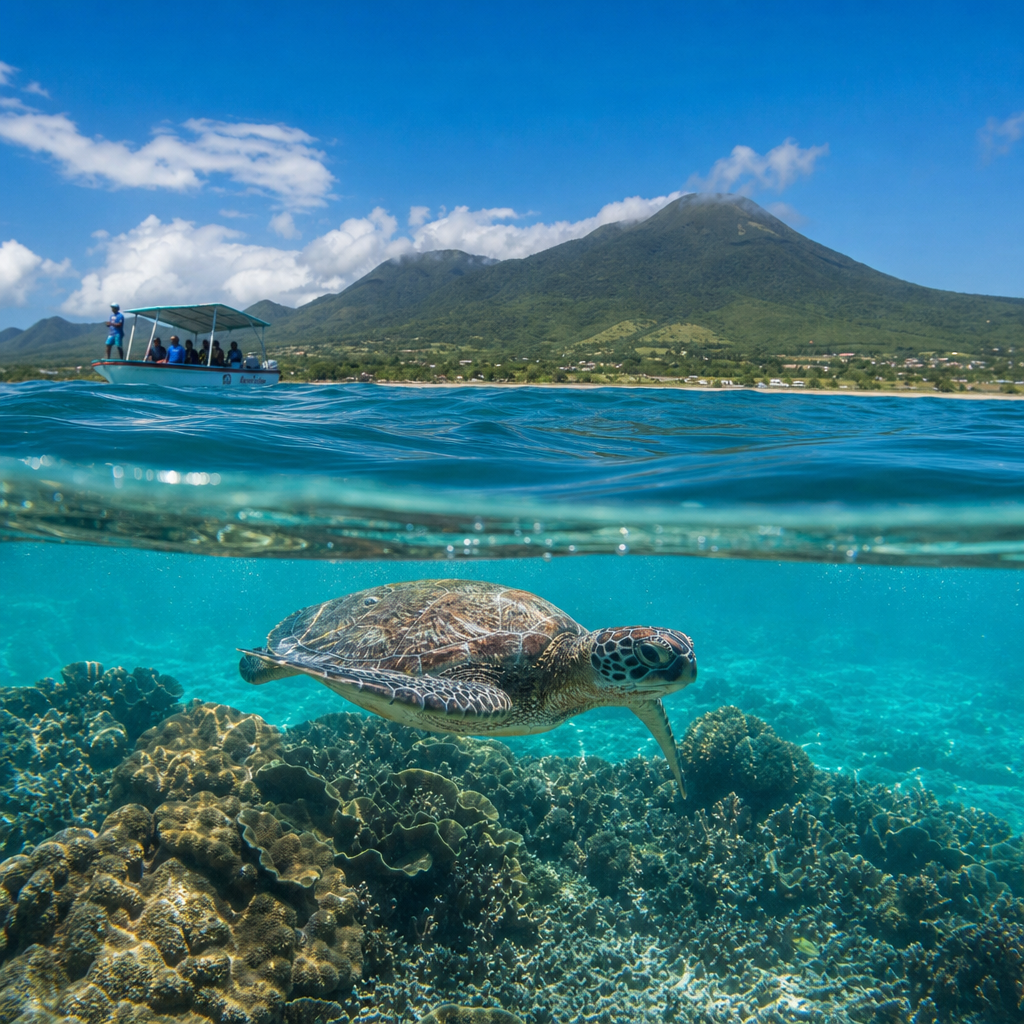
Marine protection is another crucial initiative, given the island’s dependence on its coastal and marine resources for tourism and fishing. Saint Kitts has established marine protected areas to safeguard its marine biodiversity, including coral reefs and mangroves. Tourists can contribute by engaging in responsible snorkeling and diving practices, such as not touching coral or feeding marine life, and by choosing tour operators who adhere to environmental guidelines.
Renewable Energy Initiatives
Saint Kitts and Nevis are also advancing in renewable energy use, aiming to reduce dependency on fossil fuels and decrease carbon emissions. Solar energy, in particular, has been widely adopted across the islands, powering homes, businesses, and even some of the public transportation options. Tourists can support these initiatives by utilizing eco-friendly transport options such as electric vehicles and solar-powered boats available for tours.
Community Engagement and Cultural Preservation
The local community is deeply involved in Saint Kitts’ sustainability efforts. Many cultural preservation projects are community-led, aimed at maintaining the island’s rich heritage and traditions while ensuring they are adapted to modern-day sustainability standards. Tourists are encouraged to participate in community-run events and visit local markets where they can purchase authentic, locally-made products, contributing economically to the community while reducing the carbon footprint associated with importing goods.
Tourists can also engage in cultural exchange programs where they learn about local practices and traditions directly from residents. These programs not only foster a greater understanding and appreciation of the local culture but also help to ensure that tourism has a positive impact on the community.
Sustainable Dining and Agriculture
Sustainable dining is promoted through the use of locally sourced ingredients and traditional cooking methods that minimize energy consumption and waste. Many restaurants on the island participate in farm-to-table programs, ensuring that the food served is fresh, sustainable, and supports local agriculture. Tourists can contribute by choosing these dining options, reducing the environmental impact of their food consumption.
Furthermore, the promotion of organic farming and sustainable agriculture is prevalent on the islands. Tourists can visit local farms for tours and workshops to learn more about sustainable agriculture practices. These visits not only provide an educational experience but also directly support the local agricultural sector.
Final Thoughts
The commitment of Saint Kitts and Nevis to sustainable tourism is evident in their wide range of conservation projects and community initiatives. By choosing to participate in these activities, tourists not only enhance their travel experience but also contribute to the preservation and enhancement of the islands’ natural and cultural resources. This symbiotic relationship between tourism and sustainability is key to ensuring that Saint Kitts and Nevis remain vibrant and thriving destinations for generations to come.
In conclusion, the conservation efforts in Saint Kitts and Nevis offer a robust model for sustainable tourism. Every tourist’s participation in these initiatives contributes significantly to the islands’ sustainability goals, helping preserve this paradise’s natural beauty and vibrant culture. Whether through direct involvement in conservation activities, supporting eco-friendly businesses, or engaging with the local community, tourists have numerous opportunities to make a positive impact during their visit.