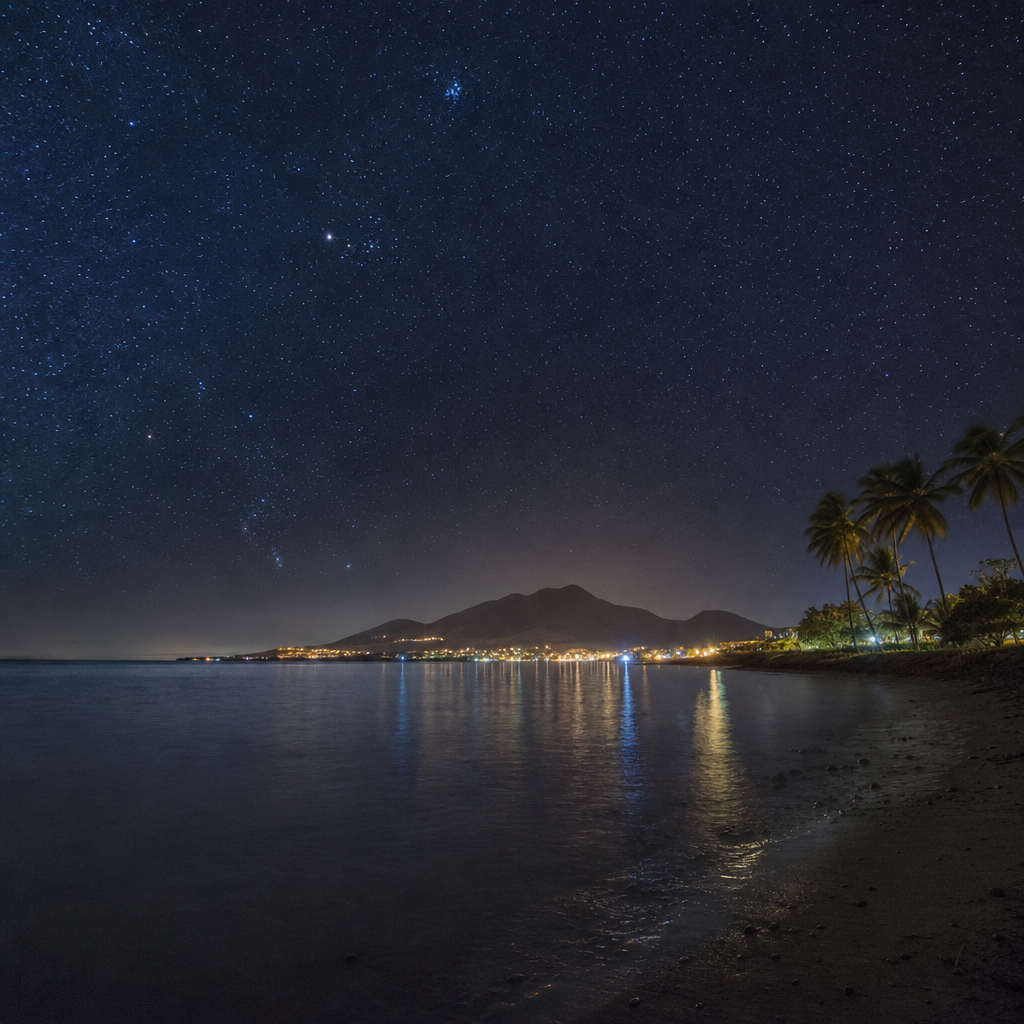
Star gazing in Saint Kitts in February offers one of the island’s most rewarding nature experiences, combining tropical evenings, relatively dry weather, and dark coastal viewpoints with a sky rich in seasonal targets. For travelers and residents alike, the February night sky above Saint Kitts is more than a scenic backdrop. It is a practical, accessible way to connect with the island’s landscape, maritime history, and wildlife rhythms after sunset. In this subtopic hub for Nature and Wildlife, “miscellaneous” means the observations that do not fit neatly into rainforest hikes, birding tours, or marine excursions, yet still reveal how the natural world shapes the island. Night-sky watching belongs squarely in that category because it ties together weather, topography, ecology, local culture, and responsible outdoor recreation.
February matters because it typically falls within Saint Kitts and Nevis’s drier season, when humidity can ease slightly, cloud cover is often more manageable than in wetter months, and evening visibility improves. Conditions still vary from the Southeast Peninsula to higher elevations near Mount Liamuiga, but in my experience planning outdoor activities on Caribbean islands, February repeatedly produces the best balance between comfort and celestial clarity. Temperatures after dark are usually warm enough for long viewing sessions without the layered clothing many northern observers need, while earlier sunsets create usable observing time for families, photographers, and casual visitors.
Key terms help set expectations. Star gazing is general naked-eye or binocular observation of the night sky. Astronomy is the scientific study of celestial objects and phenomena. Astrophotography is imaging the sky with cameras, tripods, and sometimes tracking mounts. Light pollution is artificial nighttime brightness that reduces contrast and hides fainter stars. Seeing describes atmospheric steadiness, important for planets, while transparency refers to how clear the air is, which matters for deep-sky viewing. Understanding these basics makes a major difference because many visitors assume any clear night is equally good. In reality, moon phase, haze, horizon obstructions, and nearby lighting often matter more than telescope size.
Saint Kitts is especially compelling for sky watching because its geography gives observers multiple environments within short driving distances. Beaches and peninsulas offer low horizons for moonrise, constellations, and occasional planet watching. Elevated interior areas can reduce local glare and reveal more stars, though mountain cloud can develop quickly. Historic sites, quiet bays, and resort districts all produce different experiences, from simple constellation spotting to serious imaging. This article serves as a comprehensive hub, explaining what to see in February, where to go, what gear to bring, how conditions change across the island, and how to enjoy the night responsibly alongside local wildlife and communities.
What You Can See in Saint Kitts During February
February skies in Saint Kitts are dominated by the familiar northern winter star patterns, but viewed from a lower latitude that gives them a distinctly Caribbean presentation. Orion stands out clearly in the evening, making it the easiest anchor for beginners. Its belt points northwest toward Aldebaran and the Hyades in Taurus and southeast toward Sirius in Canis Major, the brightest star in the night sky. Betelgeuse and Rigel create strong color contrast, and even casual observers can usually notice Sirius flashing through multiple hues when it sits lower in the sky.
Around Orion, several other bright targets are easy to identify without equipment. Gemini, marked by Castor and Pollux, sits prominently overhead or slightly north depending on the hour. Auriga with Capella is bright in the northwestern sky. Procyon in Canis Minor helps form the Winter Triangle with Sirius and Betelgeuse. For people new to astronomy, these star patterns are ideal because they are bright enough to survive moderate light pollution, making them visible even from hotel areas if the immediate lights are controlled.
Deep-sky highlights also reward binocular users. The Orion Nebula, cataloged as Messier 42, appears as a soft glowing patch in Orion’s sword and is often the first nebula visitors successfully observe. The Beehive Cluster, Messier 44 in Cancer, can be spotted from darker locations as a misty patch and resolves better with binoculars. Open clusters in Auriga and the Pleiades in Taurus remain attractive targets early in the evening. From Saint Kitts’s latitude, southern objects also begin to feel more accessible than they do for observers farther north, although exact visibility depends on date and horizon conditions.
Planets vary each year, so the best practice is to check current ephemerides in apps such as Sky Guide, Stellarium, or SkySafari before heading out. I strongly recommend that because many disappointed travelers expect a sky full of bright planets every night. In reality, the stars and moon are the constants, while planets shift from season to season. When visible, Venus near dusk or dawn can be spectacular above the sea, and Jupiter is often rewarding even through small binoculars or a compact telescope because its moons line up clearly.
Best Places on Saint Kitts for Darker Skies
The best star-gazing locations in Saint Kitts share three traits: low artificial light, an open horizon, and safe access after dark. The Southeast Peninsula usually offers the strongest combination. Away from Basseterre’s urban glow, it provides darker skies, broad sea horizons, and enough distance from concentrated resort lighting to improve contrast. Areas near Cockleshell Bay and stretches facing the Atlantic can be excellent, especially on moonless nights. The advantage here is not absolute wilderness darkness but a realistic reduction in glare combined with easy orientation.
Frigate Bay is convenient for visitors staying nearby, but it is better for casual viewing than serious deep-sky observation because hotels, roads, and beachfront properties add stray light. Still, if you choose a quieter section, shield your eyes from direct lamps, and observe after nearby venues settle down, you can identify major constellations and enjoy moonrise over the water. Timothy Hill can be visually dramatic, though vehicle headlights and visitor traffic may interrupt long sessions. For photography, timing matters as much as location.
Higher inland viewpoints may seem ideal, and sometimes they are, but they come with tradeoffs. Mountain slopes can improve horizons away from development, yet they also encounter passing cloud, wind, and occasional access concerns. In practical terms, I advise most visitors to favor coastal dark-sky spots over ambitious upland locations unless they are going with a guide who knows road conditions, private boundaries, and weather patterns. On islands, microclimates can shift quickly over short distances, and a clear beach can outperform a misty hillside.
| Location | Main Strength | Limitation | Best For |
|---|---|---|---|
| Southeast Peninsula | Darker skies and open horizons | Wind exposure and limited services late at night | Constellations, binocular viewing, photography |
| Cockleshell Bay area | Sea horizon and distance from city glow | Some nearby hospitality lighting | Moonrise, planet viewing, wide-angle photos |
| Frigate Bay | Convenience for visitors | Noticeable light pollution | Casual observing and family sessions |
| Timothy Hill | Scenic vantage point | Traffic lights and interruptions | Short scenic viewing stops |
How February Weather Affects Viewing Conditions
February is generally favorable, but good star gazing in Saint Kitts still depends on reading local weather with precision. The island’s dry season usually brings lower rainfall than late summer and autumn, yet “dry” never means guaranteed cloudless skies. Marine haze can soften the sky, especially near horizons, and trade winds can either clear moisture or create fast-moving cloud bands. The most useful planning habit is to check hourly cloud forecasts, wind direction, and moon phase together rather than relying on a simple rain icon.
Transparency is often best after passing showers clear the air. I have seen nights begin mediocre and improve significantly within an hour once low cloud moves through. Conversely, a day that looks perfect can transition into hazy evening conditions as moisture gathers over warm coastal zones. This matters for astrophotography and for faint objects like open clusters. If your main goal is naked-eye constellation spotting, moderate haze is less of a problem. If you want crisp Milky Way detail or long exposures, transparency becomes decisive.
Moon phase is equally important. A bright moon can wash out many stars, though it creates beautiful landscape opportunities along beaches and historic shorelines. For maximum star visibility, schedule sessions within a few days of new moon. For beginner-friendly outings, a first-quarter moon can actually help by illuminating paths and scenery while still leaving part of the sky dark enough for major constellations. Safety and enjoyment often improve when there is at least some natural light on the ground, especially at unfamiliar sites.
Essential Gear and Smart Preparation
You do not need a telescope to enjoy the February night sky in Saint Kitts. In fact, most visitors do better with simpler gear. Start with a red-light flashlight or headlamp to preserve night vision, a star map app used in night mode, insect repellent, water, and a light long-sleeved layer for breezy coastal spots. A reclining chair or blanket makes a surprisingly large difference because comfort extends observation time, and extended observation is what allows more stars and patterns to emerge.
Binoculars are the single best upgrade for beginners. A standard 8×42 or 10×50 pair reveals the Orion Nebula, star clusters, and lunar detail without the setup complexity of a telescope. If you bring a telescope, keep expectations realistic. Dobsonian reflectors are excellent for visual observing but awkward for air travel. Compact Maksutov or small refractor models are more practical for visitors, though they still require stable mounts. Humidity control is another overlooked issue; lenses can fog quickly in tropical air, so microfiber cloths and sealed cases help.
For photography, a tripod, a wide lens, and a camera or smartphone with manual night settings are enough to begin. Modern phones can capture pleasing moonlit landscapes, but true star-field images still benefit from larger sensors and manual exposure control. Use the 500 rule as a rough guide for avoiding star trails, then refine based on sensor size and focal length. Turn off flash, disable bright screen notifications, and carry spare batteries because warm climates do not eliminate battery drain during long sessions.
Responsible Night-Sky Tourism and Wildlife Awareness
Star gazing in a Nature and Wildlife context is not only about looking up. It also requires care for what is happening on the ground. Coastal areas of Saint Kitts may support nocturnal wildlife activity, and bright white lights can disrupt both animal behavior and other observers’ night vision. Red light is the standard for a reason: it is less intrusive and preserves dark adaptation far better than phone flashlights. Keep noise low, stay on established access areas, and avoid trampling vegetation near dunes or shorelines.
If you are near beaches used by nesting sea turtles at certain times of year, lighting discipline becomes even more important. February is not peak nesting season in Saint Kitts, but good habits should apply year-round. Do not shine lights toward the water without need, and do not assume a quiet beach is empty or impact-free. Local guides and conservation groups can advise on sensitive areas. Respect for private property is equally essential because some excellent viewpoints sit near resorts, homes, or managed lands.
Group etiquette also matters. Car headlights can ruin adaptation for everyone present, so park strategically and turn lights off as soon as it is safe. Music, drones, and bright screens undermine the experience. The reward for these small adjustments is immediate: better visibility, better photographs, and a stronger sense of immersion in Saint Kitts’s nighttime environment.
Making This Hub Your Starting Point for Related Topics
As a miscellaneous hub under Nature and Wildlife, this page connects naturally to several related interests. Visitors who enjoy February star gazing often also seek sunrise birding, moonlit beach walks, volcanic landscape photography, seasonal weather guides, and low-impact outdoor activities suitable for families. The same planning logic carries across these subjects: understand local conditions, choose the right site, use minimal-impact gear, and match expectations to the environment rather than to generic travel images.
That is why star gazing works so well as a hub topic. It overlaps with geography, marine horizons, conservation ethics, weather literacy, and photography skills. It can be spontaneous for a resort guest stepping onto a quiet beach, or highly structured for enthusiasts checking planetary rise times and cloud forecasts. In both cases, Saint Kitts rewards attention. The island’s February night sky is not just something to glance at after dinner. It is a landscape in its own right, with repeatable patterns, seasonal highlights, and location-specific advantages that become clearer the more intentionally you observe.
Star gazing in Saint Kitts in February is one of the easiest ways to experience the island’s natural character after dark. Clearer seasonal conditions, warm evenings, and a choice of coastal and elevated viewpoints make the February night sky accessible to beginners while still rewarding experienced observers. Orion, Sirius, Taurus, Gemini, and bright clusters provide dependable targets, and a simple pair of binoculars often delivers more practical value than a large telescope. The biggest gains usually come from timing your outing around moon phase, checking cloud and haze forecasts, and choosing a site with less artificial light.
The core lesson is straightforward: success depends more on preparation than equipment. Pick a darker location on the Southeast Peninsula or another open coastal spot, use red light, protect night vision, and plan with respect for wildlife and nearby communities. If you want to go further, connect this experience with related Nature and Wildlife topics such as coastal ecology, landscape photography, and seasonal outdoor planning across Saint Kitts.
Use this hub as your starting point, then build your own February night-sky checklist before your next evening out. Choose your location, confirm the forecast, and give the island at least one full hour under the stars. That is usually all it takes for Saint Kitts to turn a casual glance upward into a memorable nature experience.
Frequently Asked Questions
Why is February one of the best months for star gazing in Saint Kitts?
February is widely considered one of the best times for star gazing in Saint Kitts because it combines several favorable conditions at once. The island is typically in a relatively dry part of the year, which often means clearer evenings, lower haze, and fewer sudden showers than wetter seasons. That matters because even thin moisture in the air can soften the visibility of stars, dimmer constellations, and deep-sky objects. In February, observers often benefit from steadier skies and more comfortable nighttime temperatures, making it easier to spend longer periods outside without the heavy humidity that can build later in the year.
Another reason February stands out is the seasonal sky itself. During this time of year, some of the most recognizable constellations of the northern winter sky are visible, including Orion and Taurus, along with bright stars that are easy for beginners to identify. For residents and travelers in Saint Kitts, this creates an ideal mix of accessibility and reward: even a short evening outing can reveal striking patterns overhead, while more patient observers can pick out star clusters and subtle details across the sky. Combined with Saint Kitts’ coastal viewpoints and reduced light pollution outside busier areas, February offers a practical and memorable window for experiencing the island after dark.
What can you typically see in the February night sky from Saint Kitts?
From Saint Kitts in February, observers can usually enjoy a sky filled with bright seasonal landmarks that make navigation easy even for first-time stargazers. Orion is often the showpiece constellation, instantly recognizable by the three stars of Orion’s Belt. Nearby, Taurus and its bright star Aldebaran may be visible, and the Pleiades star cluster can often be seen as a small, shimmering grouping of stars. Sirius, the brightest star in the night sky, also tends to stand out clearly and can be an excellent reference point for locating neighboring constellations. Depending on the night and local viewing conditions, Gemini, Auriga, and Canis Major may also be prominent.
February also offers opportunities to appreciate the sky in a broader environmental context. From darker parts of the island, you may notice subtle differences in sky brightness over the sea compared with inland areas, and on especially clear nights the Milky Way’s fainter structure may begin to show in less light-polluted directions later in the evening. Planets can also appear in the February sky depending on the year, and a simple pair of binoculars may reveal more detail in clusters and brighter nebula-rich regions. The experience is especially rewarding in Saint Kitts because the horizon lines along beaches, headlands, and elevated overlooks help frame celestial objects as they rise and set, connecting astronomy with the island’s landscape and maritime character.
Where are the best places in Saint Kitts to go star gazing in February?
The best places to go star gazing in Saint Kitts are generally locations with a wide horizon, minimal artificial lighting, and a safe place to stand or sit comfortably after dark. Coastal areas away from the brightest resort and town lights are often excellent choices because the open sea creates unobstructed sightlines and darker viewing directions. Elevated points can also be rewarding, especially if they provide a broad view of the sky without nearby streetlights. In practical terms, the ideal spot is not necessarily the most remote location on the island, but the one that combines darkness, accessibility, and personal safety.
When choosing a viewing site, it helps to think like both an astronomer and a local nature observer. Beaches and headlands can be especially appealing because they offer open sky and a strong sense of place, but you should also consider wind exposure, cloud buildup over hills, and nighttime footing. If you are staying near a developed area, even moving a short distance away from direct lighting can significantly improve visibility. Let your eyes adapt to the darkness for at least 20 to 30 minutes, avoid looking at phone screens, and check whether the moon will be bright that night, since moonlight can wash out fainter stars. For the best results, choose a location that feels calm and quiet, where the stars can be enjoyed alongside the sounds of the coast and the rhythms of nocturnal wildlife.
Do you need special equipment to enjoy the February night sky in Saint Kitts?
No special equipment is required to enjoy the February night sky in Saint Kitts. In fact, some of the most impressive sights are best appreciated with the naked eye. Major constellations, bright stars, and broad sky patterns are all visible without a telescope, especially from darker viewpoints around the island. For many people, the most useful first tools are simply a reclining chair or blanket, comfortable clothing for the evening breeze, and a red-light flashlight to preserve night vision. A star chart app can also help, but it is best used sparingly and with the screen dimmed as much as possible.
That said, a few simple items can greatly enhance the experience. Binoculars are often more practical than a telescope for casual travel-based star gazing because they are portable, easy to use, and excellent for viewing star clusters such as the Pleiades or scanning rich parts of the sky around Orion. If you plan to stay out for a while, insect repellent, water, and proper footwear are also important. A telescope can be rewarding if you already have one and know how to use it, but it is not necessary for a meaningful evening under the stars. In Saint Kitts, the combination of clear February skies, dark coastal settings, and prominent seasonal constellations means that the island itself provides much of what you need for an impressive stargazing session.
How does star gazing in Saint Kitts connect with nature, wildlife, and local island experience?
Star gazing in Saint Kitts is more than an astronomy activity; it is also a way of engaging with the island’s natural environment after sunset. February evenings often bring a quieter, more reflective atmosphere in which the sounds of waves, tree frogs, night insects, and coastal breezes become part of the experience. Watching the sky from a beach or hillside helps place celestial observation within the rhythms of local ecosystems. The transition from twilight to full darkness can reveal how wildlife behavior changes through the evening, and it encourages a slower, more observant relationship with the landscape than daytime sightseeing often allows.
There is also a strong cultural and historical dimension to this experience. On an island shaped by seafaring, trade routes, and coastal navigation, the night sky has long carried practical meaning as well as beauty. Looking up from Saint Kitts today can still evoke that connection between stars, shoreline, and direction. For visitors, this adds depth to a simple outdoor activity; for residents, it can renew appreciation for familiar places viewed in a different light. In February, when weather conditions are often favorable and the sky features bright, recognizable seasonal targets, star gazing becomes one of the most accessible ways to connect nature, place, and heritage in a single evening.