The future of green energy investments in Saint Kitts is being shaped by a practical mix of energy security, tourism competitiveness, climate resilience, and long-term cost control. For investors, developers, business owners, and policy observers, green energy in Saint Kitts refers to projects and services that reduce dependence on imported fossil fuels while building a more efficient, lower-carbon power system. That includes utility-scale solar, battery storage, distributed rooftop systems, efficiency upgrades, electric mobility support, grid modernization, waste-to-energy discussions, and services tied to financing, engineering, and operations. I have worked with Caribbean investment briefs and renewable project assessments, and the pattern is consistent across island markets: high fuel import costs create unusually strong economic logic for clean power when projects are structured correctly. Saint Kitts matters because small-island electricity systems are especially exposed to oil price swings, shipping disruptions, storm risks, and aging infrastructure. When a country can lower generation costs, improve reliability, and strengthen its environmental brand at the same time, the investment case becomes broader than a narrow energy play. It becomes a business and national development strategy. This hub article explains where the strongest opportunities are, what risks need to be priced in, and how investors should think about timelines, partners, and market signals.
Why Saint Kitts Is a Serious Green Energy Market
Saint Kitts is a small market, but size alone does not determine investment quality. In island economies, electricity prices and fuel dependence often matter more than population because they influence every hotel, manufacturer, retailer, public utility, and household. Saint Kitts and Nevis has historically relied heavily on imported petroleum products for power generation, a structure that exposes the country to volatile global fuel prices and foreign exchange pressures. In practical terms, that means renewable projects can compete not only on sustainability claims but on avoided fuel purchases, predictable pricing, and resilience benefits. For tourism-led economies, this matters directly. Hotels, villas, marinas, restaurants, and transport operators all care about utility bills, backup power, and brand alignment with sustainability expectations from travelers and institutional partners.
Another reason the market deserves attention is policy direction. Across the Caribbean, governments and utilities have been pursuing renewable energy targets, grid upgrades, and concessional financing partnerships with development institutions. Saint Kitts sits within that regional momentum. Investors should view the country not as an isolated case but as part of a Caribbean transition where the economics of solar and storage have improved materially over the past decade. Falling photovoltaic module costs, better battery performance, improved inverters, and more sophisticated energy management systems have changed what is bankable. The key issue is no longer whether green energy fits island markets. It is which projects fit local demand profiles, grid constraints, land realities, and procurement rules.
The Main Investment Segments to Watch
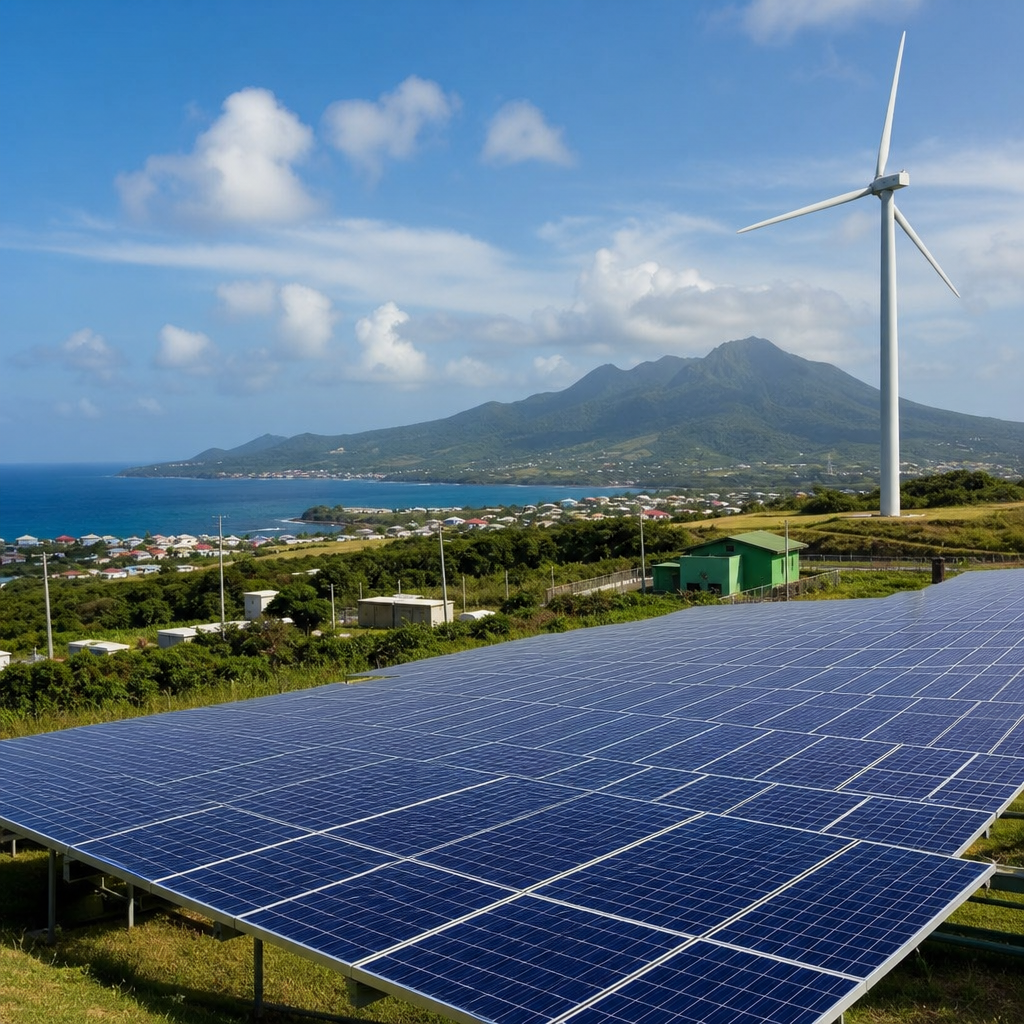
The most immediate green energy opportunities in Saint Kitts are utility-scale solar generation, commercial and industrial rooftop solar, battery energy storage systems, and energy efficiency retrofits. Utility-scale solar works well where suitable land, interconnection access, and offtake certainty align. In small systems, storage often becomes essential because solar output can exceed midday demand and create ramping challenges later in the day. Battery systems therefore are not optional add-ons in many Caribbean projects; they are central assets that improve dispatchability, reduce curtailment, and support grid stability. Investors evaluating generation should think in paired terms: solar plus storage rather than solar alone.
Commercial and industrial projects are also attractive because hotels, supermarkets, office campuses, schools, and light industrial sites often have high daytime loads that match solar output. Behind-the-meter systems can deliver strong savings when tariffs are elevated and when self-consumption is prioritized. I have seen similar projects across island markets succeed fastest where developers clearly model load curves, demand charges, backup needs, and maintenance responsibilities before signing power purchase agreements. Saint Kitts offers the same lesson. A beautiful solar proposal is not enough; project finance improves when consumption data is clean and counterparties understand performance expectations.
Efficiency is frequently underestimated, yet it can produce the fastest returns. Cooling systems, building controls, insulation, efficient lighting, and variable-speed drives often reduce consumption at lower capital cost than generation assets. For hospitality operators in Saint Kitts, efficiency and renewables should be bundled. The hotel that first reduces waste can right-size its solar and storage investment, improving payback and reducing financing strain. That combination is one of the strongest miscellaneous opportunities within the broader green energy landscape because it creates work for auditors, engineers, contractors, software providers, lenders, and facility managers, not only power producers.
How Tourism, Real Estate, and Infrastructure Create Demand
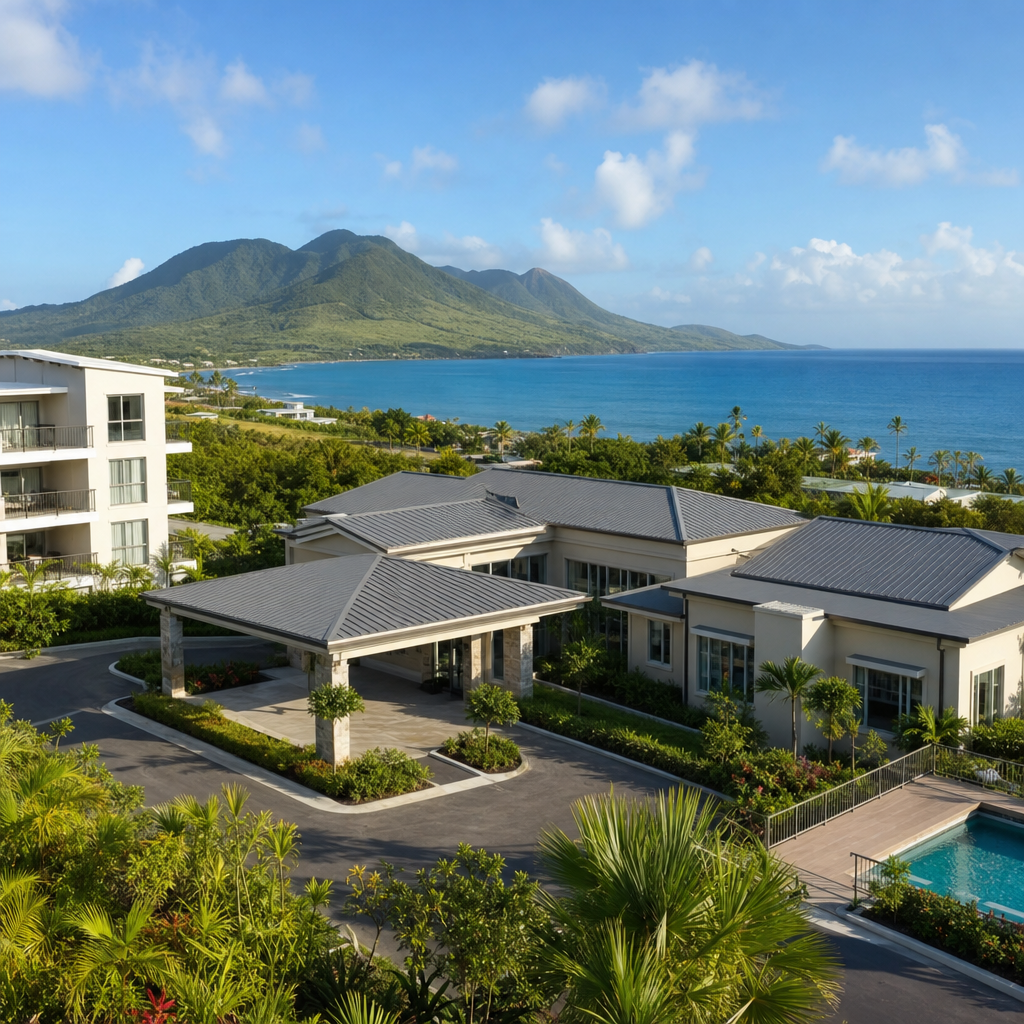
Tourism is one of the clearest demand anchors for green energy investments in Saint Kitts. Resorts and hospitality properties face high cooling loads, guest expectations for uninterrupted service, and increasing pressure from travel platforms, corporate customers, and investors to document sustainability performance. A resort with rooftop solar, battery backup, smart building controls, and efficient chillers can lower operating costs while improving its marketability. In practical underwriting terms, that means green energy supports both margin expansion and asset valuation. Real estate developers can use energy infrastructure as part of a premium product strategy, especially in mixed-use communities and villa developments where buyers value lower operating costs and resilience during outages.
Ports, airports, water services, telecom infrastructure, and public facilities also create demand for clean energy solutions. Critical facilities benefit from hybrid systems because diesel-only backup is expensive and vulnerable to fuel logistics problems during emergencies. Solar paired with storage can reduce generator run-time, stabilize critical loads, and cut maintenance costs. This is particularly relevant in hurricane-prone regions where resilience is not a marketing slogan but an operational requirement. Investors should watch procurement around public buildings, healthcare sites, schools, and utility infrastructure because these projects often create a demonstration effect that unlocks private-sector confidence.
| Segment | Typical Opportunity | Why It Fits Saint Kitts | Main Constraint |
|---|---|---|---|
| Utility-scale solar | Grid-supplied power with long-term offtake | Reduces imported fuel use and stabilizes power costs | Land, interconnection, storage needs |
| Commercial rooftop solar | Hotels, offices, retail, schools | Matches daytime load and visible sustainability benefits | Roof condition, financing, tariff rules |
| Battery storage | Peak shaving, backup, grid support | Improves resilience and solar integration | Capital cost and technical integration |
| Energy efficiency | Cooling, controls, lighting, motors | Fast payback in hospitality and public facilities | Execution quality and measurement |
| Electric mobility support | Charging for fleets and tourism transport | Supports fuel savings and cleaner visitor experience | Vehicle adoption and grid planning |
Policy, Regulation, and Project Bankability
No investor should approach Saint Kitts green energy opportunities without studying the regulatory path in detail. In small power markets, bankability depends on licenses, tariff frameworks, interconnection rules, land use approvals, utility procurement design, and the credit quality of the offtaker. The difference between a promising concept and a financeable project is usually found in the documents: grid studies, engineering reports, PPA terms, insurance requirements, curtailment clauses, and force majeure provisions. Development finance institutions and regional agencies often support Caribbean energy projects, but they still require disciplined risk allocation. If a project cannot show who absorbs curtailment risk, who maintains battery performance, and how foreign exchange exposure is managed, capital becomes expensive or unavailable.
Policy consistency matters as much as ambition. Governments may support renewable energy in principle, yet investors need predictable implementation. Clear procurement schedules, transparent technical standards, and standardized contract language reduce transaction costs significantly. Internationally recognized standards such as IEC equipment certification, IEEE interconnection practices, and robust environmental and social safeguards improve lender confidence. On island grids, technical compliance is especially important because generation variability can affect system stability faster than on large mainland networks. Experienced sponsors therefore invest early in load analysis, protection studies, and operator engagement. That up-front work is not bureaucracy; it is value protection.
Financing Models That Can Work
Several financing structures are relevant in Saint Kitts. For larger projects, independent power producer models with long-term power purchase agreements remain the most conventional route. For commercial sites, leases, energy service agreements, and shared-savings models can reduce customer hesitation by minimizing upfront capital requirements. Blended finance can be particularly effective when concessional debt, climate funds, or guarantees are available to lower the weighted cost of capital. In Caribbean markets, I have seen many sound projects stall because sponsors used mainland assumptions about debt tenor, insurance pricing, and replacement reserves. Island projects need financing structures that reflect shipping costs, spare parts strategy, weather exposure, and smaller pools of technical labor.
Local banks can play an important role, especially for efficiency retrofits and smaller solar systems, but they often need better performance data and stronger contractor track records before scaling lending. This creates an opening for specialized developers and advisory firms that can package projects, standardize documentation, and aggregate demand across multiple sites. A portfolio of hotel retrofits or school solar installations is often easier to finance than a series of isolated small deals. Investors should also watch carbon accounting and sustainability-linked finance trends. While carbon credit revenues alone rarely make these projects viable, verified emissions reductions can improve reporting quality and strengthen access to impact-oriented capital.
Risks Investors Must Price Correctly
The strongest green energy investments in Saint Kitts will come from disciplined risk pricing, not optimistic assumptions. Hurricane and storm exposure is the obvious factor. Equipment selection, mounting systems, drainage design, spare parts planning, and insurance coverage must reflect severe weather realities. Developers should choose components tested for corrosive marine environments and ensure operations teams can respond quickly after an event. Another major risk is grid integration. On small island systems, adding intermittent generation without proper storage or controls can create technical problems that reduce project value. Curtailment risk, voltage regulation issues, and delayed interconnection upgrades all need explicit treatment in contracts and models.
Counterparty risk matters as well. Whether the buyer is a utility, hotel group, public agency, or commercial tenant, investors need confidence in payment behavior and long-term occupancy or operating stability. Land title, permitting delays, customs clearance, and workforce capacity can also affect timelines. None of these risks are unique to Saint Kitts, but they are magnified in small markets where one delayed shipment or one missing approval can move an entire project schedule. The solution is not to avoid the market. It is to structure projects conservatively, use experienced local counsel and technical partners, and build realistic contingencies into budget and execution plans.
What the Next Decade Likely Looks Like
Over the next decade, the future of green energy investments in Saint Kitts will likely be defined by hybridization, decentralization, and stronger links between energy and real estate value. Hybridization means more projects combining solar, storage, backup generation, and digital controls into one managed system. Decentralization means more power being produced at or near the point of use, especially in hospitality, residential communities, and public facilities. Energy will increasingly be sold not just as kilowatt-hours but as reliability, resilience, and operational visibility. Building owners want dashboards, predictive maintenance, and measurable savings, not just panels on a roof.
The market will also become more service-driven. Beyond asset ownership, opportunities will grow in engineering, procurement, construction management, monitoring software, battery maintenance, efficiency audits, and compliance advisory work. Electric vehicle charging may remain a smaller segment in the near term, but fleet applications in rentals, government, and commercial transport could create focused opportunities where charging is paired with on-site solar. For investors building a presence under the broader business and investment opportunities theme, this miscellaneous hub matters because it connects energy generation, infrastructure services, sustainable tourism, real estate strategy, and climate adaptation into one investable story.
Saint Kitts is not a speculative green energy narrative; it is a market where renewable power, efficiency, and resilience investments can solve expensive, visible problems. The best opportunities are not abstract. They are the hotel reducing daytime electricity costs, the public facility improving backup reliability, the developer using clean energy to raise property appeal, and the utility-scale project displacing imported fuel with stable local generation. Success depends on details: sound interconnection analysis, credible offtake arrangements, storm-resilient engineering, realistic financing, and policy clarity. Investors who understand island market mechanics will see that green energy in Saint Kitts is broader than solar panels alone. It includes storage, controls, retrofits, advisory services, and infrastructure partnerships that support national competitiveness.
As this hub for miscellaneous coverage within business and investment opportunities, the central takeaway is simple: the future of green energy investments in Saint Kitts is strongest where cost savings, resilience, and commercial demand intersect. That is where projects become financeable, scalable, and durable. If you are assessing the market, start with sectors that already feel the burden of energy costs and outage risk, then evaluate the regulatory pathway and delivery partners with care. The transition will not be frictionless, but the direction is clear, and early well-structured investments can secure lasting advantage. Use this page as your starting point, then map the specific niches where your capital or expertise fits best.
Frequently Asked Questions
1. Why is Saint Kitts becoming more attractive for green energy investment?
Saint Kitts is becoming more attractive for green energy investment because the core business case is practical, not theoretical. Like many island economies, it has historically depended heavily on imported fossil fuels for electricity generation. That dependence creates exposure to fuel price volatility, shipping disruptions, and high operating costs across the economy. Green energy projects directly address those pressures by helping stabilize power costs, improve energy security, and reduce the long-term financial burden associated with imported fuels.
There is also a strong strategic link between clean energy and national competitiveness. Tourism is a major economic pillar, and hotels, resorts, villas, restaurants, and related service businesses all benefit from more predictable energy pricing and a stronger sustainability profile. For an island destination, resilience matters just as much as cost. Investors are increasingly drawn to markets where energy infrastructure can support economic continuity, climate adaptation, and modern business expectations. In Saint Kitts, that means opportunities in utility-scale solar, battery storage, rooftop systems, energy efficiency upgrades, grid modernization, and supporting technical services.
Another reason the market is gaining attention is that green energy is no longer limited to a single project type. Investors can look at generation assets, storage, commercial and industrial installations, microgrids, efficiency retrofits, and service platforms that support installation, maintenance, financing, and energy management. This broader ecosystem makes the market more investable because it allows different risk-return profiles and more than one path to participation. In short, Saint Kitts is attractive because green energy aligns with essential national needs: lower energy costs, stronger resilience, improved sustainability credentials, and a more secure long-term power system.
2. Which green energy sectors in Saint Kitts are likely to offer the strongest opportunities in the coming years?
The strongest opportunities are likely to emerge in areas that solve immediate system challenges while supporting long-term decarbonization. Utility-scale solar is one of the most visible opportunities because it can reduce fuel imports, lower generation costs over time, and be deployed in a way that supports broader grid transition goals. For a market like Saint Kitts, solar becomes even more valuable when paired with battery energy storage, which helps manage intermittency, improve reliability, and shift power availability closer to peak demand periods.
Distributed energy is also expected to play an important role. Commercial rooftop solar for hotels, office buildings, retail properties, industrial facilities, and public-sector sites can offer direct savings and greater control over electricity costs. In a tourism-driven economy, businesses that consume large amounts of electricity often have a clear incentive to invest in on-site generation and efficiency measures. Residential rooftop systems may also expand over time, especially if financing, net billing structures, or other supportive frameworks become more accessible.
Beyond generation, energy efficiency should be viewed as a major investment category rather than a secondary add-on. Efficient cooling systems, building retrofits, smart controls, LED lighting, and demand management technologies can reduce total power demand and improve project economics across the system. Grid-support technologies, electrical infrastructure upgrades, and digital energy management solutions may also become increasingly important as more renewable capacity is integrated. Investors should not overlook service-based opportunities either, including engineering, procurement, operations and maintenance, energy auditing, financing solutions, and software tools that help businesses monitor and optimize consumption. In Saint Kitts, the most promising opportunities are likely to be the ones that combine affordability, reliability, and operational resilience.
3. What risks should investors consider before entering Saint Kitts’ green energy market?
As with any developing energy market, investors should approach Saint Kitts with a clear understanding of both opportunity and execution risk. One of the most important considerations is policy and regulatory clarity. Renewable energy projects depend heavily on the rules surrounding licensing, grid interconnection, tariffs, power purchase arrangements, and permitting. Even where government support exists in principle, delays in implementation or uncertainty in process can affect timelines, project bankability, and returns. Investors should therefore assess not just policy ambition, but the actual administrative pathways required to move a project from concept to operation.
Grid capacity and technical integration are also important. On small island systems, the addition of renewable energy can present operational challenges if the grid is not prepared to absorb variable generation at scale. That is why storage, system controls, and network upgrades often become essential components of successful investment strategies. Project developers need to understand whether infrastructure can support planned capacity, what curtailment risks may exist, and how utility coordination will influence commissioning and dispatch.
Other risks include financing constraints, foreign exchange exposure, supply chain delays, insurance costs, and weather-related vulnerabilities. Because island projects can depend on imported equipment, construction schedules may be sensitive to shipping lead times and logistics. There may also be challenges related to land use, community acceptance, contractor availability, and long-term maintenance support. None of these risks make the market unattractive, but they do mean that strong due diligence is essential. The most successful investors will likely be those who structure projects conservatively, work closely with local stakeholders, and focus on solutions that match the island’s technical and economic realities rather than importing assumptions from much larger markets.
4. How does green energy investment support tourism, business growth, and climate resilience in Saint Kitts?
Green energy investment supports tourism, business growth, and climate resilience by improving one of the most important foundations of any modern economy: reliable and affordable power. In the tourism sector, electricity costs directly affect profitability because hotels, resorts, restaurants, marinas, and entertainment venues often operate energy-intensive facilities. Air conditioning, refrigeration, lighting, water systems, and guest services all depend on stable electricity. When clean energy reduces long-term power costs or improves reliability, tourism businesses can operate more efficiently and position themselves as more sustainable destinations for travelers who increasingly care about environmental performance.
For the broader business community, lower exposure to imported fuel costs can improve planning and reduce uncertainty. Businesses are better able to manage budgets, protect margins, and make long-term expansion decisions when electricity expenses become more predictable. Green energy can also stimulate new commercial activity through installation services, technical training, equipment supply, professional consulting, maintenance, and digital energy management. In that sense, the energy transition is not only about replacing generation sources; it is also about building a wider economic ecosystem around cleaner infrastructure.
Climate resilience is another major part of the investment case. Small islands are especially sensitive to extreme weather, external supply shocks, and infrastructure disruption. A more diversified energy system that includes renewables, storage, distributed generation, and efficiency measures can reduce vulnerability and improve recovery capacity. For example, decentralized systems and backup storage can help critical facilities maintain operations during disruptions. Over time, this supports not only environmental goals but also national resilience, business continuity, and investor confidence. In Saint Kitts, green energy is valuable because it links economic development with practical risk management in a way that is highly relevant to island conditions.
5. What should investors, developers, and business owners watch next in the future of green energy investments in Saint Kitts?
They should watch for signals that move the market from interest to scalable execution. That includes clearer renewable energy policies, updated regulatory frameworks, bankable procurement processes, and practical rules for interconnection and compensation. Investors should pay close attention to whether the market is developing consistent structures for utility-scale projects, commercial solar adoption, battery storage deployment, and efficiency financing. These details often determine whether a market remains promising in theory or becomes investable in practice.
It is also important to monitor how local energy demand evolves, particularly in tourism, commercial real estate, and public infrastructure. If large energy users continue looking for cost control and resilience, that can create a steady pipeline for distributed solar, storage, and efficiency projects. The pace of grid modernization will be another key factor. As renewable penetration grows, the ability of the electricity system to manage variable generation, maintain reliability, and integrate storage will shape the next phase of investment opportunities.
Business owners should watch for financing innovations and partnership models that lower entry barriers, such as leasing structures, energy service agreements, shared savings models, and long-term service contracts. Developers should watch for demand from hotels, industrial users, and institutions seeking integrated solutions rather than stand-alone equipment. Policy observers should focus on whether green energy is being treated as part of a broader economic development strategy tied to competitiveness, resilience, and fiscal sustainability. Overall, the future of green energy investments in Saint Kitts will likely be defined by practical implementation: projects that deliver measurable savings, strengthen the power system, reduce dependence on imported fuels, and fit the realities of a small but strategically important island economy.