Nevis’ flora and fauna in March offer one of the clearest windows into the island’s ecological character, because this late-dry-season month compresses coastal heat, montane moisture, migratory bird activity, and human land use into a landscape small enough to understand in a single visit. Nevis, the smaller island in the Federation of Saint Kitts and Nevis, rises from coral-fringed shores to the cloud-swept slopes of Nevis Peak, creating sharp ecological gradients over short distances. When people ask what grows and lives on Nevis in March, they are really asking how tropical dry forests, coastal strand vegetation, old plantation grounds, wetlands, reefs, insects, reptiles, and resident birds respond to a period of bright weather, lower rainfall, and steady trade winds.
That matters for travelers, naturalists, photographers, educators, and conservation planners alike. March is neither the lushest nor the stormiest period, which makes patterns easier to read. Trails are often more accessible, visibility offshore is commonly better, and flowering or fruiting in some species becomes more noticeable because surrounding vegetation is less dense than after the wetter months. On a practical level, March is also a high-interest month for wildlife watching: visitors can combine birding around ponds, hikes in upland forest, and shoreline observations without the logistical disruptions more common during the hurricane season. In my experience walking island trails and former estate grounds in the eastern Caribbean, months like March reveal the structure of an ecosystem better than peak-rainfall months do, because you can see both the resilience and the limits of native habitats under seasonal pressure.
This hub article covers the miscellaneous essentials within Nevis’ Nature and Wildlife topic: habitats, standout plants, key animal groups, where species are easiest to observe, and what seasonal conditions mean for the island’s ecology. It is designed to answer direct questions while also pointing readers toward related subtopics such as coastal life, forest ecology, birds, hiking environments, and conservation issues. If you want a concise definition, flora means the plant life of a place, and fauna means its animal life. On Nevis, both are shaped by volcanic geology, a tropical maritime climate, centuries of agriculture, and current tourism and development. Understanding that mix is the fastest way to appreciate the island beyond its beaches.
How March Shapes Nevis’ Natural Landscape
March on Nevis usually falls within the drier part of the annual cycle, although local weather can vary by elevation and by year. Coastal areas are commonly warm, sunny, and breezy, while higher slopes around Nevis Peak hold more moisture and support greener vegetation. Because the island is volcanic and steep-sided, rainfall is not evenly distributed. Moist air forced upward condenses at altitude, so cloud forest and upper montane habitats retain a cooler, wetter character even when the coast feels parched. This is the central ecological fact of Nevis: short driving distances connect dramatically different biological zones.
For plants, March conditions often mean slower surface growth in exposed lowland sites and better endurance among drought-tolerant species such as sea grape, acacia, cactus, and hardy grasses. In gardens, estate landscapes, and sheltered valleys, ornamental and cultivated plants may still appear vigorous because of deeper soils or irrigation. For wildlife, the same conditions can concentrate activity around freshwater sources, flowering trees, fruiting shrubs, ponds, and sheltered forest edges. Birders often benefit from this concentration effect. Reptiles, especially lizards, are highly visible in morning sun, and coastal marine life can be easier to spot when seas are relatively calm and water clarity improves.
Plant Communities from Shore to Peak
Nevis packs several recognizable Caribbean plant communities into a compact footprint. Along the shore, you can expect salt-tolerant species adapted to wind, spray, and sandy or rocky soils. Sea grape is one of the most familiar, with leathery round leaves that reduce moisture loss. Coccoloba uvifera stabilizes beachfronts and provides cover for birds and invertebrates. Coconut palms dominate the visual identity of many coastal areas, though they are culturally iconic more than ecologically defining. On drier open ground near the coast, thorny shrubs, agaves, and scattered cacti can appear, reflecting water stress and sun exposure.
Move inland and former plantation lands, secondary woodlands, grazing areas, and village gardens create a mosaic rather than a single intact forest block. This mixed landscape includes tamarind, mango, breadfruit, neem, flamboyant, and various pasture grasses, alongside native trees that have persisted or regenerated. Because so much of the lower island was historically cleared for sugar cultivation, many “natural” looking spaces are actually secondary habitats with a blend of native and introduced species. That does not make them unimportant. Secondary growth often supports nesting birds, pollinators, and small reptiles, and on islands with long agricultural histories, it forms a crucial buffer around remnant native vegetation.
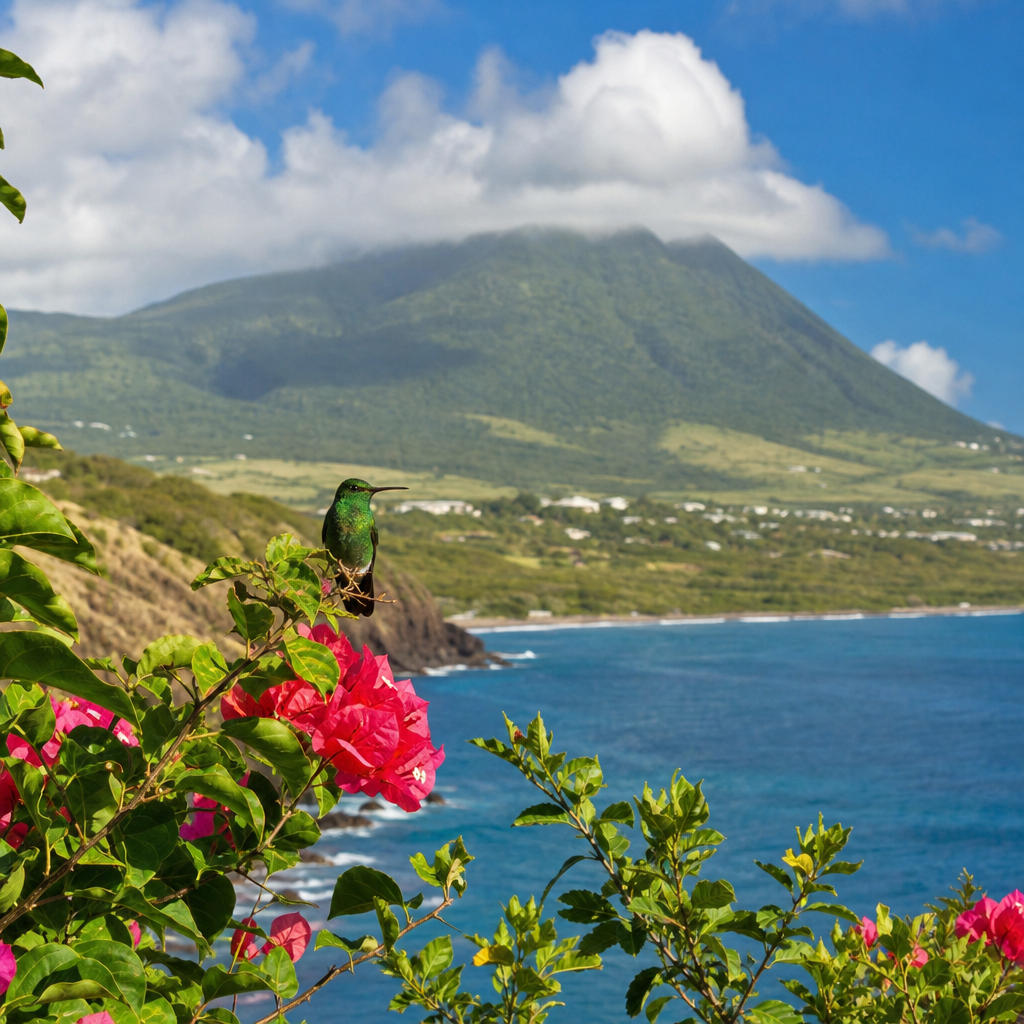
At higher elevations, vegetation shifts again. Moist forests and cloud-affected habitats support tree ferns, mosses, lianas, and broadleaf species that rely on persistent humidity. The upper slopes of Nevis Peak are where the island feels most botanically distinct from its beaches and resorts. Epiphytes become more common, trunks stay damp longer, and leaf litter supports invertebrate communities that are largely absent from exposed coastal ground. In March, these uplands remain the green engine of the island, catching water and moderating runoff even when lowland areas look seasonally dry.
Signature Wildlife to Watch in March
The most approachable fauna on Nevis in March are birds, reptiles, insects, and nearshore marine animals. Green vervet monkeys, introduced long ago and now naturalized on St. Kitts and Nevis, are among the most noticed mammals. They are charismatic but ecologically complicated, because introduced mammals can pressure crops and interact with native species in ways that are not always beneficial. Visitors often see them near roadsides, gardens, or wooded edges in the morning or late afternoon. Good wildlife viewing means keeping distance and never feeding them.
Birdlife is especially rewarding. Common and conspicuous species may include Caribbean elaenia, bananaquit, gray kingbird, zenaida dove, frigatebirds overhead along the coast, and herons or egrets around ponds and wet ground. Depending on site conditions, March can still be productive for migratory species using Caribbean stopover or wintering habitat. That makes wetlands, salt ponds, and coastal flats disproportionately important. Even a small pond can host a meaningful mix of resident and seasonal birds when freshwater and feeding opportunities narrow elsewhere.
Reptiles are integral to the island’s everyday ecology. Anoles are frequently seen on walls, trunks, and fences, adjusting body position to regulate temperature. Ground lizards forage in leaf litter and open paths, helping control insect numbers. Geckos occupy buildings and tree bark and are most obvious around dusk. Snakes are less often observed by visitors, but they remain part of the native food web. Offshore and in nearshore waters, sea turtles may occur around nesting beaches or feeding grounds, though respectful distance is essential and local regulations should always be followed.
| Habitat | What to Look For in March | Why It Matters |
|---|---|---|
| Beaches and coastal scrub | Sea grape, coconut palms, shore birds, lizards, crabs | Shows how species handle salt, wind, and drought |
| Ponds and wetlands | Egrets, herons, migratory birds, insects, amphibian activity after rain | Concentrates wildlife in the dry season |
| Former estates and gardens | Mango, breadfruit, flowering ornamentals, monkeys, bananaquits | Illustrates the blend of cultivated and wild habitats |
| Lower forest and trail edges | Anoles, butterflies, songbirds, secondary woodland trees | Excellent for easy-access observation |
| Upper slopes of Nevis Peak | Moist forest plants, ferns, epiphytes, cloud-forest birds and insects | Protects water capture and biodiversity |
| Nearshore reefs and clear water | Reef fish, seagrass life, turtles, coral structure | Connects terrestrial runoff to marine health |
Birds, Pollinators, and Small Creatures That Define the Season
If you want the most accurate March snapshot of Nevis, pay attention to small animals. They reveal ecological condition faster than large, charismatic species do. Bananaquits move quickly between flowers and fruiting plants and are a useful indicator of nectar and soft-fruit resources in settled areas. Hummingbirds, where present, track blooming cycles closely. Gray kingbirds and other flycatchers use exposed perches to hunt insects in open habitats, often making roadsides and pasture edges surprisingly productive birding locations.
Butterflies and bees are equally informative. In warm, bright weather, butterflies patrol flowering hedges, coastal shrubs, and garden margins. Their abundance rises and falls with nectar availability, host plants, wind exposure, and recent rainfall. On islands like Nevis, pollination is not an abstract process; it is visible in every garden where flowering herbs, ornamentals, and fruit trees attract insects through the day. Moths, beetles, ants, and spiders support food chains that sustain birds, lizards, and amphibians. Even land crabs and hermit crabs contribute to nutrient cycling in coastal systems.
One lesson I have seen repeatedly across Caribbean islands is that visitors often overlook ordinary species, yet those species explain the landscape. A flowering roadside tree full of bees, an anole defending a sunlit perch, or cattle egrets feeding in a pasture can tell you more about seasonal ecology than a rare sighting can. March rewards that patient kind of observation because visibility is high and animal behavior is less hidden by dense wet-season growth.
Marine and Coastal Connections
Nevis’ flora and fauna cannot be separated cleanly into land and sea. What happens upslope affects reefs and seagrass beds below. Coastal vegetation reduces erosion, traps sediment, and buffers shorelines from wave energy. When native or stable plant cover is replaced by bare ground or poorly managed development, rainfall can carry sediment downslope, reducing water clarity and stressing corals. That connection is easy to miss on a beach holiday, but it is fundamental to island ecology.
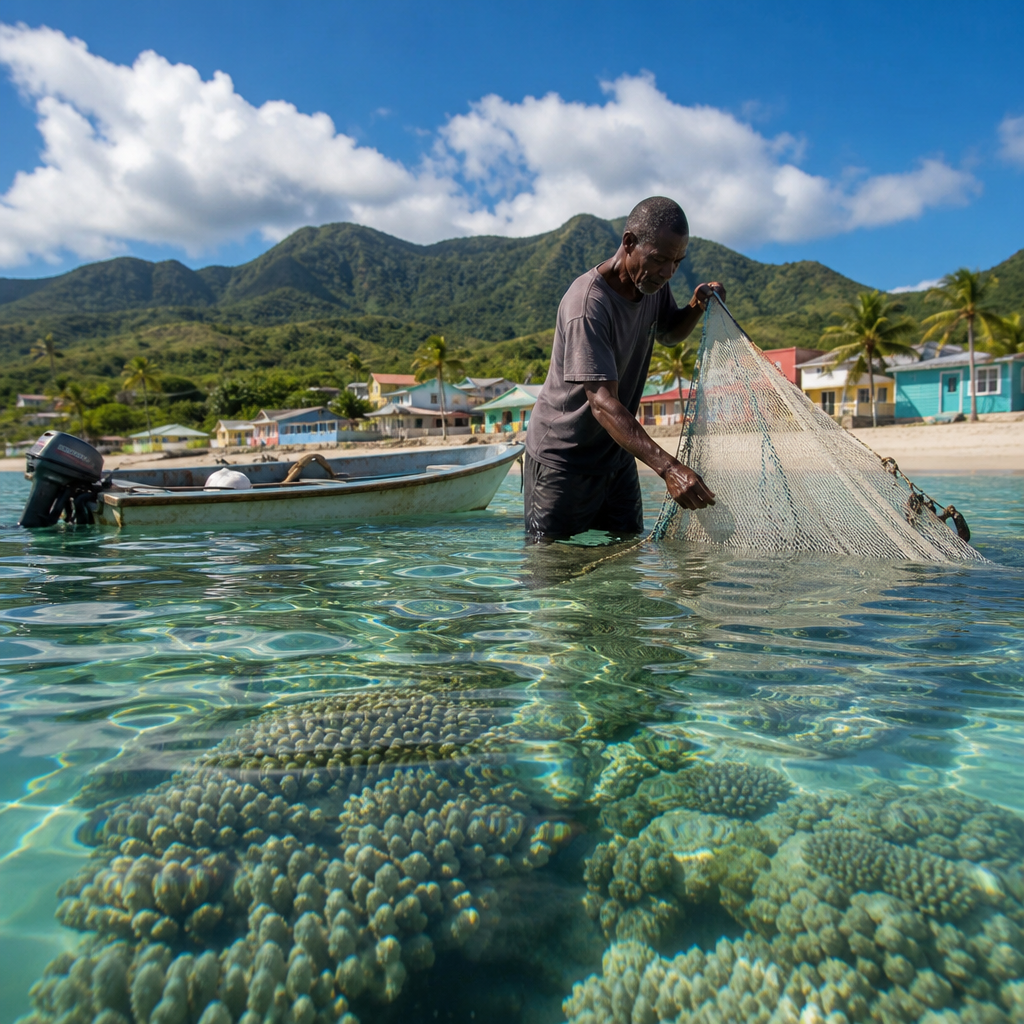
March often offers favorable conditions for observing this relationship. Clearer water can make reef fish and seagrass patches more visible from boats, docks, or snorkeling sites. Parrotfish, sergeant majors, wrasses, and juvenile fish using sheltered habitat may be easier to notice when sea state is moderate. Seagrass beds function as nurseries and feeding grounds, and turtles may forage there. Shore birds, meanwhile, exploit the margin between marine and terrestrial systems, feeding where waves, mud, and organic debris concentrate invertebrates.
For readers exploring the wider Nature and Wildlife hub, this is where marine life articles connect back to terrestrial conservation. Healthy hillsides support cleaner bays. Healthy bays support fisheries, recreation, and tourism. On a small island, these links are not theoretical; they are immediate and measurable.
Conservation Pressures and Practical Wildlife Viewing
Nevis remains beautiful, but beauty should not obscure pressure. Habitat fragmentation, invasive species, free-roaming animals, litter, storm damage, and development all shape what survives where. Introduced plants can outcompete natives in disturbed areas. Monkeys, while culturally familiar, are not neutral additions. Coastal construction can simplify beach vegetation and disrupt nesting habitat. Climate change adds another layer through higher temperatures, altered rainfall patterns, stronger storms, coral bleaching risk, and sea-level pressure on low-lying coasts.
Responsible viewing helps. Stay on established trails, especially on steeper slopes where erosion can accelerate quickly. Do not pick flowers, remove shells from protected areas, or handle reptiles and amphibians. Use reef-safe sun protection where possible, avoid stepping on coral, and never chase turtles for photographs. Early morning is generally best for birds and monkeys; midmorning can be ideal for reptiles and butterflies; calm afternoons may favor coastal observation and snorkeling. Binoculars, a basic field notebook, and a plant identification app such as iNaturalist or PictureThis can turn a casual walk into useful, memorable natural history.
This miscellaneous hub exists to make those observations more coherent. Use it as a starting point for deeper articles on Nevis birds, coastal habitats, hiking ecology, marine life, native plants, and conservation travel. March is not the only month worth exploring, but it is one of the best months for seeing how the island’s ecosystems fit together in real time.
Why a March Snapshot Is So Valuable
A March snapshot of Nevis’ flora and fauna is valuable because it reveals contrast. You can see dry coastal adaptation, productive gardens, recovering secondary woodland, moisture-rich uplands, and clear links between land management and marine health within a single day. That range helps beginners understand the island quickly and gives experienced naturalists a reliable baseline for comparing seasonal change. If you return in wetter months, you will notice denser foliage, different flowering patterns, fuller ponds, and altered wildlife behavior, but March provides the cleanest structural read.
The main takeaway is simple: Nevis is not just a beach destination with scattered greenery. It is a compact volcanic ecosystem where plants and animals respond visibly to elevation, moisture, wind, history, and human use. Sea grape on the shore, monkeys at a garden edge, egrets on a pond, anoles on a stone wall, and ferns on the upper peak are all parts of one connected story. That is why this hub matters within the broader Nature and Wildlife topic: it ties together the island’s miscellaneous natural elements so readers can place every future article in context.
If you are planning research, a holiday, a hike, or a birding morning, use March as your benchmark and explore Nevis with close attention. Start with one habitat, move slowly, and let the island’s flora and fauna show how much diversity can fit into a small Caribbean landscape.
Frequently Asked Questions
What makes March such a useful month for understanding Nevis’ flora and fauna?
March is one of the most revealing times to observe Nevis because it falls late in the dry season, when the island’s environmental contrasts are especially easy to read. In a very compact area, visitors can move from bright, sun-exposed coastal habitats to cooler, wetter upland zones around Nevis Peak, and those shifts are often more visible in March than at other times of year. Along the shore, drier conditions and stronger light can make coastal vegetation appear tougher, more salt-tolerant, and more heat-adapted, while higher elevations retain more moisture and support denser, greener plant life. That sharp transition helps explain how altitude, rainfall, wind exposure, and soil type shape the island’s ecology.
March also tends to highlight animal activity in practical, observable ways. Migratory birds may still be present or passing through, resident birds are easier to spot where foliage is thinner in some dry lowland areas, and insects and reptiles often become active during warm daytime conditions. Because Nevis is small enough to traverse relatively quickly, a single day can expose visitors to beaches, scrubland, agricultural land, villages, and rainforest margins. That makes March an excellent month not just for spotting species, but for understanding relationships between habitat, season, and human land use. In short, the island’s ecological character feels condensed and legible at this time of year.
What kinds of plants are most noticeable on Nevis in March?
In March, the most noticeable plant patterns on Nevis are often tied to elevation and moisture availability rather than to any single iconic species. Near the coast, vegetation is shaped by sun, salt spray, wind, and comparatively dry conditions. There, visitors are likely to notice hardy shrubs, grasses, and trees that can tolerate heat and periodic water stress. Coconut palms and other familiar tropical plants may frame beaches and settlements, but the broader story is one of resilience: coastal flora on Nevis is adapted to exposure, poor soils in some areas, and the demands of a dry-season landscape.
As you move inland and uphill, the plant communities begin to change. Agricultural zones and old estate lands may include fruit trees, cultivated plots, and secondary growth, reflecting generations of human use layered onto the natural environment. Higher still, increased cloud cover and moisture support lusher vegetation, including broadleaf tropical species, vines, ferns, and forest plants that benefit from cooler temperatures and more reliable humidity. On the slopes of Nevis Peak, cloud forest conditions can create a dramatically greener and denser setting than what is visible at sea level.
March is especially instructive because dry-season stress may make differences between these plant zones stand out more clearly. Instead of seeing the island as uniformly tropical, visitors can recognize it as a mosaic of habitats, each with its own plant strategies. Some species conserve water, some capitalize on sheltered ravines and richer soils, and others thrive in wetter montane conditions. That layered plant geography is one of the keys to understanding Nevis as an ecological system rather than simply a scenic island.
Which animals and birds are commonly observed on Nevis during March?
March can be a rewarding month for wildlife observation on Nevis, particularly for birdwatchers. The island’s mix of shoreline, wetlands, open country, gardens, forest edges, and mountain slopes creates opportunities to see both resident and migratory species within a short distance. Coastal areas may attract seabirds and shore-associated birds, while inland habitats can support doves, hummingbirds, flycatchers, and other small land birds adapted to scrub, woodland, or cultivated terrain. Depending on local conditions and timing, migratory species from North America may still be using the island as wintering habitat or as part of a broader seasonal movement.
Beyond birds, visitors in March often notice reptiles and invertebrates more readily as temperatures rise through the day. Small lizards are a familiar part of the island landscape, especially in sunny gardens, stone walls, and dry open areas. Insects, including butterflies and pollinators, may also be active where flowering plants are available. In wetter upland zones, the wildlife experience can shift toward listening as much as looking, with bird calls and rustling vegetation revealing species that are not always easy to see.
One important point is that Nevis rewards patient observation more than expectations of dramatic megafauna. Its fauna is best appreciated through habitat detail: a bird moving between fruiting trees, a lizard basking at the edge of a trail, or a shift in species composition as you move from dry lowlands to mistier elevations. March is ideal for this style of watching because weather conditions are often favorable for walking and because ecological boundaries across the island are so accessible.
How do Nevis’ different habitats change from the coast to Nevis Peak in March?
The most striking ecological feature of Nevis is how quickly its habitats change over short distances, and March makes those transitions especially apparent. At the coast, conditions are generally hotter, brighter, windier, and drier. Coral-fringed shores, sandy or rocky margins, and nearby lowland vegetation all reflect strong marine influence. Plants here tend to be salt-tolerant and drought-aware, and animal life often includes species comfortable with open, exposed spaces and intermittent human activity.
Moving inland, the landscape becomes more mixed. Settlements, roads, former plantation lands, gardens, and small agricultural areas create a patchwork environment where human land use and natural regeneration overlap. This middle zone can be highly productive for wildlife because edges often provide food, shelter, and variation in vegetation structure. Birds may feed in fruiting trees, insects may concentrate around flowering plants, and secondary woodland may support species that do well in disturbed but recovering habitats.
Higher up, especially on the approach to Nevis Peak, moisture increases and temperatures moderate. Clouds and mist become more influential, and the vegetation grows denser, greener, and more layered. Ferns, mosses, vines, and taller forest plants begin to dominate, and the atmosphere can feel markedly different from the coast even on the same day. In March, when lowlands may show dry-season effects more clearly, that moist upland contrast becomes even more pronounced. For travelers, this means Nevis is not ecologically one place but several connected environments stacked vertically, each responding differently to season, weather, and geology.
How does human land use influence what visitors see in Nevis’ natural environment in March?
Human land use is central to understanding Nevis’ flora and fauna, and March is a particularly good month to notice that relationship because environmental patterns are relatively easy to interpret. Much of the island has been shaped over time by settlement, plantation history, agriculture, roads, tourism, and residential gardening. As a result, what visitors encounter is rarely a strict divide between “natural” and “developed” space. Instead, Nevis presents a continuum that includes beach vegetation near built areas, old estate landscapes transitioning into secondary growth, cultivated land supporting birds and insects, and upland forests that still retain a stronger sense of wildness.
This human influence can increase biodiversity in some local settings while reducing it in others. Gardens and mixed agricultural plots may provide nectar, fruit, shade, and perching sites for birds, butterflies, and reptiles. At the same time, clearing, infrastructure, and invasive species pressures can alter native plant communities and simplify habitat structure. In March, when water availability and heat begin to shape where plants remain lush and where animals concentrate activity, the effects of irrigation, shade trees, drainage patterns, and land management can become especially noticeable.
For visitors, the key is to see Nevis as a lived-in island whose ecology has been continuously negotiated rather than preserved in isolation. That does not diminish its natural value; it makes the island more interesting and more realistic as an ecological case study. Observing how wildlife uses orchards, hedgerows, village edges, coastal strips, and mountain trails provides a fuller picture of Nevis in March than focusing only on untouched scenery. The island’s environmental story is one of gradients, adaptation, and coexistence between natural systems and human presence.