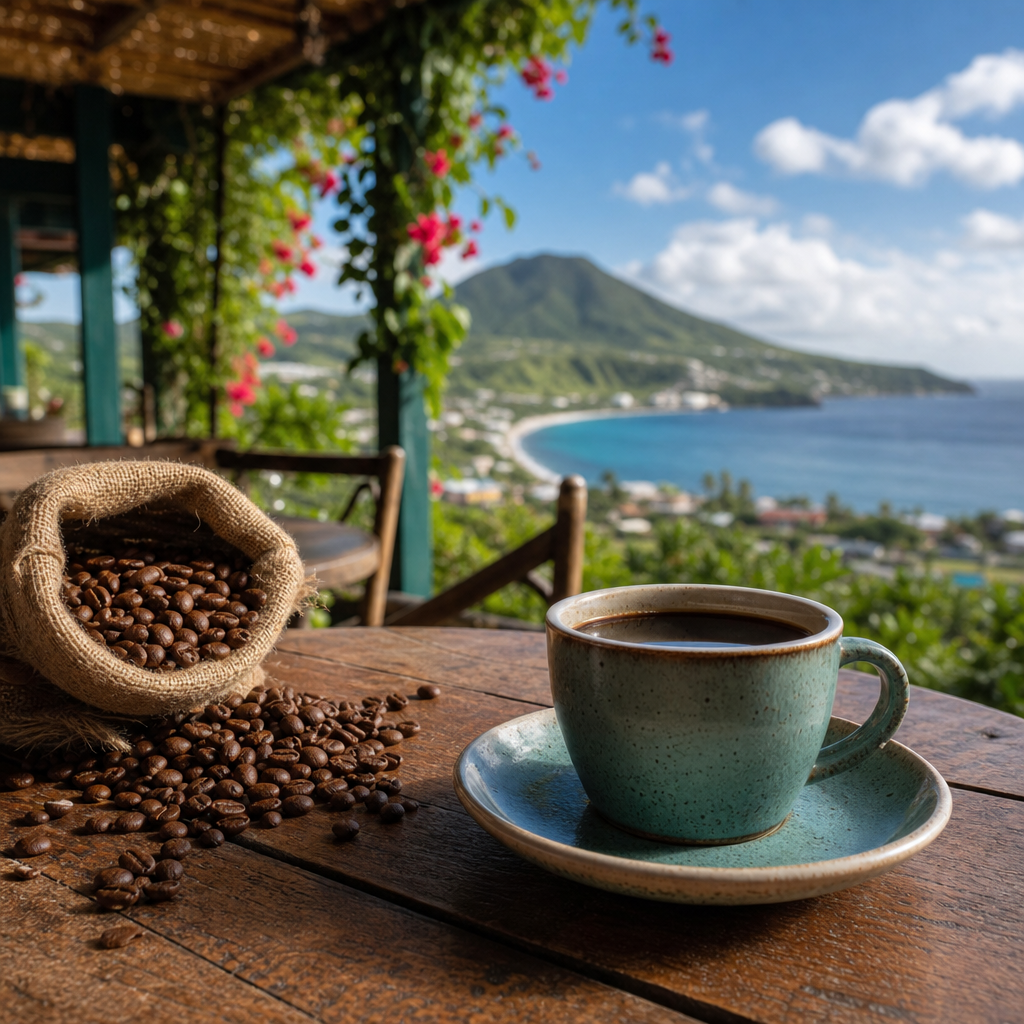
Coffee culture in Saint Kitts blends Caribbean agriculture, colonial history, tourism, and daily ritual into a small-island story that is richer than many visitors expect. On an island better known for beaches, rum, and historic sugar estates, coffee occupies a quieter but meaningful place in local life. It appears in breakfast routines, roadside conversations, hotel service, café menus, and the broader hospitality economy that shapes how residents and travelers experience the nation. Understanding coffee culture in Saint Kitts means looking beyond the cup to the networks of importers, roasters, chefs, baristas, farmers, market vendors, and families who turn coffee into both refreshment and social glue.
In practical terms, coffee culture refers to the habits, preferences, spaces, and traditions surrounding how people buy, brew, serve, and talk about coffee. In Saint Kitts, those habits are shaped by climate, trade, and neighboring Caribbean influences. The island is not a major global coffee producer on the scale of Jamaica or the Dominican Republic, yet coffee remains deeply relevant because it intersects with tourism, food service, hospitality training, and local entrepreneurship. I have seen this most clearly in breakfast rooms at Basseterre guesthouses, in resort cafés where espresso drinks sit beside bush tea and fresh juice, and at community gatherings where instant coffee, brewed coffee, and locally baked pastries all share the same table without hierarchy.
This matters for anyone exploring local life and experiences because coffee in Saint Kitts reveals how the island balances tradition with modern taste. It also opens the door to related subjects across this miscellaneous hub: breakfast customs, café etiquette, small business culture, cruise tourism, food imports, culinary fusion, and the rhythms of everyday social life. A good cup on the island may come from imported beans, regional roasting expertise, or a chef who understands exactly how visitors and locals want their morning to begin. To appreciate coffee culture in Saint Kitts, you need to understand where the beans come from, how the brews are prepared, and why the traditions around serving and sharing coffee still matter.
How Coffee Fits Into Daily Life in Saint Kitts
Coffee in Saint Kitts is less a single tradition than a spectrum of routines. Many households start the day with simple drip coffee or instant coffee because convenience, cost, and availability matter. In hotels and restaurants, brewed coffee is a breakfast standard, usually served with eggs, saltfish, johnny cakes, fruit, or pastries. In urban settings such as Basseterre and Frigate Bay, cafés and restaurants increasingly offer espresso-based drinks, iced coffee, and branded bean selections because visitors now expect specialty options alongside local flavors. That shift has changed service standards across the island.
One useful way to understand the local pattern is to separate coffee occasions. The first is the home breakfast cup, often practical and familiar rather than ceremonial. The second is the hospitality cup, where presentation and consistency are important because tourism drives reputation. The third is the social cup, taken during meetings, church events, small business conversations, and casual catch-ups. In my experience, the social role is the most revealing. Coffee is often not the headline attraction, but it supports the real purpose: connection. That makes it similar to coffee cultures in many small communities, where the drink anchors conversation rather than dominating it.
Saint Kitts also reflects a wider Caribbean beverage reality: coffee coexists with tea, cocoa tea, herbal infusions, and fresh juices. People choose based on time of day, weather, age, and occasion. Because the climate is warm, not everyone wants a heavy hot drink in the afternoon, so iced coffee and chilled coffee beverages have grown in appeal, especially in tourist zones. Yet hot coffee remains the baseline morning drink in many service settings because it signals comfort, reliability, and welcome.
Beans, Sourcing, and the Island Supply Chain
Saint Kitts does not have the large-scale coffee production infrastructure associated with famous coffee origins. Most coffee served on the island is imported, either as roasted beans, ground coffee, or soluble coffee. That fact is not a weakness; it is the core reality that defines the local market. Hotels, villas, supermarkets, and restaurants rely on import channels that can include regional distributors and international brands. As a result, coffee culture in Saint Kitts is shaped as much by sourcing strategy as by brewing technique.
For hospitality operators, bean selection usually comes down to four factors: flavor consistency, cost control, shipping reliability, and equipment compatibility. A resort using superautomatic espresso machines needs beans that behave predictably under pressure and stay available across seasons. A small café may prioritize a more distinctive roast profile to stand out. A grocery buyer may favor recognizable packaged brands because trust and shelf stability matter. These decisions influence what residents and visitors come to think of as “Saint Kitts coffee,” even when the beans were grown elsewhere.
Regional proximity matters. Caribbean businesses often look to nearby islands and Latin American supply networks for coffee products because shipping routes and distributor relationships can be more practical than importing small volumes from distant specialty roasters. Some establishments market Jamaican Blue Mountain blends or other premium regional coffees because those names carry prestige with travelers. Others emphasize a house blend paired with local desserts, which creates a more place-specific experience even when the beans are imported.
There is also an economic lesson here. On islands, food and beverage identity is not limited to what is grown locally; it is also built through curation. The café owner who chooses a balanced medium roast, trains staff well, and serves it with fresh coconut bake is creating local culture just as surely as a farm-to-cup producer would. In Saint Kitts, that curatorial role is central.
Brewing Styles You Are Most Likely to Encounter
The most common coffee formats in Saint Kitts are straightforward brewed coffee, instant coffee, and espresso-based drinks in hospitality venues. Drip brewing remains popular because it is efficient, scalable, and familiar to international guests. Instant coffee persists in homes, offices, and informal settings because it is affordable, fast, and easy to store in a humid climate. Espresso drinks have expanded with tourism and café development, especially in areas serving business travelers, cruise passengers, and resort guests.
French press, pour-over, and cold brew appear less universally but are increasingly visible in establishments positioning themselves as modern cafés rather than simple breakfast stops. When a venue offers these methods, it is usually making a statement about quality, craft, or menu differentiation. The brewing style often aligns with the customer base. A hotel breakfast buffet wants speed and consistency. A boutique café may want aroma, freshness, and a chance to discuss origin or roast notes with customers.
| Brewing style | Where you may find it | Why it works in Saint Kitts | Typical experience |
|---|---|---|---|
| Drip coffee | Hotels, guesthouses, restaurants | Easy to produce in volume, dependable for breakfast service | Clean, familiar, often served with local breakfast dishes |
| Instant coffee | Homes, offices, informal gatherings | Low cost, long shelf life, quick preparation | Practical and everyday rather than artisanal |
| Espresso drinks | Cafés, resorts, upscale dining venues | Meets visitor expectations and supports premium pricing | Lattes, cappuccinos, and iced drinks with polished presentation |
| French press or pour-over | Boutique cafés, specialty hospitality settings | Signals craft, freshness, and attention to detail | Slower service, fuller flavor, more distinctive identity |
Water quality, grind size, storage, and machine maintenance matter enormously on islands, and strong operators know this. Humidity can flatten coffee quickly if beans are stored poorly. Hard water can damage espresso equipment and distort flavor. In venues I trust, the difference is obvious: burr grinders are calibrated, brew baskets are clean, and coffee is not left sitting on heat for hours. These details determine whether coffee feels like an afterthought or a point of pride.
Cafés, Hotels, and the Tourism Effect
Tourism has raised the coffee standard in Saint Kitts more than any other force. Cruise visitors want a quick, reliable café stop. Resort guests expect espresso drinks, decaf options, non-dairy milk alternatives, and attractive breakfast service. Business travelers want Wi-Fi, comfortable seating, and coffee that matches international norms. Those demands have encouraged investment in machines, staff training, menu design, and branded presentation.
This does not mean local culture has been replaced. Instead, the best operators blend global café expectations with Kittitian hospitality. A visitor may order a cappuccino but pair it with coconut bread, tamarind pastry, or a local breakfast plate. A hotel may serve imported coffee beans, yet the atmosphere, service rhythm, and food pairings are unmistakably tied to Saint Kitts. That hybrid model is common across the Caribbean, and it works because it reflects how local economies function: rooted in place, responsive to guests.
Cafés also support a wider local life and experiences ecosystem. They are practical meeting points for tour planning, remote work, casual interviews, and reunions between residents and returning diaspora families. In Basseterre especially, coffee spaces can act as soft community hubs, even when the concept was originally designed for visitors. That crossover matters. It shows how a tourism-facing product can still become part of ordinary island life when the service feels welcoming and the quality is consistent.
Traditions, Pairings, and Social Meaning
The traditions around coffee in Saint Kitts are often found in context rather than ritualized ceremony. Morning hospitality is one example. Offering coffee to a guest, boarder, colleague, or family friend remains a simple sign of care. Coffee is also tied to bakery culture. Breads, turnovers, cakes, and fried breakfast items make natural companions, and that pairing is often where local identity becomes most visible. The cup may be imported coffee, but the pastry beside it tells you where you are.
Religious and community events sometimes include coffee service because it is economical and broadly accepted across age groups. In work settings, coffee breaks function much as they do elsewhere, but on a small island they often blur professional and personal worlds. News, family updates, politics, and business all move through these moments. I have found that if you sit long enough with people over coffee in Saint Kitts, the conversation quickly expands beyond the beverage to weather, transport, carnival, church, cricket, and who just came back from overseas.
Food pairing deserves special attention. A medium roast coffee works well with saltfish and bakes because its acidity cuts through savory richness. Sweeter milk-based drinks pair naturally with coconut pastries and banana breads. After dinner, coffee can accompany rum cake or desserts in hotel restaurants, linking two major Caribbean flavor traditions in one service moment. These combinations help coffee feel integrated into local life rather than imported and separate.
What This Means for Travelers and Local Businesses
If you are visiting Saint Kitts, expect coffee to range from practical to polished. You can find simple breakfast coffee, branded café drinks, and occasional specialty preparation, but quality varies by venue. The best strategy is to look for places with steady local traffic, clean equipment, active breakfast service, and staff who can clearly describe what they serve. If espresso matters to you, ask whether drinks are made to order and whether the machine is used throughout the day; idle equipment often signals weaker quality control.
For local businesses, coffee is more than a beverage line item. It is a margin opportunity, a guest-satisfaction tool, and a brand signal. Small improvements have outsized effects: fresher beans, better water filtration, regular grinder adjustment, and staff training on milk texture and extraction can raise customer perception immediately. Operators do not need a large specialty program to succeed. They need consistency, speed, and thoughtful pairing with local food.
As a hub within local life and experiences, coffee culture connects to wider topics worth exploring across Saint Kitts: breakfast traditions, the growth of independent hospitality businesses, culinary tourism, market shopping, island supply chains, and the evolving tastes of both residents and visitors. Coffee sits at the crossroads of all of them. Pay attention to what is in the cup, what is beside it, and who is sharing the table. That is where the real story of coffee culture in Saint Kitts begins. Seek out a local café or breakfast spot and taste the island one cup at a time.
Frequently Asked Questions
What makes coffee culture in Saint Kitts different from coffee culture in larger Caribbean destinations?
Coffee culture in Saint Kitts stands out because it is intimate, hospitality-driven, and closely tied to everyday social life rather than built around large-scale coffee production or a globally famous café scene. Unlike bigger destinations where coffee may be marketed as a major export identity, Saint Kitts presents coffee as part of the rhythm of island living. It shows up in hotel breakfasts, local eateries, roadside stops, guesthouse verandas, and conversations that unfold slowly over a morning cup. That gives coffee a practical and social role at the same time.
The island’s size also shapes the experience. In Saint Kitts, visitors often encounter coffee in settings where tourism and local routine overlap naturally. A traveler may drink coffee in a restored plantation inn, then see a similar emphasis on a strong morning brew in a neighborhood shop or family-run breakfast spot. This creates a more layered impression of coffee: it is not just a beverage for visitors, but a familiar part of the day for residents as well.
Another difference is the way coffee fits into the broader national story. Saint Kitts is historically associated with sugar, colonial estates, maritime trade, and modern tourism, so coffee occupies a quieter position in the cultural landscape. That quieter role is exactly what makes it interesting. It reflects adaptation, imported tastes, local preference, and the influence of hospitality on island habits. Rather than dominating the identity of Saint Kitts, coffee helps reveal how the island blends tradition, service culture, and everyday ritual into a distinct experience.
Does Saint Kitts grow its own coffee, or is coffee culture on the island mainly about brewing and serving?
For most people exploring coffee culture in Saint Kitts, the story is much more about brewing, serving, and enjoying coffee than about large-scale local cultivation. Saint Kitts is not widely known as a major coffee-producing island in the way some Latin American or Caribbean regions are. Its agricultural history is far more strongly linked to sugar, and in modern times tourism plays a central role in shaping how food and drink are presented and consumed.
That said, coffee culture does not depend solely on being a major producer. Many places develop rich coffee traditions through trade, hospitality, household routines, and culinary influence. In Saint Kitts, coffee’s importance comes from how it is integrated into breakfast customs, hotel dining, café offerings, and the island’s service economy. Resorts, restaurants, and local food businesses all contribute to the expectation that a good cup of coffee is part of a welcoming experience. This is especially true in a destination where mornings matter to both residents heading into the day and travelers preparing for excursions, beach visits, or business meetings.
There may be interest in small-scale experimentation, specialty sourcing, or curated coffee menus, particularly in tourism-oriented settings, but the island’s coffee identity is still primarily defined by consumption culture rather than plantation-scale bean production. In practical terms, that means the visitor experience is less about touring famous coffee farms and more about understanding where coffee appears in daily life: on breakfast tables, beside local pastries, in conversation-heavy social spaces, and as a subtle but important marker of comfort and hospitality.
How does the history of Saint Kitts influence the way coffee is enjoyed today?
The history of Saint Kitts shapes coffee culture indirectly but powerfully. As one of the Caribbean’s oldest colonial territories, the island developed through plantation agriculture, overseas trade, and the movement of goods, people, and tastes across the Atlantic world. Even though sugar defined much of Saint Kitts’ economic past, coffee belongs to the broader story of how colonial networks introduced and normalized certain beverages in the Caribbean. Over time, drinks such as coffee became part of domestic routine, social etiquette, and hospitality standards.
This historical backdrop helps explain why coffee in Saint Kitts often feels tied to place and atmosphere rather than to a single local crop identity. Drinking coffee in a historic inn, near a former estate, or in a town shaped by centuries of trade invites a connection between the present-day cup and the island’s layered past. The beverage becomes part of a longer narrative about imported habits becoming local customs, and about how Caribbean societies transformed outside influences into their own everyday traditions.
Modern tourism adds another historical layer. Many heritage properties, boutique hotels, and restored plantation settings present coffee as part of an experience that blends comfort, memory, and a sense of island elegance. At the same time, local residents continue to keep coffee rooted in practical life: morning energy, social exchange, and familiar routine. In that way, Saint Kitts’ history influences coffee not by making it the island’s dominant crop, but by giving it cultural depth. Coffee today carries traces of colonial-era exchange, post-sugar adaptation, and the contemporary hospitality economy that now defines much of the island’s public-facing identity.
Where are visitors most likely to experience authentic coffee culture in Saint Kitts?
Visitors are most likely to experience authentic coffee culture in Saint Kitts by looking beyond the idea that authenticity only exists in one type of venue. On the island, coffee culture is spread across several settings, and each reveals something different. Hotels and resorts often provide the most polished version, where coffee is part of a carefully curated breakfast or a refined hospitality routine. This can be especially meaningful in heritage accommodations, where the surroundings connect the coffee experience to the island’s architectural and historical character.
At the same time, smaller cafés, casual breakfast spots, bakeries, and roadside eateries often offer a more everyday perspective. These are the places where coffee functions less as a lifestyle statement and more as part of the daily flow. Watching how people order, linger, talk, and pair coffee with local or familiar breakfast items can tell visitors a great deal about how the beverage fits into real island life. Sometimes the most revealing cup is not the most elaborate one, but the one served in a place where conversation matters as much as the drink itself.
Authenticity also comes from timing. Morning is especially important. Early-day coffee in Saint Kitts often intersects with work routines, family habits, and the island’s tourism schedule. A visitor who seeks out coffee during those active hours is more likely to see its social role clearly. Rather than searching only for specialty branding, it helps to notice how coffee is woven into service, welcome, and routine. In Saint Kitts, authentic coffee culture is found in the overlap between local custom and visitor experience, where a simple cup can reflect both island tradition and modern hospitality.
How does coffee connect to tourism, hospitality, and daily ritual in Saint Kitts?
In Saint Kitts, coffee connects to tourism, hospitality, and daily ritual by serving as one of the island’s most consistent forms of welcome. In the tourism sector, coffee helps shape first impressions and daily rhythms. It is often one of the earliest experiences a guest has each day, whether through room service, buffet breakfast, a café stop before sightseeing, or a quiet cup overlooking the sea. Because tourism is so central to the island’s economy, even ordinary beverages take on added significance, and coffee becomes part of the quality, warmth, and reliability that visitors remember.
Within hospitality, coffee also acts as a bridge between local service culture and international expectation. Travelers often arrive with established coffee habits, and Saint Kitts meets those expectations while adding its own setting, pace, and atmosphere. A cup of coffee served on a breezy terrace, in a historic property, or in a family-run eatery does more than deliver caffeine. It reflects attentiveness, comfort, and the island’s ability to blend relaxation with professionalism. That is especially important in a destination where guest experience is a major part of national identity.
For residents, coffee is equally connected to daily ritual. It can mark the start of the day, anchor breakfast, accompany a conversation, or provide a pause between responsibilities. These rituals may appear simple, but they are culturally meaningful because they show how a beverage becomes part of social structure and personal routine. In Saint Kitts, coffee is not necessarily the loudest symbol of national culture, but it is a steady one. It links work and leisure, local life and tourism, history and the present. That combination is exactly why coffee culture on the island feels richer than many visitors first expect.