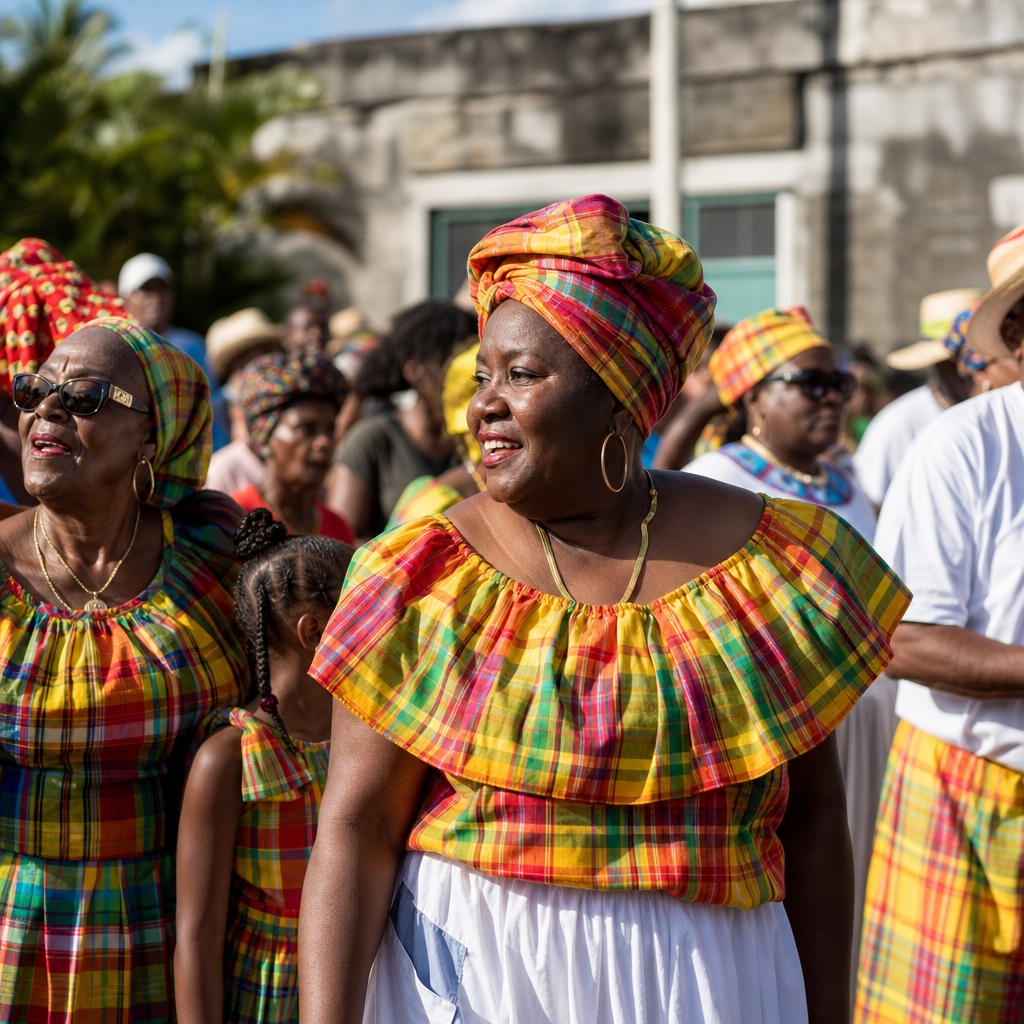
Creole Day in Nevis offers one of the clearest windows into how language, food, music, memory, and everyday customs shape local identity. On a small Caribbean island often introduced through beaches and heritage tourism, this observance reveals a different Nevis: one defined by speech rhythms, market traditions, village storytelling, and the creative blending of African, European, and regional influences. Creole Day in Nevis is not only a celebration but also a practical lesson in how culture survives through ordinary use. For travelers, researchers, and members of the diaspora, it provides a focused way to understand local life beyond resort brochures.
In this context, “Creole” refers to the language patterns, cultural expressions, and shared practices that emerged from centuries of contact and adaptation in the Caribbean. Nevisians speak English officially, yet daily communication often includes distinctive vocabulary, pronunciation, syntax, and idioms that connect the island to the wider West Indian creole continuum. Culture, likewise, is not limited to staged folklore. It appears in cooking methods, greetings, jokes, proverbs, church events, school performances, and the etiquette of community gatherings. I have worked with Caribbean cultural programming and heritage interpretation long enough to know that visitors often mistake these details for small curiosities. In reality, they are the structure holding communal memory together.
That is why Creole Day matters. It helps protect intangible heritage in a region where globalization, migration, media homogenization, and tourism pressure can flatten local distinctiveness. It also creates a practical hub for understanding miscellaneous elements of Nevisian life that do not always fit into single-topic guides. A person looking into local festivals may also want to know what children wear for cultural presentations, what foods are served, how elders speak in informal settings, why certain songs matter, or where community identity is most visible. This article brings those threads together and explains how Creole Day in Nevis connects language and culture in ways that are both celebratory and instructive.
What Creole Day in Nevis looks like in practice
Creole Day in Nevis usually appears through schools, community organizations, churches, workplaces, and public cultural activities rather than through one fixed islandwide formula. That flexibility is part of its value. In one setting, children may dress in madras-inspired prints, head ties, and clothing that evokes traditional Caribbean market wear. In another, adults may organize food fairs, storytelling sessions, folk-song performances, or language-centered presentations that encourage younger people to use local expressions confidently. The format can vary year to year, but the purpose stays consistent: celebrate inherited ways of speaking and living.
In practical terms, a Creole Day program often includes recitations, skits, drumming, traditional games, and dishes associated with home cooking rather than formal dining. Saltfish, ground provisions, coconut-based sweets, ginger drinks, and cassava preparations commonly appear in cultural observances across the Eastern Caribbean, and Nevis draws from this broader regional repertoire while maintaining local preferences. The point is not museum accuracy for every costume or recipe. The point is recognition. People see familiar objects, hear familiar phrasing, and remember that culture is carried by repeated use.
For visitors, this means Creole Day is best approached as a community-centered event, not a packaged attraction. Ask questions, listen more than you speak, and pay attention to interactions between generations. The most revealing moments are often informal: an elder correcting a phrase, a child explaining why a proverb is funny, or a vendor describing how a dish should taste when made properly. Those exchanges do more to explain Nevisian culture than a generic overview ever could.
How local language reflects Nevisian identity
The local speech heard around Creole Day in Nevis reflects the history of contact among African languages, colonial English, neighboring islands, migration networks, and modern media. Linguists generally place Caribbean English-lexifier creoles on a continuum, with speakers shifting registers depending on context. In Nevis, many people move naturally between Standard English and local forms. That shift is not confusion. It is linguistic competence. A teacher may use formal English in the classroom, then switch to local phrasing when joking with family or emphasizing a point in conversation.
Key features can include distinctive verb patterns, altered pronunciation, compressed phrasing, and idiomatic expressions whose meanings depend on context. Proverbs remain especially important because they package social guidance into memorable lines. Across the Caribbean, sayings about pride, patience, gossip, hard work, and household order function as informal education. During cultural events, these expressions often resurface in speeches and performances because they instantly signal belonging. Even when younger speakers use fewer traditional forms day to day, they usually recognize the authority attached to them.
Language also carries status tensions. In many postcolonial societies, local creole speech has historically been treated as less prestigious than formal English. Creole Day helps reverse that hierarchy by treating local expression as something worthy of public display and careful listening. This matters in schools especially. When children hear that their home language patterns are part of heritage rather than evidence of deficiency, cultural confidence improves. That does not reduce the value of Standard English. It simply restores balance by acknowledging that identity is bilingual or multidialectal for many Nevisians.
Food, dress, music, and performance as cultural memory
Food and dress are often the most visible entry points into Creole Day in Nevis, but their deeper role is archival. Recipes preserve agricultural history, trade links, and domestic knowledge. Clothing choices reflect adaptation, symbolism, and performance rather than strict historical reenactment. Music and dance, meanwhile, preserve rhythm patterns, group participation, and call-and-response structures that survived enormous social change. When these elements are presented together, they create a living record of the island’s past and present.
I have seen cultural programs become most effective when organizers explain the ordinary logic behind each element. A head tie is not just decorative; it can signal labor, modesty, style, and continuity with older generations. A pot of seasoned rice or stewed provisions is not just “traditional food”; it tells a story about making substantial meals from accessible ingredients. A drum pattern or ring game is not just entertainment; it teaches timing, memory, and community participation. When people understand the function behind the form, culture stops feeling ornamental and starts feeling intelligible.
| Cultural element | What it includes | Why it matters in Nevis |
|---|---|---|
| Language | Local expressions, proverbs, storytelling, speech rhythms | Preserves identity, intergenerational memory, and community humor |
| Food | Ground provisions, saltfish, coconut sweets, local drinks | Connects heritage to farming, household skill, and celebration |
| Dress | Madras-style prints, head wraps, heritage-inspired outfits | Makes cultural pride visible and supports school performances |
| Music and performance | Folk songs, drumming, skits, dance, spoken-word pieces | Turns tradition into shared public experience |
These features also connect Nevis to the wider Caribbean without erasing local distinction. Similar ingredients, fabrics, and performance styles appear in Dominica, St. Lucia, Antigua, and elsewhere, but each island develops its own emphasis. Nevisian cultural expression tends to be intimate and community-scaled, shaped by village networks and a strong sense of island familiarity. That scale is part of the appeal.
Where Creole Day fits within local life and experiences
As a hub topic within local life and experiences, Creole Day in Nevis sits at the intersection of many smaller subjects. It links naturally to village life, school traditions, culinary heritage, church culture, seasonal celebrations, local crafts, oral history, and family gatherings. That makes it useful for readers who want a broad picture of miscellaneous culture rather than a narrow event listing. If you are planning deeper research or travel, this is the point from which many other topics branch outward.
For example, anyone interested in Nevisian food culture can use Creole Day as an entry into market produce, breadfruit cooking, home baking, roadside vendors, and festive drinks. Someone focused on language can move from this topic into proverbs, island humor, place names, and differences between formal and informal speech. Readers interested in community events can follow connections to Culturama, village Christmas activities, school heritage days, and church harvest celebrations. This hub function matters because daily culture rarely appears in neat categories. People experience it as overlap.
Creole Day also reveals how local identity is taught. In Nevis, cultural transmission often happens through schools and families working together. A child may be assigned a folk song at school, then learn the correct words from a grandparent at home. A costume may be assembled from store-bought fabric but styled according to family memory. A recipe prepared for a class display may lead to a conversation about farming, migration, or “how people used to do it.” These are not side notes. They are the mechanics of cultural continuity.
Best ways to experience Creole Day respectfully
If you want to experience Creole Day in Nevis well, prioritize participation that supports local communities. Attend school or public cultural presentations when they are open, buy food from local vendors, and ask organizers before photographing children or private activities. Respect matters more than enthusiasm alone. Community-centered observances are not props for content creation. They are social spaces with their own etiquette, rhythms, and emotional meaning.
It also helps to learn a little before arriving. Know that local speech patterns are rule-governed, not broken English. Understand that heritage clothing may be symbolic rather than historically exact. Expect regional variation in dishes and names. If you hear different explanations for one custom, that does not mean someone is wrong. Culture is lived unevenly, and memory is shaped by family, parish, migration, and generation. The most reliable approach is to ask open questions: How did your family celebrate? What foods do you associate with the day? Which expressions do older people still use?
Finally, support preservation beyond the event itself. Visit museums and heritage sites, read local writers, hire knowledgeable guides, and spend time in village businesses rather than staying only within hotel compounds. Culture lasts when communities benefit from its continued practice. Creole Day in Nevis is most meaningful when it leads to deeper engagement with the island’s people, not just a single day of observation.
Why this celebration remains relevant today
Creole Day in Nevis remains relevant because it answers a modern problem with a practical cultural tool. Small islands are exposed to intense external influence through tourism, imported media, overseas migration, and digital culture. None of those forces is inherently harmful, but together they can weaken the everyday habits that carry local identity. Once proverbs disappear, home recipes simplify beyond recognition, and children feel embarrassed by community speech, recovery becomes difficult. Public celebration interrupts that erosion.
The strongest benefit is not nostalgia. It is literacy in one’s own environment. People who understand local language and culture navigate community life better, interpret history more accurately, and relate to elders with greater respect. Visitors benefit too. They leave with a more truthful understanding of Nevis, one grounded in people rather than scenery alone. For tourism professionals, educators, and cultural planners, that distinction is crucial because authentic interpretation builds long-term value.
Creole Day in Nevis shows that local language and culture are not miscellaneous leftovers from the past. They are active systems of meaning that still organize belonging, humor, taste, memory, and pride. If you want to understand Nevis at a human scale, start here. Follow the food, listen to the speech, notice the performances, and ask how families keep traditions alive. Then keep exploring the wider local life and experiences connected to this hub, because every village conversation and cultural practice adds another layer to the island’s story.
Frequently Asked Questions
What is Creole Day in Nevis, and why is it culturally important?
Creole Day in Nevis is a cultural observance that highlights the everyday traditions, speech patterns, foodways, music, and community memory that help define life on the island. While Nevis is often presented to visitors through its coastline, historic sites, and resort appeal, Creole Day shifts attention toward the living culture that residents create and carry forward in homes, villages, marketplaces, schools, and public gatherings. It is important because it gives visibility to forms of expression that are sometimes treated as informal or ordinary, yet they are central to how identity is understood and passed on.
At its heart, Creole Day recognizes that culture is not limited to monuments or official ceremonies. It lives in the language people use with family, in the way recipes are preserved and adapted, in storytelling styles, in local humor, in music and dance, and in the shared social customs that shape community life. In Nevis, these traditions reflect a long history of blending African heritage, European colonial influence, and wider Caribbean exchange. Creole Day makes that blending visible and meaningful, showing that local culture is dynamic rather than static. For many people, the observance serves both as a celebration and as a reminder that cultural survival depends on use, pride, and intergenerational transmission.
How does language play a role in Creole Day celebrations in Nevis?
Language is one of the most powerful elements of Creole Day because it carries rhythm, worldview, memory, and social connection all at once. In Nevis, local forms of speech often communicate more than vocabulary alone; they express familiarity, humor, emphasis, and community belonging. Creole Day brings these speech patterns into the spotlight by encouraging appreciation for the way people naturally speak in daily life, rather than treating standard or formal language as the only valid form of expression. That shift matters because language is closely tied to dignity and identity.
During Creole Day activities, language may appear through storytelling, dramatic performances, spoken-word presentations, songs, classroom programs, and conversations that intentionally honor local phrasing and pronunciation. Elders often play an especially important role because they carry idioms, sayings, expressions, and oral histories that younger generations may not hear as often in formal settings. This creates an opportunity for cultural learning that is both personal and public. Instead of seeing local speech as something to correct or minimize, Creole Day frames it as a record of history and a living form of cultural knowledge.
Language also helps explain how Nevis connects to the wider Caribbean. Across the region, creole and creole-influenced speech forms developed through contact among African languages, European colonial languages, and local adaptation over time. In Nevis, that history can be heard in tone, structure, and expression. Creole Day helps residents and visitors recognize that these speech traditions are not accidental or secondary. They are part of the island’s cultural inheritance and one of the clearest ways communities preserve identity in everyday life.
What kinds of food, music, and traditions are usually associated with Creole Day in Nevis?
Creole Day in Nevis is commonly associated with the sensory side of culture: the dishes people prepare, the music they share, the clothing they wear, the stories they tell, and the customs that bring neighbors together. Food is often one of the most immediate entry points because it reflects local ingredients, inherited methods, and the historical blending that defines Caribbean cuisine. Traditional cooking may include recipes connected to family memory, market culture, and village life, with an emphasis on resourcefulness, flavor, and communal preparation. Meals are not only eaten; they are explained, compared, and remembered, making food a form of cultural education.
Music is equally central. Rhythmic traditions, folk performance, drumming, singing, and dance all help communicate identity in ways that words alone cannot. Music on Creole Day often carries a social function as much as an artistic one: it brings people into shared space, reinforces memory, and connects generations. Songs may reflect work rhythms, celebration, courtship, spirituality, satire, or local history. Dance and performance further animate the occasion by showing how movement and sound are woven into community life.
Beyond food and music, Creole Day may feature storytelling, traditional dress, local crafts, school presentations, heritage demonstrations, and village-based gatherings. Market traditions can also be significant, since they reflect the social and economic exchanges that have long shaped island life. These customs matter because they show culture as practice rather than display alone. What visitors often find most meaningful is that Creole Day is not simply about staged entertainment. It is about seeing how ordinary traditions carry extraordinary cultural depth.
How does Creole Day help preserve Nevisian identity for younger generations?
Creole Day helps preserve Nevisian identity by creating intentional moments where younger people can engage with the island’s cultural inheritance in direct, memorable ways. In many places, traditional language patterns, oral storytelling, food preparation methods, and community customs can weaken when younger generations are shaped more heavily by global media, migration, tourism economies, and formal education systems that prioritize standardized forms of expression. Creole Day responds to that pressure by making local knowledge visible, respected, and shareable.
One of its greatest strengths is that it turns heritage into experience rather than abstraction. Young people do not simply hear that culture is important; they hear elders speak, taste traditional dishes, watch performances, learn songs, observe craft techniques, and participate in events where local identity is centered. That kind of participation makes cultural memory more durable. It also helps children and young adults understand that identity is not only found in textbooks or official history, but in family practices, neighborhood interactions, and community speech.
Creole Day can also build confidence. When young Nevisians see local language, customs, and creativity treated with pride, they are more likely to value those things in themselves. This is especially important in societies where outside standards sometimes shape ideas of what is modern, educated, or prestigious. By affirming that local culture has sophistication, history, and meaning, Creole Day supports a healthier relationship between heritage and contemporary life. It shows that preserving culture does not require rejecting change; it means carrying forward what remains essential while allowing each generation to reinterpret it with understanding and respect.
What should visitors know before attending Creole Day in Nevis?
Visitors should understand that Creole Day in Nevis is best approached as a cultural observance rather than simply a tourist event. It offers a chance to experience the island beyond familiar travel images, but that experience is richest when approached with curiosity, respect, and a willingness to listen. The most meaningful part of attending is often not just watching performances or sampling food, but paying attention to how residents talk about their traditions, how stories are shared, and how community identity is expressed in small details. A respectful visitor recognizes that these traditions carry history, resilience, and emotional significance.
It is helpful to arrive ready to engage. Ask thoughtful questions, support local vendors, listen to explanations about dishes or customs, and be open to learning about local speech patterns and cultural references that may be unfamiliar. Visitors should also avoid treating language or tradition as novelty. What may seem charming or distinctive from the outside is, for many Nevisians, part of lived identity. Approaching the day with humility leads to a much more rewarding experience.
Practical awareness matters too. Community-based celebrations may vary by location, scale, and schedule, so checking local event information in advance is wise. Wearing comfortable clothing, carrying cash for local purchases when appropriate, and allowing time for conversation can all improve the experience. Most importantly, visitors should understand that Creole Day is a window into the cultural foundations of Nevis. It is an opportunity to appreciate how language, food, music, and memory continue to shape island life in the present, not just as heritage from the past but as an active and evolving expression of community.