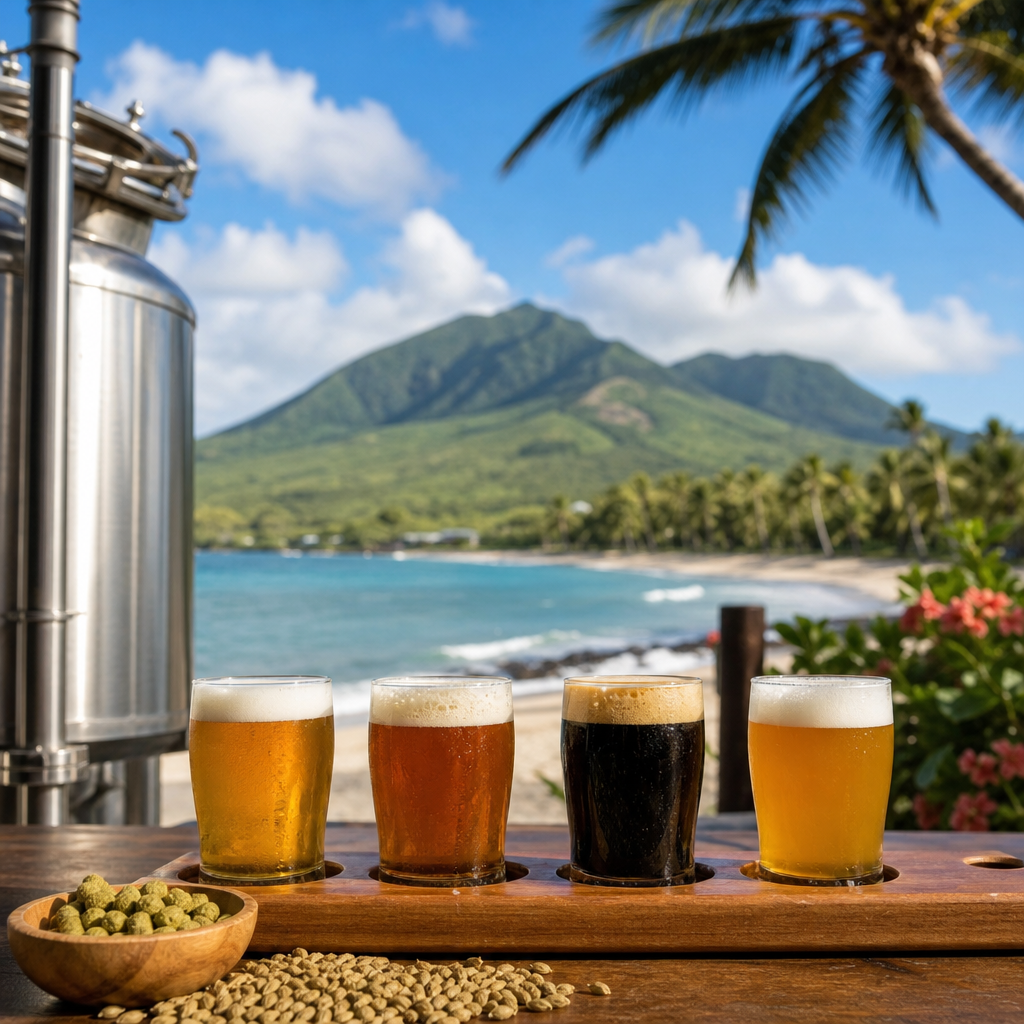
Craft beer and microbreweries in Nevis are moving from niche curiosity to credible business category, creating opportunities for brewers, hospitality operators, agricultural suppliers, and investors watching Caribbean consumer trends. In this context, craft beer means small-batch brewing focused on flavor, variety, and identity rather than mass-market uniformity, while a microbrewery is typically a small production facility that sells directly on site, through local retailers, or through restaurant and hotel channels. Nevis, the smaller island in the Federation of Saint Kitts and Nevis, has a compact domestic market, a tourism-led economy, and a strong premium hospitality presence, which together make it an intriguing test case for specialty beverage ventures. I have worked on market assessments for island food-and-beverage projects, and the pattern is familiar: limited scale raises costs, but the right concept can command strong margins because visitors and residents both respond to authentic local products. That is why this emerging market matters. It sits at the intersection of consumer experience, import substitution, destination branding, and small-business development, making it relevant across the broader business and investment opportunities landscape.
For entrepreneurs exploring miscellaneous opportunities in Nevis, craft beer deserves attention because it links multiple sectors that usually get analyzed separately. A brewery can become a manufacturer, a tourism attraction, a wholesale supplier, an events venue, and a brand platform for local ingredients. It can also support nearby businesses, from farmers growing ginger or sorrel to designers producing labels and tour operators building tasting itineraries. The category is still early enough that first movers can shape customer expectations, but not so early that demand must be invented from scratch. Global craft beer growth over the past two decades has already educated travelers, and premiumization has changed what many consumers expect from food and drink menus. In Nevis, where visitors often pay for quality, story, and setting, a well-run microbrewery can compete on experience as much as on liquid in the glass. The question is not whether craft beer can exist on the island; it is what model is most likely to work, what risks must be managed, and how the market can mature sustainably.
Why Nevis is suited to a small but distinctive craft beer market
Nevis is not a volume play. It is a differentiation play. That distinction matters because many beverage founders fail by importing assumptions from large mainland markets where scale, broad distribution, and discounting are normal. On Nevis, the economic logic is different. The island benefits from a steady tourism profile, high-end resorts, villa rentals, yacht traffic, destination weddings, and restaurant demand for premium products with local character. Those conditions support lower-volume, higher-margin beverage concepts. In practical terms, a microbrewery does not need supermarket-scale throughput if it can secure placements in boutique hotels, beach bars, independent restaurants, and direct-to-consumer tasting rooms.
The consumer mix also helps. Residents often know imported lagers and stouts well, but returning nationals, expatriates, and tourists widen the flavor base. That creates room for approachable craft styles such as pale ale, wheat beer, lager, porter, and fruit-infused seasonal releases. In island settings, familiar styles generally outperform highly technical niche beers at first. A clean pilsner suited to beach consumption, a tropical pale ale using local citrus notes, or a sorrel-spiced holiday ale can introduce the category without overwhelming drinkers. I have seen this sequencing work repeatedly: start with recognizable profiles, then add more experimental offerings once trust is built.
Nevis also has branding advantages. Place matters in craft beverage marketing, and island geography offers a naturally strong narrative. Volcanic landscape, tropical climate, heritage architecture, and farm-to-table food culture provide a ready-made identity for label design, naming, and hospitality packaging. A brewery that anchors itself in Nevisian culture can sell more than beer; it can sell a memory tied to the island. That is particularly important in tourist economies, where the product often continues to market the destination long after the visitor goes home through social media posts, souvenirs, and repeat purchases abroad where export is feasible.
Demand drivers, customer segments, and revenue pathways
The most important question for any prospective brewery is simple: who will buy the beer, how often, and in what format? In Nevis, demand is likely to come from five segments. First are short-stay tourists seeking local experiences. These customers value tasting flights, brewery tours, food pairings, and visually distinctive packaging. Second are hotel and restaurant buyers who need premium offerings that differentiate their beverage menus. Third are residents looking for new social options, especially if a brewery offers events, music, sports screenings, or family-friendly outdoor space. Fourth are expatriates and seasonal residents already familiar with craft beer culture. Fifth are event-based buyers, including weddings, corporate retreats, and festivals.
Revenue should be diversified from the start. Depending only on packaged beer sold through retail is risky because shelf space is limited and imports can squeeze margins. The stronger model combines taproom sales, keg distribution, canned or bottled take-home products, and branded merchandise. Some operations add brewery tours, private events, collaborations with chefs, and contract brewing for hospitality groups. In my experience, direct sales in a tasting room routinely produce the healthiest margins because they cut out intermediaries and increase average transaction value through snacks, tours, and merchandise.
| Revenue Channel | Why It Matters in Nevis | Main Challenge |
|---|---|---|
| Taproom sales | Highest margin and strongest brand experience for tourists and residents | Requires attractive location, staffing, and steady foot traffic |
| Hotel and restaurant kegs | Builds recurring demand and visibility across the island | Quality consistency and draft system support are essential |
| Cans or bottles | Useful for retail, villas, beach consumption, and gifts | Packaging equipment and cold-chain handling increase cost |
| Events and tours | Fits destination economy and increases non-beer revenue | Needs scheduling discipline and hospitality expertise |
| Merchandise | Turns visitors into long-term brand ambassadors | Inventory management can erode margin if assortment is too broad |
Seasonality is real, but it is manageable. Visitor peaks can drive strong sales, while slower months require more local engagement and tighter inventory planning. Successful operators account for this by adjusting production schedules, emphasizing core beers during low season, and using seasonal launches to capture peak demand. They also avoid overextending into too many stock-keeping units. A compact portfolio is usually healthier than a broad one in a small island market.
Operations, regulation, and supply chain realities
Brewing on an island demands discipline. The romance of a tropical brewery is real, but so are the operational constraints. Water treatment, refrigeration, utility reliability, sanitation, ingredient sourcing, packaging supply, and preventive maintenance all matter more in remote markets because replacement parts and emergency shipments are slower and more expensive. Beer quality can collapse quickly in hot climates if fermentation control and cold storage are weak. That is why the best microbrewery plans in Nevis start with process design, not logo design.
Equipment selection should match realistic demand. A brewhouse that is too small raises labor cost per liter and limits consistency. One that is too large ties up capital and can leave tanks underused. Many island breweries are best served by modular systems that allow measured growth. Glycol chilling, reliable laboratory checks, dissolved oxygen control during packaging, and strict cleaning-in-place procedures are not optional if the goal is premium positioning. Tourists may forgive novelty; they rarely forgive stale or infected beer.
Raw materials create both challenge and opportunity. Malt, hops, yeast, cans, crowns, labels, and cleaning chemicals will often be imported. Freight costs, customs procedures, and minimum order quantities can pressure cash flow. To manage this, breweries usually simplify recipes, forecast farther ahead, and build relationships with a small number of dependable suppliers. At the same time, selective local inputs can create signature products. Ginger, tamarind, sorrel, coconut, and local herbs can work well if used with brewing discipline. The key is consistency. Local ingredients should enhance identity without making quality unpredictable from batch to batch.
Regulatory compliance must be studied early. Entrepreneurs need to understand business licensing, excise obligations, alcohol production permissions, labeling requirements, health and safety standards, wastewater handling, and zoning issues. Saint Kitts and Nevis has its own administrative processes, and investors should verify current rules directly with relevant authorities and qualified local counsel. This is one area where outside founders often make avoidable mistakes. They focus on consumer demand and underestimate permitting timelines, utility upgrades, and fit-out approvals. A strong project plan builds in time for compliance before equipment arrives.
Investment models and the wider business opportunity
Not every opportunity requires building a full production brewery on day one. In Nevis, there are several viable entry models, each with different capital requirements and risk profiles. The highest-control option is an independent microbrewery with its own taproom. This provides the richest brand experience but requires the most capital for equipment, site preparation, staffing, and working capital. A second model is a brewpub attached to a restaurant or boutique hotel, where beer strengthens an existing hospitality business. This can be attractive because kitchen traffic and beverage sales reinforce each other. A third model is contract brewing, where a brand develops recipes and marketing while production is handled elsewhere, reducing upfront capital though also reducing control. A fourth model is beverage importing and distribution focused on premium craft labels, which can help test local demand before brewing locally.
For investors, the attraction is not only beverage margin. A successful brewery can lift surrounding real estate value, extend visitor dwell time, and create an anchor attraction in a commercial district. It can also support local manufacturing capacity, which matters in small economies that often rely heavily on imports. From a development perspective, a brewery creates jobs across brewing, packaging, sales, marketing, maintenance, hospitality, and logistics. It can connect with culinary tourism, agri-processing, and cultural events, making it more than a standalone drinks business.
Still, this is not a passive investment. Brewery economics are highly sensitive to utilization, waste control, and operational competence. Founders need accurate financial models covering breakeven volume, gross margin by channel, excise impact, utilities, and spoilage assumptions. In advisory work, I usually caution clients that the brand may look premium from launch, but margins only become durable when production, inventory, and route-to-market discipline catch up. The market opportunity in Nevis is genuine, yet it belongs to operators who respect the complexity of beverage manufacturing.
What success looks like over the next five years
The most plausible growth path for craft beer and microbreweries in Nevis is steady specialization rather than explosive scale. In the near term, the winners will likely be businesses that combine reliable flagship beers with a strong visitor experience and smart hospitality partnerships. Over five years, the category could mature into a small ecosystem: one or two established brewing brands, seasonal collaborations with chefs and hotels, local ingredient experiments tied to festivals, and broader placement across restaurants and villas. Export may emerge in limited form, especially for gift-ready packaged products aimed at diaspora markets or regional specialty retailers, but domestic premium positioning should remain the foundation.
Technology will shape that development. Better small-scale canning lines, point-of-sale analytics, inventory software, and direct-to-consumer marketing tools make it easier to operate efficiently even in compact markets. Social media also reduces customer acquisition costs when the product photographs well and the venue is memorable. A brewery with mountain views, live music, and polished service can become a destination in its own right. That is a strategic advantage in Nevis, where experience-led spending is central to the economy.
The main takeaway is straightforward. Craft beer and microbreweries in Nevis represent an emerging market with real promise, but the opportunity favors disciplined operators over hobbyists. Success depends on matching beer style to local demand, controlling quality in a tropical island environment, diversifying revenue, and integrating the business into tourism and hospitality networks. As a miscellaneous hub within business and investment opportunities, this topic touches manufacturing, retail, agriculture, branding, and events all at once. If you are evaluating Nevis for your next venture, study the numbers carefully, visit the market in person, speak with local regulators and hospitality buyers, and build a concept that is unmistakably tied to the island. That is how a small brewery becomes a durable business.
Frequently Asked Questions
1. Why is craft beer becoming a credible market opportunity in Nevis?
Craft beer is gaining traction in Nevis because it aligns with several overlapping trends in tourism, hospitality, and consumer behavior. Visitors increasingly want local, place-based experiences rather than standardized imported products, and craft beer fits that demand well. A locally brewed lager, pale ale, stout, or seasonal specialty can become part of the island’s identity in the same way that local food, music, and cultural events already are. For residents and business owners, this creates an opportunity to move beer from being a simple commodity purchase to being a differentiated product with stronger margins and stronger brand loyalty.
From a business perspective, the category is credible because it can serve multiple customer segments at once. Hotels, beach bars, restaurants, boutique resorts, and event venues all benefit from offering something distinctive that guests cannot easily find elsewhere. A microbrewery can also develop direct sales opportunities through taprooms, tasting flights, brewery tours, food pairings, and special release events. That means revenue does not have to rely only on shelf placement in retail stores. In a smaller island market, that kind of flexibility matters.
There is also a supply-chain and agriculture angle that makes the category more interesting than it may appear at first glance. Even if core brewing inputs such as malt and hops are imported, local producers can still participate through fruits, spices, herbs, honey, and other ingredients suited to tropical or Caribbean-style beer innovation. This opens the door for collaboration between brewers and local growers, which can strengthen the story behind the product and improve its appeal to both tourists and locals. In short, craft beer in Nevis is becoming a credible business category because it sits at the intersection of tourism demand, premium consumer preferences, local branding, and diversified small-business growth.
2. What makes a microbrewery different from a regular brewery or imported beer brand in the Nevis market?
A microbrewery differs primarily in scale, product philosophy, and route to market. In the Nevis context, a microbrewery is usually a small production operation focused on limited batches, hands-on brewing, and a more direct relationship with the customer. Unlike mass-market beer brands that prioritize consistency across large volumes and broad distribution, a microbrewery is built around flavor experimentation, seasonal offerings, and a sense of local identity. That difference matters in a destination economy, where consumers often respond strongly to products that feel authentic and connected to the place they are visiting.
Another important distinction is how the product is sold. Imported beer brands move through established wholesale and retail channels, often competing on familiarity, availability, and price. A microbrewery can certainly sell through retailers and restaurants, but it often adds direct-to-consumer channels such as on-site tasting rooms, branded events, growler fills where permitted, and limited-edition releases. Those channels allow the business to earn better margins, gather customer feedback quickly, and build a stronger community around the brand. For Nevis, where hospitality and tourism play major roles, direct engagement can be a significant advantage.
Microbreweries also create more room for differentiation. Instead of trying to outcompete large international labels on volume, they compete on experience, freshness, storytelling, and local relevance. A beer inspired by island ingredients, local history, or Caribbean culinary pairings offers something that imported brands generally cannot replicate. That is why microbreweries are often viewed not simply as beverage producers, but as hybrid businesses that combine manufacturing, hospitality, tourism, and branding. In Nevis, that model can be particularly attractive because it supports a premium offering within a relatively compact market.
3. What challenges do craft brewers and microbreweries face when entering the Nevis market?
Like any emerging beverage category on an island, craft brewers in Nevis face a mix of operational, regulatory, and market-education challenges. One of the most immediate issues is input cost and logistics. Brewing equipment, packaging materials, malt, hops, yeast, cleaning chemicals, refrigeration systems, and spare parts often need to be imported, which can increase startup costs and make inventory planning more complex. Shipping delays and storage limitations can affect production consistency, especially when the brewery is small and does not have the purchasing power of larger beverage companies.
Climate and infrastructure also shape the operating environment. Beer is sensitive to heat, light, and handling, so temperature control is not optional. Reliable refrigeration, cold storage, and disciplined distribution practices are essential to preserve quality from brewhouse to customer. On top of that, breweries need dependable water treatment, sanitation protocols, and equipment maintenance. In a market where technical brewing support may be limited, founders often need to invest heavily in training, process control, and contingency planning.
Another major challenge is customer education. While there is growing interest in premium beverages, not every consumer will immediately understand why a small-batch craft beer costs more than a familiar imported label. Brewers and hospitality partners need to explain the value clearly: fresher product, more distinctive flavor, local economic impact, and a stronger destination experience. Tastings, pairing dinners, staff training, and approachable flagship beers can help bridge that gap. Regulatory compliance, licensing, alcohol taxation, labeling, and health and safety requirements must also be handled carefully from day one. So while the opportunity is real, success in Nevis depends on disciplined execution, quality control, and a strategy that balances creativity with commercial practicality.
4. How can microbreweries work with restaurants, hotels, and tourism businesses in Nevis?
Partnerships with hospitality operators are one of the most practical ways for a microbrewery to grow in Nevis. Restaurants, beach clubs, hotels, and boutique resorts are constantly looking for ways to differentiate their guest experience, and locally brewed beer gives them a distinctive product with a built-in story. A hotel can feature a house lager or seasonal island ale as part of its food and beverage program. A restaurant can design pairing menus that connect specific beers with seafood, grilled dishes, local produce, or Caribbean spices. These collaborations help the brewery secure consistent accounts while helping hospitality businesses improve guest engagement and average spend.
Tourism businesses can also benefit from the experiential side of craft beer. Brewery tours, tap takeovers, tasting flights, chef collaboration dinners, and beer-focused events create content for travel marketing and social media while giving visitors another reason to extend their stay or spend more locally. In a destination like Nevis, where experience-based tourism is valuable, a microbrewery can function as more than a supplier. It can become an attraction in its own right. That makes it easier for tourism operators to promote local culture through food and beverage rather than relying solely on imported products.
Successful partnerships usually depend on consistency and education. Hospitality teams need product training so servers and bartenders can confidently explain beer styles, flavor notes, and pairing suggestions. Packaging and keg formats should match the realities of each venue, and branding should feel polished enough to sit comfortably in premium environments. If the brewery can deliver reliable quality, timely service, and collaborative marketing support, it becomes a stronger partner to the tourism sector. In that sense, the growth of craft beer in Nevis is not only about what is brewed, but about how effectively brewers integrate with the broader visitor economy.
5. What should investors and entrepreneurs evaluate before launching a craft beer or microbrewery business in Nevis?
Investors and founders should begin by understanding that a microbrewery in Nevis is not just a production business; it is often a combined manufacturing, retail, hospitality, and brand-development venture. That means the business model has to be tested from several angles. First, assess market demand carefully. Who is the primary customer: residents, tourists, hotels, restaurants, or a mix of all four? What styles are most likely to sell consistently? Is the goal to build a neighborhood taproom, a hospitality-linked destination brand, or a small wholesale operation with strategic on-premise accounts? Clear positioning is essential because scale on an island market can be limited, and overbuilding too early can create unnecessary financial strain.
Second, evaluate unit economics in detail. Brewing can appear attractive at a high level, but margins depend heavily on equipment costs, import duties, utilities, packaging choices, labor, spoilage control, and sales mix. A business that sells a meaningful percentage of volume directly to consumers often has better economics than one relying only on distribution. Investors should also examine capital requirements for cold storage, water treatment, quality assurance, backup systems, and licensing. In emerging markets, disciplined financial modeling is often the difference between a brewery that becomes a local institution and one that struggles with cash flow.
Finally, brand strategy and execution deserve as much attention as brewing skill. In Nevis, the most promising craft beer businesses are likely to be the ones that connect product quality with local storytelling, tourism relevance, and dependable hospitality partnerships. Entrepreneurs should think about ingredient sourcing opportunities, packaging design, staff training, event programming, and route-to-market resilience. They should also plan for gradual expansion rather than assuming instant scale. The strongest opportunities typically come from building a brand that feels authentically rooted in Nevis while operating with professional standards in production, compliance, and customer experience. That combination is what turns an emerging trend into a sustainable business.