Fishing techniques on Saint Kitts reflect more than a way to catch dinner; they reveal how a small Caribbean island reads currents, respects seasons, and turns local knowledge into daily practice on the water. Saint Kitts, formally Saint Christopher Island, sits in the Leeward Islands where Atlantic swells, Caribbean currents, volcanic seabeds, coral structure, and migratory pelagic routes create unusually varied fishing conditions within short distances of shore. That mix matters because anglers, boat captains, divers, and visiting travelers can target reef species, deep-drop fish, nearshore predators, and open-water game fish without traveling far. When people search for fishing in Saint Kitts, they usually want clear answers to practical questions: what fish are common, which techniques work best, when to go, what gear is used, and how local methods differ from generic sportfishing advice.
In my experience working with Caribbean coastal travel content and speaking with captains who fish these waters regularly, the biggest mistake visitors make is assuming one technique fits the whole island. It does not. Fishing on Saint Kitts changes by coastline, depth, season, target species, and weather window. Handlining on a reef edge, trolling a blue-water drop-off, and bottom fishing over structure require different rigs, bait choices, and boat handling. The island’s fishing culture also matters to anyone exploring local life and experiences, because techniques are tied to food traditions, community economics, fish markets, and inherited seamanship. A useful hub article, then, must explain the major methods, the fish they target, the tools involved, and the practical realities behind them. This guide does exactly that, giving a grounded overview of Saint Kitts fishing techniques and showing why the island’s sea knowledge remains one of its most compelling local experiences.
Why Saint Kitts Offers Distinct Fishing Conditions
Saint Kitts gives fishers access to multiple marine environments in a compact area. The Caribbean side is often calmer, with leeward shelter that supports reef fishing, pot fishing, and nearshore bottom work. The Atlantic-facing side can be rougher, more exposed, and highly productive when conditions allow. Offshore, the seabed drops quickly in places, which is why trolling for pelagic species can begin within a practical run from local marinas. Around the island, volcanic geology shapes underwater ledges, pinnacles, and reef transitions that hold snapper, grouper, jacks, barracuda, and other structure-oriented fish.
Water temperature remains warm year-round, generally favorable for fishing, but success still depends on seasonal movement. Mahi-mahi, wahoo, tuna, and billfish follow bait concentrations, temperature breaks, and offshore current lines. Reef species respond to moon phase, tide movement, and bait presence along coral and rock structure. Trade winds, swell direction, sargassum influx, and storm patterns all affect technique choice. A calm morning may favor handline bottom fishing, while a windy day may push captains toward trolling routes that let the boat work with sea conditions instead of fighting them.
Because local fishers adapt to these variables constantly, fishing on Saint Kitts is technique-driven rather than luck-driven. The best operators match method to marine conditions. That is the central secret of the sea here: success comes from reading water, not simply deploying expensive gear.
Traditional Handline and Bottom Fishing Methods
Handline fishing remains one of the most practical and culturally rooted techniques on Saint Kitts. A handline is exactly what it sounds like: a strong line managed directly by hand, often wound on a spool, bottle, hand reel, or simple frame. It is efficient, durable, inexpensive, and well suited to local boats. Many fishers still prefer handlines over rod-and-reel setups when bottom fishing because they can feel subtle bites immediately and control fish quickly around reef structure. On a small island where working gear must be dependable and easy to repair, that simplicity has real value.
Bottom fishing targets species that hold close to structure. Common examples in Saint Kitts waters include snapper, grouper, grunt, triggerfish, and porgy-like bottom dwellers depending on location and depth. Fishers usually bait hooks with squid, cut fish, ballyhoo, or other locally available bait. Sinkers are matched to current strength; too light and the rig drifts off the mark, too heavy and presentation becomes clumsy. The most effective bottom fishing spots are often reef edges, drop-offs, rocky patches, and wreck-like features known through repeated use rather than public maps.
Local knowledge is decisive here. Captains remember productive marks by shoreline alignment, GPS coordinates, bottom sounder readings, and years of observation. I have found that experienced Caribbean fishers describe spots not as static points but as moving zones shaped by tide and drift. That explains why two boats can fish close together and get different results. One may sit exactly on the up-current edge where bait funnels over the structure, while another misses the feeding lane entirely.
Trolling for Pelagic Species Offshore
Trolling is the signature offshore method around Saint Kitts for anglers hoping to catch fast-moving pelagic fish. The principle is simple: lures or rigged baits are pulled behind a moving boat at controlled speeds to imitate fleeing prey. The execution, however, is precise. Boat speed, lure shape, spread placement, wave height, and current direction all influence strikes. On Saint Kitts charters, trolling commonly targets wahoo, mahi-mahi, blackfin tuna, skipjack tuna, kingfish, barracuda, and, in the right season, blue marlin or white marlin.
Wahoo are especially prized because they are fast, strong, and excellent eating. They often strike high-speed trolling lures, especially dark-purple, blue-white, or bullet-shaped heads run over ledges and temperature breaks. Mahi-mahi, by contrast, are frequently found near floating debris, weed lines, and current edges, where they feed aggressively on baitfish. Tuna may respond to smaller lures, feathers, or cedar plugs, particularly where birds indicate surface activity. Good captains watch frigatebirds and terns constantly because bird behavior often reveals where bait is being pushed up.
The real-world advantage of Saint Kitts is access. Boats do not always need a long offshore run to reach productive water. When drop-offs and current lines are close, a half-day trip can still produce serious action. Yet trolling also has limitations. It burns more fuel than stationary bottom fishing, relies heavily on favorable sea conditions, and can involve long periods without a strike. Visitors expecting nonstop catches may be better served by mixed trips that combine trolling with reef or bottom sessions.
Spearfishing, Fish Pots, and Small-Scale Local Practices
Not all fishing on Saint Kitts happens with rods, reels, or handlines. Spearfishing, where permitted and conducted responsibly, has long been part of practical coastal harvesting across the Caribbean. In clear water around reefs and rocky shorelines, skilled divers identify target species visually and take selective shots. The strength of spearfishing is precision. A diver can avoid undersized fish and non-target species more effectively than many passive methods. The weakness is obvious: it requires experience, breath-hold discipline or scuba compliance where lawful, excellent situational awareness, and strict respect for marine ecosystems.
Fish pots, sometimes called traps, are another traditional method used in the region. These are set near suitable habitat to catch reef-associated species over time. Pot fishing is efficient for subsistence and small commercial supply, but it depends on proper placement, maintenance, and retrieval. Poorly managed traps can ghost fish if lost, so responsible use matters. In many islands, regulations govern mesh, escape gaps, or protected areas, and fishers must stay current with local rules.
Shore fishing also deserves mention. While Saint Kitts is not primarily known as a land-based angling destination, locals still fish jetties, rocky points, beaches, and harbor edges with cut bait, metal lures, and simple spinning tackle. Tarpon juveniles, jacks, snappers, and barracuda may be available in the right spots. For visitors, shore fishing offers a low-cost way to engage with the island’s marine life, though results are typically less consistent than fishing from a boat.
Best Techniques by Target Species and Conditions
The most useful way to understand Saint Kitts fishing is to match the technique to the fish and sea state. The table below summarizes the practical combinations local operators use most often.
| Target species | Best technique | Typical area | Key tip |
|---|---|---|---|
| Wahoo | High-speed trolling | Offshore drop-offs | Run lures clean in blue water at steady speed |
| Mahi-mahi | Trolling with lures or rigged baits | Weed lines and floating debris | Watch birds and current edges |
| Tuna | Trolling or casting to surface activity | Open water with bait schools | Follow bird action and breaking fish |
| Snapper | Bottom fishing with baited rigs | Reef edges and rocky structure | Fish the up-current side of the mark |
| Grouper | Deep bottom fishing or handline | Ledges, holes, and heavy structure | Strike hard and lift fast to avoid cutoffs |
| Barracuda | Trolling, casting, or live bait | Nearshore reefs and points | Use wire trace when teeth are a problem |
This kind of targeting saves time and improves catch quality. If the sea is rough offshore, forcing a wahoo trip may be less productive than bottom fishing in sheltered water. If birds are working and bait is visible, trolling blindly along the same old track is a missed opportunity. Good fishing on Saint Kitts is flexible fishing.
Gear, Boats, Bait, and Fish-Finding Tools
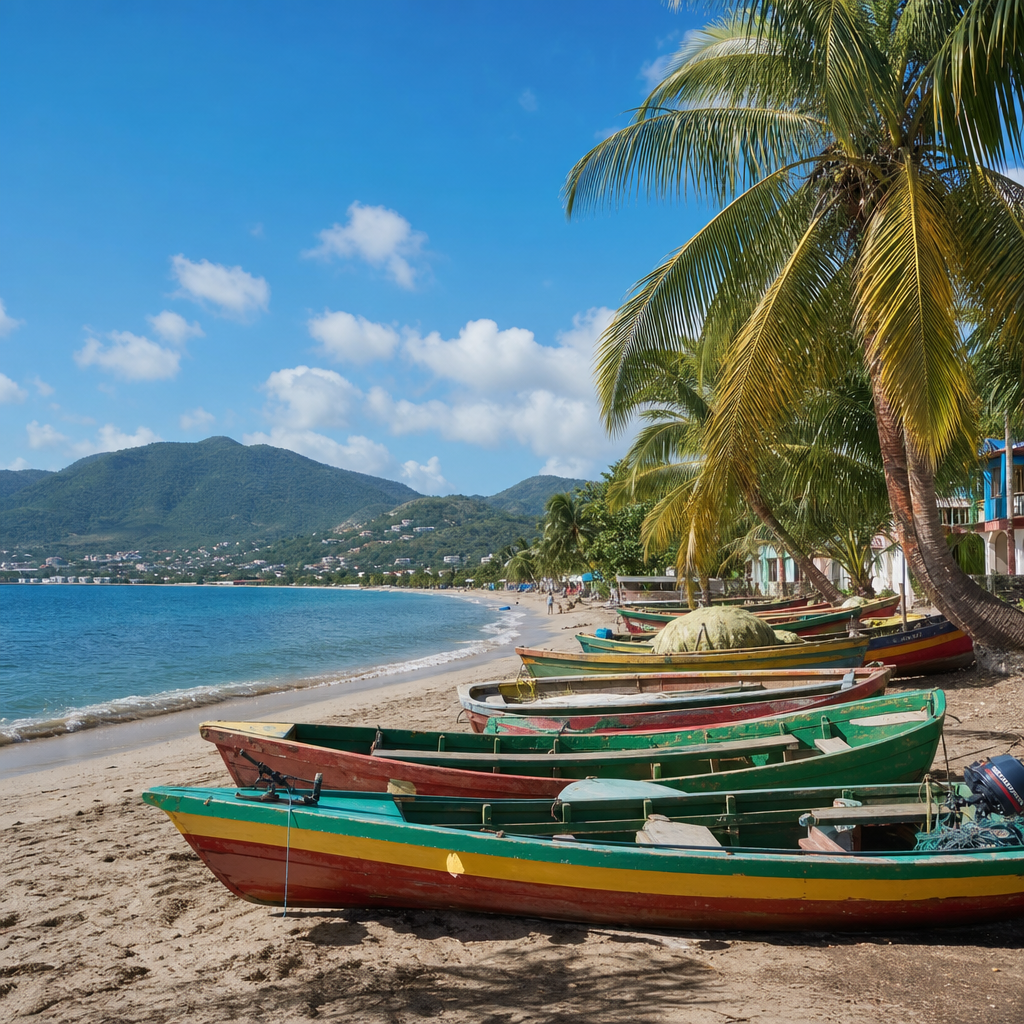
Saint Kitts fishing ranges from simple artisanal setups to fully equipped charter boats with outriggers, GPS chartplotters, VHF radios, sonar, fighting chairs, and ice boxes for pelagic runs. Small skiffs and pirogue-style boats remain useful for nearshore work, especially in settled weather. Larger center consoles and sportfishing vessels are better for offshore trolling because they handle chop more safely and allow a cleaner trolling spread.
On the gear side, handlines use heavy monofilament or braid, stout hooks, and weight tailored to depth and current. Bottom-fishing rods are usually short and powerful. Offshore trolling outfits often use 30-pound to 80-pound class tackle, depending on target species. Lures include skirted trolling heads, feathers, plugs, cedar plugs, and diving lures. Wire leaders are common when toothy fish such as wahoo and barracuda are expected. Bait may include squid, ballyhoo, bonito strips, live baitfish, or fresh cut bait from earlier catches.
Electronics have changed local fishing efficiency. Even highly experienced captains who learned by landmarks now rely on fish finders and GPS to repeat productive drifts and identify bait schools. Yet technology has not replaced judgment. Sonar can show structure, but it cannot tell you how current is setting across it or when a pressure change will slow the bite. That blend of modern tools and inherited water sense is part of what makes Saint Kitts fishing culture distinctive.
Responsible Fishing, Seasons, and Choosing a Charter
The best fishing communities protect the resource that feeds them, and Saint Kitts is no exception. Responsible fishing starts with observing local regulations on protected species, seasonal closures, size limits, gear restrictions, and marine protected areas. Visitors should always confirm current rules through local authorities or licensed operators because regulations can change. Ethical practices also include limiting harvest to what will be used, releasing unsuitable fish quickly, handling pelagic species correctly to preserve meat quality, and avoiding damage to coral when anchoring or fighting fish near reefs.
Seasonality matters. While fishing is possible year-round, certain windows favor specific species. Mahi-mahi and tuna often improve with bait movement and offshore conditions. Marlin are more seasonal and less predictable. Reef fishing can be steadier across the calendar, though weather, swell, and spawning patterns still affect results. Hurricane season can disrupt offshore access even when local fishing remains possible on sheltered coasts.
When choosing a charter, ask direct questions. What species are realistic this month? Is the trip trolling only, bottom fishing only, or mixed? What boat size and safety gear are provided? Is tackle included? How is the catch handled, and can it be cleaned? A credible captain gives specific answers and does not promise impossible results. For anyone exploring local life and experiences on Saint Kitts, booking a trip with a knowledgeable local operator is one of the clearest ways to understand the island beyond the beach. You see working coastlines, hear how fish are found, learn why methods change by season, and take part in a tradition shaped by sea, skill, and restraint. Start with the technique that matches your goal, then let a local captain teach you the rest.
Frequently Asked Questions
What makes fishing techniques on Saint Kitts different from those used on other Caribbean islands?
Fishing on Saint Kitts is shaped by an unusually compact mix of marine environments. Within a relatively short run from shore, fishers can move between reef edges, drop-offs, volcanic structure, seagrass zones, and open blue water influenced by both Atlantic swells and Caribbean currents. That variety changes how people fish. Techniques are not chosen by tradition alone; they are matched to depth, bottom type, current speed, bait movement, season, and target species. A method that works over coral rubble in one area may be ineffective a short distance away over a steep volcanic ledge.
Local knowledge is especially important because Saint Kitts rewards observation. Fishers pay close attention to wind direction, tide movement, bird activity, water color, current lines, and seasonal changes in bait presence. On some days, trolling for pelagic species such as tuna, wahoo, or mahi-mahi makes the most sense because migratory fish are moving along offshore routes. On other days, bottom fishing near structure is more productive, especially when currents and weather make offshore runs less practical. Handlines, trolling spreads, live bait, and carefully selected natural baits all have a place, and the best fishers know when to switch from one approach to another.
What truly sets Saint Kitts apart is the combination of marine diversity and inherited practical experience. Techniques are often built around reading the sea rather than forcing a single style in all conditions. That flexibility is one of the real secrets of the island’s fishing culture.
Which fishing techniques are most commonly used around Saint Kitts?
The most common techniques include trolling, bottom fishing, handlining, and bait fishing around reef and nearshore structure. Trolling is widely used for offshore pelagic species because it allows fishers to cover water efficiently while presenting lures or rigged baits at different depths and distances behind the boat. Around Saint Kitts, trolling can be especially effective where currents meet, where flying fish are active, or along routes used by migratory predators. Speed, lure selection, and sea conditions all matter, and experienced crews will adjust their spread based on what baitfish are present and how fish are feeding.
Bottom fishing remains central to many local outings, particularly over reefs, ledges, and rocky seabeds where snapper, grouper, and other demersal species hold close to structure. This technique depends on understanding the bottom and staying in the productive zone despite drift and current. Fishers often use weighted rigs and natural bait, lowering them to depths where fish are likely to shelter and feed. Precision is important, because being just off the structure can mean fewer bites.
Handlining also has deep roots in Caribbean fishing practice and continues to be valued for its direct feel and efficiency. It gives fishers immediate contact with the bait and bottom, which helps them detect subtle changes in movement, nibbles, and current. In some situations, that sensitivity can be an advantage over more rigid tackle setups. Nearshore bait fishing, whether from small boats or suitable coastal spots, is also common when targeting species that move around reefs, channels, and shallow feeding areas.
In practice, many outings use more than one technique. A crew might troll on the way out, then shift to bottom fishing once a promising area is found, or keep bait ready if fish begin feeding near the surface. That willingness to adapt is a defining feature of successful fishing on Saint Kitts.
How do currents, seasons, and seafloor structure influence fishing success on Saint Kitts?
These three factors are at the heart of fishing strategy on Saint Kitts. Currents affect where bait gathers, how predators travel, how lures swim, and whether a boat can effectively hold position over structure. Strong current can make bottom fishing more difficult by dragging lines away from the strike zone, but it can also improve action by concentrating bait and activating feeding fish. Surface current lines, temperature breaks, and changes in water clarity often signal productive areas offshore, especially for fast-moving pelagic species.
Seasonality matters because fish movements are not random. Migratory species pass through at certain times, weather patterns shift sea conditions, and spawning or feeding cycles influence when particular fish are more available. Local fishers learn these rhythms over years, building a calendar that is based not just on months, but on signs in the water. They know when calmer conditions may open offshore opportunities, when rougher Atlantic influence may change where fish can be safely targeted, and when particular baitfish runs create short but excellent feeding windows.
Seafloor structure is just as important. Volcanic contours, reef shelves, sudden depth changes, coral patches, and rocky drop-offs all create habitat and ambush points. Fish often hold where structure interrupts current, offering food and shelter at the same time. Around Saint Kitts, small changes in bottom composition can separate an unproductive drift from a highly successful one. That is why local technique is so tied to place. Success comes from matching method to underwater terrain, not simply arriving with gear and hoping fish are present.
Put together, currents, seasons, and seabed structure explain why experienced Saint Kitts fishers are so observant. They are not just fishing a location; they are interpreting a moving system.
What species are anglers typically targeting around Saint Kitts, and does the technique change by species?
Yes, technique changes significantly depending on the species being targeted. Offshore anglers often focus on pelagic fish such as tuna, wahoo, mahi-mahi, and sometimes marlin or sailfish when conditions and migration patterns align. These fish are built for speed and movement, so trolling is often the preferred method. Lure size, color, and trolling speed may be adjusted depending on water conditions, baitfish presence, and the species most likely to be in the area. Wahoo, for example, may respond well to faster presentations, while tuna behavior can shift based on schooling bait and bird activity.
Closer to the bottom and around structure, species such as snapper, grouper, and other reef-associated fish are common targets. For these fish, bottom fishing with natural bait is often more effective because the presentation stays near the habitat where they feed and shelter. The rig must account for current and depth, and the bait has to remain attractive even when drift conditions are not ideal. Timing also matters, since some bottom species feed more actively during low-light periods or when current strength changes.
Nearshore fishing may also involve smaller reef fish, jacks, or species that move along channels and coastal structure. Here, lighter tackle, smaller baits, or more precise presentations can make a difference. In all cases, the most successful anglers on Saint Kitts think in terms of fish behavior rather than just fish names. They ask where the species is likely to travel, what it is feeding on, how it uses structure, and how changing sea conditions affect that behavior.
That species-by-species adjustment is one reason Saint Kitts fishing is so dynamic. The island’s waters do not reward a one-size-fits-all approach; they reward anglers who understand how each fish interacts with the environment.
How do local knowledge and responsible fishing practices shape the way people fish on Saint Kitts?
Local knowledge is one of the most valuable tools in Saint Kitts fishing. It includes practical understanding of reefs, currents, seasonal runs, weather shifts, safe passages, productive depths, and the subtle signs that reveal where fish may be feeding. Much of this knowledge comes from repeated time on the water and from lessons passed between generations. It is not just about secret spots. It is about interpreting conditions well enough to make smart decisions, fish efficiently, and avoid wasting effort in unproductive or unsafe water.
Responsible fishing practices are closely tied to that same mindset. On an island where marine ecosystems support food supply, livelihoods, and tourism, long-term thinking matters. Respecting seasonal patterns, avoiding unnecessary pressure on vulnerable habitats, using appropriate gear, and keeping only what is needed all help protect the fishery. Reef systems and nearshore habitats are especially important because they support juvenile fish, bait species, and the broader food web that sustains offshore action as well.
For visiting anglers, this means the best experience often comes from listening to local captains and fishers who understand how to match technique with both opportunity and stewardship. Responsible fishing on Saint Kitts is not separate from successful fishing; the two are connected. The more carefully people read the sea and respect its cycles, the better the fishery tends to remain over time.
In that sense, the real secret behind fishing techniques on Saint Kitts is balance: skill with humility, efficiency with restraint, and tradition guided by close attention to the living water.