Nevis’ guided birding tours turn a compact Caribbean island into an outsized wildlife experience, pairing easy access, rich habitats, and expert local knowledge for travelers who want more than a casual birdwatching walk. Birding means observing birds by sight and sound in natural settings, while a guided birding tour adds structure: route planning, identification help, seasonal timing, and interpretation of habitat, migration, and behavior. On Nevis, that structure matters because the island packs coastal wetlands, dry scrub, village gardens, volcanic slopes, and rainforest edges into a short driving distance. I have worked on island activity content and nature itineraries long enough to know that visitors often underestimate how quickly bird diversity changes with elevation here. A morning can begin with shorebirds on a pond and end with tremblers, thrashers, and hummingbirds in cooler upland forest. For travelers exploring Adventure and Activities, this miscellaneous hub matters because birding intersects with hiking, photography, conservation, wellness travel, and soft adventure without requiring elite fitness or specialized gear.
The strongest reason to choose guided birding tours in Nevis is efficiency. Independent birders can certainly explore, but guides shorten the learning curve by recognizing calls, understanding weather patterns, and knowing which habitats are productive after rain, wind, or seasonal shifts. They also help visitors separate similar species, such as distinguishing Caribbean Elaenia from other small flycatchers by structure, call, and behavior rather than color alone. Nevis is also part of a broader Lesser Antilles birding context, so experienced guides place local sightings within regional migration and island ecology. For beginners, that makes the island approachable. For serious birders, it improves the odds of finding regional specialties and documenting trip lists accurately. This hub article covers what makes Nevis rewarding, where tours usually go, what species to expect, how to choose the right tour style, what to bring, and how guided outings support responsible tourism and local conservation.
Why Nevis is a compelling birding destination
Nevis is small, but its environmental range is unusually bird-friendly. The island is shaped by Nevis Peak, a volcanic summit that influences rainfall, vegetation, and temperature across short distances. That creates distinct birding zones within an hour: saline ponds and muddy margins for waders, coastal thickets for doves and warblers, pasture and edge habitat for flycatchers and grackles, and moist uplands for forest-associated species. On islands where road access is limited or habitats are fragmented, birding can become logistically difficult. Nevis is easier. Guides can move groups between productive sites quickly, which is especially useful for cruise visitors, short-stay couples, and families adding a half-day nature activity to a broader itinerary.
Another advantage is seasonality. Resident species provide year-round value, but migration adds variety. From roughly autumn through spring, Nearctic migrants move through or winter in the Caribbean, increasing the chance of seeing sandpipers, plovers, herons, warblers, and other transient species. During drier periods, birds may concentrate around water sources, improving viewing. After rain, upland and edge habitats can become more active. A guide who monitors these patterns can adjust plans in ways that a visitor with only an app and a rental car usually cannot. In practical terms, guided birding tours in Nevis are not just about seeing more birds; they are about seeing the right birds in the right habitats at the right time of day.
Birds and habitats commonly featured on guided tours
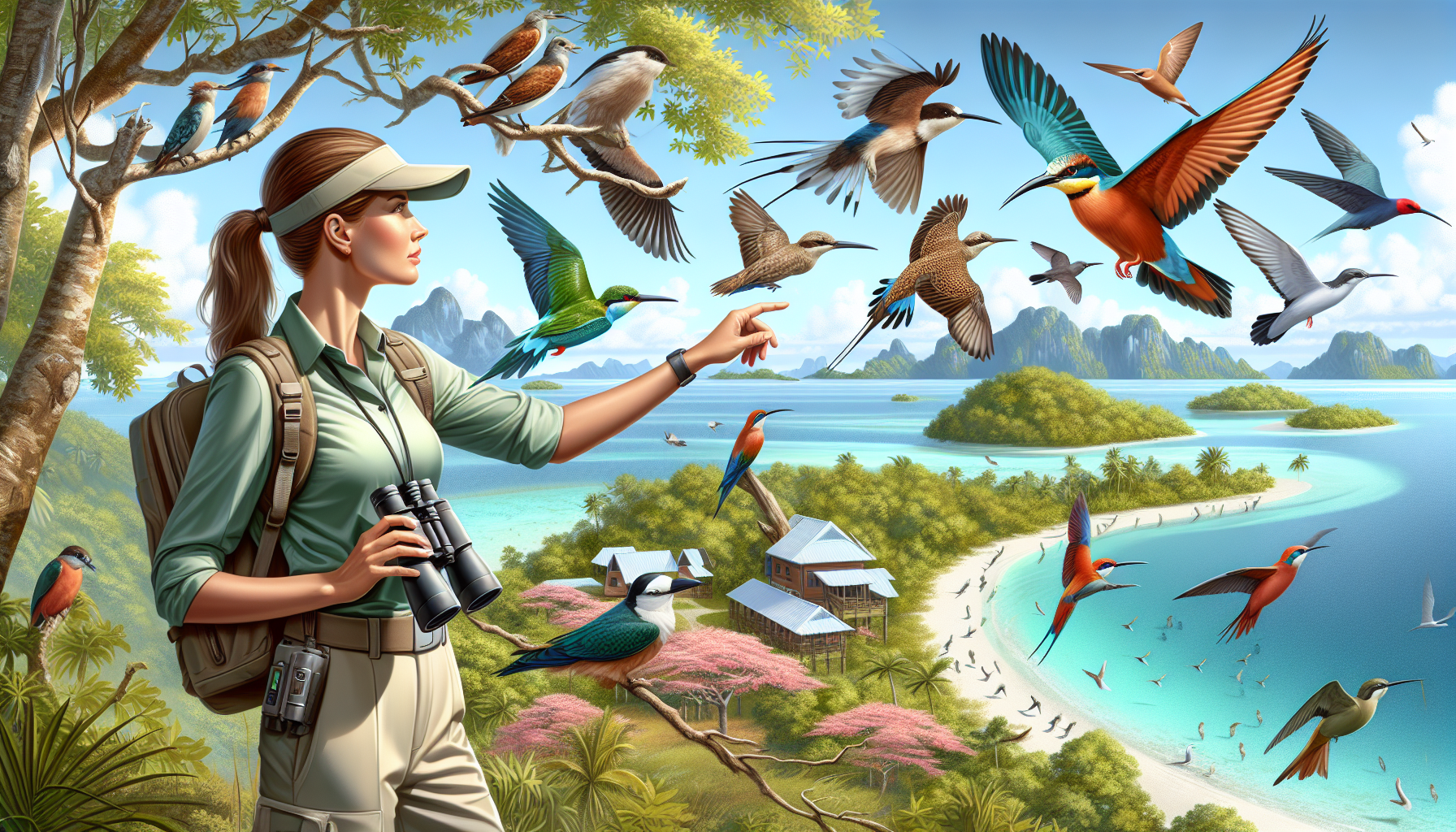
Most tours are built around habitat diversity rather than a rigid checklist, because the best guides respond to conditions in real time. Coastal ponds and wet margins may produce Black-necked Stilt, various sandpipers, Green Heron, Little Blue Heron, Cattle Egret, and occasionally surprises during migration. Shoreline areas and open country can hold Brown Pelican, Magnificent Frigatebird overhead, and terns depending on season and sea state. Inland gardens and scrub are often reliable for Bananaquit, Zenaida Dove, Common Ground Dove, Carib Grackle, and hummingbirds, including Green-throated Carib and Antillean Crested Hummingbird.
Higher elevations and thicker vegetation introduce a different soundscape. Here, guides often work by ear, helping guests learn calls before views. Species such as Scaly-breasted Thrasher, Pearly-eyed Thrasher, Lesser Antillean Bullfinch, and Caribbean Elaenia are easier to understand when a guide explains feeding style, flock behavior, and preferred canopy level. On some outings, identification depends less on plumage than on movement and voice. That is one reason guided birdwatching on Nevis appeals even to experienced travelers: island birding rewards local pattern recognition more than broad field-guide familiarity.
| Habitat | Typical species | Best tour value |
|---|---|---|
| Coastal ponds and wetlands | Black-necked Stilt, herons, sandpipers, egrets | High diversity in short time, especially for migrants |
| Gardens, villages, and scrub | Bananaquit, doves, grackles, hummingbirds | Easy viewing for beginners and photographers |
| Forest edge and uplands | Thrashers, bullfinches, elaenias, forest songbirds | Best for vocal identification and endemic-region interest |
| Coastal overlook and sea-facing points | Pelicans, frigatebirds, terns, occasional seabirds | Combines scenery with broad scanning opportunities |
What a guided birding tour in Nevis typically includes
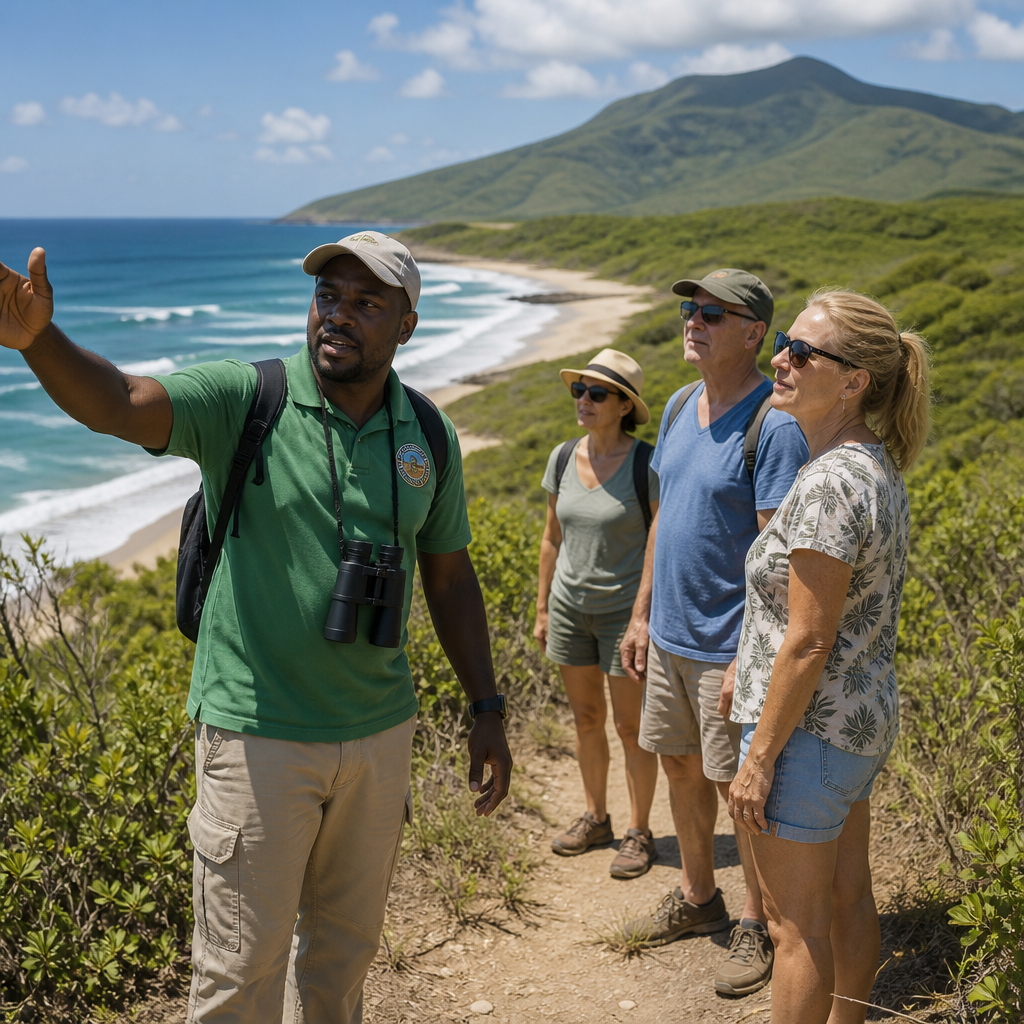
A professionally run tour usually starts early, often near sunrise, because bird activity is strongest before heat and wind rise. The guide normally provides transport or coordinates meeting points, then chooses two to four habitats based on conditions. Good operators set expectations clearly: this is not a zoo, sightings vary, and the goal is probability rather than guarantees. In my experience reviewing Caribbean nature excursions, the best guides balance list-building with interpretation. They explain why a saline pond attracts stilts, why fruiting trees pull in thrashers, or why trade winds can suppress activity on exposed ridges while sheltered gullies remain productive.
Many tours include binocular use guidance, spotting-scope views when terrain allows, and practical coaching for beginners who struggle to locate birds in dense foliage. Some guides keep annotated checklists or submit records to eBird, the Cornell Lab of Ornithology platform widely used by birders and researchers. That matters because eBird data improves trip planning and contributes to broader knowledge of distribution and seasonality. More specialized tours may target photography, combining slower pacing with attention to light direction, perch prediction, and ethical distance. Others blend birding with general natural history, identifying butterflies, native plants, monkeys, and landscape features for travelers who want a broader eco-tour rather than a strict species hunt.
How to choose the right tour style for your interests
The best guided birding tour in Nevis depends on your objective. If you are new to birding, choose a half-day tour that emphasizes common species, habitat variety, and identification basics. You will learn more from repeated views of Bananaquit, doves, hummingbirds, and herons than from chasing a long list at speed. If you already bird regularly, ask whether the guide is comfortable with vocal identification, local specialties, migrant timing, and custom targeting. Serious birders should also ask about pace, walking distance, elevation change, and whether the guide can adapt to a target list.
Families and mixed-interest groups often do best on hybrid nature tours. These keep travel times short, include scenic stops, and frame birding as part of a larger island story. Photographers should ask about vehicle access, morning light angles, and whether the guide is accustomed to waiting quietly for behavior shots rather than moving on after a quick identification. Accessibility is another useful question. Some of Nevis’ productive birding areas are roadside or near flat paths, while others involve uneven ground, mud, or steeper inclines. Reputable operators will explain terrain honestly. That transparency builds trust and usually leads to a better outing than overpromising rare sightings or effortless access.
Timing, gear, and preparation for a better outing
The most productive months for variety often coincide with migrant presence, but birding in Nevis can be rewarding year-round. Dawn remains the single best timing factor. Birds call more, temperatures are milder, and light is softer for viewing and photography. Late afternoon can also work, especially near wetlands and gardens, but heat shimmer and reduced activity can make midday less effective except for soaring birds and opportunistic coastal scanning. Weather matters. Light rain can increase activity once it passes, while strong wind can suppress song and keep birds low in vegetation.
Bring binoculars if you have them, ideally in the 8×42 range for a good balance of brightness and steadiness. Wear neutral clothing, sun protection, and footwear suited to wet edges or uneven tracks. Insect repellent is useful in humid or sheltered areas. If you use birding apps, download regional packs offline in advance because mobile coverage can be inconsistent in some upland zones. Merlin Bird ID and eBird are particularly useful, though app suggestions should never replace a guide’s field judgment. Carry water and keep your camera settings simple if you are new to wildlife photography. Fast shutter speed, continuous autofocus, and exposure compensation for bright Caribbean light can save many shots. Most importantly, arrive ready to listen. On Nevis, ears often find the bird before eyes do.
The role of guides in conservation and responsible tourism
Good guides do more than locate birds. They shape visitor behavior in ways that protect habitats and improve local support for conservation. Ethical birding avoids disturbing nests, overusing playback, trampling wetland margins, or baiting wildlife for photos. Experienced Nevis guides usually know where to stand, how long to stay, and when to move on. That reduces stress on birds and keeps tours aligned with sustainable tourism principles. It also improves sighting quality, because calm birds behave naturally.
There is also an economic case for guided birding tours in Nevis. Nature-based travel directs spending toward local drivers, guides, small operators, and nearby food businesses while rewarding habitat stewardship. When wetlands, forest edges, and traditional landscapes have tourism value beyond development pressure, communities gain another reason to protect them. Birders are often high-value, low-impact visitors: they travel in shoulder seasons, start early, spend on guides and optics, and return to destinations that produce reliable experiences. For an island balancing heritage, hospitality, and environmental limits, that is a meaningful advantage. The best tours communicate this connection clearly, showing that every checklist exists within a living landscape shaped by land use, water management, and community choices.
Using this hub to plan deeper Nevis birding experiences
As a miscellaneous hub within Adventure and Activities, this page is meant to orient readers before they branch into more specific topics. From here, travelers can move naturally into related planning themes such as rainforest walks, photography outings, family-friendly nature activities, seasonal travel guides, or coastal eco-excursions. Birding is especially useful as a gateway activity because it teaches visitors how to read the island: where fresh water collects, how vegetation shifts with altitude, why certain viewpoints attract seabirds, and how human settlement patterns influence garden species. Once people understand those patterns, every drive or hike across Nevis becomes more interesting.
The main takeaway is simple. Nevis offers guided birding tours that are accessible to beginners, rewarding for experienced birders, and valuable for the island beyond recreation alone. The combination of compact geography, multiple habitats, regional specialties, migrant potential, and skilled local interpretation gives the island a genuine edge as a soft-adventure destination. If you are planning an itinerary under Adventure and Activities, make room for an early morning birding tour, then use this hub to explore connected experiences across the miscellaneous subtopic. Book with a guide who knows the island’s habitats intimately, bring patience and binoculars, and let Nevis reveal itself one call, silhouette, and canopy movement at a time.
Frequently Asked Questions
What makes a guided birding tour on Nevis different from a regular nature walk?
A guided birding tour on Nevis is far more purposeful than a general stroll through scenic areas. While a regular nature walk may introduce visitors to beautiful landscapes, a birding tour is designed around where birds feed, rest, nest, and move throughout the day. Guides help guests recognize species by shape, plumage, flight pattern, and vocalizations, which is especially useful in habitats where birds may be heard before they are seen. On a compact island like Nevis, that expert guidance helps visitors make the most of limited time by targeting productive locations rather than wandering without a clear strategy.
Another major difference is interpretation. A knowledgeable local guide does not simply point out birds; they explain why certain species are found in particular environments, how weather and season influence activity, and what behavior means in context. That can include discussing migration timing, the importance of coastal wetlands and forest edges, or how early-morning movement patterns affect sightings. In short, guided birding on Nevis turns observation into understanding, making the experience more rewarding for beginners and serious birders alike.
What kinds of birds can travelers expect to see on Nevis?
Nevis offers a surprisingly varied birding experience for such a small Caribbean island. Visitors may encounter seabirds and shorebirds along the coast, wading birds in ponds and wet areas, and a mix of songbirds and other land birds in gardens, forested slopes, and rural landscapes. Because the island contains multiple habitats within a relatively short distance, birders can often see a diverse set of species in a single outing. That habitat variety is one of the island’s strongest advantages, allowing tours to combine coastal birding with inland observation in a practical, time-efficient way.
Guided tours also improve the chances of finding species that casual observers might miss. Some birds are more active at dawn, some remain partly concealed in dense vegetation, and others are identified more easily by call than by appearance. Local guides know which locations tend to be productive at different times of year and can adapt routes to recent conditions such as rainfall, wind, or food availability. Depending on the season, birders may also have opportunities to see migratory visitors alongside year-round resident birds, adding another layer of excitement to the experience.
Is Nevis a good destination for beginner birdwatchers, or is it better suited to experienced birders?
Nevis works very well for both beginners and experienced birders, which is one reason guided tours are so appealing. For newcomers, the island’s manageable size and accessible birding locations make the experience less intimidating than visiting a vast wilderness area. A guide can introduce the fundamentals of birding step by step, from using binoculars properly to noticing field marks and listening for calls. Beginners also benefit from having someone explain habitat clues, movement patterns, and identification shortcuts in real time, which helps build confidence quickly.
Experienced birders, meanwhile, appreciate the efficiency and local insight that a guide provides. Rather than spending valuable vacation hours researching access points or trying to guess which habitats are most active, they can rely on expertise grounded in current conditions and seasonal patterns. More advanced participants often enjoy deeper discussion about migration, regional species overlap, behavior, and ecological relationships. In both cases, guided birding on Nevis is adaptable. Tours can be paced and tailored to skill level, interests, photography goals, and desired level of challenge, making the island an unusually versatile destination for avian exploration.
When is the best time to take a guided birding tour on Nevis?
The best time depends on what kind of birding experience you want, but guided tours are valuable throughout the year because timing strongly influences bird activity. Early morning is usually the most productive part of the day, when temperatures are cooler and many birds are feeding and calling. This is especially important on a warm Caribbean island, where midday heat can reduce visible activity in some habitats. A guide can structure the outing around these daily rhythms, helping guests reach the right places at the right times for stronger viewing opportunities.
Season also matters. Different times of year may bring changes in migration, breeding behavior, plumage visibility, and habitat use. Some travelers are especially interested in migratory birds passing through the Caribbean, while others prefer focusing on resident species in stable local habitats. Weather patterns can also affect where birds concentrate, particularly in wetlands, coastal areas, and upland zones. Because of these variables, a guided tour is especially useful on Nevis: local expertise helps interpret current conditions and adjust routes accordingly, giving visitors the best possible chance of a productive and memorable birding session.
What should visitors bring and how should they prepare for a birding tour on Nevis?
Preparation for a guided birding tour on Nevis should focus on comfort, visibility, and practicality. Binoculars are the most important item, although some tour providers may offer guidance on what type works best for the island’s habitats and viewing distances. Lightweight, breathable clothing in neutral or muted colors is recommended, along with sturdy walking shoes suitable for uneven ground, garden paths, or light trails. Sun protection is essential in the Caribbean, so visitors should bring a hat, sunscreen, and plenty of water. Insect repellent can also be helpful, especially in wetter or more vegetated areas.
It is also wise to bring a notebook or birding app if you enjoy keeping a species list, as well as a camera if photography is part of your goal. Guests should let the guide know in advance about mobility needs, birding experience level, or special interests such as photography, life-listing, or learning bird calls. Mentally, the best preparation is patience and attentiveness. Birding is often about noticing subtle movement, sound, and habitat detail, and guides on Nevis help sharpen that awareness. With the right gear and expectations, visitors can enjoy a tour that is comfortable, educational, and deeply engaging from start to finish.