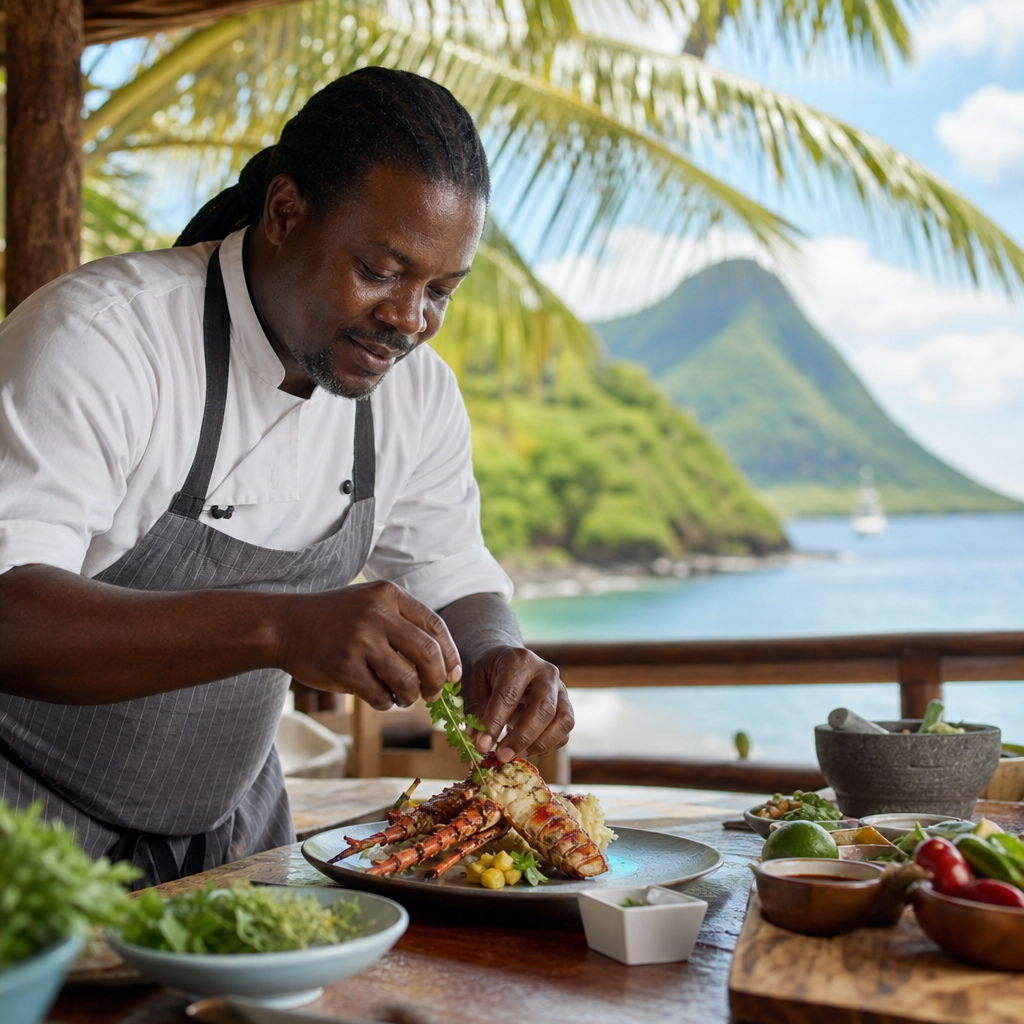
Saint Kitts reveals itself most vividly at the table, where family recipes, roadside grills, beach bars, and hotel kitchens all tell the story of the island’s people. A culinary guide to Saint Kitts is not just a list of dishes. It is a map of history, geography, trade, and daily life, expressed through breadfruit, saltfish, coconut, tamarind, cassava, fresh herbs, and the day’s catch. When local chefs share recipes, they are also sharing memory: how grandmothers seasoned goat water before dawn, how fishermen cleaned snapper on the shore, and how Sunday lunch became a ritual that gathered whole neighborhoods.
In practical terms, Saint Kitts cuisine blends African, British, French, Indian, and wider Caribbean influences into a food culture that feels distinctly Kittitian. Signature preparations include goat water, stewed saltfish, cook-up rice, conch fritters, johnny cakes, green fig dishes, and cassava-based breads and puddings. The common thread is resourcefulness. Ingredients that once reflected plantation economies and import constraints became foundations of beloved comfort food. That matters for visitors because the best meals on the island often come from understanding context, not chasing novelty alone.
I have spent enough time in Caribbean kitchens to know that island recipes are rarely fixed in the rigid cookbook sense. A chef may give exact measurements for tourists, then quietly season by eye, adjust for the salt level of cured fish, or simmer longer because the breadfruit is firmer after a dry week. That lived flexibility is one of Saint Kitts’ culinary secrets. Technique matters as much as ingredients: soaking salt cod properly, browning sugar without burning it, grinding green seasoning fresh, or allowing coconut milk to reduce at the right pace.
This hub article brings those essentials together so readers can understand the island’s food culture as a whole and use it as a gateway into deeper local experiences. It covers the pantry staples, the signature recipes local chefs discuss most often, the places and occasions where these dishes appear, and the practical details that help travelers order confidently or cook at home with respect for tradition. If you want to understand local life in Saint Kitts, start with what cooks keep in the pot and why.
The pantry behind Saint Kitts cooking
Most Saint Kitts recipes begin with a recognizable island pantry. Fresh thyme, scallion, garlic, onion, hot pepper, and celery form the aromatic base many cooks call green seasoning, though each household makes it differently. Coconut milk appears in rice dishes, stews, and desserts. Ground provisions such as yam, sweet potato, eddoe, dasheen, cassava, and breadfruit anchor meals with starch and substance. Saltfish remains important because preserved cod traveled well through colonial trade networks and became a staple across the Caribbean. Even today, chefs use it for breakfast sautés, fritters, and hearty stews.
Protein choices reflect both land and sea. Goat is central to one of the island’s most famous dishes, while chicken and pork are common in home kitchens. On the coast, snapper, mahi-mahi, lobster, conch, and seasonal pelagic fish appear on menus depending on weather, fishing conditions, and marine regulations. Tamarind, mango, guava, soursop, and sugar cane connect savory cooking with beverages, sauces, and desserts. Nutmeg, cinnamon, clove, and allspice show the influence of wider Eastern Caribbean spice traditions, even when Saint Kitts is less associated with spice exports than Grenada.
The result is a cuisine built on balance: salinity from cured fish, sweetness from caramelized sugar or ripe plantain, heat from Scotch bonnet or local peppers, acidity from lime or tamarind, and earthy depth from root vegetables. Local chefs consistently emphasize this point. Kittitian cooking is not supposed to be aggressively spicy or overly complicated. It is supposed to taste rounded, generous, and familiar.
Signature dishes local chefs return to again and again
If one dish defines Saint Kitts in conversation with chefs, it is goat water. Despite the name, goat water is not thin. It is a rich, dark, deeply seasoned stew, often thickened naturally by slow cooking and the starch from dumplings or ground provisions. The standard base includes goat meat on the bone, flour dumplings, breadfruit, herbs, onion, garlic, hot pepper, and warm spices. Some cooks brown sugar first for color and depth. Others lean on cloves, black pepper, and thyme. Proper goat water should taste savory first, with spice and aromatics layered underneath, not sitting harshly on top.
Stewed saltfish is another essential. The fish is soaked and simmered to control salt, then flaked and cooked with onion, tomato, sweet pepper, thyme, and sometimes coconut oil or butter. It appears at breakfast beside johnny cakes, plantains, or provisions. In better kitchens, the texture remains moist and flaky rather than dry. That sounds simple, but it requires timing. Overworked saltfish becomes stringy quickly, which is why experienced cooks add it late and stir gently.
Cook-up rice, pelau-style preparations, and seasoned rice dishes capture the practical intelligence of Caribbean cooking. Rice becomes a one-pot meal with pigeon peas, chicken, salt meat, or vegetables, often colored by caramelized sugar. Conch fritters and fish cakes show another side of local cooking: crisp, snackable, and built for sharing with rum punch or cold beer at a beach lime. Cassava pone, coconut tarts, and sweet potato pudding round out the sweeter end of the table, where texture matters as much as flavor.
| Dish | Main ingredients | Where you usually find it | What chefs say matters most |
|---|---|---|---|
| Goat water | Goat, dumplings, breadfruit, thyme, spices | Community events, local restaurants, weekend specials | Long simmering and balanced seasoning |
| Stewed saltfish | Salt cod, onion, tomato, pepper, herbs | Breakfast tables, home kitchens, casual cafés | Proper soaking and gentle finishing |
| Conch fritters | Conch, flour batter, herbs, pepper | Beach bars, seafood spots, starters | Tender conch and hot oil control |
| Cook-up rice | Rice, peas, meat or vegetables, coconut milk | Family lunches, takeaway counters | Correct liquid ratio and patient steaming |
| Cassava pone | Cassava, coconut, sugar, spices | Bakeries, markets, holidays | Moist interior and clean cassava flavor |
What local chefs actually mean when they share a recipe
When Kittitian chefs explain recipes, they often start with ingredients but quickly move to cues. I have heard versions of the same advice repeatedly across Caribbean kitchens: season until the meat smells right, cook until the oil separates, and stop adding liquid when the spoon drags slightly through the pot. These are not evasive instructions. They reflect how tropical ingredients behave. A tomato may carry more water after rain. Freshly grated coconut milk may be richer than canned. Goat from a younger animal will soften faster than mature meat. Recipes are therefore frameworks anchored by observation.
Take goat water as an example. A chef may marinate the goat overnight with lime, garlic, black pepper, thyme, and a touch of browning. The next day, the meat is seared or stewed down with onions and spices before water or stock is added. Dumplings go in later so they hold shape. Breadfruit can enter midway, depending on ripeness. The final adjustment is almost always acid and heat: a squeeze of lime, a split hot pepper, or both. Written recipes often miss that finishing stage, yet it is the difference between a flat stew and one that tastes alive.
The same applies to saltfish. Good cooks rinse, soak, taste, and adjust before the pan stage. There is no universal desalting time because different brands cure fish differently. A precise local recipe will tell you to soak overnight, then boil briefly, but an experienced chef still tastes before seasoning the skillet. That is why recipe sharing on Saint Kitts should be read as guided practice. The measurements help, but the real lesson is learning the signs of doneness, balance, and texture.
How history shaped the island’s flavor
Saint Kitts cuisine carries the marks of colonial agriculture, migration, and necessity. Sugar shaped the island’s economy for centuries, and with it came systems of labor and exchange that influenced food access. Enslaved Africans and later workers from other backgrounds transformed limited rations and available crops into sustaining dishes. Saltfish, imported flour, and preserved meats became staples not because they were glamorous, but because they were affordable, durable, and adaptable. Ground provisions filled the gaps and eventually became culinary identity markers rather than symbols of scarcity.
British influence appears in puddings, stews, and baking traditions, while African culinary knowledge is present in one-pot cooking, fritters, the use of okra and root vegetables, and the instinct to stretch flavor through seasoning rather than expensive cuts. Indian influence is subtler than on Trinidad but still visible in spice preferences and some curry preparations. Inter-island exchange also matters. Dishes travel between Antigua, Nevis, Dominica, and Saint Kitts, then settle into local variants. That is why two restaurants on the same island may serve noticeably different goat water yet both be considered authentic.
For travelers, this historical lens improves the eating experience. A plate of saltfish and provisions is not merely a “traditional breakfast.” It is evidence of survival, trade, adaptation, and taste refinement over generations. Local chefs know this, which is why many become animated when discussing humble ingredients. The story behind the dish gives the dish its weight.
Where to taste the island beyond hotel dining rooms
Visitors often meet Saint Kitts food first in resort restaurants, where presentation is polished and menus are accessible. Those kitchens can be excellent, especially when chefs use local seafood and reinterpret classics carefully. But to understand the island’s culinary range, eat more widely. Roadside grills, market stalls, neighborhood cookshops, and weekend events often provide the most direct link to local taste. The Central Market in Basseterre, when active, is useful for seeing produce and speaking with vendors about seasonality. Beach areas such as Frigate Bay can introduce casual seafood culture, while village spots may offer more old-school home cooking.
Ask simple questions when ordering: Is the fish local today? Does the kitchen make goat water on weekends? Are the johnny cakes fried to order? Those questions usually lead to better recommendations than scanning a broad tourist menu. In my experience, cooks respond well to genuine interest, especially when visitors are open to breadfruit, provisions, or dishes without familiar labels. If you want the best version of a local staple, ask what the kitchen is proud of that day, not what appears most universal.
Timing matters too. Some dishes are breakfast foods, others are Sunday foods, and some appear mainly during festivals, family gatherings, or late-night social settings. A traveler who understands those rhythms eats better and learns faster. Food on Saint Kitts is tied to occasion, not just appetite.
Cooking Saint Kitts recipes at home without losing authenticity
Home cooks outside the Caribbean can recreate many Saint Kitts recipes successfully if they respect the structure of the dish. Start with technique and flavor balance rather than chasing every exact ingredient. If breadfruit is unavailable, green banana or a firm potato can provide starch in a stew, though the flavor will differ. If fresh conch is inaccessible, do not force a poor substitute into fritters; make fish cakes instead. For green seasoning, fresh thyme, scallion, parsley, garlic, onion, and mild chile create a credible base, even if local herbs differ slightly.
Use reliable methods. Desalt cod gradually, marinate meat overnight, toast spices lightly, and simmer rather than boil hard. Coconut milk should enrich, not drown, a rice dish. Dumplings need enough gluten development to hold together but not so much mixing that they toughen. These are small points, yet they determine whether a recipe tastes island-rooted or merely inspired by the Caribbean. If you can source breadfruit, cassava, Scotch bonnet, and quality goat from a Caribbean or African market, your results improve immediately.
Most importantly, preserve proportion. Saint Kitts cooking is generous with seasoning but disciplined with contrast. Acid lifts rich dishes. Pepper should warm, not dominate. Sweetness in savory food usually supports browning or ripe produce rather than turning the dish sugary. Follow those principles and local recipes remain recognizable even when adapted.
Why these culinary secrets matter for local life and experiences
Food is one of the clearest ways to enter local life in Saint Kitts because it connects visitors to households, labor, memory, and celebration all at once. A recipe shared by a chef is rarely just a formula. It is an invitation to notice who grows the provisions, who catches the fish, who tends the pot, and when the community gathers to eat. That is why this subject works as a hub within local life and experiences. It links naturally to markets, festivals, fishing culture, family traditions, village rhythms, and the island’s wider historical story.
The key takeaways are straightforward. Learn the pantry staples, especially herbs, coconut, saltfish, and ground provisions. Start with signature dishes such as goat water, stewed saltfish, cook-up rice, and cassava sweets. Pay attention to chef cues about texture, smell, and timing because island recipes depend on judgment as much as measurement. Eat beyond resorts when possible, and ask what is local and in season. If cooking at home, honor the balance of salt, heat, acid, starch, and slow-developed flavor rather than chasing rigid imitation.
Saint Kitts’ culinary secrets reward curiosity. Use this guide as your starting point, then keep exploring local restaurants, village cookshops, produce markets, and family-style dishes whenever you can. The fastest way to understand the island is still the oldest one: sit down, ask questions, and taste what local cooks have been perfecting for generations.
Frequently Asked Questions
What dishes best represent the heart of Saint Kitts’ home cooking?
Saint Kitts’ home cooking is best understood through a handful of deeply rooted dishes that appear again and again in family kitchens, community gatherings, and local menus. One of the most iconic is goat water, the island’s famous savory stew made with goat meat, bread, herbs, spices, and a rich, slow-developed broth. Despite the name, it is far more substantial than a simple soup. It reflects patience, layered seasoning, and the tradition of cooking large, comforting meals for extended family and neighbors. Saltfish also plays a central role, often paired with coconut, dumplings, or ground provisions, showing how preserved ingredients became woven into everyday island cuisine.
Beyond those staples, you will often find breadfruit prepared roasted, boiled, or fried, cassava used in both savory and sweet preparations, and fresh seafood featured according to the day’s catch. Green figs, plantains, sweet potatoes, and yams also anchor many meals, adding substance and a clear connection to the island’s agricultural life. Local chefs frequently point out that these dishes are not important merely because they are traditional, but because they tell the story of adaptation, resourcefulness, and flavor. In Saint Kitts, a representative meal is rarely about one showpiece item alone. It is about the full plate: the starch, the stew, the seasoning, the freshness of herbs, and the sense that every element has a history behind it.
What ingredients appear most often in Saint Kitts recipes shared by local chefs?
The ingredients that surface most often in Saint Kitts recipes are those that reflect the island’s climate, trade history, and practical kitchen traditions. Breadfruit is one of the most recognizable staples, valued for its versatility and ability to be roasted over an open flame, boiled until tender, or transformed into hearty side dishes. Saltfish is another defining ingredient, used widely because it stores well and carries a strong savory depth that pairs beautifully with onions, peppers, tomatoes, and coconut. Cassava, coconut milk, tamarind, thyme, scallions, garlic, ginger, and hot peppers also appear regularly, forming the flavor base of many soups, stews, sauces, and marinades.
Fresh herbs and seasonings matter just as much as the main ingredients. Local cooks rely on thyme, parsley, celery, chive, and seasoning peppers to build flavor in a way that feels balanced rather than heavy. Seafood such as snapper, lobster, conch, and smaller local fish frequently enters the kitchen when available, while chicken, goat, and pork remain common proteins for more substantial dishes. Tamarind contributes a sweet-tart note to sauces and drinks, coconut adds richness and softness, and root vegetables provide the grounding texture that defines many traditional meals. When Saint Kitts chefs share recipes, they often emphasize that these ingredients are not random pantry choices. They are expressions of what the island grows, preserves, catches, and has passed down through generations.
How do local chefs in Saint Kitts balance tradition with modern cooking techniques?
Local chefs in Saint Kitts tend to treat tradition as a foundation rather than a limitation. Many begin with recipes learned from parents and grandparents, preserving key flavor profiles, ingredients, and methods such as marinating overnight, slow-simmering stews, roasting over coals, or using fresh coconut in place of processed substitutes. These techniques are not kept simply for nostalgia. They remain relevant because they produce the textures and flavors people associate with authentic island cooking. A chef might still prepare goat water with the same herb blend and patient cooking time used decades ago, because those steps are essential to the dish’s character.
At the same time, modern chefs may refine presentation, adjust cooking times with updated equipment, or introduce lighter methods that suit contemporary diners without losing the soul of the recipe. For example, a traditional fish preparation might be plated more elegantly in a restaurant setting, or a cassava-based dish may be reimagined with a new texture while keeping the original ingredients intact. The best Saint Kitts chefs understand that innovation works only when it respects the memory embedded in the food. Their recipes often reveal this balance clearly: old techniques paired with cleaner finishes, traditional spice blends used in new formats, and classic ingredients given fresh context. The result is cuisine that feels alive and current, yet unmistakably connected to the island’s culinary roots.
Why are family recipes so important to understanding Saint Kitts’ culinary culture?
Family recipes are central to Saint Kitts’ culinary culture because they preserve more than taste; they preserve memory, identity, and local knowledge. On an island where food traditions have been shaped by African heritage, colonial history, trade routes, farming practices, and community life, recipes often function as oral history. A grandmother’s method for seasoning goat water before dawn, a parent’s way of softening saltfish and pairing it with coconut, or an uncle’s precise technique at a roadside grill all carry information that may never have been formally written down. These details are passed through repetition, observation, and shared meals.
When local chefs share family recipes, they are often translating that lived experience for a wider audience. They explain not only what to add, but when to add it, how the mixture should smell, what texture signals readiness, and why a certain herb matters. This is especially important in Caribbean cooking, where intuition and rhythm in the kitchen play major roles. Family recipes also reflect local economics and resilience. They show how households made nourishing meals from available produce, preserved fish, seasonal fruits, and humble staples. To understand Saint Kitts through food, you have to understand how families cooked, adapted, celebrated, and cared for one another at the table. That is why these recipes carry such authority: they are tested by generations and tied directly to the island’s everyday life.
What should travelers expect when trying authentic food in Saint Kitts?
Travelers exploring authentic food in Saint Kitts should expect bold but balanced flavors, generous hospitality, and a cuisine that changes meaningfully depending on where they eat. At a roadside grill, the emphasis may be on smoke, spice, and immediacy, with freshly cooked meats or fish served alongside simple, satisfying sides. At a beach bar, seafood and tropical ingredients often take center stage, sometimes with tamarind glazes, coconut accents, or pepper-forward marinades. In home-style restaurants and family-run establishments, diners are more likely to encounter slow-cooked stews, ground provisions, saltfish dishes, and recipes that feel deeply connected to local routines and celebrations.
Travelers should also expect Saint Kitts cuisine to be shaped by seasonality and availability. The day’s catch matters. Ripe breadfruit, just-harvested herbs, fresh coconut, and in-season fruits influence what appears on the plate. Authentic food here is not only about famous dishes; it is about context. A bowl of stew, a piece of roasted breadfruit, or a saltfish breakfast can reveal as much about the island as any formal tasting menu. Local chefs often encourage visitors to ask questions, because the stories behind the food are part of the experience. The most rewarding approach is to eat widely: try market snacks, sample beachside seafood, order traditional favorites, and notice how each setting presents a different chapter of Saint Kitts’ culinary identity.