Community art projects in Nevis strengthen local identity, create shared public spaces, and give residents practical ways to express history, culture, and daily life through creative work. In this context, community art means collaborative painting, sculpture, craft, performance, photography, storytelling, and design activities shaped by residents rather than imposed from outside. In Nevis, where village relationships, school networks, church groups, tourism, and heritage preservation all intersect, these projects matter because they connect generations while adding visible cultural value to neighborhoods. I have seen the strongest initiatives succeed not because they had the biggest budgets, but because they matched local traditions with clear organization, trusted leadership, and room for broad participation. That is especially important on a small island, where a single mural, exhibition, youth workshop, or market day can influence how people feel about place, belonging, and opportunity. Community art in Nevis is not a side activity. It is a practical tool for education, cultural continuity, local enterprise, and civic pride.
For readers exploring local life and experiences, this hub covers the broad miscellaneous landscape of community art projects in Nevis: what they include, who benefits, how they are organized, what challenges they face, and how residents, schools, businesses, and visitors can support them. The island already has strong foundations for participatory culture, from festivals and heritage events to artisan traditions and school performances. What turns those separate efforts into lasting community art is structure: inclusive planning, accessible venues, skilled facilitation, sustainable funding, and public recognition. When these elements are present, creative projects become more than events. They become memory-making systems that preserve oral history, develop young talent, animate public areas, and help communities tell their own story with confidence.
What community art projects look like in Nevis
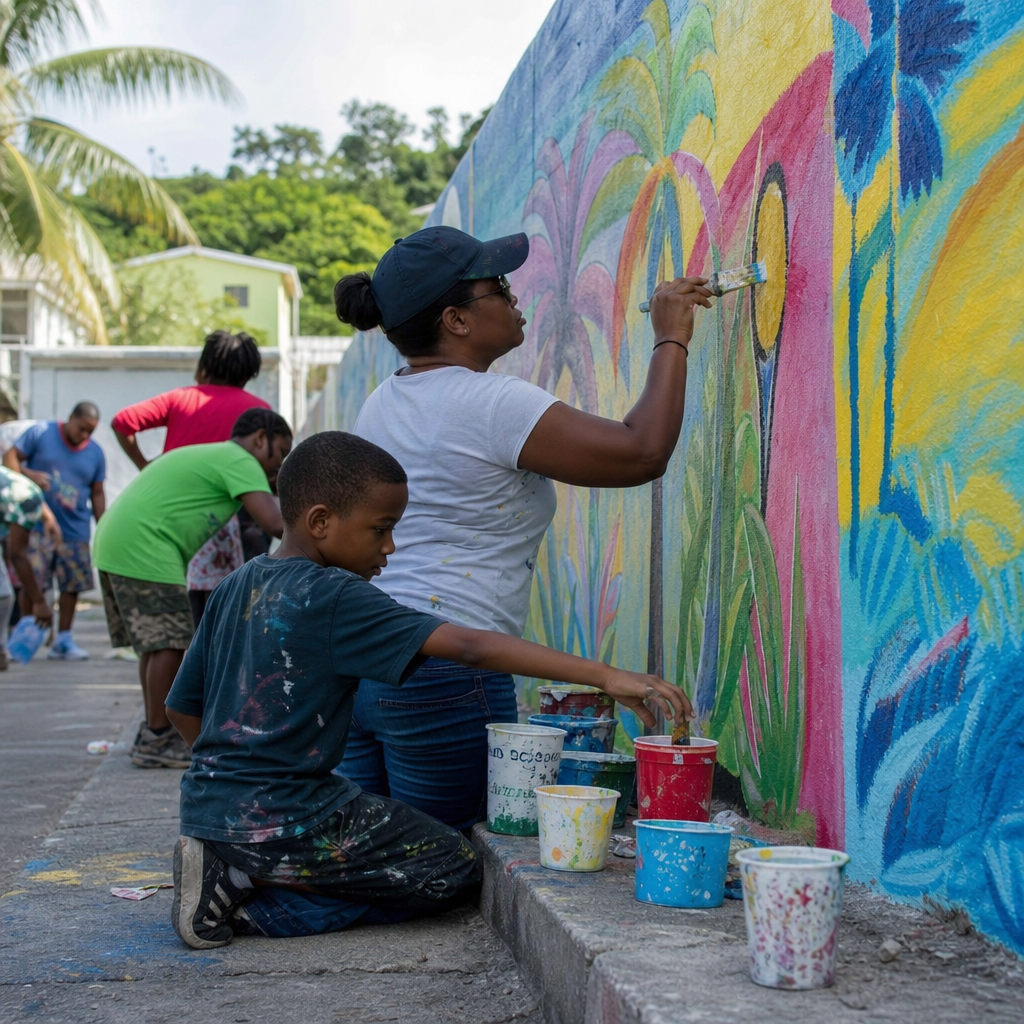
Community art projects in Nevis usually work best when they reflect the island’s scale and social fabric. Instead of anonymous large-city programming, successful initiatives tend to be rooted in village participation, school collaboration, heritage themes, and visible outcomes that people can revisit. A community mural beside a playing field, a multi-age craft workshop at a community center, a photography exhibit on coastal change, or a performance project built around oral storytelling are all examples of the same principle: art created with the public, not simply displayed to the public. In practice, these projects often combine several disciplines. A heritage exhibition may include archival photos, recorded interviews, costume design, and student-written captions. A festival installation may involve carpenters, painters, musicians, and food vendors working side by side.
The most effective projects begin with a clear local question. What story does this neighborhood want to tell? Which young people need a creative outlet? What public space feels neglected? Which traditions risk fading without documentation? On Nevis, themes often connect to emancipation history, seafaring, agriculture, village life, carnival arts, church music, environmental stewardship, and family memory. Because the island’s communities are tightly connected, participation can spread quickly when organizers involve teachers, respected elders, local artists, and youth leaders early. That local legitimacy matters more than promotional language. Residents join when they believe the project is genuinely theirs and when they can see how their time, skills, or personal stories will shape the final result.
Why community art matters for culture, education, and belonging
The cultural value of community art in Nevis is straightforward: it helps preserve identity in forms people can experience directly. Oral traditions become recorded narratives. Traditional crafts gain new audiences. Public artworks turn overlooked spaces into landmarks. This is especially important in island communities influenced by migration, tourism, and changing economic patterns. Without active cultural transmission, important details of local history can become fragmented. Community art offers a practical method for keeping those details visible. A student who interviews a grandparent for an art-and-history installation learns more than technique; that student learns continuity, context, and respect for lived experience.
The educational benefits are equally strong. Collaborative creative work builds planning skills, observation, communication, revision habits, and confidence. In workshops I have seen succeed, the visible artistic outcome was only part of the gain. Young participants learned how to meet deadlines, accept feedback, use tools safely, and present ideas in public. Teachers also benefit because art projects create interdisciplinary learning. A mural can include geometry for layout, social studies for subject matter, language arts for written interpretation, and environmental science for themes such as reef protection or waste reduction. This blended learning approach aligns well with how communities naturally share knowledge.
Belonging may be the most underestimated benefit. When residents paint, build, perform, document, or curate together, they create social trust. That trust matters in every other part of civic life. People are more likely to care for spaces they helped shape. They are more likely to attend local events when they recognize themselves in the programming. They are more likely to support young artists when they have witnessed the process behind the work. Community art therefore contributes not just to culture, but to the everyday social glue that helps neighborhoods function well.
Common types of projects and who they serve
Nevis has room for many forms of community-based creativity, and each type serves a slightly different audience. Public murals are often the most visible because they transform walls, bus stops, school boundaries, and recreation areas into conversation pieces. They work well when a theme is easy to recognize and when maintenance is planned from the start. Craft projects, including weaving, woodwork, pottery, costume making, and textile arts, are valuable because they connect traditional skills to local enterprise. They also suit intergenerational teaching, where older practitioners share methods with students and emerging makers.
Performance-based projects reach broad audiences quickly. Community theatre, dance showcases, drumming circles, spoken word events, and festival-linked productions can draw participation from people who may not identify as visual artists. Photography and digital storytelling projects are increasingly useful because smartphones and basic editing tools lower the barrier to entry. These projects can document village change, fishing traditions, architecture, foodways, and personal migration stories. Exhibition-based projects serve another purpose: they create an occasion for reflection. A small curated display in a library, school hall, heritage site, or community center gives residents a chance to see familiar subjects presented with new meaning.
| Project type | Main participants | Typical benefit | Example in Nevis context |
|---|---|---|---|
| Public mural | Youth groups, artists, schools | Visible neighborhood pride | Village wall art celebrating local history |
| Craft workshop | Elders, artisans, families | Skill transfer and income potential | Textile or costume-making sessions before festival season |
| Performance project | Students, musicians, dancers | High community engagement | Storytelling and drumming program at a cultural event |
| Photo or oral history exhibit | Researchers, residents, young creators | Documentation and preservation | Exhibit on fishing heritage or village change over time |
The best hub approach is to treat these categories as connected rather than separate. A single island-wide initiative can begin with oral history interviews, move into photo documentation, produce a public exhibition, and culminate in a live performance. That layered model keeps more people involved and creates multiple points of access for residents of different ages, abilities, and interests.
How successful projects are planned and delivered
Good community art projects in Nevis rarely happen by accident. They depend on planning decisions that seem simple but determine whether the work feels inclusive or frustrating. The first step is defining purpose. Is the goal youth development, public beautification, heritage preservation, tourism enhancement, or community healing after a difficult event? A project can meet several goals, but one primary aim should guide decisions. Next comes stakeholder mapping. Organizers should identify schools, local artists, village councils, cultural groups, churches, small businesses, heritage professionals, and property owners who need to be consulted or involved.
Venue selection is critical on a small island. A beautiful plan can fail if transport is inconvenient, shade is limited, or the site does not feel welcoming. Accessibility includes practical details such as restroom access, water, seating, weather backup, and materials storage. Budgeting should also be transparent. Paint, primer, protective coatings, insurance, artist fees, documentation, refreshments, and follow-up maintenance all cost money. Too many community projects underfund coordination, yet coordination is what keeps participation organized and expectations realistic.
Facilitation is another decisive factor. Community art is not just art instruction; it is group process management. Facilitators must gather input, balance strong opinions, keep timelines moving, and ensure novice participants do not feel excluded. In Nevis, where personal relationships shape participation, communication should be direct and respectful. Posters and social media help, but personal outreach remains essential. When organizers visit schools, speak with families, and invite local leaders to contribute, turnout improves and the final work carries stronger public legitimacy.
Challenges, tradeoffs, and practical solutions
Community art in Nevis offers clear benefits, but it also faces real constraints. Funding is often limited, especially for projects that need quality materials, professional artist time, transportation, and long-term upkeep. Grants can help, but grants alone do not build continuity. The stronger model is mixed support: small sponsorships from businesses, in-kind donations, school partnerships, volunteer labor, ticketed showcase events where appropriate, and modest public funding tied to cultural development goals. Diversified support reduces risk and makes projects less vulnerable to one delayed payment or one withdrawn sponsor.
Another challenge is maintenance. Public works can deteriorate quickly in heat, salt air, and heavy rain if surfaces are not properly prepared and sealed. This is where experienced project leads make a difference. Exterior murals need primer suited to the wall material, weather-resistant paint systems, and a maintenance schedule. Exhibits need safe handling and storage. Digital archives need backup plans and clear permissions. Without this practical follow-through, a project may generate excitement but leave little lasting value.
There are also social tradeoffs to manage. Not every resident will agree on imagery, priorities, or location. Some will want heritage-focused content, while others want contemporary youth expression. Good organizers do not treat this as a problem to suppress; they treat it as part of the process. Structured consultation, sketch reviews, and clear decision criteria help avoid conflict later. Another common issue is uneven participation. A project may attract enthusiastic children but not older teenagers, or it may draw creative volunteers without the logistical support needed to finish on time. Solutions include role diversity, stipends for key youth leaders, realistic scheduling, and visible recognition for all contributors.
How residents, institutions, and visitors can support the creative ecosystem
Building a stronger community art culture in Nevis does not depend on artists alone. Residents can support projects by attending exhibitions, volunteering during setup, sharing family photos or stories, offering wall space, or contributing small donations that cover materials. Schools can integrate local art themes into class projects and invite practicing artists to co-lead workshops. Libraries and heritage sites can host displays that turn temporary projects into documented public memory. Businesses can sponsor supplies, provide refreshments, fund prizes, or commission community-based work rather than generic décor.
Visitors also play a role when they engage respectfully. The best support is not demanding performances on cue or treating local creativity as a souvenir backdrop. It is attending public events, purchasing directly from makers, and learning the story behind the work. Tourism can strengthen community art when money flows to local practitioners and when programming is led by community priorities, not just visitor expectations. Digital support matters too. Thoughtful photography, social sharing with proper credit, and links to local organizations can extend the reach of a project beyond the island without taking ownership away from its creators.
As a miscellaneous hub within local life and experiences, this topic connects naturally to heritage, festivals, education, public spaces, entrepreneurship, and island identity. Readers interested in Nevis should view community art projects as entry points into the wider culture. They reveal how people collaborate, what histories they value, and how creativity solves everyday civic challenges. The strongest projects are inclusive, well planned, locally grounded, and carefully maintained. They give young people skills, give elders a platform to pass on knowledge, and give neighborhoods artwork and stories that feel truly theirs. If you live in Nevis, support the next workshop, mural, exhibit, or performance with your time, resources, or attendance. If you are visiting, seek out locally led creative events and buy from the people making the culture visible. That is how community art in Nevis continues fostering creativity for everyone.
Frequently Asked Questions
What are community art projects in Nevis, and why do they matter?
Community art projects in Nevis are creative activities planned, shaped, and carried out by local residents, schools, church groups, cultural leaders, youth organizations, and neighborhood networks. Rather than being designed from the outside and delivered to the public as spectators, these projects invite people to participate directly in painting murals, making sculpture, sharing oral histories, staging performances, creating craft work, documenting village life through photography, and designing public pieces that reflect local experience. In practical terms, that means art becomes a shared process rooted in the island’s everyday realities, from family traditions and village pride to heritage sites, festivals, and changing community needs.
They matter because they strengthen local identity in visible and lasting ways. When residents work together on creative projects, they are not only producing something beautiful; they are also preserving memory, celebrating culture, and building a stronger sense of belonging. In Nevis, where heritage, community ties, and place-based identity are deeply important, collaborative art can help people express stories that may not always appear in formal records. It gives children, elders, artisans, and community leaders a common platform to reflect who they are and what they value.
These projects also matter because they create shared public spaces with meaning. A mural on a community wall, a sculpture near a gathering place, or a storytelling event tied to a historic area can turn ordinary spaces into places of connection. That can improve civic pride, encourage conversation, and make neighborhoods feel more cared for and welcoming. For an island connected to tourism as well as heritage preservation, community-led art helps ensure that cultural expression remains authentic and resident-driven rather than purely commercial or decorative.
How do community art projects help preserve Nevisian history and culture?
Community art projects help preserve Nevisian history and culture by turning local knowledge into something visible, shareable, and memorable. Many important aspects of island life are carried through stories, family traditions, music, spiritual life, craftsmanship, and the habits of daily community interaction. Art provides a practical way to gather those elements and express them in forms that younger generations can engage with. A painting project might depict historical moments or village landmarks, while a photography initiative could document traditional livelihoods, local celebrations, and intergenerational relationships.
One of the strongest benefits is that community art allows preservation to happen through participation rather than observation alone. Elders can share stories, craftsmen can demonstrate techniques, teachers can connect projects to local history, and young people can contribute their own interpretations. That exchange matters because culture stays alive when it is practiced and discussed, not only stored in museums or written archives. In Nevis, this can include storytelling events about village life, costume and craft workshops linked to cultural celebrations, or performances that draw on local music, language patterns, and historical themes.
Community art also helps protect cultural meaning from being simplified. When residents shape the work themselves, they can decide which histories deserve emphasis and how they should be presented. That reduces the risk of heritage being flattened into generic tourist imagery. Instead, the resulting work can reflect the real texture of Nevisian life, including resilience, faith, labor, migration, celebration, and communal memory. In that sense, art becomes a form of cultural stewardship, helping communities retain control over how their identity is represented in public space.
Who can participate in community art projects in Nevis?
One of the greatest strengths of community art projects in Nevis is that participation can be broad and flexible. These initiatives are not limited to trained artists or cultural professionals. Children, teenagers, parents, retirees, teachers, artisans, musicians, photographers, church members, business owners, and heritage advocates can all take part in meaningful ways. Some people contribute directly by drawing, painting, performing, writing, or building, while others help with planning, storytelling, organizing materials, hosting events, documenting progress, or encouraging wider community involvement.
This inclusive structure is especially valuable in a close-knit island setting where community relationships already play a major role in daily life. Schools can involve students in research and design. Church groups can help mobilize volunteers and provide trusted gathering spaces. Village organizations can identify themes that matter locally. Elders can contribute lived experience and historical memory. Young people can bring energy, digital skills, and new creative approaches. Because community art is collaborative by nature, it can accommodate many types of talent, not only traditional artistic ability.
That inclusiveness is important because it changes how people think about creativity. Instead of viewing art as something reserved for a few specialists, residents begin to see it as a shared tool for communication, pride, and problem-solving. In Nevis, that can encourage wider civic engagement and help people feel that their perspectives count. The most successful projects often create simple entry points for participation, such as public workshops, storytelling sessions, collaborative design meetings, and open calls for ideas. When people can join at different levels, community art becomes more representative, more sustainable, and more deeply rooted in local life.
What kinds of community art projects work best in Nevis?
The projects that work best in Nevis are usually the ones that grow naturally from local relationships, cultural themes, and shared public spaces. Murals often work well because they are visible, collaborative, and capable of telling stories about village identity, historical events, local flora and fauna, or community values. Sculpture and craft projects can also be effective, especially when they draw on local materials, traditional skills, or themes connected to heritage and environment. These forms leave a physical mark on the landscape and can become lasting points of community pride.
Performance-based projects are another strong fit. Music, dance, dramatic storytelling, spoken word, and community theatre can bring together residents across generations and make cultural expression accessible to broad audiences. In a place like Nevis, where oral tradition, celebration, and social gathering remain important, live performance can be especially powerful. It allows history and identity to be communicated in emotionally engaging ways, often with lower material costs than permanent installations.
Photography, oral history, and design projects also have great value because they capture everyday life and preserve voices that may otherwise go undocumented. A community photo exhibition, a youth-led storytelling archive, or a design initiative for public signage and heritage interpretation can all strengthen local identity while serving educational and tourism-related goals. The key is not choosing the most impressive-looking format, but choosing the one that best matches community interests, available skills, and the story residents want to tell. In Nevis, successful projects are usually practical, participatory, culturally grounded, and developed with genuine local leadership from the beginning.
How can community art projects in Nevis create long-term benefits for residents?
Community art projects can create long-term benefits for Nevis residents by leaving behind more than a finished artwork. At their best, they build relationships, confidence, skills, and stronger habits of collaboration. When residents work together on a mural, storytelling series, craft program, or public performance, they learn how to organize, communicate, make decisions collectively, and manage shared goals. Those abilities can carry over into other areas of community life, including education, neighborhood improvement, youth development, and heritage protection.
These projects can also support long-term cultural continuity. Young people who participate in resident-led creative work gain direct exposure to local stories, values, and traditions in a way that feels active and relevant. Instead of receiving culture as something distant or purely ceremonial, they help shape and reinterpret it. That process can strengthen intergenerational bonds and encourage future leadership in the arts, education, and community development. For elders and long-time residents, community art offers a meaningful avenue to pass on knowledge and see their experience honored in public.
There may be economic and place-based benefits as well. Well-designed community art can enhance public spaces, support cultural tourism, and create opportunities for local artists, facilitators, and small businesses. However, the strongest long-term impact comes when projects remain grounded in resident priorities rather than outside expectations. In Nevis, sustainable success often depends on continued partnerships among schools, cultural groups, village organizations, churches, and local leaders. When that support exists, community art becomes more than a one-time event. It becomes part of how people care for place, preserve identity, and imagine the island’s future together.