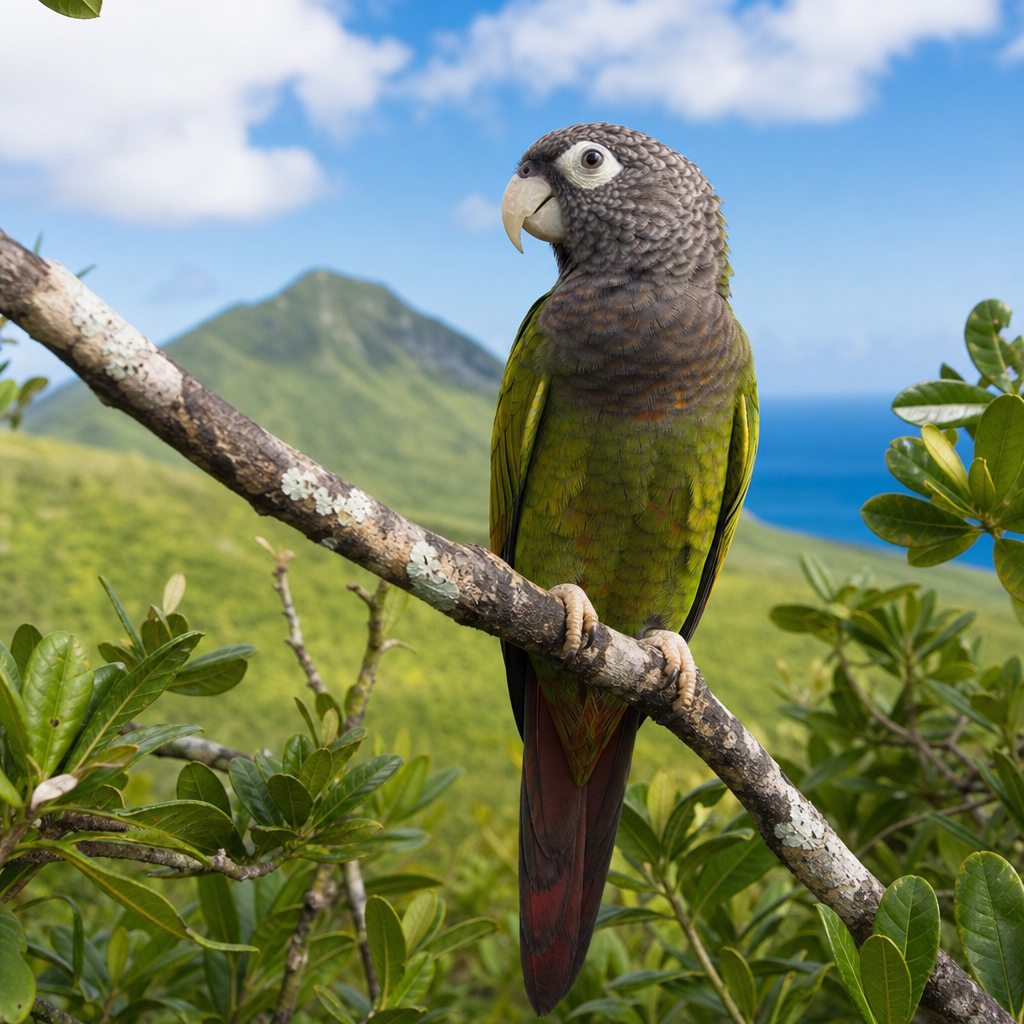
Saint Kitts’ endemic species reveal how a small volcanic island can support a surprisingly distinctive web of life. In biogeography, an endemic species is a plant or animal found naturally in one place and nowhere else on Earth. On Saint Kitts, isolation, steep elevation changes, and varied habitats have produced wildlife with narrow ranges and specialized adaptations. For travelers, educators, and conservation planners, understanding these species matters because endemic wildlife is both irreplaceable and vulnerable. Once an island endemic disappears, there is no second population elsewhere to restore it from. I have worked on Caribbean wildlife content and habitat assessments long enough to know that islands like Saint Kitts are often underestimated. Visitors notice monkeys, beaches, and rainforest views first, yet the real ecological story lies in lesser-known reptiles, birds, invertebrates, and native plants linked to specific ridges, ghauts, dry forests, and cloud-touched slopes. This hub article explains what is truly unique to Saint Kitts, where endemism exists at species and subspecies levels, which habitats support it, and why protection requires practical management rather than broad slogans. It also serves as a foundation for deeper reading across the wider Nature and Wildlife topic, connecting forest ecology, marine life, birding, hiking, and conservation policy into one island-centered guide.
What counts as endemic on Saint Kitts
When people search for Saint Kitts endemic species, they often expect a long list of large, obvious animals. In reality, true island endemism is usually concentrated among reptiles, amphibian lineages, insects, land snails, and plants, with a smaller number of birds recognized as endemic at the subspecies level rather than full species rank. That distinction matters. Taxonomy changes as scientists compare morphology, genetics, vocalizations, and range boundaries. A form once treated as a local variant may later be elevated, while another may be merged into a wider regional species. On Saint Kitts, the most consistently cited endemic vertebrate is the Saint Christopher ameiva, a ground-dwelling lizard scientifically known as Pholidoscelis erythrocephalus, confined to Saint Kitts and nearby islets historically associated with the island bank. It is fast, alert, and strongly tied to open sunny habitat edges. Another highly localized reptile is the Saint Kitts Bank racer, Alsophis rufiventris, a native snake from the Saint Kitts Bank area that has suffered severe pressure from habitat change and introduced predators. In practical wildlife interpretation, many guides also discuss island-bank endemics and Saint Kitts-Nevis shared forms because ecological management often works at that scale.
Plants complicate the picture further. Some species occur only on Saint Kitts, while others are limited to the northern Lesser Antilles or to the Saint Kitts-Nevis bank. In fieldwork, I have found that readers benefit from separating strict endemics from near-endemics. Strict endemics occur only on Saint Kitts. Near-endemics are not unique to the island alone, but they are still geographically restricted and ecologically significant. This hub therefore covers both, while clearly identifying the difference. That approach reflects how conservation decisions are made in practice: land managers protect habitats first, and those habitats usually support a mix of unique, native, and migratory wildlife rather than a single target species.
Key endemic and near-endemic wildlife to know
The most accessible flagship endemic for Saint Kitts is the Saint Christopher ameiva. This lizard is active by day, usually seen sprinting through dry coastal vegetation, disturbed grassland, stone walls, and sunny forest margins. Its role in the ecosystem is broader than many visitors realize. Ameivas consume insects and other small invertebrates, help regulate prey populations, and in turn become prey for native birds and snakes. Because they need warm basking sites and secure cover, their abundance can indicate whether a habitat still retains a functioning edge structure rather than being fully cleared or heavily invaded by dense exotic plants.
The Saint Kitts Bank racer is more elusive and conservation-sensitive. Racers in the Lesser Antilles have declined dramatically where mongooses, cats, and rats were introduced. Saint Kitts followed that wider Caribbean pattern. Historically, racers occupied dry forest, scrub, and agricultural edges where they hunted lizards, frogs, and small prey. Today, any discussion of this snake must include predator control and habitat protection. Native snakes on islands are often persecuted because people misidentify them as dangerous. In reality, racers are ecologically useful mesopredators that help maintain balance in small vertebrate communities.
Birdlife on Saint Kitts includes fewer strict endemics than the reptiles, but the island supports regionally important populations and localized forms that matter for birders and conservationists. The Lesser Antillean bullfinch, green-throated carib, Antillean crested hummingbird, Caribbean elaenia, and brown trembler are not unique to Saint Kitts alone, yet they define the island’s avian character. On upper slopes, forest birds occupy wetter conditions than coastal species, while ravines and fruiting trees create concentrated feeding zones. In practical tourism content, these species are often what visitors encounter first when learning how island biogeography shapes wildlife communities.
Invertebrates deserve far more attention than they usually receive. Endemic butterflies, moths, spiders, orthopterans, and land snails are frequently underdocumented compared with birds and mammals. On Caribbean islands, land snails in particular can show intense local endemism because populations become isolated in moist forest pockets over long periods. Pollinating insects also support native trees and shrubs that form the backbone of habitat for vertebrates. If a future survey expands Saint Kitts’ recognized endemic list, invertebrates are likely to account for much of that growth.
Habitats that create uniqueness
Saint Kitts’ endemic wildlife makes sense only when viewed through habitat gradients. The island rises from dry coastal lowlands to central volcanic highlands dominated by Mount Liamuiga. Rainfall, temperature, wind exposure, and soil depth all shift with elevation. That creates a stacked sequence of ecological zones: beaches and littoral vegetation, dry scrub and thorn woodland, abandoned cane lands and secondary growth, moist foothill forest, ghauts that hold seasonal water, and higher rainforest with cloud influence. Each zone filters species differently.
Dry coastal areas are especially important for reptiles. Open ground, rocky shelter, and sparse canopy allow lizards to thermoregulate efficiently. Where development replaces scrub with paved surfaces and ornamental plantings, those microhabitats disappear. Ghauts, the steep drainage channels common on the island, are critical movement corridors. They retain moisture, support denser vegetation, and let animals move between elevations with some cover. I have repeatedly seen island conservation plans underestimate ghauts because they appear narrow on maps, yet biologically they function like linear refuges.
Middle elevations support a transition from human-modified land to regenerating forest. Much of Saint Kitts was historically shaped by sugar cane agriculture, so many present habitats are secondary rather than primary. That does not mean they lack value. Secondary forest can recover quickly in the Caribbean when grazing pressure drops and invasive species are controlled. For birds, bats, and some reptiles, mixed native regrowth provides food, nesting sites, and humidity buffers. Higher rainforest around the mountain receives the most moisture and shelters species that depend on cooler, more stable conditions. Endemism tends to become more pronounced where topography, isolation, and microclimate combine to limit dispersal.
How endemic species are threatened
The biggest threat to Saint Kitts’ unique wildlife is not one single event but the accumulation of pressures. Habitat loss remains central, especially in lowland and coastal zones where tourism infrastructure, roads, housing expansion, and intensive landscaping simplify vegetation. Fragmentation matters as much as outright clearing. Small patches can hold wildlife temporarily, but isolated populations become easier targets for predators and more vulnerable to drought, storms, and random population crashes.
Introduced animals are a defining island challenge. Mongooses have devastated native reptiles and ground-nesting fauna across the Caribbean. Feral cats prey on lizards, birds, and small snakes. Rats consume eggs, seeds, and invertebrates. Green vervet monkeys, although iconic to visitors, are not native and can alter crops, gardens, and ecological interactions. Invasive plants also transform habitat structure. Dense stands of aggressive exotics can remove the open basking space required by ameivas or reduce native fruit resources used by birds.
Climate change adds another layer. Stronger rainfall events increase erosion in ghauts and on steep slopes. Longer dry periods can reduce food availability, especially for insectivores. For high-elevation species with narrow climatic tolerances, warming squeezes suitable habitat upslope until there is nowhere left to go. Hurricanes are natural in the Lesser Antilles, but their ecological impact becomes more severe when forests are already fragmented and recovery is slowed by invasive species. The conservation lesson is straightforward: resilience depends on healthy habitat before the storm arrives, not only on restoration afterward.
Priority species and habitats at a glance
| Species or group | Status on Saint Kitts | Main habitat | Primary threats | Why it matters |
|---|---|---|---|---|
| Saint Christopher ameiva | Endemic | Dry scrub, sunny edges, stoney lowlands | Habitat loss, cats, mongoose | Flagship reptile and indicator of open native habitat |
| Saint Kitts Bank racer | Localized native endemic to the bank area | Dry forest, scrub, edge habitats | Predators, persecution, fragmentation | Native predator that helps regulate small vertebrates |
| Forest birds and hummingbirds | Mostly near-endemic regional species | Foothill forest, ghauts, rainforest | Forest degradation, storms, invasive plants | Pollination, seed dispersal, birding value |
| Land snails and insects | Understudied, likely localized endemism | Moist forest pockets, leaf litter, native flowering plants | Drying, pesticides, habitat disturbance | Hidden diversity supporting nutrient cycling and pollination |
Conservation in practice on Saint Kitts
Effective conservation on Saint Kitts is habitat management with island realities in mind. The first priority is protecting connected elevational gradients from coast to highland, because species need to move between seasonal resources and microclimates. The second is predator management. On small islands, even modest control of feral cats, rats, and mongooses can produce measurable gains for reptiles and ground-foraging birds. The third is vegetation restoration using native species, not generic beautification plantings. Native shrubs, trees, and groundcover create the structure local wildlife evolved with.
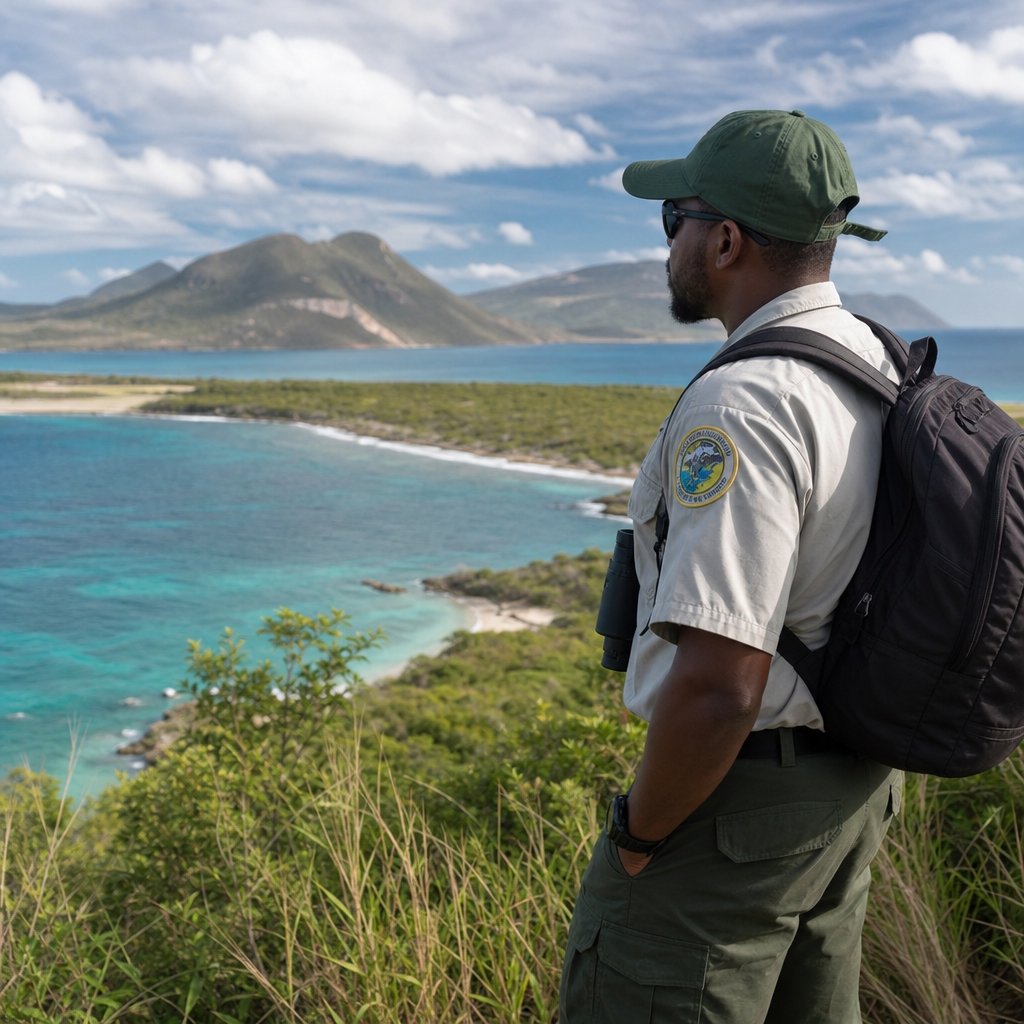
Protected area planning should include ghauts, dry coastal scrub, and secondary forest, not just scenic upper rainforest. That broader map reflects actual biodiversity value. Monitoring must also improve. Reptile transects, bird point counts, camera traps, acoustic monitoring, and repeated invertebrate surveys give managers baseline data to identify decline early. Regional partnerships matter because Saint Kitts shares ecological history with neighboring islands and can draw on methods developed by organizations working across the Lesser Antilles, including invasive species control, red listing, and habitat restoration protocols aligned with IUCN principles.
Residents and visitors have a role. Garden choices affect pollinators. Free-roaming pets affect lizards and birds. Trail use affects erosion and disturbance. Ecotourism operators can improve outcomes by training guides to interpret native wildlife accurately, discourage harassment of snakes, and explain why monkeys are not the headline conservation story. In my experience, public support increases when people are given one clear message: endemic species are part of Saint Kitts’ identity in the same way historic towns, beaches, and volcanic scenery are. Lose them, and the island becomes biologically less itself.
How this hub connects the wider Nature and Wildlife topic
As a miscellaneous hub under Nature and Wildlife, this page should point readers toward the full ecological picture of Saint Kitts. Endemic species are the anchor, but related topics deepen understanding: rainforest trails around Mount Liamuiga, birdwatching sites in ghauts and foothills, coastal ecosystems, sea turtle nesting beaches, native plants, invasive species management, and responsible wildlife tourism. These subjects are connected, not separate. A birder benefits from learning forest structure. A hiker benefits from understanding why staying on trail protects leaf litter fauna. A traveler choosing a hotel location can reduce impact by favoring operators that maintain native vegetation and control outdoor lighting near sensitive habitat.
Saint Kitts is not the Caribbean’s most species-rich island, and that is precisely why each endemic matters so much. The island’s unique wildlife survives in pockets, gradients, and edges that can easily be overlooked. Learn the names, support local conservation, and explore the rest of the Nature and Wildlife guides with the same attention you would give the island’s famous views.
Frequently Asked Questions
What does it mean for a species to be endemic to Saint Kitts?
An endemic species is one that occurs naturally in a single geographic place and nowhere else in the world. In the case of Saint Kitts, that means a plant or animal evolved on the island, or became restricted to it over time, and does not exist as a native wild population beyond its shores. This matters because Saint Kitts is a small volcanic island with strong ecological contrasts, including coastal zones, dry lowlands, moist forest, and higher-elevation habitats. Those differences, combined with long-term isolation, can create conditions where species adapt to very specific niches. Endemism is especially important in island biogeography because islands often act like natural laboratories of evolution, producing wildlife with limited ranges and unique traits. For readers, travelers, and conservationists, the key point is that endemic species are globally significant even when they are locally found, because losing them on Saint Kitts would mean losing them from Earth entirely.
Why does a small island like Saint Kitts have wildlife found nowhere else?
Saint Kitts may be small in area, but it has several features that encourage biological uniqueness. First, geographic isolation limits gene flow between island populations and mainland relatives, allowing species to diverge over long periods. Second, the island’s volcanic origin and steep terrain create sharp environmental gradients, so species can become specialized for different elevations, rainfall patterns, vegetation types, or microhabitats. Third, island ecosystems often have fewer predators, competitors, or large mammals than continental systems, which can open ecological opportunities for resident species to evolve in distinctive directions. Over time, that combination of isolation, habitat diversity, and ecological opportunity can produce species or subspecies with very narrow distributions. On Saint Kitts, this helps explain why endemic wildlife can be tied closely to particular forest zones, mountain slopes, or other localized habitats. In practical terms, a small island can support unique biodiversity not despite its size, but because its isolation and environmental complexity shape evolution in unusually concentrated ways.
What kinds of endemic species are associated with Saint Kitts?
Endemic wildlife on Saint Kitts is typically discussed in the context of island-restricted animals and plants that have adapted to local conditions over long spans of time. Depending on the taxonomic group, these may include reptiles, amphibians, insects, birds, invertebrates, or plants with ranges limited to Saint Kitts alone or, in some cases, nearly limited to the island within the wider Lesser Antilles. On volcanic Caribbean islands, endemism is often strongest in groups that do not disperse easily, such as certain lizards, land snails, insects, and specialized plants, because isolated populations can remain separated for long enough to evolve independently. Species occupying upland forests or other fragmented habitats may be especially distinctive because those areas can function like ecological islands within the island itself. For an article on Saint Kitts’ endemic species, it is useful to emphasize not only the species themselves but also the pattern behind them: narrow ranges, close ties to local habitat, and adaptations shaped by island conditions. That broader perspective helps readers understand why even less conspicuous organisms, not just charismatic animals, are essential parts of the island’s unique natural heritage.
Why are Saint Kitts’ endemic species so vulnerable to environmental change?
Endemic species are often inherently vulnerable because they occupy small ranges and depend on limited habitat. On Saint Kitts, that vulnerability can be amplified by land-use change, habitat fragmentation, invasive species, severe storms, drought, shifting rainfall patterns, and the broader effects of climate change. A species that exists only on one island has no backup population somewhere else, so any major disturbance can affect a large share of its total global population at once. Many endemic species also have specialized ecological needs, such as dependence on particular host plants, nesting conditions, temperature ranges, or moisture levels. If those conditions change, the species may not be able to adapt quickly or disperse to a new area. Invasive predators and competitors are another serious concern on islands, where native species may have evolved without strong defenses against introduced mammals, insects, or plants. This is why endemic wildlife is often considered both irreplaceable and at risk: its uniqueness is a product of long isolation, but that same isolation leaves it less resilient when rapid change occurs.
How can visitors and local communities help protect endemic wildlife on Saint Kitts?
Protection starts with recognizing that endemic species are not simply local curiosities; they are globally important components of biodiversity. Visitors can help by staying on marked trails, avoiding disturbance to nesting or sheltering wildlife, not collecting plants, shells, insects, or other natural materials, and supporting guides and tourism operators who follow responsible environmental practices. Communities and land managers play an even larger role through habitat protection, restoration of native vegetation, control of invasive species, and education that connects local identity with the island’s biological uniqueness. Schools, researchers, and conservation planners can contribute by documenting species distributions, monitoring population trends, and identifying habitats that are especially important for rare or localized organisms. Good policy also matters, including careful land-use planning and conservation measures that protect forests, watersheds, and other sensitive ecosystems before damage becomes difficult to reverse. The most effective approach is a shared one: when residents, scientists, decision-makers, and travelers all understand that Saint Kitts’ endemic species exist nowhere else, conservation becomes not just a local responsibility but a global one.