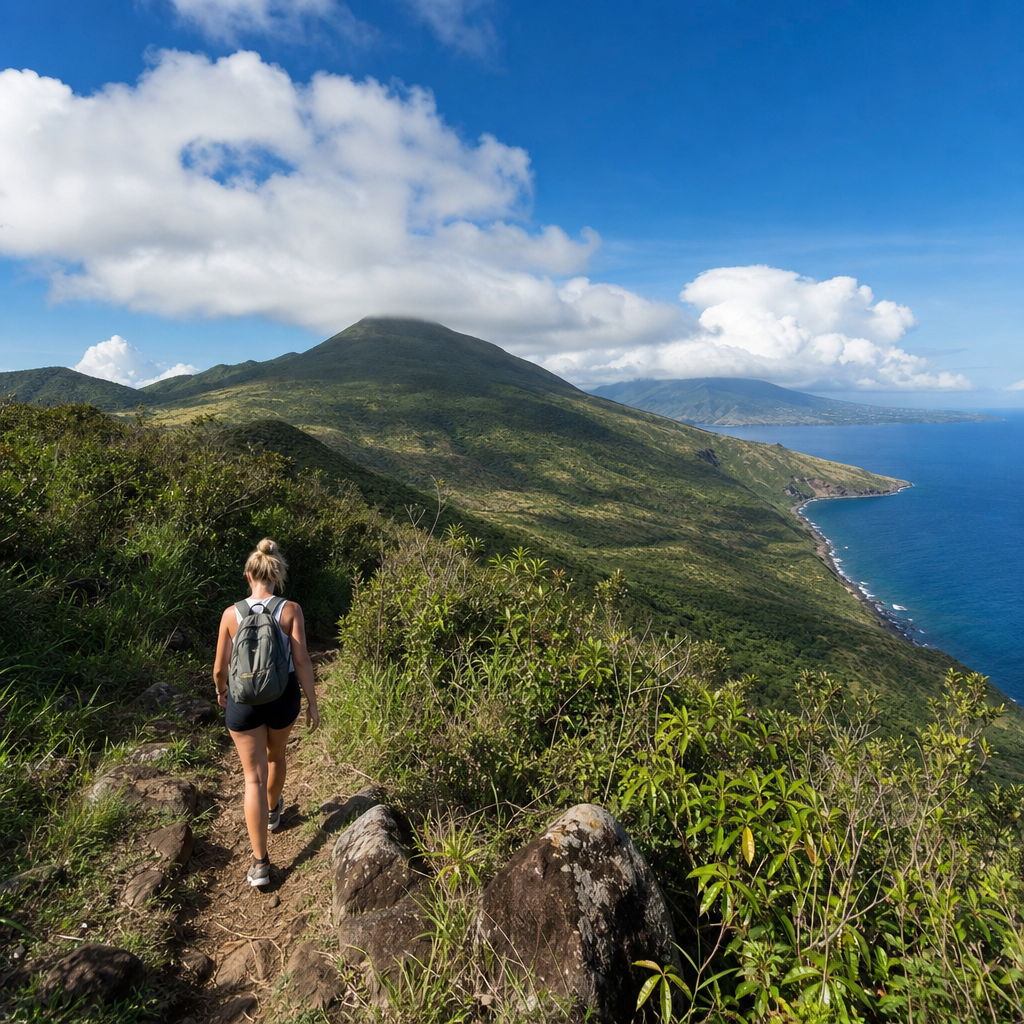
Hiking in Nevis opens a side of the island that beach-focused visitors often miss: shaded ghuts, volcanic ridges, seasonal streams, dry forest, cloud forest, and village trails that reveal how closely local life still sits beside the landscape. In practical terms, hiking in Nevis means walking routes that range from short heritage paths and coastal tracks to steep rainforest ascents on Nevis Peak, the island’s dormant volcano rising to about 3,232 feet. For travelers planning a nature-centered trip, this matters because Nevis is compact enough to explore deeply yet varied enough to reward multiple outings. As someone who has planned Caribbean nature itineraries and evaluated trail networks on smaller islands, I have found Nevis especially appealing because distances are manageable, trailheads are accessible from main roads, and the scenery changes quickly with elevation. A morning hike can begin among stone walls and grazing donkeys, move into moist forest with tree ferns and heliconia, and finish with panoramic views over Charlestown, St. Kitts, and the channel between the islands. That variety makes Nevis an ideal hub within a broader nature and wildlife itinerary. It also supports different travel styles: independent walkers, birders, photographers, families seeking gentle paths, and experienced hikers wanting a strenuous summit day. Understanding the island’s trail types, conditions, wildlife, weather, and local guiding culture helps visitors choose wisely and hike safely.
What makes Nevis hiking distinctive
Nevis is not a destination of massive national parks or heavily engineered trail systems. Its appeal lies in a smaller-scale, more intimate hiking experience shaped by volcanic geography, plantation history, and active rural land use. The island is roughly circular, and many routes radiate from the slopes of Nevis Peak or trace old estate roads and footpaths between villages, farms, and former sugar lands. Because the terrain rises abruptly from sea level, elevation gain can be significant even on shorter hikes. That is why a trail that looks modest on a map may feel much more demanding on the ground.
The most important distinction is between maintained walking routes and guide-dependent mountain trails. Easier walks near historic estates, coastal areas, or low hills can often be done independently if you have clear directions and sensible footwear. By contrast, the Nevis Peak hike usually requires a local guide. The upper mountain route is steep, muddy, and root-covered, with sections where fixed ropes assist climbers. In wet weather, footing becomes slippery quickly. Hiring a guide is not just about navigation; it materially improves safety and adds context about plants, weather patterns, and land ownership along the route.
Another defining feature is ecological transition. Lower slopes may hold dry forest species, cactus, acacia, and open grassland. Mid-elevations shift into denser tropical vegetation, while higher zones become cooler and wetter, supporting mosses, bromeliads, and cloud forest conditions. On one island, hikers can see several habitat types without long transfers. For a sub-pillar page within nature and wildlife, that range is the key reason Nevis deserves attention: its trails are not separate from its ecosystems. They are the most direct way to understand them.
Best hiking trails in Nevis for different experience levels
If you are asking where to hike in Nevis, the answer depends on your fitness, tolerance for heat, and interest in either scenery or exertion. The signature route is the Nevis Peak hike. This is the island’s best-known trek and the most physically demanding. Expect a strenuous climb through rainforest with steep gradients and rope-assisted sections near the top. On a clear day, summit or near-summit views can extend across St. Kitts, the Caribbean Sea, and neighboring islands. However, cloud cover is common, especially later in the day, so the experience is as much about the forest as the final panorama.
For moderate hikers, the Source Trail area and the paths around Golden Rock and other inland estates provide a more forgiving introduction. These routes often combine shaded woodland, old stone features, and glimpses into the island’s agricultural past. Depending on the exact path and weather, they can be suitable for active families with older children. They are also useful acclimatization walks before attempting Nevis Peak.
Short scenic options exist around Saddle Hill, coastal overlooks, and village-adjacent tracks. These are ideal for travelers who want a nature outing without committing to an all-morning climb. Birders often prefer these lower-elevation areas during early hours when light is better and movement is easier to spot. Photographers may also favor these routes because summit hikes can be too misty for broad landscape images.
| Trail or Area | Difficulty | Typical Experience | Best For |
|---|---|---|---|
| Nevis Peak | Strenuous | Steep rainforest ascent, rope sections, summit attempt | Fit hikers seeking a signature adventure |
| Source Trail and inland estate paths | Moderate | Forest walking, heritage features, shaded climbs | Active travelers, couples, older families |
| Saddle Hill and lower hill routes | Easy to moderate | Open views, drier terrain, shorter outings | Casual hikers, photographers, birders |
| Village and coastal tracks | Easy | Gentle walking, local scenery, quick access | Beginners and cruise or day visitors |
The practical takeaway is simple: choose one hike for challenge, one for ecology, and one for culture. That combination gives you a fuller picture of Nevis than repeating the same terrain each day.
Wildlife, plants, and seasonal conditions on the trails
Hiking in Nevis is as much about observation as movement. The island supports a mix of tropical birdlife, small reptiles, insects, and varied plant communities that change with altitude and rainfall. Birdwatchers commonly look for species such as green-throated carib hummingbirds, bananaquits, and tremblers, while migratory birds may appear seasonally in coastal and wetland areas. Monkeys are part of the wider St. Kitts and Nevis landscape, though sightings vary by route and time of day. On quieter trails, especially early in the morning, you are more likely to notice calls, rustling movement, and pollinator activity around flowering plants.
The vegetation tells a clear story about water and exposure. Dry coastal and lower-slope zones can feature scrub, thorny plants, and sun-hardened grasses. As hikers gain elevation, broadleaf trees, vines, and ferns become more prominent. In higher, wetter sections near the mountain, roots and moss dominate the trail surface. This is why good grip matters more than many visitors expect in the Caribbean. People often pack for heat and forget that wet tropical trails behave more like mountain mud than beach paths.
Seasonality matters. The drier period, often running from roughly December through April, usually offers more stable footing and better visibility. The wetter months bring lush vegetation and dramatic cloud formations but also more mud, mosquitoes, and occasional route closures or guide advisories after heavy rain. Hurricane season, officially June through November, does not make hiking impossible, but it increases the need for local judgment. Trail conditions can change within a day, and downed branches or washed sections are not unusual after storms.
For visitors interested in responsible nature travel, stay on existing paths, avoid picking plants, and keep noise low in forest sections. Small islands are ecologically sensitive. Repeated shortcutting causes erosion quickly, especially on steep volcanic soil. Good hiking behavior protects both the habitat and the quality of the route for future walkers.
How to prepare for a safe and rewarding hike in Nevis
The first rule of hiking in Nevis is to respect the climate. Heat, humidity, and sudden rain can affect performance more than distance. Start early, carry more water than you think you need, and treat sun protection as essential even when cloud cover looks heavy. I generally advise at least one to two liters for shorter outings and more for a summit attempt, depending on pace and conditions. Electrolytes are useful because steep tropical hikes lead to rapid sweat loss.
Footwear should match the route. For village trails and easier estate walks, trail runners with decent tread may be enough. For Nevis Peak, lightweight hiking boots or aggressive trail shoes are better because the trail can become slick from mud and exposed roots. Trekking gloves are a smart addition for rope sections, and a small dry bag or pack liner protects phones, passports, and camera gear during sudden showers.
Navigation on Nevis is improving, but visitors should not assume every trail is signed to the standard of major mainland parks. Offline maps, a charged phone, and direct instructions from accommodation staff or guides are valuable. If you are staying near Oualie Beach, Gingerland, or Charlestown, ask specifically about current trail access rather than relying on older blog posts. Routes sometimes shift because of vegetation growth, private land use, or storm impacts.
Guides add measurable value. Local operators know where footing has deteriorated, which starts are fastest, and how weather behaves on the mountain. For the Peak, a guide is the standard recommendation and, in practice, the correct choice for most visitors. Beyond safety, guides connect hikers to the island’s history, from estate-era landmarks to medicinal plant uses and oral place names that do not appear on tourist maps.
If you are traveling with children or less mobile companions, think in layers rather than all-or-nothing hiking days. One group can do a moderate trail while others enjoy nearby gardens, heritage properties, or scenic drives. Nevis works well for mixed-interest itineraries because access distances are short.
Building a nature and wildlife itinerary around hiking in Nevis
Because this page serves as a hub within the nature and wildlife topic, the most useful approach is to treat hiking in Nevis as the backbone of a broader exploration plan. A strong three-day outline could start with an easy lowland walk to understand the island’s geography, continue with a moderate interior trail focused on plants and birdlife, and end with the Nevis Peak hike for travelers ready for a challenge. Between hikes, visitors can add botanical gardens, beachside birdwatching, historical estate visits, and snorkeling sessions that reveal how terrestrial and marine ecosystems connect around a volcanic island.
This hub also supports several natural companion topics. Readers interested in birds can use trail information here to choose the best elevations and times of day. Travelers focused on photography can pair golden-hour coastal walks with misty forest mornings. Visitors researching family nature activities can select shorter routes and combine them with wildlife spotting near lodges and gardens. Adventure readers can branch from this overview into route-specific planning for Nevis Peak, packing lists, weather timing, and guide selection.
The central benefit of hiking in Nevis is perspective. On the trail, the island stops feeling like a resort destination and starts reading as a living landscape shaped by geology, rain, agriculture, and community. That shift is why hiking deserves a central place in any nature-based itinerary here. Choose trails that match your ability, hire local expertise when needed, and give yourself time to notice the details between trailhead and viewpoint. Start with one well-planned walk, then build the rest of your Nevis nature trip around what you discover on foot.
Frequently Asked Questions
What kinds of hiking trails can visitors expect to find in Nevis?
Nevis offers a surprisingly varied hiking experience for such a compact island. Visitors can choose from shorter village and heritage walks, coastal paths with open sea views, shaded ghut trails that follow seasonal watercourses, and more demanding rainforest routes that climb toward Nevis Peak, the island’s dormant volcano. This variety is part of what makes hiking in Nevis so rewarding: the landscape changes quickly, and even a relatively short outing can pass through several distinct environments. Depending on the route, hikers may move from dry forest and old agricultural land into cooler, wetter cloud forest with dense vegetation, moss-covered trees, and frequent mist.
For travelers who want a gentle introduction, lower-elevation trails often provide a strong sense of place without requiring advanced fitness. These walks can include old footpaths near villages, routes that reveal traditional land use, and tracks that connect local communities with the surrounding hillsides. More ambitious hikers usually focus on the ascent of Nevis Peak, which is significantly steeper and more technical in places. That climb is known for muddy sections, thick roots, rope-assisted scrambles, and rapid weather shifts. In short, Nevis does not offer just one type of hike. It offers a layered trail experience that combines scenery, ecology, history, and a close view of how island life still interacts with the land.
Is hiking Nevis Peak difficult, and do you need a guide?
Yes, Nevis Peak should generally be considered a challenging hike, especially for visitors who are used only to casual walking trails. Although the summit is about 3,232 feet above sea level, the difficulty comes less from extreme altitude and more from the steep terrain, humid conditions, muddy footing, and the fact that the route can become slick and physically demanding even in good weather. Many sections require careful balance and steady effort, and upper portions of the trail may involve pulling on fixed ropes or tree roots to navigate steep inclines. The climb is very achievable for fit hikers, but it should not be underestimated.
Hiring a guide is strongly recommended, and on many summit attempts it is the smartest choice by far. Local guides understand trail conditions, recent weather patterns, safe pacing, and how to manage sections that can be confusing or hazardous for first-time visitors. They also add real value by identifying plants, pointing out landscape features, and explaining how the mountain fits into Nevisian history and local culture. Weather on the peak can change quickly, with fog, rain, and reduced visibility arriving with little warning, so having someone experienced on the route is important for both safety and overall enjoyment. If your goal is Nevis Peak, think of it as a serious tropical mountain hike rather than a simple vacation walk.
What should you bring for a hike in Nevis?
What you bring depends on the trail, but some essentials apply almost everywhere in Nevis. Start with sturdy footwear that has reliable grip, because trails can be uneven, rocky, root-filled, or muddy, especially after rain. Lightweight, breathable clothing is ideal in the island’s warm climate, but long sleeves or long pants can be useful on overgrown or insect-prone routes. A daypack with plenty of water is essential, since the combination of humidity, sun exposure, and steady elevation gain can drain energy quickly. For longer or steeper hikes, it is wise to carry more water than you think you will need.
Other recommended items include sun protection, insect repellent, snacks, a small first-aid kit, and a fully charged phone. If you are heading into higher elevations or attempting Nevis Peak, add a rain layer, because conditions can turn damp and cool in the cloud forest even when the coast feels bright and hot. Trekking poles can be helpful on descents, though many hikers on steeper summit trails prefer to keep their hands free for roots and ropes. It is also smart to avoid hiking with valuables you do not need. The most prepared hikers in Nevis travel light but thoughtfully, packing for moisture, mud, changing visibility, and the physical effort of tropical hiking rather than assuming the island environment will be easy simply because the distances may look short.
When is the best time of year to go hiking in Nevis?
Hiking is possible year-round in Nevis, but the best time depends on your priorities, fitness level, and tolerance for heat or mud. Many visitors prefer the drier part of the year, when trails are generally more manageable and views are more likely to open up, especially on exposed ridges or coastal routes. During these months, lower humidity and firmer footing can make hikes more comfortable and predictable. That said, Nevis remains a tropical island, so even in relatively dry periods you should still expect warmth, occasional showers, and changing conditions as you gain elevation.
During wetter periods, the island becomes especially lush, and the forests can feel even more dramatic, but trails may be muddier, slipperier, and harder to navigate. This matters most on steep routes such as Nevis Peak, where rainfall can significantly increase difficulty. Time of day is also important. Early morning is often the best choice for most hikes because temperatures are cooler, weather tends to be more stable, and there is more time to complete the route safely before afternoon rain or fading light. If your main goal is a strenuous mountain hike, choosing a clear morning and checking conditions with a local guide is usually the best strategy. If your goal is simply to explore nature trails, almost any season can work well with the right preparation.
What makes hiking in Nevis different from hiking on other Caribbean islands?
What sets Nevis apart is the intimacy of the experience. The island’s trail network does not feel isolated from daily life in the way some larger-destination hikes can. In Nevis, walking through the landscape often means moving beside villages, old estate lands, fruit trees, grazing areas, and footpaths that reflect long-standing connections between people and place. Hikers are not just entering nature; they are entering a lived-in environment where ecology, history, and community remain closely linked. That gives even a short hike more depth and personality than a purely scenic outing.
Nevis also stands out for the sharp contrast packed into a relatively small area. A single trip can reveal coastal dryness, shaded ghuts, volcanic slopes, rainforest, and cloud forest in quick succession. The presence of Nevis Peak adds a dramatic vertical element, making the island especially appealing to travelers who want more than flat tropical walking. At the same time, Nevis remains quieter and less commercialized than many Caribbean destinations, so the hiking experience often feels more personal, uncrowded, and grounded in the island’s natural rhythms. For visitors who want to understand Nevis beyond its beaches, hiking offers one of the clearest and most memorable ways to do it.