The influence of African culture in Saint Kitts is woven into the island’s language, music, food, spirituality, family life, and public celebrations, making it essential to understanding both daily life and national identity. Saint Kitts, officially part of the Federation of Saint Kitts and Nevis, was shaped by Indigenous presence, European colonization, plantation slavery, emancipation, and modern nationhood, but African cultural continuity remains one of the strongest throughlines across those eras. When people ask what African heritage means in Saint Kitts, the answer is not limited to ancestry; it includes living practices, inherited values, artistic forms, agricultural knowledge, religious expression, oral memory, and community institutions that survived brutal disruption and adapted over centuries. I have worked with Caribbean cultural materials long enough to see a consistent pattern: on islands like Saint Kitts, African influence is most visible not only in museums or festival stages, but in ordinary routines such as speech rhythms, market exchange, childrearing, cooking methods, and funeral traditions. That matters because culture is not an abstract label. It shapes how people celebrate, mourn, organize neighborhoods, interpret history, and present themselves to visitors and younger generations. For a hub article under culture and history, Saint Kitts offers a particularly rich case because African influence operates across many “miscellaneous” areas that are often treated separately. Looking at them together provides a more accurate picture of how the island developed and why its cultural character feels distinct within the wider Caribbean.
Historical foundations of African influence
African culture in Saint Kitts cannot be understood without the history of forced migration through the transatlantic slave trade and the plantation economy that dominated the island from the seventeenth century onward. Saint Kitts was among the earliest English and French colonial footholds in the Caribbean, and its sugar plantations created a sustained demand for enslaved African labor. People were taken from multiple West and Central African regions, including areas linked to Akan, Igbo, Yoruba, Kongo, and Mandé cultural zones. Colonial records often flattened these identities, yet their knowledge systems and social habits did not disappear on arrival. They were reassembled under conditions of coercion, producing creolized forms that were new to Saint Kitts but deeply rooted in African precedent. In my experience reading estate records alongside oral accounts, the most revealing detail is that planters tried to control labor and movement, yet could not fully control music, belief, naming customs, herbal practice, or modes of kinship.
Emancipation in the British Caribbean in the 1830s did not end hardship, but it did expand the space for African-derived customs to become more visible in village life, churches, mutual aid patterns, and festive performance. After apprenticeship ended in 1838, formerly enslaved communities built institutions that carried memory forward even when formal histories ignored them. The result was not a frozen survival of Africa, but an evolving Afro-Kittitian culture. This is a key point for readers exploring culture and history: continuity in Saint Kitts comes through adaptation. African influence persisted because people modified inherited practices to fit island conditions, available materials, Christian environments, and changing economic realities.
Language, oral tradition, and social memory
One of the clearest signs of African influence in Saint Kitts appears in speech patterns, oral storytelling, and the social uses of language. Standard English has official status, but Kittitian Creole English carries the cadence of local experience. Like other Caribbean creoles, it developed in contact zones where African speakers, Europeans, and later generations forged practical communication systems. The grammar, idiom, tonal quality, and expressive compression of creole speech reflect this history. Not every feature can be mapped neatly to one African language, yet the broader process is unmistakable: African linguistic habits helped shape how language works socially on the island.
Oral tradition has long served as an archive of memory. Folktales, proverbs, teasing songs, and cautionary sayings preserve values around cleverness, endurance, respect, and communal accountability. In village contexts, an elder’s story often does more than entertain; it explains how to behave, whom to trust, and what past struggles mean in the present. This use of speech as social instruction has strong parallels with African oral cultures in which history, morality, and practical wisdom circulate through performance rather than only through written texts. On Saint Kitts, that tradition survives in family gatherings, roadside conversations, school cultural programs, and festival commentary. It also informs local humor, where wit and indirect criticism can carry serious meaning without formal confrontation.
Music, dance, and carnival performance
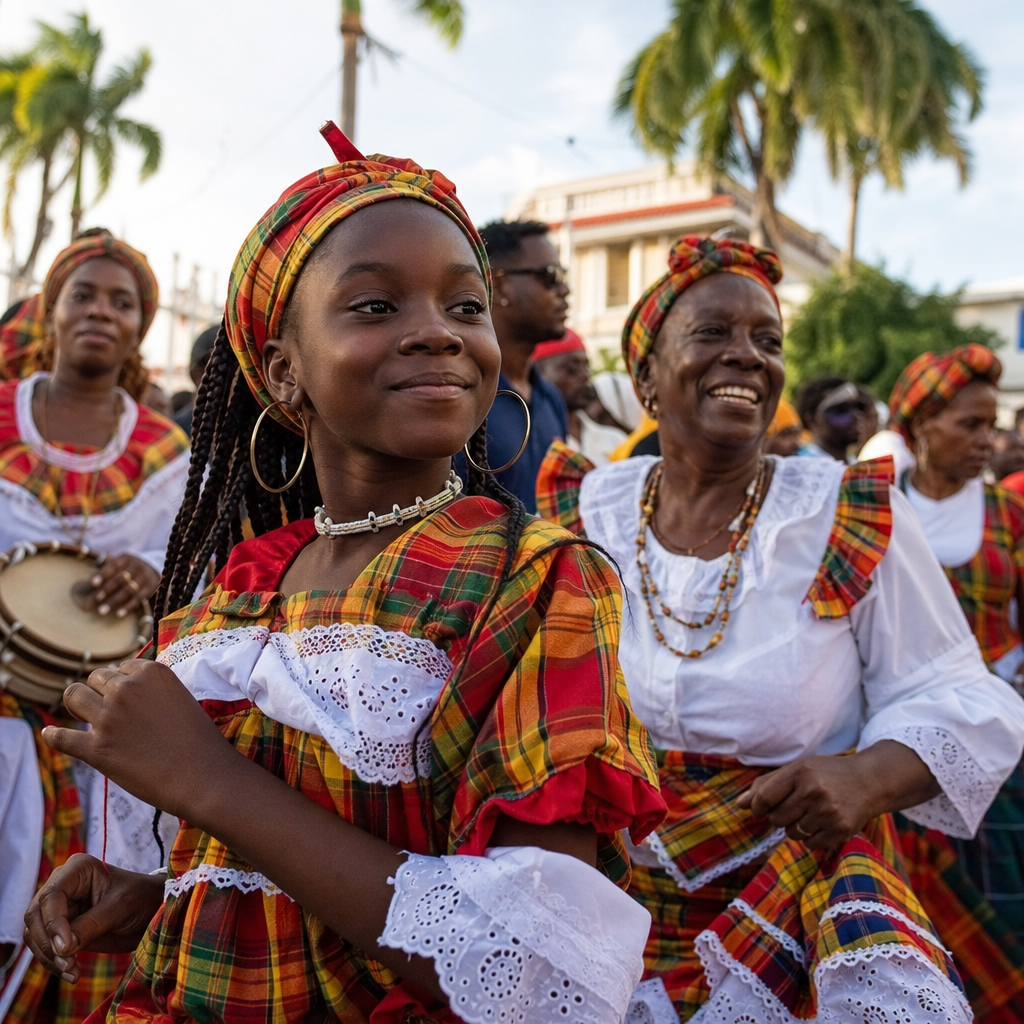
If you want to see African cultural influence in Saint Kitts in motion, start with music and dance. Rhythm-based performance traditions across the island draw on African principles of call and response, layered percussion, collective participation, improvisation, and movement as social communication. Carnival, locally central and nationally significant, is one of the strongest public expressions of this heritage. Masquerade, drumming, street procession, and costumed performance combine spectacle with historical memory. Even where forms have changed over time, the core idea remains African in orientation: music is not separate from community life, and performance is a way to claim visibility, release tension, and reaffirm belonging.
Big Drum traditions in the wider Eastern Caribbean help provide context, and while each island has its own style, Saint Kitts shares the regional pattern of drum-centered performance carrying ancestral resonance. String bands, calypso, soca, and community drumming also show how African-derived aesthetics fused with newer influences. I have seen festival performances where the crowd response matters as much as the musicians on stage; that reciprocal energy is not incidental. It reflects a participatory cultural logic in which audience and performer co-create the event. Carnival troupes, moko jumbie traditions in the broader Caribbean sphere, and masquerade elements all point to a long history of African-descended communities using embodied art to transform public space.
Foodways, farming knowledge, and domestic life
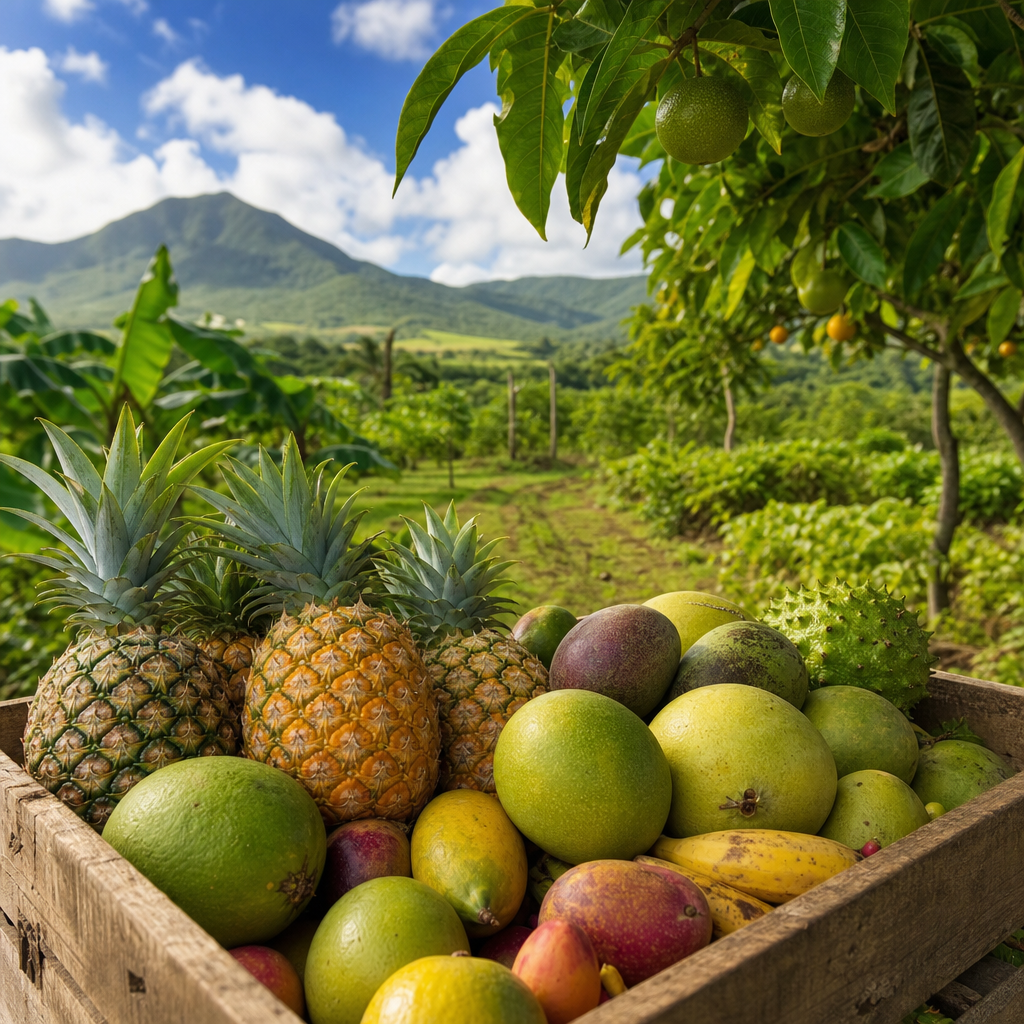
African influence in Saint Kitts is equally strong in food culture, especially in ingredients, cooking techniques, and the social meaning of meals. Ground provisions such as yam, sweet potato, dasheen, and cassava became staples across plantation and post-emancipation life because they were filling, adaptable, and tied to agricultural knowledge that enslaved Africans and their descendants carried and refined. Okra, pigeon peas, and seasoning practices also connect Saint Kitts to a broader Afro-Caribbean food tradition. Goat water, often treated as a national dish, illustrates this layered history well: a slow-cooked, highly seasoned stew built around thrift, flavor extraction, and communal eating. Those are not accidental features. They come from survival economies that turned limited resources into sustaining cuisine.
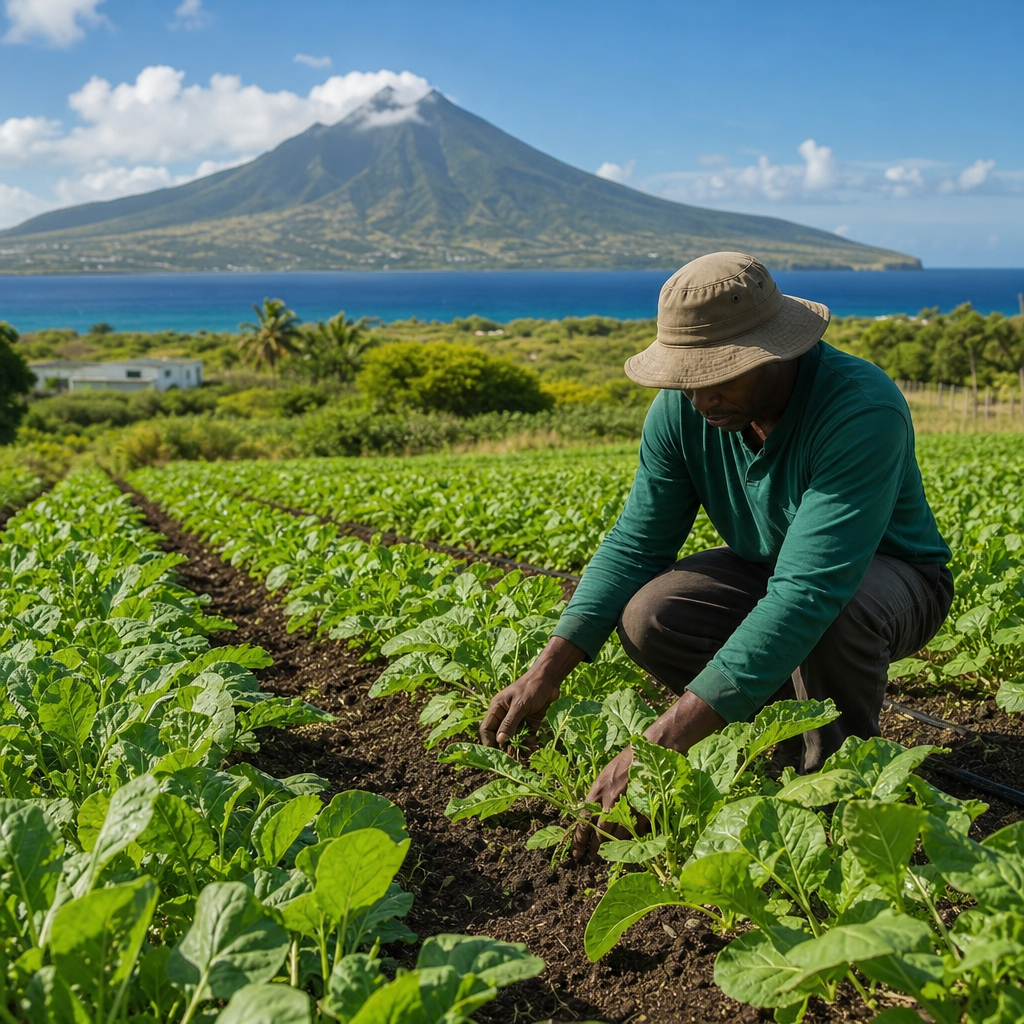
Cooking methods matter as much as ingredients. One-pot preparations, prolonged simmering, spice layering, and the use of every available cut reflect practical intelligence developed under constraint. In many Kittitian homes, food still carries the values of sharing and hospitality that historically helped communities endure poverty and instability. Market exchange, backyard gardening, and small-scale livestock rearing also echo older African-derived approaches to household resilience. Women especially played central roles in preserving these systems through domestic labor, vending, caregiving, and food transmission across generations.
| Cultural area | African influence in Saint Kitts | Everyday example |
|---|---|---|
| Language | Creole expression, proverb use, oral performance | Storytelling and idiomatic village speech |
| Music and dance | Polyrhythm, call and response, communal movement | Carnival bands, drumming, street performance |
| Foodways | Ground provisions, stews, seasoning traditions | Goat water, shared Sunday meals |
| Belief systems | Ancestral memory, healing knowledge, ritual forms | Herbal remedies and funerary customs |
| Community life | Extended kinship, mutual aid, collective identity | Neighborhood support during births and bereavement |
Religion, healing, and ancestral continuity
Christianity is dominant in Saint Kitts, especially through Anglican, Methodist, Moravian, Pentecostal, and other Protestant traditions, yet African influence remains present within the way religion is practiced and interpreted. Across the Caribbean, enslaved Africans often adopted Christianity outwardly while maintaining older cosmologies, healing systems, and ideas about spirit presence, protection, and the moral significance of dreams. Saint Kitts reflects that broader pattern. You can hear it in testimonies about signs, warnings, and unseen forces; you can see it in the value placed on elders who know bush medicine, ritual timing, or traditional remedies. Herbal knowledge in particular deserves attention. The use of leaves, roots, teas, poultices, and baths is not simply “folk practice.” It is a historical knowledge system preserved despite colonial dismissal.
Funeral culture and mourning customs also reveal deep continuities. In many Afro-Caribbean societies, death is treated as a communal passage requiring extended visitation, collective support, food preparation, song, and remembrance. Saint Kitts shares this orientation. Even when ceremonies follow Christian liturgy, the emotional structure often emphasizes community presence and ancestral respect in ways that align with African understandings of social continuity between the living and the dead. These practices matter because they show that African heritage is not limited to entertainment or cuisine; it also shapes how people confront illness, uncertainty, and loss.
Family networks, labor, and community organization
Another important dimension of African influence in Saint Kitts is the organization of family and community life. Plantation slavery systematically attacked kinship by separating relatives and subordinating family formation to labor needs. Yet African-descended communities rebuilt support systems through extended family structures, fictive kinship, godparent-style bonds, and neighborhood reciprocity. On Saint Kitts, these patterns became crucial after emancipation, when access to land, wages, and public services remained uneven. Childrearing, elder care, home construction, food sharing, and crisis support frequently depended on networks larger than the nuclear household.
In practical terms, this means African cultural influence can be seen in how communities mobilize around life events. When someone dies, falls ill, or hosts a major celebration, participation extends beyond immediate relatives. That collective ethic has obvious economic value, but it also carries historical memory. Communities learned to survive through mutual reliance because formal power structures rarely served them well. Over time, that necessity became a cultural norm. It informs village cohesion, church groups, workplace solidarity, and local associations today. It also helps explain why migration has not erased identity. Kittitians abroad often maintain strong ties through remittances, visits, funerals, and festival return, reinforcing communal belonging across distance.
National identity, heritage preservation, and modern expression
In contemporary Saint Kitts, African culture influences not only traditional practices but also national branding, education, heritage policy, and creative industries. Independence in 1983 created more room to frame local culture on its own terms rather than through colonial narratives. Schools, heritage organizations, and artists increasingly highlight slavery, emancipation, resistance, and Afro-Caribbean creativity as central to national history. Sites connected to plantation life, including landscapes around former sugar estates, are interpreted not only as economic history but as places shaped by African labor and endurance. Brimstone Hill Fortress National Park, while primarily associated with military and colonial history, also sits within the larger story of the enslaved workforce that sustained the colonial economy.
Modern Kittitian musicians, writers, designers, and cultural organizers continue to translate African-rooted forms into contemporary expression. That may appear in drumming fused with digital production, in fashion inspired by madras and carnival aesthetics, or in spoken-word performances using creole rhythms to discuss migration, class, and memory. The point is not that culture stays unchanged. It is that African influence remains productive. It gives Saint Kitts a vocabulary for innovation that is local rather than imported wholesale. For readers using this page as a hub, related topics worth exploring include carnival history, slavery and emancipation, Kittitian Creole, traditional food, folk medicine, and village social life. Together, those subjects show that African culture in Saint Kitts is not a side note in miscellaneous heritage. It is the connective tissue across the island’s historical and cultural development.
The influence of African culture in Saint Kitts is best understood as a living foundation rather than a distant inheritance. From the plantation era to present-day independence, African-descended people transformed trauma into durable cultural systems that still shape speech, music, belief, food, kinship, and public celebration. The strongest evidence lies in ordinary life: the creole phrase that carries more meaning than formal English, the drum pattern that organizes a crowd, the herbal remedy passed down by an elder, the shared meal built from ground provisions, and the community response when a family needs help. These are not isolated customs. They form an integrated social world created through adaptation, resilience, and memory.
For anyone studying Saint Kitts under the wider culture and history theme, this subject offers a clear entry point into many related articles and subtopics. African influence explains why national festivals feel the way they do, why local cuisine developed its signature character, why oral tradition remains important, and why heritage conversations increasingly center enslaved and emancipated communities. It also encourages a more accurate reading of Caribbean history by shifting attention from colonial institutions alone to the people who built lasting culture under extraordinary pressure. Explore the connected topics in this hub to see how African heritage continues to define Saint Kitts in both historic and modern forms.
Frequently Asked Questions
How has African culture shaped everyday life in Saint Kitts?
African culture has had a deep and lasting influence on everyday life in Saint Kitts, especially in the way people speak, cook, celebrate, worship, and relate to one another. Although the island’s history includes Indigenous roots, European colonization, plantation slavery, emancipation, and independence, African cultural continuity remains one of the clearest threads connecting past and present. Many customs that feel distinctly Kittitian today developed through the experiences of enslaved Africans and their descendants, who preserved memory, values, and creative expression even under harsh colonial conditions.
In practical terms, this influence can be seen in oral traditions, humor, storytelling, communal child-rearing, respect for elders, and a strong emphasis on extended family and neighborhood support. It is also reflected in the rhythms of social life, from the way festivals are organized to the role of music and dance in community gatherings. African cultural influence is not limited to ceremonial moments; it appears in language patterns, food preparation methods, herbal knowledge, market culture, and spiritual worldviews that blend African inheritance with Christianity and other traditions. For many people in Saint Kitts, African culture is not a separate or historical layer of identity. It is a living foundation of national life and a key part of what gives the island its character.
What role does African heritage play in the music and festivals of Saint Kitts?
African heritage is central to the music and festivals of Saint Kitts, especially in the island’s rhythmic traditions, performance styles, and public celebrations. The use of percussion, call-and-response singing, improvisation, group participation, and energetic movement all reflect African musical legacies that survived slavery and were reshaped across generations. These elements are especially visible during Carnival, often called Sugar Mas, where music, dance, masquerade, costume, and street performance come together in a powerful display of cultural memory and creativity.
Traditional forms such as drumming and masquerade carry echoes of West and Central African ceremonial and communal practices, even as they have evolved in a Caribbean context. Folkloric expressions like the Masquerade tradition, moko jumbies, clowns, and other performance forms reflect the blending of African retention, resistance, and local innovation. Music in Saint Kitts is not just entertainment; it has long been a way to preserve identity, build solidarity, and express joy, satire, struggle, and resilience. Modern genres performed on the island may include calypso, soca, gospel, and string band influences, but beneath these styles are older African-derived patterns of rhythm, audience interaction, and storytelling. In that sense, African heritage continues to animate both formal festivals and everyday cultural expression in Saint Kitts.
In what ways is African influence reflected in Kittitian food and cooking traditions?
African influence is strongly reflected in Kittitian food traditions through ingredients, cooking methods, flavor preferences, and the social meaning of meals. During the plantation era, enslaved Africans adapted available provisions, cultivated food knowledge, and transformed limited ingredients into sustaining, flavorful dishes. Over time, these practices became part of the island’s culinary identity. Ground provisions such as yam, sweet potato, cassava, eddoe, and plantain, along with legumes, salted meats, stews, and one-pot dishes, all connect to broader African and Afro-Caribbean foodways.
The influence also appears in techniques such as slow cooking, boiling, steaming, seasoning heavily with herbs and spices, and making practical use of locally available produce. Foods associated with Sunday dinners, communal events, market trade, and festive gatherings often reveal this heritage clearly. Just as important, food in Saint Kitts carries cultural values linked to family, hospitality, survival, and continuity. Recipes are often passed down through generations, and the preparation of traditional dishes can serve as a form of memory-keeping. While Kittitian cuisine also reflects European, Caribbean, and broader Atlantic influences, African cultural inheritance remains one of its most important foundations, especially in the island’s comfort foods, celebratory meals, and rural cooking traditions.
Did African spiritual beliefs survive in Saint Kitts despite colonization and slavery?
Yes, African spiritual beliefs and worldviews did survive in Saint Kitts, although often in transformed, blended, or less publicly visible ways. Under slavery and colonial rule, open expression of African religious systems was frequently suppressed, and Christianity became the dominant formal religion. Even so, many African-derived understandings of ancestry, healing, sacred power, moral balance, dreams, and the unseen world continued beneath the surface of colonial society. These ideas were often woven into Christian practice, folk healing, community rituals, and local beliefs about protection, misfortune, blessing, and spiritual presence.
This survival is common across the Caribbean, where African traditions were not simply erased but adapted to new conditions. In Saint Kitts, the influence can be seen in herbal medicine, reverence for elders as keepers of wisdom, spiritual interpretations of life events, and forms of expressive worship that emphasize rhythm, testimony, movement, and communal participation. Even where people identify primarily with Christian denominations today, aspects of African cosmology may still shape attitudes toward illness, death, celebration, and the relationship between the living and those who came before. The result is not a direct copy of African religious systems as they existed before enslavement, but a Kittitian spiritual landscape in which African inheritance remains deeply embedded.
Why is understanding African cultural influence important to understanding the national identity of Saint Kitts?
Understanding African cultural influence is essential to understanding the national identity of Saint Kitts because African-descended people have been central to the island’s demographic, historical, and cultural development for centuries. The labor of enslaved Africans built the plantation economy, and their descendants helped shape the social institutions, artistic traditions, political consciousness, and community values that define the nation today. To discuss Saint Kitts without recognizing African cultural influence would leave out one of the most powerful forces in the island’s formation.
This importance goes beyond heritage in a symbolic sense. African influence helps explain why certain musical forms matter, why family and community networks remain so strong, why festival culture carries such depth, and why everyday language, food, and spirituality have the character they do. It also helps place Saint Kitts within the wider Caribbean story of survival, resistance, creolization, and self-definition after slavery. In modern nationhood, that legacy continues to inform education, cultural preservation, tourism narratives, and public memory. Recognizing African cultural influence is therefore not just about honoring the past. It is about accurately understanding how Saint Kitts became what it is and why that legacy still matters in contemporary life.