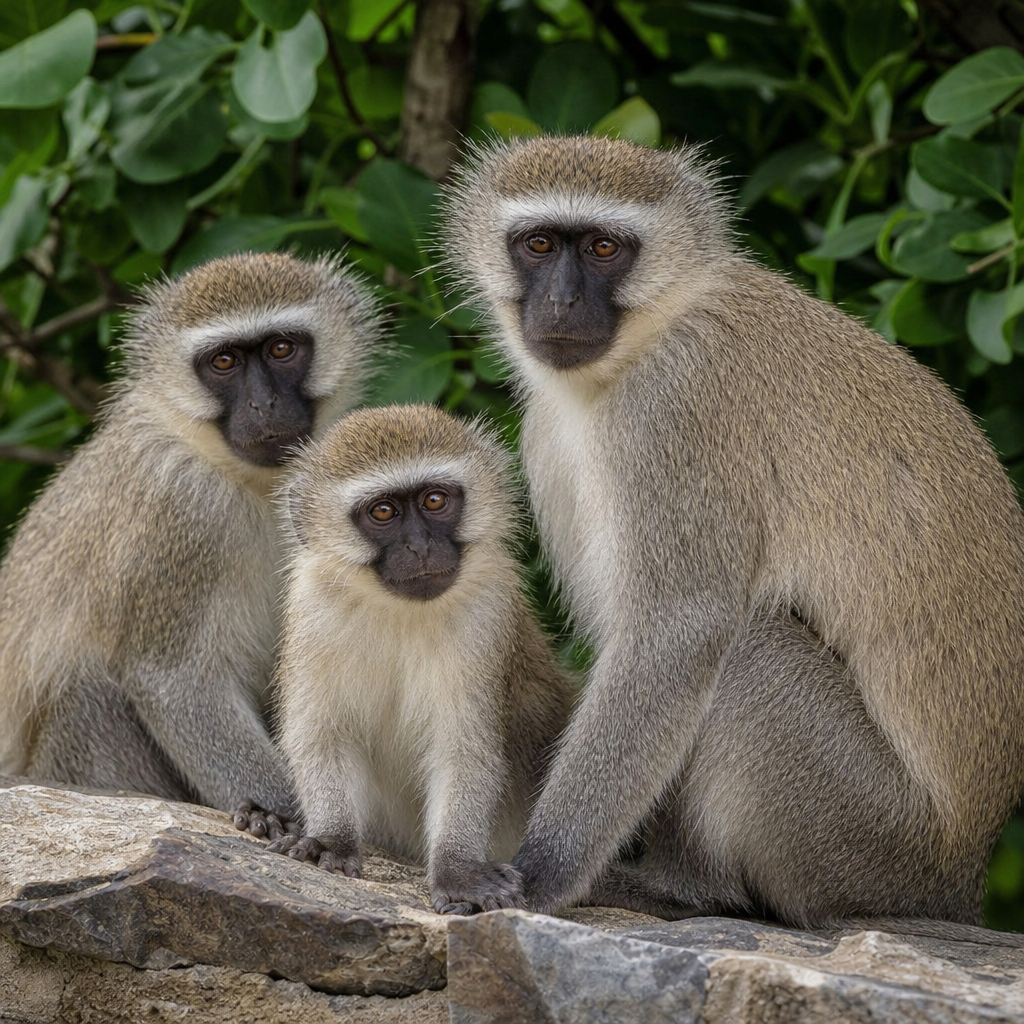
Green vervet monkeys are among the most recognizable animals on Saint Kitts, shaping daily life, agriculture, tourism, and conservation in ways few visitors expect. The phrase “monkeys of Saint Kitts” usually refers to African green monkeys, more precisely vervet monkeys, a species introduced to the island centuries ago during the colonial era. Today they are woven into the landscape from coastal scrub and sugar estate ruins to village gardens and rainforest edges. Understanding these primate neighbors matters because they are not simply a postcard attraction. They are adaptable mammals with complex social behavior, real ecological impacts, and a direct relationship with residents, farmers, hoteliers, and wildlife managers.
On Saint Kitts, monkeys occupy a curious middle ground between beloved icon and persistent nuisance. I have seen visitors delighted by a roadside troop at first light, then surprised to learn that the same animals can strip fruit trees, raid crops, and pressure native habitats. That tension is the starting point for any useful discussion. A hub article on this miscellaneous wildlife subject must answer several practical questions: where did the monkeys come from, how many are there, how do they live, what problems do they create, and how should people interact with them responsibly? It should also connect broader wildlife topics such as invasive species management, animal behavior, biodiversity protection, and ethical tourism.
Vervet monkeys are medium-sized Old World monkeys native to parts of sub-Saharan Africa. They are diurnal, meaning active by day, and highly social, living in multi-individual troops with clear dominance relationships, cooperative vigilance, and recognizable vocal communication. On Saint Kitts they have thrived because the island offers food, water, shelter, and relatively limited predation pressure. Their success has made them one of the most discussed wild animals in the federation of Saint Kitts and Nevis. To understand them well, it helps to treat them neither as pests alone nor as mascots alone, but as established non-native primates living in a small-island ecosystem with finite resources.
This article serves as a comprehensive guide to the monkeys of Saint Kitts: their history, biology, habitat use, interactions with people, economic significance, management challenges, and future on the island. If you are a resident, traveler, student, or writer building out a broader Nature and Wildlife resource, this overview provides the context needed to explore every related article with more clarity. It also offers direct, plain-language answers that reflect how these animals are actually encountered on the ground, not just how they are described in brochures.
Origins, identity, and how monkeys reached Saint Kitts
The monkeys on Saint Kitts are generally identified as vervet monkeys, commonly grouped under the African green monkey label. Historical accounts and biological consensus indicate they were introduced from West Africa during the seventeenth century, likely aboard ships involved in the transatlantic slave trade and colonial plantation economy. As with goats, rats, mongooses, and other transported animals across the Caribbean, their movement was tied to human trade networks rather than natural dispersal. Once established, they adapted exceptionally well to island conditions.
That origin story matters because it explains two important facts. First, vervets are not native wildlife in the strict ecological sense, even though they have lived on Saint Kitts for generations and now feel culturally inseparable from the island. Second, their population dynamics are shaped by the same invasive-species principles seen elsewhere: release from some native constraints, broad diet, flexible behavior, and close association with human-modified landscapes. In practical terms, they survive in forests, abandoned estates, roadside vegetation, dry scrub, and agricultural zones because they are opportunistic generalists.
Visitors often ask whether the monkeys are wild or semi-domesticated. The correct answer is wild. Some become habituated to people where food is offered regularly, especially near tourist corridors, but habituation is not domestication. A monkey that accepts fruit from a person remains a wild primate capable of biting, stealing, defending rank, and changing behavior unpredictably. That distinction should guide every conversation about safety, tourism, and wildlife ethics on Saint Kitts.
Behavior, social structure, and daily life in the wild
Vervet monkeys live in troops that may include multiple adult females, their offspring, and adult males. Females usually remain in their natal group, while males often disperse. In the field, this creates a stable core of related females and a shifting male component, a pattern well documented in primatology. Troops use vocal alarm calls, visual signals, grooming, and spatial positioning to maintain cohesion and reduce risk. Grooming is not a trivial detail; it helps reinforce alliances, calm tension, and support troop structure.
On Saint Kitts, daily activity often follows a practical rhythm. At dawn, troops leave sleeping sites in trees and begin foraging. Midmorning movement may bring them through forest edge, dry ghauts, and cultivated land. During the hottest part of the day, they often rest in shade, then feed again later in the afternoon before returning to safer elevated roosts. Their diet includes fruits, leaves, flowers, seeds, pods, shoots, and insects, plus occasional human food when available. This flexibility explains why they can flourish near homes, farms, and resorts.
One of the most important points for residents and travelers is that monkey behavior changes in response to human habits. Feeding encourages boldness. Repeated access to unsecured bins, outdoor dining areas, and fruiting backyard trees rewards risk-taking. Over time, troops can learn routes, schedules, and weak points in fencing. I have seen the same pattern in agricultural areas across the Caribbean: once wildlife links people with easy calories, conflict escalates quickly. That is why understanding behavior is essential to prevention.
| Topic | What happens on Saint Kitts | Why it matters |
|---|---|---|
| Diet | Monkeys eat wild fruits, leaves, insects, and cultivated crops | Flexible feeding supports high survival near farms and homes |
| Social groups | Troops move together with clear rank and vigilance behavior | Group living improves defense, learning, and access to food |
| Human contact | Feeding by people increases habituation and opportunistic raiding | Habituated monkeys create more safety and property concerns |
| Habitat use | Forest edge, estates, gardens, and roadside trees are all used | Monkeys thrive in mixed landscapes, not only deep forest |
Where to see monkeys on Saint Kitts and what visitors should expect
Many people want a simple answer to the question, “Where can I see monkeys in Saint Kitts?” The most accurate answer is that sightings are common in areas with tree cover, estate lands, and roads that pass near slopes and forest margins. Troops are frequently spotted in the greener central and foothill regions, around former plantation landscapes, near hiking routes, and on quieter roads in the morning or late afternoon. Sightings are never guaranteed, but the species is widespread enough that many visitors encounter monkeys without planning an organized excursion.
Still, expectation management matters. Wild monkeys are not performers, and responsible wildlife viewing means observing from a distance without calling them closer, offering snacks, or trying to pose for photos at arm’s length. Tourism businesses sometimes include monkey encounters in scenic drives or cultural tours, but the most ethical experiences avoid direct feeding and keep handling to a minimum or none at all. If a monkey approaches a vehicle or outdoor table, that is usually a sign it has been conditioned by previous human behavior, not that it wants affection.
For families, the key safety rule is simple: do not touch, feed, corner, or tease monkeys. Secure bags, drinks, and food. Keep children close. A monkey that appears calm can lunge quickly if competing for food or defending space. From a public health perspective, any wild mammal bite or scratch should be cleaned immediately and evaluated by a medical professional. Responsible tourism protects both people and animals by reducing stressful contact and discouraging unnatural dependence.
Impact on farming, gardens, and the island economy
The economic side of the monkey story is often underestimated by first-time visitors. For many farmers and household growers, vervet monkeys are not a novelty but a costly agricultural challenge. They feed on fruits, vegetables, and other marketable crops, damaging produce directly and sometimes wasting more than they consume. Because they are intelligent, agile, and persistent, they can defeat weak barriers, exploit gaps in timing, and return repeatedly to profitable feeding sites. Crop loss can be especially frustrating for small producers working with thin margins.
On Saint Kitts, the issue is tied to broader land-use change. As sugar declined and parts of the landscape shifted in use, some areas became more favorable to mixed scrub, secondary growth, and edge habitat, which vervets use effectively. Farms bordering cover are especially exposed. Monkeys can move from concealment into cultivated areas quickly, feed in groups, and retreat before people respond. This creates a management problem that is labor-intensive and rarely solved by one method alone.
Yet the same animals also contribute to the visitor economy. Monkeys appear in marketing imagery, souvenir culture, storytelling, and island identity. They attract curiosity and can enrich nature tourism when viewed responsibly. This dual role complicates policy. An island cannot sensibly treat them only as a tourism asset or only as an agricultural pest. The more realistic approach is balanced management: protect livelihoods, reduce incentives for raiding, maintain humane standards, and communicate honestly with the public about tradeoffs.
Conservation, control, and the challenge of coexistence
Because vervet monkeys on Saint Kitts are established non-native primates, management is not the same as conservation planning for an endangered native species. The main goals are usually population control, crop protection, reduced human-wildlife conflict, and safeguarding native biodiversity where monkey pressure may be significant. In practice, this means there is no single perfect solution. Effective management usually combines monitoring, exclusion methods, habitat planning, public education, and where authorized, direct population interventions.
Farm-level tools may include stronger fencing, netting for vulnerable crops, guarding, coordinated harvesting, deterrents, and removing easy attractants near field edges. None are foolproof. Monkeys learn quickly, and many deterrents lose effectiveness if used inconsistently. At the community level, the most important policy principle is reducing artificial food access. Open garbage, intentional feeding, and poorly managed tourist interactions increase local densities and problem behavior. Once a troop learns that human spaces provide dependable rewards, conflict becomes harder and more expensive to manage.
There are also ethical and ecological questions. Heavy-handed control can trigger public backlash, especially where monkeys are culturally valued. Inaction, however, can impose hidden costs on farmers, home gardeners, and native species. Good policy starts with accurate population data, clear legal frameworks, and transparent communication. Residents are more likely to support management when officials explain objectives plainly: fewer raids, safer interactions, healthier landscapes, and less pressure on livelihoods. Coexistence is possible, but only if it is managed rather than assumed.
How this hub connects the wider miscellaneous wildlife topic
As a sub-pillar hub within Nature and Wildlife, the monkeys of Saint Kitts connect naturally to many “miscellaneous” subjects that deserve their own detailed pages. One cluster involves species profiles: vervet monkey identification, life cycle, reproduction, and comparison with other Caribbean mammals. Another cluster involves practical guides: where to spot wildlife on Saint Kitts, how to photograph animals ethically, what not to feed wild animals, and how residents can monkey-proof gardens. A third cluster covers policy and science: invasive species on Caribbean islands, human-wildlife conflict, biodiversity monitoring, and the role of former plantation landscapes in modern habitat patterns.
This hub should therefore function as the foundation page that answers the broad questions first. Readers who land here may be looking for facts about monkey history, quick travel advice, school project material, or context for agricultural and conservation debates. By organizing the topic from origin to behavior to management, the page creates clear paths to more specialized resources. That structure is useful not only for human readers but also for search systems that favor pages with direct answers, strong topical relationships, and complete coverage.
The central takeaway is straightforward. The monkeys of Saint Kitts are intelligent, adaptable, historically introduced primates that now influence everyday life across the island. They are fascinating to watch, important to understand, and impossible to discuss honestly without addressing both their appeal and their impact. If you are building out a deeper wildlife library, use this page as your starting point, then continue with focused guides on behavior, viewing etiquette, farming impacts, and island conservation so every future article rests on the right context.
Frequently Asked Questions
What kind of monkeys live on Saint Kitts, and are they native to the island?
The monkeys most people see on Saint Kitts are green vervet monkeys, often casually called African green monkeys. In everyday conversation, the phrase “monkeys of Saint Kitts” almost always refers to this species. They are highly recognizable because of their expressive faces, agile movement, grayish-olive fur, and frequent presence near roadsides, farms, old estates, and forest edges. Although they feel like a natural part of the island today, they are not native to Saint Kitts. Historical accounts indicate they were introduced centuries ago during the colonial period, most likely from West Africa through transatlantic trade routes.
Over generations, vervet monkeys adapted extremely well to the island’s climate and habitats. They now occupy a wide range of environments, from coastal scrub and abandoned sugar lands to gullies, village fringes, and upland rainforest margins. That long history on the island has made them culturally familiar, even iconic, but it is still important to understand that they are an introduced species rather than an original component of Saint Kitts’ wildlife. This distinction matters because it helps explain why their role in local ecosystems, farming, and conservation is often more complicated than visitors first assume.
Why are monkeys so common on Saint Kitts compared to other Caribbean islands?
Vervet monkeys became so visible on Saint Kitts because the island offers a combination of favorable habitat, food availability, and relatively few barriers to their spread. They are adaptable primates that can thrive in many conditions, especially where forest cover meets cultivated land or human settlement. Saint Kitts provides exactly that kind of patchwork landscape. The island includes fruiting trees, agricultural fields, dense vegetation for cover, freshwater sources, and plenty of edge habitat where monkeys can forage efficiently while staying close to escape routes.
Another reason they seem unusually common is their behavior. Vervets are social, intelligent, and active during the day, which makes encounters with people more likely. They often move in groups, use elevated perches such as trees, walls, and ruins to survey their surroundings, and learn quickly where food can be found. Farms, backyard gardens, and even tourist areas can attract them because these spaces concentrate edible plants and create predictable feeding opportunities.
Public visibility also shapes perception. On some islands, wildlife may be present but less often noticed. On Saint Kitts, monkeys are part of daily life in a way that residents and visitors regularly observe. A traveler may spot them crossing roads, resting in trees near historic estates, or foraging along the edge of cultivated land. That repeated visibility reinforces the impression that they are everywhere, and in many parts of the island, that impression is not far from the truth.
How do the monkeys of Saint Kitts affect agriculture and everyday life?
The relationship between vervet monkeys and local communities is one of the most important parts of understanding life on Saint Kitts. For farmers and home gardeners, monkeys can be a serious challenge. They are opportunistic feeders and are known to raid crops, especially fruits, vegetables, and other high-value produce. Because they are intelligent and observant, they quickly learn planting patterns, harvest timing, and weak points in fencing or other deterrents. A troop can damage crops not only by eating them, but also by trampling plants, breaking branches, and taking more produce than they actually consume.
That creates real economic pressure, particularly for small-scale farmers and households that rely on gardens for supplemental food or income. Crop loss can be frustrating because it is difficult to control consistently. Methods that work for a short time may become less effective as the monkeys adapt. This is why the animals are often discussed not just as wildlife, but as a practical issue linked to food production, rural livelihoods, and land management.
At the same time, their impact on everyday life is broader than agriculture alone. Residents may see monkeys near homes, roads, or community spaces, especially in areas close to vegetation. Tour guides and hospitality businesses also factor them into the visitor experience, since many tourists are fascinated by the chance to see free-ranging primates in the Caribbean. So the monkeys occupy a complicated place in island life: they are charismatic and economically useful in tourism on one hand, but a costly nuisance in farming contexts on the other. Any serious discussion of Saint Kitts’ vervets has to account for both sides of that reality.
Is it safe to interact with monkeys on Saint Kitts, and should visitors feed them?
Visitors should enjoy Saint Kitts’ monkeys from a respectful distance and should not feed them. Although vervet monkeys can appear playful, calm, or accustomed to people, they are still wild animals with natural instincts, social hierarchies, and unpredictable behavior. Feeding them encourages dependence on human food sources and increases the likelihood that they will approach roads, tourist stops, vehicles, restaurants, and residential areas. That can create risks for both people and monkeys.
Close interaction may lead to scratching, biting, food-snatching, or aggressive behavior, especially if an animal feels threatened, becomes competitive around food, or is protecting young. Even when no injury occurs, repeated feeding can alter normal behavior patterns and reinforce problematic habits. Monkeys that learn to associate people with food may become bolder over time, which can make management more difficult for local communities.
The best approach is simple: observe, photograph, and appreciate them without trying to touch, feed, or lure them closer. Secure bags, keep food out of sight, and follow guidance from local operators and residents. Responsible wildlife viewing protects the health of the animals, reduces conflict, and gives visitors a more authentic experience. Respectful distance is not only safer; it is also the most ethical way to engage with Saint Kitts’ primate neighbors.
Why is understanding the monkeys of Saint Kitts important for conservation and the island’s future?
Understanding Saint Kitts’ vervet monkeys matters because they sit at the intersection of ecology, history, tourism, agriculture, and public policy. They are not simply an island curiosity. They are an introduced species that has become deeply established over centuries, and their presence raises difficult questions about how people manage landscapes that are shared by wildlife and human communities. Conservation on Saint Kitts is not just about protecting animals in the abstract; it is about balancing biodiversity, farming needs, tourism interests, and humane management strategies in a limited island environment.
A clear understanding of the monkeys helps move the conversation beyond stereotypes. They are neither harmless mascots nor villains. They are adaptable primates responding to available habitat and food opportunities, many of which are shaped by human land use. Effective management depends on that perspective. Discussions may involve habitat patterns, population pressure, crop protection, public education, non-feeding policies, and long-term planning that reduces conflict rather than reacting to it after the fact.
There is also a cultural dimension. The monkeys are woven into the identity of Saint Kitts in ways that surprise many newcomers. They appear in visitor memories, local storytelling, and the visual character of the island itself. Because of that, the future of the vervet population is closely tied to broader decisions about development, rural land use, and environmental stewardship. The more accurately people understand these primates, the better equipped the island is to support responsible tourism, protect livelihoods, and make informed conservation choices that reflect local realities.