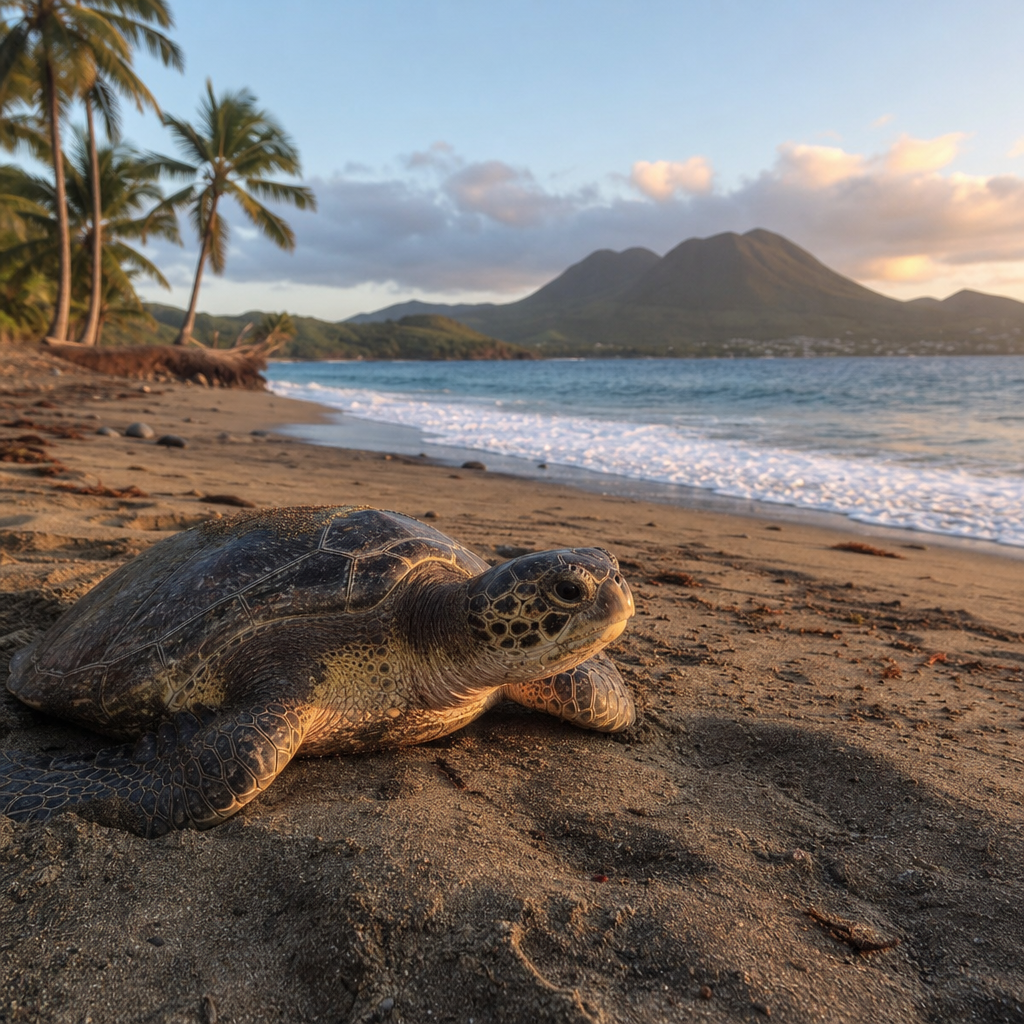
Saint Kitts’ sea turtle conservation is one of the most important wildlife efforts in the Eastern Caribbean because it protects endangered marine species, strengthens coastal ecosystems, and connects local communities to the long-term health of their beaches and reefs. Sea turtle conservation refers to the coordinated work of monitoring nests, protecting hatchlings, reducing threats at sea, enforcing wildlife laws, restoring habitat, and educating residents and visitors. On Saint Kitts, this work matters because the island’s nesting beaches are limited, development pressure is rising, and turtle populations recover slowly. I have worked with Caribbean conservation content and field reports long enough to know that sea turtle protection succeeds only when science, tourism, fisheries, and public participation move together. A single lost nesting season can set back years of recovery because females take decades to mature and do not breed every year.
The main species associated with Saint Kitts are hawksbill, green, and leatherback turtles, with occasional reports involving loggerheads in the wider region. Hawksbills are critically important to coral reef balance because they feed on sponges, helping corals compete for space. Green turtles support seagrass bed health through grazing, while leatherbacks influence open-ocean food webs by feeding largely on jellyfish. These are not abstract ecological roles. Healthier reefs protect shorelines from wave energy, more resilient seagrass meadows store carbon and shelter juvenile fish, and balanced marine food webs support fisheries and tourism alike. When people ask why Saint Kitts should invest in sea turtle conservation, the direct answer is that turtles are both a biodiversity priority and a practical asset for coastal resilience.
Saint Kitts also sits within a wider Caribbean conservation network where migratory species cross national borders. A turtle that nests on one beach may forage in another country’s waters and pass through several jurisdictions during its life. That means local success depends on regional cooperation, standardized data collection, and public support at home. This hub article covers the essential miscellaneous topics that shape Saint Kitts’ sea turtle conservation today: species and habitats, nesting protection, fisheries interaction, tourism management, legal enforcement, education, research methods, and the practical ways future generations can help. If readers want one reliable starting point for understanding how turtle protection works on Saint Kitts, this page provides that foundation in plain terms.
Sea turtles in Saint Kitts: species, habitats, and why recovery is slow
Sea turtle recovery is slow because these animals have delayed maturity, low hatchling survival, and complex life cycles that expose them to threats on beaches and in the ocean. Hawksbills may take roughly twenty to thirty years to mature, greens can require similar timelines, and leatherbacks also need many years before reproducing. Even under good conditions, only a very small fraction of hatchlings survive to adulthood. In practice, conservation teams on Saint Kitts are protecting a process measured in decades, not months. That is why consistency matters more than one-off campaigns. Missing patrols, allowing beachfront lighting to spread, or failing to control poaching can undo gains that took years to build.
Each species uses habitat differently. Hawksbills are most closely tied to reef systems, where their feeding behavior shapes sponge communities. Green turtles rely heavily on seagrass meadows, especially as juveniles and adults, and leatherbacks spend much of their time in pelagic waters before returning to sandy nesting beaches. Nesting females need dark, accessible shorelines above the high tide line with sand that supports incubation. Temperature, moisture, and beach stability all influence success. In the Caribbean, warmer sand can also affect hatchling sex ratios, since sea turtles have temperature-dependent sex determination. That makes climate change more than a background issue; it directly influences future population structure.
On Saint Kitts, coastal development creates a sharp management challenge because beaches are also valuable for tourism, housing, and infrastructure. Armoring shorelines, removing native vegetation, driving vehicles on sand, and placing bright lights near the beach can all reduce nesting success. Artificial light is especially damaging because adult females may avoid illuminated beaches, while hatchlings can become disoriented and crawl inland instead of toward the sea. I have seen conservation guidance across the Caribbean become very specific on this point: shield lights, use turtle-friendly amber wavelengths where possible, close curtains at night, and keep beachfront areas dark during nesting and hatching season. Simple changes often prevent measurable losses.
How nesting beach protection works on the ground
Nesting beach protection is the front line of sea turtle conservation on Saint Kitts because reproductive success begins with secure nests and undisturbed hatchlings. In field operations, the work usually includes nighttime beach patrols, morning track surveys, nest marking, data logging, predator management, and public guidance for anyone using the beach after dark. Patrol teams record crawl patterns, identify species by track width and symmetry, estimate nest locations, and monitor whether females completed nesting successfully. These details are not mere paperwork. Standardized records help conservationists detect trends in nesting frequency, hatch success, false crawls, and beach-specific threats over time.
When a nest is laid in a high-risk location, managers may relocate it, but relocation is not done casually. Best practice in sea turtle conservation is to move nests only when the risk from inundation, erosion, construction, or heavy disturbance is greater than the risk created by handling eggs. Improper relocation can damage embryos, especially if eggs are rotated after development begins. Experienced teams use established protocols for timing, orientation, depth, and spacing. Organizations across the region often draw from guidance developed by groups such as the Wider Caribbean Sea Turtle Conservation Network and align methods with IUCN-informed conservation principles. Good technique matters because intervention should increase survival, not simply look active.
Public cooperation on nesting beaches is equally important. Visitors often do the wrong thing with good intentions, such as crowding a nesting turtle for photos, using flash, digging around a nest, or helping hatchlings by carrying them to the water. In reality, the best response is usually to keep distance, minimize light and noise, avoid touching animals, and contact local conservation personnel. Hatchlings need to crawl naturally because that short journey helps orient them and supports early muscle development. A beach can appear calm while hidden threats are present, so clear signage, volunteer stewards, and hotel staff training make a practical difference.
| Threat on Saint Kitts beaches | Impact on turtles | Effective conservation response |
|---|---|---|
| Artificial beachfront lighting | Disorients nesting females and hatchlings | Use shielding, amber bulbs, blackout curtains, and seasonal lighting policies |
| Coastal erosion and storm surge | Floods or washes out nests | Monitor nest elevation, relocate only high-risk nests, restore dune vegetation |
| Human disturbance at night | Causes false crawls or nest abandonment | Restrict access, educate visitors, run supervised patrols |
| Predators and free-roaming animals | Destroy eggs and hatchlings | Track predation hotspots, manage animals responsibly, protect nest sites |
| Beach driving and heavy trampling | Compacts sand and crushes nests | Enforce beach access rules and mark sensitive areas clearly |
Major threats beyond the beach: fisheries, plastics, climate, and habitat loss
Sea turtles do not spend most of their lives on land, so beach protection alone is not enough. One of the most serious threats in the wider Caribbean is accidental capture in fishing gear. Gillnets, longlines, and some trap lines can entangle turtles or prevent them from surfacing. Responsible fisheries management can reduce mortality through gear modifications, rapid release training, area-based restrictions, and reporting systems that help identify hotspots. Fishers are often treated as opponents in public discussion, but in effective conservation programs they are partners. They know local waters, seasonal patterns, and recurring bycatch zones better than many outside observers. The strongest programs bring them into the solution early.
Marine debris is another persistent problem. Turtles can ingest plastic bags and soft film that resemble jellyfish, while monofilament and abandoned gear cause entanglement. On islands where waste management systems face capacity limits, coastal cleanups help, but they are not sufficient by themselves. The larger solution includes reducing single-use plastics, improving collection and disposal systems, securing bins near beaches, and preventing runoff through better watershed management. Leatherbacks are particularly vulnerable to floating debris because of their feeding behavior. A turtle that survives hatching, juvenile predation, and years at sea can still be killed by a preventable piece of plastic.
Climate change compounds nearly every existing threat. Sea level rise narrows nesting habitat, stronger storms erode beaches, and hotter sand temperatures can reduce hatch success or skew sex ratios toward females. Coral bleaching and seagrass stress also reduce the quality of feeding grounds used by hawksbill and green turtles. On Saint Kitts, adaptation planning should therefore include dune protection, setbacks for coastal construction, native vegetation retention, and beach monitoring that links nesting data with temperature and erosion patterns. Conservation is most effective when it treats turtles as part of a climate-exposed coastal system, not as isolated animals needing occasional rescue.
Law, policy, tourism, and community stewardship
Legal protection gives conservation teeth. Across the Caribbean, sea turtles are commonly protected under national wildlife laws, fisheries regulations, and international commitments such as the Convention on International Trade in Endangered Species and the Inter-American Convention for the Protection and Conservation of Sea Turtles where applicable. On Saint Kitts, enforcement matters as much as legislation. Rules against poaching, egg collection, and harmful disturbance only work when agencies have staff capacity, evidence standards, and public backing. In small-island contexts, community awareness often determines whether violations are ignored or reported. That is why outreach is not secondary to enforcement; it supports it directly.
Tourism can either undermine or strengthen sea turtle conservation depending on how it is managed. Poorly controlled wildlife encounters, excessive beachfront lighting, and construction too close to nesting habitat create chronic stress. Well-managed tourism produces the opposite result by funding monitoring, training staff, and turning visitors into informed advocates. Hotels can adopt dark-beach policies, train security teams on turtle protocols, and provide guests with clear guidance about nesting season behavior. Tour operators can avoid disturbing nearshore turtles, prevent crowding, and explain why hands-off observation protects survival. I have seen properties in the region shift from passive compliance to active stewardship once managers understood that turtle-friendly operations improve both ecological performance and brand credibility.
Community stewardship is the long-term anchor. School programs, citizen science, youth beach patrols, and local volunteer networks create continuity that government budgets alone rarely provide. When children on Saint Kitts learn to identify a hawksbill track, understand why hatchlings follow moonlight, or see how reefs and seagrass support turtles, conservation becomes local knowledge rather than imported messaging. Miscellaneous support actions matter too: responsible pet control near beaches, careful use of off-road vehicles, support for native coastal planting, and quick reporting of injured turtles to the correct authorities. Future generations are protected when conservation becomes part of normal civic behavior.
Research, data, and what success looks like for future generations
Good sea turtle conservation is evidence-led. Researchers and trained volunteers use tagging, nest inventories, hatch success assessments, satellite telemetry, photo documentation, and stranding records to understand trends. Tagging helps identify remigration intervals and beach fidelity. Satellite telemetry can reveal migration corridors and foraging grounds, showing that a turtle protected on Saint Kitts may depend on habitats hundreds of miles away. Standardized nest monitoring allows managers to compare beaches across seasons and detect whether interventions are working. Without data, it is impossible to separate a true recovery trend from normal year-to-year variation.
Success should be defined carefully. It is not just more social media posts during nesting season or a single dramatic hatchling release. Real success means sustained nesting activity, higher hatch emergence where threats are managed, lower poaching rates, reduced light pollution, better fisher reporting, stronger compliance by beachfront businesses, and durable public support. It also means accepting tradeoffs. Some beaches cannot be heavily developed and remain good nesting habitat. Some visitor experiences must be restricted at night. Some conservation actions cost money now to avoid much larger ecological losses later. Those are practical choices, not symbolic ones.
Saint Kitts’ sea turtle conservation ultimately protects future generations by preserving species that connect beaches, reefs, and open water into one living system. Hawksbill, green, and leatherback turtles each play distinct ecological roles, and each depends on decisions made by residents, businesses, fishers, educators, and policymakers today. The key takeaway is simple: protect nesting beaches, reduce marine threats, enforce the rules, and keep the public involved year after year. If you manage property, darken beachfront lights. If you visit, watch respectfully and leave no trace. If you live on Saint Kitts, support the organizations and agencies doing the daily work. Sea turtle recovery is slow, but with disciplined conservation, future generations can inherit beaches where turtles still return.
Frequently Asked Questions
Why is sea turtle conservation so important in Saint Kitts?
Sea turtle conservation is especially important in Saint Kitts because the island’s beaches, nearshore waters, and coral reef systems provide critical habitat for endangered and threatened marine turtles in the Eastern Caribbean. These species are not only valuable from a biodiversity standpoint, but they also play an important ecological role. Sea turtles help maintain healthy seagrass beds and reef environments, both of which support fish populations, stabilize coastal ecosystems, and contribute to the overall resilience of marine habitats. When turtle populations decline, the effects can ripple outward through the food web and weaken the natural systems that many coastal communities depend on.
In Saint Kitts, conservation also matters because the island’s economy and quality of life are closely tied to healthy beaches and marine resources. Protecting turtles helps protect nesting shorelines, supports nature-based tourism, and reinforces a broader culture of environmental stewardship. Conservation efforts connect science, law enforcement, education, and local participation, making them one of the most visible examples of how wildlife protection benefits both nature and people. By investing in sea turtle conservation now, Saint Kitts is helping ensure that future generations inherit healthier coastlines, richer marine ecosystems, and a stronger connection to the natural heritage of the island.
What does sea turtle conservation in Saint Kitts actually involve?
Sea turtle conservation in Saint Kitts involves much more than simply watching turtles on the beach. It is a coordinated effort that includes monitoring nesting beaches, identifying and protecting nests, documenting turtle activity, safeguarding hatchlings, and reducing threats that affect turtles both on land and at sea. Conservation teams and volunteers often patrol beaches during nesting season to record where turtles come ashore, assess whether nests are at risk from flooding, erosion, predators, or human disturbance, and take action when intervention is necessary. In some cases, vulnerable nests may be marked, monitored, or carefully relocated according to established conservation protocols.
The work also extends offshore. Sea turtles face numerous marine threats, including entanglement in fishing gear, boat strikes, marine debris, and habitat degradation. Effective conservation therefore includes public education for fishers and boaters, stronger enforcement of wildlife protection laws, and efforts to reduce pollution and preserve feeding areas such as seagrass beds and coral reefs. Community outreach is another central part of the process. Residents, students, tourism operators, and visitors all need to understand how their actions affect turtles, especially during nesting and hatching periods. When these efforts are combined, conservation becomes a long-term strategy for species recovery rather than a short-term response to isolated problems.
Which threats do sea turtles face in Saint Kitts, and how are conservation programs addressing them?
Sea turtles in Saint Kitts face a combination of natural and human-related threats, but human pressures are typically the most serious and preventable. On nesting beaches, turtles and their eggs can be disturbed by coastal development, artificial lighting, heavy foot traffic, off-road vehicles, unmanaged pets, and beach erosion. Bright lights near the shoreline are a major concern because they can disorient nesting females and newly emerged hatchlings, drawing them away from the sea and increasing the risk of death from dehydration, exhaustion, or predators. Illegal harvesting of turtles or eggs, while prohibited, can still remain a threat if enforcement and public awareness are not strong enough.
In the marine environment, turtles are vulnerable to entanglement in fishing gear, ingestion of plastics and other debris, vessel collisions, and the loss of important feeding and resting habitats. Climate-related impacts also add pressure by affecting beach temperatures, storm intensity, and shoreline stability. Conservation programs address these threats through a mix of practical protection and long-term planning. This can include nest monitoring, hatchling escorts, beach lighting awareness campaigns, stronger regulation and enforcement, data collection, habitat restoration, and public reporting systems for turtle sightings or strandings. The most effective programs do not focus on a single issue; they work across beaches, reefs, coastal communities, and policy systems to reduce risks throughout the turtles’ life cycle.
How do local communities and visitors contribute to sea turtle protection in Saint Kitts?
Local communities and visitors play a major role in the success of sea turtle conservation in Saint Kitts. Conservation is most effective when it is not limited to specialists, but supported by the people who live, work, and travel along the coast. Residents can help by respecting nesting beaches, reporting turtle activity to local conservation groups or relevant authorities, keeping beachfront lighting low during nesting season, and avoiding actions that disturb nests or hatchlings. Fishers and boat operators also make an important contribution by handling accidental turtle encounters responsibly, following marine protection rules, and taking precautions to reduce collisions or entanglements.
Visitors have a responsibility as well. Tourists should never touch nesting turtles, crowd hatchlings, use flash photography, or block turtles’ path to or from the sea. Simple actions such as removing beach litter, filling in holes in the sand, staying away from marked nests, and choosing eco-conscious tours can make a meaningful difference. Community involvement also strengthens conservation through school programs, public awareness campaigns, volunteer beach patrols, and citizen science initiatives. When local knowledge, public pride, and responsible tourism come together, sea turtle protection becomes more durable and effective. That community connection is one of the strongest foundations for ensuring turtles continue to return to Saint Kitts for generations to come.
What are the long-term benefits of protecting sea turtles for future generations in Saint Kitts?
The long-term benefits of protecting sea turtles in Saint Kitts go far beyond the survival of a single group of species. Healthy turtle populations contribute to balanced marine ecosystems, which in turn support fisheries, reef health, and coastal resilience. For example, turtles help maintain productive seagrass habitats and influence ecological processes that benefit other marine life. When these habitats remain strong, they can support biodiversity, improve water quality, and reinforce the natural systems that help protect shorelines. In this sense, sea turtle conservation is directly linked to the long-term environmental stability of the island.
There are also important social, cultural, and economic benefits. Conservation creates opportunities for environmental education, scientific research, youth engagement, and responsible tourism. It encourages communities to value beaches and marine life not only as resources to use, but as assets to protect. Over time, that shift in perspective helps build a stronger conservation ethic across the island. For future generations, the greatest benefit may be the combination of ecological health and public awareness: children grow up understanding that their actions can protect wildlife, strengthen local ecosystems, and preserve the natural beauty of Saint Kitts. That is what makes sea turtle conservation such a meaningful investment in the island’s future.