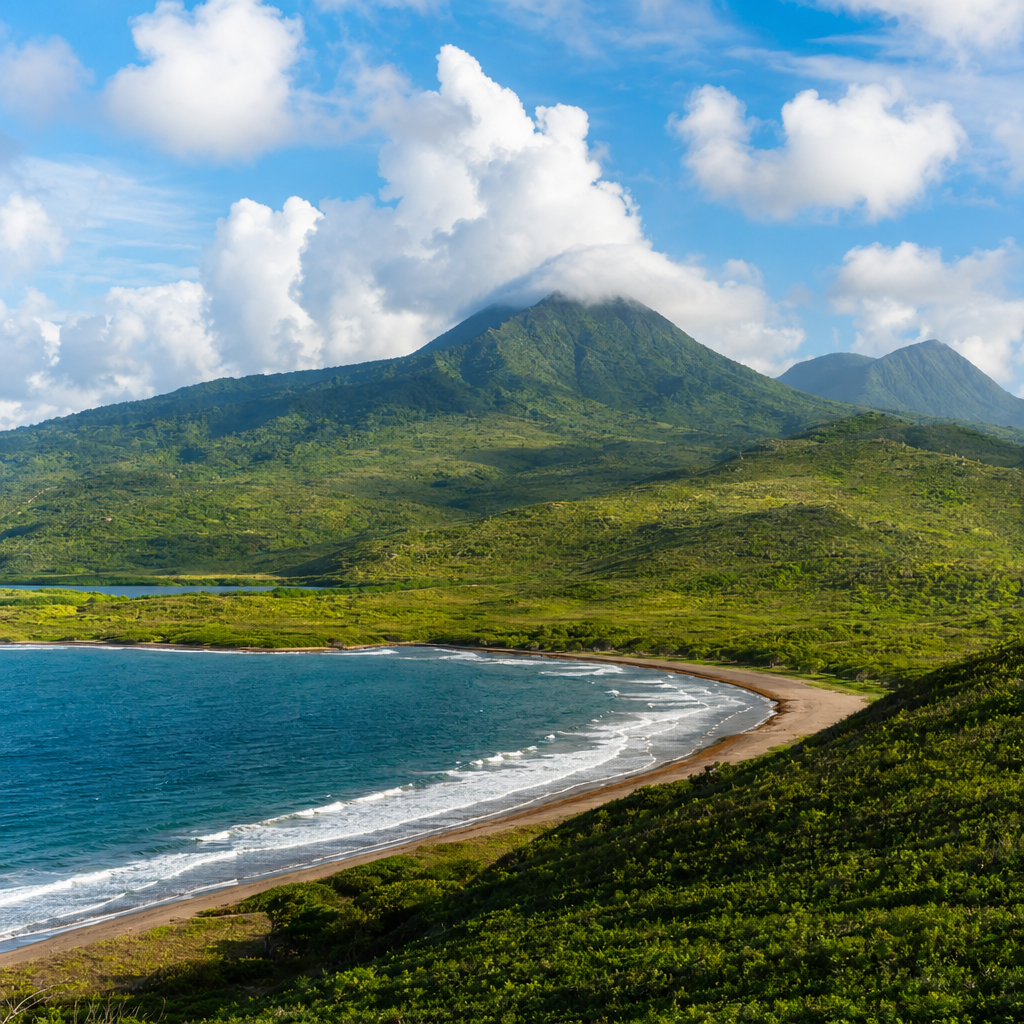
Photographing Saint Kitts’ natural landscapes rewards patience, planning, and an understanding of how light interacts with volcanic peaks, rainforest canopies, black-sand coves, and reef-lined shorelines. For photographers building an Adventure and Activities itinerary, this Miscellaneous hub matters because Saint Kitts compresses an unusual range of ecosystems into a compact island, making it possible to capture mountain panoramas, coastal scenes, wildlife details, and atmospheric weather shifts in a single day. In practical terms, natural landscape photography here means more than scenic snapshots. It includes seascapes at sunrise, forest compositions under heavy shade, long exposures around bouldered beaches, telephoto studies of distant ridgelines, and environmental images that place hikers, fishers, or kayakers within the broader terrain.
Saint Kitts rises from a volcanic foundation, and that geology shapes nearly every frame. Mount Liamuiga dominates the island’s interior, with steep green slopes and cloud formations that change by the hour. Lower elevations transition into farmland, old sugar estate lands, mangroves, rocky Atlantic edges, and calmer Caribbean-facing bays. Those contrasts are what make the island especially useful for photographers who want variety without constant relocation. I have found that the strongest images usually come from embracing that diversity rather than chasing a single iconic viewpoint. A morning shoot at Timothy Hill, for example, works best when followed by a slower session in the Central Forest Reserve or along the Southeast Peninsula, where textures, wind, haze, and tide patterns create a completely different visual language.
This guide serves as the hub for Saint Kitts landscape photography under the broader Adventure and Activities category by covering the essential decisions every photographer must make: where to shoot, when to go, what gear to bring, how to expose difficult scenes, how to work safely in tropical conditions, and how to connect landscape work with related outdoor experiences across the island. If you are researching hikes, coastal drives, beach outings, boat trips, or rainforest excursions, this page gives you the photographic framework that ties those activities together. The goal is simple: help you return with stronger files, better field habits, and a clearer sense of how to photograph Saint Kitts as a living landscape rather than a postcard backdrop.
Best natural landscape locations in Saint Kitts
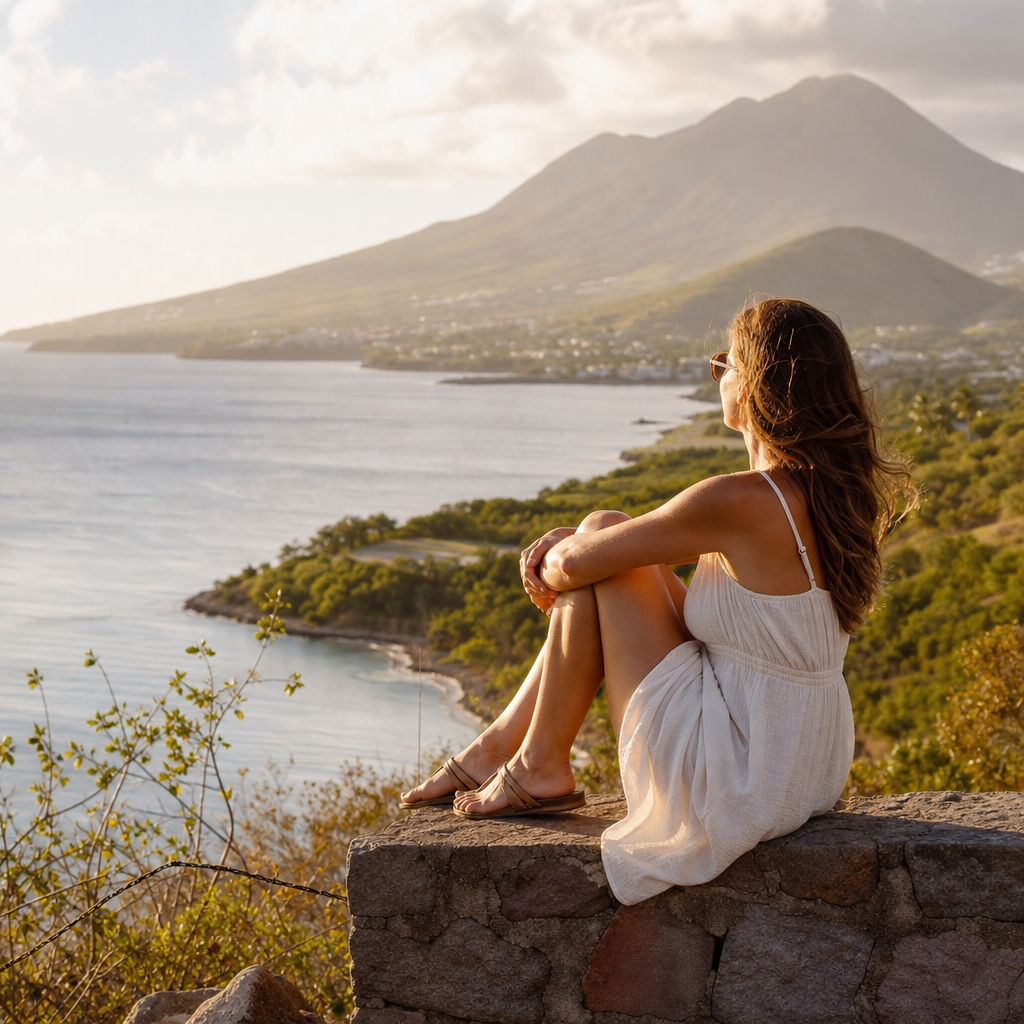
The most reliable landscape photography locations in Saint Kitts fall into four groups: elevated overlooks, rainforest interiors, volcanic and agricultural highlands, and coastal environments. Timothy Hill is the most famous overlook for a reason. From one roadside vantage, you can frame the Caribbean Sea on one side and the Atlantic on the other, with the Southeast Peninsula tapering into the distance toward Nevis. Early morning usually delivers cleaner visibility and less convective haze. Midday can still work if trade winds create fast-moving cloud shadows, but wide scenes often lose depth when the light becomes flat and overhead.
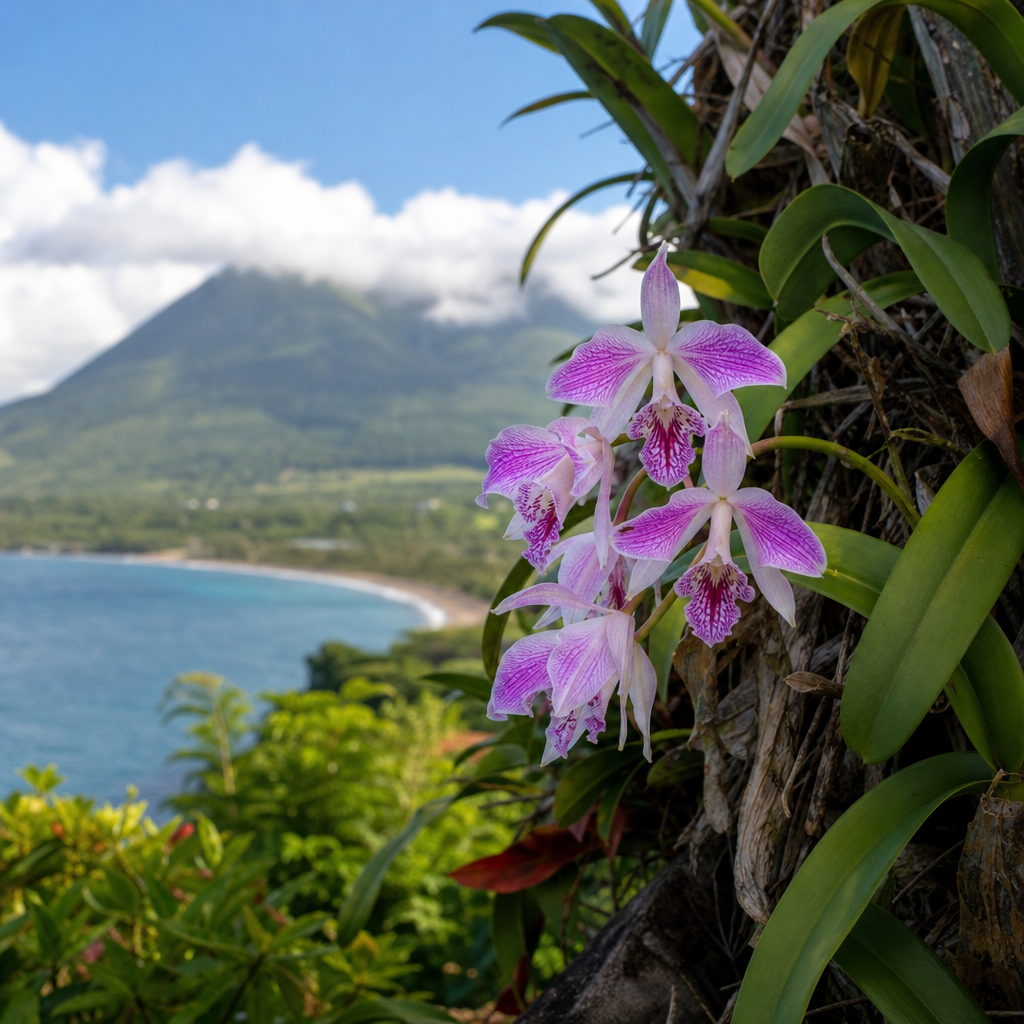
Mount Liamuiga and its surrounding highlands offer a different type of landscape image. Here, the appeal is not only the summit crater but also the layered approach through forest, mist, buttress roots, and occasional openings that reveal descending ridges. On guided hikes, I recommend carrying one wide zoom and one short telephoto rather than a large kit. The most useful compositions often appear during transitions, such as a break in cloud cover over a ravine or a hiker crossing a root-laced section of trail. Interior forest scenes can become visually cluttered, so look for dominant anchors: a single palm, a mossed trunk, or a path line leading into fog.
Coastal photographers should separate the island into Caribbean and Atlantic moods. On the Caribbean side, South Friars Bay and the coastline near Old Road Town can produce calmer water, layered sunsets, and gentler tonal gradations. On the Atlantic side, the scenery feels more exposed and kinetic, with rougher surf, darker rock, and stronger wind patterns. White House Bay and the Southeast Peninsula are especially effective for foreground-driven compositions built around volcanic stones, sea grape branches, and wave motion. Frigate Bay and Cockleshell Bay are more accessible and work well for sunrise scouting, while the Black Rocks area reveals the island’s volcanic identity through jagged formations and dramatic surf interaction.
For variety beyond the obvious landmarks, include the Central Forest Reserve, Romney Manor surroundings, Wingfield foothills, and selected heritage estate grounds where cultivated landscapes meet wild topography. These areas are useful because they let you connect natural scenery with human history, adding scale and narrative without overwhelming the landscape itself.
When to shoot: light, weather, and seasonal timing
The best time to photograph Saint Kitts’ landscapes is usually within two hours after sunrise and the final ninety minutes before sunset, when lower sun angles reveal terrain shape and reduce the harsh contrast common in the tropics. Dawn is particularly valuable on the island because humidity and heat build quickly. By 10 a.m., distant ridges often soften under haze, especially during calmer weather. Sunset remains productive on the Caribbean-facing coast, but cloud banks can either enrich color or block it completely. The lesson is to plan for consistency rather than one dramatic sky.
Seasonality matters. The drier months, generally from January through April, improve hiking conditions and increase the odds of clearer long-distance views. The wetter season, typically from May through November, brings lush vegetation, fuller cloud structures, and moodier atmospherics, though it also raises the likelihood of sudden rain and obscured summits. Hurricane season overlaps that wetter pattern, so photographers should watch official forecasts closely and build flexibility into location planning. Rain does not ruin landscape photography in Saint Kitts; in fact, some of the most memorable mountain images happen immediately after showers, when low cloud wraps the interior and leaves flash briefly in filtered light.
Wind is another overlooked variable. Strong trade winds can keep skies clearer along the coast and animate water surfaces, but they also complicate tripod work and drone use where permitted. Tide and swell conditions matter on rocky beaches, particularly for long exposures. Before shooting exposed shorelines, check marine forecasts and observe a full set of wave cycles. Local conditions can change quickly, and wet volcanic rock becomes dangerously slick.
| Location type | Best time | Main visual strength | Primary challenge |
|---|---|---|---|
| Overlooks like Timothy Hill | Sunrise to early morning | Clean visibility, layered coastlines | Haze increases quickly after mid-morning |
| Rainforest and mountain trails | Early morning or after light rain | Mist, saturated greens, dramatic depth | Low light and high humidity |
| Caribbean-facing beaches | Late afternoon to sunset | Warm side light, calmer water | Blocked sun by low cloud banks |
| Atlantic and rocky coastlines | Sunrise or windy bright mornings | Texture, surf energy, bold contrast | Salt spray and unstable footing |
Camera gear and field technique that work on Saint Kitts
A practical Saint Kitts landscape kit should prioritize weather resistance, moderate lens coverage, and protection from moisture and salt. A full-frame or APS-C body with strong dynamic range helps when balancing bright skies against shaded vegetation, but technique matters more than sensor size. My default setup on the island is a 16-35mm or equivalent wide zoom, a 24-70mm or equivalent standard zoom, a lightweight carbon-fiber tripod, a circular polarizer, a microfiber cloth in every pocket, and a rain cover even when the forecast looks favorable. A 70-200mm lens becomes useful if you want to isolate ridges, compress distant coastline, or photograph frigatebirds and pelicans within wider environmental scenes.
Filters deserve careful use. A circular polarizer can deepen water color and cut glare from wet leaves, but in very wide scenes it may create uneven skies, especially near midday. Neutral density filters are useful on rocky shores where you want to smooth moving water into a soft veil around dark foreground stones. Graduated filters are less essential than they once were because modern raw files hold substantial highlight detail, but they still help when the horizon is clean and you want to reduce post-processing time.
Exposure strategy should match the subject. For broad coastal scenes, aperture priority at f/8 to f/11 often gives the best balance of sharpness and flexibility. In dense forest, manual exposure can be more stable because shifting patches of light confuse evaluative metering. When contrast is extreme, bracket exposures and merge later with restraint. Saint Kitts rewards believable color and tonal separation; overprocessed greens and exaggerated sunsets make the landscape look less credible, not more dramatic.
Tripod discipline matters. Extend thicker leg sections first, keep the center column down, and rinse feet after saltwater sessions. If hiking Mount Liamuiga or moving through muddy reserve trails, strip the kit to essentials. A lighter bag increases your chance of staying mobile enough to catch changing conditions. On this island, successful landscape photography usually comes from reacting quickly to weather, not hauling every accessory you own.
Composition, storytelling, and ethical field practice
The strongest Saint Kitts landscape photographs combine structure with local context. Start with classic compositional tools: foreground interest, leading lines, layering, and balance between land and sky. Then add place-specific elements. Sea grape leaves can frame a bay without feeling generic. A ridgeline footpath can direct the eye toward cloud-shrouded peaks. Stone remnants near former estates can provide historical texture when used subtly. The point is not to force cultural symbols into every frame, but to let the island’s geography and working landscape speak together.
Human presence can strengthen scale and narrative when used intentionally. A lone hiker near the Mount Liamuiga trail, a paddleboarder in a broad bay, or anglers casting from a rocky edge can turn a pretty scene into a story about movement and environment. This is especially relevant for an Adventure and Activities hub, because many readers will experience these places while hiking, driving, boating, or exploring beaches. Environmental portraits and wide activity shots fit naturally beside pure landscapes, giving you a fuller visual record of the island.
Ethics are not optional. Stay on established paths in sensitive areas, avoid trampling coastal vegetation for a cleaner angle, and never pressure wildlife for a dramatic foreground. If flying a drone, follow current local regulations, respect privacy, and avoid protected zones or crowded beaches. Ask permission before including identifiable people as primary subjects, especially near small communities or fishing areas. Photographers sometimes act as if landscapes are empty space, but in Saint Kitts many scenic areas are also lived-in, worked-in, or ecologically fragile environments.
Post-processing should preserve that integrity. Correct lens distortion, recover highlights, and refine local contrast, but keep greens natural and ocean tones believable. The island’s appeal lies in real variation: blue water shifts toward steel gray under clouds, volcanic rock can read brown-black rather than pure black, and rainforest foliage contains yellow-green, olive, and deep emerald at once. Accurate color tells the truth of the place and makes your portfolio stronger over time.
Building a complete Saint Kitts photography itinerary
The best way to use this Miscellaneous hub is to treat it as the planning foundation for related Adventure and Activities content across Saint Kitts. Build your itinerary around light first, then fit activities into those windows. A strong three-day plan might begin with sunrise at Timothy Hill, followed by late-morning detail work in shaded gardens or heritage grounds, then a sunset session on the Caribbean coast. Another day can center on a guided Mount Liamuiga hike, with photography focused on trail atmospherics rather than only the summit. A third can cover the Southeast Peninsula, Black Rocks, and selected beaches for wave studies, wider panoramas, and travel storytelling.
If you are traveling with non-photographers, Saint Kitts is especially forgiving. Distances are short, many major viewpoints are accessible by road, and rewarding locations sit close to beaches, restaurants, and activity operators. That means you can capture portfolio-level landscapes without turning every outing into a dedicated expedition. Keep a simple shot list: grand overlook, forest interior, wave motion, volcanic texture, activity-in-landscape scene, and weather-driven atmospheric frame. With that structure, you are less likely to duplicate images and more likely to come home with a rounded body of work.
In the end, photographing Saint Kitts’ natural landscapes is about reading a small island with big visual range. Learn the rhythm of haze, rain, wind, and tide. Choose locations that match the light instead of fighting it. Carry gear that supports mobility. Compose with honesty, and let the island’s volcanic backbone, rainforest depth, and dual-coast character define the frame. Use this guide as your hub, then map it to your hikes, beach days, drives, and outdoor excursions. Plan the next shoot around sunrise, check the forecast, and go make images that feel unmistakably Saint Kitts.
Frequently Asked Questions
What are the best times of day to photograph Saint Kitts’ natural landscapes?
The most rewarding times to photograph Saint Kitts are usually early morning and late afternoon, when the island’s varied terrain responds beautifully to softer, angled light. At sunrise, the air is often clearer, temperatures are cooler, and the low sun helps reveal texture across rainforest-covered slopes, rolling hills, and volcanic ridgelines. This is especially useful if you want depth and definition in wide landscape compositions rather than the flatter look that can happen under harsh midday sun. Early light is also ideal along the coast, where calm water can produce cleaner reflections and gentler tonal transitions.
Late afternoon and the hour before sunset are equally productive, particularly for shoreline scenes, black-sand beaches, fishing villages, and views where the sea frames the foreground. The warmer color temperature at this time can add atmosphere without requiring heavy editing. If clouds begin to build over the mountains, that can actually improve your images by introducing drama and layered contrast. Saint Kitts is an island where weather shifts quickly, so some of the strongest photographs happen just before or after a passing shower, when sunlight breaks through clouds and illuminates one section of the landscape while leaving another in shadow.
Midday is usually the most challenging period for classic landscape work because the light can be intense and contrasty, especially on bright water and exposed coastlines. That said, it is not wasted time. Midday can work well in dense rainforest, where the canopy softens direct light, or for detail shots of leaves, volcanic rock textures, tide pools, and reef patterns. If you are planning a full day of shooting, many photographers use dawn for wide vistas, midday for close-up nature images, and golden hour for coastal panoramas. That rhythm matches the island’s changing light and helps you make the most of Saint Kitts’ compact but diverse geography.
Which locations in Saint Kitts are best for photographing a variety of natural landscapes in one trip?
One of Saint Kitts’ biggest advantages for photographers is how much variety fits into a relatively small island. In a single trip, you can move between volcanic highlands, lush rainforest, dramatic coastlines, and tranquil bays without spending long hours in transit. For mountain and interior scenery, the areas surrounding the central highlands and the slopes near Mount Liamuiga are excellent for capturing layered ridges, misty vegetation, and the island’s volcanic character. These locations are especially compelling in the morning, when low cloud and angled light create atmosphere and scale.
For coastal diversity, the island offers a mix of black-sand stretches, rocky points, calm Caribbean-facing water, and more wind-shaped Atlantic-facing scenery. This gives photographers the chance to create a broad portfolio rather than repeating the same beach image in different light. South Peninsula viewpoints are particularly valuable because they can provide elevated perspectives, long shoreline curves, and scenes where sea, hills, and sky all work together in one frame. These areas are useful if you want strong foreground-to-background compositions and wide-angle landscapes that still feel distinctly Caribbean.
Rainforest zones are equally important if your goal is a complete visual story of Saint Kitts. Within these areas, you can photograph filtered light, giant ferns, tropical textures, vines, and small wildlife details that contrast nicely with your open panoramas. Reef-lined shorelines and quieter coves add another layer, giving you opportunities for wave patterns, clear shallows, and intimate seascape images. The best approach is not to think in terms of one “best” location, but to build a route that deliberately combines elevations, coasts, and interior greenery. That is where Saint Kitts stands out: the island allows you to create a varied, cohesive landscape collection in a short amount of time.
What camera gear and lenses should I bring for photographing Saint Kitts’ landscapes?
A versatile kit is usually the smartest choice for Saint Kitts because the island’s landscapes change quickly from expansive mountain views to enclosed forest scenes to coastal details. A wide-angle lens is the foundation for most travelers, since it helps capture volcanic peaks, sweeping bays, and layered shoreline compositions. Something in the ultra-wide to standard wide range is useful for emphasizing foreground elements such as rocks, vegetation, drift lines, or surf while still holding onto the scale of the background. If you enjoy environmental storytelling, this will likely be your most-used lens.
A mid-range zoom is equally valuable because it gives you flexibility when the scene does not call for an exaggerated wide perspective. This focal range works well for compressing ridgelines, isolating sections of coastline, framing distant boats or headlands, and creating more balanced compositions in mixed terrain. A telephoto lens can also be surprisingly important on Saint Kitts. It allows you to pick out cloud bands wrapping mountain slopes, isolate wildlife, capture patterns in reef breaks, and simplify busy scenes by focusing on shapes, light, and atmosphere rather than including everything at once.
Support gear matters too. A lightweight but stable tripod is extremely helpful for sunrise, sunset, long exposures of water, and low-light rainforest work. Polarizing filters can reduce glare on foliage and water, deepen skies, and improve color separation, though they should be used carefully with very wide lenses to avoid uneven sky tones. Neutral density filters are useful if you want to smooth surf or create motion in clouds. Because Saint Kitts can be humid and occasionally wet, pack lens cloths, weather protection, and dry storage solutions. Extra batteries and memory cards are essential, especially if you plan to move between multiple ecosystems in one day. The goal is not to bring every piece of gear you own, but to carry a setup that lets you respond quickly to changing light, weather, and terrain.
How can I handle Saint Kitts’ changing weather and strong tropical light when shooting outdoors?
Photographing Saint Kitts successfully means treating weather as part of the composition rather than as an obstacle. Conditions can shift fast, especially between the coast and higher elevations, and those transitions often create the most memorable images. Passing showers, low cloud, bursts of sun, and haze around the mountains can all add mood and dimension. Instead of waiting only for perfectly clear skies, watch for moments when light breaks through clouds or when mist partially veils the landscape. Those brief windows can produce photographs with far more character than a fully blue sky at midday.
Strong tropical light requires careful exposure control. Bright water, reflective sand, dark volcanic rock, and dense green forest can create scenes with a wide dynamic range, so it helps to shoot in a format that preserves as much editing flexibility as possible. Pay close attention to highlights, especially along the coast, where sunlit water can clip easily. In high-contrast situations, bracketing exposures can be a practical solution for preserving detail in both sky and land. Using your histogram rather than relying only on the rear screen is also wise, since glare can make images look different outdoors than they really are.
From a planning perspective, build flexibility into your itinerary. If the mountains are hidden by cloud in the morning, shift to forest textures or coastal details and return later for wider views. If midday sun is harsh on open beaches, move into shaded trails or focus on abstract compositions where strong contrast becomes an asset. Rain covers, quick-dry clothing, and protective bags are not glamorous, but they make it easier to keep shooting when conditions change. On Saint Kitts, patience is often rewarded. The same overlook can look ordinary one minute and extraordinary ten minutes later when wind, cloud, and light align.
What techniques help create more compelling landscape photos in Saint Kitts instead of standard vacation snapshots?
The difference usually comes down to intention. Instead of photographing only what is in front of you, look for ways to show how Saint Kitts’ ecosystems relate to one another. Use foreground elements such as volcanic stones, coastal plants, tide pools, or trail edges to lead the viewer into the frame. Then anchor the image with a clear subject, whether that is a peak, a cove, a line of surf, or a bank of cloud drifting across the hills. This kind of layered composition gives your images depth and helps them feel more immersive than simple point-and-shoot travel photos.
It also helps to vary your perspective. Many visitors shoot everything from eye level, but Saint Kitts offers opportunities to work high, low, near, and far. Try getting lower to emphasize texture in black sand or shoreline rock. Use elevated viewpoints to reveal the relationship between sea and interior mountains. Switch between wide scenes and tighter studies of natural details such as leaves, wave foam, reef patterns, or wildlife activity. A strong photo set often combines grand landscapes with quieter supporting images, creating a fuller narrative of the island rather than a sequence of similar panoramas.
Finally, pay close attention to atmosphere and timing. Saint Kitts is particularly photogenic when there is movement in the weather: mist in the rainforest, clouds catching late sun, or waves shaping the edge of a reef-lined shore. Return to locations if the light is wrong the first time. Watch the edges of the frame for distractions, simplify where possible, and be deliberate about color and contrast. The most memorable landscape photographs from Saint Kitts usually balance beauty with specificity—they do not just show a pretty island view, but capture the volcanic terrain, tropical vegetation, shifting weather, and coastal character that make the island visually distinct.