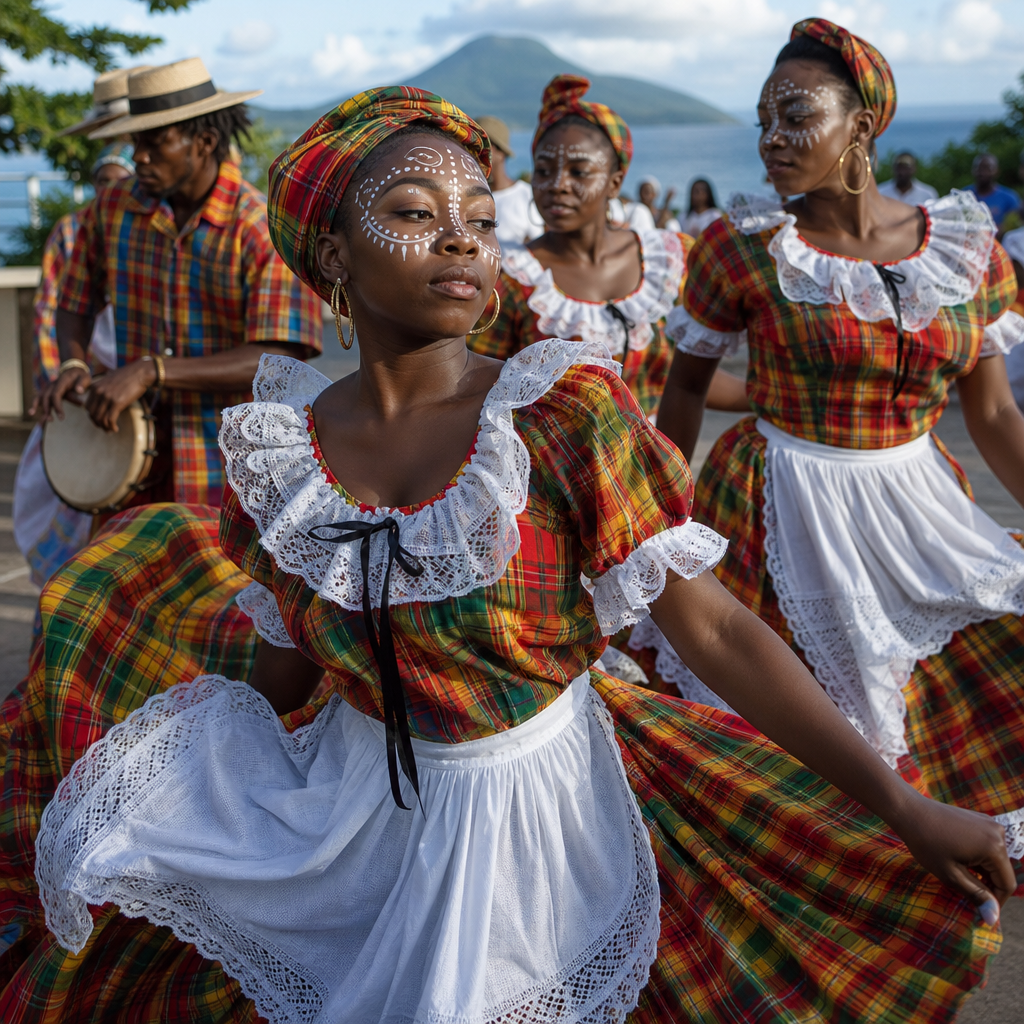
The African diaspora in Nevis lives not as an abstract historical idea but as a visible, audible, and deeply rooted force in everyday culture, social memory, and community tradition. In Nevis, a small island in the Federation of Saint Kitts and Nevis, diaspora refers to the descendants of Africans who were brought through the transatlantic slave trade and whose cultural practices adapted, survived, and reshaped island life over centuries. Their influence appears in language patterns, foodways, music, religious expression, labor traditions, storytelling, healing knowledge, and festive performance. To understand Nevisian culture and history with any seriousness, you have to start here, because African continuities and Creole innovation form the foundation of the island’s identity.
I have worked across Caribbean heritage content long enough to know that Nevis is often summarized too narrowly through plantation history and Alexander Hamilton tourism. That framing misses the people who transformed coercion into community. From the seventeenth century onward, enslaved Africans from West and Central Africa supplied the labor that made sugar profitable on Nevis. Yet they also carried cosmologies, rhythms, agricultural knowledge, food techniques, naming patterns, and social structures that outlived slavery itself. Emancipation in 1834 changed legal status, but it did not erase hierarchy, poverty, or racialized land inequality. What endured was a culture built through adaptation: African-derived practices mixed with European colonial systems and local island realities to create distinct Nevisian traditions.
This matters because culture in Nevis is not museum material. It is active heritage. Village funerals, church services, drumming, oral sayings, cassava dishes, herbal remedies, road marches, and family reunions all preserve historical meaning. For travelers, students, and researchers using this page as a hub within Culture and History, the key question is simple: where do African echoes appear in Nevis today, and what do those echoes reveal about survival, resistance, and belonging? The answer reaches across the island’s miscellaneous cultural life, linking the plantation era to modern festivals, domestic routines, and public memory.
Historical Roots: From Enslavement to Cultural Persistence
Nevis was colonized by the English in 1628 and became one of the Caribbean’s early sugar islands. Sugar cultivation required brutal labor, and plantation owners imported enslaved Africans in large numbers. By the eighteenth century, Africans and their descendants formed the demographic majority. This is the demographic fact that explains almost everything that followed. While colonial records emphasized property and production, lived culture developed in provision grounds, work gangs, market spaces, nighttime gatherings, and domestic compounds where African-descended people preserved practical and spiritual knowledge.
The African diaspora in Nevis cannot be traced to one ethnic origin. Captives came from broad regions including the Gold Coast, Bight of Biafra, West Central Africa, and Senegambia, each with distinct languages and ritual systems. Under slavery, these identities were compressed, but not erased. In Nevis, as elsewhere in the Caribbean, cultural retention happened through fragments: drum patterns, call-and-response singing, kinship habits, burial customs, spiritual beliefs, and culinary staples. Creolization did not mean loss alone. It also meant invention under pressure.
After emancipation, formerly enslaved people built villages, churches, mutual aid ties, and small-scale livelihoods despite restricted access to fertile land. The end of apprenticeship and slavery did not produce equality, but it did create more room for autonomous cultural expression. Many traditions now seen as purely Nevisian emerged from that period of reassembly. When local historians discuss heritage sites such as plantation ruins, cemeteries, village churches, and market districts, they are also documenting the geography of African-descended resilience.
Language, Oral Tradition, and Community Memory
One of the clearest signs of diaspora influence in Nevis is speech. Nevisian Creole English carries African-derived patterns in rhythm, emphasis, syntax, and verbal economy, even though its vocabulary is largely English-based. Across the Caribbean, linguists have shown that creoles developed under contact conditions shaped by African substrate influences and colonial power. In Nevis, everyday expressions, tonal shifts, proverb-like sayings, and speech performance all carry this history. Language is not just communication; it is a record of adaptation.
Oral tradition remains central. Elders transmit family histories, cautionary tales, folk beliefs, and place-based stories that often blend Christian morality with older cosmological sensibilities. In many Nevisian households, stories about duppies, signs, dreams, and ancestral warnings are treated neither as simple superstition nor as formal doctrine. They belong to a practical worldview in which the visible and invisible coexist. I have seen this dynamic repeatedly in Caribbean communities: oral culture preserves memory where archives are incomplete or written from the planter’s perspective.
These traditions matter for historical interpretation. A proverb about hard work, envy, or respect for the dead can encode values forged in plantation society. Family stories about a grandmother who healed neighbors with bush medicine can point to African botanical knowledge carried through generations. Even local nicknaming practices reflect communal intimacy and social commentary. For a hub page on miscellaneous culture, oral tradition is essential because it links every other topic: food, religion, healing, music, and social etiquette all travel through spoken memory first.
Music, Festival, and Performance as Living Archive
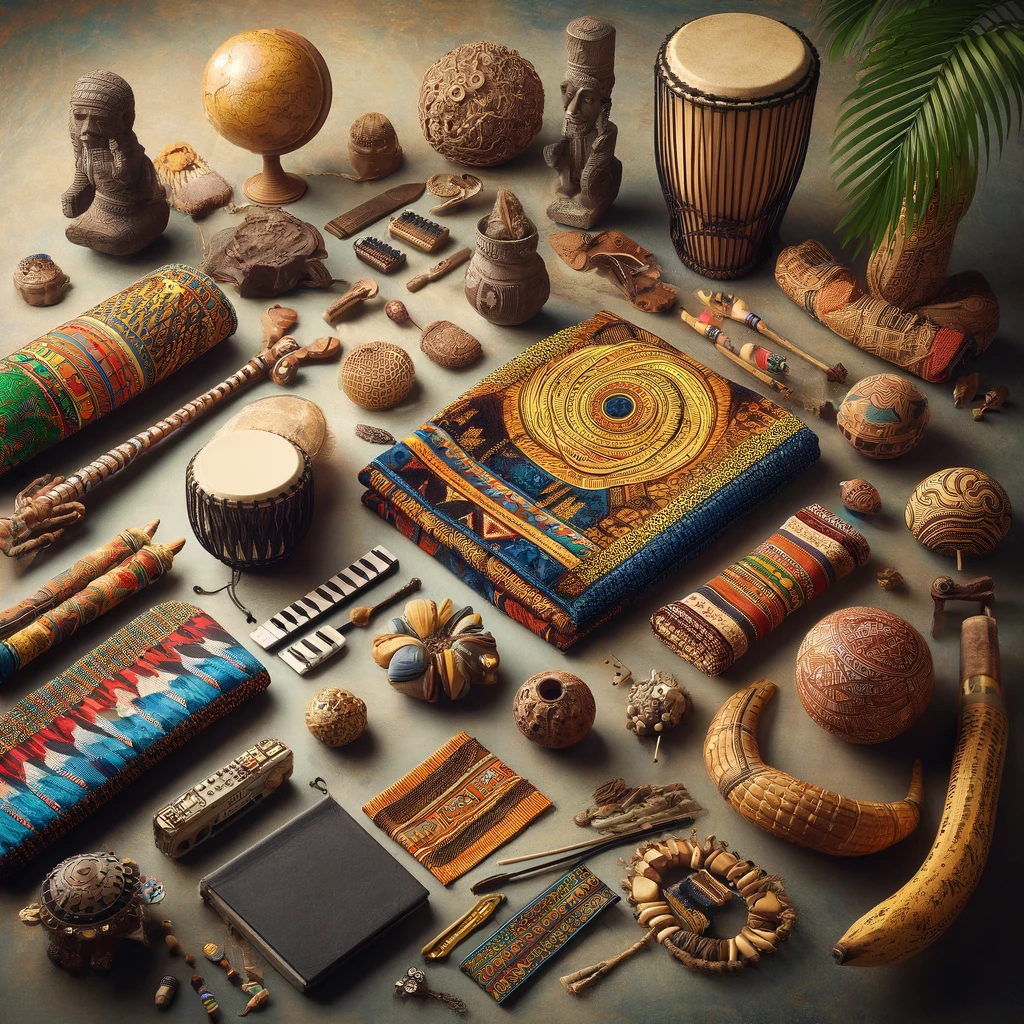
Music in Nevis bears unmistakable African diaspora signatures. The use of syncopation, repetition, improvisation, layered rhythm, and call-and-response connects local performance to wider Afro-Caribbean forms. String band traditions, gospel performance styles, masquerade elements, drumming, and carnival expression all reveal this lineage. While instrumentation has changed over time, the structure of participation remains communal. Performance is rarely only for spectators. People answer back, dance, chant, and physically enter the rhythm.
Culturama, Nevis’s annual cultural festival, is one of the strongest modern sites where African-descended heritage is publicly celebrated. The festival includes music competitions, pageantry, food, folklore, and street performance. Like carnival traditions elsewhere in the region, it mixes entertainment with historical memory. Costuming, dance language, and percussion-driven energy embody freedom, satire, sensuality, and village pride. What looks contemporary is often rooted in forms developed by people excluded from elite institutions yet determined to define public culture on their own terms.
Religious music also deserves attention. In Methodist, Anglican, Moravian, Pentecostal, and other church contexts, worship in Nevis often reflects African diasporic aesthetics through vocal intensity, handclapping, responsive participation, and embodied praise. The Christian framework is unmistakable, yet its performance style is shaped by Black Atlantic experience. This is a useful reminder that African retention in Nevis is not limited to overtly “folk” settings. It also appears inside formal institutions, transformed but still legible.
Foodways, Healing, and Everyday Survival
Food is one of the most concrete ways the African diaspora shaped Nevis. Dishes built around ground provisions, legumes, salted meats, greens, cassava, plantains, and one-pot methods reflect both African continuities and plantation-era necessity. Breadfruit, yam, sweet potato, pigeon peas, and stewed preparations became staples not because they were quaint, but because they were sustaining. Enslaved and later free Black communities made cuisine from what could be grown, traded, stretched, or preserved. That practical intelligence remains visible in Nevisian cooking.
Goat water, the national dish of Saint Kitts and Nevis, demonstrates this adaptive heritage well. It is a deeply seasoned stew built from accessible ingredients and long-simmered technique, turning modest resources into collective comfort food. Conkie, cooked around festive periods, also carries layered history through cornmeal, coconut, pumpkin, sweet potato, spices, and leaf wrapping. These foods are cultural documents. They show how African-descended communities transformed scarcity into ritualized abundance.
Healing traditions tell a similar story. Bush medicine in Nevis uses local plants for teas, baths, poultices, and tonics. Knowledge about lemongrass, cerasee, ginger, soursop leaf, aloe, and other remedies often moves through families rather than formal medical systems. That does not mean every remedy is clinically validated, and responsible interpretation requires caution. Still, ethnobotanical continuity is real. Across the Caribbean, scholars have linked plant knowledge among Afro-descended communities to African medical traditions adapted to new ecologies.
| Cultural area | African diaspora echo in Nevis | Present-day example |
|---|---|---|
| Language | Creole rhythm, proverb use, oral performance | Storytelling, village sayings, family nicknames |
| Music | Polyrhythmic emphasis, call-and-response, communal participation | Culturama events, church singing, street performance |
| Food | Provision-based cooking, one-pot methods, leaf wrapping | Goat water, conkie, ground provision meals |
| Healing | Inherited botanical knowledge and practical remedies | Bush teas, baths, home treatments |
| Spiritual life | Ancestral respect, layered belief systems, ritual community | Funeral customs, revival practices, memorial gatherings |
Spiritual Practice, Death Rituals, and Moral Order
Spiritual life in Nevis shows how African-derived sensibilities survived within changing religious frameworks. Christianity became dominant under colonial rule, but African-descended communities interpreted it through their own experiences of suffering, deliverance, kinship, and sacred power. That is why church life in Nevis often feels communal rather than purely institutional. Testimony, singing, mourning, fasting, and public prayer are not marginal acts. They help organize moral life.
Funeral customs are especially revealing. Across many Caribbean societies, funerals are social as well as religious events, and Nevis fits that pattern. The dead are treated with seriousness, ceremony, and extended communal attention. Nights of gathering, singing, shared food, remembrance, and support for bereaved families express a worldview in which the individual belongs to a larger ancestral and neighborhood network. These practices do not map neatly onto one African ethnic system, but they clearly resonate with African diasporic understandings of continuity between the living and the dead.
Belief in signs, spiritual sensitivity, and unseen consequences also shapes daily conduct. People may speak about envy, blessing, protection, and respect in ways that exceed formal doctrine. This moral vocabulary matters because it helps explain why seemingly ordinary actions such as visiting the sick, attending a funeral, bringing food, or speaking properly to elders carry such weight. They are social obligations rooted in long histories of mutual dependence.
Craft, Labor, and the Social Meaning of Place
The African diaspora in Nevis is also embedded in work. Agricultural knowledge, fishing practices, domestic skills, market trade, and craft traditions were built by African-descended communities under difficult conditions. Even where documentation is thin, the imprint is visible in settlement patterns and local economies. Villages developed around labor routes, estate boundaries, churches, and provision grounds. Place names, family land stories, and remembered work practices preserve this geography.
Charcoal burning, small farming, seamstress work, cooking for community events, and roadside vending may seem miscellaneous compared with grand historical narratives, but they are exactly where cultural continuity lives. In my experience, this is one of the most overlooked parts of Caribbean heritage writing. Visitors often seek dramatic monuments, while the deeper record sits in techniques of making and sustaining life. A woven basket, a market stall, or a carefully seasoned pot can reveal more about continuity than a plaque on a ruined estate wall.
For readers exploring this subtopic hub, the practical takeaway is clear: Nevisian culture is best understood through connected subjects, not isolated attractions. Festival links to music, music links to worship, worship links to oral tradition, oral tradition links to healing and family memory, and all of them link back to the African diaspora. To go deeper, follow those connections through local museums, heritage organizations, village events, and interviews with community elders. The reward is a fuller, truer view of Nevis.
The African diaspora in Nevis is the central thread running through the island’s culture and history, not a background detail attached to plantation tourism. It explains why Nevisian identity is so strongly expressed through communal music, resilient food traditions, oral storytelling, spiritual seriousness, and neighborhood-based memory. Across slavery, emancipation, migration, and modernization, African-descended people on Nevis preserved what they could, transformed what they had to, and created forms of life that remain visible today.
As a hub for the miscellaneous side of Culture and History, this subject invites broad reading rather than a single takeaway. Language, festival, healing, labor, death ritual, and domestic practice all belong in the same conversation because they are part of one historical continuum. The most important benefit of studying these echoes is accuracy. It corrects shallow narratives and places Black Nevisian experience at the center of the island’s story, where it belongs.
If you want to understand Nevis beyond the postcard image, use this page as your starting point and keep following the cultural links outward. Explore related articles on festivals, heritage sites, local foods, village traditions, and oral history, then compare what you read with what Nevisians themselves preserve in practice. That is where the island’s deepest history still speaks.
Frequently Asked Questions
What does the African diaspora in Nevis mean in a cultural and historical sense?
In Nevis, the African diaspora refers to the descendants of Africans who were forcibly brought to the island through the transatlantic slave trade and whose lives, labor, beliefs, and creativity helped shape the society that exists today. It is not simply a demographic label or a distant historical category. In Nevisian life, the African diaspora is a living presence expressed through memory, community customs, oral tradition, music, spirituality, food, and language. The term captures both historical displacement and cultural continuity: although Africans were uprooted from diverse regions of the continent, they carried knowledge systems, rhythms, survival practices, and social values that endured and evolved under colonial rule.
Understanding the African diaspora in Nevis also means recognizing that cultural identity on the island was formed through resilience. Enslaved Africans and their descendants did not merely preserve isolated fragments of the past; they adapted inherited traditions to new realities and created distinctly Nevisian forms of expression. Over generations, African influences blended with Caribbean experience, producing customs and social habits that remain deeply embedded in island life. Whether seen in communal celebrations, storytelling styles, folk beliefs, agricultural knowledge, or family-centered social structures, the diaspora is central to the island’s cultural foundation. In that sense, the African diaspora in Nevis is not only about origins, but about the ongoing shaping of identity, belonging, and heritage.
How has African heritage influenced everyday culture and tradition in Nevis?
African heritage influences everyday culture in Nevis in ways that are both obvious and subtle. It can be heard in speech rhythms and expressions, seen in social interactions and community events, and tasted in food traditions rooted in resourcefulness, seasonality, and inherited culinary knowledge. Many aspects of daily life reflect values historically associated with African-descended communities across the Caribbean, including respect for elders, the importance of kinship networks, shared childcare, communal labor, and the passing down of knowledge through observation and oral instruction. These practices have helped sustain a strong sense of continuity even as the island has changed over time.
Music and movement are especially powerful examples of this influence. Drumming traditions, call-and-response patterns, festival performance, and dance-centered celebration all reflect African-derived modes of expression that survived enslavement and later developed into local cultural forms. Foodways tell a similarly important story. Dishes built around provision grounds, root crops, peas, stews, and practical cooking methods speak to traditions of adaptation and endurance. Cultural influence also appears in proverbs, folk narratives, herbal knowledge, burial customs, and local ideas about healing, morality, and spiritual protection. Taken together, these elements show that African heritage in Nevis is not confined to formal ceremonies or museum history. It remains woven into the routines, tastes, sounds, and social values of everyday life.
Why is oral tradition so important to understanding the African diaspora in Nevis?
Oral tradition is essential because it has long served as one of the main ways Nevisian communities preserved history, identity, and collective memory, especially in circumstances where the experiences of enslaved and working people were underrecorded or distorted in official written documents. Stories, sayings, songs, family recollections, and community anecdotes often carry truths that archives alone cannot fully reveal. Through oral tradition, people in Nevis have transmitted lessons about ancestry, hardship, resistance, migration, land, religion, and social change. These spoken forms of memory help bridge the gap between historical events and lived experience.
For descendants of the African diaspora, oral tradition also preserves cultural frameworks that are deeply relational. Knowledge is not always presented as formal history; it may be shared through folktales, cautionary stories, humor, ritual speech, and repeated family phrases. These forms teach values, reinforce identity, and connect younger generations to older ones. In Nevis, oral culture helps explain how African-rooted traditions survived even when they were pressured by colonial institutions, economic hardship, or modernization. It keeps alive the emotional and cultural dimensions of the past, allowing people to remember not only what happened, but how communities interpreted, endured, and transformed those experiences. That is why oral tradition remains one of the most important tools for understanding the depth of the African diaspora’s legacy on the island.
In what ways can visitors and readers see the legacy of the African diaspora in Nevis today?
Visitors and readers can see the legacy of the African diaspora in Nevis in many layers of island life, from major cultural celebrations to ordinary neighborhood interactions. Public festivals, traditional music, dance performances, local cuisine, craft practices, and storytelling events all reveal the enduring imprint of African-descended communities. Historical sites connected to plantation life and emancipation provide important context, but the legacy is not limited to those spaces. It also lives in village culture, church gatherings, family events, marketplaces, and the distinctive social warmth that defines many community settings. Paying attention to how people speak, cook, celebrate, remember, and care for one another often reveals more about diaspora heritage than a simple checklist of attractions ever could.
Readers exploring the topic should also understand that this legacy is dynamic rather than frozen in the past. Contemporary Nevisian culture continues to reinterpret older traditions in response to tourism, migration, education, religion, and global media. Even so, many core features remain rooted in historical patterns shaped by African ancestry and Caribbean adaptation. A local meal may reflect generations of inherited practice. A festival rhythm may carry echoes of older African expressive forms. A family story may preserve knowledge absent from official histories. For visitors, the most meaningful way to recognize this legacy is with curiosity and respect: listen closely, ask thoughtful questions, and view culture not as performance alone, but as a lived inheritance carried by the people of Nevis every day.
Why is it important to preserve and study the African diaspora’s cultural legacy in Nevis?
Preserving and studying the African diaspora’s cultural legacy in Nevis is important because it safeguards the historical truth of how the island was built and who shaped its identity. Too often, Caribbean history has been told mainly through colonial records, economic narratives, or tourism imagery that overlook the knowledge, creativity, and endurance of African-descended communities. Serious attention to the diaspora corrects that imbalance. It affirms that the descendants of enslaved Africans were not marginal figures in Nevisian history, but central actors in the making of the island’s language, customs, agriculture, spirituality, cuisine, music, and social values. Preservation ensures that these contributions are documented, respected, and passed on rather than diluted or forgotten.
This work also matters for cultural confidence and intergenerational connection. When younger Nevisians understand the roots of their traditions, they are better able to value their heritage and see themselves within a long story of survival and adaptation. For scholars, educators, and cultural institutions, studying the African diaspora in Nevis opens deeper insight into Caribbean identity, creolization, memory, and resistance. For the wider public, it encourages a more honest and human understanding of history. Preservation can take many forms, including recording oral histories, supporting local artists and tradition bearers, protecting heritage sites, teaching community history, and documenting food, language, and ritual practices. Ultimately, to preserve this legacy is to honor the people whose lives and cultural strength continue to echo through Nevisian tradition today.