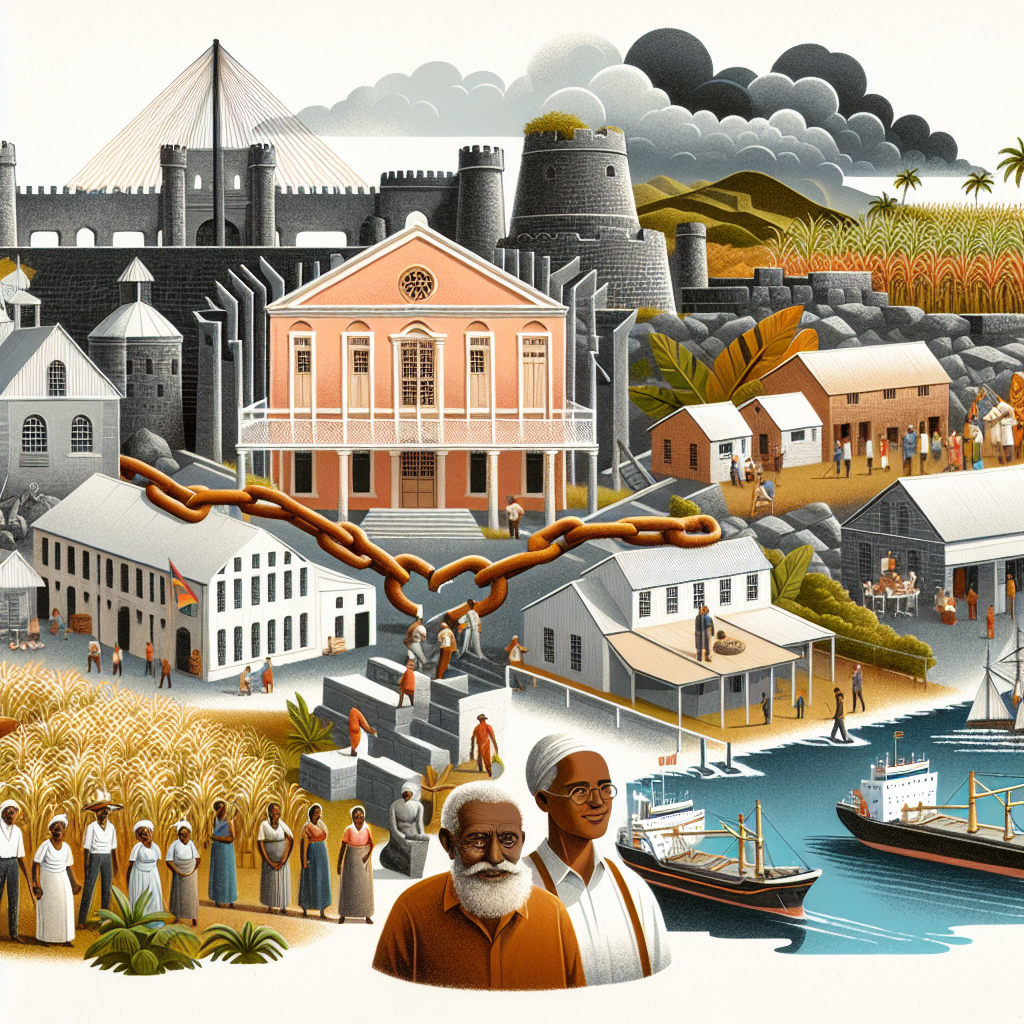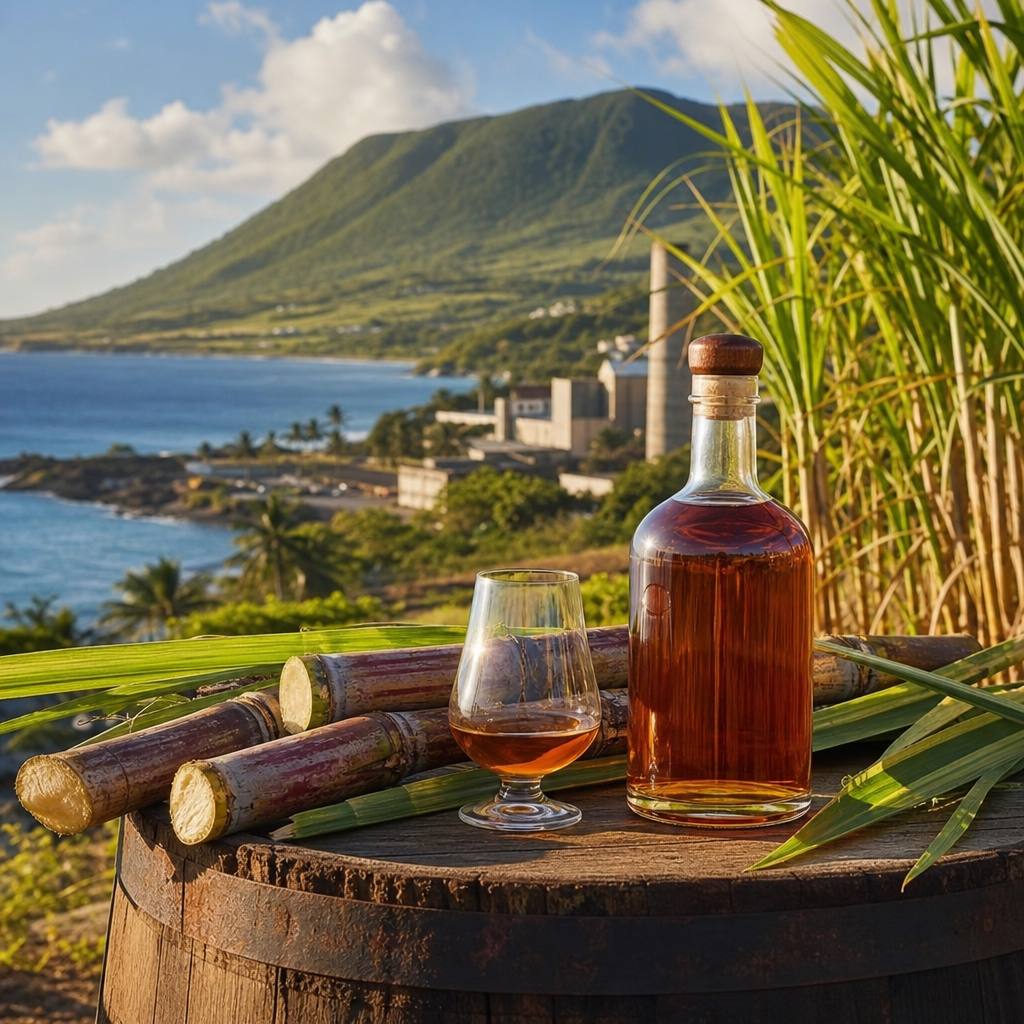
Saint Kitts’ rum history begins in the cane fields, where a small Caribbean island built an economy, a labor system, and eventually a cultural identity around sugar and spirits. To understand rum in Saint Kitts, you have to start with sugar cane itself: a tropical grass brought into the wider Caribbean during European colonial expansion and cultivated at industrial scale because it produced sugar, molasses, and export wealth. Rum is the distilled alcohol made largely from molasses or fresh cane products, and on Saint Kitts it developed as both a plantation byproduct and a social drink that moved from estates into homes, shops, festivals, and tourism. I have spent years studying Caribbean heritage sites and reading plantation records, and Saint Kitts stands out because its rum story is unusually complete. The island preserves visible links between agriculture, industry, and daily life, from surviving estate names to working heritage spaces and longtime local brands. That continuity matters because rum is not just a beverage history. It reveals how land was used, how labor was organized, how trade linked Saint Kitts to Europe and North America, and how post-sugar communities adapted after major economic change. For readers exploring Culture and History, this hub article connects the island’s miscellaneous but essential rum themes: plantation origins, distillation methods, colonial commerce, emancipation, village traditions, modern brands, culinary uses, heritage tourism, and the challenges of preserving an industry tied to painful history. Saint Kitts’ rum history is therefore best read as a story of transformation, from cane to molasses, from still to barrel, and from colonial commodity to modern cultural symbol.
How Sugar Cane Shaped Saint Kitts
Sugar cane arrived in the Caribbean after earlier experiments in Atlantic colonies showed that the crop could generate enormous profits in warm climates with ample rainfall and fertile volcanic soils. Saint Kitts, settled by the English in the early seventeenth century, quickly became one of the region’s important sugar islands. By the late colonial period, much of the island’s arable land had been converted into sugar estates, each built around cane cultivation, milling, boiling houses, curing houses, storage areas, and labor quarters. Molasses, the dark syrup left after sugar crystallization, accumulated in significant volume. Distillers turned that residue into rum, creating a secondary revenue stream that reduced waste and increased estate income.
In practical terms, rum production on Saint Kitts was inseparable from plantation economics. Cane had to be cut at peak maturity, rushed to mills before sucrose deteriorated, crushed to extract juice, and processed rapidly in boiling houses. Once sugar crystals were removed, the remaining molasses could be fermented with water and yeast, then distilled in pot stills or, later, more efficient column systems. The quality of the rum depended on fermentation control, still design, cuts between heads, hearts, and tails, and sometimes aging in oak. Yet the broader system rested on coerced labor. Enslaved Africans and their descendants performed the grueling agricultural and industrial work that made both sugar and rum possible. Any honest account of Saint Kitts’ rum history has to keep that reality central.
Plantations, Distilleries, and Trade Networks
During the eighteenth and nineteenth centuries, Saint Kitts’ estates functioned as integrated industrial sites. A plantation was not merely farmland; it was a production complex connected to shipping routes, insurers, merchants, and imperial regulations. Estate owners sold sugar abroad, used molasses for local distillation or export, and often supplied rum for plantation consumption, commercial sale, or maritime trade. In the British Caribbean, rum became a familiar commodity in Atlantic exchange, valued because it was durable, transportable, and profitable. Saint Kitts participated in this network, even if larger islands sometimes dominated output.
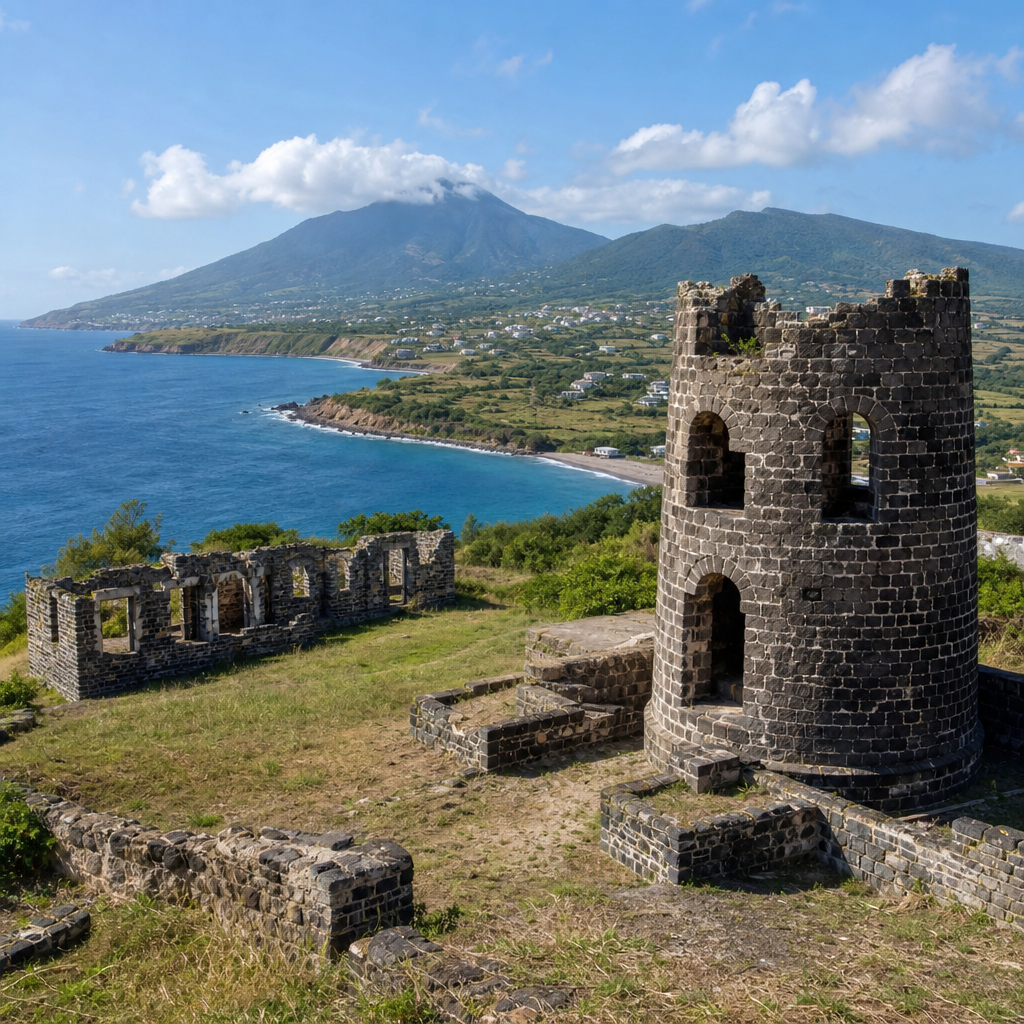
The island’s geography influenced production patterns. Volcanic soil and rainfall supported cane, while coastal access allowed shipment through island ports. Estate names that survive in maps and local memory reflect how densely sugar once covered the landscape. On many Caribbean islands, old windmills and boiling house ruins are the most visible markers of this era. Saint Kitts has similar remains, and they are useful historical evidence because they show the physical sequence of sugar production that generated molasses for rum. When I walk old estate grounds in the Caribbean, the logic becomes obvious: fields fed mills, mills fed coppers, coppers fed curing rooms, and the leftovers fed the still.
Rum also circulated socially in ways that went beyond export. It was consumed by estate managers, laborers, sailors, shopkeepers, and eventually visitors. Some estates issued rum as part of rations or informal compensation, a practice seen across the Caribbean and one that had complicated effects, from social cohesion to dependency and control. By the nineteenth century, rum had become embedded in local commerce, with varying strengths and styles sold in towns and villages.
Production Methods and Flavor Traditions
Saint Kitts’ rum history is best understood through process. Traditional rum on sugar islands usually began with molasses fermentation. Distillers diluted molasses, added yeast, and managed temperature and time to encourage alcohol production. Longer fermentations could create more esters and heavier aromas, while shorter, cleaner fermentations often produced lighter spirit. Pot still distillation generally yielded fuller-bodied rum with more congeners, whereas column still distillation offered consistency and higher throughput. Neither method is inherently superior; each serves a different style and market.
Aging also matters. Clear white rum may be rested briefly and filtered, while gold or dark expressions spend time in oak, commonly ex-bourbon barrels. Tropical maturation accelerates interaction between spirit and wood because higher ambient temperatures increase extraction and evaporation. This is why Caribbean rums can develop substantial flavor in fewer years than spirits aged in cooler climates. On Saint Kitts, local palates have long favored practical, mixable, robust rum styles suitable for punches, grog, and culinary use, though contemporary producers also market sipping rums for visitors and export buyers.
| Stage | What Happens | Why It Matters for Flavor |
|---|---|---|
| Cane Processing | Cane is milled and boiled to make sugar; molasses remains | Quality of molasses affects richness, sweetness, and fermentation potential |
| Fermentation | Molasses, water, and yeast convert sugars into alcohol | Duration and yeast choice influence aroma, fruitiness, and body |
| Distillation | Alcohol is separated and concentrated in a still | Pot stills create heavier character; columns create lighter profiles |
| Aging | Rum rests in oak barrels, often ex-bourbon casks | Wood adds vanilla, spice, color, and texture |
| Blending | Different barrels or marks are combined | Balancing creates a consistent house style |
These methods help explain why one Saint Kitts rum may taste clean and lightly sweet while another shows caramel, baking spice, dried fruit, or smoky oak. Production choices are the bridge between agriculture and culture.
From Enslavement to Emancipation and Wage Labor
No account of rum history is credible without addressing the human cost of sugar. Saint Kitts’ plantations were built on the forced labor of enslaved Africans, and rum was one product of that system. Field work involved cutting cane under intense heat, hauling stalks, feeding mills, tending boiling coppers, and maintaining estate infrastructure. Injury, punishment, malnutrition, and disease were common features of plantation life throughout the British Caribbean. The wealth generated by sugar and rum did not reflect fair exchange; it reflected power, violence, and dispossession.
After emancipation in the British Empire in 1834, followed by full freedom after apprenticeship, the labor system changed but did not suddenly become equitable. Formerly enslaved people often remained tied to estates through limited land access, low wages, and entrenched economic hierarchy. Rum persisted within village life and plantation commerce, but its meaning shifted. It could still be associated with labor discipline or estate provisioning, yet it also became part of family gatherings, holidays, wakes, and market exchanges controlled more directly by local communities. This period is crucial because it links colonial production to modern Kittitian social history.
Decline of Sugar and the Survival of Rum Culture
In the twentieth century, global sugar competition, changing trade preferences, and rising production costs weakened Saint Kitts’ traditional plantation economy. Many Caribbean sugar industries struggled under the pressure of beet sugar, mechanization elsewhere, and the long-term inefficiencies of old estate systems. Saint Kitts maintained sugar production for decades, and the industry remained symbolically important well into the modern era, but closure eventually came in 2005 when the state ended sugar manufacturing. That decision marked the end of one chapter, not the disappearance of cane heritage.
Rum culture survived because it had always been larger than a single factory or export ledger. Local drinking traditions continued in bars, shops, homes, and celebrations. Historic estates were repurposed as heritage attractions, restaurants, and event venues, keeping plantation landscapes visible. Brands associated with Saint Kitts adapted by sourcing, blending, bottling, and telling a story rooted in place even when production models changed. This pattern is common in former sugar islands: industrial agriculture declines, but foodways, memory, and tourism keep the spirit tradition alive.
Modern Brands, Heritage Sites, and Tourism
Today, Saint Kitts’ rum identity is carried by a mix of commercial branding and heritage interpretation. The best-known name is Brinley Gold Shipwreck Rum, a family-founded brand associated with Saint Kitts and recognized internationally for flavored and aged expressions. While not a direct continuation of a single colonial-era estate distillery, it demonstrates how the island’s rum reputation now works in a tourism and export economy. Visitors encounter rum through tastings, duty-free retail, beach bars, and cocktails served across Basseterre, Frigate Bay, and cruise-linked venues.
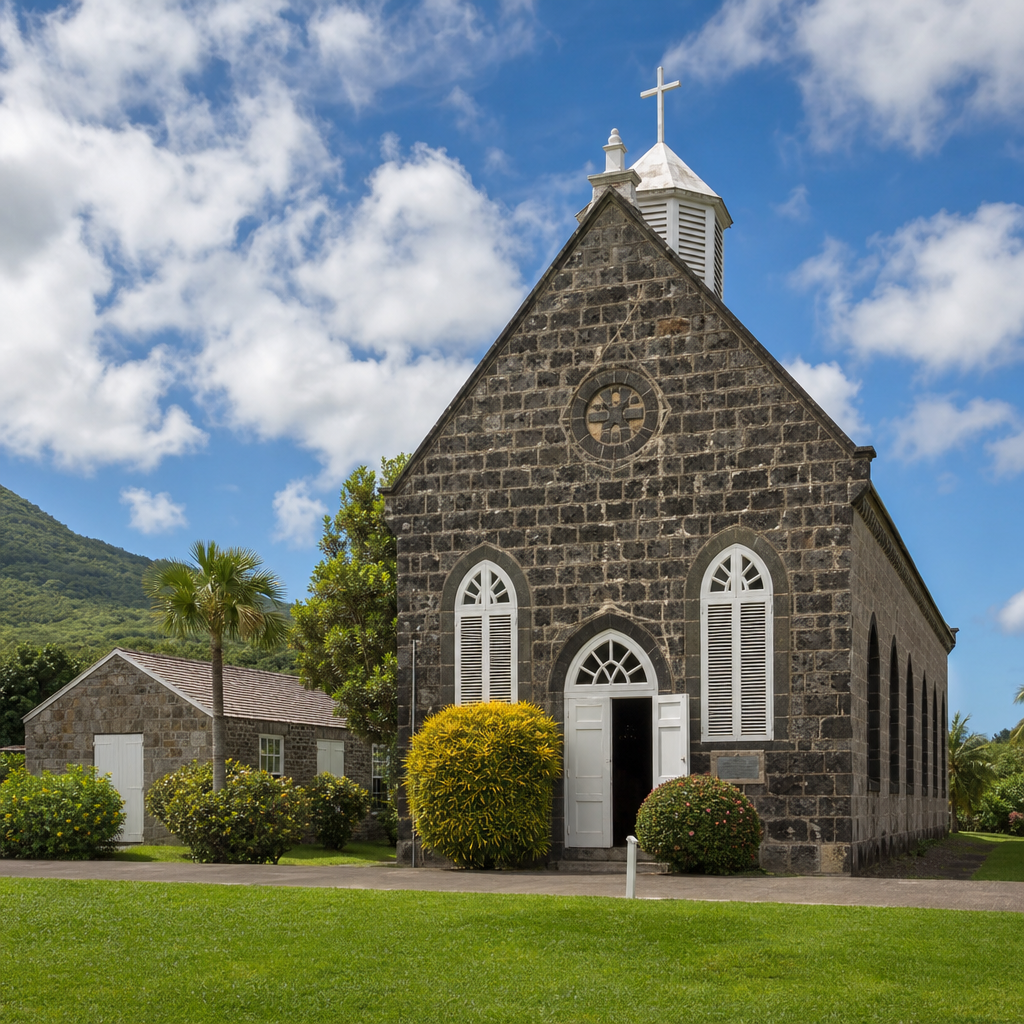
Heritage sites deepen that experience. Romney Manor, closely linked with the Caribelle Batik complex, gives visitors a plantation-era setting where discussions of land use, estate life, and colonial history naturally intersect with rum and sugar. The St. Kitts Scenic Railway, built on former sugar transport routes, visually explains how central cane once was to the island’s economy. At places like these, travelers can connect glass-in-hand enjoyment with a broader understanding of how cane moved from field to factory. The strongest heritage interpretation does not romanticize plantation life. It acknowledges beauty in the landscape while explaining the exploitation that made the system work.
Rum in Food, Festivals, and Everyday Life
On Saint Kitts, rum is not confined to bottles on souvenir shelves. It appears in cooking, celebration, and ordinary social rituals. Local cooks use rum in fruit cakes, soaked black cake during Christmas, dessert sauces, marinades, and punches. Spiced rum or overproof styles may be added in small amounts for aroma and depth. At community events, carnival gatherings, beach limes, and family celebrations, rum remains a familiar offering, often mixed with fresh juices, bitters, nutmeg, or syrup. These uses matter because they show continuity between agricultural history and living culture.
Rum also acts as a storytelling object. Ask older residents about estate work, village shops, or holiday traditions, and rum often appears in the memory alongside cane carts, factory shifts, and seasonal cooking. That oral history is invaluable. Official records tell us volumes exported and estates owned, but everyday recollections explain how rum was actually experienced: as comfort, income, hospitality, and sometimes hardship. For a Culture and History hub, that miscellaneous layer is essential because it connects industrial facts to lived identity.
Why Saint Kitts’ Rum History Still Matters
Saint Kitts’ rum history matters because it condenses the island’s wider past into one tangible subject. Through rum, you can understand colonial settlement, plantation technology, enslaved labor, emancipation, export trade, national economic change, tourism, and cultural resilience. Few topics connect so many historical layers so clearly. Rum also offers a practical way for visitors and readers to engage with difficult history without reducing it to nostalgia. A tasting, estate visit, or museum conversation can open discussion about land, labor, and memory in ways that statistics alone rarely do.
The key takeaway is simple: Saint Kitts’ rum is not just a drink descended from sugar cane. It is a record of how the island was built, who paid the human price, and how communities transformed that legacy into something locally meaningful. If you are exploring Saint Kitts culture and history, use rum as a hub topic, then follow the links outward to plantation heritage, emancipation history, village traditions, foodways, and modern tourism. Start with the glass, but do not stop there. Explore the estates, ask local guides better questions, and read the island’s landscape as carefully as you taste its spirits.
Frequently Asked Questions
How did sugar cane shape the early history of rum in Saint Kitts?
Sugar cane is the foundation of Saint Kitts’ rum story. Long before rum became a recognizable Caribbean spirit, cane was grown as part of a much larger colonial sugar economy. In Saint Kitts, as on many Caribbean islands, sugar cane was cultivated intensively because it generated enormous commercial value. Once harvested, cane could be processed into sugar for export, while the thick byproduct left behind during refining—molasses—became the raw material for rum production. This meant rum was not originally a separate industry in the modern sense, but a practical and profitable extension of sugar production.
As plantations expanded, cane transformed the island’s landscape, labor systems, and trade networks. Large estates needed mills, boiling houses, storage facilities, shipping infrastructure, and a workforce capable of sustaining continuous agricultural and industrial output. In that environment, rum emerged naturally from the economics of efficiency: if sugar production produced molasses, distilling it into alcohol created another saleable commodity. Over time, that commodity took on a life of its own. What began as a byproduct became a major cultural and commercial expression of island life. In Saint Kitts, rum history is therefore inseparable from the history of cane cultivation, plantation agriculture, and the broader colonial economy that defined the island for generations.
What is the connection between sugar, molasses, and rum production in Saint Kitts?
The connection is direct and essential. Sugar cane contains sweet juice rich in natural sugars. When that juice is extracted and processed, producers can make crystallized sugar, but the refining process also leaves behind molasses, a dense, dark syrup that still contains fermentable sugars. In traditional Caribbean rum-making, including the historical practices associated with Saint Kitts, molasses became the most common base ingredient for distillation because it was abundant, relatively stable, and economically sensible to use. Rather than wasting what remained after sugar manufacture, distillers fermented molasses with water and yeast, then distilled the resulting wash to produce rum.
This relationship explains why rum flourished in sugar-producing colonies. The sugar industry supplied the raw material, and distilling converted industrial residue into something valuable, transportable, and widely consumed. In some cases, rum could also be made from fresh cane juice, but molasses-based rum became especially important in places where sugar production operated at scale. In Saint Kitts, that linkage meant rum was tied not only to agricultural cycles but also to factory output, export markets, and changing technologies in cane processing. Understanding this chain—from cane to juice, from juice to sugar, from molasses to fermentation, and from distillation to aging or bottling—is key to understanding why rum became such an enduring part of the island’s economic and cultural history.
Why is Saint Kitts’ rum history so closely tied to colonialism and plantation labor?
Saint Kitts’ rum history cannot be told honestly without addressing colonialism and plantation labor. The island’s sugar economy was built during European imperial expansion, when Caribbean territories were reorganized around export agriculture for overseas profit. Sugar cane cultivation on Saint Kitts required vast amounts of land, capital, and labor, and that labor system was deeply shaped by exploitation, including the forced labor of enslaved Africans and the harsh plantation regimes that sustained sugar production. Because rum developed from the byproducts of that system, its history is inseparable from the social and human costs that made plantation wealth possible.
This does not diminish rum’s importance in Kittitian identity; rather, it deepens it. Rum represents both economic ingenuity and historical contradiction. It is part of local tradition, celebration, craftsmanship, and memory, but it also comes from a past marked by inequality and coercion. As historians and cultural interpreters increasingly emphasize, understanding Saint Kitts’ rum heritage means recognizing both the technical evolution of distilling and the labor structures that supported cane agriculture. The most complete view of rum history does not romanticize the past. Instead, it acknowledges that the spirit emerged from a system that profoundly shaped the island’s demographics, culture, and social history, leaving a legacy still visible in land use, family histories, and national memory.
How did rum evolve from a plantation byproduct into a cultural symbol in Saint Kitts?
Rum’s transformation from byproduct to cultural symbol happened gradually, as its role expanded beyond plantation economics. At first, rum was valued largely because it made productive use of molasses and added revenue to sugar operations. Over time, however, it became woven into everyday life in Saint Kitts. It was consumed locally, traded regionally, and incorporated into social rituals, hospitality, seasonal celebrations, and communal gatherings. As generations passed, rum came to signify more than industry; it began to reflect place, memory, and local identity.
That cultural evolution was shaped by both continuity and change. Even as sugar’s dominance declined and the old plantation order changed, rum remained a visible link to the island’s agricultural past. Its aromas, production methods, and styles carried echoes of cane cultivation and processing, while its presence in festivals, storytelling, and culinary traditions helped preserve a sense of connection to earlier eras. In modern Saint Kitts, rum is often appreciated not just as a drink but as a historical artifact in liquid form—something that tells a story about land, labor, commerce, resilience, and adaptation. That is why discussions of Kittitian rum often go beyond tasting notes and brands. They enter the realm of heritage, where a spirit becomes a symbol of how the island remembers and reinterprets its own past.
What should readers understand first when exploring Saint Kitts’ rum heritage today?
The most important starting point is that Saint Kitts’ rum heritage begins with sugar cane, not with the bottle. To appreciate the island’s rum history, readers should first understand the agricultural and industrial world that made rum possible. Cane was not just a crop; it was the organizing force behind land use, labor systems, export trade, and wealth creation. From there, rum becomes easier to understand as part of a larger historical process: cane was harvested, sugar was processed, molasses accumulated, fermentation and distillation followed, and a local spirit industry emerged within that chain. In other words, rum was born from the logic of the sugar economy.
It is also important to approach Saint Kitts’ rum story with a balanced perspective. On one hand, rum reflects craftsmanship, resourcefulness, and a long-standing Caribbean tradition of transforming raw materials into something distinctive and globally recognized. On the other hand, its roots lie in a colonial plantation system that depended on exploitation and deeply unequal power structures. Readers who keep both truths in view will gain a far richer understanding of the subject. Saint Kitts’ rum heritage is compelling precisely because it sits at the intersection of agriculture, commerce, technology, empire, and culture. When explored in full, it reveals how a spirit can embody both the material history of sugar production and the evolving identity of an island shaped by that past.