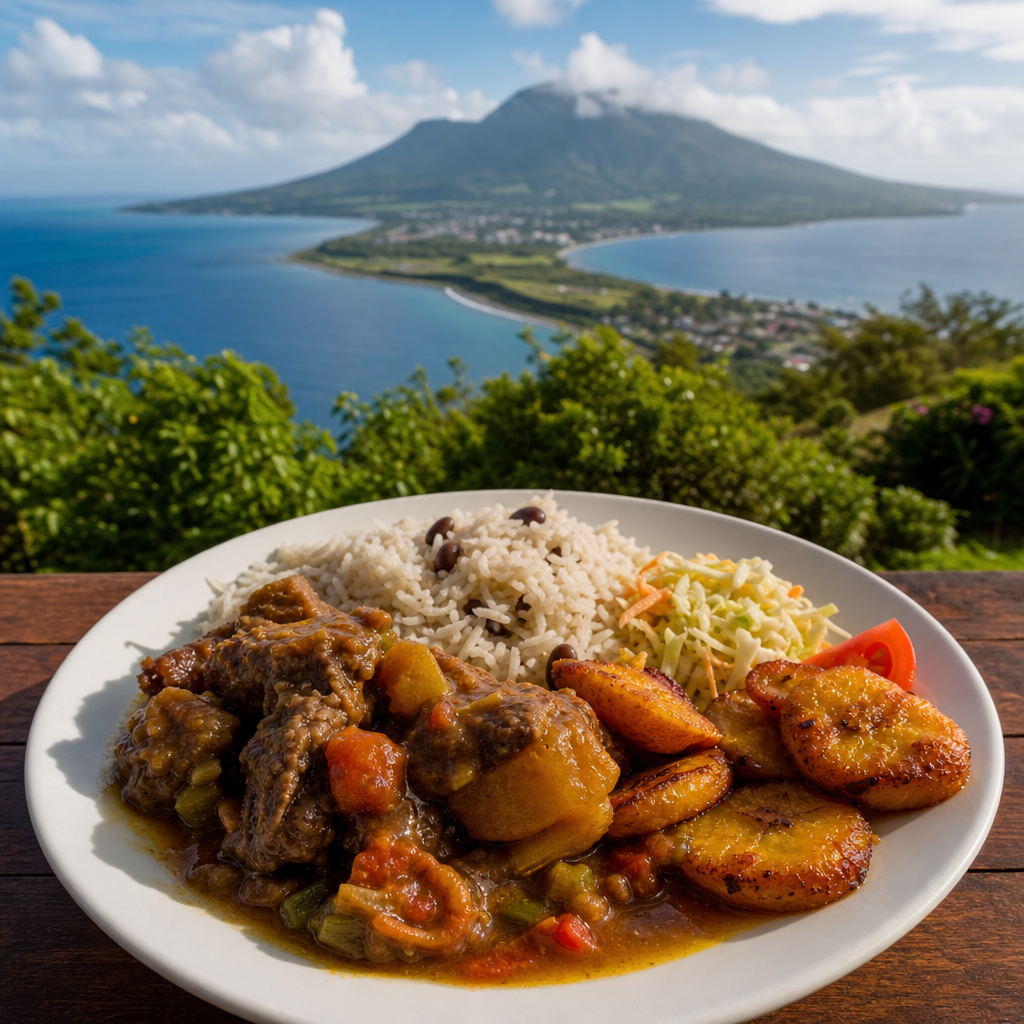
Nevis’ agricultural heritage is the living record of how a small Caribbean island fed families, built communities, and shaped its landscape through centuries of farming. In practical terms, agricultural heritage means more than old estates or nostalgic stories. It includes traditional farms, inherited planting methods, irrigation habits, livestock care, market customs, food preservation, and the social rules that guided rural life. On Nevis, those traditions developed through Indigenous knowledge, African farming practices carried through enslavement, European plantation systems, and later smallholder adaptation after emancipation. The result is a farming culture that is distinct, resilient, and still visible in fields, village gardens, fruit trees, grazing lands, and local cuisine. Understanding Nevis’ agricultural heritage matters because agriculture explains the island’s settlement patterns, economy, biodiversity, and identity. Visitors often arrive for beaches and heritage architecture, yet the interior tells an equally important story in provision grounds, old stone walls, wind-exposed pasture, and family plots growing yam, sweet potato, cassava, pigeon peas, and vegetables for home use and sale.
I have walked farms on Nevis where older growers can point to a breadfruit tree planted by a grandparent, explain why certain slopes are better for tania than for pumpkin, and describe how drought years forced changes in cropping cycles. Those details reveal why traditional farms deserve close attention. They are not frozen museum pieces. They are working landscapes where practical decisions about soil, rain, labor, and markets have accumulated over generations. Traditional farms on Nevis also connect directly to broader nature and wildlife themes. Mixed cropping creates habitat edges for birds and pollinators. Tree cover around farms reduces erosion on steep land. Livestock management affects watershed health. Seed saving preserves genetic diversity that can be crucial in a hurricane-prone climate. As a hub topic, Nevis’ agricultural heritage brings together rural history, food culture, environmental stewardship, estate archaeology, and community memory. Anyone researching miscellaneous nature and wildlife topics on the island will find that farming sits at the center, linking people to place in ways that are immediate, visible, and enduring.
How Traditional Farming Took Shape on Nevis
Nevis is a volcanic island with fertile soils, varied elevations, and a climate that can support diverse crops, but farming here has always been shaped by uneven rainfall, exposure to storms, and limits on flat land. Before colonial plantation agriculture dominated, food production was local and adaptive, tied to seasonal conditions and practical land use. During the plantation era, sugar transformed much of the island. Estates organized labor, infrastructure, and export activity around cane, mills, boiling houses, and shipping. Yet even in that system, enslaved Africans maintained provision grounds, producing food for survival and trade. Those plots were the foundation of many techniques later seen in post-emancipation small farming, including intercropping, careful water use, and reliance on hardy staples.
After emancipation in 1834, many Nevisians expanded small-scale agriculture where possible. Estate dominance did not disappear overnight, but family plots, village gardens, and share arrangements became increasingly important. Farmers learned to balance subsistence and cash needs by combining fruit trees, root crops, kitchen vegetables, herbs, and small livestock. This pattern remains central to the island’s agricultural heritage. Unlike specialized industrial farming, traditional Nevisian agriculture favored diversity as a risk management strategy. If drought reduced one crop, another might survive. If market prices fell, households still had food. This approach made sense on an island where hurricanes, shipping interruptions, and labor shortages could quickly disrupt supply.
Geography also shaped farm culture. Lower and drier areas were often used differently from cooler upland zones near Nevis Peak. Farmers matched crops to microclimates long before modern extension officers used that term. They knew where moisture held longer, where wind damaged young plants, and where free-draining soils suited certain root crops. Stone boundaries, hedgerows, and scattered fruit trees were not random features. They reflected labor patterns, animal control, and practical environmental knowledge built through repetition.
Crops, Livestock, and the Logic of the Traditional Farm
The traditional farm on Nevis is best understood as a mixed system rather than a single-crop operation. Common crops have included yam, sweet potato, cassava, eddoes, tania, corn, pigeon peas, beans, pumpkins, okra, tomatoes, hot peppers, and leafy greens, alongside mango, breadfruit, coconut, guava, soursop, tamarind, sugar apple, and citrus. Each crop served a purpose. Cassava and sweet potato offered calorie security. Pigeon peas improved meals and stored reasonably well. Breadfruit and mango produced seasonal abundance with relatively low annual labor once trees matured. Kitchen gardens supplied quick-growing vegetables near the home, reducing daily food costs and making household meals less dependent on imported goods.
Livestock were equally important. Goats have long suited Nevis because they tolerate dry conditions better than some larger stock and can use rough grazing areas. Sheep, cattle, pigs, and poultry also formed part of the agricultural landscape. Chickens converted household scraps and supplied eggs and meat. Pigs could be raised with careful feeding and sold for cash at strategic times. Cattle offered labor historically, then later meat and status, though they required more land and water. On many traditional holdings, animals were not separate from crop production. Manure fertilized fields. Crop residues fed livestock. Trees offered shade and fodder. That integrated logic reduced waste and increased resilience.
When people picture Caribbean farming, they often think first of sugar. Sugar undeniably shaped Nevisian history, but a journey through traditional farms reveals a more varied agricultural reality. Food crops sustained households through plantation volatility, post-emancipation transitions, and tourism-driven economic shifts in the modern era. In my experience, the most informative farm visits are not to highly polished attractions but to ordinary plots where an elder can explain why pigeon peas are planted on a margin, why breadfruit remains prized during expensive import periods, or why a family continues raising goats despite fencing challenges. Those choices embody heritage in active form.
| Farm Element | Traditional Role on Nevis | Why It Mattered |
|---|---|---|
| Provision crops | Cassava, yam, sweet potato, tania, corn for household food | Protected families from import shortages and price swings |
| Tree crops | Breadfruit, mango, coconut, citrus, guava | Provided seasonal food, shade, and long-term value |
| Kitchen gardens | Herbs, peppers, greens, tomatoes near homes | Improved daily diets and reduced spending |
| Goats and sheep | Grazing on marginal land and dry areas | Matched local conditions and supplied meat or income |
| Poultry | Egg and meat production on small holdings | Low-cost protein and efficient use of scraps |
| Mixed cropping | Several crops planted together or in sequence | Spread risk, protected soil, and diversified harvests |
Traditional Knowledge, Land Stewardship, and Rural Practice
Traditional farming on Nevis depends on observation. Long before weather apps and imported inputs, growers read cloud movement, soil texture, insect behavior, and the timing of seasonal winds. They planted with attention to rainfall windows, used mulching to retain moisture, and selected hardy local varieties because replacement seed was not always easy to obtain. This knowledge was practical, not romantic. A farmer who misread the season could lose weeks of labor. A family that failed to preserve cassava, peas, or dried herbs might struggle later. Traditional methods therefore evolved around efficiency and risk control.
One overlooked part of Nevis’ agricultural heritage is household-scale processing and preservation. Breadfruit could be roasted, boiled, or turned into multiple dishes; cassava was grated and baked; fruits were preserved in jams, juices, or home preparations; herbs were dried; surplus produce was shared, bartered, or sold informally. These post-harvest practices mattered because they extended value beyond the moment of harvest. They also created social ties. Rural life on Nevis historically depended on exchange networks, neighbor assistance, and seasonal labor sharing, especially when clearing land, planting, weeding, or managing animals.
Land stewardship was never perfect, and it is important to avoid idealizing the past. Overgrazing, deforestation during plantation expansion, and erosion on slopes all affected the island. Yet many traditional smallholders used methods that align with modern conservation principles. Intercropping reduced bare soil. Tree cover buffered heat and wind. Reusing organic material improved fertility. Matching crops to site conditions lowered unnecessary losses. In current sustainability language, these are climate adaptation and agroecological practices. On Nevis, they were often simply common sense. That continuity is one reason agricultural heritage deserves a central place within the island’s nature and wildlife conversation.
Estate Landscapes, Village Life, and Food Culture
To understand Nevis’ agricultural heritage fully, it helps to read the island as a layered landscape. Former sugar estates still leave visible marks through mill ruins, stone structures, road alignments, and field divisions. But just as significant are the less monumental spaces: family yards with fruit trees, small grazing lots, village paths connecting plots, and market points where produce changed hands. These everyday rural spaces show how people adapted a plantation island into a lived agricultural landscape. They also explain the close relationship between farming and local food culture.
Many dishes associated with Nevis reflect the logic of traditional farms. Goat water, the island’s famous stew, is rooted in practical livestock use and communal cooking. Provision-based meals rely on the same root crops and breadfruit long valued for food security. Fresh mangoes, guavas, coconuts, and soursop are not just tropical symbols; they are outputs of long-established planting traditions. When local restaurants or guesthouses highlight these foods, they are drawing from a farming system built over generations. Culinary tourism on Nevis is strongest when it acknowledges that link rather than treating food as disconnected from land.
Village life reinforced this connection. Children often learned farming tasks early, whether carrying feed, weeding beds, collecting eggs, or helping harvest fruit. Knowledge moved through families by doing. Older farmers taught spacing, pruning, seed selection, and animal handling through repetition, not manuals. Even today, some of the clearest explanations of Nevisian agriculture come from these informal teachers. Their insights are especially valuable because they understand local variability. They know which valley retains moisture after a light rain, where monkeys pressure fruit crops more heavily, and how hurricane cleanup affects the next planting cycle.
Why Agricultural Heritage Matters for Nature, Wildlife, and Tourism
Nevis’ traditional farms are part of the island’s ecological fabric. Mixed farms create mosaic landscapes that support birds, insects, reptiles, and beneficial soil organisms more effectively than heavily simplified land use. Fruiting trees feed wildlife. Hedgerows provide shelter. Ground cover can reduce runoff into coastal waters, which matters for marine habitats as well as farming. At the same time, agriculture can create tension with wildlife, especially when vervet monkeys raid crops or grazing affects regeneration. A balanced view recognizes both benefits and pressures. Good stewardship means designing farms that remain productive while protecting watersheds, soils, and habitat quality.
This is also where agricultural heritage intersects with tourism. Travelers increasingly want experiences that go beyond passive sightseeing. Farm visits, cooking demonstrations, orchard walks, estate interpretation, and rural heritage trails can show how Nevis developed through labor, land use, and food production. Done well, these experiences support local income and keep knowledge visible. Done badly, they reduce real farms to decorative backdrops. The difference lies in accuracy, community involvement, and respect for working agricultural spaces. The best programs let farmers explain their own methods, challenges, and changes over time.
For a hub page covering miscellaneous nature and wildlife interests, traditional farms provide a useful organizing lens. They connect botany, birdlife, watershed protection, landscape history, foodways, and cultural resilience in one subject. They also offer a grounded answer to a common visitor question: what makes Nevis different from other Caribbean islands? The answer is not one crop or one postcard view. It is the layered survival of practical farming knowledge in a small island environment. If you want to understand Nevis beyond the shoreline, start with the farms, the fruit trees, the grazing land, and the stories attached to them.
Nevis’ agricultural heritage is not a side note to the island’s history. It is one of the clearest ways to understand how land, labor, culture, and ecology developed together over time. Traditional farms show the transition from plantation dominance to diverse smallholder practice. They explain why root crops, tree crops, kitchen gardens, and livestock still matter. They reveal how local knowledge formed around drought, storms, steep slopes, and limited land. They also show that rural heritage is active, not merely historical. Every maintained breadfruit tree, goat pasture, cassava bed, and market garden carries forward decisions made by earlier generations and adapted by present ones.
As a hub within the broader nature and wildlife topic, this subject opens doors to related articles on estate history, native and cultivated plants, food traditions, conservation, rural walking routes, and community tourism. It also highlights an essential truth: protecting Nevis’ landscapes means understanding the people who worked them. Traditional farms preserve biodiversity, memory, and practical resilience in the same spaces. If you are exploring Nevis, make time for its agricultural story. Visit a local farm, ask about crops and seasons, taste provision-based dishes, and follow the rural landscape with informed attention. That is where the island’s heritage becomes tangible, useful, and unforgettable.
Frequently Asked Questions
What does “agricultural heritage” mean in the context of Nevis?
On Nevis, agricultural heritage refers to the full set of farming traditions, rural practices, and community knowledge that helped the island sustain itself over generations. It includes the visible elements, such as traditional farms, stone boundaries, cultivated plots, grazing areas, fruit trees, and old estate lands, but it also covers the less visible habits that shaped daily life. These include inherited planting calendars, seed saving, soil management, water collection and irrigation methods, livestock care, food preservation techniques, market exchange, and the unwritten social customs that organized rural work.
In other words, Nevis’ agricultural heritage is not just about the past as a historical curiosity. It is a living record of how people adapted to local conditions, including changing rainfall, volcanic soils, hillside terrain, and limited land. Over time, farmers combined practical experience with knowledge passed through families and communities. That created a rural culture where farming was closely tied to food security, household economy, and social identity. Understanding agricultural heritage on Nevis means seeing agriculture not only as production, but as a system of knowledge, relationships, and landscape stewardship.
How did traditional farms shape family and community life on Nevis?
Traditional farms on Nevis did much more than produce food. They played a central role in supporting families, creating local trade, and strengthening community ties. For many households, farming provided staples for daily meals, seasonal produce for sale, and small but important forms of income. Families often relied on mixed-use plots where vegetables, root crops, fruit trees, herbs, and small livestock worked together as part of a practical, resilient system. This diversity helped reduce risk, especially during dry periods, market fluctuations, or storms.
Community life was also closely connected to agricultural rhythms. Planting, weeding, harvesting, animal care, and market preparation often required cooperation among relatives, neighbors, and friends. Knowledge was shared through observation and participation rather than formal instruction alone. Children learned when to plant, how to recognize healthy soil, how to care for animals, and how to prepare crops for storage or sale by working alongside elders. Markets and roadside exchanges created additional points of connection, where people traded produce, shared advice, and maintained social relationships.
Because of this, traditional farming helped shape values as much as livelihoods. It encouraged self-reliance, mutual support, discipline, and respect for land and seasons. Even as the economy changed, the memory of these farming systems remains deeply tied to the way many people on Nevis understand home, community, and continuity between generations.
What kinds of traditional farming methods were commonly used on Nevis?
Traditional farming methods on Nevis were shaped by the island’s environment and by practical experience accumulated over long periods. Farmers commonly relied on mixed cropping rather than single-crop systems, growing a variety of foods in the same area to make efficient use of land and reduce vulnerability to pests, disease, or weather-related losses. Root crops, vegetables, legumes, fruit trees, and medicinal plants were often cultivated together or in nearby plots, allowing households to meet several needs from one farming space.
Soil care was also essential. Farmers observed which areas retained moisture, which slopes needed protection, and which crops performed best in particular conditions. Organic matter, crop rotation, and careful timing of planting were important tools for maintaining productivity. On a small island where rainfall could vary, water management mattered greatly, so traditional irrigation habits often included capturing and conserving available water, spacing crops wisely, and planting according to seasonal patterns.
Livestock care formed another important part of traditional agriculture. Small animals and grazing animals supported household nutrition, labor, and income, while also contributing manure that could improve soil fertility. Farmers paid close attention to breeding, feeding, and shelter based on available resources and local conditions. Food preservation methods, such as drying, salting, and other practical storage techniques, extended the usefulness of harvests and reduced waste.
These methods were effective because they were adapted to local realities. Rather than depending on highly specialized systems, traditional farms on Nevis emphasized balance, flexibility, and close knowledge of land, climate, and household needs.
Why is Nevis’ agricultural heritage important today?
Nevis’ agricultural heritage remains important because it offers insight into sustainable living, local resilience, and cultural identity. In a modern world where many islands face food import dependence, climate uncertainty, and pressure on land use, older farming knowledge can still provide relevant lessons. Traditional practices often emphasized crop diversity, careful resource use, seasonal awareness, and strong local food networks. These are not outdated ideas. In many cases, they are exactly the kinds of approaches communities revisit when thinking about long-term food security and environmental responsibility.
There is also a strong cultural reason to preserve this heritage. Farming traditions carry stories of labor, adaptation, survival, and creativity. They reflect how people on Nevis responded to the island’s opportunities and constraints while building family life and community structure. When those practices are remembered and documented, they help preserve more than techniques; they preserve worldview, vocabulary, values, and place-based identity.
In addition, agricultural heritage can support education, heritage tourism, and local pride. Visitors and younger generations often understand Nevis more fully when they see how fields, villages, markets, and food traditions are connected. Traditional farms and rural practices help explain why the landscape looks the way it does and how communities developed around it. Protecting that heritage can therefore contribute to both cultural continuity and practical conversations about the island’s future.
How can traditional farms and agricultural knowledge on Nevis be preserved for future generations?
Preserving traditional farms and agricultural knowledge on Nevis requires more than protecting old sites. It means actively supporting the people, practices, and stories that keep rural knowledge alive. One of the most effective steps is documentation. Oral histories from farmers, market vendors, livestock keepers, and elders can capture details that are rarely found in official records, including planting habits, seasonal decision-making, local crop varieties, and community rules surrounding land and labor. Recording those memories in schools, archives, museums, and local heritage projects helps ensure that important knowledge is not lost.
Practical education is equally important. Younger generations benefit most when they can see and participate in farming traditions directly. School gardens, community plots, demonstration farms, and intergenerational workshops can connect historical knowledge with present-day agricultural learning. Rather than presenting traditional farming as something frozen in time, these programs can show how inherited methods still inform sustainable growing, water conservation, and local food production.
Policy and community support also matter. Protecting agricultural land, encouraging small farmers, promoting local markets, and recognizing the cultural value of rural landscapes all strengthen the conditions that allow heritage to survive. Heritage tourism, if handled respectfully, can also help by creating appreciation for farm history, local foods, and countryside traditions. Most importantly, preservation works best when communities themselves lead the process. Nevis’ agricultural heritage is strongest when it is treated not as a relic, but as a living inheritance that still has meaning, relevance, and practical value.