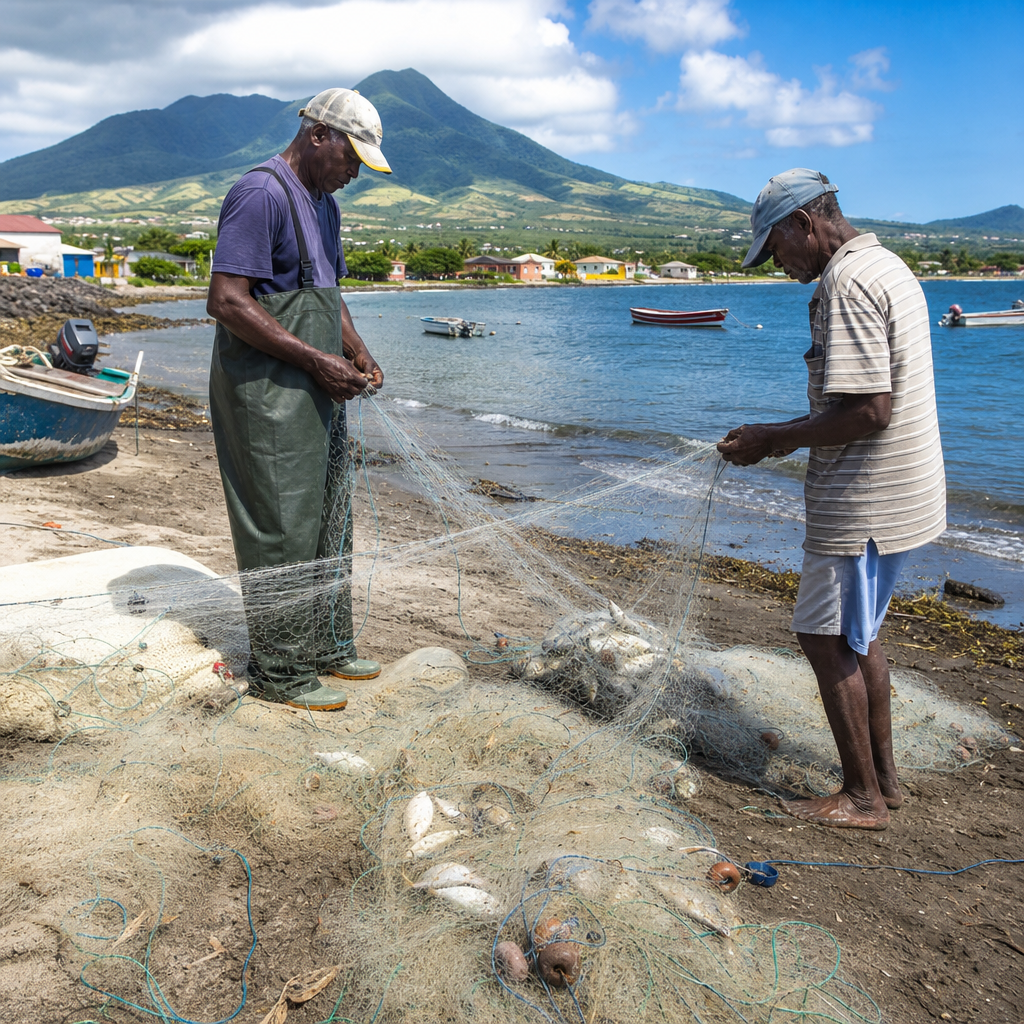
Traditional fishing practices in Saint Kitts reveal how a small Caribbean island built food security, community identity, and maritime knowledge from generations spent reading reefs, currents, moon phases, and seasonal fish movements. In Saint Kitts, traditional fishing refers to small-scale, nearshore methods developed before industrial fleets and modern electronics became common. These practices include handlining, fish trapping, beach seining, spearfishing, and the use of wooden skiffs powered first by sail and oar, then by outboard engines. They matter because fishing in Saint Kitts has never been only an economic activity. It has shaped village life, local cuisine, family livelihoods, folklore, and the island’s relationship with the sea. Anyone studying the culture and history of Saint Kitts needs this subject as a hub because it connects labor, trade, technology, environment, and everyday survival.
I have spent years reviewing Caribbean heritage material and interviewing fishers across island communities, and one lesson is consistent: traditional fishing knowledge is practical science carried in memory, routine, and observation. Fishers learn where grunts gather over grass beds, when jacks run along rocky points, and how weather signs on the horizon can matter more than any forecast. In Saint Kitts, that knowledge developed around a coastline of bays, reefs, and landing sites where catches were sold fresh or shared within villages. The result is a fishing culture rooted in adaptation. Crews adjusted gear to the seabed, shifted target species with the season, and balanced income from market sales with subsistence needs at home. Understanding these patterns explains far more than how fish were caught; it explains how coastal communities organized work, preserved knowledge, and responded to change.
This hub article covers the main traditional fishing practices in Saint Kitts, the tools used, the species targeted, the communities involved, and the pressures now affecting the continuity of older methods. It also links the topic to broader themes in culture and history, including colonial trade, foodways, apprenticeship, conservation, and modernization. If a reader asks what traditional fishers in Saint Kitts used, where they fished, how they learned, what they caught, and why these practices still matter, the sections below provide direct answers with context.
Historical roots of fishing in Saint Kitts
Fishing in Saint Kitts predates European colonization. Indigenous peoples across the Lesser Antilles depended on marine resources, using dugout canoes, shellfish gathering, and line or spear techniques suited to shallow coastal waters. Although documentary evidence for every local practice is limited, archaeological work across the region confirms long-standing marine harvesting before the plantation era. Under colonial rule, fishing remained essential because plantation systems focused land and labor on sugar production rather than diversified food supply. Coastal households therefore relied on fish to supplement imported staples and limited provisions grown locally. In practical terms, fish filled nutritional gaps and created one of the few dependable protein sources available outside plantation control.
By the nineteenth and early twentieth centuries, fishing villages and landing points around Saint Kitts had established recognizable routines. Men launched small craft at dawn or before sunrise, worked reefs and nearshore drops, then returned to beach markets, roadside buyers, or known middlemen. Much of the trade was informal, built on reputation and repeated exchange. Cash mattered, but so did reciprocity. A successful catch might be divided among crew, sold to households, set aside for a shopkeeper who extended credit, or shared with relatives. This social economy is a defining feature of traditional fishing and helps explain why many older fishers speak about duty and community before profit.
Boats, gear, and practical seamanship
The classic traditional fishing craft in Saint Kitts was a small wooden boat designed for versatility rather than comfort. Earlier vessels depended on oars and sail, with crews launching directly from beaches where no formal marina existed. As outboard engines spread during the twentieth century, the basic workflow changed less than outsiders assume. Fishers still had to judge swell, wind direction, surf entry, and boat balance with precision. A skiff loaded with traps, line, ice, and fuel behaves differently in cross chop than an empty boat returning at speed, and experienced crews learned this through repetition, not manuals.
Handlines were among the most widespread tools because they were affordable, repairable, and effective over reefs, ledges, and deeper offshore edges. A handline setup might include monofilament or older cordage, weighted hooks, and bait selected according to species. Fish traps, often made with wood and wire in later periods, targeted reef fish by exploiting feeding habits and shelter behavior. Beach seines required coordination, labor, and favorable shoreline conditions, making them community gear rather than an individual method. Spearfishing, though more modern in some forms, also fits within traditional small-scale practice when used by local divers working familiar grounds.
| Method | How it worked | Common targets | Main advantage |
|---|---|---|---|
| Handlining | Baited hooks lowered or drifted over reef and drop-off areas | Snapper, grouper, grunt, jack | Low cost and highly adaptable |
| Fish trapping | Baited or strategically placed traps left on the seabed | Reef fish, lobster in some contexts | Can fish while crew work elsewhere |
| Beach seining | Net set from shore or boat and hauled by teams | Schooling nearshore fish | Large catches when timing was right |
| Spearfishing | Divers targeted visible fish near reefs and rocks | Parrotfish, snapper, reef species | Selective catch with little bycatch |
Seamanship was inseparable from gear knowledge. Fishers read clouds, wave period, tide movement, and current lines to decide whether to work the Atlantic side, the Caribbean side, or stay closer to shore. Without GPS, they fixed locations using landmarks called ranges, lining up a church steeple, hill slope, or distinctive tree with a coastal point to relocate productive grounds. That skill deserves emphasis because it represents a precise navigation system built from local geography. Younger fishers who rely mainly on electronics can still benefit from it when batteries fail or weather shifts quickly.
Fishing grounds, target species, and seasonal rhythm
Traditional fishing in Saint Kitts depended on intimate knowledge of habitats. Coral reefs, sea grass beds, rocky margins, sandy bays, and offshore drop-offs each held different species and demanded different tactics. Near reefs, fishers sought snapper, grouper, grunt, doctor fish, squirrelfish, and parrotfish. In open water or along current lines, they might target jacks, barracuda, tuna, or seasonal pelagic fish. Lobster and conch also formed part of the wider marine harvest in certain periods and places, though regulations and stock pressures have changed what is legal and sustainable today.
Seasonality shaped effort more than any fixed calendar. Fishers watched wind regimes, water clarity, sargassum presence, lunar cycles, and spawning behavior. A full moon can alter feeding patterns and catch rates. Rough Atlantic conditions may push crews toward calmer leeward waters, while calmer periods open access to grounds normally avoided. During some seasons, flying fish and other migratory species become more important in the Eastern Caribbean, though Saint Kitts has never been as strongly identified with flying fish as Barbados. What matters is the principle: traditional fishers matched effort to ecological timing. That responsiveness made small-scale fisheries resilient, even when technology remained basic.
Communities, labor, and the market for fish
Traditional fishing was concentrated in coastal communities where maritime work fit into a mixed livelihood economy. Families might combine fishing with boat repair, small farming, market vending, carpentry, or seasonal wage labor. This reduced risk. When seas were too rough, household income did not disappear entirely, and when a catch was poor, fish could still be salted, shared, or sold in smaller quantities. On Saint Kitts, landing sites became social centers where prices were negotiated, news was exchanged, and younger people absorbed practical lessons simply by being present.
The labor structure on small boats usually depended on kinship or trusted partnership. A boat owner might provide fuel, gear, and maintenance, while crew contributed labor and local knowledge, with proceeds divided by agreed shares. These arrangements were not always equal, but they were widely understood. Women played a critical role even when they were less visible at sea. They cleaned fish, sold catches, handled household budgeting, prepared value-added foods, and maintained the social relationships that made credit and repeat sales possible. Ignoring this would distort the history. Traditional fishing in Saint Kitts was supported by whole households, not only by the men who launched the boat.
Fish moved through both formal and informal channels. Some was sold directly on the beach. Some went to village customers, roadside stalls, restaurants, or urban markets in Basseterre. In earlier decades, cold storage was limited, so freshness determined speed of sale. That reality influenced species preference. Fast-selling fish with local culinary demand had obvious economic value. Unsold catch might be fried the same day, curried, stewed, or preserved when possible. The market therefore shaped fishing decisions just as strongly as ecology did.
Food culture, knowledge transfer, and living heritage
Traditional fishing practices in Saint Kitts survive not only in boats and gear but in food culture. Saltfish, fish broth, fried jack, stewed snapper, grilled lobster, and fish served with ground provisions all reflect a cuisine built around what coastal households could catch, trade, and cook efficiently. Preparation methods developed for flavor but also for practicality. Frying gave quick turnover for fresh catch. Stewing stretched smaller fish into a family meal. Seasoning with thyme, pepper, onion, garlic, and local herbs tied fishing directly to the broader Creole food tradition of the island.
Knowledge transfer usually happened through apprenticeship rather than classroom instruction. Boys often began by untangling line, carrying bait, bailing water, or helping haul a net before they were trusted with hooks or navigation. They learned species identification, safe handling of spines and teeth, and the difference between a productive reef edge and a barren bottom. Today, oral transmission is less automatic because more young people pursue non-maritime work, but many older fishers still teach through direct demonstration. Heritage projects, oral history interviews, and museum interpretation can help preserve this knowledge, yet none fully replaces time on the water with a skilled elder who explains why one patch of water holds fish and another does not.
This is why traditional fishing belongs within cultural history rather than only economic history. It encodes language, nicknames for fishing grounds, beliefs about weather, rituals of departure and return, and values about patience, risk, and mutual dependence. In Saint Kitts, the sea has long been a workplace, but it has also been a teacher.
Change, pressure, and the future of traditional practice
Traditional fishing in Saint Kitts faces real pressure from coastal development, reef degradation, stronger storms, fuel costs, imported seafood, and changing career aspirations. Modern engines and electronics have improved safety and range, but they also increase operating expenses and can mask the erosion of older navigational knowledge. Climate change adds another layer. Warmer seas, coral bleaching, altered storm patterns, and habitat loss affect the same nearshore ecosystems that sustained small-scale fishers for generations. When reefs decline, traditional gear produces less, and cultural continuity weakens alongside livelihoods.
Management therefore matters. Effective fisheries policy in Saint Kitts and Nevis must balance conservation with the survival of fishing communities. Closed seasons, gear rules, marine protected areas, and licensing can help rebuild stocks when they are enforced and designed with fisher input. The best results usually come from co-management, where authorities and fishers share data and practical experience. I have seen across the Caribbean that regulations fail when they ignore local reality, such as weather windows, market dependence, or the cost of compliance. They work better when fishers understand the purpose and can see long-term benefit.
For readers exploring the wider Culture and History topic, this hub should lead to related subjects: coastal villages, traditional boatbuilding, seafood dishes, colonial trade routes, marine conservation, oral history, and labor history in Saint Kitts. Traditional fishing practices bring all of these themes together. They show how people used skill rather than scale, memory rather than machines, and cooperation rather than industrial infrastructure to make a living from the sea. That legacy remains valuable today because it offers both historical insight and practical lessons about sustainability, local knowledge, and resilience. To understand Saint Kitts more fully, start with its fishing communities, follow the stories at the shoreline, and explore the connected articles that deepen this maritime history.
Frequently Asked Questions
What are the main traditional fishing methods used in Saint Kitts?
Traditional fishing practices in Saint Kitts are centered on small-scale, nearshore methods that developed long before GPS, sonar, and industrial fishing boats became common. Among the most important methods are handlining, fish trapping, beach seining, and spearfishing, all of which were adapted to the island’s reefs, bays, currents, and seasonal fish movements. Handlining is one of the most widely recognized techniques, involving a baited hook and line worked by hand from a small boat or from shore. It is valued for its simplicity, low cost, and precision, especially when targeting species found around reefs and drop-offs.
Fish trapping has also played a major role in Saint Kitts. Fishers traditionally placed traps in known fishing grounds where reef fish were likely to feed or travel. These traps required local ecological knowledge, because placement mattered as much as design. Beach seining, another long-standing method, involved teams working together to draw a net from the water onto shore, making it both a fishing technique and a community activity. Spearfishing, whether done free-diving or in shallow nearshore waters, relied heavily on skill, patience, and familiarity with fish behavior. Wooden skiffs powered by oars, sails, and later small engines supported many of these activities, allowing fishers to reach reefs and coastal grounds while still operating on a modest scale. Together, these methods reflect a fishing culture built on observation, experience, and close ties to the marine environment.
Why were traditional fishing practices so important to life in Saint Kitts?
Traditional fishing practices were important in Saint Kitts because they supported food security, livelihoods, and community identity in a small island setting where the sea has always been central to daily life. For many coastal families, fishing provided a dependable source of protein and income, especially before imported foods and large-scale commercial supply chains became common. Fresh fish could be eaten at home, traded locally, or sold in village markets, helping households meet immediate needs while contributing to the wider island economy.
Beyond their economic value, these practices carried social and cultural importance. Fishing knowledge was often passed down through generations, with elders teaching younger fishers how to read reef structures, interpret weather patterns, understand moon phases, and recognize when certain fish species were likely to appear. This transfer of knowledge strengthened family bonds and preserved a distinctly local way of life. Many fishing activities also depended on cooperation, whether launching a boat, hauling a seine, repairing traps, or sharing a catch. In that sense, traditional fishing was never just about harvesting fish; it helped shape community relationships, local identity, and an enduring connection between the people of Saint Kitts and the surrounding Caribbean Sea.
How did fishers in Saint Kitts use environmental knowledge to guide their work?
Environmental knowledge was at the heart of traditional fishing in Saint Kitts. Fishers relied less on modern instruments and more on close observation of the natural world. They learned to read currents, tides, wind direction, cloud cover, water color, and seabird activity to decide where and when to fish. Reefs, seagrass beds, rocky bottoms, and coastal shelves each attracted different species, so understanding marine habitats was essential. A skilled fisher knew that success depended not only on effort but on being in the right place under the right conditions.
Moon phases and seasonal cycles were also important guides. Fish movements, spawning periods, feeding behavior, and water conditions often changed throughout the year, and experienced fishers adjusted their methods accordingly. Certain times were better for handlining, while others favored trapping or seining. Knowledge of sheltered bays versus exposed coasts helped fishers work safely during changing weather. This kind of local expertise was built over years of practice and shared through memory, conversation, and routine. It represents a form of practical maritime science, shaped by repeated experience in the waters around Saint Kitts and refined across generations.
What role did boats and gear play in traditional fishing on the island?
Boats and gear were fundamental to traditional fishing in Saint Kitts, but they were typically simple, durable, and suited to the island’s coastal environment. Wooden skiffs were especially important. These small boats allowed fishers to move between shore and nearby fishing grounds, navigate reefs and bays, and transport gear and catch without needing large crews or expensive equipment. In earlier periods, they might be rowed or sailed, and later many were fitted with small outboard engines, blending older practices with practical improvements.
The gear itself reflected the realities of small-scale fishing. Handlines, hooks, traps, nets, and spears were often selected or adapted for specific species and habitats. Because fishers worked relatively close to shore, they needed equipment that could be maintained locally and used effectively in changing coastal conditions. Repairing nets, maintaining boats, preparing bait, and checking traps were all part of the routine, requiring technical skill as well as patience. The value of this gear was not in complexity but in how well it matched local knowledge. Traditional fishing in Saint Kitts depended on tools that were accessible, functional, and closely tied to the rhythms of everyday island life.
How are traditional fishing practices in Saint Kitts relevant today?
Traditional fishing practices remain relevant in Saint Kitts because they preserve cultural heritage while offering insights into sustainable, place-based ways of using marine resources. Even as modern technology has changed the fishing industry, traditional methods still represent a deep reservoir of ecological knowledge. They show how generations of fishers worked within the limits of local environments, using selective techniques and adapting to seasonal patterns rather than relying solely on intensive extraction. For historians, cultural advocates, and marine planners, these practices are valuable records of how island communities built resilience through experience and environmental awareness.
They also matter today because they continue to shape identity in coastal communities. Stories, skills, and fishing customs connect present-day Saint Kitts to earlier generations, helping preserve a maritime tradition that might otherwise be overshadowed by modernization. In discussions about coastal management, fisheries policy, and heritage tourism, traditional fishing offers a meaningful framework for understanding the island’s relationship with the sea. It reminds people that fishing is not only an industry but also a cultural practice rooted in knowledge, cooperation, and respect for local waters. In that way, traditional fishing in Saint Kitts is both a historical legacy and a living source of insight for the future.