School life in Nevis offers a revealing window into the island’s wider character, where education, culture, community, and daily routines are tightly connected. On a small Caribbean island of roughly twelve thousand people, schools are not isolated institutions; they are meeting points for families, churches, sports clubs, heritage groups, and public services. To understand education in Nevis is therefore to understand how children grow up, how traditions are passed on, and how local identity is shaped in practical, visible ways.
Nevis forms one half of the Federation of Saint Kitts and Nevis, and its education system reflects both national policy and distinctly Nevisian priorities. Children typically move through early childhood settings, primary school, and secondary school within a structure influenced by British educational traditions, Caribbean regional standards, and local administration. English is the language of instruction, but the rhythms of communication, storytelling, music, and social expectation are deeply Caribbean. In my experience reviewing school systems across small island jurisdictions, Nevis stands out because the scale of the island creates unusually close ties between educators and the communities they serve.
For families considering relocation, heritage travel, research, or simply a deeper appreciation of local life and experiences, school life matters because it reveals more than exam results. It shows how public institutions function, how history is taught, what children value, and how a place balances global opportunities with local roots. Questions people often ask are straightforward: What is the school system like in Nevis? How do students spend their day? What role does culture play in education? The short answer is that education in Nevis is structured, community-centered, and culturally expressive, with strong emphasis on academic basics, discipline, citizenship, and participation in music, sport, and national events.
This hub article covers the miscellaneous dimensions that make Nevis school life distinctive. It looks at the structure of schooling, classroom culture, extracurricular life, the role of heritage, common challenges, and what visitors or new residents should realistically expect. Rather than treating education as a narrow policy subject, it approaches schools as living parts of island society. That broader view is essential because in Nevis, the school gate does not separate learning from life; it connects them.
The Structure of Education in Nevis
Education in Nevis follows the broader framework used across Saint Kitts and Nevis, with children progressing from preschool to primary and then secondary education. Early childhood education includes day care centers and preschools that prepare children for formal learning through literacy exposure, social development, and basic numeracy. Primary education generally begins around age five and continues for seven years. Secondary education follows, typically lasting five years, with students preparing for regional examinations such as the Caribbean Secondary Education Certificate, administered by the Caribbean Examinations Council. That exam benchmark matters because it connects Nevisian students to standards recognized throughout the Caribbean.
Public education plays a central role on the island, though private and faith-based options also contribute to the educational landscape. Because Nevis is small, schools often operate with a level of familiarity that larger systems cannot replicate. Principals, teachers, parents, and ministry officials are more likely to know one another personally. This can help with accountability and pastoral support, though it also means system-wide challenges are highly visible. Attendance, teacher deployment, student welfare, and school maintenance become community concerns rather than distant administrative issues.
The curriculum is designed to cover core subjects such as English, mathematics, science, social studies, and health education, while also integrating Caribbean history, civic awareness, and creative expression. Information technology has become increasingly important, especially as island economies depend on digital literacy, tourism services, and access to international education and employment pathways. In practical terms, students in Nevis are expected to master foundational academics while also becoming adaptable, respectful, and community-aware. That balance between exam preparation and social development is a defining feature of school life on the island.
What a Typical School Day Looks Like
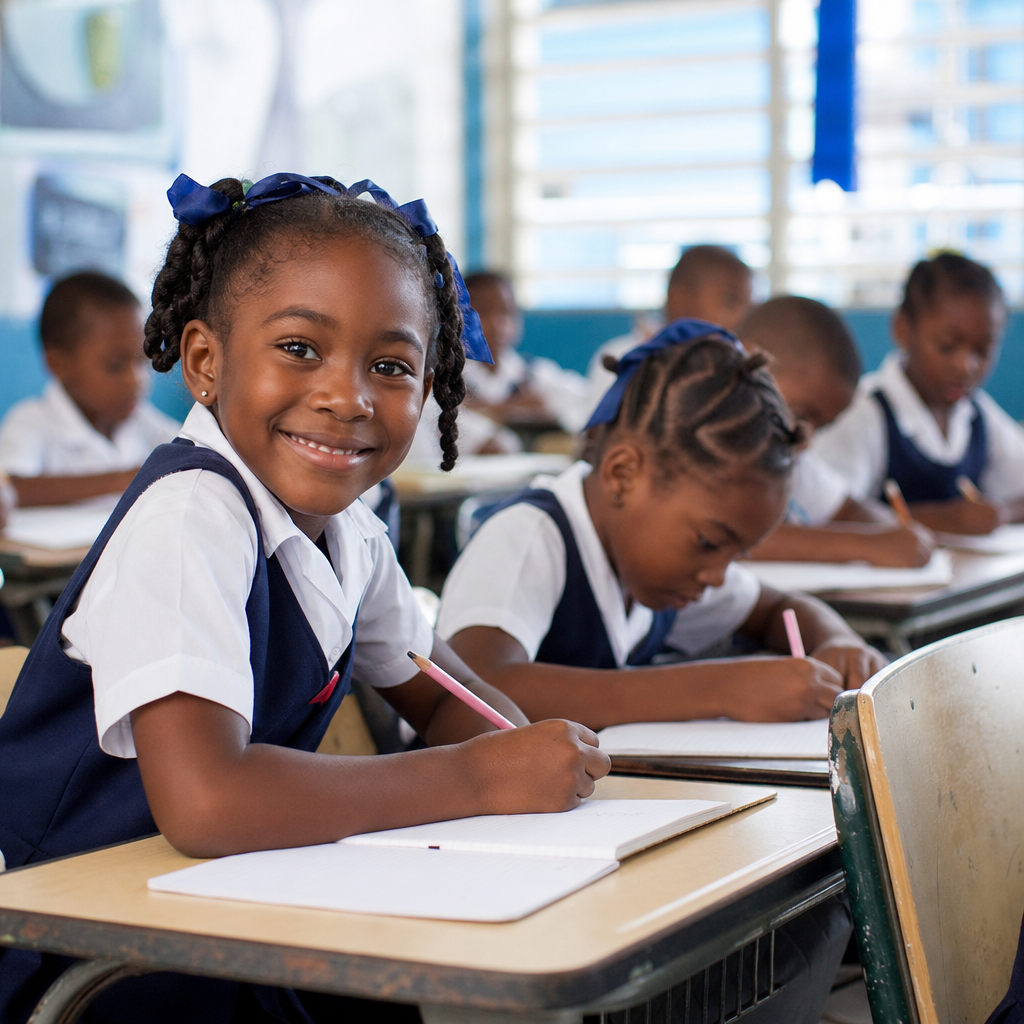
A typical school day in Nevis is structured and disciplined, with clear expectations around punctuality, uniforms, assembly, classroom conduct, and homework. Students usually arrive in uniform, which reinforces equality, neatness, and school identity. Morning assembly remains important in many Caribbean schools, including those in Nevis, serving as a time for announcements, prayer or reflection in some contexts, recognition of achievements, and reinforcement of values. For outside observers, this routine can seem formal, but it plays a practical role in setting the tone for the day.
Classroom teaching generally combines direct instruction, recitation, workbook exercises, and group activities, though teaching styles vary by school and teacher. In smaller island settings, class sizes can allow for stronger teacher-student familiarity, but resources may differ between schools and year groups. I have seen that in systems like Nevis, experienced teachers often compensate for limited materials through strong classroom management and personal commitment. Students are expected to show respect, complete written work carefully, and prepare for regular tests. Academic seriousness is not abstract; it is visible in how schools emphasize reading fluency, arithmetic confidence, and examination readiness from an early stage.
Beyond lessons, the school day often includes break periods, supervised lunch, sports practice, clubs, and rehearsals for cultural events. For many children, school is also where they access social support, guidance, mentorship, and opportunities they might not otherwise encounter daily on a small island. That is one reason school life in Nevis cannot be reduced to textbooks. The campus is a social ecosystem where friendship networks, leadership habits, and community expectations are formed.
Culture, Heritage, and Identity in the Classroom
Culture is not an optional extra in Nevisian education; it is woven into the way students understand themselves and their island. Lessons in history and social studies situate Nevis within the wider story of the Caribbean, including colonialism, emancipation, federation, migration, and nation building. Students learn about local landmarks, national heroes, and important civic dates. This matters because small islands must work deliberately to preserve memory. Schools are one of the main places where that preservation happens.
Music, dance, storytelling, and performance also carry educational weight. Choirs, drumming, poetry recitals, and festival presentations help students develop confidence while keeping traditions active. Nevis has a strong cultural calendar, and schools often participate in independence celebrations, heritage events, and community performances. These activities teach more than stage presence. They teach public responsibility, teamwork, historical awareness, and pride in local expression. In practical terms, children learn that being educated does not mean becoming detached from their roots.
Language offers another example. Instruction is delivered in Standard English, yet students live in a linguistic environment shaped by Caribbean speech patterns and local idiom. Good teachers in Nevis understand the distinction between honoring students’ home language realities and building formal literacy. The goal is not to erase local expression but to add range. That approach is educationally sound because students need command of formal written English for exams and careers, while cultural fluency remains central to identity and belonging.
Activities Beyond the Classroom
Extracurricular life is one of the clearest ways to glimpse education and culture working together in Nevis. Schools encourage participation in athletics, cricket, netball, football, debate, music, scouting, and service activities. On a small island, these programs have outsized importance. They keep students engaged after classes, build public confidence, and create pathways for recognition beyond academics alone. Sporting events in particular can draw broad community support, turning school competition into a shared social occasion.
Several common areas of school life illustrate how these activities support development:
| Area | What Students Gain | Why It Matters in Nevis |
|---|---|---|
| Sports | Fitness, teamwork, discipline | Builds school pride and community visibility |
| Music and performance | Confidence, memory, expression | Preserves cultural traditions and public participation |
| Debate and public speaking | Critical thinking, articulation | Prepares students for leadership in a close-knit society |
| Clubs and service | Responsibility, empathy, initiative | Strengthens civic habits on a small island |
These activities often matter just as much as formal grades when families discuss a child’s progress. A student who learns to captain a cricket side, perform in a school concert, or speak confidently at assembly gains durable skills that transfer into adult life. Employers, community leaders, and educators across the Caribbean regularly note that reliability, communication, and self-presentation can be as decisive as technical knowledge. Nevisian schools understand that reality well.
Teachers, Families, and Community Expectations
One of the strongest features of school life in Nevis is the close relationship between schools and families. Parents and guardians are usually highly aware of school expectations, even when they face work pressures or transport constraints. Because communities are relatively small, student behavior is not hidden from public view. Teachers, relatives, neighbors, and church members may all know one another, which creates a web of social accountability. That can be supportive for children, though it can also feel demanding because expectations are public and persistent.
Teachers on the island often perform multiple roles: instructor, mentor, disciplinarian, event organizer, counselor, and community representative. In many small systems, educators carry a workload that extends beyond classroom hours, and Nevis is no exception. They may supervise clubs, prepare students for examinations, organize cultural items, and communicate closely with parents. This breadth of responsibility is one reason local respect for good teachers tends to run deep. Families know from experience that a committed teacher can alter a child’s trajectory in a visible way.
Community expectations around manners, presentation, and effort remain significant. Students are generally expected to greet adults properly, wear uniforms correctly, respect school property, and participate responsibly in public events. These norms are not trivial. They reflect a wider belief that education includes character formation. In Nevis, a well-schooled child is not judged only by report cards, but by conduct, speech, reliability, and awareness of others.
Challenges, Change, and Future Priorities
Like many island education systems, Nevis faces practical challenges that shape daily school life. Resource constraints can affect facilities, specialist staffing, technology access, and the breadth of subject options, especially at smaller schools. Teacher recruitment and retention may be complicated by migration, salary pressures, and competition from other sectors. Students also face the modern pressures seen everywhere: distraction from digital media, uneven home support, and the need to prepare for economies that are changing quickly.
At the same time, small scale can be an advantage. Policy changes can be felt quickly, inter-school collaboration can be easier to organize, and community response to student needs can be direct. Regional institutions such as the Caribbean Examinations Council provide a common academic benchmark, while digital tools increasingly widen access to learning resources, virtual content, and professional development. The most effective path forward for Nevis is not to imitate much larger countries without adaptation. It is to strengthen foundational literacy and numeracy, invest in teacher support, expand technical and digital learning, and preserve the cultural strengths that already make school life meaningful.
Anyone trying to understand local life and experiences in Nevis should pay attention to its schools. They show the island at work: ambitious but grounded, disciplined yet expressive, small in scale but rich in identity. Education here is about competence, certainly, but also about continuity. Children are being prepared not only to pass exams or leave for opportunities abroad, but to carry Nevis with them wherever they go.
A glimpse into Nevis’ school life therefore reveals much more than classrooms and timetables. It reveals how a community teaches values, remembers its history, and equips young people for a changing world. If you want to explore Nevis beyond scenery and travel brochures, start with its schools, speak with educators and families, and follow the everyday routines that shape the island’s future.
Frequently Asked Questions
1. What makes school life in Nevis different from larger education systems?
School life in Nevis stands out because it is shaped by the close-knit nature of the island itself. On an island with a relatively small population, schools function as far more than places of formal instruction. They are central community spaces where teachers, parents, extended families, church leaders, coaches, and local organizations often know one another personally and work together in visible, practical ways. This creates an educational environment where children are not easily anonymous; their progress, behavior, talents, and challenges are often noticed by a wider circle of adults.
That community closeness influences the tone of daily school life. Relationships tend to be more personal, and school events frequently carry strong local participation. Assemblies, cultural programs, sports days, and holiday observances can reflect the island’s social fabric in ways that are harder to replicate in larger, more fragmented systems. Students are growing up in a setting where education is regularly connected to family expectations, civic pride, and community reputation.
Another important difference is that learning in Nevis is often intertwined with local history, heritage, and identity. Children are not just absorbing general academic content; they are also learning what it means to belong to a small Caribbean island with its own traditions, historical memory, and cultural rhythms. In practical terms, that means school life may include stronger visibility of local customs, national celebrations, religious influence, and community-based values such as respect, discipline, and participation.
2. How are education and culture connected in Nevisian schools?
In Nevis, education and culture are deeply linked because schools help preserve and transmit the island’s social values, traditions, and sense of identity. Culture is not limited to special occasions; it often appears in the everyday atmosphere of school life, from morning routines and shared expectations to music, storytelling, celebrations, and the way students are taught to represent themselves in public. Children learn not only academic subjects but also how to carry themselves as members of a community with a strong collective memory.
Local heritage can surface in classroom discussions, national observances, and extracurricular activities that highlight Nevisian and wider Caribbean history. Students may engage with topics related to colonial history, emancipation, local heroes, village life, and the importance of preserving island traditions. Cultural expression can also come through performances, recitations, folk traditions, and celebrations that reinforce a sense of belonging. In a place like Nevis, these experiences are especially important because they help young people see themselves as part of a continuing story rather than as individuals disconnected from their environment.
The connection between education and culture is also reinforced by the broader community. Families, churches, and local groups often play a role in shaping how values are taught and practiced. Respect for elders, pride in presentation, spiritual life, and commitment to community involvement may all influence the expectations placed on students. As a result, schools in Nevis are not simply preparing children for exams; they are also helping form citizens who understand the customs, relationships, and cultural foundations of island life.
3. What role does the community play in the daily life of schools in Nevis?
The community plays a remarkably active role in school life in Nevis, largely because of the island’s small scale and strong social interconnectedness. Schools are not separate from the neighborhoods around them; they are woven into the same networks that include families, churches, health services, youth groups, sports organizations, and public institutions. This means that a child’s school experience is often influenced by multiple layers of community involvement, both formal and informal.
Parents and relatives may be highly visible at school events, while local leaders and organizations often support educational programs, celebrations, and student activities. Sporting competitions, cultural showcases, graduations, and commemorative events can become community occasions rather than school-only functions. That kind of participation strengthens accountability and reinforces the idea that education is a shared responsibility. Children grow up seeing that their effort in school matters not just to teachers but to the wider society around them.
This close involvement can also provide support structures that are especially meaningful in a small-island setting. Students may benefit from adults who recognize their strengths early, encourage their ambitions, and step in when help is needed. At the same time, community visibility can bring higher expectations for conduct and achievement. Because people know one another, students are often reminded that their behavior reflects on their families and communities as well as on themselves. In that sense, school life in Nevis becomes an extension of island life as a whole: relational, public, and rooted in mutual awareness.
4. What does a typical student experience in Nevis reveal about childhood and growing up on the island?
A typical student experience in Nevis reveals that childhood on the island is shaped by structure, familiarity, and a strong sense of social belonging. Daily routines often reflect the balance between formal education and the rhythms of community life. Students move through a world where school, home, church, recreation, and family obligations are closely connected, rather than divided into separate spheres. That continuity gives children a grounded understanding of their place in society from an early age.
Growing up in this environment often means being known across multiple settings. A teacher may know a student’s relatives, a coach may also be a family acquaintance, and community members may take a direct interest in a child’s progress. This can foster confidence, support, and accountability all at once. Children are often encouraged to show respect, maintain discipline, contribute to group activities, and take pride in representing their school. These expectations are not abstract; they are reinforced in real relationships every day.
The student experience also reflects the cultural texture of island life. Schoolchildren in Nevis are likely to encounter traditions, celebrations, and public events that help connect education with identity. Sports, performance, religion, and community ceremonies can all become part of how young people understand themselves and their future. In this way, school life offers insight into how Nevisian children are raised not only to succeed academically, but also to participate meaningfully in the social and cultural life of the island.
5. Why is understanding school life important for understanding Nevis as a whole?
Understanding school life is important because schools in Nevis provide one of the clearest views into how the island works socially, culturally, and even emotionally. Education on a small island is never just about curriculum delivery. It reflects how families interact, how values are preserved, how public institutions function, and how communities invest in younger generations. If someone wants to understand Nevis beyond its scenery or tourism image, looking at its schools offers a much more grounded and revealing perspective.
Within school life, you can see the island’s priorities take shape. You see the importance placed on respect, presentation, collective identity, and community participation. You also see how culture is passed down in practical ways, through ceremonies, language patterns, celebrations, discipline, and shared public experiences. Schools become a lens through which larger themes in Nevisian life become visible: tradition and change, local pride and global aspiration, individual development and communal responsibility.
Perhaps most importantly, school life shows how the future of Nevis is formed in everyday settings. The values taught to children, the support they receive, and the cultural frameworks they inherit all shape the next generation of citizens. To understand those processes is to understand how Nevis sustains its identity while adapting to modern realities. In that sense, school life is not a side topic at all; it is one of the most meaningful entry points into the island’s character, continuity, and social life.