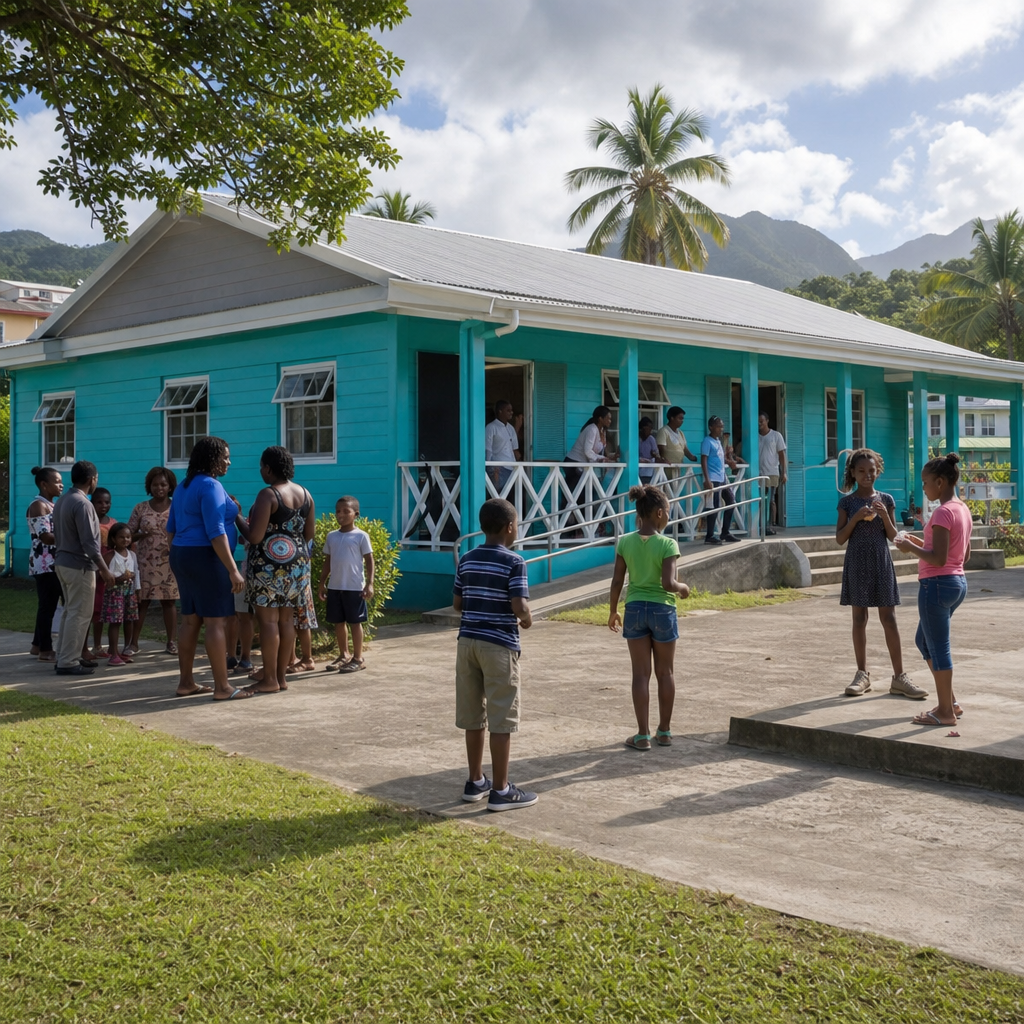
Community centers in Nevis are more than meeting halls: they are the everyday infrastructure that supports culture, education, recreation, emergency response, and neighborhood cohesion across the island. In practical terms, a community center is a shared local facility where residents gather for classes, public meetings, youth programs, health outreach, celebrations, and civic problem solving. On a small island like Nevis, where villages retain strong identities and personal networks still shape daily life, these spaces carry unusual importance. They help connect generations, preserve traditions, and provide access to services that might otherwise be scattered or difficult to reach. I have seen repeatedly that when a center is active, nearby residents tend to have more opportunities to participate in village life, and local organizers can move faster because they already have a trusted venue and audience. That makes community centers central to local life and experiences in Nevis, and it is why any broad guide to the island’s miscellaneous community assets should start here.
Nevis, the smaller island in the Federation of Saint Kitts and Nevis, combines rural settlements, a close-knit population, and a public culture built around churches, schools, sporting events, festivals, and village associations. In that setting, the role of a community center extends beyond simple room rental. It can function as a place for after-school support, a venue for seniors’ activities, a rehearsal space for cultural groups, and a hub during storms or public information campaigns. These facilities matter because they reduce social isolation, strengthen local identity, and turn abstract ideas like development and participation into visible, repeatable action. For residents, they are where information becomes engagement. For visitors trying to understand Nevis beyond beaches and resorts, they reveal how communities organize themselves, celebrate milestones, and respond to shared needs. As a hub topic within local life and experiences, community centers offer a useful entry point to many related subjects: heritage, youth development, volunteerism, health initiatives, neighborhood events, sports, and public service delivery.
Why community centers matter in everyday Nevisian life
The basic answer is direct: community centers matter because they give villages and neighborhoods a stable place to gather, plan, teach, celebrate, and assist one another. On an island where public life is intensely local, the presence of a functional shared space changes what a community can realistically do. Parent meetings can happen without borrowing a classroom. Craft groups can meet consistently. Youth clubs can run structured activities instead of relying on informal arrangements. Public agencies can reach residents with screenings, forms, or workshops in familiar surroundings. This convenience sounds simple, but in practice it shapes participation rates. People attend more often when the location is known, nearby, and socially comfortable.
In Nevis, local life is still strongly tied to village rhythms, church calendars, school schedules, and seasonal celebrations. Community centers sit at the crossroads of those rhythms. They host wedding receptions, funeral repasts, pageants, fitness sessions, voter education meetings, small business workshops, and cultural rehearsals. They may also serve as venues for agricultural discussions, neighborhood association planning, and charitable drives. Because many residents know one another personally, the center also acts as a trust bridge. New initiatives gain credibility when introduced in a familiar local space by people the community recognizes. That social trust is hard to quantify, but it is one of the most valuable assets a center provides.
Cultural preservation and intergenerational learning
One of the clearest roles of community centers in Nevis is cultural preservation. Small islands often face pressure from migration, imported media, and economic change, all of which can weaken local traditions if there is no place to teach and practice them. Community centers help prevent that erosion by giving residents a venue to pass on music, dance, storytelling, culinary knowledge, and customary forms of celebration. In my experience with local programming, the most successful cultural activities are not one-off performances for visitors; they are recurring sessions where older residents teach younger participants in an ordinary, accessible setting.
That process matters for festivals and public holidays, but also for the quieter details of identity: dialect expressions, folk memory, etiquette, village history, and the stories attached to particular families or neighborhoods. Centers support these exchanges because they can host rehearsals, oral history gatherings, exhibitions, and practical workshops. A youth dance group, for example, needs a place to practice regularly. A heritage club documenting community elders needs a room for interviews and recordings. A cooking demonstration based on local ingredients needs a venue where participants can gather and talk through methods and meaning. Without these spaces, cultural transmission becomes more fragmented and less visible.
For visitors interested in authentic local experiences, this role is especially important. A well-used community center often offers a more accurate picture of Nevisian life than any packaged attraction. It shows how residents represent themselves, what they prioritize, and how traditions evolve in real time rather than being frozen for display.
Youth development, education, and practical skills
Community centers in Nevis also support youth development by filling gaps that formal school hours cannot cover. Education does not end when classes dismiss, and families often need safe, structured environments for children and teenagers during afternoons, weekends, and holidays. Centers can host homework assistance, reading circles, exam preparation, computer access, debating clubs, music lessons, and leadership training. These are not abstract benefits. They influence confidence, attendance, employability, and social behavior over time.
On small islands, where resources can be limited and opportunities unevenly distributed by location or household income, shared facilities help level access. A student without strong internet access at home benefits from a center offering digital resources or supervised study time. A young person curious about entrepreneurship gains from meeting a local business owner at a workshop. A teenager interested in public speaking or event planning can practice through youth councils, pageants, community fairs, or volunteer committees. I have seen these settings become informal pipelines into tourism work, teaching, public service, and creative enterprise because they give participants a first experience of responsibility.
Community centers also support lifelong learning for adults. Financial literacy sessions, CV writing workshops, agricultural extension meetings, health education talks, and artisan training all fit naturally into the same space. This is one reason they matter across the miscellaneous local-life category: they are not restricted to one age group or one function. They are platforms for practical advancement.
Health outreach, social support, and emergency readiness
A strong community center improves public health communication and local resilience. Residents are more likely to attend blood pressure screenings, nutrition talks, mental health awareness sessions, vaccination outreach, or caregiver meetings when these are delivered in a trusted local venue. On an island such as Nevis, where transport and schedules can affect attendance, bringing services closer to communities can significantly improve reach. Public health works best when information is repeated in person, questions are answered clearly, and residents feel comfortable raising concerns. Centers make that possible.
They also help reduce social isolation, especially for seniors, caregivers, and people living alone. Regular gatherings, exercise classes, hobby groups, and communal meals create routine social contact, which is itself a protective factor for wellbeing. During difficult periods, such as economic strain, bereavement, or severe weather preparation, the center often becomes a coordination point for assistance and information sharing.
| Function | How a Nevis community center helps | Practical local impact |
|---|---|---|
| Health outreach | Hosts screenings, talks, and clinic-led education sessions | Improves attendance and early awareness of preventable issues |
| Youth engagement | Provides safe after-school and holiday programming | Supports supervision, skills, and confidence |
| Cultural continuity | Offers space for rehearsals, storytelling, crafts, and heritage events | Preserves traditions across generations |
| Emergency readiness | Serves as meeting point for updates, supplies, or coordination | Strengthens local response during storms or disruptions |
| Civic participation | Enables town-hall style meetings and public consultations | Connects residents directly to decision-making |
Emergency readiness deserves special emphasis. Caribbean islands must plan around hurricanes and related disruptions. While formal shelters and emergency management systems have defined roles, community centers can still act as communication nodes, volunteer staging points, or places for preparedness training. Their value lies in familiarity: people already know where they are, how to reach them, and who typically coordinates activities there.
Economic, civic, and tourism-related value
Community centers contribute to the local economy in ways that are easy to miss if attention is focused only on major sectors. First, they create low-cost venues for commerce-adjacent activity: vendor meetings, craft exhibitions, training sessions, cooperative planning, and small events that generate income for decorators, caterers, musicians, and transport providers. Second, they support employability by hosting workshops on customer service, digital skills, interview preparation, and entrepreneurship. In a tourism-linked economy, these practical sessions can have direct labor-market value.
They also strengthen civic life. Public consultations, constituency discussions, nonprofit meetings, and neighborhood planning sessions are more effective when held in spaces residents identify as their own. Good local governance depends on participation, and participation depends on accessible venues. A community center makes it easier for ministries, elected representatives, schools, health teams, and civil society groups to meet residents where they are. This kind of face-to-face contact remains important in Nevis, where trust, reputation, and follow-through often determine whether an initiative succeeds.
There is also a tourism-related dimension, though it should be handled carefully. Community centers can support heritage showcases, local exhibitions, or village events that help visitors engage respectfully with Nevisian culture. The benefit is not simply entertainment. It is economic circulation tied to local authorship. When cultural demonstrations, seasonal fairs, or artisan markets are organized through community-based venues, more value tends to stay with residents. The tradeoff is that programming must remain community-led. Once activities are shaped only for outside consumption, authenticity weakens and resident participation often declines.
Challenges, management realities, and what makes a center succeed
Not every community center automatically delivers these benefits. The difference between a thriving center and an underused hall usually comes down to management, maintenance, programming, and partnerships. Buildings need predictable upkeep: roofs, lighting, seating, bathrooms, accessibility features, and basic safety standards cannot be neglected. Scheduling must be transparent so no single group dominates access unfairly. Governance matters as much as infrastructure. The most effective centers typically have clear local leadership, a calendar of recurring activities, and working relationships with schools, churches, health services, sports groups, and government departments.
Funding is a common challenge. Many centers depend on mixed support, including public allocations, private donations, fundraising events, rental income, and volunteer labor. That model can work, but it requires disciplined administration. Accurate accounts, booking procedures, and maintenance planning are essential. Digital communication helps too. Even a simple WhatsApp announcement network or Facebook page can increase attendance and make programming more visible to younger residents and diaspora families.
Success also depends on inclusion. A center should not cater only to one age bracket, political network, or social circle. The strongest examples balance children’s activities, youth opportunities, adult learning, senior engagement, and cultural programming. They welcome both routine use and special events. In practical terms, that means listening to the community, tracking which programs draw attendance, and adjusting accordingly. Residents support centers when they can see that the space belongs to everyone and produces tangible value.
Community centers in Nevis remain essential because they turn local connection into organized action. They preserve culture, support youth, extend health outreach, encourage civic participation, and provide practical venues for learning, celebration, and resilience. As a hub within local life and experiences, this topic connects naturally to heritage, education, volunteerism, sports, public service, and village identity. The central lesson is simple: when a community has a trusted shared space, it can solve more problems locally and sustain more of what makes it distinct.
For residents, that means stronger networks and better access to programs close to home. For visitors, it offers a clearer understanding of how Nevis actually works beyond its scenic image. For policymakers and organizers, it is a reminder that investment in local facilities produces social returns far beyond the building itself. If you are exploring Nevis’s community life, start by looking at the centers, halls, and gathering spaces that anchor each area. They reveal the island’s priorities, its social strengths, and the everyday partnerships that keep village life active. Follow that path, and you will understand Nevis more completely.
Frequently Asked Questions
What role do community centers play in everyday life in Nevis?
Community centers in Nevis serve as practical, day-to-day support systems for village life. They are not simply buildings used for occasional events; they function as shared spaces where residents come together for education, recreation, public discussion, cultural activities, and neighborhood coordination. In a close-knit island setting, these centers help translate community relationships into organized action. A parent may bring a child to an after-school activity, a local group may hold a planning meeting, health workers may host outreach sessions, and elders may gather for social interaction or informational programs—all in the same facility.
Because Nevis is made up of communities with strong local identities, community centers also help preserve a sense of belonging. They provide a familiar, accessible place where people can meet face to face, exchange information, and respond collectively to local needs. This matters on an island where trust, personal connections, and community participation continue to shape how problems are solved. In that sense, community centers act as the everyday infrastructure of social life in Nevis, supporting both routine engagement and the island’s broader resilience.
How do community centers help preserve culture and strengthen village identity in Nevis?
Community centers are important cultural anchors in Nevis because they provide space for traditions to be practiced, shared, and passed down. Local celebrations, music and dance rehearsals, seasonal events, storytelling, craft workshops, and heritage-focused gatherings often rely on community-based venues. When these activities happen in a familiar local setting rather than a distant or purely formal institution, they remain rooted in the village and connected to the people who live there.
These centers also strengthen village identity by giving residents a place to express what makes their community distinct while still contributing to island-wide life. In Nevis, villages have their own histories, relationships, and social rhythms, and a community center can become the place where those local qualities are sustained. Younger generations benefit from direct exposure to customs and shared memories, while older residents gain an avenue to remain active in community life. Over time, this helps protect cultural continuity, reinforces pride of place, and ensures that local identity remains a living part of everyday life rather than something remembered only during special occasions.
In what ways do community centers in Nevis support education, youth development, and public services?
Community centers in Nevis often serve as flexible platforms for educational and developmental programs that might otherwise be harder to deliver consistently at the neighborhood level. They can host tutoring, skills workshops, literacy support, computer training, career talks, youth clubs, and educational seminars. For children and teenagers, these spaces provide structured, supervised environments where they can learn, socialize, and build confidence outside of school hours. That role is especially valuable in smaller communities, where accessible local programming can make a meaningful difference in participation and outcomes.
Beyond youth development, community centers support public services by making outreach more local and more effective. Government departments, nonprofit organizations, health professionals, and civic groups can use these venues to bring information and assistance directly into communities. This may include health screenings, nutrition education, parenting sessions, social support services, civic consultations, or public awareness campaigns. Because residents already recognize the center as a trusted gathering place, engagement is often more natural and more inclusive. In this way, community centers help bridge the gap between institutions and the public, ensuring that services are not just available in theory but accessible in practice.
Why are community centers important for emergency response and community resilience in Nevis?
On an island like Nevis, community resilience depends heavily on local coordination, and community centers can play a vital role in that process. During severe weather events, public emergencies, or periods of community disruption, these facilities may serve as staging points for communication, relief coordination, volunteer organization, and local support. Even when they are not formal shelters, they are often among the most recognizable and accessible shared spaces in a village, making them useful for distributing information, supplies, and assistance.
Their value, however, goes beyond emergency use itself. Community centers strengthen resilience before a crisis occurs by helping residents build relationships, routines of cooperation, and habits of civic participation. People who already know where to gather, whom to contact, and how to work together are better positioned to respond effectively under pressure. In Nevis, where community ties remain a major asset, this social readiness is just as important as physical infrastructure. A well-used community center supports both preparedness and recovery by giving neighborhoods a stable place from which to organize, communicate, and care for one another.
What makes community centers especially significant on a small island like Nevis?
The significance of community centers in Nevis is closely tied to the scale and character of island life. In larger places, social services, cultural programming, and civic engagement may be spread across many specialized institutions. In Nevis, a single community center often fulfills several of those roles at once. It may be a classroom one day, a meeting venue the next, a rehearsal space in the evening, and a coordination point during a local challenge. That versatility makes it one of the most useful forms of shared infrastructure in a small-island setting.
Community centers are also significant because they support a model of development that remains people-centered and place-based. They make it easier for residents to participate in decisions, access programs close to home, maintain intergenerational ties, and solve local problems collectively. On a small island, proximity matters, familiarity matters, and trusted gathering spaces matter. Community centers bring all of those elements together. They help ensure that social cohesion is not left to chance, but is supported through a physical space where community life can regularly take shape.