Island Tales: Storytelling Night in Nevis captures one of the most vivid parts of local life: the way memory, music, humor, and history are shared aloud after sunset. In Nevis, storytelling night is not a staged novelty for visitors alone. It is a living social practice shaped by village gatherings, family verandas, school performances, community festivals, and cultural events where elders, performers, and younger listeners meet in the same circle. When people speak about “storytelling” here, they usually mean more than reading a tale. They mean spoken performance, call-and-response, improvised commentary, folk sayings, Anansi stories, personal testimony, and songs that carry local history in memorable lines.
That matters because Nevis is small in size but rich in oral tradition. Like many Caribbean communities, the island has preserved knowledge through voice as much as through print. Stories explain place names, recount hurricane seasons, remember plantation-era realities, celebrate village characters, and pass on lessons about wit, pride, caution, and resilience. In my experience covering Caribbean cultural programs and listening in community spaces, the strongest storytelling nights work because they feel communal rather than theatrical. The audience is not passive. People laugh, correct details, finish lines, and measure a teller’s skill by timing, phrasing, and authenticity.
As a hub within Local Life and Experiences, this guide covers the miscellaneous side of storytelling night in Nevis: what it is, where it happens, what themes appear, how it connects to food, music, tourism, education, and heritage, and what visitors should expect. If you are searching for an authentic evening activity in Nevis, the direct answer is simple: a storytelling night offers one of the clearest windows into the island’s character because it combines entertainment with cultural memory. It is low-tech, deeply social, and often more revealing than a formal museum visit.
Key terms help frame the subject. Oral tradition refers to knowledge passed through speech and performance rather than written documents. Folklore includes traditional stories, proverbs, songs, beliefs, and customs. A cultural night is a broader event that may include dance, drumming, food, and spoken word, while a storytelling night centers spoken performance as the main attraction. In Nevis, those categories often overlap. A single evening might begin with a folk song, move into a comic village story, shift toward an Anansi trickster tale, and end with a reflective account about migration, education, or community change.
What a storytelling night in Nevis usually looks like
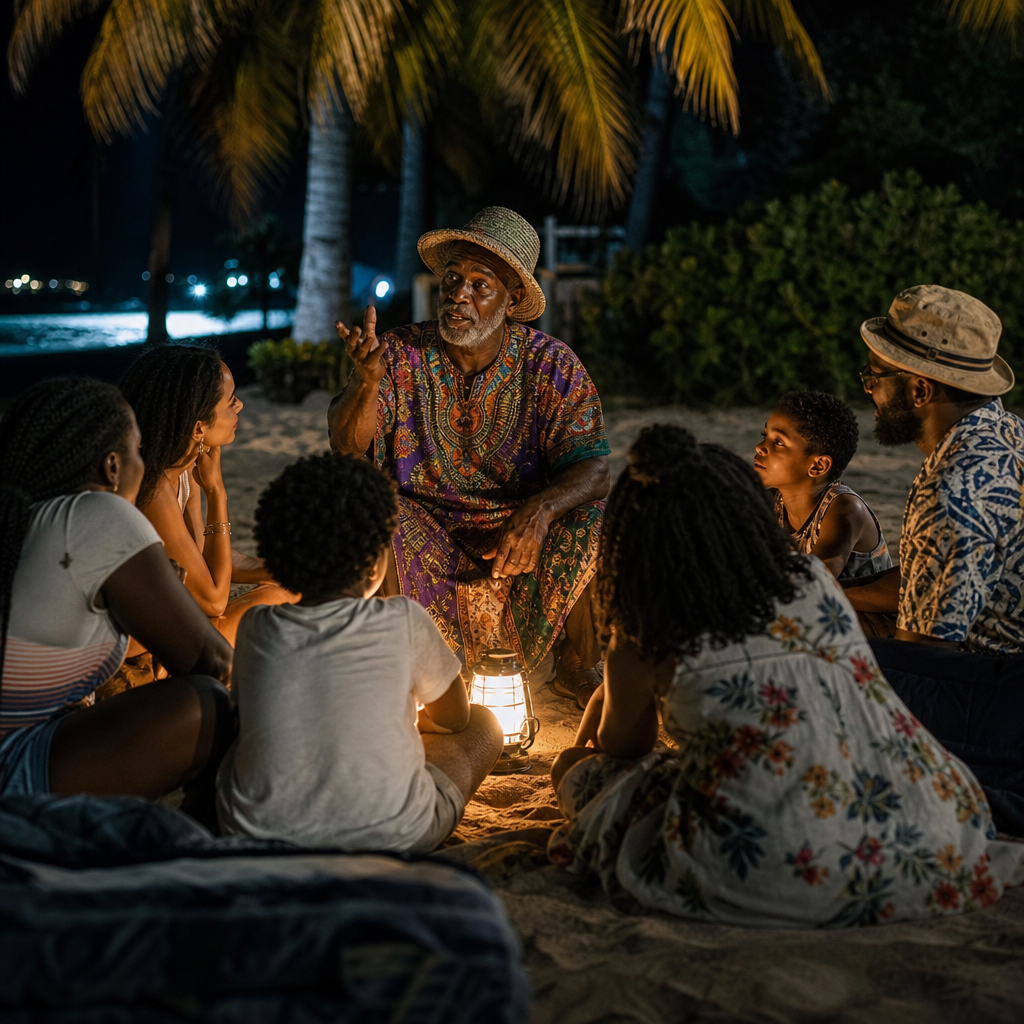
A typical storytelling night in Nevis is intimate, rhythmic, and shaped by the setting. It may be held at a community center, heritage venue, school hall, hotel courtyard, village yard, or festival stage. Seating is often simple. The atmosphere matters as much as the program: warm evening air, familiar dialect, laughter from several generations, and occasional music between speakers. Unlike highly scripted performances, local events often leave room for spontaneity. A host introduces tellers, but performers may adjust stories in response to the crowd, current events, or the age mix in the audience.
The best tellers combine language control with observation. They know when to use standard English for clarity and when to shift into local speech for humor, emphasis, or realism. That code-switching is part of the art. A story about a stubborn fisherman, a strict grandparent, or a clever child sounds different when the teller uses island cadence and idiom. Visitors sometimes worry they will miss the meaning. In practice, context, gesture, repetition, and audience reaction make most stories easy to follow, and that process helps listeners hear Nevisian speech as a living cultural form rather than background color.
Storytelling nights also tend to mix genres. One speaker may tell a humorous folktale; another may offer a real memory about schooldays, sugar estate work, church life, or hurricane preparation. This variety keeps the event grounded. Folklore is not treated as something frozen in the distant past. It sits beside present-day concerns such as youth identity, migration, tourism work, and preserving village ties. That blend is precisely why the topic belongs in a miscellaneous hub: storytelling touches many parts of everyday life and connects to nearly every local experience category.
Common themes, characters, and cultural meanings
Several recurring themes define island storytelling in Nevis. Trickster intelligence is one of the strongest. Across the Caribbean, Anansi stories remain important because they reward wit over raw power. They emerged from West African traditions and took on new meanings in colonial societies where survival often depended on strategy, coded speech, and social reading. When Anansi appears in a Nevis setting, the spider is rarely just comic. He represents the ability to outthink stronger opponents, expose greed, and reveal the weakness hidden inside authority.
Another major theme is reputation. In small communities, everyone knows the difference between public image and private behavior, and stories play with that gap. The respectable churchgoer, boastful farmer, flashy return migrant, or chronic gossip can all become comic material. These stories are entertaining, but they also regulate behavior. A well-timed tale reminds listeners that pride, dishonesty, or selfishness will eventually be noticed. Oral culture can serve as social accountability without becoming a lecture.
Place is equally important. Nevisian stories often attach memory to roads, villages, churches, schools, beaches, estates, and mountain paths. A story about walking from one district to another, carrying produce, courting by lantern light, or hearing jumbie warnings after dark gives shape to the island beyond maps. For visitors, this is valuable context. You learn that a landscape is not only scenic; it is narrated. The road, tree, ruin, or shoreline becomes meaningful because someone has attached a lived experience to it.
| Theme | How it appears at storytelling night | Why it matters in Nevis |
|---|---|---|
| Trickster tales | Anansi or clever local figures outsmart stronger rivals | Reflects resilience, strategy, and inherited African storytelling traditions |
| Village humor | Stories about gossip, courtship, pride, or everyday mishaps | Builds community through shared recognition and social commentary |
| Historical memory | Accounts of plantation life, labor, migration, storms, and schooling | Preserves lived history often absent from formal archives |
| Spiritual beliefs | Warnings, jumbie stories, nighttime encounters, moral lessons | Shows how folklore and belief shape behavior and imagination |
| Place-based identity | Stories tied to villages, roads, estates, and family land | Strengthens attachment to landscape and local belonging |
Where storytelling connects with food, music, and festivals
Storytelling nights in Nevis rarely exist in isolation. They often sit alongside other sensory parts of island life, especially food and music. At a community cultural evening, spoken performance may be paired with local dishes such as goat water, saltfish, cook-up style sides, johnny cakes, coconut tart, or bush tea. That pairing is not incidental. Food keeps people in the space longer, encourages intergenerational attendance, and reinforces the idea that culture is participatory. You are not simply consuming a performance; you are entering a shared social setting with its own pace and etiquette.
Music adds another layer. Drumming, folk songs, gospel harmonies, string band influences, or a brief dance item can reset the room between stories and prevent fatigue. Skilled organizers know that oral performance works best when the evening has texture. A serious historical account may be followed by a comic song. A children’s recitation may come before an elder’s memory. This variety mirrors wider Caribbean festival programming, where the boundaries between spoken word, music, ritual, and celebration are fluid rather than fixed.
Festival periods are especially important for storytelling visibility. During heritage-focused events, independence observances, school cultural showcases, and tourism calendars, storytelling gains a formal platform and reaches audiences who might not attend a purely literary event. Hotels and cultural institutions sometimes incorporate folk nights because travelers increasingly want experiential programming instead of generic entertainment. The strongest examples avoid flattening the tradition into caricature. They use knowledgeable hosts, local performers, and contextual explanation so that visitors understand what they are hearing and residents still recognize the event as culturally honest.
Why storytelling night matters for heritage, education, and tourism
Storytelling night matters because oral tradition does practical cultural work. First, it preserves language patterns that disappear quickly when younger speakers hear only standardized media. Accent, proverb structure, pacing, and local metaphor all survive better when performed publicly. Second, it preserves community history that may never appear in official records. A former teacher’s recollection of school routines, an elder’s memory of storm recovery, or a farmer’s account of market travel can add detail that archives, monuments, and textbooks often miss.
In education, storytelling is more than enrichment. Teachers and cultural workers use oral narratives to develop listening skills, memory, confidence, historical awareness, and creative expression. Children who learn a folktale are not only practicing performance. They are absorbing values, humor, and verbal technique. I have seen school programs across the region transform shy students when they realize that family expressions and village stories count as knowledge. That shift is powerful because it validates local culture inside formal learning environments.
Tourism also benefits when storytelling is done well. Travelers increasingly judge destinations by authenticity, and oral culture offers something that cannot be replicated by imported entertainment formats. A storytelling night gives context to daytime sightseeing. After hearing local stories, a visitor understands plantation ruins, churches, village layouts, and family compounds differently. The economic value is real, but there is a tradeoff. If events are designed only for tourist expectations, nuance gets lost. The most sustainable model serves residents first and welcomes visitors into an existing cultural practice rather than inventing a superficial version for them.
How visitors can experience storytelling respectfully in Nevis
If you want to attend a storytelling night in Nevis, start by checking community calendars, heritage organizations, hotel cultural schedules, local social media pages, libraries, museums, and festival announcements. Because the island is small, some of the best events are not heavily marketed online. Asking a guesthouse host, taxi driver, cultural officer, or resident with community ties often produces better results than a generic search. Storytelling may also be embedded inside a broader cultural night, so look for programs that mention folklore, spoken word, heritage, or community performance.
Respectful attendance is simple. Arrive on time, listen actively, keep phone use minimal, and avoid treating dialect as a novelty. If the audience responds during a call-and-response section, follow the room. If a story addresses slavery, migration, or hardship, do not expect constant comedy. Oral tradition can be playful, but it can also be serious testimony. Supporting the event by purchasing food, donating where appropriate, or thanking organizers directly helps small community programs continue.
For families, storytelling night is usually one of the most accessible evening experiences on the island because it does not require specialized knowledge. For researchers, writers, and culturally curious travelers, it offers unusually dense local insight in a short period. The main thing to remember is that storytelling in Nevis is not background entertainment. It is a social archive. Listening well is part of the experience, and asking informed follow-up questions afterward often leads to the richest conversations of the trip.
Island Tales: Storytelling Night in Nevis belongs at the center of any serious guide to local life because it gathers so many strands of culture into one shared evening. It preserves oral tradition, showcases language, teaches history, strengthens community ties, and offers visitors a direct encounter with the island beyond beaches and resort spaces. Whether the stories are comic, cautionary, historical, or supernatural, they reveal how Nevisians interpret place, remember change, and pass on values in forms people actually enjoy hearing.
The most important takeaway is straightforward: if you want to understand Nevis, listen to how the island speaks about itself. Storytelling night turns that idea into a practical experience. You hear folklore alongside real memory, local speech alongside song, and heritage alongside contemporary life. Few activities deliver so much cultural context in a single evening, and few are as welcoming across generations. That makes storytelling not a miscellaneous extra, but a core experience within Local Life and Experiences.
Use this page as your hub for exploring the wider subtopic, then look for related articles on folk culture, community events, local food evenings, village traditions, and heritage festivals in Nevis. Better still, attend a storytelling night, stay for the full program, and let the island introduce itself in its own words.
Frequently Asked Questions
What makes a storytelling night in Nevis different from a typical tourist performance?
A storytelling night in Nevis stands apart because it grows out of everyday community life rather than existing only as entertainment for visitors. The tradition is rooted in village culture, family gatherings, school activities, church and community events, and island celebrations where people of different ages come together to listen, laugh, remember, and respond. That means the experience is not simply about watching someone perform from a distance. It is about entering a shared social space where stories carry local values, personal memories, historical knowledge, humor, and recognizable island rhythms.
In Nevis, storytelling often includes voice changes, pauses, proverbs, songs, teasing exchanges, and audience participation. Elders may recall events from long ago, performers may bring folk characters to life, and younger listeners may hear familiar lessons wrapped in wit and suspense. The atmosphere is usually warm and interactive, with storytelling functioning as both cultural expression and social bonding. Even when a storytelling night is organized for a wider audience, its power comes from the fact that it reflects a living tradition. It is not just about preserving the past; it is about continuing a way of speaking and remembering that still matters in the present.
What kinds of stories are usually shared during storytelling night in Nevis?
The stories shared during storytelling night in Nevis can vary widely, but they often reflect the island’s oral traditions, social memory, and cultural imagination. Listeners may hear folk tales featuring clever characters, cautionary stories that carry moral lessons, humorous accounts of village life, retellings of historical moments, and family stories passed down across generations. Some stories are playful and designed to provoke laughter, while others carry deeper themes of resilience, ancestry, work, migration, hardship, or community pride.
Storytelling in Nevis is rarely limited to one strict category. A single evening might move from comedy to folklore to history with ease. One narrator may focus on the textures of old-time island life, while another may dramatize a well-known tale with music, repetition, and spoken rhythm. In many cases, the most memorable stories are those that blend fact and feeling: recollections of people, places, habits, sayings, and turning points that reveal how communities understand themselves. This variety is part of what makes storytelling night so compelling. It serves as entertainment, education, and cultural continuity all at once, allowing listeners to experience Nevis not just through information, but through voice, personality, and shared memory.
Why is oral storytelling still important in Nevis today?
Oral storytelling remains important in Nevis because it continues to connect people across generations in a direct and human way. In an era dominated by screens, short-form content, and fast communication, storytelling creates a slower, more attentive kind of exchange. It invites listeners to be fully present, to imagine, to interpret tone and gesture, and to absorb meaning from the storyteller’s style as much as from the words themselves. That quality makes storytelling especially valuable as a cultural practice, because it preserves not only what is said, but how it is said.
In Nevis, oral storytelling also helps maintain links to local identity and historical understanding. Stories carry dialect, humor, values, sayings, family references, and community knowledge that may not be captured in the same way in written records. They help younger generations hear the worldview of elders and understand the island through lived experience rather than through abstract summaries. At the same time, storytelling remains adaptable. It can address contemporary issues, revisit historical subjects from fresh perspectives, and create space for performance and creativity. Its ongoing relevance comes from this balance: it honors inheritance while remaining active in present-day community life. That is why storytelling night in Nevis is more than a nostalgic custom. It is still a meaningful way of teaching, entertaining, remembering, and belonging.
Who participates in storytelling night in Nevis?
One of the defining strengths of storytelling night in Nevis is its intergenerational character. Participation is not limited to professional performers or cultural specialists, although skilled storytellers often play a central role. Elders are frequently valued for their memory, delivery, and deep familiarity with local sayings, incidents, and folk traditions. Community performers may bring theatrical energy, music, or dramatic interpretation. Teachers and students may also take part, especially when storytelling is connected to school programs, heritage events, or youth development activities.
Just as important, audiences are not passive. Children react with curiosity and laughter, adults respond with recognition and commentary, and older listeners may add context or corrections after a story is told. In many settings, the event becomes a collective exchange rather than a one-way presentation. Families, neighbors, cultural organizers, artists, and visitors can all share the same space, but the heart of the experience lies in local participation and shared understanding. This mixed-circle setting allows storytelling night to do something rare: it creates a public moment where age, memory, performance, and conversation all meet. That is part of why it remains so valued in Nevis. It encourages continuity, respect, creativity, and a sense of community built through listening as much as speaking.
What should visitors expect if they attend a storytelling night in Nevis?
Visitors should expect an experience that is intimate, expressive, and culturally grounded. A storytelling night in Nevis is often less about polished spectacle and more about atmosphere, connection, and the skill of oral performance. Depending on the setting, the evening may take place at a community venue, festival space, school program, cultural event, or gathering area where people can settle in and listen closely. The tone may shift throughout the night, with moments of laughter, suspense, reflection, song, and audience response woven together naturally.
It is helpful for visitors to arrive with curiosity and respect rather than expecting a scripted show designed only for outside consumption. The most rewarding experience comes from listening carefully to local speech patterns, humor, references, and emotional cues. Even when every historical or cultural reference is not immediately familiar, the energy of the storytelling usually communicates meaning clearly through rhythm, expression, and interaction. Visitors may also notice that storytelling in Nevis often reveals more than plot alone. It reveals social relationships, collective memory, local values, and the island’s way of turning lived experience into art. In that sense, attending storytelling night offers a meaningful window into Nevisian culture. It is not simply something to watch; it is something to feel, hear, and remember.