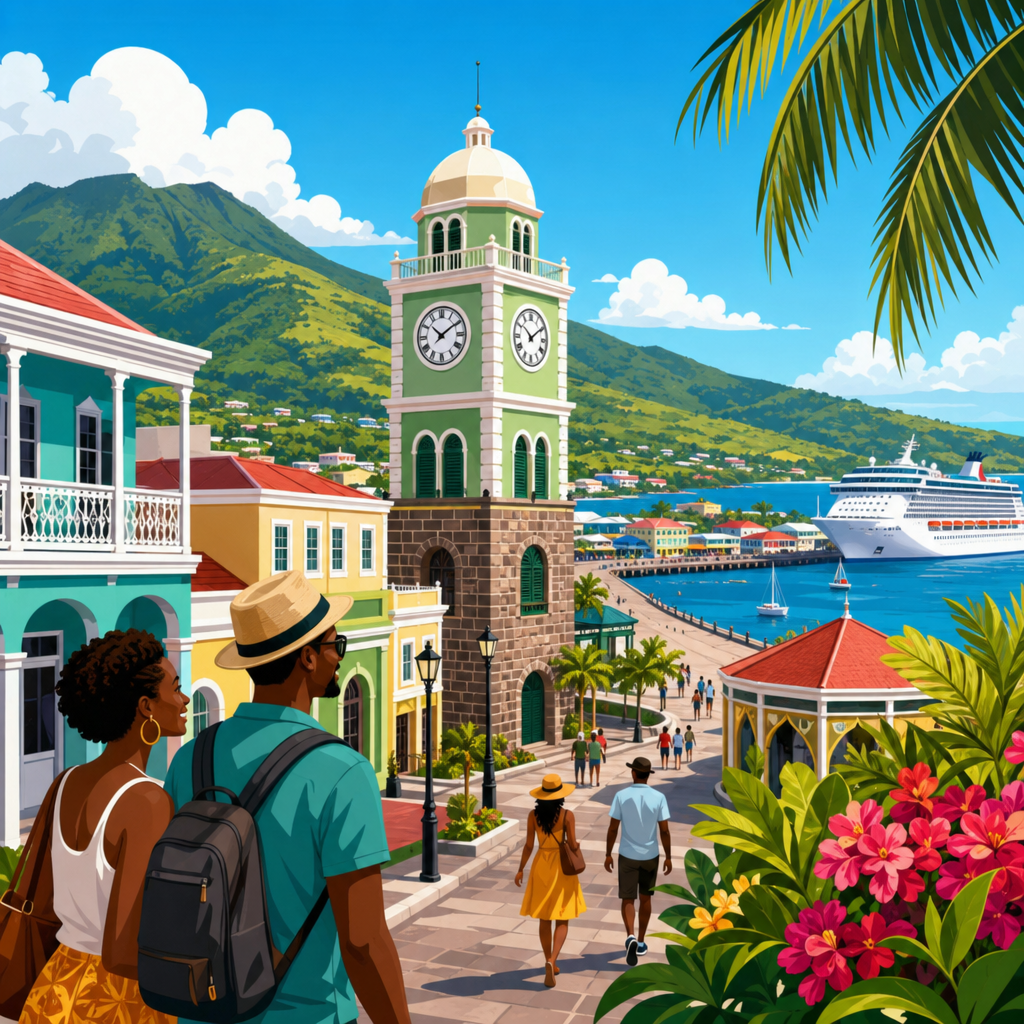
Living off the land in Saint Kitts means building a daily life around local food, water awareness, practical skills, community exchange, and careful use of the island’s natural resources. In a Caribbean setting, the phrase does not suggest complete isolation or romantic self-sufficiency. It usually means reducing dependence on imported goods, growing and preparing more of what you use, and adapting your household to tropical conditions. On Saint Kitts, that approach matters because the island combines fertile volcanic soils, a long agricultural history, a warm climate that supports year-round growing, and modern economic pressures that make imported food and utilities expensive.
I have worked with island households, small growers, and relocation clients long enough to see the same pattern repeat: people arrive with abstract ideas about sustainability, then quickly learn that success depends on mundane details. You need to know which crops tolerate dry spells, how to collect rain safely, where to source compost inputs, when roadside produce is freshest, and how salt air affects tools and storage. A sustainable lifestyle in Saint Kitts is practical before it is philosophical. It begins with understanding the island’s rhythms, from wet and dry periods to market availability and hurricane season preparation.
Saint Kitts also presents a useful case study for sustainable living because it sits at the intersection of local tradition and global supply chains. Residents can still draw on knowledge shaped by fishing, backyard gardening, fruit trees, medicinal plants, and resourceful home cooking. At the same time, the island imports a substantial share of packaged food, fuel, and consumer goods, which creates vulnerability when shipping costs rise or disruptions occur. Living off the land, even partially, improves household resilience. It can lower expenses, increase food quality, reduce waste, and reconnect people with the landscapes that support everyday life.
For readers exploring local life and experiences, this article serves as a hub for the wider miscellaneous aspects of sustainable island living. It covers food production, home systems, energy and water habits, low-waste household management, community networks, and realistic constraints. The goal is not to present a fantasy of total independence. The goal is to show how people in Saint Kitts can build a grounded, durable, and rewarding lifestyle by using what the island offers wisely.
Understanding Saint Kitts as a Place to Live Off the Land
Saint Kitts is a small volcanic island with varied microclimates, coastal exposure, and interior elevations that affect what grows well and how people live. Lower coastal areas can be hotter, drier, and more exposed to salt spray, while higher zones often receive more rainfall and support different planting strategies. Soil conditions also vary. In many areas, volcanic soils are productive, but drainage, slope, and erosion control still matter. A flat yard near Basseterre will behave differently from a hillside plot closer to the central range. Anyone serious about sustainable living needs to assess site conditions before planting or building systems.
The island’s history shapes current opportunities. Sugar dominated land use for centuries, and after the industry’s closure, agricultural land entered a more mixed phase of small farming, livestock, housing, and regeneration. That means some people have access to old estate lands, while others work with compact household plots. In practice, most residents who live more sustainably are not operating large farms. They are combining backyard production, local purchasing, preservation, and skill sharing. A family might grow seasoning peppers, thyme, scallion, cassava, and breadfruit at home, buy fish from a landing site, and source eggs or ground provisions from trusted local vendors.
Climate is a major advantage, but it is not effortless. Tropical heat accelerates plant growth and decomposition, yet it also increases pest pressure, water demand, and spoilage risk. You cannot approach food storage in Saint Kitts the same way you would in a temperate climate. Root crops keep differently, leafy greens wilt quickly, and flour or grain storage requires attention to humidity and insects. I advise households to think in cycles: harvest small and often, cook around what is abundant, preserve surplus quickly, and avoid overbuying imported perishables that may already have spent time in transit.
Growing Food at Home: What Works on the Island
Home food production is the foundation of living off the land in Saint Kitts, but it should start with crops that match the island’s conditions and local diets. The most successful household gardens usually mix annuals, herbs, root crops, and perennial trees. Common productive choices include okra, dasheen, sweet potato, pumpkin, pigeon peas, eggplant, seasoning peppers, hot peppers, lemongrass, basil, thyme, and scallion. Fruit trees such as mango, soursop, sugar apple, banana, papaya, breadfruit, coconut, tamarind, and avocado can provide long-term value if planted in suitable locations with enough space.
Raised beds help where drainage is poor or soil quality is inconsistent, while mulching is essential almost everywhere. A thick mulch layer reduces evaporation, suppresses weeds, buffers soil temperature, and feeds the soil as it breaks down. In tropical systems, organic matter disappears fast, so composting is not optional if you want sustained productivity. Kitchen scraps, yard trimmings, dried leaves, and cut grass can all contribute, though meat and oily waste should be managed carefully because of pests. Small growers often underestimate how much biomass a productive garden consumes. The easiest improvement is usually not buying more fertilizer; it is producing and retaining more organic matter on site.
Pests are constant, and good management is mostly preventive. Healthy spacing improves airflow, hand inspection catches damage early, and mixed planting reduces the vulnerability that comes from monocropping. Neem-based sprays, soap solutions, physical barriers, and crop rotation can all help, but timing matters. If caterpillars or aphids establish themselves during a humid stretch, intervention has to be immediate. I have seen gardens fail not because the climate was unsuitable, but because owners were away for two weeks and returned to overgrowth, insects, and moisture stress.
| Category | Best Local Options | Main Benefit | Key Watchout |
|---|---|---|---|
| Leafy crops | Callaloo, lettuce in cooler spots, pak choi | Fast harvests for home meals | Heat stress and insect damage |
| Root crops | Sweet potato, cassava, dasheen, yam | Reliable calories and storage value | Drainage and harvesting timing |
| Herbs | Thyme, basil, chive, scallion, lemongrass | High yield in small spaces | Frequent trimming needed |
| Fruit trees | Mango, papaya, banana, breadfruit, avocado | Long-term household food supply | Storm exposure and space needs |
| Protein support | Pigeon peas, backyard eggs where permitted | Improves diet diversity | Predators, feed, and management |
For beginners, the smartest approach is a kitchen garden first, orchard second. Grow what you cook repeatedly. If a household uses thyme, pepper, scallion, and herbs every week, those crops deliver immediate savings and reduce waste. Larger staples like breadfruit and cassava are valuable, but they make more sense when you already have a routine for harvesting, processing, and sharing surplus.
Fishing, Foraging, and Sourcing Food Beyond the Garden
Living off the land on an island includes the sea. In Saint Kitts, local fishing remains an important source of protein, and residents who build relationships with fishers often eat better than households relying mainly on supermarket imports. Snapper, mahi-mahi, tuna, lobster in season, and smaller reef or coastal species may be available depending on weather and catch conditions. The practical lesson is to buy according to availability rather than insisting on a fixed menu. Sustainable island households stay flexible and plan meals around the day’s catch, seasonal fruit, and market supply.
Foraging exists, but it requires caution and local knowledge. Sea grapes, tamarind, wild herbs, coconuts, and occasional roadside fruit can supplement the household pantry, yet land access and plant identification matter. Not every fruit hanging over a boundary is free to pick, and not every traditional bush tea plant should be consumed casually. People who are new to Saint Kitts should learn from experienced residents, farmers, or herbal practitioners rather than guessing. Respect for property, conservation, and safety is part of the ethic of living off the land.
Roadside vendors and public markets are often the bridge between full self-sufficiency and ordinary household life. In reality, many sustainable households in Saint Kitts do not produce everything themselves. They produce some, preserve some, and buy the rest from local networks. That still counts. If you purchase breadfruit from a nearby grower, fish directly from a boat, and eggs from a trusted small producer, you are supporting a local food system that is more resilient than one built entirely on imports.
Water, Energy, and the Sustainable Island Home
Water management is one of the least glamorous but most important parts of sustainable living in Saint Kitts. Rainwater harvesting can support gardening, cleaning, and in some systems broader household use, but storage must be designed correctly. Gutters, first-flush diverters, covered tanks, mosquito control, and regular cleaning are basic requirements, not upgrades. During dry periods, every gallon matters. Gardeners who rely only on hose watering from treated supply often discover that food production becomes expensive fast, especially when watering is inefficient.
Simple irrigation changes make a measurable difference. Watering at dawn reduces evaporation. Mulching keeps soil moisture stable. Drip lines or gravity-fed systems outperform hand spraying for many beds. Greywater reuse can help in some cases, but soaps, grease, and local regulations must be considered carefully. The broader principle is that water should move through the property intentionally rather than being wasted and then repurchased.
Energy use follows the same logic. Saint Kitts has abundant sun, which makes solar water heating and photovoltaic systems attractive, especially as electricity costs can be high. Not every household can install a full solar array, but passive cooling delivers immediate savings. Cross-ventilation, shaded windows, roof insulation, light exterior colors, and strategic tree planting reduce indoor heat gain. Ceiling fans are often a better first investment than assuming air conditioning must run constantly. In tropical homes, design choices are an energy policy.
Waste Reduction, Preservation, and Everyday Resourcefulness
The households that live most sustainably in Saint Kitts are usually excellent at avoiding waste. Food scraps become compost. Glass jars are reused for storage. Leftover cooked provisions become the next day’s breakfast or lunch. Fruit gluts are turned into juice, jam, chutney, or frozen pulp before they spoil. This resourcefulness is not trendy minimalism; it is an old island habit that remains economically rational today.
Preservation skills matter because abundance often arrives in bursts. A mango tree does not produce one fruit at a time for six months. It may produce more than a family can eat in a short window. Breadfruit can be roasted, shared, or processed, but timing is everything. Fish can be cleaned, seasoned, and frozen the same day. Herbs can be air-dried or blended into green seasoning. Pickling, dehydration, pressure canning where appropriate, and disciplined freezer management all help stabilize a local food supply.
Imported packaged goods create another waste challenge. Islands face higher disposal costs and limited space, so reducing single-use plastics and unnecessary purchases has direct environmental value. Buying in refillable, reusable, or bulk formats when available lowers both cost and waste. The guiding question is simple: can this item be grown, repaired, reused, preserved, or sourced locally instead?
Community, Skills, and the Real Limits of Self-Sufficiency
No one lives off the land in Saint Kitts alone for long. The strongest sustainable households are embedded in community. They know who sells seedlings, who has extra breadfruit, who repairs pumps, who catches fish, and who can advise on hurricane pruning or soil problems. Informal exchange is a serious asset. I have seen one neighbor trade coconuts for seedlings, another swap labor for fruit, and families share surplus produce before it spoils. That network effect is often more valuable than expanding a garden by another ten percent.
Skills also matter more than ideology. Cooking from scratch, sharpening tools, basic carpentry, pruning, composting, seed saving, food safety, and storm preparation all reduce dependence on fragile supply chains. At the same time, there are limits. Saint Kitts is not a place where most households will produce all their grains, fuels, medicines, and manufactured goods. Hurricanes, drought, pests, land access, and labor constraints are real. Sustainable living works best as a spectrum. Even replacing a portion of imported food with local production can materially improve resilience and quality of life.
Living off the land in Saint Kitts is most successful when it is realistic, local, and incremental. Start with what your site can support, what your household actually eats, and what routines you can maintain through the year. Build soil, collect water, plant useful crops, buy from local producers, preserve surplus, and learn from experienced residents. Those steps create a lifestyle that is healthier, less wasteful, and better adapted to island realities. If you want to experience Saint Kitts more deeply, begin with one practical change at home and let the island teach you the rest.
Frequently Asked Questions
What does living off the land in Saint Kitts really mean?
Living off the land in Saint Kitts usually means creating a more local, practical, and resilient lifestyle rather than trying to live in total isolation. In real terms, it involves growing some of your own food, cooking more from scratch, using local ingredients when possible, learning how to manage water carefully, and reducing dependence on imported products that can be expensive or inconsistent. Because Saint Kitts is a small Caribbean island, complete self-sufficiency is not realistic for most households. Instead, the goal is to become less dependent on outside supply chains while making better use of the island’s climate, soil, seasonal crops, and community knowledge.
It also means adapting daily life to tropical conditions. Homes, gardens, and routines work best when they are designed around heat, rainfall patterns, dry spells, and storm preparation. Many people who pursue this lifestyle focus on fruit trees, kitchen gardens, herbal plants, rainwater collection, composting, simple food preservation, and basic repair skills. Community exchange is also part of the equation. In Saint Kitts, practical sustainability often grows through relationships with farmers, fishers, neighbors, market vendors, and local craftspeople. The result is not a fantasy of escaping modern life, but a grounded approach to living more responsibly, economically, and in closer connection with the island’s resources.
What foods can you realistically grow or source locally in Saint Kitts?
Saint Kitts offers strong potential for local food production, especially if you work with the climate instead of against it. Common options include tropical fruits such as mango, papaya, banana, breadfruit, soursop, guava, coconut, and tamarind, along with vegetables and staples like sweet potatoes, cassava, yams, pumpkins, okra, peppers, callaloo, herbs, and pigeon peas. Home gardeners can often maintain a productive kitchen garden with careful planning, mulching, and watering, especially when they choose crops suited to heat, humidity, and periodic dry conditions. Fruit trees and perennial plants are often especially valuable because they provide ongoing harvests with less constant replanting than annual crops.
Beyond home growing, living off the land in Saint Kitts also means sourcing food intelligently from local systems. Farmers’ markets, roadside vendors, fishing communities, and direct relationships with growers can all reduce your dependence on imported supermarket goods. Fresh fish, local eggs, seasonal produce, ground provisions, and island-grown herbs can form the core of a sustainable household diet. That said, availability can vary with weather, season, and storm impacts, so flexibility matters. A realistic strategy is to build meals around what is abundant locally, preserve or store what you can, and treat imported foods as supplements rather than the foundation of the household. This approach supports both food security and the local economy.
How important is water management when living sustainably in Saint Kitts?
Water management is one of the most important parts of living sustainably in Saint Kitts. On a small island, freshwater resources must be used thoughtfully, and households that want to live off the land need to pay close attention to how they collect, store, conserve, and use water. Rainfall may be seasonal or uneven, and periods of dryness can place stress on gardens and household routines. That means water awareness is not optional. It becomes part of daily decision-making, from choosing drought-tolerant crops to mulching soil, watering at cooler times of day, fixing leaks quickly, and rethinking wasteful habits.
Many sustainable households look into rainwater harvesting, storage tanks, and efficient irrigation methods to improve resilience. Even simple systems can make a meaningful difference when they are well maintained and paired with practical conservation habits. Water-conscious landscaping, soil improvement through compost, and shade management can also help retain moisture and reduce demand. In a broader sense, careful water use reflects the core principle of island sustainability: resources are limited, so long-term security comes from stewardship rather than excess. Anyone serious about living off the land in Saint Kitts should view water not just as a utility, but as a central resource that shapes food production, household planning, and overall resilience.
What skills are most useful for building a sustainable lifestyle on the island?
The most useful skills for living off the land in Saint Kitts are the ones that make a household more capable, adaptable, and less wasteful. Food-growing knowledge is high on the list, including understanding local soils, seasonal planting, pest management, composting, pruning, and how different crops perform in tropical conditions. Just as important are food preparation and preservation skills. If you can cook with local staples, dry herbs, bottle sauces, freeze produce properly, and make the most of seasonal abundance, you will get far more value from what the island provides. Basic home maintenance and repair skills are also extremely helpful because they reduce costs and dependence on constant replacement.
Other valuable skills include water storage management, simple carpentry, herbal knowledge, seed saving where appropriate, storm preparedness, and the ability to plan around seasonal fluctuations. Social skills matter too. Building relationships with knowledgeable locals, experienced gardeners, fishers, and market vendors can teach you more than theory alone. In Saint Kitts, sustainable living is rarely just an individual effort. It often works best when people share advice, trade surplus produce, exchange labor, and learn from generations of practical island experience. The strongest foundation is not perfection, but competence: knowing how to solve everyday problems with local resources, limited waste, and a clear understanding of what the environment can realistically support.
Is living off the land in Saint Kitts affordable and practical for most people?
For many people, it can be more affordable over time, but it is best understood as a gradual transition rather than an instant cost-saving strategy. Starting a productive garden, installing rainwater systems, improving soil, planting trees, and buying basic tools all require some upfront investment. There is also a learning curve, and not every attempt will succeed immediately. Crops can fail, pests can be persistent, and weather can be unpredictable. However, once the system begins to mature, the benefits can be significant. Households often save money by growing herbs, fruits, and vegetables, reducing food waste, cooking at home more often, and relying less on imported packaged items.
Practicality depends on your location, available space, time, and willingness to learn. Even people without large plots of land can still practice elements of this lifestyle through container gardening, backyard fruit trees, buying local produce, conserving water, composting kitchen scraps, and learning traditional food skills. In Saint Kitts, sustainable living does not have to be all or nothing. In fact, it is usually most successful when approached in stages. You might begin with a few crops, a better food storage routine, and stronger community connections, then expand into more advanced systems over time. That steady approach is both practical and realistic, especially on an island where resilience comes from thoughtful adaptation rather than chasing the idea of total independence.