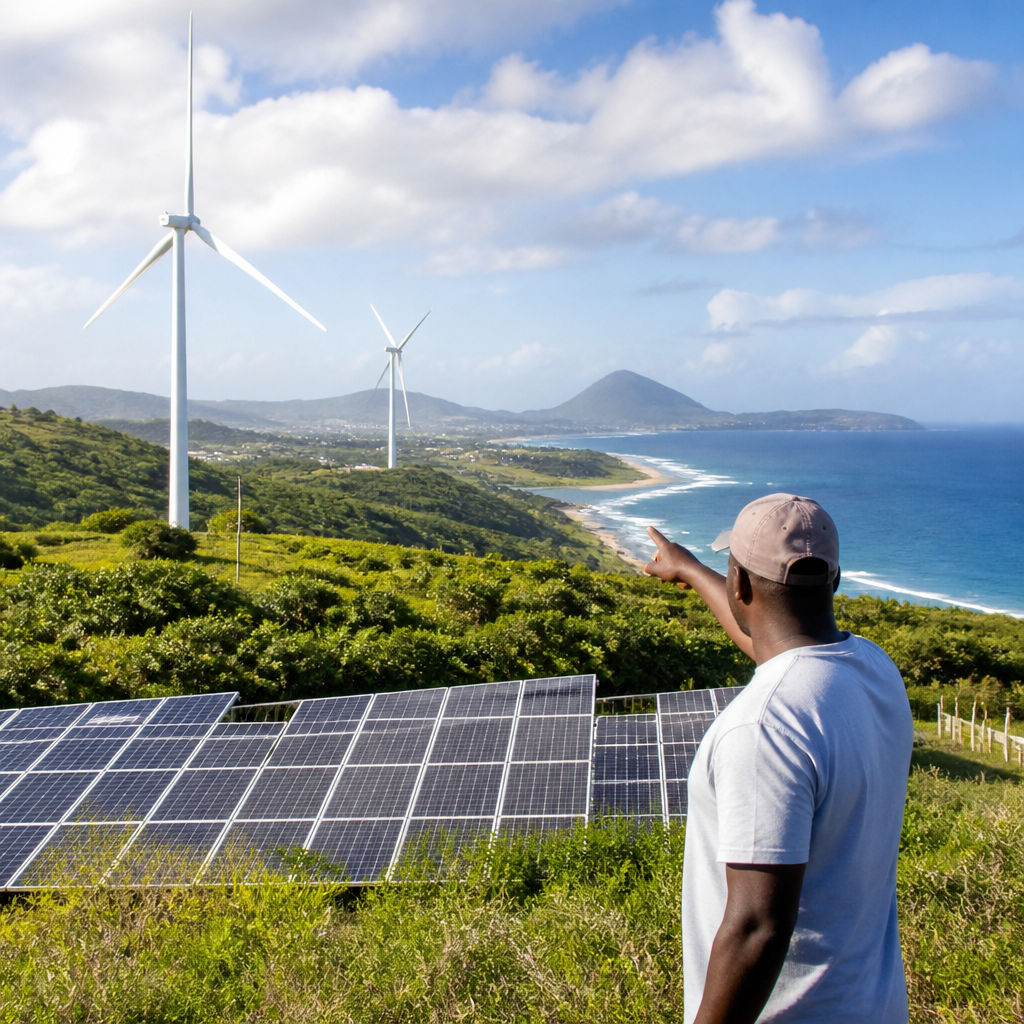
Saint Kitts’ renewable energy tours turn a Caribbean vacation into a practical lesson in how small islands can cut fuel imports, protect fragile coastlines, and build a more resilient tourism economy. On Saint Kitts, green power is not an abstract policy idea; it is visible in solar arrays, efficient resort systems, waste-reduction programs, and the long-term push toward geothermal development across the federation. For travelers interested in sustainable tourism, these tours provide context that a beach day alone cannot. They show how electricity is generated, where water and waste pressures come from, and why island infrastructure matters to every hotel stay, taxi ride, and snorkeling trip.
Renewable energy tours in this context include guided visits to solar installations, sustainability briefings at eco-conscious hotels, educational stops focused on utility planning, and broader excursions that connect energy, agriculture, transport, and conservation. Green power refers to energy sourced from naturally replenishing systems such as sunlight, wind, and geothermal heat, usually paired with efficiency measures like LED lighting, smart cooling, battery storage, and water management. In Saint Kitts and Nevis, these topics matter because island states face high imported fuel costs, exposure to hurricanes, and tight land-use constraints. I have found that visitors understand sustainability far better when they can stand beside panels, hear from facility managers, and see the operational tradeoffs firsthand.
This hub article explains what travelers can expect from Saint Kitts’ renewable energy tours, which sites and themes deserve attention, and how these experiences fit into the broader sustainable tourism landscape. It also serves as a gateway topic for related coverage under miscellaneous sustainability themes, from low-impact transport and green hospitality to educational travel and community-based tourism. If you want a trip that goes beyond scenery and answers the practical question of how a Caribbean island can decarbonize without sacrificing comfort, this is the right starting point.
What renewable energy tours in Saint Kitts actually include
The simplest answer is that Saint Kitts’ renewable energy tours combine infrastructure visits with storytelling about island life. A strong tour does not just point at equipment. It explains the grid, utility demand peaks, fuel price exposure, and why a hotel or public facility chose one technology over another. On Saint Kitts, that often means solar energy is the most visible component because photovoltaic systems are easier to deploy than utility-scale wind or geothermal drilling. Visitors may see rooftop arrays on hospitality properties, solar street lighting, water-heating systems, or educational displays that translate kilowatts into household use and emissions savings.
Some tours are formal products sold by operators, while others are custom experiences arranged through resorts, destination management companies, schools, or cruise excursion planners. In practice, the best versions include a guide who can connect technical details with local economics. For example, when diesel generation sets the baseline cost of electricity, every kilowatt-hour produced by solar can help reduce operating pressure, especially during sunny daytime demand. That matters to restaurants, cold storage, and air-conditioned accommodations. Travelers who hear those links directly usually leave with a much clearer picture of why sustainable tourism on islands must include energy literacy.
Why Saint Kitts is a compelling case study for green power tourism
Saint Kitts is compelling because its energy story sits at the intersection of vulnerability and opportunity. Like many Caribbean destinations, it has historically depended on imported petroleum products for power generation. That model exposes the island to volatile global fuel prices, shipping disruptions, and high electricity costs that ripple through the whole visitor economy. At the same time, Saint Kitts benefits from strong solar conditions and from the federation’s wider strategic interest in geothermal energy, especially associated with Nevis’ long-discussed geothermal potential. For a visitor, that means the destination is not presenting a finished sustainability success story. It is presenting a live transition.
That transition is exactly what makes tours valuable. In polished urban destinations, energy systems can feel invisible. On Saint Kitts, the constraints are easier to understand because the island scale is manageable and the links between utilities, imports, tourism, and climate resilience are direct. A hotel manager can explain why backup generation remains necessary during grid interruptions. A guide can point out how efficient building design reduces cooling loads in the tropical climate. A community educator can connect renewable investment with jobs, technical training, and reduced emissions. Those are concrete lessons, not marketing slogans.
Key stops and experiences travelers should look for
The most useful renewable energy tours in Saint Kitts include a mix of generation sites, hospitality case studies, and community sustainability stops. A solar installation is usually the headline feature because it offers immediate visual impact and straightforward explanation. Guides can show inverter systems, panel orientation, shading issues, and expected production profiles across the day. When a site includes battery storage, that adds an important layer: visitors can learn the difference between generating electricity and being able to use it reliably when clouds pass or evening demand rises.
Hospitality properties are equally important stops because tourism is one of the clearest places where efficiency and renewable integration affect the guest experience. I have seen travelers grasp sustainability far faster when a resort engineer explains occupancy-driven cooling loads, laundry water heating, kitchen refrigeration, and lighting retrofits. These operational details reveal that green tourism is not only about installing panels. It is about reducing demand first, then serving that lower demand with cleaner power. Some tours may also include botanical or agricultural locations where irrigation, composting, and solar pumping show how energy links to food systems.
| Tour stop | What visitors learn | Why it matters for sustainable tourism |
|---|---|---|
| Solar installation | Panel output, inverters, storage, maintenance needs | Shows how islands reduce fuel imports and daytime power costs |
| Eco-conscious resort | Cooling efficiency, solar water heating, waste reduction | Connects sustainability to actual guest operations |
| Community site or school | Energy education, public benefits, workforce skills | Demonstrates that tourism can support local capacity |
| Agricultural property | Solar pumping, food miles, composting links | Explains the energy-food nexus in island resilience |
Solar power, efficiency, and the realities of island grids
Solar power tends to anchor Saint Kitts’ renewable energy tours because it is the most intuitive technology for visitors. Photovoltaic panels convert sunlight into electricity, and on a sunny Caribbean island that immediately makes sense. Yet the deeper story is grid integration. Solar output peaks during the day, while hospitality demand can remain high into the evening because guests return to rooms, shower, dine, and use air conditioning after sunset. That mismatch is why energy storage, load shifting, and efficiency are not optional side notes. They are central to whether solar meaningfully reduces diesel dependence.
In tours I consider credible, guides explain that not every roof is suitable, not every system pays back on the same schedule, and maintenance is crucial in marine environments where salt corrosion is real. They also explain why efficiency upgrades often deliver the fastest returns. Variable refrigerant flow systems, high-efficiency chillers, occupancy sensors, insulation improvements, reflective roofing, and solar water heating can lower demand before a property invests in larger generation assets. This sequence matches established energy management practice: measure, reduce, optimize, then add renewable supply. Travelers interested in the operational side of sustainable tourism should look for tours that discuss both kilowatt generation and kilowatt-hour savings.
How geothermal potential shapes the conversation
Any serious discussion of renewable energy in the Saint Kitts and Nevis federation should mention geothermal potential, even when a tour physically takes place on Saint Kitts. Geothermal energy uses heat from beneath the earth’s surface to generate reliable baseload power, unlike solar, which varies by time of day and weather. Nevis has long been associated with geothermal development discussions because of its volcanic geology. For visitors, this matters because guides often use Saint Kitts tours to explain the federation-wide energy future, including inter-island possibilities, infrastructure financing, and the strategic value of stable low-carbon power.
The key point is that geothermal represents a different class of renewable energy. If developed at scale, it could provide steady generation that complements solar and reduces reliance on imported fuel more dramatically than intermittent sources alone. But tours should present the topic honestly. Geothermal projects require exploration, drilling, transmission planning, environmental review, and significant capital. They are not quick wins. I appreciate operators who explain both the promise and the complexity, because that reflects how energy transitions actually happen. Visitors leave better informed when they understand why one technology is visible today while another may shape the next decade.
Environmental and economic benefits for visitors to understand
The environmental benefits of renewable energy tours are not limited to lower carbon emissions, though that is important. On islands, reducing diesel generation can also mean lower exposure to fuel spills, fewer local air pollutants around generation assets, and less pressure from imported energy costs that can undermine public services and business margins. For tourism, cleaner energy supports a destination image aligned with conservation, but the economic case is even more immediate. Hotels, restaurants, and transport operators all feel electricity prices. When those costs fall or become more predictable, businesses have more room to invest in staff, maintenance, and guest experience.
There is also an educational multiplier. Travelers who see how Saint Kitts approaches energy are more likely to ask informed questions about water reuse, local sourcing, reef protection, and low-impact mobility. In that sense, renewable energy tours act as a hub within sustainable tourism. They connect the utility system to nearly every other environmental issue on the island. That makes this miscellaneous subtopic especially useful for trip planning, because it naturally links to articles on eco-friendly accommodations, responsible excursions, community projects, and climate-conscious travel behavior. A well-designed tour gives visitors a framework they can apply across the rest of their stay.
How to choose a worthwhile tour and avoid shallow green claims
Not every sustainability tour is equally informative. The best Saint Kitts renewable energy tours identify specific sites, name the technologies in use, and explain measurable outcomes such as reduced fuel consumption, lower energy bills, or resilience improvements. If a description relies only on broad words like eco-friendly or green without naming systems, ask questions before booking. Find out whether the guide has operational knowledge, whether you will speak with site staff, and whether the itinerary covers efficiency as well as generation. Credible tours welcome detailed questions because the facts are part of the value.
It is also wise to evaluate logistics. Small group formats usually work better for technical visits because participants can hear explanations and safely move around equipment. Closed-toe shoes, sun protection, and hydration are often practical necessities. Photographs may be limited at some infrastructure locations, especially near electrical equipment, so travelers should confirm policies in advance. If you are staying at a resort, ask whether engineering or sustainability staff ever host guest briefings; I have found these sessions surprisingly strong because they focus on actual operational data rather than sales language.
Saint Kitts’ renewable energy tours offer one of the clearest ways to understand sustainable tourism in action. They translate big ideas like decarbonization, resilience, and responsible development into visible systems that affect every visitor stay. By exploring solar installations, efficient hospitality operations, community projects, and the federation’s geothermal ambitions, travelers gain a grounded view of how island destinations can reduce dependence on imported fuel while protecting both economy and environment. The subject is especially valuable within the broader miscellaneous sustainability hub because it connects energy to transport, food systems, education, and conservation.
The main takeaway is simple: the best green power tours do more than showcase technology. They explain tradeoffs, costs, maintenance realities, and local benefits in plain terms. That honesty makes them more useful and more memorable. For travelers planning a thoughtful Caribbean itinerary, Saint Kitts stands out as a place where renewable energy can be seen, discussed, and understood at human scale. Use this hub as your starting point, then explore related sustainable tourism topics and book experiences that let you learn directly from the people building the island’s cleaner energy future.
Frequently Asked Questions
What can travelers expect to see on a renewable energy tour in Saint Kitts?
Travelers can expect a hands-on introduction to how clean energy and sustainability work in a real island setting. Rather than focusing only on theory, many tours highlight visible examples of green infrastructure such as solar panel installations, energy-efficient resort systems, water-saving technologies, recycling and waste-reduction initiatives, and broader discussions about the federation’s long-term geothermal ambitions. Guests often learn how hotels, tourism operators, and public institutions are trying to reduce dependence on imported fossil fuels while also lowering operating costs and protecting natural resources. In practical terms, that means a tour may include visits to properties using solar energy, explanations of efficient cooling and lighting systems, and conversations about how energy, water, transportation, and waste all connect within a small-island economy. The experience is especially valuable because it shows sustainability not as a marketing label, but as a set of real decisions that affect beaches, local businesses, utility bills, and long-term resilience.
Why are renewable energy tours especially relevant in Saint Kitts?
Renewable energy tours matter in Saint Kitts because small islands face very specific energy and environmental challenges. Imported fuel is often expensive and leaves island economies vulnerable to global price swings, shipping disruptions, and external supply pressures. At the same time, coastal ecosystems, freshwater resources, and tourism-dependent landscapes are highly sensitive to pollution, climate impacts, and overdevelopment. A renewable energy tour helps visitors understand why clean power is not just an environmental preference here, but a strategic priority. By exploring how Saint Kitts is investing in solar power, improving efficiency, reducing waste, and looking toward geothermal development across the federation, travelers gain a clearer picture of how sustainability supports both everyday life and economic stability. These tours also show why tourism itself has a stake in the transition: cleaner energy can help preserve the very beaches, views, and ecosystems that attract visitors in the first place, while supporting a more resilient local economy.
How does renewable energy support sustainable tourism in Saint Kitts?
Renewable energy supports sustainable tourism in Saint Kitts by helping the destination reduce environmental strain while improving the long-term viability of its hospitality sector. Hotels, resorts, and tourism facilities consume significant amounts of electricity and water, so efficiency upgrades and renewable energy systems can make a meaningful difference. When tourism businesses use solar power, install efficient air-conditioning and lighting, manage water more carefully, and reduce waste, they lower their dependence on imported fuel and shrink their environmental footprint. That matters on an island where energy costs can influence prices, competitiveness, and infrastructure planning. Just as importantly, visitors increasingly want travel experiences that align with sustainability values, and renewable energy initiatives help demonstrate that commitment in concrete ways. A renewable energy tour connects those dots by showing how cleaner operations can protect coastlines, reduce emissions, improve resource management, and strengthen the tourism economy without sacrificing guest comfort. In that sense, green power becomes part of the destination’s quality, resilience, and appeal.
Is geothermal energy part of the renewable energy story in Saint Kitts and Nevis?
Yes, geothermal energy is an important part of the broader renewable energy conversation in the federation, particularly when discussing long-term energy transformation. While travelers on Saint Kitts may more immediately see solar installations and efficiency measures, geothermal development has attracted attention because of its potential to provide stable, large-scale renewable electricity in the region. For island nations, geothermal power is especially compelling because it can offer a more consistent energy supply than some weather-dependent sources, helping reduce reliance on imported diesel generation over time. On a renewable energy tour, geothermal is often presented as part of the bigger picture: solar and conservation efforts address immediate and visible needs, while geothermal represents a major strategic opportunity for deeper energy independence and resilience. Even when a tour does not include an active geothermal site visit, guides may explain how regional geology, infrastructure planning, investment, and policy all shape the future of clean power in Saint Kitts and Nevis. This gives travelers a fuller understanding of where the federation is today and where it hopes to go.
Who should take a renewable energy tour in Saint Kitts?
Renewable energy tours in Saint Kitts are a strong fit for a wide range of travelers, not just energy professionals or environmental specialists. They are especially worthwhile for visitors interested in sustainable tourism, climate resilience, island development, architecture, hospitality innovation, or community-based travel experiences. Students, educators, planners, and business travelers often find them useful because the tours translate big sustainability concepts into understandable local examples. They are also ideal for curious vacationers who want to go beyond beaches and historic sites and gain a deeper sense of how the island functions behind the scenes. What makes these tours appealing is that they combine education with place-based storytelling: guests learn how energy choices affect food systems, water management, coastal protection, transportation, and tourism livelihoods. For many travelers, the experience adds depth to a Caribbean holiday by showing how Saint Kitts is working to balance economic growth with environmental stewardship. Even if someone begins with only a general interest in eco-friendly travel, a renewable energy tour can provide practical insight into how small islands are building a cleaner and more resilient future.