Nevis during the colonial era was a small Caribbean island with outsized importance in the making of the Atlantic world. From the early seventeenth century through emancipation in the nineteenth, Nevis became a testing ground for English settlement, plantation agriculture, imperial rivalry, and the forced migration of enslaved Africans. To understand Nevis today, including its landscapes, estates, churches, and social memory, it is essential to understand this colonial past. The island’s history is not a footnote to larger neighboring colonies. It is central to the history of the Leeward Islands, to British imperial commerce, and to the social formations that shaped the wider Caribbean.
In practical terms, the colonial era on Nevis refers to the period beginning with sustained English settlement in the 1620s and extending through slavery, sugar wealth, military conflict, and post-emancipation adjustment. During these centuries, colonialism on Nevis meant land seizure from Indigenous space, the creation of export plantations, governance through imperial law, and an economy tied to Europe by shipping, finance, and war. It also meant daily resistance, adaptation, and cultural creation by enslaved and free Black communities whose labor made the island profitable. When visitors see surviving great houses, ruined windmills, or the thermal spring at Bath, they are seeing material evidence of this long and contested era.
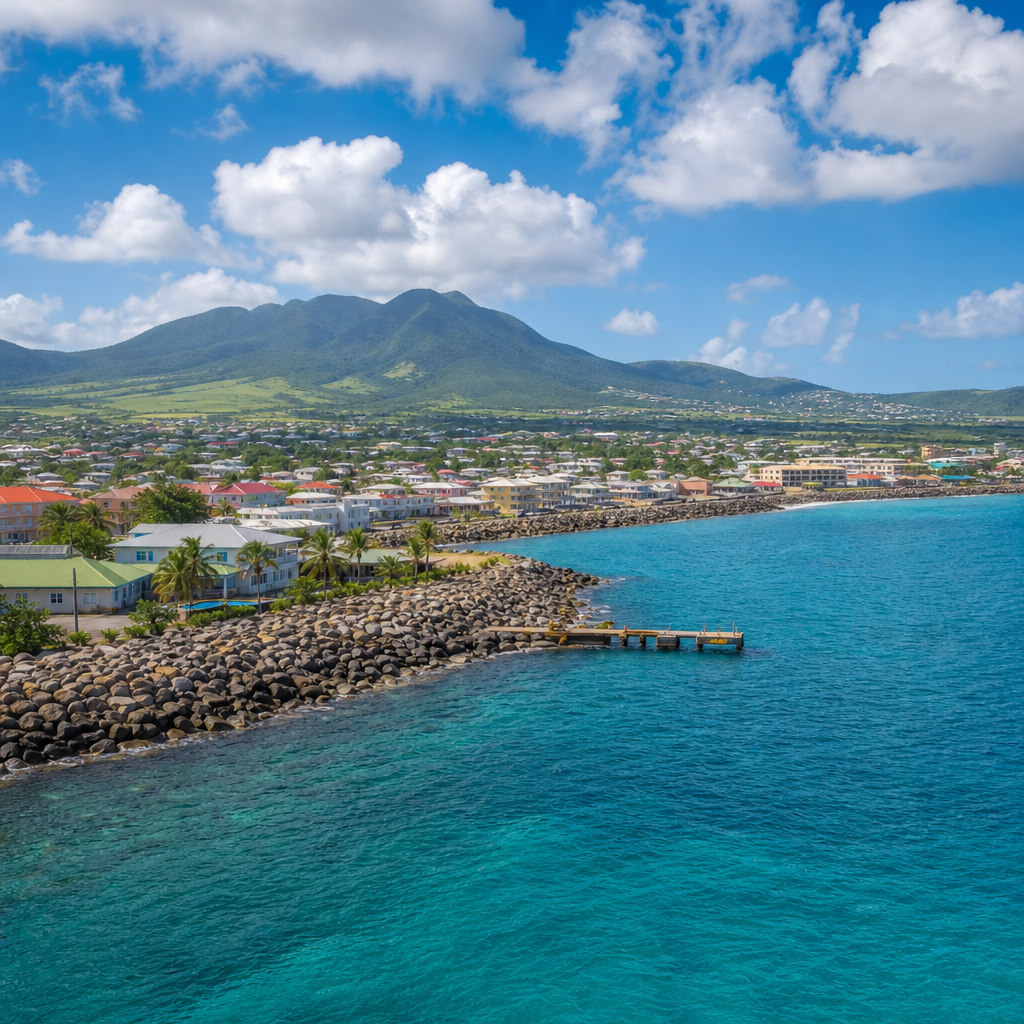
Nevis mattered because it became one of England’s earliest and richest sugar islands before larger colonies overshadowed it. In the seventeenth century, planters on Nevis generated substantial wealth from sugar and related trade, drawing merchants, soldiers, and administrators into a dense imperial network. Charlestown developed as a busy port, and estate districts spread across fertile slopes. The island also became known for its health resort at Bath, where elite visitors sought the curative qualities of hot springs. Yet prosperity rested on brutal plantation slavery. The elegance associated with colonial Nevis cannot be separated from the violence that financed it.
As a hub within culture and history, this overview of miscellaneous colonial themes connects the island’s economy, architecture, religion, conflict, family life, and legacies. Readers often ask direct questions: Why was Nevis valuable? What crops dominated? Who lived there? How did slavery work? What colonial landmarks survive? The clearest answer is that Nevis condensed many defining Caribbean colonial patterns into a compact setting. Over years of studying estate records, traveler accounts, church registers, and surviving sites across the island, I have found that Nevis is best understood not through one storyline but through several linked histories that still shape identity and heritage today.
Settlement, Empire, and the Rise of a Plantation Colony
English settlement on Nevis began in the early seventeenth century, shortly after nearby St. Christopher, now St. Kitts, became a base for English and French colonization. Nevis offered arable land, defensible terrain, and access to regional trade routes. Early colonists first experimented with tobacco and small-scale farming, as happened across the English Caribbean. Those crops, however, produced volatile returns, and by the mid-seventeenth century many planters shifted toward sugarcane. That shift changed everything. Sugar required expensive mills, boiling houses, coppers, skilled oversight, and above all a large bound labor force. It pushed Nevis from a settler colony toward a mature plantation society.
The island’s political framework reflected wider imperial patterns. Local assemblies and governors operated under the English Crown, while merchants in London and Bristol shaped trade through credit and shipping. Nevis was frequently administered alongside other Leeward colonies, and its fortunes rose or fell with imperial wars against the French and later changing British policy. Colonial records show repeated concern with fortifications, militia readiness, customs revenue, and maritime defense. These were not abstract matters. In the Caribbean, war could destroy a crop, interrupt shipping for a season, or expose an island to invasion and privateering within weeks.
Landownership quickly concentrated in the hands of a planter class. Estates were surveyed, divided, mortgaged, inherited, and litigated. Parish organization supported both taxation and local governance. The geography of Nevis favored plantation development, especially on lower and middle slopes where rainfall and soils supported cane. By the late seventeenth century, the island had earned a reputation for wealth disproportionate to its size. That wealth financed imported furnishings, masonry houses, education abroad for elite children, and transatlantic connections that linked Nevis families to Britain, North America, and other islands.
One of the clearest ways to understand colonial Nevis is to compare its major features across the period of growth and consolidation.
| Theme | Colonial Reality on Nevis | Why It Mattered |
|---|---|---|
| Primary crop | Sugarcane dominated after early tobacco experiments | Sugar generated export wealth and drove estate expansion |
| Labor system | Enslaved African labor on plantations and in towns | Provided the workforce that made sugar profitable |
| Main port | Charlestown served shipping, trade, and government | Connected estates to Atlantic markets and imperial rule |
| Elite culture | Planter families built churches, houses, and spa amenities | Displayed status and tied Nevis to British colonial society |
| Strategic risk | French attacks, privateering, and regional wars | Made defense and alliances essential to survival |
| Lasting legacy | Ruins, place names, family records, and social inequality | Shapes heritage tourism and historical interpretation today |
Sugar, Slavery, and Everyday Life on the Estates
The sugar plantation system defined colonial Nevis more than any governor or battle. Once cane cultivation expanded, estates became industrial landscapes. A typical sugar property included cane fields, laborers’ provision grounds, a mill powered by wind or animal force, a boiling house, curing rooms, storage areas, and the planter’s residence. Cane had to be cut and processed quickly because sucrose deteriorated after harvest. During crop time, work intensified dramatically. Enslaved laborers cut cane, fed mills, fired furnaces, skimmed boiling sugar, moved hogsheads, and maintained roads, walls, and drainage. Plantation management was relentless because delays meant financial loss.
Enslaved Africans and their descendants formed the majority of Nevis’s population for much of the colonial era. They came from diverse West and West Central African societies and brought agricultural knowledge, craft skills, spiritual practices, and languages that shaped island culture. On Nevis, as elsewhere, slavery was legal property ownership in people, enforced by punishment, surveillance, and restrictions on movement. Yet the enslaved were never passive. They preserved kin ties where possible, cultivated provision grounds, traded in local markets, negotiated with overseers, ran away, sabotaged equipment, and sustained cultural life under impossible constraints. Any honest account of colonial Nevis must place their experience at the center.
Estate life varied by scale and management. Some planters lived on Nevis and supervised operations directly. Others were absentees, relying on attorneys and overseers. In my work with Caribbean estate papers, absentee ownership consistently appears as a source of both inefficiency and cruelty, because managers were often pressured to maximize output without long-term investment in people or soil. On Nevis, that pattern was visible in fluctuating maintenance, debt burdens, and disputes over inheritance. Mortality, disease, hurricanes, and market swings made plantation profitability less stable than the image of effortless sugar riches suggests.
Town life also mattered. Charlestown included merchants, artisans, sailors, free people of color, domestic servants, and officials whose labor supported the plantation economy indirectly. Women, both enslaved and free, played major roles in domestic work, marketing, small trade, childrearing, and household production. Religious institutions, especially Anglican and later Methodist networks, shaped social life unevenly across race and class lines. Marriage, baptism, burial, and probate records from Nevis are particularly valuable because they reveal a layered society: powerful planters, middling whites, free Black families, and a large enslaved majority navigating unequal law.
War, Disaster, and the Fragility of Colonial Wealth
Colonial wealth on Nevis was always fragile. The island sat in a contested imperial zone where conflict between Britain and France repeatedly spilled into local waters. During the seventeenth and eighteenth centuries, French raids and invasions threatened life and property across the Leeward Islands. Nevis experienced direct military pressure, and nearby St. Kitts changed hands more than once. Planters fortified positions, maintained militias, and watched shipping anxiously because a single campaign could wreck harvests, burn estates, and bankrupt families. Security was never guaranteed, even in prosperous years.
Nature was equally disruptive. Hurricanes could flatten cane, destroy mills, wreck wharves, and kill livestock in hours. Earthquakes and volcanic risks in the wider Lesser Antilles added another layer of uncertainty, while periodic drought reduced yields. Disease was perhaps the most relentless threat. Yellow fever, malaria-like fevers, dysentery, and smallpox affected soldiers, sailors, planters, and laborers alike, though the poor and enslaved suffered most severely because of inadequate living conditions and overwork. Nevis’s reputation as a healthy retreat around Bath coexisted with the hard epidemiological reality of plantation colonies.
These pressures help explain why planters pursued aggressive diversification within a sugar framework. Estates might also produce rum, molasses, livestock, or provisions. Merchants extended credit against future crops, creating cycles of debt that became dangerous when war interrupted exports or prices fell. The late eighteenth and early nineteenth centuries brought wider structural challenges: competition from larger colonies, changing trade regulations, abolition of the British slave trade in 1807, and the eventual end of slavery in the 1830s. Nevis did not collapse overnight, but its earlier dominance faded as the economics of sugar shifted across the empire.
The lesson is straightforward. Colonial Nevis was wealthy, but not secure. Its prosperity depended on vulnerable monoculture, coerced labor, favorable shipping conditions, and imperial military protection. Remove any one of those pillars and the system weakened. That is why the island’s ruins should be read not only as monuments to power but also as evidence of instability.
Religion, Architecture, and Social Hierarchy
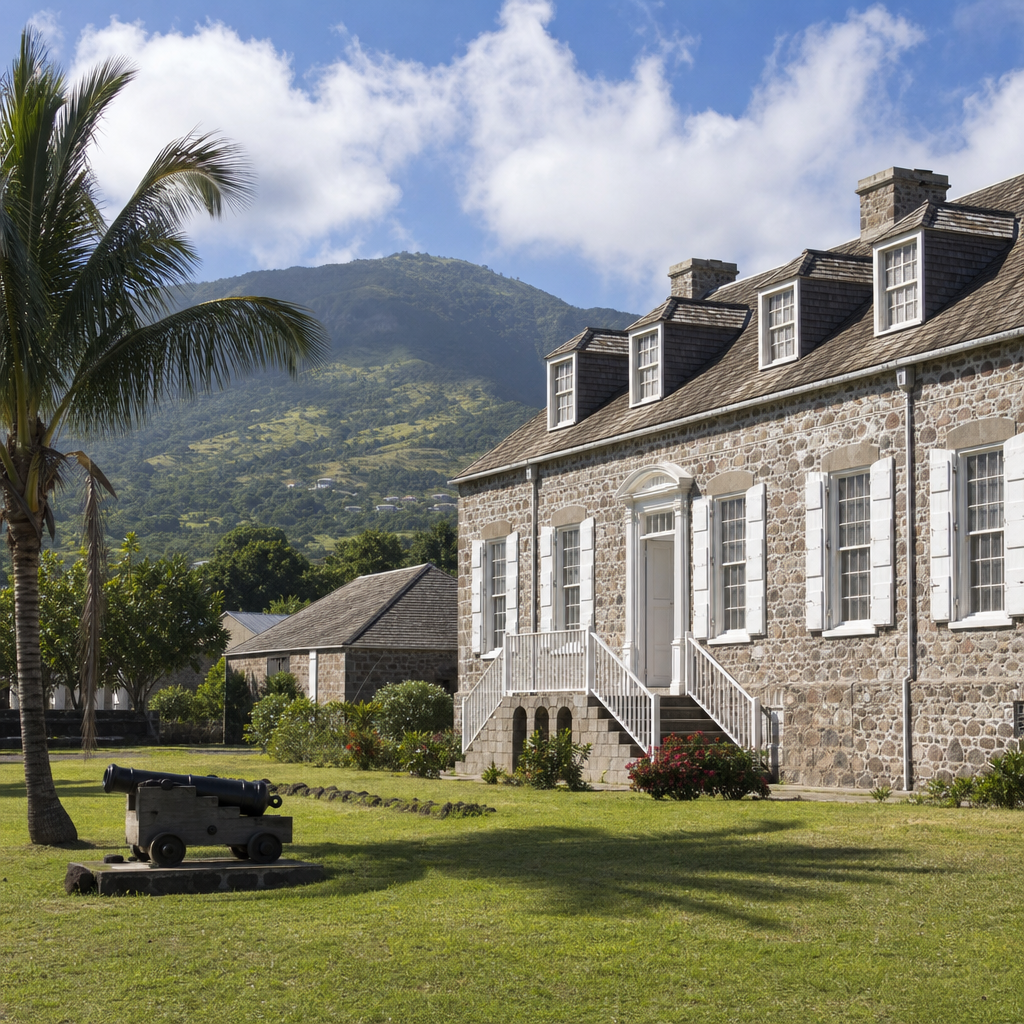
Colonial society on Nevis expressed itself physically through churches, estate houses, government buildings, roads, and burial grounds. Architecture signaled hierarchy. Planter residences often used stone, imported timber, galleries, and elevated positions to catch breezes and display status. Industrial buildings were more functional but equally revealing, especially surviving sugar mills and boiling houses that mark the island’s plantation zones. In Charlestown, urban plots reflected commercial density, with warehouses, administrative sites, and domestic structures arranged close to the harbor. These built environments helped enforce colonial order by separating labor, authority, worship, and trade into recognizable spaces.
Churches played both spiritual and administrative roles. Anglican parishes recorded baptisms, marriages, and burials, providing essential evidence for modern historians. They also legitimized elite authority. At the same time, missionary movements later expanded religious participation among enslaved and free Black communities, sometimes creating friction with planters who feared independent gatherings. Religion in colonial Nevis therefore cannot be reduced to piety alone. It was part of governance, respectability, literacy, and community formation. Cemeteries and memorial inscriptions remain some of the most tangible records of these layered identities.
Social hierarchy was rigid but not static. White planters sat at the top, but beneath them stood attorneys, merchants, smallholders, soldiers, artisans, and widows managing property. Free people of color occupied an intermediate and often precarious position, sometimes owning land or businesses while still facing legal discrimination. Enslaved people formed the laboring foundation of the colony. Over time, manumission, mixed ancestry, military service, and commercial success created limited social mobility for some, but the structure remained fundamentally unequal. The language of civility and refinement so often attached to colonial Caribbean elites obscures how completely that world depended on coercion.
What Survives Today and Why It Matters
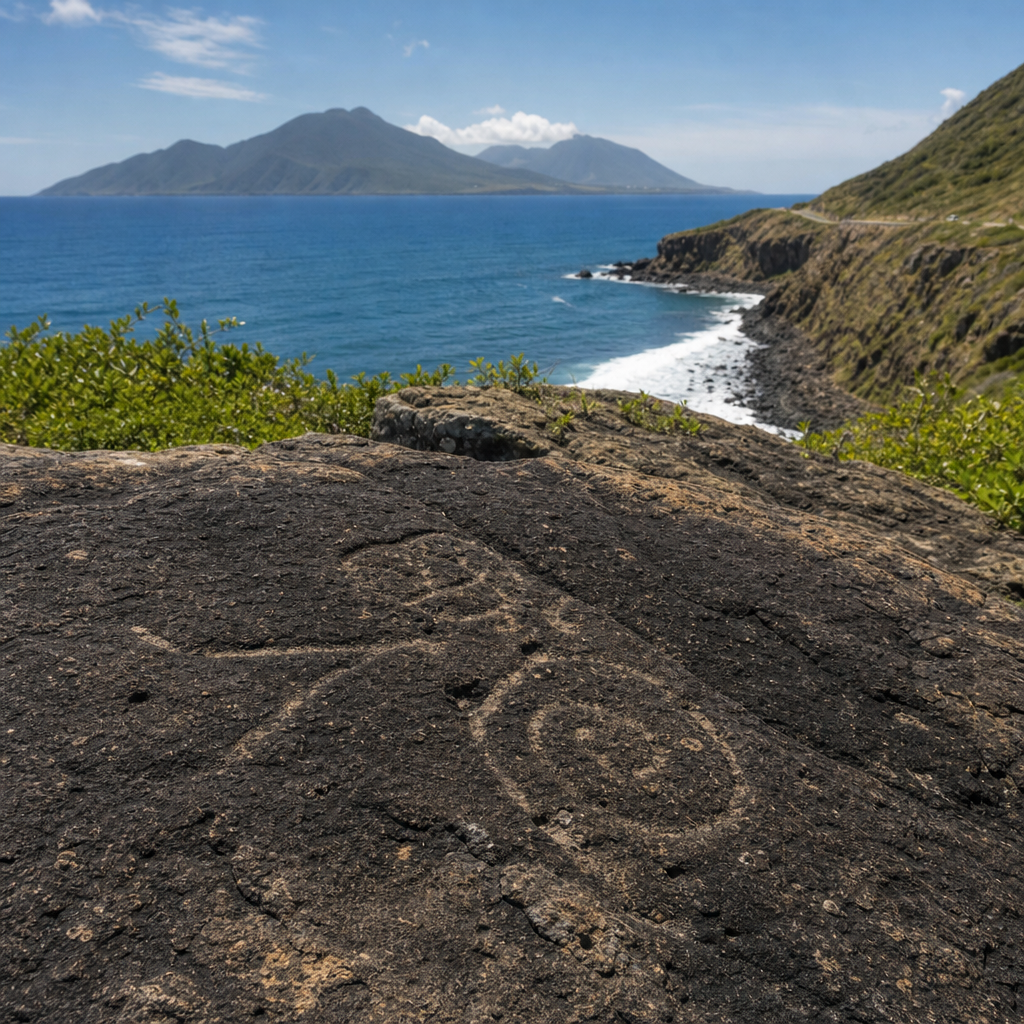
The colonial era remains visible across Nevis if you know what to look for. Estate ruins, stone aqueducts, old road alignments, churchyards, Charlestown’s historic core, and Bath’s spring landscape all preserve fragments of the period. Heritage sites are not merely tourist attractions. They are primary evidence. A ruined mill tells you where cane once grew, how wind power was used, and where labor was concentrated. A family tomb reveals transatlantic connections, mortality patterns, and claims to status. Place names preserve ownership, memory, and sometimes Indigenous or African traces that outlast documents.
Interpreting these places responsibly matters because colonial history can easily be romanticized. Visitors may encounter elegant inns, scenic plantation grounds, or references to famous figures such as Alexander Hamilton, who was born on Nevis, without fully confronting the enslaved labor that underwrote elite life. Good historical interpretation does both. It recognizes architecture, trade, and global connections while naming exploitation clearly. Museums, guide programs, archival projects, and school curricula on Nevis have an opportunity to frame colonial sites as spaces of evidence, mourning, resilience, and education rather than nostalgia alone.
For readers exploring Nevis under the broader culture and history theme, the colonial era is the essential hub connecting many other subjects. It links to slavery and emancipation, historic estates, churches and cemeteries, family genealogy, maritime trade, archaeology, foodways, Afro-Caribbean cultural survival, and heritage preservation. Understanding these connections makes every later topic clearer. If you want to go deeper, start with surviving estate sites, parish records, Bath, and Charlestown, then follow the stories of the people whose lives shaped them. Nevis’s colonial past is complex, consequential, and still present in the island’s landscape.
Frequently Asked Questions
Why was Nevis so important during the colonial era?
Nevis played a much larger role in colonial history than its small size might suggest. Settled by the English in the early seventeenth century, the island quickly became one of the most valuable colonies in the eastern Caribbean. Its importance came from a combination of geography, climate, and timing. Nevis was well positioned within emerging Atlantic trade routes, and its fertile volcanic soil supported profitable export crops. In the early years, tobacco and other small-scale crops mattered, but sugar transformed the island’s place in the British Empire. Once sugar cultivation expanded, Nevis became deeply tied to the systems of land ownership, labor exploitation, shipping, finance, and imperial competition that defined the colonial Caribbean.
The island also mattered because it served as an early model for English colonial development. Planters, merchants, and imperial officials used places like Nevis to refine plantation management, legal structures, and labor systems that would later spread elsewhere in the Atlantic world. The wealth generated there helped connect the island to London investors, regional trading networks, and neighboring colonies such as St. Kitts, Antigua, and Barbados. At the same time, Nevis was frequently caught up in rivalry among European powers, especially the English and French, making it strategically significant as well as economically valuable. In short, Nevis was not simply a remote island colony; it was part of the machinery that helped build Britain’s Caribbean empire.
How did sugar plantations shape life on Nevis?
Sugar plantations reshaped nearly every aspect of Nevisian life during the colonial period. What began as a settlement with smaller farms and mixed agricultural production gradually turned into a plantation society organized around sugar cultivation and export. This shift changed the physical landscape first. Estates expanded across the island, fields were cleared and divided, mills were built to crush cane, and boiling houses processed sugar for shipment abroad. Roads, ports, storage spaces, and estate buildings developed around the needs of plantation production rather than the needs of a balanced local community. Much of the island’s land, labor, and political energy became focused on generating profit from sugar.
The social impact was just as profound. Plantation owners and wealthy merchants occupied the top of a rigid hierarchy, while free poor whites, free people of color, and enslaved Africans occupied very different and unequal positions beneath them. Daily life for enslaved people was defined by relentless labor, surveillance, punishment, and limited autonomy, while planters lived from the proceeds of a system designed to extract maximum value from land and people. Churches, legal institutions, and local government often reinforced this order. The plantation economy also made Nevis vulnerable to fluctuations in global markets, storms, drought, war, and disease. Although sugar created tremendous wealth for some, it did so through a deeply unequal system that left lasting marks on the island’s economy, settlement patterns, and historical memory.
What role did enslaved Africans play in Nevis during the colonial period?
Enslaved Africans were central to the making of colonial Nevis. Their labor built and sustained the plantation economy that made the island profitable to planters and valuable to empire. They cleared land, planted and cut cane, worked in mills and boiling houses, tended livestock, cooked, cleaned, crafted tools, transported goods, and performed the countless forms of labor that kept estates functioning. Without the forced labor of enslaved people, the sugar economy on Nevis could not have existed in the form it did. Their work generated wealth not only for local planters but also for merchants, insurers, shipowners, and investors across the Atlantic.
Yet enslaved Africans were not only laborers within a brutal system; they were also people who preserved culture, formed families, created communities, and resisted oppression in ways both large and small. They brought agricultural knowledge, technical skill, religious practices, language traditions, and survival strategies that shaped life on the island. Despite the violence of slavery, enslaved people found ways to assert humanity through kinship networks, spiritual life, market activity, craft production, and everyday acts of endurance and resistance. Resistance could include slowing work, preserving forbidden practices, running away, negotiating limited concessions, or participating in wider patterns of revolt and unrest across the Caribbean. Any serious understanding of colonial Nevis must place enslaved Africans at the center, because they were the people whose forced migration, labor, suffering, and resilience defined the island’s colonial experience.
How did colonial rule affect Nevis’s society, politics, and built environment?
Colonial rule shaped Nevis far beyond the plantation fields. Politically, the island was governed through institutions designed to protect property, maintain order, and uphold imperial interests. Local assemblies, courts, militias, and parish structures reflected English models, but they operated in a slave society where law was applied unevenly and where race and class strongly determined power. Planter elites dominated public life, and many laws were crafted specifically to regulate enslaved populations, secure estate wealth, and maintain the hierarchy on which the colonial economy depended. This meant that colonial politics were never separate from slavery; they were deeply intertwined.
The built environment of Nevis still reflects these colonial arrangements. Great houses, estate ruins, churches, fortifications, roads, cemeteries, and old sugar works all tell part of the story. Anglican churches and parish divisions point to the role of religion and administration in colonial life, while plantation ruins reveal the industrial scale of sugar production. Stone windmills, boiling houses, and estate yards show how the island was engineered around export agriculture. Even landscapes that look serene today often carry the imprint of coerced labor and land concentration. Colonial settlement patterns also influenced where people lived, worshipped, traded, and worked. In that sense, Nevis’s historical sites are not simply picturesque remnants of the past; they are physical evidence of an era shaped by empire, inequality, and the transformation of land into a colonial economic machine.
Why is Nevis’s colonial history still important today?
Nevis’s colonial history remains important because it helps explain many features of the island’s present-day identity, landscape, and social memory. The arrangement of estates, the ruins scattered across the countryside, the prominence of certain churches and historic buildings, and the stories families tell about land, ancestry, and belonging all connect back to the colonial era. Understanding that past provides context for how wealth and power were created, who benefited, and who paid the human cost. It also helps make sense of how race, class, and land ownership developed over time in ways that still influence Caribbean societies more broadly.
Just as importantly, studying Nevis during the colonial era allows modern readers to see the island as part of a much larger Atlantic story. Nevis was linked to Europe, Africa, and the Americas through trade, war, migration, and slavery. Its history is therefore not only local; it is global. Remembering that history encourages a fuller and more honest view of heritage, one that includes both architectural beauty and human suffering, both economic ambition and moral violence. For residents, descendants, scholars, and travelers alike, engaging with this past can deepen appreciation for the island while also honoring those whose lives were shaped by colonialism and enslavement. Nevis today cannot be fully understood without recognizing how profoundly the colonial era helped form the world it inhabits.