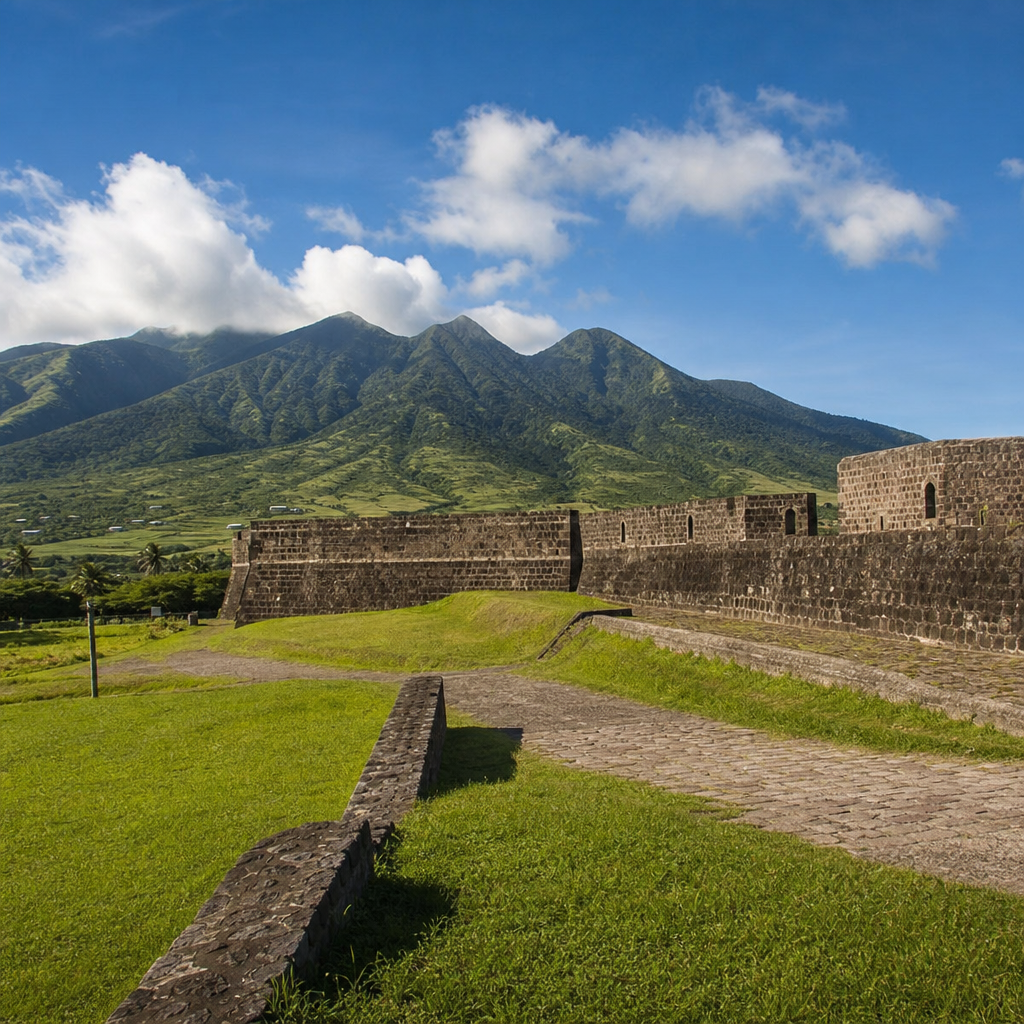
Nevis’ historical landmarks give travelers a compact but remarkably rich introduction to Caribbean history, where colonial ambition, African resilience, religious change, maritime trade, and modern conservation all intersect on one small island. In practical terms, a landmark is any place with enduring historical, architectural, cultural, or archaeological value, and on Nevis that includes plantation estates, churches, forts, cemeteries, public squares, hot springs, and museums tied to pivotal events and everyday life. I have walked these sites in the dry season and after rain, and the experience changes with the light: stone walls become easier to read at dawn, while overgrown ruins reveal how quickly the tropics reclaim human plans. That contrast is exactly why Nevis matters. The island is often overshadowed by larger Caribbean destinations, yet it preserves a concentrated record of British colonial rule, sugar production, slavery, emancipation, and local identity. For travelers building a culture and history itinerary, Nevis works exceptionally well because distances are short, landmarks are interconnected, and the stories are legible even in ruins. A morning can begin at a birthplace museum, continue through a plantation landscape, and end at a village churchyard where the island’s social hierarchy is literally carved in stone. This guide covers the key places, what they mean, how to visit them intelligently, and how they connect to broader Caribbean history, so you can treat Nevis not as a beach add-on but as a destination whose landmarks reward careful attention.
The Hamilton legacy and Charlestown’s historic core
Most travelers start with Charlestown, and that is the right choice because the capital contains the clearest orientation to Nevisian history. The best-known site is the Museum of Nevis History, which incorporates the reputed birthplace of Alexander Hamilton, the Caribbean-born statesman who later became a foundational figure in the United States. The building itself matters as much as the exhibit narrative. Its Georgian proportions, timber details, and relationship to the waterfront reflect an eighteenth-century port town shaped by Atlantic commerce. Inside, the interpretation links Hamilton’s early life on Nevis to the island’s merchant culture, recurrent hurricanes, and plantation economy. Even visitors who arrive mainly because of Hamilton usually leave with a broader understanding of Nevis, because the museum also frames the island’s indigenous past, colonial rivalry, and social change.
Charlestown rewards slow walking. Government House, the Bath Hotel area, old mercantile structures, and surviving civic buildings reveal how a small Caribbean capital once functioned as an administrative and trading center. The town plan is legible, with lanes leading toward the sea and inland estates, making it easier to visualize the flow of sugar, imported goods, and official power. One practical tip from experience: visit early, before midday heat flattens the architectural detail. Look for masonry thickness, shutter design, elevated foundations, and roof forms adapted to storms. These are not decorative accidents. They are responses to climate, economics, and available materials. Charlestown is also the best base for linking out to more specialized sites across the island, which is why it serves naturally as a hub within any culture and history itinerary.
Plantation estates and the sugar landscape
To understand Nevis’ historical landmarks, you must understand sugar. From the seventeenth century onward, plantations reorganized land, labor, ecology, and wealth. Estates such as New River, Montpelier, Golden Rock, and others across the island were not simply elegant residences surrounded by cane. They were industrial landscapes with windmills, boiling houses, curing houses, cisterns, slave villages, roads, and export links. Today, some are restored as inns or heritage properties, while others survive as dramatic ruins. In both forms, they provide evidence of how sugar shaped daily life and imperial policy. The New River estate in particular is useful for travelers because the remains of its mill and processing works help explain the mechanics of production. Once you stand beside those structures, the plantation ceases to be an abstract word and becomes a system you can map physically.
These estates also require moral clarity. Plantation beauty and violence occupy the same ground. Travelers should resist romanticizing great houses without accounting for the enslaved Africans and their descendants whose labor made them possible. On Nevis, this is not difficult to see if you pay attention to scale and placement. Owners’ residences often sit on breezier elevations with views and masonry refinement, while work areas and laboring populations were organized for extraction and control. I find that the most responsible way to visit is to read the landscape in layers: architecture, labor systems, water management, transport, and social hierarchy. That approach produces a truer understanding than treating estates as photo backdrops. It also makes subsequent visits to churches, cemeteries, and villages much more meaningful, because those places absorbed the long afterlife of plantation society.
Churches, cemeteries, and sacred history
Nevis’ churches are among its most informative landmarks because religious buildings often preserve the island’s best continuous records of community life. St. Thomas Lowland Church, St. John’s Figtree, St. Paul’s Charlestown, and other parish churches contain memorial tablets, burial grounds, rebuilding phases, and spatial clues that reveal class structure, family networks, and changing devotional practice. Anglican churches especially reflect the institutional framework of British rule, but they also document adaptation after hurricanes, earthquakes, and social transition. When I visit these sites, I spend as much time in the churchyard as in the nave. Tombstone inscriptions can reveal mortality patterns, migration links, military presence, and merchant ambition in a few lines of carved text. They also show how remembrance was distributed unevenly: some lives received polished stone, others little durable record.
One of the most affecting aspects of Nevisian sacred sites is the way they compress scale. A modest village church can connect global trade, local family history, and environmental risk in one place. Reused masonry, weathered coral stone, and repaired walls testify to repeated rebuilding after storms. That matters because resilience is itself part of the island’s heritage. These churches are still living spaces, not static museums, so respectful timing is essential. Avoid interrupting services, ask before photographing interiors, and remember that a graveyard may be both a heritage site and a place of active mourning. For travelers interested in deeper research, parish records and memorial inscriptions can guide further reading on emancipation, landholding, and kinship. As a hub topic, church landmarks also connect neatly to narrower articles on genealogy, architecture, and local religious traditions.
Forts, batteries, and coastal defense
Although Nevis is not dominated by massive fortifications in the way some larger Caribbean islands are, its defensive sites are historically significant because they reflect the island’s strategic vulnerability and commercial value. Fort Charles in Charlestown is the best-known example. Positioned to protect the harbor, it once formed part of a wider defensive network meant to deter attack, privateering, and imperial competition. The surviving masonry and cannon placements help visitors understand a central Caribbean reality: wealth from sugar invited violence, and ports had to be defended against rival states as well as opportunistic raiders. Even partial remains tell that story effectively. Stand at the fort and look seaward, and the geography becomes obvious. The harbor was a lifeline for exports and imports, but also an exposure point.
Smaller batteries and defensive traces around the coast are easier to miss, especially where vegetation has advanced, but they add nuance to the island’s story. Defense on Nevis was not only about formal war. It was also about policing trade routes, securing anchorage, and projecting authority. Travelers should not expect monumental military architecture everywhere; instead, expect fragmentary evidence integrated with later development. That makes interpretation more important than spectacle. A local guide or a strong museum visit beforehand can turn a modest wall line into a meaningful stop. If your interest extends across the region, compare Nevisian defenses with those on St. Kitts, Antigua, or Barbados. The contrast highlights how island size, topography, and fiscal capacity shaped military investment. On Nevis, the surviving forts are best read as functional nodes in a plantation colony rather than isolated attractions.
The Bath, thermal heritage, and elite travel culture
The Bath area is one of Nevis’ most distinctive historical zones because it joins natural history to colonial leisure. The island’s geothermal springs were known long before formal spa development, but by the eighteenth century they had become associated with therapeutic bathing and elite social life. The Bath Hotel, often cited as one of the earliest hotels in the Caribbean, was built to serve visitors seeking the supposed medical benefits of the hot springs. Even in altered or partially preserved form, the site is valuable because it shows that Nevis was not only a plantation island; it also participated in an early wellness economy tied to class, status, and mobility within the British Atlantic world.
For present-day travelers, the Bath landscape rewards interpretation rather than grand expectations. Some come looking for a fully intact resort complex and leave confused. A better approach is to see the area as a historical palimpsest: spring, bathing culture, hotel architecture, and changing public use layered over time. The hot water itself is the constant. It explains why investment happened there in the first place. When you combine a visit to the Bath with Charlestown and a plantation estate, you can trace three linked dimensions of Nevisian history: production, administration, and leisure. That is unusually efficient for a small island itinerary, and it is why the Bath deserves a central place in any serious traveler’s guide to Nevis’ historical landmarks.
How to plan a meaningful landmark itinerary
The most effective way to explore Nevis is to organize landmarks by theme rather than trying to check off names randomly. Start with context in Charlestown, move to one plantation landscape, include at least one church and cemetery, then add either Fort Charles or the Bath depending on your interests. Distances are manageable, but roads can be narrow and signage uneven, so allow more time than a map suggests. I recommend carrying water, sun protection, and offline directions. Interpretation improves dramatically if you read before visiting, especially on slavery and sugar production, because many ruins are evocative but not fully labeled on site.
| Landmark type | Best example | What it explains | Ideal visit time |
|---|---|---|---|
| Museum and town core | Museum of Nevis History, Charlestown | Political, commercial, and biographical context | Early morning |
| Plantation ruins | New River Estate | Sugar production and labor systems | Morning or late afternoon |
| Church and cemetery | St. Thomas Lowland Church | Community records, class, memory | Late morning |
| Military site | Fort Charles | Harbor defense and trade security | Sunset light |
| Thermal heritage | The Bath and Bath Hotel area | Health tourism and colonial leisure | Mid-morning |
One final planning principle matters: pair landmarks with local conversation. Nevisian history is preserved not only in stone but in oral knowledge, family memory, and community interpretation. Taxi drivers, museum staff, church caretakers, and heritage guides often provide the connective tissue that signage lacks. Ask what changed after hurricanes, which estate names are still used locally, or how a church relates to the surrounding village. Those answers help visitors move from sightseeing to understanding. They also point naturally to related culture and history topics, from foodways and festivals to genealogy, architecture, and post-emancipation village life, making this hub page a practical starting point for deeper exploration.
Nevis’ historical landmarks are compelling because they make Caribbean history tangible on a human scale. In one island circuit, travelers can see the birthplace museum associated with Alexander Hamilton, plantation ruins that expose the mechanics and brutality of sugar, churches and cemeteries that preserve social memory, coastal defenses tied to imperial rivalry, and geothermal sites that supported an early health and leisure culture. The key benefit of visiting these places is not simply that you learn dates or names. You understand how power, labor, belief, commerce, climate, and survival shaped a real landscape that people still inhabit today. That perspective leads to better travel decisions. You slow down, read buildings carefully, ask better questions, and recognize that ruins are records, not scenery.
As a hub within the broader culture and history topic, Nevis’ miscellaneous landmarks also provide a strong framework for deeper reading. A plantation stop can lead into focused research on slavery and emancipation. A parish church can open paths into genealogy and vernacular architecture. Charlestown can anchor articles on political history, maritime trade, or the Hamilton story. Use this guide as your starting map, then build an itinerary that balances famous sites with quieter places that reveal continuity between past and present. If you are planning a trip, choose three landmark types, book enough time to explore them without rushing, and let Nevis show you how much history a small island can hold.
Frequently Asked Questions
What kinds of historical landmarks can travelers expect to find on Nevis?
Travelers exploring Nevis will find a surprisingly wide range of historical landmarks for such a compact island. The most recognizable sites include former plantation estates, old sugar-related properties, churches, cemeteries, forts, museums, and public spaces that reveal how deeply Nevis was shaped by colonial expansion, slavery, trade, and religious life. Many landmarks are tied to the island’s sugar economy, which influenced settlement patterns, architecture, labor systems, and transportation networks for centuries. Estate ruins, great houses, stone walls, and surviving outbuildings often serve as visible reminders of that era.
Beyond plantation landscapes, Nevis also offers important religious and civic landmarks. Anglican churches, burial grounds, and village centers help tell the story of local communities over generations, while places such as Charlestown’s historic core preserve elements of the island’s administrative and commercial past. Fortifications and coastal sites add another layer, reflecting the strategic importance of Nevis during periods of imperial rivalry in the Caribbean. Even natural sites such as the island’s hot springs can qualify as landmarks because of their long historical use and cultural significance. Together, these places give visitors a broad, grounded understanding of Nevis not just as a beach destination, but as an island with a layered and deeply meaningful past.
Which historical sites on Nevis are considered especially important for first-time visitors?
For first-time visitors, a few sites stand out because they offer both historical depth and easy orientation to the island’s story. The Museum of Nevis History in Charlestown is often the best place to begin. It provides context for the island’s colonial development, its social history, and its place within the wider Caribbean. The museum is also known for its connection to Alexander Hamilton, who was born on Nevis, making it a useful stop for travelers interested in Atlantic history and the island’s global connections.
Another essential site is Bath Hotel and the nearby hot springs area, which reflects Nevis’s early reputation as a health and leisure destination during the colonial period. Visitors interested in architecture and community history should also seek out churches such as St. Thomas’ Anglican Church and other historic religious structures that preserve records of worship, social hierarchy, and local continuity. Estate sites such as New River Estate are particularly valuable because they show the industrial and agricultural foundations of Nevis’s plantation past, including surviving ruins that help travelers visualize how sugar production once operated. A walk through Charlestown itself is equally important, since the town’s streets, public buildings, cemeteries, and waterfront setting bring together the civic, commercial, and maritime dimensions of Nevisian history in one accessible area.
How does visiting Nevis’s landmarks help travelers understand Caribbean history more broadly?
Nevis is an excellent place to understand Caribbean history because so many of the region’s major themes appear here in concentrated form. When travelers visit the island’s landmarks, they encounter evidence of European colonial competition, plantation agriculture, the transatlantic slave trade, African-descended cultural endurance, Christian missionary influence, and the ongoing reshaping of historic spaces in the modern era. On Nevis, these themes are not abstract. They are embedded in estates, churches, burial grounds, roads, ruins, and harbor-facing townscapes that can be explored within a relatively small geographic area.
Plantation sites in particular help explain how wealth was extracted from Caribbean islands and how enslaved labor made that wealth possible. Religious buildings and cemeteries reveal social divisions as well as community resilience, while forts and coastal viewpoints remind visitors that the Caribbean was central to global commerce and imperial strategy. Museums and preserved civic spaces then help connect those older systems to present-day identity, memory, and heritage tourism. In that sense, Nevis functions almost like a historical microcosm of the wider Caribbean. A traveler who takes time to interpret its landmarks carefully can gain insight into regional patterns of conquest, resistance, adaptation, and preservation that extend far beyond the island itself.
What is the best way to tour Nevis’s historical landmarks in a meaningful and respectful way?
The best approach is to combine preparation, pacing, and local insight. Before visiting, it helps to learn a little about Nevis’s colonial history, the sugar economy, and the role of enslaved Africans in shaping the island’s society. That background makes the landmarks more legible and prevents travelers from seeing them only as scenic ruins or photo opportunities. Once on the island, visitors often benefit from hiring a knowledgeable local guide or joining a heritage-focused tour, since guides can explain lesser-known details, oral traditions, and connections between sites that may not be obvious from signage alone.
Respect is equally important. Many landmarks, especially cemeteries, churches, and former plantation grounds, are places of memory as much as places of interest. Travelers should follow posted rules, ask permission where appropriate, avoid climbing on fragile ruins, and remember that these sites may carry painful associations linked to enslavement and colonial exploitation. It is also worth moving slowly rather than trying to “check off” every landmark in one day. Spending real time in Charlestown, at an estate ruin, or in a historic church often leads to a richer understanding than rushing between stops. Supporting local museums, guides, artisans, and conservation efforts also helps ensure that Nevis’s heritage is interpreted and protected by the communities most closely connected to it.
Are Nevis’s historical landmarks well preserved, and what challenges affect their conservation?
Some of Nevis’s historical landmarks are well maintained and accessible, while others survive in partial or fragile condition. This mix is common on Caribbean islands, where preservation depends on funding, climate resilience, land use pressures, and the availability of technical expertise. Museums and certain public landmarks generally receive more structured attention, while plantation ruins, cemeteries, and lesser-known architectural sites may be more vulnerable to weathering, vegetation growth, erosion, and gradual neglect. Hurricanes, humidity, salt exposure, and seismic activity can all take a toll on old stone, wood, and mortar, making conservation an ongoing challenge rather than a one-time achievement.
At the same time, growing interest in cultural heritage has helped increase awareness of the value of these places. Conservation on Nevis is not just about repairing buildings; it is also about protecting historical memory, documenting archaeological remains, and interpreting the island’s past honestly and inclusively. That means acknowledging both elegant colonial architecture and the harsh realities of plantation slavery that underpinned much of it. Travelers can play a positive role by visiting responsibly, paying entrance fees where applicable, choosing reputable guides, and treating historic sites as irreplaceable resources rather than casual backdrops. In practical terms, preservation on Nevis is a shared effort involving local institutions, community knowledge, tourism stakeholders, and visitors who understand that heritage is one of the island’s most valuable and vulnerable assets.