Nevis’ youth organizations play a quiet but decisive role in shaping future leaders, giving children and young adults practical spaces to learn responsibility, confidence, service, and civic participation. In a small island community, leadership development is rarely confined to a classroom. It happens on playing fields, in church halls, at summer camps, during cultural rehearsals, through environmental projects, and inside volunteer groups that ask young people to solve real problems with real consequences. When I have worked with community initiatives in small Caribbean settings, the pattern has always been clear: the strongest future leaders usually emerge from organizations that combine structure, mentorship, and opportunities to act.
On Nevis, the phrase youth organization can describe a wide range of groups. It includes sports clubs, church youth ministries, school-based leadership councils, cultural and performing arts groups, service clubs, environmental initiatives, scouting-style programs, and public sector youth development efforts. Some are formal charities or registered associations. Others operate informally but still shape behavior, aspirations, and public spirit. What unites them is a shared function: they help young people move from passive participation to active contribution.
This matters because small islands depend heavily on human capital. Nevis cannot rely on scale; it relies on capable people. Future business owners, teachers, nurses, hospitality managers, public servants, elected officials, artisans, and community advocates often begin developing leadership habits long before they enter the workforce. Youth organizations create those early repetitions. They teach punctuality, teamwork, public speaking, project planning, conflict resolution, and accountability. They also give young people a sense of belonging, which is one of the strongest protective factors against disengagement and antisocial behavior.
As a hub within Local Life and Experiences, this article maps the broad landscape of youth development on Nevis and explains how miscellaneous community-based groups contribute to leadership formation in everyday life.
The Role of Youth Organizations in Nevisian Community Life
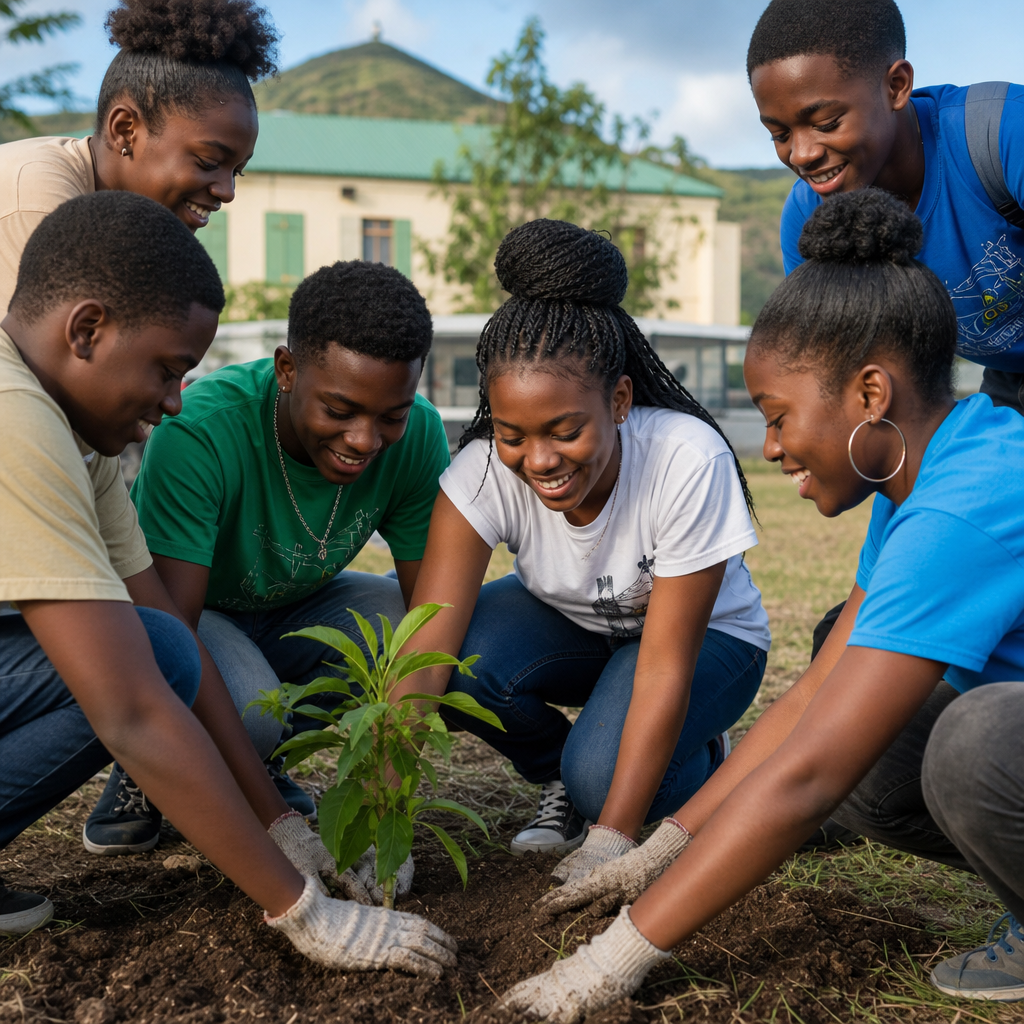
Youth organizations in Nevis do more than keep young people occupied after school. At their best, they function as training grounds for citizenship. A teenager who helps organize a beach cleanup learns more than litter control. That student learns logistics, delegation, communication, and follow-through. A young netball captain learns how to motivate peers under pressure. A church youth leader gains experience speaking before a group, planning events, and handling sensitive interpersonal dynamics. These are leadership competencies, not side benefits.
Because Nevis has close-knit communities, the impact of these organizations is visible. Adults often know the families, teachers, and mentors connected to a child’s development. That creates a social feedback loop. When young people perform well in one setting, they are more likely to be invited into other forms of responsibility. A student who excels in a school club may be recommended for a parish event committee. A reliable volunteer may later become a youth representative in a civic discussion. Leadership grows through repeated trust.
The island context also strengthens intergenerational influence. In larger countries, youth programs can feel isolated from daily public life. On Nevis, a cultural performance, sports tournament, independence celebration, or environmental drive is often a community-wide event. Young participants are seen, evaluated, encouraged, and remembered. That visibility can be demanding, but it also accelerates maturity. Young people understand quickly that their actions affect reputation, opportunity, and relationships.
Where Leadership Skills Are Built: Common Types of Youth Groups
The youth development ecosystem on Nevis is diverse, even when organizations have modest budgets. School-based groups are often a starting point. Student councils, debate teams, reading clubs, peer mentorship groups, and prefect systems introduce formal responsibility. Students learn agenda setting, representation, and basic governance. They also learn that leadership is not simply popularity. It requires reliability, preparation, and fairness.
Sports organizations are equally important. Cricket, football, athletics, basketball, swimming, and netball programs teach discipline through repetition. Coaches often become some of the most influential adult mentors in a young person’s life. The lesson is not just performance. It is resilience after losses, composure after mistakes, and respect for rules. Those habits transfer directly into work and civic leadership.
Church and faith-based youth groups remain central in many Caribbean communities, and Nevis is no exception. These groups often offer safe social spaces, service opportunities, and moral guidance. Young members may lead devotionals, coordinate charity drives, visit elders, or assist with holiday outreach. Even for families focused more on community than doctrine, these organizations provide structure and adult supervision that many parents value.
Cultural organizations also deserve attention. Dance troupes, music groups, drama circles, and heritage programs preserve Nevisian identity while building confidence. Performing in public demands rehearsal, timing, emotional control, and collaboration. Young people involved in Culturama-adjacent activities or heritage presentations often become strong communicators because they learn to stand before an audience and represent something larger than themselves.
Environmental and service-oriented groups are increasingly relevant. Projects involving coastal care, gardening, tree planting, recycling awareness, or historical site maintenance connect youth leadership to stewardship. Young people begin to see that leadership includes protecting place, not just leading people.
| Type of organization | Typical activities | Leadership skills developed |
|---|---|---|
| School clubs | Student councils, debates, peer support, event planning | Representation, planning, public speaking, decision-making |
| Sports groups | Training, competitions, team captains, travel coordination | Discipline, teamwork, resilience, accountability |
| Faith-based groups | Service projects, youth meetings, outreach, presentations | Empathy, organization, communication, responsibility |
| Cultural programs | Dance, music, drama, heritage events, festival preparation | Confidence, collaboration, creativity, poise |
| Environmental initiatives | Cleanups, planting, awareness campaigns, conservation projects | Stewardship, problem-solving, civic action, teamwork |
How Mentorship Turns Participation Into Leadership
No youth organization succeeds without adults who know how to guide without smothering. Mentorship is the mechanism that converts attendance into growth. I have seen this repeatedly: the same program can produce very different results depending on whether adults merely supervise or intentionally mentor. Strong mentors set expectations, model calm behavior, correct privately when possible, and create opportunities for young people to lead before they feel fully ready.
On Nevis, mentors often come from overlapping roles. A teacher may also coach. A pastor may also coordinate youth outreach. A cultural organizer may also be a family friend. This overlap can be powerful because it reinforces values across settings. When a young person hears the same message about conduct, effort, and service from multiple respected adults, those lessons stick.
Effective mentorship usually follows a simple progression. First, adults assign manageable responsibility, such as taking attendance or introducing a speaker. Then they expand the task to planning part of an event, managing a team, or representing the group publicly. Finally, they step back enough for the young person to make decisions and experience consequences. That gradual release builds confidence rooted in competence, not empty praise.
The most effective organizations also understand that mentorship requires consistency. Occasional inspirational talks help, but regular check-ins matter more. Young people benefit when an adult notices missed practice, declining school performance, conflict within a peer group, or signs of withdrawal. Early intervention keeps leadership pathways open for youth who might otherwise drift away.
Real Benefits for Young People, Families, and the Island
The immediate benefit of youth organizations is skill development, but the long-term benefit is social stability. Young people who belong to structured groups are more likely to develop routines, healthier peer networks, and stronger attachment to community standards. Research across youth development literature consistently finds that belonging, adult support, and meaningful participation improve educational engagement and reduce risk behaviors. Nevis benefits when these protective factors are embedded in daily life rather than treated as emergency interventions.
Families benefit too. Parents gain trusted spaces where children can spend time productively, especially during after-school hours, weekends, and holidays. In small communities, that practical support matters. It can relieve pressure on working households while exposing children to experiences parents may not be able to provide alone, such as formal coaching, structured performance opportunities, or organized service projects.
The island’s economy also gains indirectly. Hospitality, public service, entrepreneurship, and the creative sector all need people who can communicate well, solve problems, and work in teams. Youth organizations cultivate those exact capacities early. A teenager who learns event coordination in a church group may later thrive in hotel operations. A student who leads an environmental campaign may become a stronger tourism advocate or community planner. Leadership development is not abstract; it is workforce preparation with a civic backbone.
There is also a cultural benefit. Organizations that involve music, storytelling, traditional celebrations, and community service help young Nevisians value local identity at a time when global media can flatten distinct traditions. Leaders who know their own community history tend to advocate for it more effectively.
Challenges Youth Organizations on Nevis Must Navigate
Despite their value, youth organizations face practical limits. Funding is the most obvious challenge. Many groups depend on donations, volunteer labor, small fundraising events, or irregular sponsorships. That makes long-term planning difficult. Equipment replacement, transportation, uniforms, venue costs, insurance, and training all require money. Even strong programs can weaken when administrative capacity is thin.
Volunteer burnout is another serious issue. On small islands, the same committed adults are often asked to serve in multiple organizations. Over time, that leads to fatigue and succession problems. If a group relies too heavily on one coach, one church worker, or one cultural organizer, continuity becomes fragile. Sustainable organizations deliberately train younger adults to step into leadership.
Access and inclusion can also be uneven. A child living closer to Charlestown may have easier access to activities than one who depends on transport from another area. Program fees, uniforms, or travel expenses can quietly exclude families. The strongest youth systems recognize that talent is distributed widely, while opportunity is not. They work to remove practical barriers.
Another challenge is balancing discipline with relevance. Young people disengage when programs feel outdated, overly rigid, or disconnected from their interests. At the same time, organizations lose their developmental value if they abandon structure entirely. The best groups adapt their methods without lowering standards. They use digital communication, modern project themes, and youth input while still insisting on attendance, respect, and responsibility.
How to Strengthen the Hub of Youth Development on Nevis
If Nevis wants stronger future leaders, it should continue treating youth organizations as community infrastructure, not optional extras. Practical improvements are straightforward. First, build better coordination across schools, nonprofits, churches, sports clubs, and public agencies so families can find opportunities more easily. A shared calendar or annual youth activity directory would reduce duplication and improve visibility.
Second, invest in mentor training. Adults who work with youth need support in safeguarding, communication, conflict management, and basic program design. Good intentions are not enough. Short workshops based on established youth development principles can raise quality across many organizations at once.
Third, measure outcomes beyond attendance. It is useful to track retention, volunteer hours, school engagement, certifications, competition participation, and youth-led projects completed. These indicators show whether organizations are truly building leaders or simply hosting activities.
Finally, celebrate youth contribution publicly. Recognition matters. Awards, local media coverage, school assemblies, and community acknowledgments tell young people that service and responsibility are valued. Nevis’ youth organizations are already shaping future leaders through everyday effort, mentorship, and opportunity. The next step is simple: support them intentionally, participate consistently, and make space for more young people to lead.
Frequently Asked Questions
1. How do youth organizations in Nevis help shape future leaders?
Youth organizations in Nevis help shape future leaders by giving children and young adults practical, everyday opportunities to develop the habits and skills leadership requires. In a close-knit island community, leadership is not treated as an abstract idea reserved for adulthood. It is learned through action. Young people are asked to organize events, work in teams, show up on time, solve problems, communicate respectfully, and take responsibility for shared goals. Whether they are participating in sports clubs, church-based groups, summer programs, cultural organizations, environmental initiatives, or volunteer projects, they are learning how to contribute to something larger than themselves.
What makes these organizations especially valuable is that they place young people in real situations with real consequences. A student helping to coordinate a community clean-up learns planning and accountability. A young performer preparing for a cultural showcase learns discipline, teamwork, and confidence under pressure. A teen involved in a service group may learn how to listen to community needs, work with different personalities, and follow through on commitments. These are foundational leadership experiences. Over time, they help build self-belief, emotional maturity, initiative, and civic awareness, all of which are essential traits in future leaders.
2. Why is leadership development through youth organizations so important in a small island community like Nevis?
In a small island community like Nevis, leadership development through youth organizations is especially important because the connection between young people and community life is immediate and visible. In larger places, it can be easy for young people to feel disconnected from decision-making or public service. In Nevis, however, the impact of involvement is easier to see. When young people take part in neighborhood events, school-based outreach, environmental campaigns, cultural celebrations, or volunteer efforts, they can directly observe how their time and energy strengthen the island. That kind of visibility makes leadership feel tangible rather than distant.
Youth organizations also help ensure that values, traditions, and civic responsibility are carried forward to the next generation. Nevis depends not only on formal institutions but also on active citizens who care about community well-being. By encouraging service, collaboration, and accountability from an early age, these groups help prepare young people to become thoughtful adults who are ready to lead in families, workplaces, public life, and community organizations. They create a steady pipeline of engaged individuals who understand local needs and are more likely to invest in the island’s future. In that sense, youth leadership development is not just beneficial for individual growth; it is vital to long-term community resilience and continuity.
3. What kinds of skills do young people gain by participating in Nevis’ youth organizations?
Young people in Nevis’ youth organizations gain a broad set of practical and personal skills that serve them well in school, work, and community life. One of the most important is responsibility. When youth are expected to attend meetings, prepare for activities, complete assignments, or support team goals, they begin to understand that leadership starts with reliability. They also build communication skills by speaking in groups, sharing ideas, listening to others, and learning how to express themselves clearly and respectfully. These abilities are critical whether a young person eventually leads a classroom project, a business team, or a community initiative.
They also develop confidence, decision-making ability, and problem-solving skills. Many youth activities require participants to adapt, think creatively, and work through challenges together. A sports team may teach resilience and composure. A volunteer group may teach planning and initiative. A cultural or faith-based program may strengthen public speaking, discipline, and identity. Environmental and service projects often build civic awareness and a sense of stewardship. Just as importantly, these organizations teach soft skills that are sometimes overlooked but deeply valuable, including empathy, patience, respect for others, and the ability to work across different ages and backgrounds. These are the qualities that often distinguish effective, trusted leaders from those who simply hold titles.
4. Are youth organizations in Nevis only beneficial for children who already show leadership potential?
No, youth organizations in Nevis are not only beneficial for children who already appear confident or naturally leadership-oriented. In fact, many of the greatest benefits are seen in young people who may be quiet, uncertain, or still discovering their strengths. Good youth organizations create supportive environments where leadership can emerge gradually. Not every future leader starts out as the most outspoken person in the room. Some begin by helping behind the scenes, showing consistency, learning to work well with others, and slowly building the confidence to take on more visible responsibilities.
That is one of the strengths of community-based youth development in Nevis. Leadership is not limited to formal positions or public recognition. A young person can lead by being dependable, by encouraging peers, by following through on service projects, or by showing maturity during group activities. Organizations that provide structure, mentorship, and encouragement often help participants recognize abilities they did not know they had. Over time, shy children may become effective communicators, hesitant teens may become organizers, and uncertain participants may develop a clear sense of purpose. The process is inclusive, and that inclusiveness matters because communities need many types of leaders, not just the most visible ones.
5. How can families and the wider community support youth organizations in Nevis?
Families and the wider community can support youth organizations in Nevis by treating them as essential parts of leadership development rather than optional extras. Parents and guardians play a major role by encouraging consistent participation, valuing service and discipline, and recognizing that growth often happens outside formal academics. Something as simple as helping a child get to meetings, attending performances or events, volunteering time, or reinforcing the importance of commitment can make a significant difference. Young people are more likely to stay engaged when adults around them show that these experiences matter.
The broader community can help by providing mentorship, sponsorship, safe spaces, and public encouragement. Churches, schools, local businesses, civic groups, and community leaders all have a role to play. They can partner with youth organizations, offer resources, invite young people into meaningful projects, and create opportunities for them to contribute in visible ways. When youth feel trusted and included, they are more likely to develop the confidence and civic identity that leadership requires. Strong support also helps organizations remain sustainable, which is crucial in smaller communities where resources may be limited. Ultimately, investing in youth organizations is an investment in Nevis itself, because the young people being guided today are the future organizers, professionals, advocates, cultural bearers, and community leaders of tomorrow.