Nevis’ year-end bird migration turns the island into one of the Caribbean’s most rewarding places to watch wildlife, as shorebirds, seabirds, raptors, and songbirds move through a compact landscape of beaches, wetlands, dry scrub, and cloud-touched slopes. Bird migration is the seasonal movement of birds between breeding and nonbreeding areas, usually driven by changes in food availability, weather, and daylight. On Nevis, that movement is especially visible from late autumn into the end of the calendar year, when northern migrants arrive, local habitats concentrate feeding activity, and resident species share the same spaces with passing flocks. For travelers, naturalists, photographers, and conservation-minded residents, this period matters because it reveals how a small island can support an outsized range of species within a few square miles.
Nevis sits in the northern Lesser Antilles and combines coastal ponds, rocky shores, offshore waters, pasture, village gardens, and the forested elevations of Nevis Peak. That variety explains why migration here feels dynamic rather than repetitive. In one morning, I have watched plovers stitch across a salt pond, Brown Pelicans patrol near Charlestown, and a migrant warbler forage in shaded hotel grounds before breakfast. The island’s scale helps beginners: you do not need a long expedition to understand the rhythms of the season. The same closeness also makes ecological connections easy to see. Rainfall affects ponds, ponds affect invertebrates, and invertebrates affect whether a tired sandpiper can refuel enough to continue south.
As a hub within Nature and Wildlife, this overview covers the miscellaneous dimensions that make Nevis migration compelling: timing, habitats, key species, viewing sites, identification basics, photography, conservation pressures, and practical etiquette. A few terms are useful from the start. Resident birds live on Nevis year-round. Migrants pass through or spend the winter after breeding elsewhere, often in North America. Stopover habitat is the place birds use to rest and feed during migration. Vagrants are unexpected birds found outside their usual range, often after storms or unusual wind patterns. Understanding these categories helps visitors read what they are seeing instead of treating every sighting as random. Migration on Nevis is not random at all; it is a repeating natural event shaped by geography, weather, habitat quality, and survival.
Why late-year migration on Nevis is so distinctive
The end of the year is a prime birding window on Nevis because species from North America and other Caribbean islands overlap with resident birds just as seasonal conditions sharpen habitat use. In practical terms, that means wetlands host feeding concentrations, coastal edges become active with waders and terns, and upland gardens may hold migrant passerines. November and December often produce especially satisfying birding because the first rush of autumn movement has settled into more stable patterns. Birds are easier to locate than during peak transit days, yet diversity remains high. Visitors also benefit from calmer holiday itineraries: dawn shorebird watching, midday historical sightseeing, and late-afternoon seawatching fit comfortably into a single day.
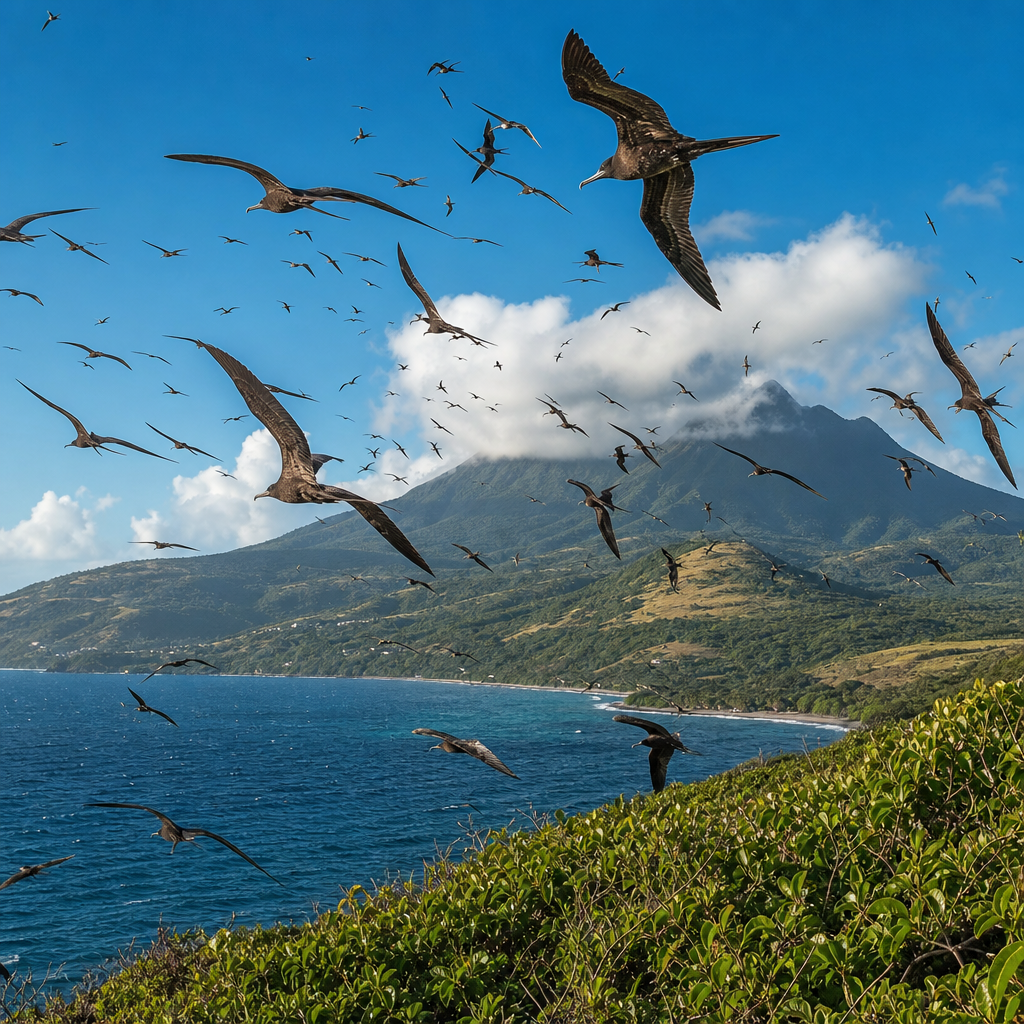
Geography does much of the work. Nevis is small, volcanic, and ringed by productive coastal habitats, with higher interior elevations intercepting moisture and supporting greener vegetation. Migrating birds are drawn to these resource pockets after crossing water or moving between islands. Shorebirds seek exposed mud and shallow edges. Herons and egrets use ponds and mangrove-like margins where available. Frigatebirds and pelicans exploit marine updrafts and nearshore fish movements. Smaller insect-eating birds concentrate in sheltered gardens, woodland edges, and fruiting trees. Because habitats sit close together, weather can shift activity quickly. A brief rain shower may activate insect feeding in village trees, while a receding tide immediately improves conditions for peeps, stilts, and plovers along open margins.
Late-year migration on Nevis also stands out because visibility is high without requiring advanced field skills. On larger islands, birds can disperse across vast wetlands or inaccessible forest. On Nevis, many productive sites are reachable within minutes from lodging areas, especially around Pinney’s Beach, the ponds near the airport zone, and roads linking Charlestown with lowland estates. This accessibility does not mean every species is easy, but it does lower the barrier to entry. Families can enjoy obvious species such as Brown Pelican, Magnificent Frigatebird, Green Heron, and Belted Kingfisher, while experienced birders can scan for less common shorebirds or unusual warblers moving through mixed habitat mosaics.
Key habitats that support migrating birds
Wetlands are the backbone of year-end migration on Nevis. Seasonal ponds, brackish flats, drainage margins, and muddy edges provide feeding grounds for sandpipers, plovers, stilts, and herons. Even modest water bodies can be important because migrants operate on energy budgets measured in survival, not scenic grandeur. A shallow pond with exposed mud may hold Least Sandpiper, Semipalmated Sandpiper, Black-necked Stilt, and Greater Yellowlegs, all feeding on small invertebrates. Water levels matter enormously. If rains flood a pond too deeply, shorebirds lose access to food. If it dries completely, prey availability falls. The best sites often sit at intermediate levels where mud, shallow water, and sparse cover coexist.
Coasts and nearshore waters form the second major habitat group. Sandy beaches can host Sanderling and plovers, rocky sections attract turnstones, and open sea views allow scanning for terns, gulls, shearwaters, and frigatebirds. Pelicans and kingfishers patrol fish-rich areas, especially where currents or small bait schools gather. On several visits, I have found that the most productive coastal sessions begin just after sunrise, when light is gentle, wind is lower, and birds feed actively before human beach traffic increases. Tide state shapes results. Falling tides expose feeding areas for shorebirds, while rougher conditions after weather systems may push seabirds closer to shore.
Gardens, scrub, and lower-elevation woodland are often underestimated by casual visitors, yet they can be excellent for migrant songbirds. Warblers, vireos, and other small species use flowering shrubs, shaded hedges, fruiting trees, and insect-rich leaf litter to recover after longer flights. Hotel grounds, estate gardens, and village edges can therefore produce memorable sightings. Upland forest around Nevis Peak supports a different mix again, blending resident species with occasional migrants seeking cooler, moister conditions. Habitat diversity within a short drive is Nevis’ competitive advantage as a birdwatching destination.
| Habitat | Typical late-year birds | Best viewing approach |
|---|---|---|
| Seasonal ponds and mudflats | Sandpipers, plovers, stilts, herons | Arrive early, scan edges slowly, use a spotting scope |
| Beaches and rocky shore | Sanderling, turnstones, terns, pelicans | Check tide lines and wave-washed rocks at first light |
| Nearshore sea views | Frigatebirds, gulls, terns, occasional shearwaters | Watch wind direction and scan after weather changes |
| Gardens and scrub | Warblers, vireos, bananaquits, hummingbirds | Look for flowering plants, fruiting trees, and shade |
| Upland forest margins | Doves, thrashers, resident songbirds, passing migrants | Walk quietly and listen for calls before sunrise |
Species to look for from shorebirds to songbirds
Shorebirds are often the headline group during Nevis’ year-end migration. Expect small peeps such as Least Sandpiper and Semipalmated Sandpiper, larger species like Greater Yellowlegs, and charismatic birds including Black-necked Stilt and Ruddy Turnstone. Plovers may include Semipalmated Plover or Black-bellied Plover depending on habitat and timing. Identification depends on size, bill shape, leg color, feeding posture, and flock structure. Beginners should not rush. A yellowlegs striding in slightly deeper water behaves differently from a compact peep sewing across the mudline. Watching behavior for thirty seconds often reveals more than a hurried glance through binoculars.
Wading birds and waterbirds add structure and drama to wetland scenes. Great Egret, Snowy Egret, Cattle Egret, Green Heron, and Yellow-crowned Night Heron are among the species birders commonly hope to see in the wider eastern Caribbean, alongside ducks or coots where conditions permit. Pelicans are usually among the easiest birds for visitors to identify, and Magnificent Frigatebird is unforgettable once learned: long angular wings, forked tail, and effortless soaring. Belted Kingfisher is a classic migrant that announces itself with rattling calls and direct flight along ponds or shorelines. Ospreys may appear over water, especially where fish are concentrated.
Smaller landbirds reward patience in gardens and wooded edges. American Redstart, Northern Parula, Black-and-white Warbler, Prairie Warbler, or other migrant warblers can appear depending on the season and annual conditions, while resident species such as Bananaquit, Lesser Antillean Bullfinch, and hummingbirds anchor the local avifauna. Doves, including Zenaida Dove and Common Ground Dove, are often conspicuous in drier open areas. One lesson I always share with new birders on Nevis is to treat every mixed feeding pocket seriously. A flowering hedge buzzing with Bananaquits may also hide a migrant warbler quietly gleaning insects from the shaded interior.
Best places on Nevis to watch migration well
The most reliable strategy is to build a circuit rather than rely on one famous site. Start with lowland ponds and wet areas near the airport corridor and open coastal flats, where shorebirds often feed during the first hours of light. Continue to Pinney’s Beach and other accessible shoreline stretches for pelicans, terns, kingfishers, and tide-line specialists. Charlestown waterfront areas can be surprisingly useful for seabird scanning, especially if fish activity is visible offshore. Later in the morning, shift to shaded estates, hotel gardens, or village edges where migrant songbirds become active in trees and shrubs as insects warm up.
If time allows, sample elevation by driving toward the slopes of Nevis Peak. You are less likely to compile large shorebird lists there, but you gain context for the island’s ecological range and improve your chances of seeing resident forest-edge species. This change of scene matters for a hub-level understanding of Nevis wildlife because migration is not just about numbers; it is about how birds distribute themselves across an island with steep environmental gradients. Keep notes on wind, cloud cover, tide, and recent rainfall. Those variables explain why one pond can be loaded one morning and nearly empty the next.
Good birding on Nevis also depends on method. Bring binoculars of at least 8×42, a field guide covering Caribbean birds, water, sun protection, and if possible a spotting scope for distant shorebirds. Merlin Bird ID and eBird are useful tools for sound hints, recent sightings, and trip logging, though visual confirmation remains essential. I recommend standing still for several minutes before moving on. Many migrants remain motionless when disturbed, then resume feeding once the observer settles. Slow observation consistently outperforms constant walking.
Conservation, ethics, and how visitors can help
Nevis’ migration spectacle depends on habitat quality, and that quality is never guaranteed. Small-island wetlands face pressure from drainage, construction, pollution, off-road disturbance, invasive predators, and climate volatility. Sea-level rise can alter salinity and flood low coastal feeding areas. More intense rainfall can abruptly change pond depth, while longer dry periods reduce food-rich mud margins. Tourism creates both opportunity and risk: protected landscapes gain economic value when wildlife draws visitors, yet unregulated access can flush birds repeatedly and reduce the energy reserves migrants need to survive onward journeys.
Responsible birding is straightforward. Keep a respectful distance, especially from roosting flocks and birds that are actively feeding. Do not walk onto mudflats or push birds from high-tide refuges just for closer photographs. Use playback sparingly, and avoid it entirely around stressed migrants or nesting residents. Support accommodations and guides who value habitat stewardship. Submit observations to eBird because shared records improve knowledge of seasonal timing and site importance. If you live on Nevis or visit often, participate in beach cleanups, advocate for wetland protection, and encourage native planting in gardens. Flowering and fruiting native plants support insects and nectar resources that migrants and residents both use.
Nevis’ year-end bird migration is memorable because it compresses the vast story of hemispheric movement into an island landscape that is easy to explore and rich in contrast. Within a single trip, you can watch a sandpiper refuel on a shallow pond, a frigatebird tilt above blue water, and a migrant warbler work through a tropical garden. That variety is the core benefit for readers exploring this miscellaneous hub within Nature and Wildlife: Nevis offers an accessible, layered introduction to migration, not a single-site checklist exercise. The season teaches how birds depend on connected habitats, careful observation, and local conservation. Plan your visit for the late-year window, carry binoculars, move slowly, and let the island reveal its avian traffic one habitat at a time.
Frequently Asked Questions
What makes Nevis such a special place to experience year-end bird migration?
Nevis offers an unusually rich migration experience because a wide range of habitats is packed into a small, easily explored island. During the year-end migration period, birds moving between breeding and nonbreeding grounds encounter beaches, coastal ponds, wetlands, dry scrub, open countryside, and the higher, greener slopes around Nevis Peak, often within a short distance of one another. That habitat diversity means birdwatchers can potentially see shorebirds feeding along the water’s edge, seabirds moving offshore, raptors using air currents overhead, and songbirds resting and refueling in thickets and woodland all in the same day.
Another reason Nevis stands out is visibility. Migration is a seasonal movement driven largely by changing food supply, weather patterns, and daylight, and on Nevis those changes become especially noticeable from late autumn through the end of the year. As birds pause to rest, feed, or pass through, the island becomes a natural observation point for travelers and residents alike. Because the landscape is compact, visitors do not need to travel long distances to enjoy meaningful birding. That combination of accessibility, ecological variety, and strong seasonal movement makes Nevis one of the Caribbean’s most rewarding places to witness migration in action.
When is the best time to watch migrating birds on Nevis at the end of the year?
The most rewarding period generally begins in late autumn and continues through the end of the year, when migratory movement is especially visible across the island. At this time, many species are traveling to warmer nonbreeding areas or stopping over to rest and feed, so bird activity can be both diverse and dynamic. Conditions can shift from day to day depending on wind, rainfall, and food availability, but the late-year window consistently offers excellent opportunities to observe birds in transit as well as species lingering in favorable feeding areas.
Within any given day, early morning and late afternoon are often the best times to watch. Shorebirds may be easier to observe as they feed along exposed coastal edges and wetlands, while songbirds are usually more active during the cooler hours. Raptors and seabirds can also become more noticeable when weather conditions encourage movement or soaring. If possible, birdwatchers should plan more than one outing rather than relying on a single session, since migration is never completely predictable. Repeated visits to beaches, ponds, scrub, and hillside viewpoints can reveal very different species and behaviors over the course of a few days.
What kinds of birds might visitors see during Nevis’ year-end migration?
Visitors can expect a broad mix of migratory birds, especially species associated with coastal and open habitats. Shorebirds are often among the most anticipated, as they use beaches, mudflats, and wetlands to rest and feed during their journeys. Depending on conditions, observers may also notice seabirds offshore, taking advantage of marine feeding grounds and wind patterns around the island. These coastal sightings are a major part of what makes late-year birding on Nevis so memorable, particularly for travelers hoping to experience migration in a dramatic island setting.
Inland and overhead, the variety continues. Raptors may be seen passing through or circling on favorable air currents, while songbirds can appear in gardens, scrub, woodland edges, and greener upland areas as they refuel. The exact species list changes from season to season, and migration always includes an element of surprise, which is part of the excitement. Even experienced birders know that each outing can bring something different. Rather than focusing only on rare birds, many visitors find that the real appeal lies in seeing how many different groups of birds use Nevis’ compact landscape during this seasonal movement.
Where on Nevis should birdwatchers go to get the best views during migration season?
The best strategy is to explore a range of habitats rather than relying on a single location. Coastal areas are excellent starting points, especially beaches, salt ponds, and wetlands where shorebirds may gather to feed and rest. These places can be highly productive during migration because they provide essential resources for birds that have traveled long distances. Offshore viewpoints and open stretches of coastline are also worthwhile for spotting seabirds and scanning for movement over the water.
Beyond the coast, dry scrub, open fields, and lower hillside habitats can be very rewarding for songbirds and passing raptors. Higher elevations and greener slopes may hold additional species seeking shelter, moisture, or food in more protected conditions. Because Nevis is relatively small, birdwatchers can sample several environments in a single morning, which greatly increases the chance of seeing a wider variety of birds. For the best results, move slowly, listen carefully, and revisit promising sites under different light and weather conditions. Migration is influenced by subtle environmental changes, so the same place can produce very different sightings from one day to the next.
How can visitors enjoy Nevis’ bird migration responsibly and make the most of the experience?
Responsible birdwatching begins with minimizing disturbance. Visitors should keep a respectful distance from feeding and resting birds, especially in wetlands and along shorelines where migrants are conserving energy after long flights. Avoid sudden movements, loud noise, and attempts to flush birds for a better view or photograph. Staying on established paths where possible and respecting sensitive habitat helps protect the very ecosystems that make Nevis such an important stopover. A pair of binoculars, a field guide or birding app, sun protection, water, and patience will go much further than trying to get physically close to wildlife.
To make the most of the experience, visitors should approach migration as both a spectacle and an ecological story. Paying attention to habitat, weather, tides, and time of day can greatly improve sightings and deepen understanding of why birds are using a particular area. Joining a knowledgeable local guide or birding excursion can add valuable context, from identification tips to insight into seasonal patterns across the island. Most of all, keep expectations flexible and enjoy the process. Year-end migration on Nevis is not just about ticking species off a list; it is about witnessing one of nature’s great movements unfold across a remarkably beautiful Caribbean landscape.