Nevisian storytelling keeps memory alive in a way no archive, museum label, or tourism brochure can match. On a small Caribbean island where family names, village histories, seafaring lessons, proverbs, songs, and cautionary tales travel from one generation to the next by voice, oral tradition is not a leftover from the past. It is a living system for teaching values, preserving language, and giving people a shared sense of place. When people ask what makes local life in Nevis distinctive, the answer often begins with stories told on verandas, at community gatherings, after church, during holidays, and in everyday conversation.
Oral tradition means knowledge passed through speech, performance, memory, and repetition rather than primarily through print. In Nevis, that includes folktales, family histories, village anecdotes, work songs, seasonal customs, spiritual testimony, nicknames, riddles, and sayings that compress practical wisdom into a few memorable words. Storytelling is the act that carries those forms forward. A good storyteller does more than repeat facts. They shape timing, voice, gesture, and local references so listeners understand not just what happened, but why it matters.
This matters because islands can lose intangible heritage faster than people expect. Migration, digital entertainment, changing school routines, and the pressure to package culture for visitors can weaken the settings where stories once circulated naturally. I have seen this across Caribbean communities: once an elder dies, entire chains of memory can disappear unless younger people have heard, recorded, and retold them. In Nevis, preserving storytelling supports local identity, strengthens intergenerational relationships, and gives residents and visitors a deeper understanding of the island beyond beaches and historical sites.
As a hub within Local Life and Experiences, this article maps the broad landscape of Nevisian storytelling and points to the themes that shape the wider miscellaneous subtopic. It explains where stories are told, what kinds of stories endure, how language and performance carry meaning, what threatens continuity, and which practical methods can keep oral traditions alive. For readers researching Nevis culture, planning community projects, or simply trying to understand everyday island life, storytelling offers one of the clearest windows into how memory becomes belonging.
What Nevisian storytelling includes
Nevisian storytelling is broad, layered, and rooted in context. It includes folktales with trickster energy, family stories tied to specific houses or estates, accounts of hurricanes and rebuilding, fishing knowledge shared at the shoreline, church testimonies, village nicknames, and stories about migration to places such as St. Kitts, Antigua, the United Kingdom, the United States, and Canada. Some stories are humorous and sharpen social bonds. Others are cautionary, warning listeners about pride, wastefulness, dishonesty, or disrespect. Many blend memory and performance so closely that separating entertainment from education misses the point.
One defining feature is place specificity. A story in Nevis is often anchored to a road, a hill, a spring, a former plantation, a churchyard, or a well-known family line. That grounding gives oral history local authority. Listeners can picture the route, know the people involved, and connect the tale to land use, labor, weather, or village reputation. In practice, this means storytelling doubles as an informal map of the island. It teaches social geography as much as narrative.
Another feature is flexibility. Oral tradition survives because it adapts. The core lesson may remain the same, but wording changes with the audience. An elder speaking to children may heighten suspense and moral clarity. The same elder speaking to adults may emphasize community politics, economic struggle, or the irony of how an event was remembered. That adaptability is not distortion. It is part of the craft. In strong oral cultures, variation is a sign of vitality.
Where stories live in everyday Nevis life
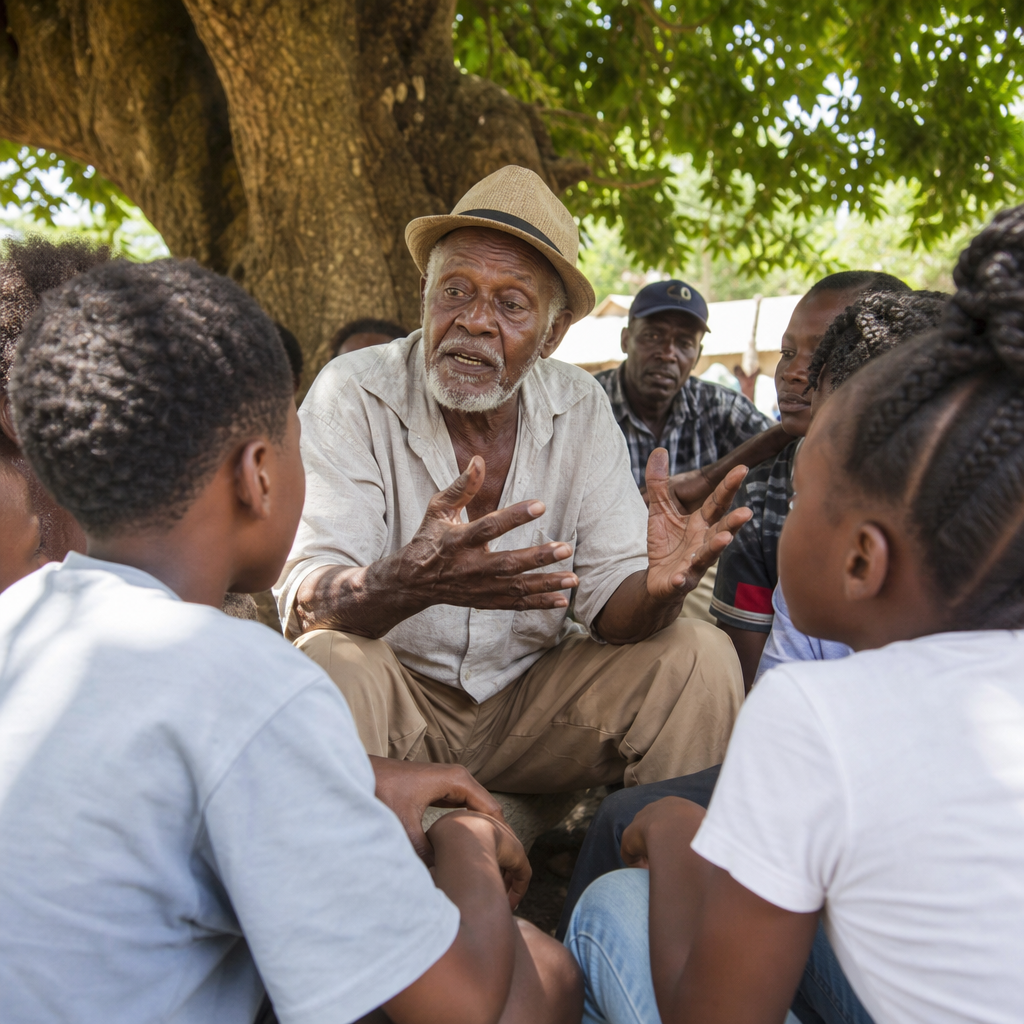
Storytelling in Nevis does not depend on a stage. It lives in ordinary social spaces. Family yards, kitchens, roadside liming spots, shops, churches, funerals, school programs, heritage events, and taxi rides can all become story venues. This matters because oral tradition stays strongest when it is embedded in routine rather than isolated as a special performance. A grandmother explaining why a family moved after a storm, a fisherman recounting changes in reef behavior, or a market vendor naming who used to grow what in a certain district are all acts of cultural preservation.
Seasonal events help too. During holidays and commemorations, stories about ancestors, village customs, and older forms of celebration often resurface. Emancipation-related discussions, Christmas traditions, and community reunions create openings for memory work. In my experience, some of the richest storytelling emerges after formal events end, when people relax, compare versions of the same incident, and correct one another’s details. That collaborative correction process is one reason oral history can remain remarkably resilient over time.
Schools and cultural organizations also play an increasing role. When teachers invite elders into classrooms, students hear cadence, vocabulary, and lived memory that textbooks cannot reproduce. Community archives, local historians, museum staff, and heritage groups can extend that work by recording interviews and presenting them with context. The best initiatives avoid treating stories as isolated curiosities. Instead, they link them to agriculture, slavery and emancipation, religious life, migration, health practices, and environmental change.
Common forms of oral tradition and what they teach
Different forms of oral tradition carry different kinds of knowledge. In Nevis, folktales often teach social intelligence. Trickster stories reward alertness and expose greed or vanity. Family histories preserve genealogy and explain how households formed, split, or relocated. Work stories capture labor systems, from plantation routines to domestic service to small-scale farming and fishing. Spiritual testimonies document how communities interpret suffering, healing, and moral duty. Proverbs and sayings condense judgment into language that is easy to repeat and hard to forget.
Riddles and playful verbal exchanges deserve attention because they train memory and listening. They also socialize children into local patterns of speech and inference. Songs function similarly. A song can preserve names, political commentary, satire, and emotional truth long after formal records disappear. Funeral speeches and memorial reflections are especially important because they gather life history, moral evaluation, and community memory into a public act. In islands where many families are interconnected, such moments help define how a person will be remembered.
Local legends and ghost stories also matter, even when listeners debate their literal truth. These narratives often express community fears, boundaries, and unresolved history. A tale about a haunted path may encode warnings about nighttime travel, violence, or a traumatic event people found difficult to discuss directly. Oral tradition does not only preserve facts. It preserves emotional reality, and that is one reason it remains essential to understanding local life.
Language, performance, and memory
Storytelling is not just content; it is delivery. In Nevis, meaning often depends on rhythm, pause, repetition, intonation, and the movement between standard English and local speech patterns. Dialect choices can signal intimacy, authority, humor, or social criticism. When an elder shifts tone to imitate a relative, a preacher, a market seller, or a village character, listeners receive a social portrait that transcription alone cannot fully capture. Performance is therefore part of the historical record.
Memory techniques are built into that performance. Repeated openings, patterned phrasing, call-and-response, and familiar moral turns help listeners retain key points. This is one reason oral tradition can endure for decades without formal writing. It is structured for recall. Researchers in folklore and oral history have long noted that repetition and formula are not signs of weak originality. They are tools that stabilize transmission while leaving room for interpretation.
Accent and vocabulary also preserve heritage. Words for foods, weather, kinship, work, and place can reveal layers of African, British, and wider Caribbean influence. When those words disappear from daily use, communities lose more than colorful expressions. They lose categories of thought tied to specific environments and experiences. Protecting Nevisian storytelling therefore supports linguistic diversity as well as historical memory.
Why oral traditions face pressure today
Nevisian oral traditions are resilient, but they are not immune to change. Migration is a major factor. When younger generations leave for school or work, they may miss the informal gatherings where stories circulate naturally. Elders may remain on the island while descendants abroad inherit only fragments. Tourism creates another pressure. Cultural practices can be simplified into neat performances for outside audiences, losing the conversational nuance that gives them local meaning.
Digital media is a mixed force. Phones make recording easy, but they also compete for attention. A family gathering that once centered on talk may now be interrupted by screens. Formal education can unintentionally contribute if it privileges written sources so strongly that students assume spoken history is less reliable. In reality, oral sources are indispensable, especially where colonial records excluded ordinary people or reduced them to labor statistics and property categories.
There are also trust issues. Some elders hesitate to share stories if they fear mockery, misquotation, or online misuse. Others know that once a recording leaves the community, context can vanish. This caution is reasonable. Preservation should never mean extraction. Good cultural work requires consent, clear attribution, and respect for stories that families consider sensitive or sacred.
Practical ways to keep Nevisian storytelling alive
Keeping oral traditions alive requires regular use, not occasional celebration. The most effective approach is simple: create more chances for stories to be told, heard, recorded, and retold. Families can start by documenting elders in audio or video interviews organized around themes such as childhood, work, foodways, storms, festivals, and migration. Schools can assign community oral history projects with basic training in interview ethics, note-taking, and verification. Libraries, museums, and cultural departments can build searchable archives with transcripts, dates, locations, and speaker biographies.
The methods below work best when combined, because oral tradition survives through relationships as much as technology.
| Method | How it works | Why it helps |
|---|---|---|
| Family recording days | Relatives gather to interview elders with phones or recorders | Captures voice, phrasing, and personal memory before it is lost |
| School oral history projects | Students collect stories tied to villages, trades, or holidays | Builds research skills and intergenerational respect |
| Community story circles | Public sessions organized around themes like storms or migration | Encourages shared correction and multiple perspectives |
| Digital archives | Audio, video, photos, and transcripts stored with metadata | Makes material searchable and usable for future education |
| Festival programming | Storytelling included alongside music, food, and heritage events | Keeps oral tradition visible in public cultural life |
Quality matters. Use external microphones when possible, record in quiet spaces, note full names and locations, and save files in more than one place. Ask open questions rather than leading ones. Most importantly, return copies to families and communities. Preservation is strongest when people can hear themselves in the record and remain connected to how their stories are used.
Using this hub to explore local life and experiences
As a miscellaneous hub under Local Life and Experiences, Nevisian storytelling connects many related subjects. Food stories reveal how ingredients, scarcity, and celebration shaped households. Craft stories explain who made what, from household tools to festive decorations. Transport stories show how roads, donkeys, boats, and later vehicles changed mobility. Market stories track trade and social networks. School stories expose discipline, aspiration, and colonial influence. Health stories preserve remedies, caregiving practices, and responses to epidemics or hurricanes. In other words, storytelling is not separate from daily life. It is the thread that ties these topics together.
For researchers and readers, this hub is most useful when treated as a starting point. Follow storytelling outward into village history, music, religion, labor, architecture, migration, and memory. The same narrative can illuminate several themes at once. A simple account of walking to school in the rain may reveal road conditions, family structure, clothing, discipline, weather knowledge, and class differences. That density is exactly why oral tradition deserves serious attention.
Nevisian storytelling remains one of the clearest ways to understand the island from the inside. It preserves local language, teaches values, maps social relationships, and fills gaps left by official records. It also offers something rare in modern life: a form of knowledge shared person to person, with accountability, feeling, and context. When communities protect storytelling, they protect more than anecdotes. They protect memory, identity, and the authority to define their own experience.
The practical lesson is straightforward. Listen carefully, record responsibly, ask elders specific questions, and create regular spaces where stories can be passed on naturally. If you are building out your understanding of Local Life and Experiences in Nevis, start here and keep following the voices behind the history. They will lead you to the island’s most durable truths.
Frequently Asked Questions
What makes Nevisian storytelling different from simply recording history in books or archives?
Nevisian storytelling does more than preserve facts. It carries the emotion, rhythm, personality, and local perspective that often disappear when history is reduced to a document or a museum caption. In Nevis, stories are not just about what happened, but about how people understood what happened, what lessons they drew from it, and how those lessons continue to shape community life. A family story about a storm, a fisherman’s warning about the sea, or an elder’s retelling of a village dispute can communicate practical knowledge, moral guidance, humor, and cultural identity all at once.
That is what makes oral tradition so powerful on a small island. Voice gives context. Tone signals seriousness or playfulness. Repetition reinforces memory. Proverbs condense generations of experience into a few memorable words. Songs and cautionary tales make values easier to remember than a written rule ever could. In that sense, Nevisian storytelling is not a lesser form of history; it is a fuller social record. It keeps memory alive in a communal, human way and helps people understand not only the island’s past, but also their place within it.
Why is oral tradition still important in modern Nevis?
Oral tradition remains important in modern Nevis because it continues to do work that newer forms of communication cannot fully replace. It teaches children where they come from, explains why certain customs matter, and passes down practical wisdom tied to local life. In a place where community relationships, family names, village identity, and shared memory still carry real meaning, storytelling helps connect everyday life to a longer cultural inheritance. It keeps history personal rather than abstract.
It also helps preserve ways of speaking, local expressions, and patterns of thought that might otherwise fade under the influence of global media. Oral tradition is where language lives naturally. It is where people hear proverbs used in context, learn the meaning behind old sayings, and absorb the humor, timing, and imagery that belong to Nevis itself. Just as importantly, storytelling strengthens belonging. When people hear stories about relatives, neighborhoods, work on the sea, village celebrations, or hard-earned lessons from earlier generations, they are reminded that local identity is built through shared memory. In that way, oral tradition is not a relic of the past. It is an active part of how Nevis maintains continuity, resilience, and cultural self-understanding today.
What kinds of stories are commonly passed down in Nevisian oral tradition?
Nevisian oral tradition includes a wide range of story types, each serving a different purpose. Family histories are especially important, as they help younger generations understand kinship, ancestry, migration, and the reputations attached to certain names and places. Village stories preserve local landmarks, memorable characters, community conflicts, and moments that shaped how a neighborhood sees itself. There are also seafaring stories, which often contain practical lessons about weather, risk, judgment, and respect for the ocean. These are not merely dramatic tales; they can function as informal education rooted in lived experience.
Alongside those are proverbs, folk sayings, songs, work memories, ghost stories, cautionary tales, and humorous accounts designed to entertain while teaching something deeper. A cautionary tale might warn against pride, carelessness, gossip, or disrespect. A humorous story may expose human weakness in a way that makes the lesson easier to accept. Songs can preserve both language and history, especially when tied to labor, celebration, or seasonal events. Together, these forms create a rich oral landscape in which memory, instruction, entertainment, and identity are intertwined. That variety is part of what gives Nevisian storytelling its durability: it meets people at every stage of life and in many different settings.
How does storytelling help preserve Nevisian values and cultural identity?
Storytelling preserves Nevisian values by placing them inside memorable human situations rather than presenting them as abstract rules. Respect for elders, responsibility to family, humility, courage, caution, generosity, and perseverance all become more meaningful when they are embedded in stories about real choices and consequences. A child may forget a lecture, but a well-told story about someone who ignored good advice, faced hardship at sea, or brought honor to a family name can stay in the mind for years. That is one of the great strengths of oral tradition: it teaches through example, repetition, and emotional connection.
It also reinforces cultural identity by tying people to place. Stories name roads, hills, villages, shorelines, homes, and gathering spaces, turning geography into lived memory. They remind listeners that culture is not something imported or performed only for visitors; it is something rooted in local experience. Through storytelling, people learn not just what Nevis is, but how Nevisians have interpreted life on the island over time. The result is a strong sense of continuity. Even as the island changes, oral tradition helps ensure that values, local speech, and community memory remain active parts of daily life rather than fading into background nostalgia.
What can be done to keep Nevisian storytelling alive for future generations?
Keeping Nevisian storytelling alive requires both everyday practice and intentional preservation. At the community level, the most important step is simple but powerful: create more spaces where stories are told and heard. That can happen in homes, at family gatherings, in schools, at cultural events, and through intergenerational programs that bring young people and elders together. Storytelling survives when it remains part of ordinary life, not only when it is staged for special occasions. Encouraging children to ask questions, remember family histories, learn local proverbs, and retell stories in their own words helps make oral tradition active rather than ceremonial.
At the same time, recording elders, documenting songs, and preserving spoken histories can support long-term cultural continuity, especially as older generations pass on. The key is to document without flattening the tradition into something lifeless. Audio and video recordings, school projects, community archives, and local cultural initiatives can all help capture voice, phrasing, and performance style. When combined with live storytelling, these efforts strengthen rather than replace the oral tradition. The goal is not just to save stories as artifacts, but to keep them circulating as part of Nevisian identity. When communities value storytellers as carriers of knowledge, and when younger generations see these stories as relevant to who they are, oral tradition remains what it has long been in Nevis: a living system of memory, language, and belonging.