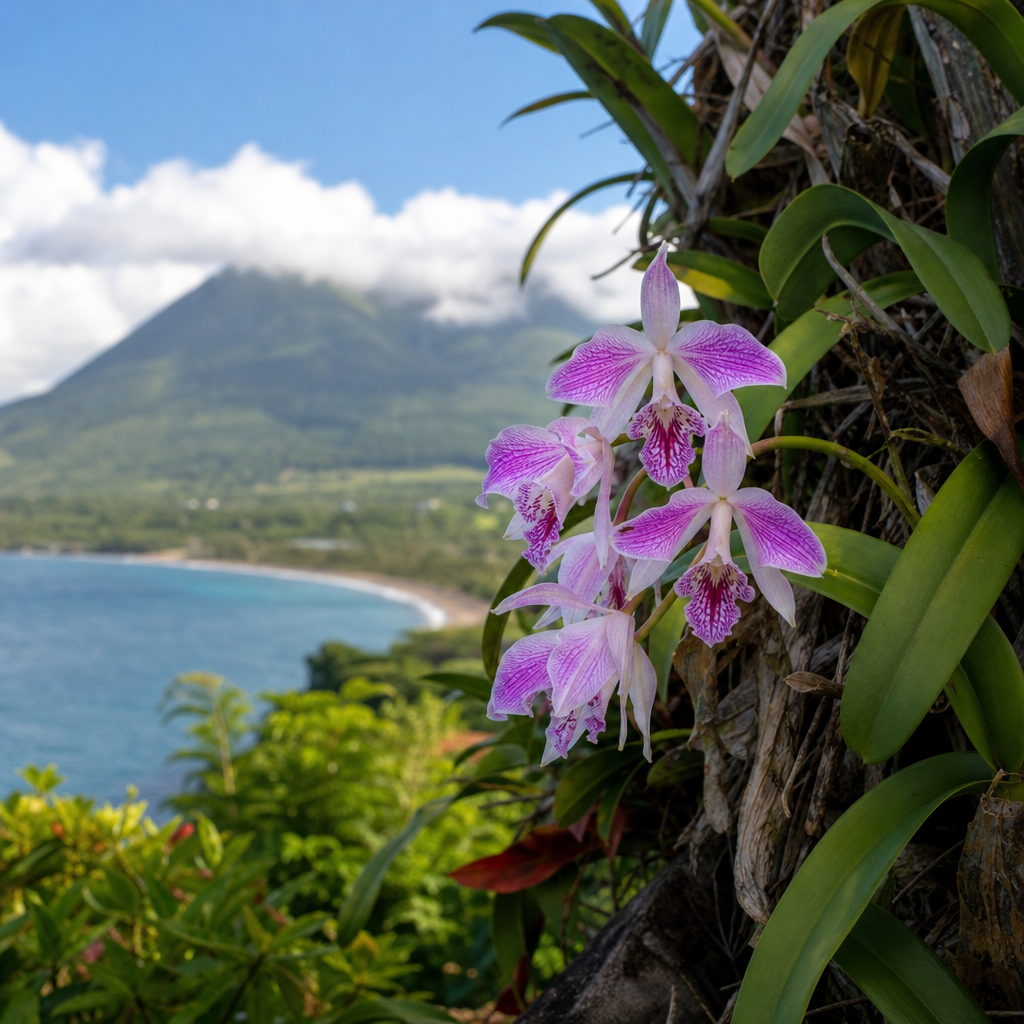
Orchid blooms in Nevis reward patient travelers with some of the most delicate and surprising botanical encounters in the Caribbean, especially for visitors willing to look beyond beaches and resort gardens. On this small volcanic island, orchids appear in cloud-kissed uplands, shaded ghauts, old estate lands, roadside trees, and carefully tended private landscapes, making them a compelling subject within Nevis nature and wildlife. In practical terms, orchid blooms in Nevis refers both to the native and naturalized orchid species that flower across the island and to the places, seasons, and habitats where those flowers can be found. That distinction matters, because many people arrive expecting a single famous bloom or one dedicated orchid garden, when the real experience is broader: orchid discovery in Nevis is a habitat-based search tied to rainfall, elevation, host trees, and local stewardship.
I have walked Nevis trails in both dry and wet periods, and the biggest mistake first-time visitors make is assuming orchids behave like showy garden attractions. Most species here are subtle. Flowers can be small, short-lived, and easy to miss unless you know where to pause and what to scan: mossy branches, forked trunks, shaded embankments, and humid edges where moisture lingers after dawn. Yet that subtlety is exactly why this subject deserves a hub page. For hikers, birders, photographers, and casual eco-travelers, orchids offer a way to understand the island’s ecology through a finer lens. They reveal how cloud forest works, how invasive pressure alters habitat, and how old agricultural landscapes can still support native life.
Nevis also matters regionally. As part of the Lesser Antilles, it sits within a chain of islands where orchid diversity is shaped by isolation, trade winds, topography, and human land use. Some orchids are widespread across the Caribbean, while others are locally uncommon and easiest to find only in very specific microhabitats. Because flowers may appear only during narrow blooming windows, visitors benefit from guidance that combines route planning with realistic expectations. This article serves as that hub. It explains where to find orchid blooms in Nevis, how habitats differ, what times of year improve your odds, what to bring into the field, and how to search responsibly without damaging fragile plants or the places they grow.
Just as importantly, this guide connects miscellaneous orchid-related experiences across the island rather than treating them as one niche interest. If you are exploring rain forest walks, heritage estates, botanical landscapes, scenic drives, village gardens, or mountain trails, orchids can be part of the journey. Understanding where they grow will improve every other wildlife outing you take in Nevis.
Best habitats for orchid blooms in Nevis
The best places to find orchid blooms in Nevis are not defined by tourist districts; they are defined by moisture, shade, elevation, and available surfaces for roots to anchor. Most orchids on the island are epiphytes, meaning they grow on trees without parasitizing them. They use bark, branch forks, and accumulated organic matter as support while taking water and nutrients from humid air, rain, and decomposing debris. A smaller number may occur on the ground or on rocks in suitable conditions. Once you understand that, the search becomes much more strategic.
Lower elevations around settlements and former plantation lands can still produce sightings, especially where old trees remain. Mango, tamarind, and large shade trees in long-established gardens sometimes host orchids, particularly in areas that retain humidity overnight. These sites are accessible and useful for casual visitors, but bloom reliability varies because pruning, storm damage, and dry spells can interrupt flowering cycles. By contrast, ghauts, the steep-sided watercourses that cut through Nevis, often create better microclimates. Their shade, airflow, and retained moisture support ferns, mosses, bromeliads, and occasional orchids. Even when flowers are absent, ghauts teach your eye what orchid habitat looks like.
Mid-elevation slopes and forest edges are usually more productive. Here, cloud influence increases, temperatures moderate, and tree cover becomes denser. I have had the best luck scanning older branches along shaded trails where filtered light reaches the canopy but the air never feels fully dry. Upland estate roads and access routes near hiking areas can be especially rewarding because they combine visibility with suitable habitat. You may not need to penetrate deep forest to see orchids; sometimes the best specimens hang over a path where changing light triggers blooming.
Highest on the island, the Nevis Peak rain forest offers the most intact moisture-loving environment, but it also presents the greatest challenge. Trails can be muddy, steep, and slippery, and flowers may sit well above eye level. This is where hiring a knowledgeable local guide makes a real difference. Guides familiar with seasonal changes can point out host trees, recent bloom sites, and species that untrained visitors would walk past. In cloud forest conditions, orchids compete with dense vegetation for attention, so experience matters.
Where visitors most often see orchids on the island
For most travelers, the easiest orchid encounters happen in three broad zones: landscaped properties, accessible forest trails, and mountain approaches. Landscaped properties include hotel gardens, heritage inns, and private estates with mature trees and irrigation. These are not substitutes for wild habitat, but they are often the first place visitors notice orchid growth. Staff gardeners may know when certain plants bloom, especially if orchids have been mounted intentionally or protected during maintenance. Asking politely can uncover excellent viewing spots.
Accessible forest trails include routes connected to popular eco-activities such as rain forest walks, source hikes, and interpretive outings near former plantation areas. On these trails, orchids may appear on trunks beside the path or in canopy openings created by fallen limbs. The advantage here is that you can search at eye level while also enjoying birds, insects, and native trees. The downside is that casual foot traffic means blooms can be overlooked or, in rare cases, disturbed by people trying to get photos too closely.
Mountain approaches, especially the greener roads and footpaths leading toward Nevis Peak trailheads, tend to offer the strongest combination of habitat quality and visibility. As you gain elevation, look for old trees with rough bark, limbs carrying moss, and spots where morning mist lingers. These indicators often matter more than the trail name itself. On several outings, I found more orchids during the approach drive and first hour of walking than on the summit push, simply because scanning was easier and the canopy sat lower.
| Area type | What to expect | Best for | Main limitation |
|---|---|---|---|
| Hotel and estate gardens | Protected trees, mounted orchids, easy access | Casual visitors, photographers | May feature cultivated rather than wild plants |
| Ghauts and shaded trail corridors | Humid microclimates, epiphytes, ferns, moss | Nature walkers, birders | Blooms can be seasonal and small |
| Mid-elevation forest edges | Strong habitat mix with better visibility | Independent explorers | Requires slow searching and patience |
| Nevis Peak uplands | Rain forest conditions and native habitat | Serious hikers, guided trips | Steep terrain and difficult viewing angles |
If you are building a broader Nevis nature itinerary, these orchid zones pair well with birdwatching at dawn, rain forest hikes after overnight moisture, and heritage visits during cooler morning hours. That makes orchids an effective hub topic within miscellaneous wildlife experiences rather than a standalone specialty.
Seasonality, bloom timing, and weather patterns
The most common question visitors ask is simple: when do orchids bloom in Nevis? The honest answer is that there is no single island-wide bloom season. Flowering depends on species, elevation, rainfall, temperature shifts, and recent weather. In the Caribbean, many orchids respond to wet-dry cycles rather than the four-season pattern travelers know from temperate climates. On Nevis, periods following meaningful rain often improve chances of seeing fresh growth and blooms, especially in humid uplands and sheltered ghauts.
Broadly, the wetter part of the year tends to produce more obvious flowering activity, but storms can also shorten bloom life. Some orchid flowers last days, others longer, and heavy wind or intense rain can spoil a display before most visitors ever hear about it. Dry periods do not eliminate orchid viewing; they simply shift what you can expect. During drier months, you may see roots, leaves, and pseudobulbs more readily than flowers, which is still useful if your goal is learning habitats and planning a return.
Morning is the best time to search. Light is softer, humidity is higher, and flowers look fresher before heat builds. I recommend scanning slowly from trunk base to canopy, then stepping back to inspect branch forks and horizontal limbs. Binoculars help far more than most people expect. A compact 8×32 pair is enough to confirm whether a distant tuft is an orchid, bromeliad, or just moss-covered debris. Macro photographers should also remember that overcast mornings often produce the cleanest images because white petals and glossy leaves blow out easily under hard midday sun.
If you want precise bloom intelligence, ask local hiking guides, gardeners, or naturalists shortly before your outing. Recent observations matter more than generic calendars. One good recommendation from someone who walked a trail last week can save hours of unfocused searching.
How to identify orchids without harming them
Identifying orchids in the field starts with structure, not flowers. Many visitors focus only on blooms, but those may be absent. Look instead for clustered roots gripping bark, fleshy leaves, cane-like stems, or pseudobulbs that store water. Epiphytic orchids often occupy branch crotches where leaf litter gathers. They may appear as tidy rosettes, dangling sprays, or compact clumps depending on species. On Nevis, confusion usually happens with bromeliads, aroids, and young ferns. Bromeliads often form water-holding rosettes; many orchids do not. Ferns unfurl fronds; orchids produce distinct leaves and flower spikes.
Use a phone camera zoom or binoculars before stepping off trail. The fastest way to damage orchids is to scramble up banks, pull branches down, or handle plants for a better photograph. Orchid roots are sensitive, and repeated disturbance can break anchors or expose plants to drying. On private land, always ask permission before entering. On public or guided trails, stay on the established route unless your guide clearly indicates a safe spot to stand.
Field identification is easier if you record habitat notes. Write down elevation, host tree type if known, light level, and whether the plant sits in deep shade or filtered sun. These details are often enough for a local expert to help with identification later, even if your flower photo is incomplete. Apps such as iNaturalist can help, but they work best when paired with multiple angles and habitat context. For serious enthusiasts, the Royal Botanic Gardens, Kew plant database and regional flora references provide useful taxonomic cross-checks, though Caribbean orchid identification can still be tricky from photos alone.
The essential rule is simple: observe, document, and leave untouched. Orchids are most meaningful in place, attached to the living systems that support them.
Responsible orchid tourism and conservation in Nevis
Orchid tourism sounds gentle, but it can become destructive when rare plants are treated as collectibles or social media props. Nevis avoids some of the pressure seen in larger destinations, yet the risks are real. Habitat loss from development, severe storm events, invasive species, aggressive pruning, and illegal plant removal all threaten small island orchid populations. Because many orchids occupy very specific niches, losing a few host trees or one humid ravine can have outsized local effects.
Responsible visitors can help in practical ways. Do not pick flowers, remove seed pods, or detach plants from bark. Avoid posting exact coordinates for uncommon orchids on open platforms if the site is easily reached and unmonitored. Support guides and properties that protect mature trees and retain native vegetation. If you stay at an inn or villa, ask whether the grounds use pesticide-heavy maintenance; pollinators and orchid health both benefit from more balanced landscaping practices.
Conservation also depends on seeing orchids as part of a larger network. The same shaded habitats that support epiphytes also shelter insects, reptiles, fungi, and nesting birds. Protecting ghauts and upland forests improves water retention, slope stability, and biodiversity well beyond orchids alone. That is why orchid blooms in Nevis fit naturally within the wider nature and wildlife conversation. They are indicators of habitat quality, not isolated ornaments.
Visitors who want a deeper experience should combine orchid searching with guided ecology walks, botanical garden visits on neighboring islands for comparison, and conversations with residents who know old estate trees and seasonal patterns. The result is richer than a checklist. You begin to read the landscape, and once you do, Nevis reveals orchid possibilities almost everywhere moisture, shade, and time come together.
Orchid blooms in Nevis are best found by matching expectations to habitat: look for humidity, mature trees, shaded watercourses, and greener middle to upper slopes rather than searching for one famous attraction. The island rewards slow observation. Garden settings can offer easy introductions, but the most meaningful sightings usually happen along forest edges, ghauts, and mountain approaches where orchids grow as part of intact ecological communities. Timing matters, yet local rainfall and recent trail reports are more useful than a rigid bloom calendar. Morning light, binoculars, and patience consistently improve results.
This hub page also points to the broader value of orchids within Nevis nature and wildlife. They connect hiking, photography, conservation, birding, and heritage landscapes into one experience. When you learn to spot roots on bark, identify likely host trees, and read moisture patterns, every walk becomes more interesting, even if only a few flowers are open. That is the real benefit: orchids teach you how to see Nevis more closely.
If you are planning a trip, build at least one guided upland walk and one slower self-directed garden or estate stroll into your itinerary. Ask locals what is blooming now, carry binoculars, and keep your search gentle. Nevis does not hand its orchids to hurried visitors, but for travelers who look carefully, the island offers botanical discoveries that stay with you long after the trail ends.
Frequently Asked Questions
Where are the best places to find orchid blooms in Nevis?
The best places to look for orchid blooms in Nevis are usually the island’s cooler, wetter, and more shaded environments rather than the open beachfront areas many visitors see first. Good orchid habitat can include the upland slopes near Nevis Peak, moisture-rich ghauts, old estate lands with mature trees, roadside trunks and branches in less developed areas, and private gardens where orchids are either cultivated or naturally encouraged. Because Nevis is a small volcanic island with varied elevation and microclimates, orchids can appear in surprisingly different settings, from mossy interior routes to settled landscapes where trees create filtered light and steady humidity.
For travelers, this means the most rewarding approach is to think in terms of habitat rather than a single famous orchid site. Areas with older vegetation, tree cover, lingering moisture, and less disturbance are usually more promising than dry, exposed coastal stretches. Guided nature walks can be especially useful because local guides often know where orchids have bloomed recently, which trees or ravines tend to host epiphytic species, and how seasonal weather is affecting visibility. In short, orchid blooms in Nevis are scattered across natural and semi-managed settings, and the best results usually come from exploring shaded inland environments patiently and respectfully.
When is the best time of year to see orchid blooms in Nevis?
There is no single guaranteed month when every orchid in Nevis is in flower, because blooming depends on species, rainfall, temperature, elevation, and short-term weather patterns. In general, orchids are more likely to be noticed during periods when the island has received enough moisture to support active growth, especially in the uplands and shaded ghauts. Some species may bloom after rains, while others appear only briefly and can easily be missed by casual observers. That is why orchid viewing on Nevis often rewards repeat visits, flexible expectations, and attention to current local conditions.
If your goal is specifically to see flowers rather than just orchid plants, it helps to ask local naturalists, gardeners, hiking guides, or eco-focused accommodations what has been blooming recently. The island’s small size works in your favor here, since recent observations can be relevant quickly. Visitors should also remember that orchid flowers may be delicate and short-lived. A location that seems quiet one week may be unexpectedly productive the next. The practical takeaway is that the best time to see orchid blooms in Nevis is often tied less to a fixed calendar date and more to recent rainfall, the specific habitat you are visiting, and whether knowledgeable locals can point you toward active bloom areas.
Are the orchids in Nevis found only in the wild, or can visitors also see them in gardens and landscaped areas?
Visitors can see orchids in both wild and cultivated settings on Nevis, and that combination is part of what makes the island especially interesting for plant lovers. In the wild, orchids may grow on trees, along shaded ravines, on old estate lands, or in upland habitats where moisture and airflow create suitable conditions. These naturally occurring orchids often require a careful eye because they can be small, high in tree branches, or tucked into vegetation where they do not immediately stand out. Seeing them in nature can feel like a discovery, especially when you begin to notice how closely they are tied to the island’s volcanic landscape and changing elevations.
At the same time, orchids also appear in private gardens, heritage properties, and curated landscapes where growers and homeowners make use of Nevis’s favorable climate. These settings can be ideal for travelers who want a closer, easier look at orchid flowers, growth habits, and variety. Garden orchids may include native-friendly plantings, collected ornamentals, or species that thrive with attentive care. For many visitors, the most complete orchid experience comes from combining both approaches: exploring natural habitats for authentic wild sightings and visiting well-kept gardens for clearer views and identification. Together, these settings show that orchid blooms in Nevis are not limited to remote forested areas but are woven into the island’s broader botanical character.
Do I need a guide to find orchid blooms in Nevis?
You do not absolutely need a guide to see orchid blooms in Nevis, but having one can significantly improve your experience. Orchids are often overlooked because they may grow high on tree bark, blend into surrounding vegetation, or bloom in places that casual visitors would pass without noticing. A knowledgeable guide can help identify likely habitats, distinguish orchids from other epiphytic plants, explain which areas are best after recent rains, and point out small botanical details that make the search much more rewarding. This is especially true if you want to explore inland trails, ghauts, old estate landscapes, or the lower approaches toward the island’s more elevated terrain.
Guides also add important context. Rather than simply helping you spot a flower, they can explain how orchids fit into Nevis nature and wildlife, how volcanic topography shapes plant distribution, and why certain species favor particular elevations or tree hosts. From a practical standpoint, a guide can also help you avoid trespassing on private land, choose safe walking routes, and observe orchids without disturbing them. Independent travelers can certainly find orchids on their own, particularly in gardens or accessible roadside areas, but for the best combination of access, identification, timing, and local insight, a guide is often the smartest option.
How can visitors look for orchids in Nevis without harming them or their habitat?
The most important rule is simple: observe, photograph, and leave everything exactly where it is. Orchids can be highly sensitive to disturbance, and many are healthiest when left attached to their host tree, branch, or natural substrate. Visitors should never pick flowers, remove plants, break branches to get a better view, or trample surrounding vegetation for a closer photograph. Even seemingly minor interference can damage roots, reduce future blooming, or disrupt the humid microhabitat that orchids depend on. This matters even more in shaded ghauts and upland areas, where delicate ecological conditions help support a wide range of plant life.
It is also wise to stay on established paths where possible, ask permission before entering private land, and use zoom rather than physical contact to examine blooms that are out of reach. If you are hiking with a guide, follow their lead on where to stand and how to move through sensitive areas. Visitors who enjoy orchid photography should avoid repositioning plants or clearing surrounding material for a cleaner shot. Respectful viewing not only protects individual orchids but helps preserve the broader Nevis landscape that makes these sightings possible. In other words, the best orchid experience on Nevis is one that values patience, minimal impact, and appreciation for the island’s living habitats rather than collecting or handling what you find.