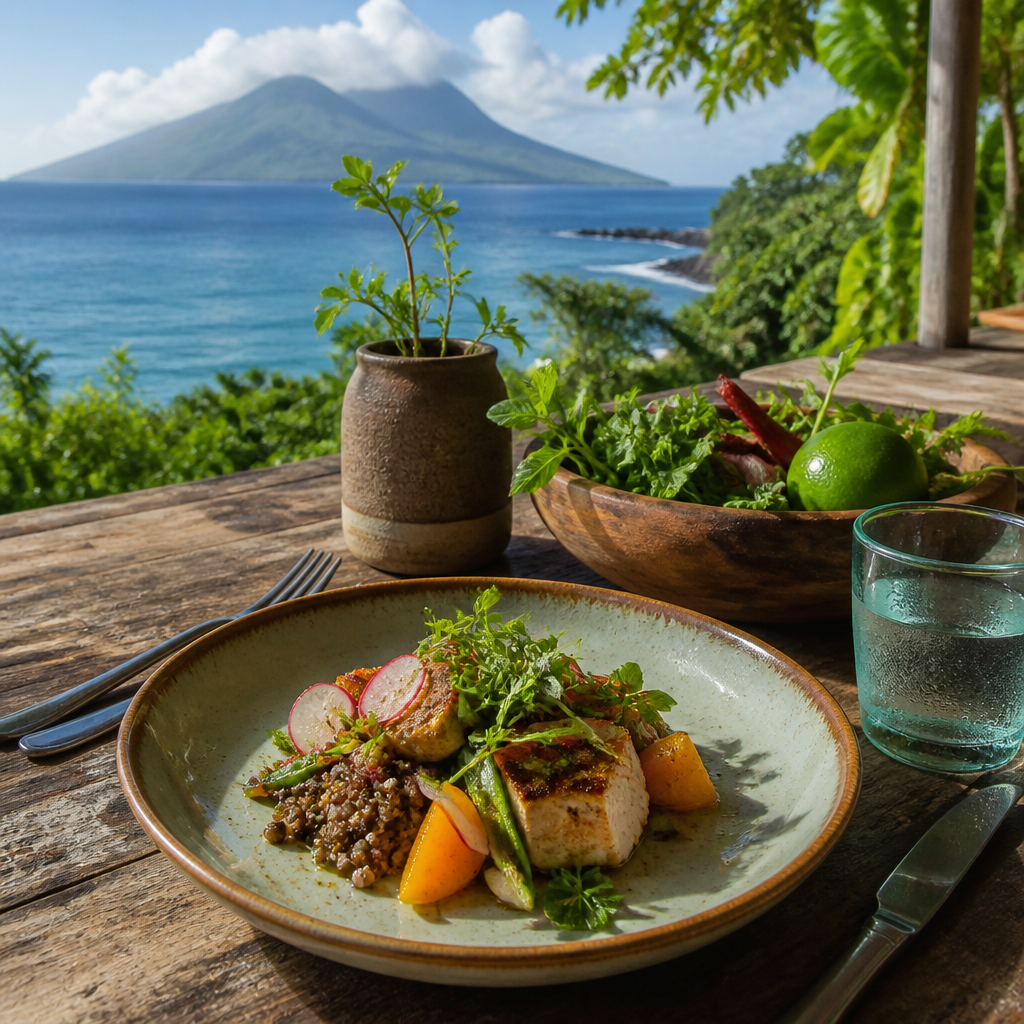
Saint Kitts’ winter flora reveals a truth many travelers miss: tropical landscapes do change with the seasons, just not in the dramatic, leaf-stripping way familiar in temperate climates. On this eastern Caribbean island, “winter” generally refers to the cooler, drier months from roughly December through April, when northeast trade winds moderate heat, rainfall patterns shift, and plant communities respond with subtle but visible changes in growth, flowering, fruiting, and ground cover. Flora means the plant life of a place, from coastal vines and mangroves to rain forest trees, sugar-era grasslands, garden ornamentals, and high-elevation cloud forest species. Understanding these seasonal patterns matters for hikers, birders, gardeners, conservation planners, and anyone trying to read the island’s ecology accurately. I have walked Saint Kitts in both wet and dry periods, and winter consistently shows the island in a different botanical register: clearer mountain views, crisper trails, fewer fungal blooms, and selective bursts of blossoms and seed production. Rather than dormancy, the season brings rebalancing. Moisture stress increases in exposed lowlands, while upland vegetation often remains comparatively lush because of cloud interception and cooler temperatures. This article serves as a hub for Saint Kitts’ miscellaneous winter plant topics by explaining what changes, where to see it, how native and introduced species respond, and why these shifts connect directly to wildlife, land use, and conservation.
What Winter Means for Plants on Saint Kitts
Winter on Saint Kitts is defined less by temperature extremes than by reduced rainfall, steadier breezes, and slightly shorter days. Average temperatures in Basseterre still remain warm, commonly in the mid-20s Celsius, but evapotranspiration can exceed available moisture in open coastal and agricultural zones. That imbalance shapes the season’s most important botanical effect: plants in drier habitats conserve water, slow vegetative growth, drop some leaves, or prioritize flowering and seed set. In practical terms, hillsides may look more tawny, roadside herbs become patchier, and deciduous or semi-deciduous trees show thinner crowns. Yet this is not a uniformly dry island. Elevation creates strong ecological gradients. The central volcanic massif, including the slopes of Mount Liamuiga, captures moisture from clouds and trade winds, supporting wetter forests that retain greener canopies through winter.
The term tropical dry season can be misleading because visitors expect barren landscapes. Saint Kitts instead displays mosaic seasonality. A ghaut, or steep ravine that channels runoff, may remain shaded and moist enough to support ferns, philodendrons, and seedlings while nearby pasture browns under sun and wind. I have seen this contrast within a ten-minute walk: one bend lined with mossy trunks and heliconia, the next opening onto grass cropped short by goats and cured to straw. That patchwork is central to understanding winter flora on the island. Microclimates matter as much as the calendar.
Another key concept is phenology, the timing of life-cycle events such as leaf flush, blooming, and fruiting. Many tropical species do not follow a single islandwide schedule. Some respond to day length, others to soil moisture, and others to interactions with pollinators or dispersers. Winter, therefore, is best viewed as a period that reorganizes the plant community rather than pauses it. Some species become less conspicuous; others become easier to notice because competing foliage thins out.
Lowland Coasts, Scrub, and Former Sugar Landscapes
Much of the visible winter change on Saint Kitts appears in lowland areas shaped by historic sugar cultivation, grazing, road building, and coastal exposure. These landscapes include secondary scrub, disturbed fields, dry grassland, and mixed ornamental plantings around settlements. During winter, introduced grasses often fade from green to buff, especially where soils are shallow and drainage is rapid. This color shift can make woody plants stand out more clearly, including acacia-like thorn scrub, seaside grape, turpentine bush, and scattered cacti or succulents in the driest pockets. Along exposed coasts, salt spray compounds water stress. Leaves tend to be smaller, thicker, glossier, or more leathery because these traits reduce water loss and protect tissues from salt and sun.
Sea grape is a useful example. Its broad, round leaves are iconic on Caribbean beaches, but in the drier season older leaves may redden, bronze, or drop, especially in windy sites. That visual change is seasonal, not necessarily a sign of decline. Likewise, many ornamental frangipani trees become more skeletal in winter as they reduce leaf cover, which makes their branch architecture more obvious and prepares them for later flowering. In old estate zones and roadside verges, flowering weeds may decline after wet-season abundance, but seed heads become important food sources for finches and other small birds.
Human land use strongly influences what “winter flora” looks like in these settings. Areas repeatedly cut, grazed, or burned respond differently from protected tracts. Disturbed sites tend to favor hardy colonizers and invasive species that exploit brief showers quickly. Guinea grass, tan-tan, and other widespread nonnative plants can dominate the dry-season view, masking remnants of native shrubland. For visitors exploring the island’s nature beyond postcard beaches, this is worth noting: not every green or flowering plant in winter represents original vegetation.
Rain Forest and Cloud Forest in the Cooler Months
Inland and upslope, winter tells a different botanical story. Saint Kitts’ central highlands support moist forest, montane thicket, and cloud-influenced habitats where humidity remains higher than in the coastal belt. Orographic uplift forces moist air upward, where it cools and condenses, adding cloud drip to rainfall totals. That process helps sustain epiphytes, mosses, liverworts, orchids, and ferns even when lower elevations experience seasonal drying. On mountain trails in winter, the forest floor is often less muddy than in peak rainy periods, making root systems, seedlings, and leaf litter patterns easier to observe. Canopies may open slightly in places, improving light penetration and triggering understory responses.
Tree ferns and broadleaf evergreens remain a defining presence in these uplands. Lianas continue active growth where moisture persists, while bromeliads and orchids benefit from frequent mist. The cooler months can also improve visibility for botanical observation because reduced insect pressure and lower heat make longer field walks practical. When I have surveyed upland vegetation during winter, I have found species identification easier precisely because the environment is less physically overwhelming than in humid late summer. Bark texture, branching habit, and epiphyte load become more noticeable when every surface is not dripping.
These forests are also where seasonal misconceptions fall away. Visitors expecting “dry season equals dry forest” are often surprised to find dripping leaves near ridgelines after a windy morning. Cloud forest systems do not rely solely on direct rainfall. They harvest moisture from air, which buffers them against short-term seasonal deficits. Still, prolonged droughts linked to broader climate variability can stress even these habitats, particularly at lower montane edges.
Winter Flowering, Fruiting, and Wildlife Links
One of the best ways to interpret Saint Kitts’ winter flora is to follow food and pollination. Seasonal flowering and fruiting patterns shape where insects, birds, and bats forage. Some shrubs and trees bloom in the drier season because reduced rainfall improves pollinator activity or lowers the risk of flower damage. Others fruit after earlier wet-season growth, offering resources when soft vegetation is scarcer. The result is a changing map of ecological hotspots rather than a simple islandwide bloom calendar.
Hummingbirds, for example, track nectar sources across gardens, forest edges, and ghauts. If one flowering tree species peaks in winter, bird activity can concentrate around it. Frugivorous species respond similarly to figs, palms, and berry-producing shrubs as resources ripen. Insects often become less abundant in dry, windy open areas but persist in sheltered valleys, influencing which plants receive reliable pollination. Bats contribute to pollination and seed dispersal for several tropical plants, especially those with night-opening flowers or fleshy fruits. This means winter plant changes ripple outward into the whole wildlife system.
| Habitat | Typical Winter Plant Response | Wildlife Effect |
|---|---|---|
| Coastal scrub | Leaf thickening, partial leaf drop, slower herb growth | Seed-eating birds use dry seed heads; fewer insects in exposed sites |
| Old fields and pastures | Grass curing, scattered flowering after brief showers | Foraging shifts toward hardy weeds, seeds, and edge shrubs |
| Ghauts | Moist refuges remain green with ferns and vines | Pollinators and birds concentrate where water and cover persist |
| Montane forest | Canopy stays relatively lush through cloud moisture | Epiphyte-rich habitat supports insects, birds, and roosting sites |
Gardeners and naturalists can use these patterns practically. If bird activity seems low in one area during January, moving to a sheltered ravine or flowering hedge often changes the picture immediately. Winter flora is not just visual seasonality; it is resource seasonality.
Native Plants, Introduced Species, and Seasonal Identification
Saint Kitts’ flora reflects centuries of ecological mixing. Indigenous coastal and forest plants coexist with crops, ornamentals, escaped garden species, and aggressive invasives introduced through plantation agriculture, trade, and landscaping. Winter can actually help with plant identification because reduced vegetative clutter exposes structure. You may notice whether a tree is truly evergreen, whether leaves are arranged oppositely or alternately, or whether a dry capsule, pod, or berry remains attached after leaf drop. Those details are essential in field identification.
Native species often show traits tuned to seasonal water availability: smaller leaves, tough cuticles, deep roots, or timing that aligns reproduction with likely moisture. Introduced ornamentals may behave differently depending on irrigation. In hotel grounds and residential gardens, bougainvillea, hibiscus, crotons, ixora, and palms can look perpetually lush because people compensate for the dry season with watering and fertilization. That can distort visitors’ expectations of “natural” winter conditions. Beyond irrigated landscapes, however, seasonal stress becomes evident quickly.
Invasive plants deserve special attention on a miscellaneous hub page because they alter how winter vegetation functions. Fast-growing vines can smother shrubs even in drier months. Grasses introduced for forage can carry fire more readily once cured, threatening native regeneration. Shrub invasions along roads and abandoned cane lands may create dense stands with low botanical diversity. Recognizing winter flora therefore requires asking not just what is present, but what ecological role it plays and whether it belongs to the original plant community or a newer disturbance regime.
How to Observe Winter Flora Responsibly
The best winter botany on Saint Kitts is found by moving across elevation zones and looking slowly. Start at the coast in the morning, where angled light highlights leaf texture and salt-pruned growth forms. Continue through old agricultural lands to compare grasses, secondary scrub, and roadside trees. Then head uphill into shaded ghauts or forest trails to see how moisture retention changes everything. Carry water, use established paths, and avoid entering overgrown private lands without permission; many biologically interesting spots are embedded within working landscapes or near homes.
For identification, use a notebook or phone camera to capture whole-plant habit, leaves, bark, flowers, fruits, and habitat context. Apps such as iNaturalist can help, but tropical identifications are most reliable when multiple features are recorded. A single leaf photo is rarely enough. After rain, revisit the same site within a few days. I often advise travelers to do paired observations because dry-season flora can change quickly after a short shower. Dormant-looking herbs may flush green, vines may extend visibly, and scattered flowering can appear almost overnight.
Responsible observation also means minimizing impact. Do not collect orchids, bromeliads, seeds, or cuttings from wild areas. Stay out of fragile stream edges where trampling accelerates erosion. Clean footwear between sites when possible, especially after muddy upland walks, to reduce accidental seed movement. On small islands, these habits matter.
Conservation, Climate Pressure, and Why Seasonal Knowledge Matters
Knowing how Saint Kitts’ flora behaves in winter has practical conservation value. Seasonal baselines help land managers distinguish normal dry-season leaf loss from drought stress, storm damage, pest outbreaks, or land degradation. They also improve restoration planning. If a revegetation project uses species unsuited to seasonal dryness in exposed lowlands, mortality will be high without irrigation. Matching plants to habitat, elevation, and dry-season resilience is basic but often overlooked.
Climate change raises the stakes. Caribbean islands are experiencing shifts in rainfall timing, more intense drought episodes, rising temperatures, and stronger storm extremes. Those pressures can compress seasonal windows, alter flowering times, and favor hardy invasives over slower native species. Coastal plants face additional stress from saltwater intrusion and erosion. In uplands, changes in cloud formation could affect the moisture balance that sustains epiphyte-rich forests. Seasonal knowledge gives residents, researchers, and visitors a way to notice these trends early rather than treating every dry hillside as ordinary.
Saint Kitts’ winter flora is valuable precisely because it teaches close reading of the tropics. The island does not need autumn colors to display seasonality. It shows change through moisture gradients, flowering pulses, seed production, leaf texture, and the constant negotiation between native resilience and human-altered landscapes. To explore the Nature and Wildlife hub more deeply, use this overview as your starting point, then follow specific habitats, species groups, and conservation topics across the island. The more carefully you look in winter, the more Saint Kitts reveals.
Frequently Asked Questions
Does Saint Kitts really have a “winter” if it is a tropical island?
Yes, but winter in Saint Kitts does not look like winter in North America or Europe. Instead of freezing temperatures, bare branches, and widespread dormancy, the island experiences a cooler, drier seasonal period that generally runs from December through April. During these months, northeast trade winds help moderate daytime heat, nights can feel fresher, and rainfall usually becomes less frequent than in the wetter part of the year. These shifts are enough to influence how plants grow, flower, and fruit, even though the landscape remains green overall.
This is why Saint Kitts’ winter flora is best understood as a season of subtle transition rather than dramatic decline. Some grasses may look less lush in exposed areas, some shrubs temporarily slow their growth, and certain trees become more noticeable as they move into flowering or fruiting cycles. Ground cover can thin in drier coastal zones, while upland and rainforest vegetation often stays comparatively dense because of higher moisture levels. In short, tropical winter is real on Saint Kitts—it simply expresses itself through changes in moisture, wind, and plant behavior rather than frost and snow.
What visible changes happen in Saint Kitts’ plant life during the winter months?
The most noticeable winter changes in Saint Kitts are usually tied to moisture and exposure rather than temperature extremes. In lower, sunnier, and more wind-exposed parts of the island, vegetation may appear a bit less exuberant than in the rainy season. Some grasses and herbaceous plants become shorter, paler, or patchier as soils dry out. Leaf flushes may slow on certain species, and roadside greenery can look more restrained, especially after stretches of dry weather. This can make the island’s contours, stone walls, old sugar estate landscapes, and volcanic slopes stand out more clearly.
At the same time, winter can be an excellent season for noticing flowering and fruiting patterns that are easy to miss when everything is uniformly lush. Some trees and shrubs concentrate energy into blooms or seed production during the drier season, and these events can add bursts of color or texture to the landscape. Coastal scrub, dry forest remnants, cultivated gardens, and higher-elevation habitats may all respond differently, which is part of what makes Saint Kitts botanically interesting. Rather than expecting a single island-wide transformation, it is more accurate to look for a mosaic of small seasonal signals shaped by elevation, wind, soil depth, and rainfall.
Which parts of Saint Kitts show winter flora changes most clearly?
The clearest winter changes are often seen in drier and more exposed environments, especially coastal areas, lower slopes, and places with thinner soils. These landscapes respond quickly when rainfall decreases, so seasonal differences in ground cover, grass vigor, and leaf density are easier to spot. Areas influenced by salt spray and steady trade winds may also show more visible seasonal stress, with hardy shrubs and drought-tolerant plants becoming especially prominent during the drier months. If travelers want to understand how tropical plants adjust seasonally, these lower-elevation habitats are often the most revealing.
By contrast, the central mountain region and wetter upland zones, including rainforest areas associated with the volcanic interior, may remain relatively green through winter. Moisture retention, cloud cover, and elevation help buffer these habitats from the drying effects felt elsewhere. That does not mean there is no seasonal change there—growth rates, flowering timing, and understory density can still shift—but the visual contrast is usually more muted. For the fullest picture of Saint Kitts’ winter flora, it helps to compare multiple environments in a single trip: beaches and scrublands, agricultural edges, village gardens, and higher forest trails all tell different parts of the story.
Are there specific flowers, trees, or plant communities that stand out in Saint Kitts during winter?
What stands out in winter is often less about one universally dominant species and more about how different plant communities reveal their seasonal rhythms. In cultivated spaces such as hotel grounds, botanical gardens, village yards, and former estate landscapes, ornamental tropical species may continue blooming, but the background conditions—cooler breezes, lower humidity, and slightly drier soils—can make individual flowers seem more distinct. In natural settings, dry coastal vegetation, thorny scrub, and seasonal grasslands often become easier to read structurally because dense wet-season growth recedes.
Trees and shrubs may also become more noticeable when they enter flowering or fruiting phases during the drier months. Depending on local conditions, visitors may see fresh blooms, seed pods, or changing leaf density that highlights branch architecture. Meanwhile, moisture-loving plants in higher elevations can remain vibrant, offering an instructive contrast to the more restrained appearance of lower zones. The key point is that Saint Kitts in winter rewards careful observation. Instead of expecting a dramatic blanket change, look for differences between habitats and for the timing of life-cycle events such as budding, flowering, fruiting, and leaf turnover.
Is winter a good time for travelers to explore Saint Kitts’ flora?
Yes, winter is an excellent time to explore Saint Kitts’ flora, especially for travelers who enjoy walking, photography, birding, and landscape observation. The cooler, drier conditions from roughly December through April often make outdoor exploration more comfortable than in hotter, wetter months. Trails can be less muddy, visibility may improve in some areas, and the moderated climate makes it easier to notice subtle ecological details instead of simply reacting to heat and humidity. Winter is particularly rewarding for visitors interested in how tropical ecosystems function seasonally rather than those expecting nonstop peak lushness everywhere.
It is also a strong season for appreciating contrast across the island. Travelers can observe how coastal plants handle dryness and wind, how cultivated tropical gardens respond to seasonal shifts, and how upland forests retain moisture and density. This variety helps explain an important ecological truth: tropical landscapes are dynamic year-round, even when they do not undergo the dramatic seasonal resets familiar in temperate regions. For the best experience, explore different elevations, pay attention to flowering and fruiting, and visit both natural and managed landscapes. Saint Kitts’ winter flora is subtle, but for attentive visitors, it is rich with pattern, adaptation, and beauty.