October is one of the most rewarding months for birding on Saint Kitts, combining peak autumn migration with the island’s resident Caribbean specialties, changing rainfall patterns, and a landscape compact enough to cover coast, wetland, and forest in a single day. For anyone planning a bird-focused trip, “birding hotspots” means the places where habitat, season, and access align to produce the highest likelihood of seeing a wide range of species, while “October edition” matters because timing changes everything on a small volcanic island. I have birded Saint Kitts in both dry and wet periods, and October consistently stands out for variety: shorebirds begin stacking onto ponds and salt flats, herons concentrate at wetlands, forest birds become more active in cooler morning conditions, and occasional migrants add surprise value. This article serves as a hub for the island’s miscellaneous birding coverage within a broader nature and wildlife guide, so it does more than list locations. It explains what each site is, what birds are realistic there in October, what conditions improve success, and how to connect these stops into a practical route. Saint Kitts does not have the vast protected birding infrastructure found on larger islands, so knowing the right habitat patches is the difference between a casual scenic drive and a productive field day. The island rewards methodical observation, early starts, and patience.
Why October is Prime Time on Saint Kitts
October sits in the late wet season, when freshwater availability, insect abundance, and migratory turnover combine to boost activity across multiple habitats. In practical terms, that means you can watch a Green-throated Carib feeding at flowering shrubs after dawn, check a pond for Blue-winged Teal and Lesser Yellowlegs mid-morning, and still finish with seabirds and terns along the coast in late afternoon. On Saint Kitts, migration is not as dramatic as on continental flyway bottlenecks, but it is very real. North American shorebirds, warblers, and some raptors pass through or pause briefly, and even a modest wetland can produce species that are absent in drier months.
October also softens one of the island’s biggest birding challenges: habitat fragmentation. Because many key sites are small, birds move between them in response to water levels, food, and disturbance. After seasonal rains, temporary pools can attract egrets, sandpipers, and plovers that would otherwise bypass the area. At the same time, upland vegetation often looks greener and supports better foraging for resident species. The tradeoff is weather. Sudden showers, muddy verges, and variable light can complicate observation, so the best strategy is to bird early, keep optics dry, and treat every stop as dynamic rather than fixed.
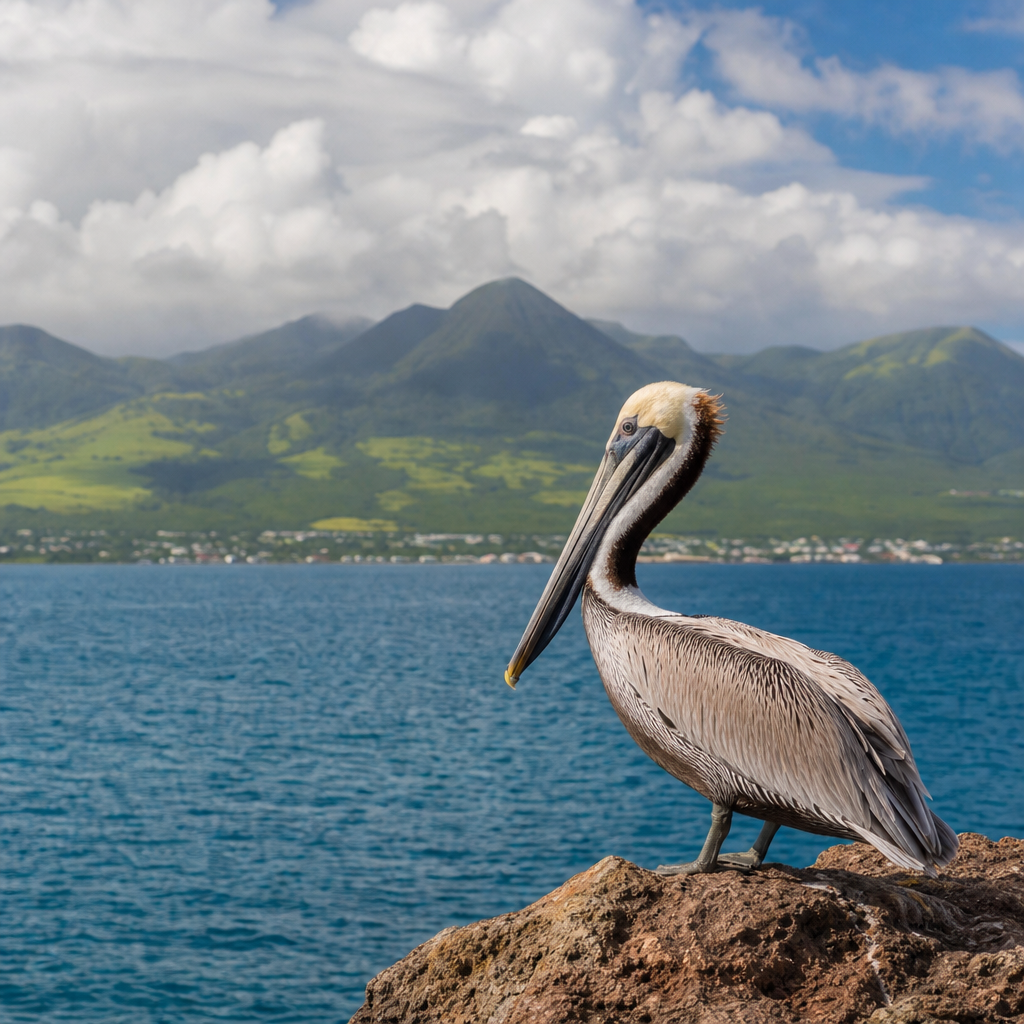
For visitors asking what birds they should expect in October, the answer is a mix of dependable residents and mobile migrants. Common or regularly encountered resident targets include Brown Pelican, Magnificent Frigatebird, Zenaida Dove, Common Ground Dove, Antillean Crested Hummingbird, Green-throated Carib, Caribbean Elaenia, Gray Kingbird, Lesser Antillean Bullfinch, Carib Grackle, and Bananaquit. Depending on habitat, you may also see herons, egrets, Belted Kingfisher, Osprey, and a rotating cast of sandpipers and plovers. This mix is why October is the month when Saint Kitts feels bigger than it is.
Great Salt Pond and the Southeast Peninsula
If a birder has only one half-day on Saint Kitts in October, the Southeast Peninsula is the smartest priority, and Great Salt Pond is the anchor site. The peninsula creates an unusual concentration of habitats for such a short drive: salt pond margins, scrub, rocky coast, sandy edges, and open sea views. In October, water levels and exposed mud can change quickly, but that variability is exactly what brings birds in. I have found that even a quiet first scan often improves after ten patient minutes, as shorebirds emerge from the pond edge or shift into clearer sight lines.
Great Salt Pond is strongest for waders and waterbirds. Expect to check carefully for Black-necked Stilt, Snowy Egret, Great Egret, Little Blue Heron, Tricolored Heron, and migrant shorebirds such as Semipalmated Sandpiper, Least Sandpiper, Spotted Sandpiper, Lesser Yellowlegs, and occasionally Pectoral Sandpiper. Blue-winged Teal can appear on suitable water, and the surrounding scrub supports Zenaida Dove, Caribbean Elaenia, and hummingbirds. The coast nearby regularly adds Brown Pelican, Royal Tern, Laughing Gull, and Magnificent Frigatebird. The value of this area is not just species count but efficiency: one location can answer multiple birding goals at once.
Bird this area at first light if possible. Heat shimmer becomes a real issue later in the morning, especially when viewing across open flats. Bring a scope if you have one; on Saint Kitts it can turn distant “small shorebird” views into usable identifications. Stay aware of access conditions, because tracks may be uneven after rain. The peninsula is also scenic and popular for general sightseeing, so weekdays and early hours usually mean less disturbance. For anyone building a miscellaneous birding hub page, this is the site that should link outward to separate pieces on shorebirds, coastal birds, and migration timing.
Basseterre Valley Aquatic Sites and Urban Edges
Many visitors underestimate Basseterre and its surrounding lowlands because they think productive birding only happens in remote scenery. In October, that assumption costs sightings. Urban edges, drainage channels, temporary pools, and managed water bodies can hold surprising numbers of birds, especially after rain. These sites are rarely glamorous, but they can be practical and species-rich, particularly for birders with limited transport or a single free morning before departure. On small islands, birds use whatever habitat works, and that includes human-modified landscapes.
Look for ponds, roadside wetlands, and grassy margins around the Basseterre Valley and nearby agricultural areas. Cattle Egret often becomes one of the easiest species here, feeding in open ground or following livestock. Gray Kingbird favors wires and exposed perches, while Carib Grackle and Lesser Antillean Bullfinch exploit gardens and edge habitat. October can also produce migrant flycatchers, swallows, and warblers in sheltered trees, especially after overnight weather systems. I have had some of the most instructive birding sessions on Saint Kitts in ordinary-looking places where fresh water, insects, and a hedgerow happened to coincide.
The key method in these areas is slow scanning rather than destination birding. Pull over safely, listen first, and work vegetation in layers: high perches for kingbirds, flowering hedges for hummingbirds, ground edges for doves, and shallow water for waders. Because these are mixed-use spaces, be respectful of property lines and traffic. They are not wilderness sites; they are functional habitats embedded in daily life. That makes them useful for a miscellaneous hub article, because they show how birding on Saint Kitts often depends less on famous reserves and more on reading the landscape intelligently.
Central Forest Slopes and the Road to the Rainforest
Saint Kitts’ interior slopes offer a different October experience from the coast: fewer obvious congregations, more listening, and better chances for forest-associated resident birds. The roads and trails leading toward the rainforest, including areas reached on guided hikes, are worth time at dawn when cloud cover is higher, temperatures are lower, and bird vocal activity increases. The island’s volcanic topography creates elevational shifts over short distances, so birders can transition from dry lowland scrub to lush interior vegetation quickly.
In these greener habitats, focus on Lesser Antillean Bullfinch, Bananaquit, Antillean Crested Hummingbird, Green-throated Carib, Caribbean Elaenia, and Scaly-naped Pigeon overhead or in fruiting trees. Broad-winged Hawk may appear during migration, and kestrels hunt openings and roadside clearings. October is also a useful month to watch flowering plants carefully; hummingbird activity can be concentrated and repeated when nectar sources are limited to a few productive patches. I often advise visiting birders to spend less time marching and more time standing near bloom-heavy shrubs or fruiting trees, because the same birds will often cycle through multiple times.
Guided rainforest tours are helpful here, especially for first-time visitors who want local knowledge on access, weather, and safe footing. Even if a guide is not a dedicated birder, they usually know where birds are regularly seen and how conditions have changed after rain. The limitation of upland birding on Saint Kitts is that visibility is tighter than at wetlands, so species totals can feel lower. The benefit is quality of encounter. Close views of endemic-region hummingbirds and pigeons in fresh October light can be the highlight of the trip.
Coastal Headlands, Beaches, and Offshore Views
Not every hotspot on Saint Kitts is a pond or forest trail. Exposed coastlines, headlands, and beaches are essential supporting sites in October because they add seabirds, terns, gulls, and roosting shorebirds that may be missed inland. Frigate Bay, Timothy Hill viewpoints, and stretches of coast along the Southeast Peninsula can all be productive when sea conditions and light cooperate. On windy days, seabird movement may be more obvious; on calmer days, roosting flocks can offer better study opportunities.
Brown Pelican is the baseline species and often the first bird visitors notice, but detailed coastal scanning pays off. Magnificent Frigatebird regularly soars over bays and cliffs, using minimal wingbeats and distinctive forked tails for easy identification. Royal Tern and Sandwich Tern may be seen along the shoreline, while Laughing Gull is common around active coastal areas. Osprey is always worth watching for in October, particularly near fish-rich water. When conditions are right, these coastal stops work best as short tactical sessions added before or after wetland birding rather than as standalone half-days.
| Hotspot | Best October Targets | Best Time | Birding Advantage |
|---|---|---|---|
| Great Salt Pond | Shorebirds, herons, teal, stilts | Sunrise to mid-morning | Highest wetland diversity |
| Southeast Peninsula coast | Pelicans, terns, frigatebirds, gulls | Early morning or late afternoon | Combines sea and scrub habitats |
| Basseterre Valley ponds | Egrets, kingbirds, doves, migrants | Morning after rain | Accessible and often overlooked |
| Central forest slopes | Hummingbirds, bullfinches, pigeons | Dawn to 9 a.m. | Best resident forest birding |
One practical lesson from repeated October visits is to watch both the water and the air. Birders often focus so heavily on shoreline activity that they miss passing frigatebirds, hunting raptors, or swift-moving terns offshore. Use binoculars first for movement, then a scope for confirmation if available. Coastal birding also depends heavily on sun angle. A west-facing stop can be nearly useless in harsh glare and excellent an hour later. Flexible timing matters more here than at any other Saint Kitts hotspot.
How to Build an October Birding Route
The most efficient October route on Saint Kitts starts before sunrise with a wetland, transitions to lowland edges, moves uphill by mid-morning, and finishes with a coastal stop if weather remains stable. This sequence matches bird behavior and island conditions. Wetlands are most readable in early light before shimmer builds. Urban-edge and agricultural birds stay active through the morning. Forest slopes are most comfortable before midday rain or heat. Coastal scans often improve again later as light softens and seabird movement becomes easier to track.
For a one-day plan, begin at Great Salt Pond, then work additional Southeast Peninsula pull-offs for scrub and sea views. From there, return through lower-elevation ponds or Basseterre Valley edges, taking short scanning stops wherever fresh water is present. After a break, head toward the central slopes or a rainforest access road for resident birds. If the afternoon is clear, finish at a headland or beach with broad coastal views. This route works because Saint Kitts is compact, but compact does not mean rushed. Build in time to stay with active birds rather than trying to tick too many pins on a map.
Essential gear is straightforward: binoculars, a spotting scope if you have one, lightweight rain protection, water, and footwear that can handle mud and uneven shoulders. eBird is useful for recent sightings, but on Saint Kitts local conditions change faster than checklists suggest, so use reports as guidance rather than promise. Merlin can help with sound review, though wind and background noise often limit real-time audio identification. Most importantly, keep expectations calibrated. October offers excellent variety, not guaranteed rarities. The birder who pays attention to habitat, weather, and timing will still come away with a strong island list and a much clearer understanding of how Saint Kitts works.
Saint Kitts rewards birders who treat October as a month of movement, not a static checklist exercise. The island’s best birding hotspots succeed because they capture that movement across wetlands, scrub, forest, and coast within a very small geographic area. Great Salt Pond and the Southeast Peninsula lead for all-around productivity, especially for shorebirds, herons, and coastal species. Basseterre Valley proves that practical urban-edge habitats matter more than appearances suggest. The central forest slopes deliver the resident Caribbean character many visitors want most, with hummingbirds, bullfinches, and pigeons in greener settings. Coastal headlands complete the picture with pelicans, frigatebirds, terns, and scanning opportunities that change by the hour.
As a hub article for the miscellaneous side of Saint Kitts birding within a larger nature and wildlife section, the main takeaway is simple: October is the month to sample the whole island, not just one reserve-style stop. Success depends on starting early, combining habitats, revisiting water when conditions shift, and keeping enough flexibility to respond to rain, light, and tide-like water changes in ponds. That approach consistently produces better results than staying in one place too long or assuming famous viewpoints are automatically the most bird-rich.
If you are planning an October visit, map three to four habitats into each outing, pack for sudden rain, and let the birds dictate your timing. Use this page as your starting point, then build outward into more detailed guides on Saint Kitts wetlands, coastal wildlife, rainforest walks, and seasonal migration. Bird the island patiently, and October will show you why Saint Kitts deserves far more attention from Caribbean birders.
Frequently Asked Questions
Why is October such a strong month for birding on Saint Kitts?
October is one of the best times to bird Saint Kitts because it brings together several advantages at once: active autumn migration, strong resident bird activity, greener habitats after seasonal rains, and practical access to multiple ecosystems in a short timeframe. During this period, migratory species moving south through the Caribbean can appear in coastal scrub, wetlands, ponds, agricultural edges, and upland forest, sometimes creating a much more varied day list than in drier or less transitional months. At the same time, Saint Kitts’ resident species remain a major draw, so birders are not choosing between local specialties and passage migrants—they can realistically look for both on the same trip.
October also matters because recent rainfall often improves feeding conditions. Wetland edges may hold more shorebirds, herons, egrets, and other water-associated species, while fruiting and flowering in different habitats can increase activity among doves, thrashers, hummingbirds, and other landbirds. Visibility can be excellent in the early morning, and because the island is compact, birders can start at a pond or salt area at first light, move into foothill woodland by mid-morning, and finish in higher forest or coastal habitat later in the day. That combination of migration, habitat diversity, and efficient travel is what makes October especially rewarding for visitors focused on maximizing species variety.
What are the main birding hotspots to prioritize on Saint Kitts in October?
The best hotspots in October are the places where habitat diversity and seasonal bird movement overlap most clearly. Wetlands and pond margins should be high on the list, especially for anyone hoping to find migrant shorebirds, herons, egrets, and other waterbirds taking advantage of temporarily favorable conditions. Coastal areas are also important because migrant birds often concentrate along shorelines, open flats, and scrubby edges where food is accessible and sightlines are good. These sites can be productive very early in the day, when birds are feeding actively and temperatures are still relatively comfortable.
Just as important are the island’s wooded foothills and rainforest zones, where resident Caribbean species can be found alongside migrant songbirds stopping over during fall passage. Forest-edge habitats are often especially productive because they create a transition between dense cover and open feeding space. Agricultural patches, secondary growth, and village edges can also be surprisingly useful, particularly in October, when mixed feeding activity may bring together resident birds and migrants in the same area. For many visitors, the smartest approach is not to rely on a single “famous” site but to build an itinerary around three broad habitat types in one day: wetland, coastal scrub, and forest. On Saint Kitts, that strategy is realistic and often produces the most balanced results.
What kinds of birds can visitors realistically expect to see in October?
In October, birders can expect a mix of resident Caribbean birds and migratory species passing through or stopping to refuel. The exact species list will vary with weather, rainfall, recent movement, and time spent in different habitats, but the overall pattern is what makes the month so appealing. In wetlands and along pond edges, visitors may encounter a rotating cast of waders and waterbirds, with the possibility of shorebirds, egrets, herons, and other species using shallow water and muddy margins. Along the coast, open-country and scrub-associated birds may be active early, and migration can add extra interest in the form of transient individuals that are not always easy to predict in advance.
In woodland and forested settings, resident island species are a major part of the experience. These birds often provide the backbone of an October trip because they are present regardless of daily migration fluctuations. Migrant warblers, flycatchers, and other small landbirds may also appear in sheltered groves, edge habitat, and higher vegetation where they can feed after crossing water. One of the pleasures of birding Saint Kitts in October is that each habitat tells a different seasonal story: wetlands reveal rainfall and water levels, coastal areas reflect migration flow, and forests showcase the island’s year-round avian character. Birders who stay flexible and work multiple habitats usually enjoy the broadest species mix.
How should birders plan a single October day to get the best results on Saint Kitts?
The most effective plan is to start early and move through habitats in a deliberate sequence. Begin at first light in a wetland, pond, or coastal flat where waterbirds and shorebirds are easiest to observe before heat shimmer and stronger light make viewing more difficult. Early morning is also when many birds are actively feeding, and quieter conditions can improve both visual detection and listening opportunities. After covering open water and shoreline habitat, shift into coastal scrub, secondary growth, or agricultural edge, where migrants and resident birds may be moving through in mixed activity.
By mid-morning, it often makes sense to head toward foothill woodland or rainforest margins. These areas can remain productive later into the morning because cover, shade, and elevation help sustain activity. If conditions are overcast or slightly damp—common enough in October after rainfall—forest birding can remain especially lively. In the afternoon, revisiting a wetland or exploring a different coastal site can add species missed earlier, particularly if changing light improves viewing angles. The key is to avoid spending the whole day in one habitat. Saint Kitts is compact enough that a thoughtful route can cover several hotspot types without feeling rushed, and that flexibility is one of the island’s biggest birding advantages in October.
What practical October birding tips should travelers keep in mind before visiting Saint Kitts?
October birding on Saint Kitts is rewarding, but preparation matters because conditions can change quickly. Light rain, muddy tracks, wet vegetation, and intermittent cloud cover are all realistic possibilities, so lightweight rain gear, a dry bag or waterproof cover for optics, and sturdy footwear are wise choices. Because the month sits within an active seasonal transition, some of the best birding may happen around changing weather rather than only under perfect blue skies. A brief shower can freshen activity, and overcast conditions sometimes make forest birding more comfortable and prolonged than on hotter, drier days.
It is also important to set expectations correctly: October offers excellent variety, but migration is inherently dynamic. One day may produce obvious movement in coastal or edge habitat, while another may favor wetlands or upland areas depending on recent weather patterns. That is why local knowledge, flexible scheduling, and repeated visits to strong habitats can make a big difference. Bring binoculars, consider a camera with reach if photography is a goal, and allow enough time to bird slowly rather than racing between stops. If possible, reserve at least two birding mornings so that you are not relying on a single outing. On an island where coast, wetland, and forest can all be reached in one day, the best October strategy is to stay adaptable and let habitat conditions guide where you focus your time.