Saint Kitts is often celebrated for green mountains, black volcanic soils, and rain-fed valleys, yet the island’s most enduring natural wealth lies in its indigenous plants and the practical uses local people have long drawn from them. Indigenous plants are species that occur naturally in a place without recent human introduction, while native vegetation refers more broadly to plant communities shaped by local climate, geology, salt exposure, elevation, and wildlife interactions. On Saint Kitts, these plants matter because they stabilize slopes, protect freshwater catchments, feed birds and pollinators, support traditional medicine and craft knowledge, and preserve the ecological character that makes the island distinct within the Lesser Antilles.
In field work across coastal scrub, ghauts, dry forest edges, and wetter upland sites, I have seen the same pattern repeatedly: where indigenous vegetation remains intact, soils hold better after heavy rain, streams run clearer, and wildlife activity is noticeably higher. That relationship is not abstract. Saint Kitts faces development pressure, invasive species, hurricane damage, and shifts in land use following the decline of the sugar industry. Understanding indigenous plants is therefore not just a botanical exercise. It is a practical guide for land care, habitat restoration, cultural continuity, and smarter landscaping that fits the island’s environment rather than fighting it.
This hub article surveys the main indigenous plants of Saint Kitts and their uses across medicine, food, building materials, erosion control, shade, ornament, and biodiversity support. It also explains where these plants grow, how they are identified, and why some should be favored in gardens, farms, and public planting schemes. Because common names vary across the Caribbean, I use widely recognized names and, where helpful, botanical names to reduce confusion. The goal is simple: give readers a reliable foundation for exploring Saint Kitts’ miscellaneous native flora in depth, while showing how these species connect daily life, conservation, and the wider Nature and Wildlife story of the island.
Major indigenous plant habitats on Saint Kitts
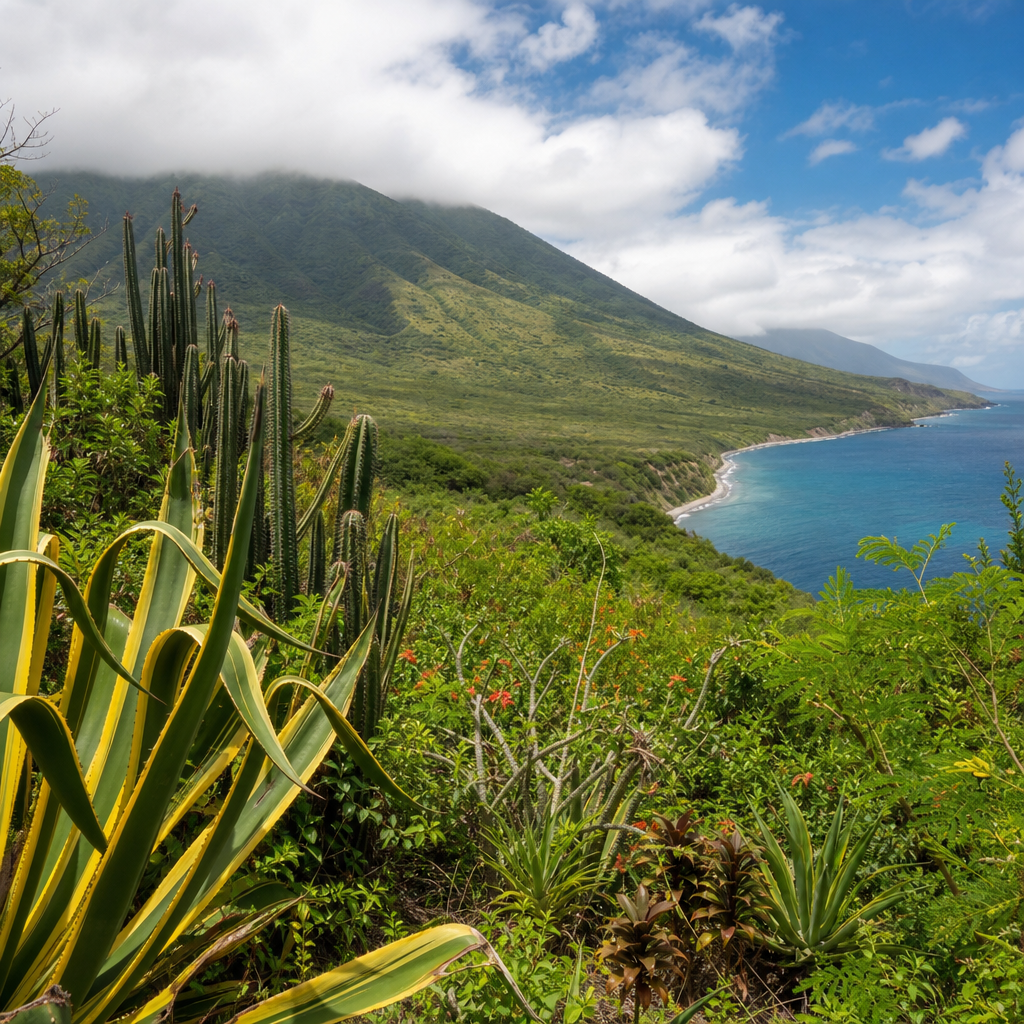
Saint Kitts packs unusual ecological variety into a small area. Coastal zones support salt-tolerant species exposed to wind, spray, and sandy or rocky soils. Lower slopes and rain-shadow areas carry dry forest and scrub plants adapted to periodic drought. Ghauts, ravines, and moist valleys hold species that prefer deeper soils and more consistent moisture. Higher elevations toward Mount Liamuiga support wetter forest elements, epiphytes, ferns, and trees that intercept cloud moisture. This habitat gradient explains why the island’s indigenous plants are so functionally diverse. A sea grape thriving above a beach solves different ecological problems than a trumpet tree or mountain cabbage in upland forest.
For anyone asking which native plants are most useful, the answer depends first on site conditions. On exposed coasts, species that tolerate salinity and sand movement are the practical choice. On steeper inland slopes, deep-rooted trees and shrubs that bind volcanic soils are more valuable. In urban Basseterre or village landscapes, compact natives that handle heat and intermittent dry spells often outperform imported ornamentals. Matching plant to habitat is the first rule of successful use, and it is where many landscaping projects fail when they rely on species unsuited to local rainfall patterns or hurricane winds.
Coastal and dry-zone plants and what they do
Several of Saint Kitts’ best-known indigenous plants come from coastal and lower-elevation dry habitats. Sea grape, Coccoloba uvifera, is among the most useful. Its broad leaves withstand salt spray, its roots help stabilize beachfront soils, and its dense canopy creates windbreaks. The fruits are edible when ripe and have traditionally been used for jams or fresh snacking, though quality varies by plant. In practical landscaping, sea grape is one of the island’s most dependable choices for shoreline resilience, privacy screening, and habitat for birds that feed on the fruit.
Buttonwood, Conocarpus erectus, is another important coastal native. It tolerates saline soils, periodic inundation, and strong wind better than most ornamental trees. I have recommended buttonwood repeatedly for difficult sites near the sea because it provides quick structural cover without demanding intensive irrigation. Its wood has historically been valued for fuel and small construction uses, and ecologically it contributes to shoreline buffering and nesting cover. Along the same coastal belt, seaside mahoe and bay cedar also function as dune and strand stabilizers, reducing erosion where foot traffic and storms loosen sand.
Turk’s cap cactus, prickly pear, and other drought-adapted succulents and cacti are less discussed in tourism materials, but they are integral to dry scrub ecology. These plants provide nectar, fruit, and shelter in water-limited environments. Prickly pear pads and fruits have traditional food and fodder value across the Caribbean, although handling requires care because of spines and glochids. Agave-like species, where native or long-naturalized in drier settings, offer fibers and strong architectural form for xeric planting. Their real value on Saint Kitts lies in reducing water demand while preserving a landscape identity appropriate to hot, exposed sites.
Forest trees, shade species, and watershed protection
Moving inland and upward, indigenous trees become central to water management and slope stability. Gum tree, Bursera simaruba, sometimes called tourist tree because of its peeling reddish bark, is a hallmark Caribbean native that performs well in seasonal climates. It establishes on poor soils, offers light shade, and supports insects and birds. In restoration work, its tolerance for heat and its relatively fast establishment make it a useful transitional species. More importantly, mixed with other natives, it contributes to the layered canopy that slows runoff and protects thin tropical soils from direct rainfall impact.
Trumpet tree, often Cecropia species in wetter areas, plays a different role. It is a classic pioneer tree, colonizing disturbed ground quickly after landslips, clearing, or storm damage. That fast growth is ecologically useful because it shades exposed earth, creates perches for birds, and accelerates succession toward more complex forest. Mountain cabbage and related palms also deserve attention for their cultural and ecological value. Palms provide nesting structure, fruit resources, and visual continuity with the island’s natural heritage. However, harvesting palm hearts kills the plant, so any food use must be weighed against conservation concerns, especially in limited wild populations.
Tree ferns, lianas, understory shrubs, and epiphytes in upper watersheds may not have obvious household uses, but they are indispensable to ecosystem function. They trap moisture, support amphibians and invertebrates, and maintain the humid microclimates that help springs and streams persist. When these forests are fragmented, downstream effects follow: more flash runoff, poorer water quality, and reduced habitat continuity. For Saint Kitts, protecting indigenous upland vegetation is one of the most cost-effective forms of natural infrastructure, even if the benefits are measured in reduced erosion and steadier water supplies rather than market products.
Traditional medicinal and household uses
Many indigenous or long-established native plants in Saint Kitts have been used in bush medicine, though careful identification and dosage are essential. Lignum vitae, Guaiacum officinale, historically one of the Caribbean’s most valued medicinal and hardwood species, was used in preparations associated with inflammatory conditions and other ailments. It is now better known as a conservation-priority tree because overexploitation reduced regional populations. Aloe is commonly used in household remedies, though some aloe species are introduced rather than indigenous. This distinction matters: not every useful plant in local tradition is native, and readers should separate cultural importance from biogeographic origin.
Cerasee, lemongrass, soursop leaf, and noni are frequently mentioned in Caribbean home remedy conversations, but again, they are not all indigenous to Saint Kitts. A rigorous plant list must avoid folding every traditional remedy into the native flora category. Indigenous medicinal plants on the island are better understood as part of a broader healing landscape that includes native species, naturalized plants, and cultivated imports. From practical experience, the safest advice is to document local names carefully, cross-check botanical identity, and treat traditional medicinal knowledge with respect while recognizing the need for evidence, contraindications, and professional medical guidance.
Household uses extend beyond medicine. Leaves, flexible stems, and durable woods from native plants have been used for thatching, simple tools, fuelwood, walking sticks, fencing, and basketry. Even when these uses are less common now, they remain important cultural records of how people adapted to available vegetation. In educational programs, these examples help students see plants not as background scenery but as working parts of island life. That perspective strengthens conservation because species become valuable in lived terms, not only as entries in a botanical survey.
Food, wildlife value, and restoration uses
Some indigenous plants contribute directly to food systems, while others support food indirectly by feeding pollinators, birds, bats, and beneficial insects. Sea grape fruit is the most obvious example of a native edible familiar to many residents and visitors. Native berries, palms, and flowering shrubs also supply seasonal resources to wildlife that then assist with seed dispersal and ecosystem regeneration. On islands, that service is critical. When frugivorous birds move seeds from remnant forest into recovering land, they perform restoration work that would be expensive to replicate manually.
The practical restoration value of indigenous plants is easier to see in comparison with common alternatives.
| Plant | Main habitat | Primary uses | Why it matters on Saint Kitts |
|---|---|---|---|
| Sea grape | Coast | Erosion control, edible fruit, windbreak | Handles salt spray and stabilizes beachfronts |
| Buttonwood | Coast and saline flats | Shoreline buffering, fuelwood, screening | Tolerates difficult seaside conditions |
| Gum tree | Dry to moist lowlands | Shade, restoration, wildlife support | Establishes well on poor soils |
| Trumpet tree | Moist disturbed areas | Pioneer cover, slope recovery | Quickly re-vegetates damaged ground |
| Lignum vitae | Dry forest | Historic medicine, dense hardwood, conservation planting | Iconic native with high heritage value |
In farms and community projects, native hedgerows and mixed plantings can reduce wind damage, improve beneficial insect habitat, and lower maintenance costs once established. They also tend to recover better after hurricanes than shallow-rooted, water-hungry exotics planted only for appearance. That does not mean every native is automatically ideal. Some grow slowly, some are hard to source, and some need protection from grazing when young. Still, for long-term resilience, indigenous plants usually provide the best ecological return on investment.
Conservation challenges and how to use native plants responsibly
The biggest threats to Saint Kitts’ indigenous plants are habitat loss, invasive species, unsympathetic landscaping, overharvesting of vulnerable species, fire in dry areas, and storm disturbance compounded by erosion. Invasive vines and aggressive ornamental shrubs can smother native regeneration, especially along roadsides and abandoned lands. Development can also fragment coastal and ghaut habitats that seem common at a glance but are ecologically narrow. Once these plant communities are broken apart, wildlife movement and natural regeneration decline. That is why conservation should focus not only on individual species but on entire habitat mosaics.
Responsible use starts with sourcing. Native plants for home gardens, hotels, and public projects should come from reputable nurseries that propagate legally rather than removing specimens from the wild. Planting should follow natural site logic: coastal species near the shore, dry forest species on sunny lower slopes, and moisture-loving plants in suitable upland or ravine settings. Maintenance should support establishment, then step back. Overwatering and heavy fertilization often weaken native plants by pushing soft growth unsuited to local conditions. A better approach is mulch, correct spacing, and early weed control.
For readers building a wider understanding of Nature and Wildlife on Saint Kitts, indigenous plants are the connecting thread. They shape bird habitat, insect diversity, watershed health, scenic character, and cultural memory all at once. As a hub topic, miscellaneous native flora deserves attention because many species do not fit neatly into a single category such as trees, flowers, or medicinal herbs, yet each contributes to the island’s ecological integrity. Learn the common natives in your area, ask local growers for island-appropriate species, and choose one indigenous plant to add, protect, or restore this season.
Frequently Asked Questions
What counts as an indigenous plant on Saint Kitts, and how is that different from native vegetation?
On Saint Kitts, an indigenous plant is a species that occurs naturally on the island without recent human introduction. In other words, it arrived and established through natural ecological processes rather than through deliberate planting, trade, or colonial-era agriculture. This distinction matters because many plants now seen across the island, including useful food and ornamental species, were brought from elsewhere in the Caribbean, Africa, Europe, or the Americas. Indigenous plants are part of the island’s original ecological inheritance and are closely tied to its volcanic soils, seasonal rainfall, steep slopes, coastal exposure, and long evolutionary relationship with local wildlife.
Native vegetation is a broader concept. It refers not just to individual species, but to the plant communities that naturally form under Saint Kitts’ environmental conditions. Those communities can include dry coastal scrub, moist upland forest, ghauts and valley vegetation, and wind-shaped growth on exposed ridges. Native vegetation reflects how plants interact with one another and with factors such as salt spray, erosion, drainage, elevation, and the availability of freshwater. So while indigenous plants are the building blocks, native vegetation describes the larger living system they create together. Understanding both terms helps readers appreciate why the island’s flora is important not only for botanical interest, but also for soil stability, watershed protection, habitat creation, and traditional practical uses.
How have people on Saint Kitts traditionally used indigenous plants in everyday life?
Indigenous plants on Saint Kitts have long supported daily life in practical, low-waste ways. Historically, local communities drew on naturally occurring species for food supplements, teas, folk remedies, shade, animal forage, building materials, fuelwood, fencing, and craftwork. In many Caribbean islands, including Saint Kitts, people learned to recognize which leaves could be brewed, which bark or roots were valued in traditional wellness practices, which woods held up best in humid or coastal conditions, and which plants were useful for stabilizing slopes or marking boundaries. These uses were often shaped by necessity, local observation, and generations of shared knowledge.
Some indigenous or long-established native plants were valued because they could thrive where introduced crops could not. Plants growing in rocky ground, along dry coasts, or on steep volcanic hillsides often became important for resilient, place-based uses. Trees and shrubs could provide durable poles, posts, and small construction timber. Fibrous plants might be used in tying, weaving, or simple household tasks. Leaves from certain species offered temporary wrapping material or thatch-like functions, while flowers and fruits could support pollinators, birds, and, indirectly, local livelihoods tied to healthy landscapes.
Traditional plant use was also closely connected to seasonality and locality. What was available in wetter uplands differed from what was gathered in coastal zones or lower valleys. That meant plant knowledge was not generic; it was highly specific to terrain, rainfall, and habitat. Even when modern materials replaced many older practices, this plant knowledge remained culturally significant because it reflects how Kittitians adapted to the island’s environment using resources that were already part of its natural ecosystems.
Which kinds of indigenous plants are especially important to Saint Kitts’ environment and local communities?
Several broad groups of indigenous plants are especially important, even when the exact species vary by habitat. Coastal plants are critical because they tolerate salt spray, wind, and poor soils while helping protect shorelines from erosion. Their roots bind loose ground, their foliage reduces wind impact, and their presence helps create more stable conditions for other species to establish. Inland, shrubs and trees on slopes and in valleys are essential for holding Saint Kitts’ rich volcanic soils in place, especially during heavy rains. Without that vegetation, runoff can increase quickly, leading to erosion, sediment movement, and pressure on freshwater systems.
Forest and upland species are equally valuable because they support the island’s watershed functions. Rainfall intercepted by leaves and absorbed into forest soils is released more gradually, helping maintain moisture in streams, ghauts, and lower landscapes. Indigenous trees also create shade, shelter, and nesting areas for birds, insects, and other wildlife. In practical terms, this ecological role benefits people as much as nature: healthier vegetation means better water retention, cooler microclimates, more stable slopes, and more resilient agricultural surroundings.
From a community perspective, the most important indigenous plants are often those that perform multiple functions at once. A single species may offer habitat value, erosion control, medicinal tradition, and usable wood. Others may be prized because they flower at key times for pollinators or because they recover relatively well after storms. On a small island like Saint Kitts, multifunctional plants are especially significant. They do not simply exist as scenery; they help support environmental stability, cultural memory, and practical land use all at the same time.
Are indigenous plants on Saint Kitts used for traditional medicine and home remedies?
Yes, indigenous and native-associated plants have historically played an important role in traditional medicine and home remedies on Saint Kitts, as in many parts of the Caribbean. Families and communities often relied on plant-based preparations long before modern pharmaceuticals were widely available, and many of those practices remained part of household knowledge even after clinics and imported medicine became more common. Leaves, bark, roots, seeds, and flowers might be prepared as teas, infusions, poultices, baths, or topical applications, depending on the plant and the intended use.
These remedies were usually tied to everyday concerns such as colds, stomach discomfort, minor skin issues, fevers, or general “cleansing” and strengthening traditions. In many cases, the value of a plant came not only from chemistry, but from trusted intergenerational knowledge about timing, dosage, preparation, and combinations. People learned which parts of a plant were used, whether fresh or dried material worked best, and which remedies were considered mild versus potent. This type of knowledge is an important part of cultural heritage and reflects deep familiarity with the island’s natural environment.
At the same time, it is important to approach traditional medicinal use responsibly. Not every wild plant is safe, and not every historical use has been scientifically validated for dosage, effectiveness, or interactions with modern medications. Some plants can be irritating, toxic, or unsafe during pregnancy or for people with certain health conditions. So while traditional plant medicine on Saint Kitts is culturally meaningful and often botanically insightful, it should be documented carefully and used with informed caution. In modern discussions, the best approach is to respect traditional knowledge while also recognizing the value of medical guidance and botanical accuracy.
Why is it important to protect Saint Kitts’ indigenous plants today?
Protecting Saint Kitts’ indigenous plants is important for ecological, cultural, and practical reasons. Ecologically, these plants are the species best adapted to the island’s real conditions: black volcanic soils, intense tropical sun, seasonal downpours, salt-laden winds, steep slopes, and habitat variation from coast to mountain. Because they evolved or established naturally within these conditions, they often play roles that introduced ornamentals or invasive plants cannot fully replace. They stabilize land, support biodiversity, protect watersheds, and help ecosystems recover after droughts, storms, and disturbance.
Culturally, indigenous plants preserve a living record of how people related to the landscape before modern infrastructure and imported materials became dominant. Traditional uses for healing, shade, timber, boundary planting, and household utility form part of Saint Kitts’ environmental heritage. If those plant populations decline, the island risks losing not only species, but also stories, skills, and practical knowledge that connect communities to place. Conservation therefore is not just about protecting wild nature; it is also about protecting identity and memory.
There is also a strong future-oriented argument for conservation. Indigenous plants can be valuable in restoration projects, climate adaptation planning, low-maintenance landscaping, and erosion-control strategies because they are already suited to local conditions. As Saint Kitts faces pressures from development, invasive species, changing land use, and climate-related stress, indigenous flora may become even more important as reliable components of resilient landscapes. Protecting them through habitat conservation, careful planting choices, public education, and documentation of traditional uses helps ensure that the island’s natural wealth remains useful, visible, and meaningful for generations to come.