Saint Kitts’ culinary heritage is a living record of migration, trade, survival, and celebration, expressed through dishes that blend African, European, Indigenous, and wider Caribbean influences into a distinctive island food culture. In practical terms, culinary heritage means more than recipes. It includes farming traditions, fishing methods, holiday meals, market habits, family techniques, and the social rules around preparing and sharing food. On Saint Kitts, those traditions developed over centuries shaped by Kalinago presence, British colonial rule, the sugar economy, emancipation, inter-island exchange, and modern tourism. The result is cuisine that feels both familiar within the Caribbean and sharply local in its seasoning, ingredients, and rituals.
This topic matters because food is one of the clearest ways to understand Saint Kitts beyond beaches and cruise itineraries. A plate of goat water, saltfish with coconut dumplings, cook-up rice, or fresh tamarind balls reveals how people adapted to hardship, made use of local produce, and preserved identity through taste. I have worked across Caribbean travel and cultural content long enough to see the same pattern repeatedly: visitors remember the landscapes, but they understand a place only after they taste it. In Saint Kitts, culinary heritage explains class history, agricultural change, religious observance, and family continuity in a way museums alone cannot. It also supports local businesses, from roadside grill operators to market vendors and small farmers.
For readers exploring the Culture and History section, this hub page serves as the central guide to the island’s food story and the many related subjects that branch from it. It covers the foundations of Kittitian cuisine, signature dishes, ingredients, cooking methods, festival foods, beverages, and the ways culinary traditions are changing today. If you want a clear answer to what defines food in Saint Kitts, the short version is this: local cuisine is built on provision grounds produce, seafood, preserved staples, slow-cooked stews, aromatic seasonings, and communal eating practices that carry memory across generations.
How History Shaped Kittitian Food
Saint Kitts’ food culture developed through layered historical contact rather than a single origin point. Before colonization, Indigenous communities used cassava, seafood, tropical fruits, and locally available herbs. European settlement introduced plantation systems, wheat flour, salt cod, domesticated livestock, and formal baking traditions. Enslaved Africans brought agricultural knowledge, one-pot cooking methods, okra, yam-centered foodways, and seasoning approaches that remain central today. After emancipation, communities expanded kitchen gardens, relied on provisions, and turned inexpensive ingredients into highly flavored meals. That pattern still defines much of everyday island cooking.
The sugar industry had an especially deep effect on what people ate. Plantation economies focused land and labor on export crops, which often reduced local food autonomy. Families compensated by cultivating small plots with sweet potatoes, cassava, tannia, breadfruit, pumpkin, plantains, and medicinal herbs. Saltfish became important because it was affordable, preserved well, and paired naturally with ground provisions. Molasses and cane byproducts shaped desserts and drinks. Even now, older cooks speak about meals in terms of making the most of what was available, a principle that produced some of the island’s most enduring dishes.
Migration also broadened the table. Trade and movement between Saint Kitts, Nevis, Antigua, Montserrat, and other Eastern Caribbean islands spread ingredients and techniques quickly. You can see this in the overlap between pelau-like rice dishes, coconut dumpling traditions, and the broad use of green seasoning. Yet Saint Kitts retains local distinctions, especially in its love of goat water, seasoned rice, stewed meats, and combinations of starch and seafood that are prepared with a notably hearty hand. Food here is not a museum piece. It is a historical continuum still evolving in homes, cookshops, and festival grounds.
Core Ingredients That Define the Island Table
If you ask what ingredients define Saint Kitts’ culinary heritage, several categories appear again and again: provisions, seafood, meats, legumes, herbs, spices, and tropical fruits. Provisions are foundational. Breadfruit, yam, sweet potato, cassava, green banana, plantain, eddoes, and pumpkin create the starch base for many meals. They are boiled, roasted, mashed, or added to soups and stews. These crops matter culturally because they connect present-day cooking to subsistence traditions and small-scale agriculture.
Seafood reflects the island environment. Fresh fish, lobster, conch where available, shrimp, and shellfish appear in both home kitchens and restaurant menus, though catch and seasonality affect availability. Saltfish occupies a special place because it links colonial trade routes with practical household cooking. It is still commonly sautéed with onions, peppers, tomatoes, and herbs, then served with provisions or dumplings. Meat dishes often center on goat, chicken, pork, and oxtail. Goat in particular carries ceremonial and everyday significance, especially in stews prepared for gatherings.
Flavor comes from seasoning architecture rather than heat alone. Typical aromatics include thyme, scallion, onion, garlic, celery, parsley, and hot pepper, often Scotch bonnet. Coconut milk adds body and sweetness to stews, rice, and dumplings. Brown sugar, molasses, ginger, nutmeg, cinnamon, and clove show the island’s historic connection to regional spice use and sugar production. Tamarind, guava, mango, soursop, sugar apple, and passion fruit enter drinks, sauces, jams, and sweets. In practice, Kittitian food is defined by balance: savory depth, herbal freshness, chile warmth, and the earthy comfort of provisions.
Signature Dishes Every Reader Should Know
The dish most often identified with Saint Kitts is goat water, the island’s celebrated national stew. Despite the name, it is not watery. Properly made, it is rich, dark, and deeply seasoned, built from goat meat simmered with bread, flour dumplings, herbs, pepper, and browned flavorings until the broth becomes concentrated and aromatic. I have seen it served at village events, family gatherings, and restaurant tables, and the best versions share one trait: patience. The meat is cooked until tender, the spices are integrated rather than sharp, and the dumplings absorb the broth without falling apart. Goat water tells the story of communal cooking, economical use of ingredients, and pride in a dish that is both humble and iconic.
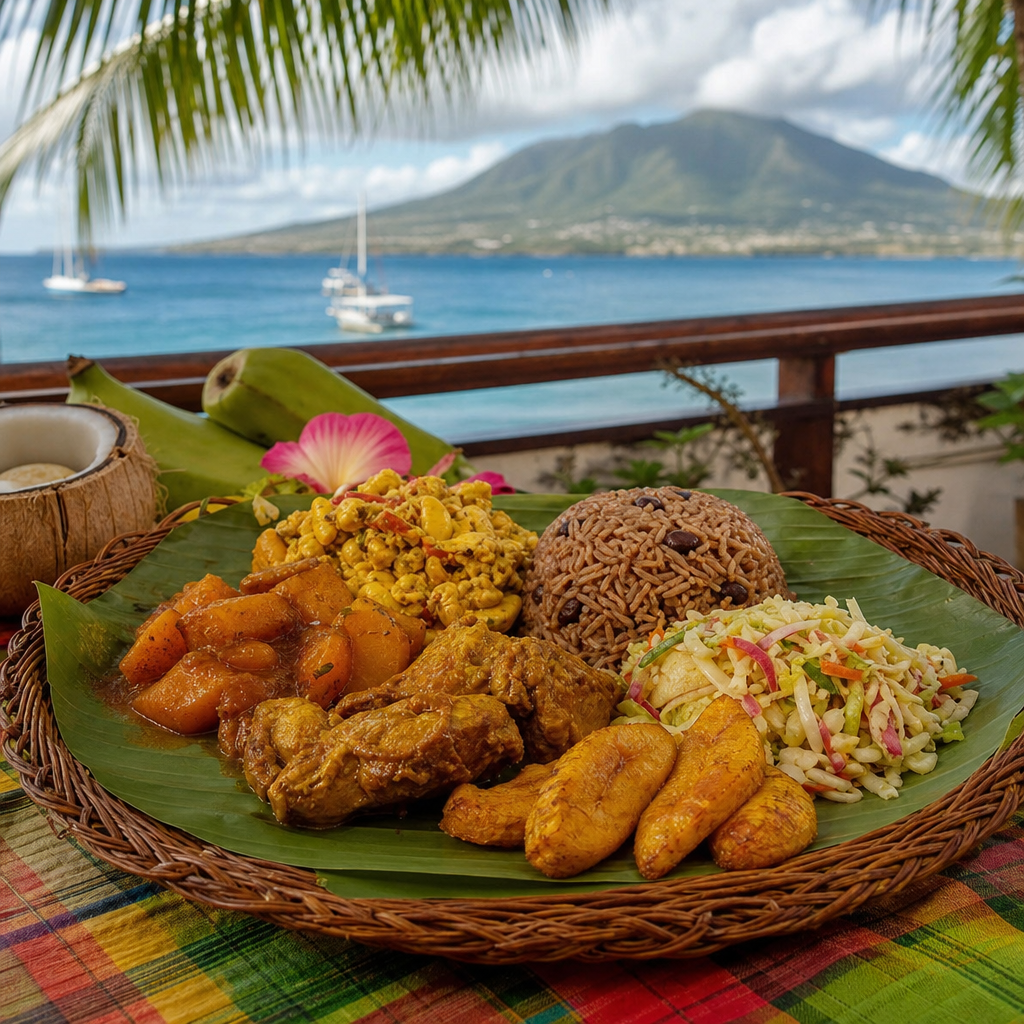
Saltfish with dumplings, seasoned rice, pelau-style combinations, stewed chicken, and fish dishes also sit at the center of daily food culture. Coconut dumplings are especially important. Their subtle sweetness and soft texture pair well with saltfish, smoked herring, or stewed vegetables. Cook-up dishes combine rice, peas or beans, meat, and seasonings into a complete meal designed for efficiency and flavor. On Sundays and holidays, larger spreads may include macaroni pie, baked chicken, mutton, green salad, coleslaw, and provisions. Black pudding and souse appear in social settings and reflect wider Afro-Caribbean culinary traditions adapted to local taste.
Street and snack foods deserve equal attention. Johnny cakes, patties, roasted corn, tamarind balls, sugar cakes, and coconut turnovers connect everyday eating with memory and movement. They are practical foods sold in bakeries, schools, roadside stalls, and community events. For a traveler, they offer an accessible entry point into Kittitian flavor. For residents, they often carry emotional weight because they are linked to childhood, after-school routines, and seasonal occasions. A culinary heritage page that ignored these foods would miss how people actually eat beyond formal restaurant settings.
Cooking Methods, Meal Patterns, and Social Meaning
Traditional cooking methods in Saint Kitts favor slow simmering, stewing, boiling provisions, grilling over open heat, and baking in both household ovens and commercial bakeries. These techniques developed from necessity as much as preference. Stewing tenderizes tougher cuts, stretches flavor across large portions, and allows cooks to season deeply. Boiling provisions creates filling meals from crops that grow well in tropical conditions. Grilling, especially for chicken, fish, and pork, adds smoke and speed for roadside service and weekend gatherings.
Meal structure often follows a clear rhythm. Breakfast may include saltfish, bake, porridge, bread, cocoa tea, or leftovers repurposed from the previous day. Lunch is frequently the main hot meal, featuring rice, peas, meat or fish, vegetables, and salad. Dinner can be lighter but still substantial, especially in multigenerational households. Weekend cooking carries special significance. Saturday may bring soups, ground provisions, or market food, while Sunday often means a larger family meal. In many homes, food preparation is collective labor: seasoning meat, peeling provisions, kneading dough, and tasting sauces as they develop.
These practices give food social meaning beyond nutrition. Certain dishes signal comfort, respect, mourning, celebration, or hospitality. Offering a visitor a plate is a statement of welcome. Preparing a labor-intensive stew for a community event demonstrates generosity and competence. Recipes are rarely transmitted through exact measurements; they are taught through repetition, watching, and correction. That method can frustrate outsiders, but it is one reason local food retains character. Technique is embodied knowledge, and in Saint Kitts that knowledge remains strongly tied to family and community life.
Festivals, Drinks, and the Future of Culinary Heritage
Food becomes especially visible during Carnival, village festivals, beach events, and national celebrations, where traditional dishes move from domestic spaces into public identity. Large pots of goat water, grilled meats, rice dishes, and local sweets feed crowds and reinforce the connection between cuisine and celebration. Seasonal baking also matters. Christmas brings black cake, ginger beer, sorrel, and richer meat preparations across much of the Eastern Caribbean, and Saint Kitts shares that festive pattern while preserving local preferences in seasoning and presentation. These occasions are not only about indulgence. They are moments when culinary memory is performed publicly and passed to younger generations.
Drinks are part of that heritage as well. Fresh fruit juices, mauby, sorrel, ginger beer, seamoss drinks, coconut water, and rum-based beverages all appear in local food culture. Each has a role. Sorrel is strongly associated with the Christmas season. Ginger beer carries both festive and medicinal associations. Rum reflects the long legacy of sugar cultivation and Caribbean distillation culture. Small producers, bars, and home cooks all contribute to how these drinks are prepared and served. Together, they complete the sensory picture of the island table.
| Category | Key Examples in Saint Kitts | Cultural Role |
|---|---|---|
| Main dishes | Goat water, saltfish with dumplings, seasoned rice | Daily meals, gatherings, national identity |
| Starches | Breadfruit, yam, plantain, cassava, coconut dumplings | Links to subsistence farming and food resilience |
| Snacks and sweets | Johnny cakes, tamarind balls, sugar cakes, patties | School snacks, roadside food, childhood memory |
| Drinks | Sorrel, mauby, ginger beer, rum, fresh juices | Seasonal rituals, hospitality, celebration |
Modern influences are changing the food landscape, but not erasing it. Tourism has increased demand for polished restaurant interpretations of local dishes. Imported ingredients and global fast-food habits have shifted some everyday eating patterns. At the same time, there is stronger interest in farm-to-table sourcing, culinary tourism, and preserving traditional recipes as cultural assets. The most promising future for Saint Kitts’ culinary heritage lies in treating local food not as nostalgia, but as a living economic and cultural resource. That means supporting farmers, fishers, cooks, school food education, and independent food businesses that keep local techniques in active use.
Saint Kitts’ culinary heritage stands out because it turns history into something tangible, memorable, and nourishing. The island’s food tells a coherent story: Indigenous knowledge laid early foundations, colonial trade introduced preserved staples and baking traditions, African foodways shaped the heart of the kitchen, and generations of Kittitians transformed limited resources into cuisine with depth and identity. From goat water to coconut dumplings, from market produce to festive drinks, each element reflects adaptation, skill, and community memory.
For anyone exploring Saint Kitts through its culture and history, food is not a side topic. It is one of the clearest entry points into how the island lives, remembers, and celebrates. Understanding the role of provisions, stews, seafood, snacks, and holiday cooking helps explain family life, agricultural traditions, and local values around hospitality. It also reveals why everyday dishes matter as much as restaurant specialties. The real strength of Kittitian cuisine is not novelty. It is continuity, rooted in practice and refreshed by each generation.
Use this hub as your starting point for the broader Miscellaneous subtopic, then continue into deeper articles on individual dishes, food festivals, market culture, rum history, and agricultural traditions. If you want to understand Saint Kitts in a meaningful way, follow the food: visit a local cookshop, ask about the day’s stew, try the seasonal drink, and pay attention to the stories served with the plate.
Frequently Asked Questions
What makes Saint Kitts’ culinary heritage unique?
Saint Kitts’ culinary heritage is distinctive because it reflects centuries of cultural exchange, adaptation, and local creativity. The island’s food traditions were shaped by African cooking knowledge, European colonial influence, Indigenous ingredients and techniques, and connections with neighboring Caribbean islands. Rather than existing as separate layers, these influences blended over time into a food culture that is deeply local and immediately recognizable to Kittitians. This is why the cuisine of Saint Kitts is not simply a collection of dishes, but a living record of how people lived, worked, traded, and celebrated.
What makes that heritage especially meaningful is that it extends far beyond what appears on a plate. It includes the crops people learned to grow in local conditions, the fishing practices that supplied coastal communities, the methods families used to stretch ingredients and avoid waste, and the customs that determined how meals were prepared and shared. Everyday staples such as ground provisions, saltfish, stewed meats, peas, rice, and seasonal produce carry stories of survival and resourcefulness. At the same time, festive foods served at holidays, village gatherings, and family events reveal how food became tied to joy, identity, and social connection. In Saint Kitts, culinary heritage is unique because it preserves both hardship and celebration in one continuous tradition.
Which cultural influences have shaped the food of Saint Kitts?
The food of Saint Kitts has been shaped by several major cultural influences, each contributing ingredients, techniques, and food values that remain visible today. African influence is especially foundational. Enslaved Africans brought agricultural knowledge, methods of seasoning and stewing, and a deep understanding of how to make nourishing meals from limited resources. Many staple preparations associated with one-pot cooking, the use of root crops, greens, legumes, and preserved fish reflect this enduring legacy. African influence also appears in the communal nature of cooking and eating, where food is often prepared for family, neighbors, and larger gatherings rather than treated as a purely individual matter.
European influence entered through colonization and plantation systems, affecting the island’s ingredients, dining habits, and imported food traditions. Certain meats, baking methods, puddings, and festive meal structures were shaped in part by British and other European customs. At the same time, Indigenous Caribbean influence remains important in the use of local plants, cassava, tropical fruits, and practical knowledge about island food resources. Broader Caribbean exchange also played a major role, as trade and migration connected Saint Kitts to nearby islands, allowing cooking styles, seasonings, and favored dishes to circulate and evolve. The result is a cuisine that does not belong to one source alone, but to a long process of adaptation in which multiple cultural traditions were transformed into something distinctly Kittitian.
What are some traditional foods and dishes that represent Saint Kitts’ culinary heritage?
Several traditional foods help define Saint Kitts’ culinary identity, especially dishes built around local produce, preserved fish, hearty starches, and slow, flavorful preparation. Saltfish is one of the most important ingredients in the island’s food culture, both because of its historical availability and its versatility in home cooking. It has long been paired with staples such as coconut dumplings, provisions, and seasoned vegetables, creating filling meals that reflect the practical side of island life. Goat water, widely recognized as one of Saint Kitts’ signature dishes, is another powerful example. This rich, seasoned stew is often associated with gatherings and community events, and it demonstrates how humble ingredients can be turned into something deeply celebrated through technique and seasoning.
Other representative foods include cook-up style dishes, stewed meats, rice and peas, breadfruit, green fig, cassava, sweet potatoes, and fresh seafood prepared according to local taste. Seasonal fruits and vegetables also matter greatly, not just as side items but as part of the rhythm of everyday eating. Traditional beverages, festive sweets, and special holiday preparations are equally important to the culinary story, because they mark the calendar of social life. Together, these dishes show that Saint Kitts’ culinary heritage is rooted in balance: land and sea, everyday necessity and special occasions, inherited methods and local improvisation. The foods most associated with the island are not famous only because they taste good, but because they carry memory, meaning, and continuity.
How do farming, fishing, and markets contribute to Saint Kitts’ food traditions?
Farming, fishing, and market culture are central to understanding how culinary heritage operates in Saint Kitts. Traditional foodways developed in direct relationship to what could be grown, caught, traded, preserved, and prepared within the island’s environment. Farming supplied essential ingredients such as root crops, peas, fruits, herbs, and vegetables that formed the backbone of many meals. These were not merely agricultural products; they shaped household cooking patterns, seasonal menus, and family routines. Knowledge about when to plant, how to harvest, and how to use every part of an ingredient became part of the island’s broader culinary inheritance.
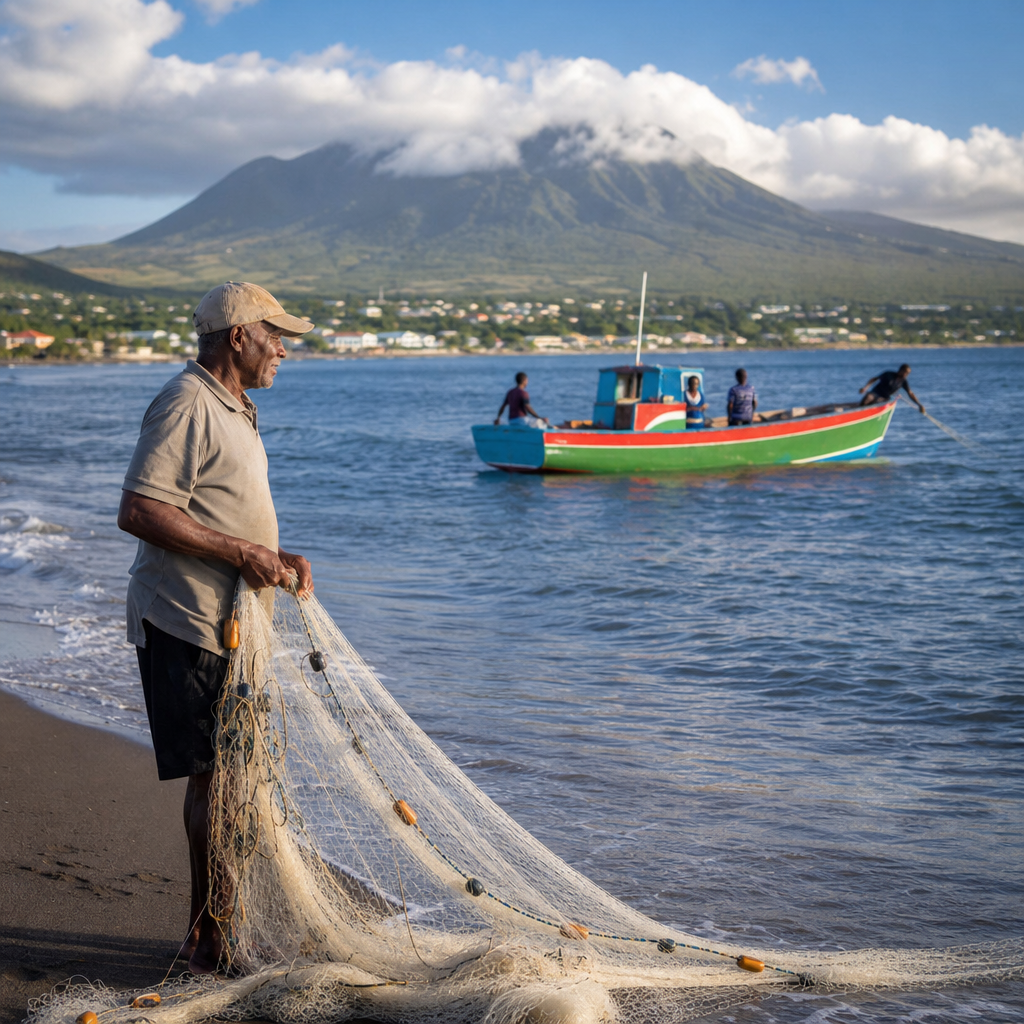
Fishing played an equally important role, particularly in coastal communities where fresh fish and shellfish contributed protein and variety to the local diet. Fishing methods, weather knowledge, and preservation practices helped determine what was available and how it was cooked. Markets then connected producers, fishers, vendors, and households, making them essential spaces in the culinary life of the island. They were not just places to buy food, but places where recipes, opinions, news, and practical knowledge were exchanged. Market habits helped preserve familiarity with seasonal ingredients and encouraged a cuisine built around freshness, adaptability, and local relationships. In this way, Saint Kitts’ food traditions are inseparable from the people who grow, catch, sell, and prepare the ingredients every day.
Why is preserving Saint Kitts’ culinary heritage important today?
Preserving Saint Kitts’ culinary heritage matters because food is one of the clearest ways a community retains its history, identity, and values. Traditional dishes and cooking methods hold evidence of how earlier generations survived economic hardship, worked with the island’s natural resources, and maintained cultural continuity despite major social change. When those traditions are passed on, they do more than keep old recipes alive. They preserve language, memory, social customs, and a sense of belonging. Family techniques for seasoning, preparing provisions, or organizing a holiday meal often carry just as much cultural meaning as the finished dish itself.
Preservation is also important in a modern context shaped by globalization, imported foods, changing lifestyles, and the risk of younger generations losing touch with traditional practices. Protecting culinary heritage helps ensure that local knowledge is not replaced entirely by convenience or outside trends. It supports farmers, fishers, cooks, and vendors whose work sustains the island’s food culture in practical ways. It can also strengthen cultural tourism by giving visitors a more authentic understanding of Saint Kitts beyond beaches and scenery. Most importantly, preserving culinary heritage honors the people who built the island’s food traditions through labor, adaptation, and celebration. It keeps Saint Kitts’ story visible, edible, and relevant for the future.