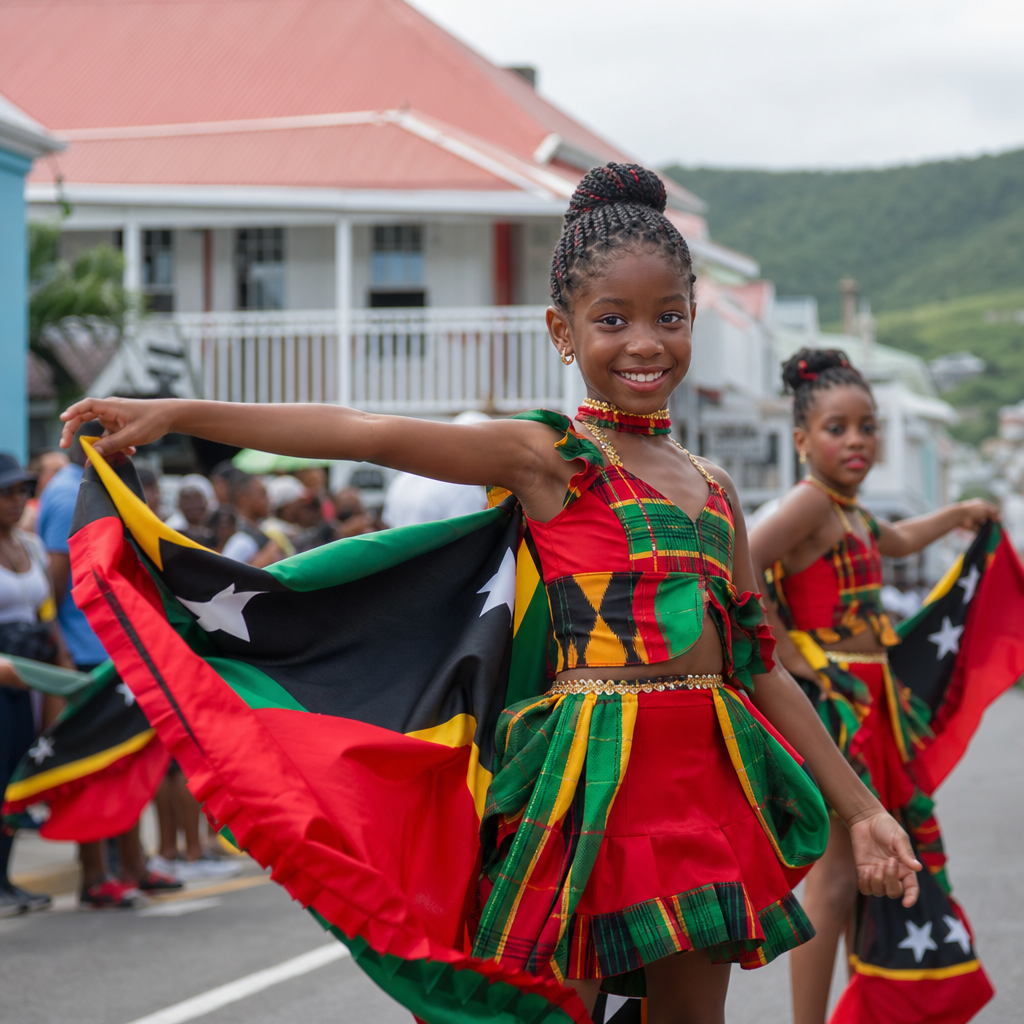
Saint Kitts’ local playwrights and theater reveal how a small Caribbean island has built a stage tradition that preserves memory, sharpens public debate, and turns community stories into shared cultural experience. In Saint Kitts, theater is not a minor pastime tucked behind tourism marketing. It is a living part of local life, linking oral storytelling, school performance, folk music, festival culture, church halls, and national celebrations. When people ask what Kittitian theater includes, the answer is broad: scripted drama, comedy revues, historical pageants, spoken-word performance, festival productions, youth theater, and community works that blend dance, music, and dialect. Local playwrights are the writers who create these works from Kittitian and wider Caribbean realities rather than importing stories wholesale from Britain or North America. Their subject matter often includes migration, family duty, colonial legacies, village life, political rivalry, spirituality, education, carnival energy, and the tension between modern aspirations and inherited customs.
This matters because theater in Saint Kitts performs several jobs at once. It entertains, but it also archives speech patterns, social codes, and local humor that may never be fully captured in policy documents or school textbooks. In my experience working with Caribbean cultural content and reviewing regional performance programs, the strongest local productions do something rare: they make audiences laugh at familiar situations, then recognize deeper questions about identity and belonging. On an island where community networks remain visible and audiences often know the places, accents, and types being portrayed, a play can have unusual force. It does not speak into abstraction. It speaks to neighbors. That directness gives Saint Kitts’ theater scene an importance beyond box-office size. For a hub page under local life and experiences, this topic sits at the center of miscellaneous culture because it connects festivals, education, heritage, literature, nightlife, and civic conversation in one form.
How theater developed in Saint Kitts
The foundation of theater in Saint Kitts lies in a mix of colonial-era stage customs and Afro-Caribbean performance traditions. British influence brought school recitations, church pageants, Shakespearean exposure, and formal stage structure. At the same time, local expressive culture carried ring games, masquerade traditions, music, satire, storytelling, and call-and-response performance habits that never fit neatly into imported dramatic forms. Over time, Kittitian theater evolved by combining these streams. The result is not a copy of London theater in tropical dress. It is a local performance language shaped by the island’s social reality.
After emancipation and into the twentieth century, public performance spaces broadened through schools, village events, civic halls, and holiday celebrations. Teachers became cultural gatekeepers, often directing students in sketches and historical pieces. Churches staged morality plays and Christmas programs. Carnival and related festival traditions kept costume, movement, and public spectacle visible. By the time regional independence movements and postcolonial cultural confidence grew across the Caribbean, Saint Kitts already had the ingredients for a national theater identity: local speech, social comedy, strong amateur performers, and audiences willing to see themselves onstage.
A major institutional force has been the Caribbean Secondary Education Certificate theater syllabus and the broader work of schools in drama education. Across the Eastern Caribbean, including Saint Kitts and Nevis, drama in schools has introduced students to improvisation, characterization, stagecraft, Caribbean theater history, and playwriting. That pipeline matters. Many actors, directors, and writers first learned blocking, ensemble work, and script interpretation in school productions rather than private conservatories. In practical terms, local theater survives because it is taught, rehearsed, and performed repeatedly in educational settings.
What makes a Kittitian play distinctly local
A Kittitian play usually becomes unmistakably local through language, setting, rhythm, and social reference. Standard English may appear, especially in formal scenes, but Kittitian Creole expressions, intonation, and code-switching often carry the emotional truth of a character. That linguistic movement tells an audience who is performing respectability, who is gossiping, who is hiding status anxiety, and who is speaking from the heart. Local theater also relies heavily on recognizable settings: the village road, a family yard, a market conversation, a civil service office, a rum shop, a classroom, or a migration farewell scene at the port or airport.
Humor is another defining feature. In Saint Kitts, comedy onstage is rarely just joke delivery. It is social diagnosis. A sharp exchange about politics, church protocol, debt, overseas relatives, or generational conflict can generate laughter while exposing pressure points in everyday life. Playwrights also use music strategically. A hymn, carnival rhythm, folk refrain, or popular chorus can locate a scene culturally faster than pages of exposition. This is one reason Caribbean theater often feels communal: audiences do not merely watch the story; they recognize it through sound.
Local plays frequently address history without becoming lecture pieces. A domestic argument can carry the weight of migration economics. A character’s obsession with respectability can echo colonial social ranking. A village celebration can hint at survivals of African-derived performance. The strongest Kittitian scripts understand that local specificity is not a limitation. It is the source of universality. When the details are right, audiences elsewhere can still understand the larger themes of class, ambition, love, betrayal, and memory.
Local playwrights, themes, and creative ecosystems
Because Saint Kitts has a smaller population than larger Caribbean nations, its theater ecosystem is less dependent on a long list of celebrity playwrights and more dependent on multi-hyphenate cultural workers. Teachers write scripts for students. Directors adapt oral histories. Poets and calypsonians move into stage writing. Community organizers produce issue-based drama. This means the phrase local playwrights in Saint Kitts should be understood broadly. It includes professional dramatists where available, but it also includes educators, performers, and cultural activists who create original scripts for public performance.
The recurring themes are consistent across productions I have studied from the region. Migration is central: families separated by work abroad, returning nationals readjusting, and the emotional cost of remittances. Generational tension appears often, especially when elders defend discipline and communal values while younger characters push for privacy, mobility, or different ideas of success. Politics is another frequent subject. Caribbean audiences are highly attuned to political language, so satire about elections, patronage, public image, or bureaucracy tends to land well. Religion also enters local theater, sometimes reverently and sometimes critically, particularly where church culture shapes family decisions and public morality.
Women’s experiences form another strong current. Plays examine caregiving burdens, migration motherhood, gossip as social control, workplace barriers, and the emotional labor expected of daughters and wives. Men’s roles are scrutinized too, often through storylines about fatherhood, pride, unemployment, reputation, or the expectation to provide. These themes remain effective because they are not abstract policy questions. They appear through vivid household disputes, village encounters, and public embarrassment, which are dramatic engines audiences immediately understand.
Where theater happens and how productions are built
In Saint Kitts, theater is shaped by available space as much as by script. Productions may be mounted in formal performance venues, school auditoriums, community centers, church halls, and festival stages. This flexible geography affects writing and staging. A playwright who knows a script may be performed in a multipurpose hall often writes with portable sets, strong dialogue, and ensemble movement rather than technical spectacle. Directors become practical problem-solvers, balancing acoustics, lighting limitations, budget constraints, and audience proximity.
That constraint can be a creative advantage. Caribbean theater has long excelled in actor-centered performance, where characterization, timing, and vocal precision do more work than elaborate scenery. In Saint Kitts, a well-directed family confrontation can command a room with little more than a table, two chairs, and a radio prop. Costumes signal class and generation quickly. Sound cues such as a church bell, a market call, or distant music establish place efficiently. Because audiences are culturally literate in these markers, productions can move fast without losing clarity.
| Production element | How it typically appears in Saint Kitts | Why it matters |
|---|---|---|
| Venue | Schools, community halls, festival stages, churches | Determines scale, acoustics, and staging style |
| Language | Standard English mixed with Kittitian speech patterns | Creates authenticity and social nuance |
| Music | Folk songs, hymns, carnival rhythms, popular local references | Builds mood and deepens local recognition |
| Themes | Migration, politics, family, class, religion, education | Keeps theater rooted in everyday island life |
| Talent pipeline | Teachers, students, community performers, festival artists | Sustains new writing and future productions |
Rehearsal culture is often collaborative. Cast members may help refine dialogue so it sounds natural in Kittitian mouths. Directors adjust pacing when jokes need more space or when serious scenes require less melodrama. In community productions, actors sometimes bring firsthand knowledge of professions or village life into the script, improving accuracy. This workshop quality is common in small-island theater and helps explain why local productions can feel more truthful than polished but culturally generic imports.
The relationship between theater, carnival, and education
Saint Kitts’ theater cannot be separated from festival culture and education. Carnival fosters confidence in public performance, costume design, comic exaggeration, timing, and audience rapport. While carnival and scripted drama are different forms, they share performers, musicians, and spectators. A comic carnival sensibility often appears in stage revues and satirical scenes, especially where public figures, social habits, or community contradictions are being lampooned. That crossover keeps theater lively rather than overly literary.
Education provides the discipline that festival energy alone cannot sustain. School drama programs train memorization, script analysis, voice projection, stage movement, and historical awareness. Regional examinations and festivals encourage standards in acting and production. Students exposed to Caribbean playwrights learn that local stories belong onstage and that dialect can be artistically valid when used with control and purpose. In practical terms, this is how a nation builds audiences as well as artists. People who once performed in school or watched siblings perform are more likely to attend plays as adults.
Theater also works as informal public education. A play about domestic conflict, migration choices, or civic behavior can reach audiences who would never read a report on the same issue. This is one reason community drama remains useful in public health campaigns, youth engagement, and heritage programming. It translates policy themes into recognizable human stakes. On a small island, that translation can be especially effective because the social distance between issue and audience is short.
Challenges facing local playwrights and why the scene still matters
Saint Kitts’ theater scene faces predictable constraints: limited funding, small audience pools, inconsistent venue infrastructure, and competition from streaming entertainment. Original writing also demands time that many cultural workers do not have because they are balancing teaching, directing, family obligations, and other employment. Publishing and archiving are additional weaknesses. Too many scripts remain in personal folders, school cupboards, or memory, which makes long-term recognition difficult.
Even so, local theater still matters because it does something digital entertainment cannot replicate. It gathers a Kittitian audience in one room to hear its own language, tensions, and aspirations reflected back in real time. That creates cultural continuity. It also supports broader local life and experiences content: heritage tourism, literature, music, festivals, education, and community identity all intersect here. For travelers, residents, researchers, and diaspora readers, paying attention to Saint Kitts’ local playwrights and theater offers a direct route into how the island thinks about itself.
The clearest takeaway is simple: Kittitian theater is not peripheral culture. It is a working archive of voice, humor, conflict, and memory. To understand Saint Kitts beyond beaches and cruise itineraries, follow the scripts, the school productions, the festival stages, and the community performers who keep local stories alive. Explore related articles in this miscellaneous hub, attend a performance when possible, and support the artists, teachers, and writers building Saint Kitts’ cultural future onstage.
Frequently Asked Questions
What makes Saint Kitts’ local theater tradition unique?
Saint Kitts’ local theater tradition stands out because it grows directly from community life rather than from a distant commercial stage culture. On the island, theater has long been shaped by oral storytelling, public performance, folk expression, school productions, church events, festival presentations, and national commemorations. That means plays in Saint Kitts often do more than entertain. They preserve memory, record social change, and give audiences a way to hear their own speech rhythms, concerns, humor, and history reflected back to them. In a small-island setting, theater becomes intensely local and immediate, with performances often carrying a strong sense of recognition for the people watching.
Another defining feature is the way Kittitian theater bridges tradition and debate. Local playwrights frequently draw from everyday life, family relationships, migration, class tensions, politics, faith, colonial history, and the island’s evolving identity. Because audiences often know the places, references, and social realities being portrayed, the response can be especially engaged. Theater in Saint Kitts is therefore not just a performance art; it is also a public conversation. It sharpens discussion, challenges assumptions, and turns ordinary experiences into a shared cultural event that strengthens local identity.
Who are Saint Kitts’ local playwrights, and what kinds of stories do they usually tell?
Saint Kitts’ local playwrights include cultural workers, teachers, performers, directors, and writers who use the stage to interpret island life from the inside. In smaller artistic communities, playwrights are often multi-talented figures who may also act, direct, organize productions, mentor younger performers, or contribute to festival and school programming. Their importance lies not only in writing scripts but also in sustaining a broader theater ecosystem. They help create spaces where Kittitian voices, concerns, and humor can take center stage rather than being filtered through outside perspectives.
The stories they tell often focus on the experiences that define social life on the island: family dynamics, village culture, intergenerational tension, community pride, economic struggle, education, faith, migration, and the legacy of colonial rule. Many local works also explore how people balance tradition with modern pressures, including tourism, changing cultural values, and the influence of the wider Caribbean and diaspora. Some plays lean toward comedy and satire, using wit and familiar situations to expose social contradictions. Others are more historical or reflective, using drama to revisit memory, resistance, and nationhood. Across these different tones, local playwrights help document what it feels like to live in Saint Kitts at particular moments in time.
How does theater in Saint Kitts connect to oral storytelling and folk culture?
Theater in Saint Kitts is deeply connected to oral storytelling and folk culture because performance on the island did not begin as something limited to formal stages. Long before modern theater spaces became central, people transmitted stories, values, warnings, jokes, and history through speech, song, proverb, and communal gathering. That oral foundation still shapes how many local performances feel. Dialogue may carry the cadence of everyday conversation, characters may resemble recognizable community types, and scenes often depend on timing, rhythm, audience familiarity, and cultural reference in ways that reflect older storytelling habits.
Folk culture also influences the music, movement, themes, and spirit of Kittitian theater. Festival traditions, popular sayings, communal memory, and the blending of humor with serious social observation all contribute to the theatrical style. In many Caribbean contexts, performance is not sharply separated from celebration, ritual, or public gathering, and Saint Kitts reflects that reality. A local play may borrow from folk sensibility by using song, stylized speech, moral tension, comic exaggeration, or collective participation. This connection gives Kittitian theater authenticity and vitality. It helps ensure that even when playwrights address modern issues, the work remains rooted in cultural forms that audiences instinctively recognize as their own.
Why is local theater important to cultural identity and public debate in Saint Kitts?
Local theater is important to cultural identity in Saint Kitts because it gives the island a place to narrate itself in its own terms. In societies where outside images can easily dominate, theater offers a powerful corrective by centering local language, local memory, and local perspectives. A play can preserve the subtleties of social life that are often overlooked in official histories or tourism narratives. It can show how people speak, how communities remember, what they fear losing, and what they hope to build. In that way, theater becomes part of cultural preservation, helping future generations understand not only major historical events but also the emotional and social texture of Kittitian life.
It is equally important as a forum for public debate. Because theater presents conflict through characters and situations rather than abstract argument, it can make difficult issues easier to confront. Questions about leadership, inequality, education, migration, morality, family expectation, and national change can be dramatized in ways that invite reflection rather than simple slogans. Audiences may laugh, disagree, feel challenged, or see their own choices mirrored onstage. That kind of engagement matters in a close-knit society, where artistic work can stimulate conversation long after the performance ends. In Saint Kitts, local theater helps communities think aloud about who they are and where they are going.
Where can people experience or support local theater in Saint Kitts today?
People can experience or support local theater in Saint Kitts through a range of community-based and cultural settings rather than relying only on formal theaters. School performances, cultural festivals, church halls, civic events, national celebrations, and special community productions have all played a role in keeping the theatrical tradition visible. Because island theater is often tied closely to education and public culture, some of the most meaningful performances may happen in spaces that also serve broader social functions. Watching local productions, attending festival events, and following cultural organizations are practical ways to stay connected to what playwrights and performers are creating.
Support also matters beyond ticket buying. Audiences help sustain theater by showing up consistently, encouraging youth participation, sharing information about productions, and recognizing the value of locally written work. Teachers, parents, community leaders, and cultural institutions all play a role in making sure the next generation sees theater as a living artistic path rather than a disappearing tradition. For visitors or researchers, the best approach is to seek out events tied to local culture rather than looking only for entertainment aimed at tourists. The more people invest attention in Saint Kitts’ own playwrights and performers, the stronger the island’s stage tradition becomes as a place of memory, creativity, and public expression.