Saint Kitts’ fishing traditions reveal how a small Caribbean island built daily life, community identity, and coastal knowledge around the sea. Long before tourism became a central economic force, fishing helped feed households, supported village trade, and shaped routines in bays such as Old Road, Dieppe Bay, Sandy Point, and Basseterre. In Saint Kitts, fishing traditions include the techniques used to catch reef and pelagic species, the boatbuilding and gear-making skills passed through families, the fish markets and roadside sales that connected fishers with cooks and consumers, and the social customs tied to seasons, weather, and shared labor. Understanding these traditions matters because they explain more than food habits. They show how people adapted to island geography, changing technology, colonial history, and modern environmental pressures while keeping practical knowledge alive.
When I have studied coastal communities in the Eastern Caribbean, one pattern has always stood out: fishing traditions endure not because they stay frozen, but because they absorb change without losing their core purpose. Saint Kitts offers a clear example. The island’s fishers have moved from dugout and simple wooden craft to fiberglass pirogues and outboard engines. Handlines, fish pots, beach seines, and trolling methods have all played roles at different times and in different places. Yet the essential logic remains familiar: read the sea, know the grounds, respect the weather, land quality fish, and distribute the catch quickly. This article explores Saint Kitts’ fishing traditions from past to present, showing how history, methods, communities, cuisine, regulation, and sustainability connect across generations.
Historical roots of fishing in Saint Kitts
Fishing in Saint Kitts developed within a layered history that includes Indigenous use of marine resources, European colonization, plantation agriculture, and village-level subsistence economies. Before the sugar estate system dominated the landscape, coastal peoples harvested fish, shellfish, and other marine life as part of a broader survival strategy. Archaeological work across the Lesser Antilles has consistently shown that nearshore waters were reliable food sources, and Saint Kitts fits that regional pattern. Under colonial rule, however, the island’s economy focused overwhelmingly on sugar, which meant fishing often remained less institutionally visible than farming even though it was essential at the household level.
That imbalance shaped the social status of fishing. In many Caribbean islands, including Saint Kitts, fishers historically worked in communities that were economically important but not always politically prioritized. Boats were small, credit was limited, and daily success depended on intimate environmental knowledge rather than state support. Older fishers typically learned through observation: where reefs dropped off, how moon phases influenced movement, what cloud buildup over the Atlantic side suggested for afternoon conditions, and which species were worth targeting in a given month. This oral transfer of knowledge formed the backbone of Saint Kitts’ fishing culture.
By the nineteenth and early twentieth centuries, fishing was embedded in village life as both a trade and a supplement to low wages elsewhere. Men often fished before or after estate labor, while women played indispensable roles in cleaning, selling, and preparing the catch. Salt fish imports were common throughout the Caribbean, but fresh local fish held a different place in local diets and social exchange. A good catch could be sold door to door, bartered informally, or brought to town. These patterns tied fishing to resilience: when plantation work was unstable, the sea offered another route to income and food security.
Traditional methods, boats, and target species
Traditional fishing methods in Saint Kitts were shaped by coastal topography, sea conditions, and species behavior. Handlining was one of the most widespread practices because it required relatively modest investment and could be used from shore or small boats. A skilled handline fisher knew how to vary hook size, bait type, and depth depending on the target. Fish pots, often made from wire in later years but rooted in older trap traditions, were set to catch reef-associated species. Beach seining was used in suitable areas where teams could coordinate the pulling effort. Trolling, especially once motorized craft became more common, expanded access to faster pelagic fish offshore.
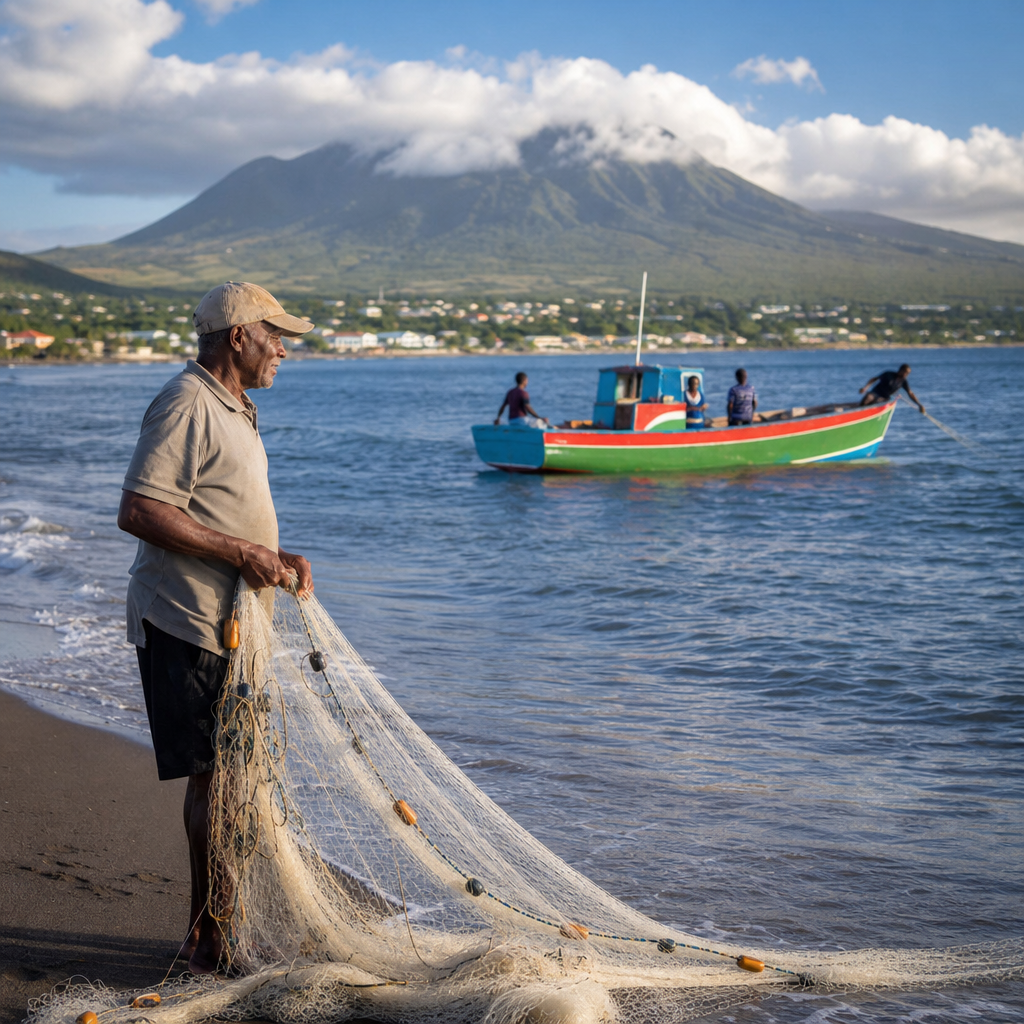
The boats themselves tell an important story about continuity and adaptation. Earlier craft were basic wooden vessels, sometimes locally built with practical modifications based on available materials and local sea conditions. These boats limited range but encouraged precise knowledge of nearby grounds. Over time, fiberglass pirogues with outboard engines became more common across the Caribbean, including Saint Kitts, improving speed, safety margins, and access to offshore waters. Even with better engines, however, small-scale fishing remained vulnerable to fuel prices, rough weather, and equipment maintenance costs.
Species targeted by Kittitian fishers have included jacks, groupers, snappers, grunts, barracuda, kingfish, mahi-mahi, tuna, and lobster, with catches varying by season and gear. Reef fish were historically important for local consumption, while more pelagic species gained commercial value as market demand changed. One reason this matters is that gear choice is never random. Handlines reduce some habitat impacts compared with destructive methods, while traps and nets require careful management to avoid overfishing or bycatch. In Saint Kitts, as in neighboring islands, the most experienced fishers have traditionally adjusted techniques in response to weather shifts, spawning patterns, and market opportunities rather than fishing the same way year-round.
| Traditional element | How it was used in Saint Kitts | Modern change | What stayed the same |
|---|---|---|---|
| Handlines | Nearshore and offshore line fishing for reef and pelagic species | Stronger monofilament, improved hooks, GPS-supported spot finding | Success still depends on timing, bait, and fish behavior knowledge |
| Fish pots | Set on reef grounds for demersal species | Wire construction, marker buoys, tighter regulation in some areas | Placement skill remains critical |
| Wooden boats | Shorter-range trips close to familiar fishing grounds | Fiberglass pirogues and outboards expanded range | Small-boat seamanship is still essential |
| Fish sales | Village distribution, roadside selling, direct household trade | Landing sites, coolers, phone orders, restaurant supply | Freshness and trust still drive buying decisions |
Fishing communities and everyday coastal life
Saint Kitts’ fishing traditions are inseparable from the communities that sustained them. In places such as Old Road Town, Dieppe Bay Town, and other coastal settlements, fishing was never just about the person on the boat. It involved crews, relatives, vendors, repairers, and cooks. Someone maintained engines, someone patched nets or traps, someone arranged ice, and someone found buyers before the fish reached shore. In my experience reviewing small-island fisheries, this support system is what separates a fishing economy from occasional fish catching. Saint Kitts has long had that wider system, even when it operated informally.
Landing a catch often triggered a chain of social interactions. Fish might be sorted immediately by species and size, with premium fish sold first and smaller mixed catch reserved for local customers. Regular buyers knew which fishers handled their catch well and returned consistently, so reputation mattered. This direct relationship between fisher and consumer remains one of the strongest parts of traditional island food systems. It also explains why fish markets are cultural spaces as much as commercial ones. News travels there, prices are debated there, and local preferences are reinforced there.
Family roles deserve special attention. Across the Caribbean, women have often been under-credited in fisheries despite their central work in processing, vending, and household budgeting. Saint Kitts is no exception. The ability to clean fish efficiently, preserve quality, season it properly, and sell it at a fair margin has always been part of the fishing tradition. Children also absorbed knowledge early, whether by helping to unload boats, recognizing species, or learning which weather signs meant a trip should be delayed. These details matter because tradition survives through repeated routine, not ceremony alone.
From subsistence to commercial and tourism-linked fishing
One of the biggest changes in Saint Kitts’ fishing traditions has been the shift from primarily subsistence and village trade toward a more mixed economy that includes restaurants, hotels, and visitor demand. This did not happen overnight. As the island diversified beyond sugar and tourism expanded, fresh seafood became part of the visitor experience. That created opportunities for fishers to supply businesses seeking reliable quantities of snapper, mahi-mahi, tuna, lobster, and other favored species. Higher-value sales could improve income, but they also introduced new pressures around consistency, storage, and quality control.
Cold chains and transport matter more in this newer context. Traditional sales could happen within hours to neighbors who knew exactly what a just-landed fish looked like. Commercial buyers require steadier standards. Ice, insulated containers, sanitary handling, and predictable delivery schedules become much more important when seafood is moving into formal hospitality channels. For small-scale fishers in Saint Kitts, this means the work no longer ends at capture. Market access increasingly depends on post-harvest management.
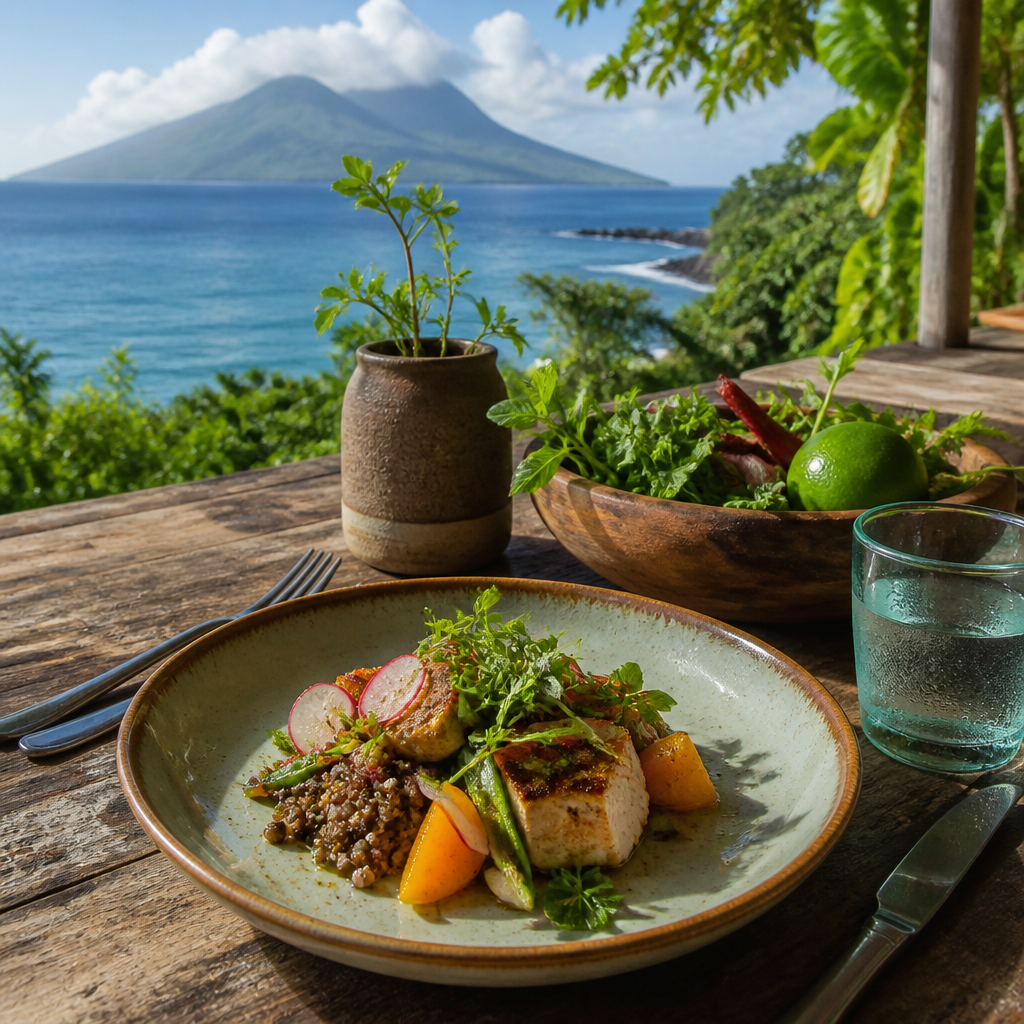
Tourism has also changed the image of fishing. In some destinations, fishing becomes something visitors watch rather than a trade they understand. Saint Kitts has partly resisted that flattening because local seafood still connects directly to community food culture. Grilled fish, fish water, stewed preparations, and beachside seafood meals all preserve that link. At the same time, charter fishing and recreational angling have added another layer to the marine economy. This can broaden income sources, but it requires clear management so commercial, subsistence, and recreational uses do not conflict unnecessarily.
Regulation, sustainability, and the future of the tradition
No account of Saint Kitts’ fishing traditions is complete without addressing sustainability. Small-island fisheries face concentrated pressure because coastal populations, reef habitats, and market demand all meet in limited space. Overfishing of reef species, habitat degradation, storm damage, invasive species impacts, and climate change can all weaken the biological foundation that traditional fishing depends on. Warmer seas and stronger storms are not abstract concerns in the Caribbean. They alter fish distribution, damage landing infrastructure, and increase risk for small vessels.
Management tools used in the wider region include licensing, closed seasons for species such as lobster and conch where relevant, size limits, gear restrictions, and marine protected areas. Saint Kitts and Nevis has worked within this regional policy environment, often informed by the Caribbean Regional Fisheries Mechanism and standard fisheries science on stock protection and habitat conservation. Good regulation is not anti-tradition. In practice, it is often the only way to keep a tradition economically and ecologically viable. The strongest fishing communities usually understand this clearly: if juvenile fish are harvested heavily, if spawning periods are ignored, or if reef damage accelerates, future catches decline.
Preserving Saint Kitts’ fishing heritage therefore means supporting both culture and management. It means documenting oral histories, teaching younger fishers safe and selective methods, improving landing sites, strengthening weather information access, and rewarding quality rather than just volume. It also means recognizing that a living fishing tradition can include engines, smartphones, GPS units, and direct restaurant sales without becoming inauthentic. The core tradition is disciplined knowledge of the sea in service of community livelihood. Saint Kitts has carried that knowledge from past to present through adaptation, not nostalgia.
For anyone exploring local life and experiences in Saint Kitts, fishing offers one of the clearest windows into how the island has changed while staying rooted in place. Its traditions began as a practical response to geography and survival, then evolved through colonial economics, village exchange, technological shifts, and modern tourism. Along the way, fishers and their families built systems of knowledge that remain visible in landing sites, markets, kitchens, and coastal communities. The history matters because it explains present-day choices: why certain species are valued, why direct sales still matter, and why weather wisdom remains as important as modern equipment.
The main lesson is simple. Saint Kitts’ fishing traditions survive when experience, community support, and responsible management work together. Boats and gear may change, but the best outcomes still come from respecting seasons, protecting habitats, handling seafood well, and keeping local knowledge in circulation. If you want to understand the island beyond its postcard image, follow the story of its fisheries. Visit a fish market, ask how the catch was landed, learn the names of local species, and explore the related articles in this hub to see how fishing connects with the wider rhythms of Kittitian life.
Frequently Asked Questions
1. Why has fishing been so important in Saint Kitts’ history and daily life?
Fishing has long been one of the foundations of life in Saint Kitts because it provided food, income, and a dependable rhythm for coastal communities well before tourism became a major economic force. In villages such as Old Road, Dieppe Bay, Sandy Point, and areas around Basseterre, the sea was not simply a backdrop to daily life; it was an active source of survival and social connection. Families relied on fish to feed households, and fishers supplied local markets, roadside vendors, and neighborhood trade networks. In this way, fishing supported both nutrition and the small-scale island economy.
Its importance also extends beyond economics. Fishing helped shape community identity, practical knowledge, and intergenerational learning. Skills such as reading currents, identifying seasonal patterns, selecting bait, repairing nets, and understanding reef behavior were passed from elders to younger fishers through experience rather than formal instruction. Launching before dawn, returning with the day’s catch, and sharing knowledge at landing sites created traditions that tied families and villages together. Even as Saint Kitts modernized, these longstanding practices remained a powerful symbol of resilience, self-reliance, and cultural continuity.
2. What traditional fishing methods have been used in Saint Kitts over time?
Traditional fishing in Saint Kitts developed around the island’s coastal geography, available materials, and knowledge of local species. Fishers historically used handlines, fish pots, nets, and small boats to target both reef fish and pelagic species. Handlining was especially practical because it required skill more than expensive equipment, allowing fishers to work near reefs or in deeper offshore waters depending on the season and target catch. Fish pots were also widely used, particularly for reef environments, where carefully placed traps could capture species moving through familiar underwater routes.
These methods were closely connected to observation and timing. Fishers had to understand weather patterns, moon phases, water clarity, fish movement, and the behavior of different coastal zones. Techniques were not random; they reflected detailed local knowledge built over generations. In many cases, gear was made, repaired, or adapted by hand, which meant fishing was inseparable from craftsmanship. Even when newer engines, synthetic lines, and modern navigation tools entered the picture, many traditional principles remained intact. Successful fishing in Saint Kitts has always depended as much on judgment and inherited coastal knowledge as on the equipment itself.
3. How did boatbuilding and gear-making become part of Saint Kitts’ fishing traditions?
Boatbuilding and gear-making became central to Saint Kitts’ fishing traditions because island fishers could not depend solely on imported tools or outside suppliers. Coastal livelihoods required practical self-sufficiency, so the ability to build, maintain, and repair boats and fishing gear became just as valuable as the ability to catch fish. Wooden boats were traditionally designed with local conditions in mind, including shoreline access, wave action, fishing distance, and the need to carry gear safely. A well-built vessel was essential for reaching fishing grounds and returning with a catch in changing sea conditions.
Gear-making followed the same tradition of hands-on expertise. Fishers and family members often repaired nets, prepared lines, maintained hooks, and crafted or modified pots to suit specific species and fishing areas. These were learned skills embedded in everyday life, often taught through observation, repetition, and shared labor. In many communities, this knowledge passed through families and close-knit village networks, reinforcing the idea that fishing was not a single task but a complete system of work, skill, and tradition. Today, even with access to manufactured equipment, the legacy of local craftsmanship remains an important part of how people understand the island’s maritime heritage.
4. How have Saint Kitts’ fishing traditions changed from the past to the present?
Fishing traditions in Saint Kitts have changed significantly over time, but many of their core values remain recognizable. In the past, fishing was more directly tied to household survival and village-level trade. The catch was essential to feeding families and supplying local consumers, and the work was structured around manual methods, small-scale boats, and deeply localized knowledge. Over time, technological advances such as outboard motors, improved lines, storage methods, and broader market access changed how fishers operated. These developments made it possible to travel farther, target different species, and bring catches to market more efficiently.
At the same time, the social and economic environment also shifted. Tourism became a larger part of the national economy, and fishing no longer occupied the same dominant place it once held in everyday island life. Even so, fishing continues to matter as a livelihood, a cultural practice, and a marker of heritage in coastal communities. Present-day fishers often balance tradition with adaptation, using modern tools while still relying on inherited knowledge of fishing grounds, weather, and seasonal patterns. The story from past to present is not one of disappearance, but of evolution. Saint Kitts’ fishing culture has adjusted to new economic realities while preserving important links to community identity and ancestral skill.
5. Why do Saint Kitts’ fishing traditions still matter today?
Saint Kitts’ fishing traditions still matter because they preserve a living connection to the island’s history, coastal environment, and community values. These traditions tell the story of how people built livelihoods from the sea, developed specialized knowledge of local waters, and created systems of cooperation around work, food, and trade. In an era when rapid development can sometimes overshadow older ways of life, fishing heritage offers a reminder that the island’s identity was shaped not only by plantations, ports, and tourism, but also by small boats, shoreline villages, and generations of fishers who understood the sea intimately.
They also matter for practical and educational reasons. Traditional knowledge about marine habitats, seasonal cycles, and species behavior remains valuable for cultural preservation and for conversations about sustainability and responsible resource use. When younger generations learn about fishing customs, boatbuilding, landing sites, and village routines, they gain more than historical facts; they gain insight into resilience, ingenuity, and the relationship between people and place. For visitors and residents alike, understanding these traditions helps deepen appreciation for Saint Kitts as more than a scenic Caribbean destination. It reveals the island as a community whose past and present have been shaped in meaningful ways by the sea.